
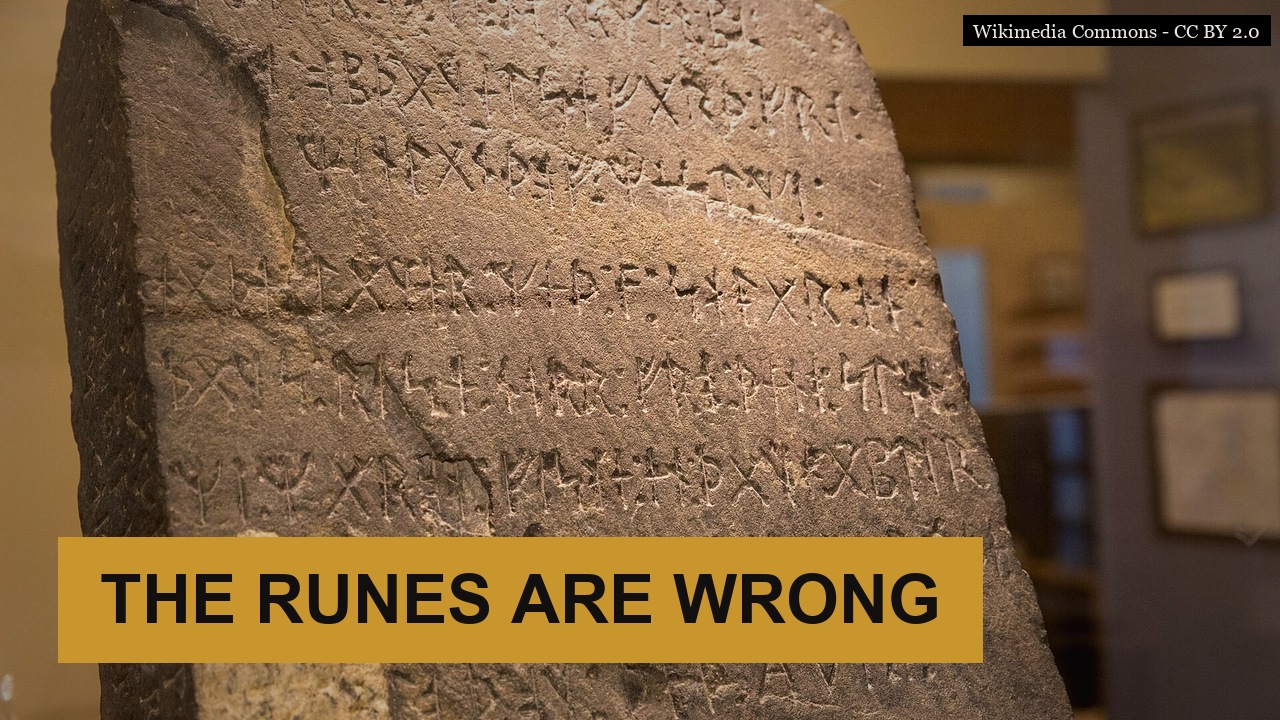
Read the full history: The Kensington Runestone Hoax: What the Evidence Actually Shows
In November 1898 a Swedish immigrant farmer named Olof Ohman levered a stunted poplar out of a knoll in Solem Township, Douglas County, Minnesota, and found a 202-pound greywacke slab lying face down in its roots, cut with nine lines of runes on the face and three more along one edge. The inscription reads like a report: eight Geats and twenty-two Norwegians on an exploration journey west from Vinland, ten of their men found dead, ten more left behind with the ships, and a date written in pentadic numerals – 1362. Scandinavian runologists were sent copies within months and came back unanimous that it was a recent forgery, and the lettering and grammar have gone on failing linguistic tests ever since. But the state geologist Newton Horace Winchell put the weathering inside the carved grooves at roughly five hundred years, the historian Hjalmar Holand gave about forty years of his life to defending the stone, and in more than a century nobody has produced the carver.

Follow for the next mystery.
#relatablehistory #history #mystery #unsolved #kensingtonrunestone