- The Scandalous History of the Fork | Object Histories
 When a Byzantine princess brought a two-pronged golden fork to an Italian wedding in the 11th century, the clergy called it sinful — proof, they said, that God’s own fingers weren’t good enough for her. For the next several hundred years, most of Europe agreed and ate with its hands. This is the surprising, genuinely scandalous history of the fork, from Byzantine court dining to the Italian nobility who finally made it fashionable, and the etiquette battles that followed it all the way to your kitchen drawer. Shop the styles/items featured in this video: Consider the Fork: A History of… Read more: The Scandalous History of the Fork | Object Histories
 - The Umbrella’s Scandalous History | Object Histories
 Real men didn’t carry umbrellas. For most of history, that wasn’t a joke, it was the rule. From royal Assyrian sunshades and Chinese oiled-paper rain umbrellas, to 2,000 years of feminine stigma, one Englishman who endured 30 years of public mockery just to carry one, and the steel-ribbed redesign that finally made it ordinary — this is the full history of the object hanging by your front door. Shop the styles/items featured in this video: Windproof Travel Umbrella Compact Folding Umbrella Traditional Oiled Paper Parasol As an Amazon Associate I earn from qualifying purchases. Follow for the next object. #relatablehistory… Read more: The Umbrella’s Scandalous History | Object Histories
 - The Mirror’s Deadly Monopoly | Object Histories
 Seeing your own face used to be a luxury almost nobody could afford. From polished obsidian at Çatalhöyük and sacred bronze in Han dynasty China, to a Venetian state secret guarded by assassins, Louis XIV’s spiteful Hall of Mirrors, and the chemist who finally made mirrors cheap enough for everyone — this is the surprising history of the object hanging over your bathroom sink. Shop the styles/items featured in this video: Wall Mirror, Modern Round Vanity Makeup Mirror with Lights Black Obsidian Scrying Mirror As an Amazon Associate I earn from qualifying purchases. Follow for the next object. #relatablehistory #history… Read more: The Mirror’s Deadly Monopoly | Object Histories
 - The Toothbrush Was Invented in Prison | Object Histories
 Ancient people cleaned their teeth by chewing on sticks, and it worked better than you’d think. From 5,000-year-old chew sticks in Babylon and Egypt, to a prison cell in 1780 London, hog-bristle brushes from Ming dynasty China, and the DuPont chemists who replaced them with nylon — this is the surprising history of the object sitting in your bathroom cup. Shop the styles/items featured in this video: Electric Toothbrush Bamboo Toothbrush, Eco-Friendly Pack Natural Miswak Chew Sticks As an Amazon Associate I earn from qualifying purchases. Follow for the next object. #relatablehistory #history #objecthistory #didyouknow #toothbrushhistory #dentalhealth #hygiene
 - The Accidental History of the Pencil | Object Histories
 The best writing tool on Earth was found by accident, after a storm knocked over a tree in 16th-century England. From a graphite deposit so valuable it was guarded by armed soldiers, to a wartime blockade that gave us the H and B hardness scale, Henry David Thoreau’s family pencil factory, and a diamond-themed marketing stunt that made pencils yellow — this is the full story behind the object in your junk drawer. Shop the styles/items featured in this video: Classic Yellow Wood-Cased Pencils Graphite Drawing Pencil Set Mechanical Pencil Set As an Amazon Associate I earn from qualifying purchases.… Read more: The Accidental History of the Pencil | Object Histories
 - The Zipper’s Surprising History | Object Histories
 It took 80 years to catch on, and it wasn’t even invented for pants. From an 1851 patent nobody bothered to sell, to a jamming boot fastener at the 1893 World’s Fair, the engineer who finally got the design right, a tire company that named it after the sound it made, and the surrealist designer who turned it into fashion — this is the surprising history of the object running down your jacket. Shop the styles/items featured in this video: YKK Zip-Up Jacket Zipper Pouch Organizer Set Assorted Sewing Zippers Pack As an Amazon Associate I earn from qualifying purchases.… Read more: The Zipper’s Surprising History | Object Histories
 - Sunglasses Weren’t Invented for the Sun | Object Histories
 Sunglasses weren’t invented for the sun. From Inuit snow goggles and Chinese judges hiding their expressions behind smoky quartz, to Army Air Corps pilots and Hollywood’s favorite disguise — this is the full, surprising history of the object on your face right now. Shop the styles/items featured in this video: Classic Aviator Sunglasses Retro Wayfarer-Style Sunglasses Polarized Sport Sunglasses As an Amazon Associate I earn from qualifying purchases. Follow for the next object. #relatablehistory #history #objecthistory #didyouknow #sunglasseshistory #vintagefashion #eyewear
 - The General Behind Chewing Gum | Object Histories
 Chewing gum has a general hiding in it. From Stone Age birch tar and Maya tzictli, to an exiled Mexican general’s failed rubber scheme, a soap salesman who stumbled into a gum empire, and the accountant who invented pink bubble gum by accident — this is the full, surprising history of the thing in your pocket right now. Shop the styles/items featured in this video: Bazooka Bubble Gum Bulk, 225 Count Extra Sugar-Free Gum, Variety Pack (6 flavors) Vintage-Style Gumball Machine, 11-Inch As an Amazon Associate I earn from qualifying purchases. Follow for the next object. #relatablehistory #history #objecthistory #didyouknow… Read more: The General Behind Chewing Gum | Object Histories
 - The Comb Is Older Than the Wheel | Object Histories
 The comb might be the oldest grooming tool humans ever made — older than the wheel itself. From a 5,500-year-old ivory comb carved with a giraffe in ancient Egypt, to Roman delousing kits, Viking grave goods, a medieval coronation ritual, an accidental plastics fire hazard, and a clenched-fist symbol of the Black Power movement — this is the full, surprising history of the thing sitting in your bathroom drawer right now. Shop the styles/items featured in this video: Wide-Tooth Detangling Comb, Wood Fine-Tooth Nit/Lice Comb, Stainless Steel Vintage-Style Pocket Comb Set Afro Pick with Fist Handle As an Amazon Associate… Read more: The Comb Is Older Than the Wheel | Object Histories
 - This Drill Bored Into Human Skulls | Object Histories
 Note: this object was posted twice to YouTube with two different video IDs. We’re using the newer upload below. This drill was built to bore straight through a human skull — and people survived it. Ancient healers used flint, shark teeth, and sheer skill to perform brain surgery millennia before anesthesia existed. Trepanning is one of the oldest surgical procedures ever documented, practiced on every inhabited continent, and skulls have been found with healed bone growth proving patients lived for years afterward. This is the real story of the trepanning drill, from Neolithic flint tools to the modern neurosurgical burr… Read more: This Drill Bored Into Human Skulls | Object Histories
 - The Machine That Breathed For You | Object Histories
 In 1928, doctors sealed an eight-year-old girl inside a metal chamber called the Drinker respirator — and her breathing steadied within a minute. You know it as the iron lung, and for nearly fifty years it was the only thing standing between tens of thousands of polio patients and suffocation. This is the full story: the Harvard engineer who built it, the patent fight that made it affordable, the hospital wards packed with rows of tanks during the 1950s epidemics, the vaccine that emptied them out almost overnight, and the small handful of survivors who kept living inside their machines… Read more: The Machine That Breathed For You | Object Histories
 - This Jar Once Held Living Medicine | Object Histories
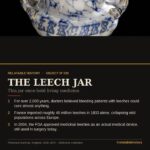 This ceramic jar once held some of the most valuable creatures in medicine. For two thousand years, doctors believed that bleeding a patient could cure almost anything, and leeches were the preferred tool for it, right up until French pharmacies were importing forty million of them in a single year. This is the strange, occasionally absurd, and surprisingly modern story of the leech jar, from ancient Egypt to the FDA’s 2004 decision to approve the medicinal leech as an actual medical device. Shop the styles/items featured in this video: Quackery: A Brief History of the Worst Ways to Cure Everything… Read more: This Jar Once Held Living Medicine | Object Histories
 - Doctors Cured You By Draining Your Blood | Object Histories
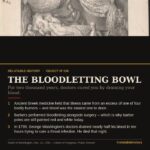 For roughly two thousand years, if you got sick almost anywhere in the Western world, a doctor’s first move was to cut you open and drain your blood into a bowl like this one. From ancient Greek humoral theory to the death of George Washington, this is the full story of bloodletting: the tools, the barber-surgeons, the bleeding calendars built around astrology, and the French physician whose careful counting finally brought the whole two-thousand-year practice down. Shop the styles/items featured in this video: Medical history book on the history of bloodletting and humoral medicine Reproduction antique-style pewter bowl (decorative) Vintage… Read more: Doctors Cured You By Draining Your Blood | Object Histories
 - A Key That Pulled Your Teeth Out | Object Histories
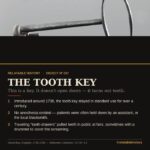 This is a key. For over a hundred years it was standard equipment for pulling a rotten tooth — no anesthesia, sometimes in the middle of a crowded market square with a drummer playing to cover the screaming. From the pelican that came before it, to the Key of Garengeot, to the forceps and ether that finally ended its reign in the 1840s, here’s the full, stranger-than-fiction history of the tooth key. Shop the styles/items featured in this video: 🦼 The Excruciating History of Dentistry (book) 🔑 Antique-style dental key replica / collectible 🖼️ Wellcome Collection historic medical instrument print… Read more: A Key That Pulled Your Teeth Out | Object Histories
 - Louis XIV’s 2,000 Enemas | Object Histories
 Louis XIV received over two thousand enemas in his lifetime — some administered during actual meetings of state. For two centuries the clyster syringe was a genuine status symbol in French high society: crafted from silver and porcelain, displayed like jewelry, and taken as often as three or four times a day. This is the full story, from ancient Egyptian papyri to the playwright it may have helped kill. Shop the styles/items featured in this video: “The Imaginary Invalid” (Molière’s play that satirized the clyster craze) Quackery: A Brief History of the Worst Ways to Cure Everything Modern enema kit… Read more: Louis XIV’s 2,000 Enemas | Object Histories
 - Liquid Sunshine: The Radioactive Water Doctors Prescribed | Object Histories
 In the 1920s, a con man named William Bailey bottled real radium and sold it as “perpetual sunshine” — a cure-all tonic that doctors prescribed and pharmacies stocked. His most devoted customer was Eben Byers, a wealthy steel executive and U.S. Amateur golf champion, who drank roughly 1,400 bottles before his jaw began to disintegrate. Here’s the full story of Radithor, the radium fad it rode in on, and the death that finally got it banned. Shop the styles/items featured in this video: ☢️ “The Radioactive Boy Scout” and other radium-era history (book) 🧪 Vintage-style apothecary bottle / decor piece… Read more: Liquid Sunshine: The Radioactive Water Doctors Prescribed | Object Histories
 - The Ice Pick That Performed Brain Surgery | Object Histories
 In 1946, an American doctor performed brain surgery with a tool from his own kitchen — an ice pick. Over the next two decades he’d perform more than 3,000 of these procedures himself, touring state hospitals in a station wagon reporters nicknamed the “lobotomobile.” This is the real history of the ice pick lobotomy, from its Nobel Prize-winning origins in Portugal to the pill that finally ended it. Shop the styles/items featured in this video: “The Lobotomist” by Jack El-Hai (book) “Great and Desperate Cures” by Elliot S. Valenstein (book) “Rosemary: The Hidden Kennedy Daughter” by Kate Clifford Larson (book)… Read more: The Ice Pick That Performed Brain Surgery | Object Histories
 - This 1790 Invention Replaced Insane Asylum Chains | Object Histories
 In 1790, a Paris asylum orderly named Guillaume Ferrus sewed a canvas jacket to replace the iron chains patients had worn for centuries — and it was genuinely seen as an act of mercy. This is the full story of the straitjacket: from Bedlam’s chained wards, through the reform movements of Pinel and Tuke, to Nellie Bly’s undercover expose of asylum abuse, to its final act as Harry Houdini’s signature escape. Shop the styles/items featured in this video: Madhouse: A Tragic Tale of Megalomania and Modern Medicine Houdini: The Elusive American (biography) Ten Days in a Mad-House by Nellie Bly… Read more: This 1790 Invention Replaced Insane Asylum Chains | Object Histories
 - The Party Drug That Ended Surgical Pain | Object Histories
 Before it ever reached an operating room, ether was a party drug. College students and traveling showmen hosted “ether frolics,” inhaling the sweet-smelling gas for laughs — until a Boston dentist watched a man stumble through one of those parties without feeling a thing, and wondered if it could stop the screaming in his own surgery room. This is the real story of the ether inhaler, from carnival sideshows to the 1846 operation that changed surgery forever. Shop the styles/items featured in this video: Ether Day: The Strange Tale of America’s Greatest Medical Discovery (book) Antique-style glass apothecary bottle The… Read more: The Party Drug That Ended Surgical Pain | Object Histories
 - They Read Your Skull Before Hiring You | Object Histories
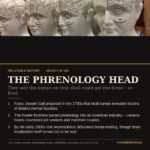 In the 1800s, employers really did hire skull-readers to feel job applicants’ heads before making an offer. Phrenology claimed the bumps and contours of your skull revealed everything from your honesty to your intelligence, and for decades it was taken seriously enough to shape hiring decisions, marriages, and even criminal trials. This is the full story of the porcelain head charts, the traveling phrenologists who read skulls at county fairs, and the science that eventually proved the whole theory wrong. Shop the styles/items featured in this video: Ceramic phrenology head replica (decor/collectible) The Skull Beneath the Skin: A History of… Read more: They Read Your Skull Before Hiring You | Object Histories
 - The Glowing Wand That “Cured” Everything | Object Histories
 It looked like a magic wand: a glass tube humming with a faint violet glow, promising to cure baldness, wrinkles, arthritis, and “nervous exhaustion” with nothing more than a crackling tingle. For forty years, the violet ray machine sat in millions of American bathroom cabinets — cheap, legal, and almost entirely useless for anything it claimed to treat. This is the real story of the device, from Nikola Tesla’s high-frequency lab experiments through Sears catalog sales, John Harvey Kellogg’s Battle Creek Sanitarium, and the decades-long crusade by the AMA and FDA that finally caught up with it. Shop the styles/items… Read more: The Glowing Wand That “Cured” Everything | Object Histories
 - The Diet Pill With a Parasite Inside | Object Histories
 In the early 1900s, American mail-order catalogs sold weight-loss pills that were exactly what they sounded like: live tapeworm eggs, swallowed on purpose. The parasite would grow inside the buyer’s gut for months, quietly eating a share of every meal, until it was removed — sometimes by a doctor, sometimes not at all. This is the strange, genuinely dangerous history of the tapeworm diet, from the traveling patent-medicine salesmen who peddled it to the deworming crazes that still occasionally resurface as an urban legend today. Shop the styles/items featured in this video: Quackery: A Brief History of the Worst Ways… Read more: The Diet Pill With a Parasite Inside | Object Histories
 - The Plague Doctor’s Beak Was Full of Flowers | Object Histories
 If you saw this figure walking toward your house in the 1600s, you knew someone was dying. The wide-brimmed hat, the waxed coat, the glass-eyed leather mask with a foot-long beak — this was the plague doctor, designed in 1619 by a French royal physician who was working from a medical theory that turned out to be completely wrong. Here’s the real story of the costume, the doctors who wore it, and the ironic reason it might have actually helped. Shop the styles/items featured in this video: Plague doctor mask replica (costume/collectible) The Black Death, illustrated history book Venetian carnival… Read more: The Plague Doctor’s Beak Was Full of Flowers | Object Histories
 - The 400-Year Cure That Was Worse Than The Disease | Object Histories
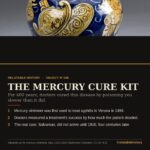 In 1496, a doctor in Verona rubbed mercury ointment onto a patient’s syphilis sores — and it seemed to work. For the next four hundred years, mercury became medicine’s default cure for the disease, delivered as ointments, vapor baths, and pills, even as it rotted patients’ teeth and gums and gave them violent tremors. This is the story of the “cure” that was sometimes worse than the disease it treated, and the 1910 discovery that finally ended its four-century reign. Shop the styles/items featured in this video: Quackery: A Brief History of the Worst Ways to Cure Everything (book) Antique-style… Read more: The 400-Year Cure That Was Worse Than The Disease | Object Histories
 - The Vibrating Chair Doctors Swore Would Cure You | Object Histories
 In the late 1800s, doctors prescribed sitting in a chair that shook you sixty times a second as a genuine medical treatment for everything from constipation to depression. The vibrating chair grew out of a wave of “mechanotherapy” clinics that promised mechanized vibration could cure nerves, aid digestion, and even improve your complexion — and for a while, respectable physicians agreed. This is the real story of the vibrating chair, the inventor who patented it, and the slow slide from serious medicine to novelty-shop gimmick. Shop the styles/items featured in this video: Quackery: A Brief History of the Worst Ways… Read more: The Vibrating Chair Doctors Swore Would Cure You | Object Histories