
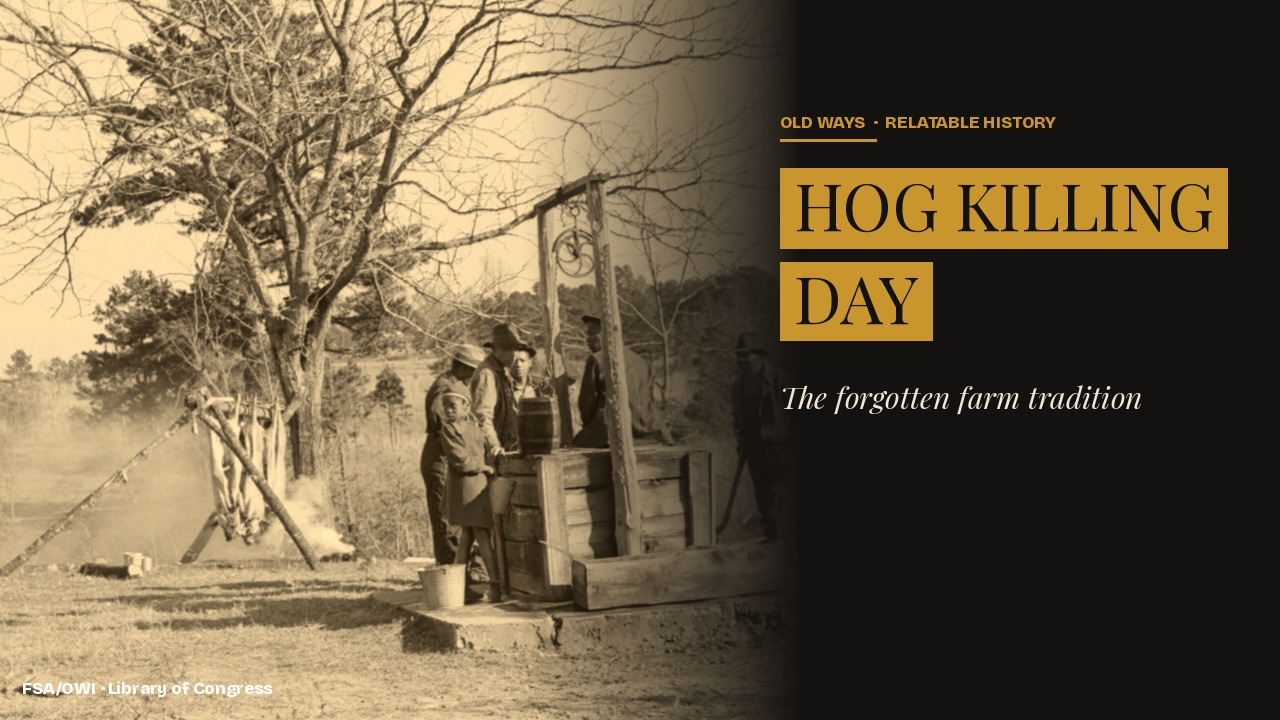
Read the full history: How Hog Killing Day Worked on the American Farm
Once a year, usually on the first hard-cold morning of late autumn, a farm’s neighbors showed up before sunrise — because hog killing day was never a one-family job. Butchering, scalding, and rendering a hog into salt pork, sausage, bacon, and lard took more hands than any one household had, and the cold snap itself was the clock: warm weather meant the meat would spoil before it could be cured.
Nothing on the hog went to waste. Hams and shoulders went into salt or smoke, fat was rendered into lard that would last the whole winter, scraps became sausage, and even the head went into head cheese. The day doubled as a social occasion — a shared, exhausting, genuinely communal piece of the farm calendar that disappeared almost entirely once home refrigeration and commercial meatpacking took over.

If you want to try curing your own, the modern reference most people reach for:
Would you want a hand in hog killing day, or just a seat at the dinner after?