
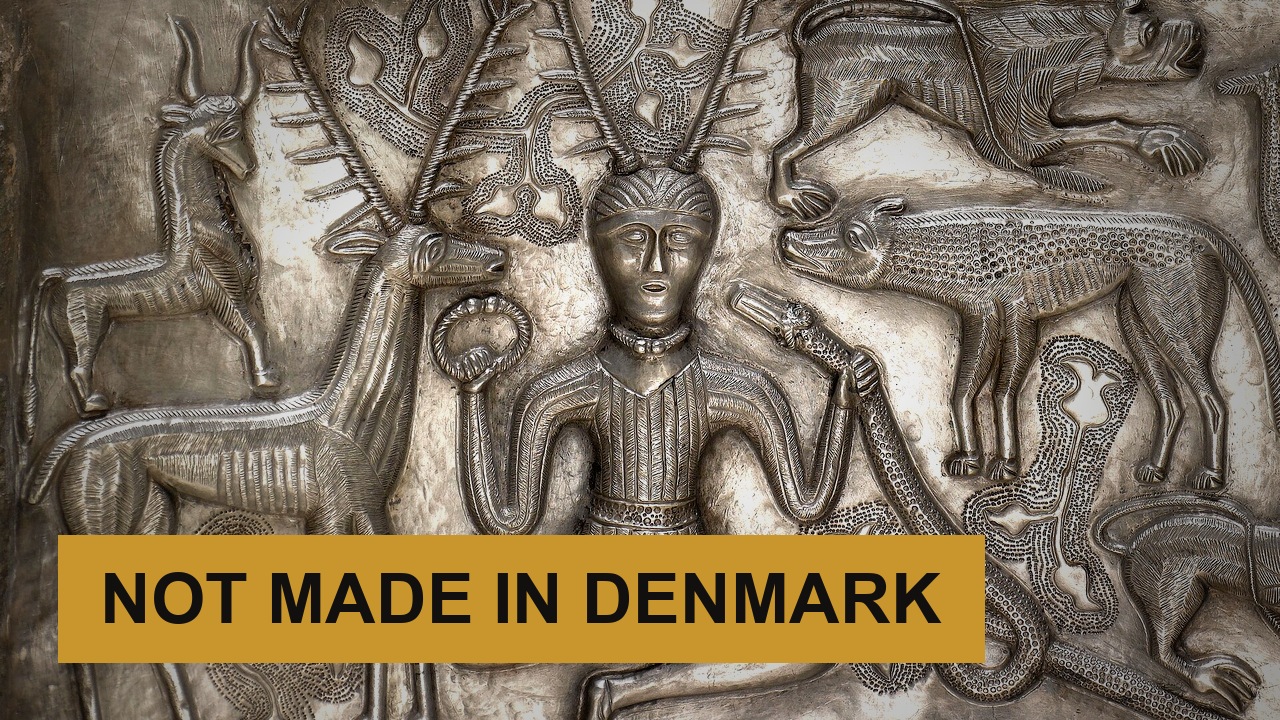
Read the full history: Who Made the Gundestrup Cauldron? The Mystery Nobody Has Solved
On 28 May 1891 peat cutters working a small bog called Raevemose, near Gundestrup in Himmerland, northern Jutland, hit silver. What they pulled out was the largest surviving piece of European Iron Age silverwork – a cauldron 69cm across, 42cm high and weighing just under nine kilograms, around 97 percent silver, with gilding, tin solder and glass set in as the figures’ eyes. It had been dismantled before it went into the ground, the rim pulled off and the decorated plates stacked in the bottom of the bowl. Thirteen plates survive and an eighth outer plate does not. The sheet-silver technique belongs to Thrace, in the lower Danube; lead isotope analysis matched the silver to ore in northern France and western Germany and specifically to Coriosolite coins struck in Armorica; the tin matched Cornish ore and the glass is of an eastern Mediterranean type. Tool marks point to at least three silversmiths and the metal to several batches of recycled silver. The dating does not resolve either: typology puts it in the last two centuries BC, while radiocarbon dating of beeswax left on the backs of the plates has returned readings centuries apart from each other.

Follow for the next mystery.
#relatablehistory #history #mystery #unsolved #gundestrupcauldron