
Read the full history: Why Christmas Nutcrackers Are Shaped Like Kings and Soldiers
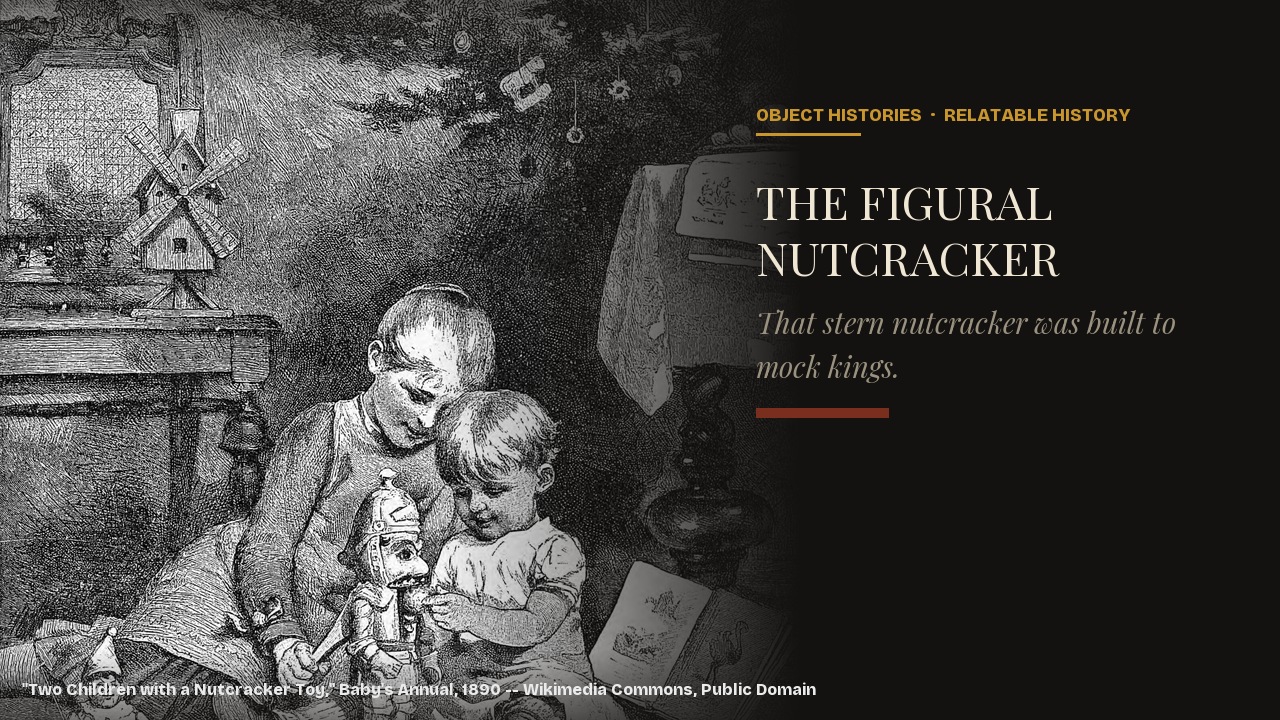
That stern wooden figure on your mantel was built as an insult. When silver and tin mining collapsed in Germany’s Ore Mountains in the 1700s, out-of-work miners turned to woodcarving to survive — and the toy they’re most famous for was a joke at the ruling class’s expense. Carve a king, a soldier, a bishop, dress them in uniform, and make them do the one kind of work they never had to do: grinding their jaw open and shut to crack a nut, over and over, for someone else’s amusement.
We trace the full story: the Erzgebirge’s mining-to-toymaking economy, the folk legend of the farmer and his reward, Wilhelm Friedrich Fuchtner’s 1870s Seiffen workshop that turned a regional craft into mass production, E.T.A. Hoffmann’s completely separate 1816 fairy tale that gave the toy its other life, the 1892 Tchaikovsky ballet that finally merged the two, the American GIs who brought the figures home as WWII souvenirs, George Balanchine’s 1954 production that made it a US Christmas fixture, and the Seiffen workshops still turning the same figures today — a tradition formally recognized as German intangible cultural heritage in 2016.

Would you want the king cracking your nuts, or the soldier?
Follow for the next object.
#relatablehistory #history #objecthistory #didyouknow #nutcracker #christmas