
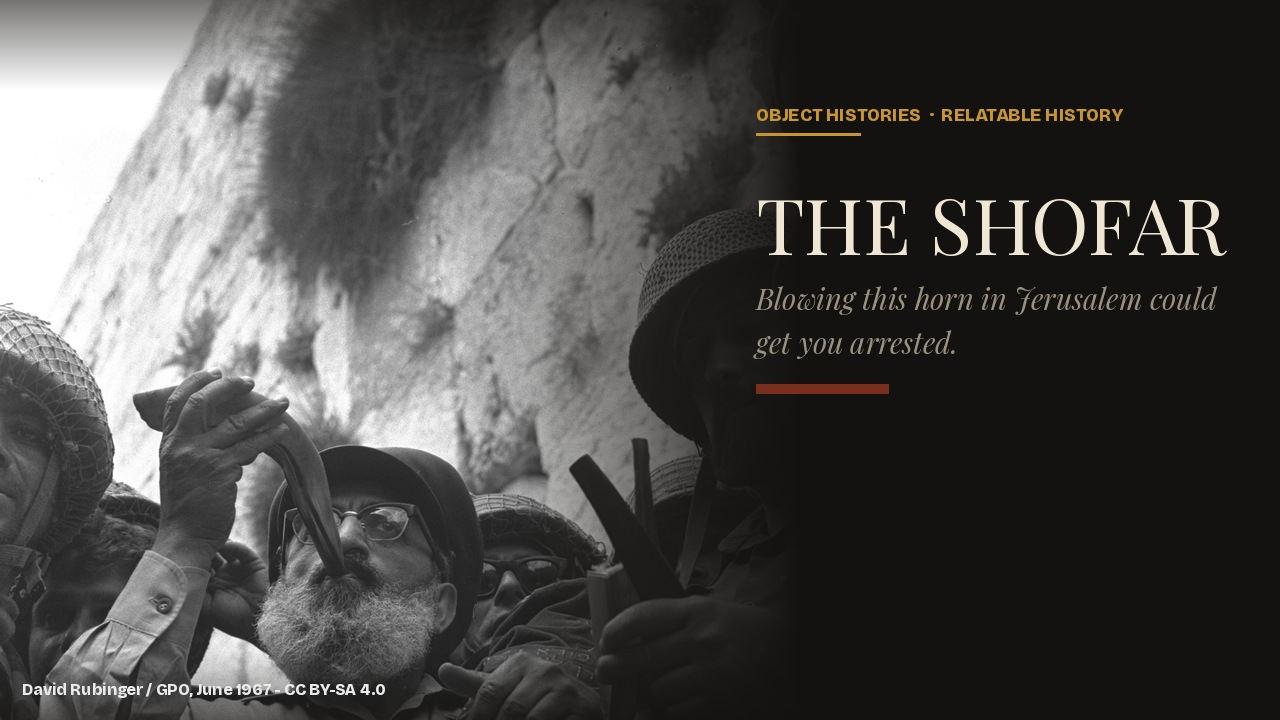
On the evening of Yom Kippur in 1930, a young man named Moshe Segal stood at the Western Wall in Jerusalem, surrounded by British police, and committed a crime. The crime was blowing a ram’s horn. He was arrested on the spot and taken to the Kishle lockup, and he was very probably expecting it.
This is not a metaphor or a piece of folklore. Between 1930 and the end of the Mandate, sounding a shofar at the Western Wall was a specific statutory offence in Palestine, punishable by a fine of fifty pounds, six months’ imprisonment, or both. And for seventeen consecutive years, at the close of Yom Kippur, somebody did it anyway.
The object at the centre of it is one of the least technological instruments ever made: a horn taken off an animal, hollowed, heated, bent and drilled. No keys, no valves, no mouthpiece. It is also, by most reckonings, the oldest musical instrument still in continuous religious use anywhere in the world, which is what makes it such an unlikely thing to have needed a police cordon.
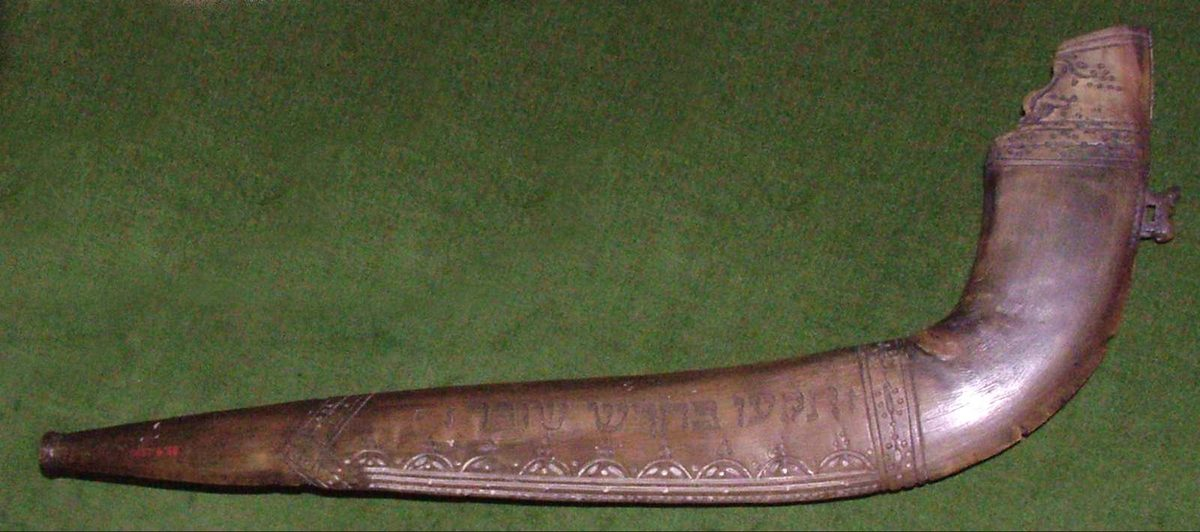
The shofar is deliberately the least engineered instrument in the room
A shofar is made from the horn of a kosher animal — in practice usually a domestic ram, sometimes a kudu or an ibex. The horn is not solid. It consists of a keratin sheath over a bony core, and the first step in making one is getting that core out, traditionally by soaking the horn until the core loosens and can be drawn free. What remains is a hollow cone, closed at the tip.
The tip is then drilled through to open a narrow bore, and the horn is heated — over steam, in hot water, or in sand — until the keratin softens enough to be straightened or bent to the shape the maker wants. Yemenite kudu shofars get their dramatic spiral partly from the animal and partly from this working. A ram’s-horn shofar is usually opened out into the familiar flattened curve.
What it does not get is a mouthpiece. Jewish law is specific that the instrument must be a horn and not a manufactured object, and adding a separate mouthpiece crosses that line. The player’s lips buzz directly against the drilled bore, which is why a shofar is genuinely difficult to sound well and why the person who does it in a congregation is a designated role rather than a volunteer.
The instrument produces essentially two usable pitches, and the liturgy is built around patterns of them: tekiah, one long blast; shevarim, three broken ones; teruah, a rapid series of short notes; and tekiah gedolah, the long final blast that closes Yom Kippur. The whole expressive range of the thing is duration and attack. That is the entire design brief, and it has not needed revision in roughly three thousand years.

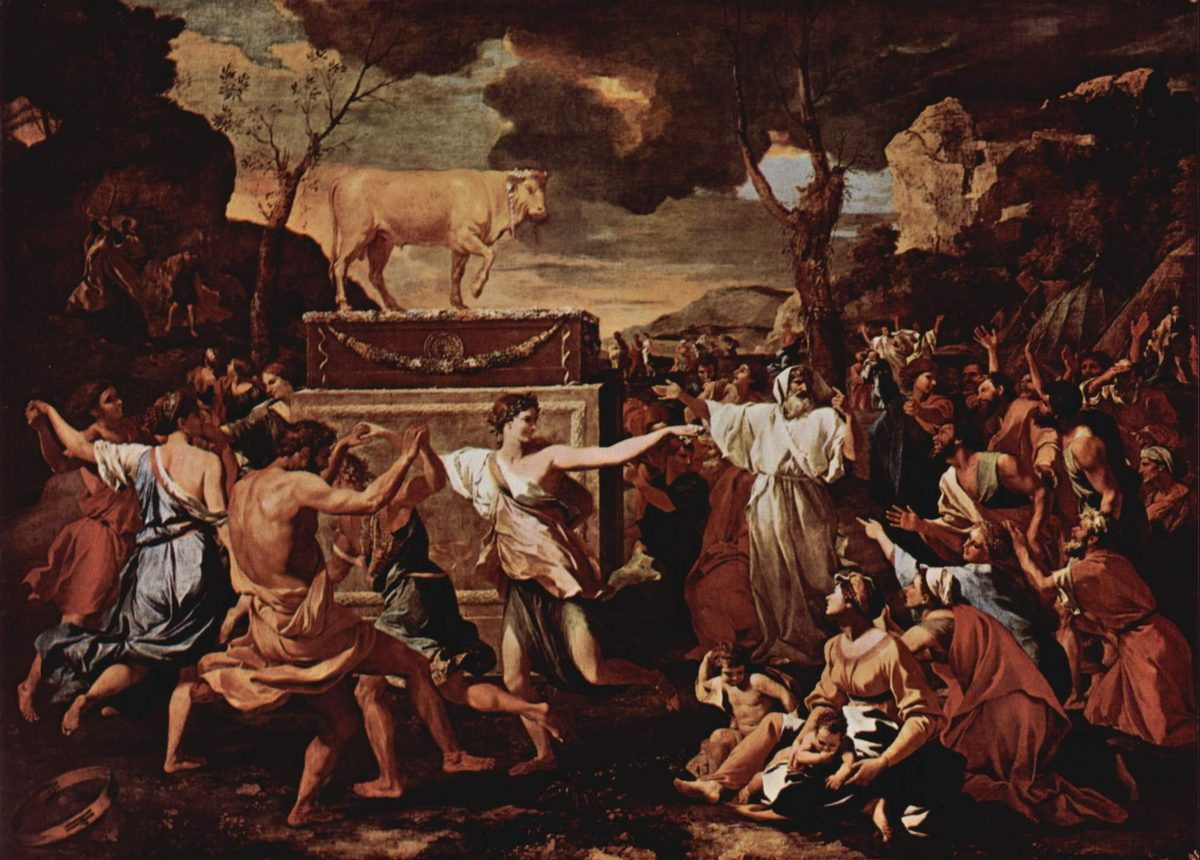
It can be made from almost any animal except a cow, and the reason is the golden calf
The Mishnah sets out which horns are acceptable and, in doing so, rules out the single most available horn in the ancient Near East. A cow’s horn is disqualified. So is a bull’s. Given that cattle were everywhere and their horns are large, workable and free, this is a genuinely strange exclusion on practical grounds.
The reasoning the Talmud gives is not practical at all. The prosecutor, it argues, cannot also serve as the defence counsel: an instrument used to plead for mercy on the Day of Atonement cannot be made from the animal that Israel once worshipped at Sinai. The golden calf disqualifies the entire species from a role in the liturgy of forgiveness.
It is worth sitting with how unusual that is as a design constraint. This is not a rule about sound, or durability, or ritual purity in any mechanical sense. It is a rule about association — a material banned for what it reminds the congregation of. Very few objects carry a specification like that, and it has held for two millennia.
The 1930 commission put the prohibition in writing
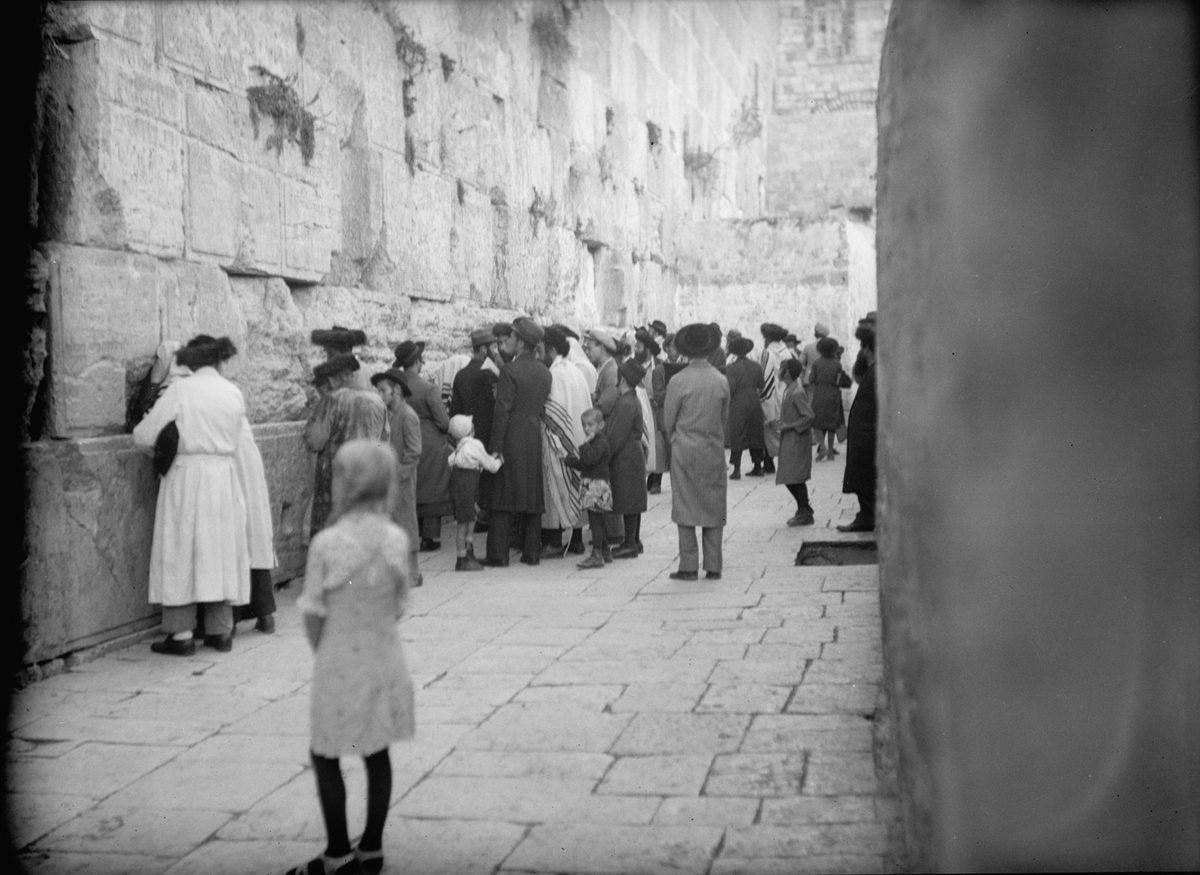
The ban did not begin with the shofar. It began with a long, bitter dispute over what Jewish worshippers were permitted to bring to, and do at, the Western Wall — a strip of pavement beside a wall that forms part of the Haram al-Sharif, and which was Muslim waqf property. Through the 1920s the British administration tried to freeze the status quo by forbidding any physical change: no ark, no benches, no screens, no partitions. A White Paper in November 1928 set out the position.
After the violence of August 1929, the British government appointed an international commission, approved by the Council of the League of Nations, to settle the rights and claims of both communities at the Wall. Its three members were jurists from Sweden, Switzerland and the Netherlands — Eliel Löfgren, Charles Barde and C. J. van Kempen. They reported in December 1930.
The commission found that the Wall itself, and the pavement in front of it, were Muslim property, while affirming that Jews had free access to it for devotion at all times. Then it attached conditions. One of them stated that Jews were not to be permitted to blow the ram’s horn near the Wall, nor cause any other avoidable disturbance to Muslims. The recommendations became binding law through the Palestine (Western or Wailing Wall) Order in Council, which took effect on 8 June 1931, carrying the fifty-pound fine and the six-month sentence.
What that sequence produced is a peculiar artefact of colonial administration: a statute naming one musical instrument, in one place, and making its use a criminal act. The shofar was not singled out because anyone in Whitehall or Geneva objected to it. It was on the list of frozen physical facts, along with the benches and the screens, and it was the only item on that list that made a noise.
Someone blew it every year for seventeen years
Moshe Segal’s blast in 1930 was the first open defiance. His release came quickly and by an unusual route: Rabbi Abraham Isaac Kook, the Ashkenazi Chief Rabbi, intervened with the High Commissioner and let it be known that he would not break his own Yom Kippur fast until Segal was freed. A hunger strike by the Chief Rabbi was not a headline the administration wanted. Segal was out within the day.
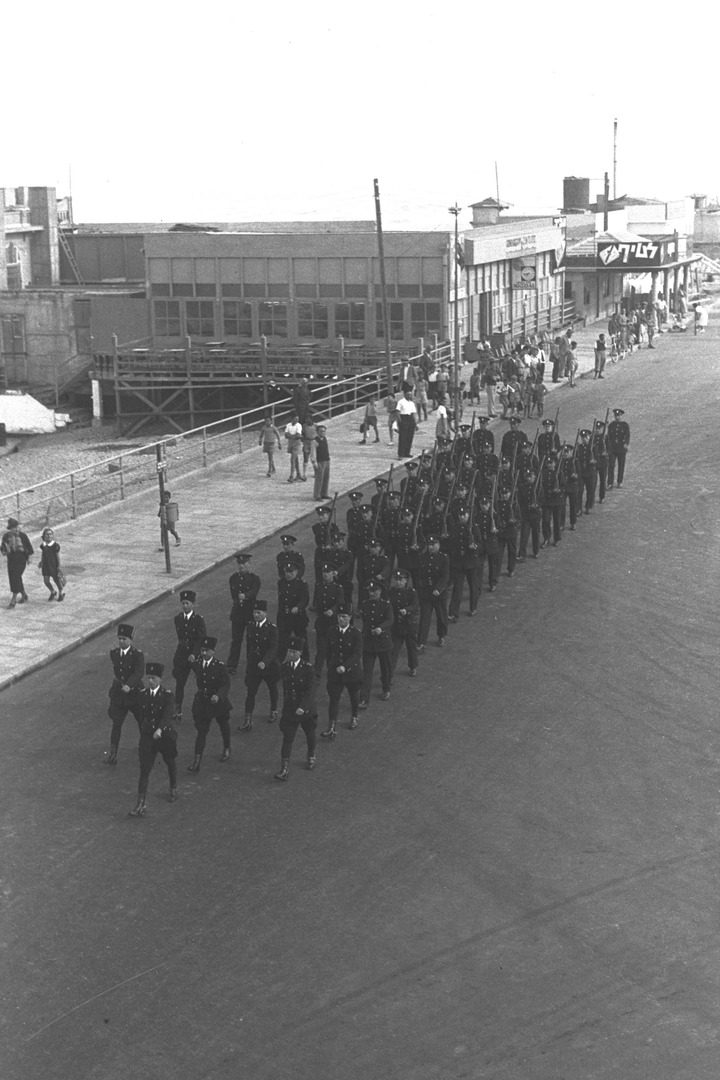
What followed was not a single act of protest but a relay. Every year until 1947, a volunteer — from the Irgun, from Betar, from Brit HaHashmonaim — sounded the shofar at the close of Yom Kippur at the Wall. Segal himself trained many of them, and the training covered two separate skills: how to produce the blast, and how to get past the police to produce it. Shofars were smuggled in under coats. Crowds were arranged so that the officers could not see who had raised the horn. Arrests followed most years.
Set against the scale of what was happening in Mandate Palestine, a few seconds of sound once a year is almost nothing. That is rather the point. The prohibition had converted an ordinary liturgical act into the cheapest possible piece of civil disobedience — one that cost a few seconds, required one object, and could not be ignored because it was audible.
What happened to the instrument afterwards
The Mandate ended in 1948 and the question became moot in the worst way: the Old City fell under Jordanian control, and Jewish worshippers had no access to the Wall at all for nineteen years. When Israeli forces reached it in June 1967, the army’s chief rabbi, Shlomo Goren, sounded a shofar there — an image that became one of the most reproduced photographs of the war, and which is impossible to read without the previous four decades behind it.
The instrument itself did not change. A shofar made today is made the same way it was made under the Mandate, and under the Talmudic sages who argued about cows’ horns, and in the Temple period before that. Manufacture has industrialised at the edges — there are workshops in Israel turning out thousands a year, and the horns are sourced internationally — but the object that comes out is the object described in the Mishnah.
That continuity is the real claim to significance. Plenty of ancient instruments survive in museums. Very few are still being played, for the original purpose, by people who would recognise the two-thousand-year-old rules governing how they are made. The shofar is the clearest case there is, and for seventeen years it was also, in one specific place, contraband.
Watch the full history
The video version covers the making of the horn, the meaning of the blasts, and the years of arrests in about six minutes.

Related reading
- The Beer Stein’s Lid Was A Public Health Law | Object Histories
- London’s First Taxi Had No Wheels And No Horse | Object Histories
- The Supreme Court Still Sets Out Goose Quills | Object Histories
- Your Hobby Is Named After a Medieval Warhorse | Object Histories
Works cited
- Montagu, Jeremy. The Shofar: Its History and Use. Rowman & Littlefield, 2015.
- Cohen, Hillel. Year Zero of the Arab-Israeli Conflict 1929. Translated by Haim Watzman. Brandeis University Press, 2015.
- Mishnah Rosh Hashanah 3:2, on which horns are valid for the shofar. Link.
- Babylonian Talmud, Rosh Hashanah 26a, on the disqualification of the cow’s horn. Link.
- Report of the Commission appointed by His Majesty’s Government in the United Kingdom of Great Britain and Northern Ireland, with the approval of the Council of the League of Nations, to determine the rights and claims of Moslems and Jews in connection with the Western or Wailing Wall at Jerusalem. December 1930. United Nations document archive. Link.
- Palestine (Western or Wailing Wall) Order in Council, 1931, which gave the Commission’s findings the force of law on 8 June 1931. Link.
- “Findings of Commission: Wailing Wall is Moslem Property but Not Moslem Sacred Shrine.” Jewish Telegraphic Agency, December 1930. Link.
- “Segal Moshe Tzvi — ‘Itiel’.” Freedom Fighters of Israel (Lehi) Heritage Association. Link.