
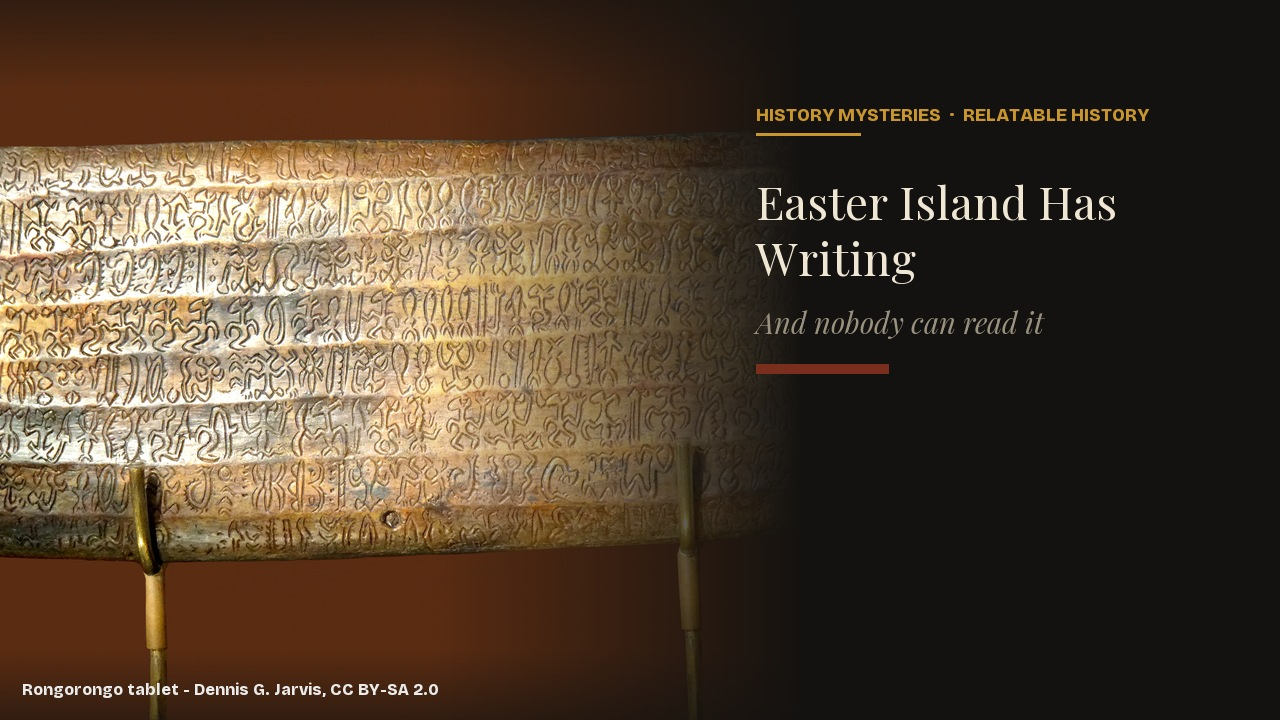
Roughly two dozen carved wooden objects, scattered across museum storerooms from Rome to Honolulu, carry a script that nobody alive can read. Not fragments of a script — a script. Distinct, repeating signs, arranged in lines, on objects made specifically to hold them. Easter Island, an island with no other documented contact with any literate culture before 1722, appears to have had writing. A century and a half of trying has not produced a single sentence anyone can confidently translate.
That combination — a real script, a total reading failure — is rare enough that rongorongo gets compared to Linear A and the Indus script, the other two members of the short list of writing systems that have resisted every attempt at decipherment. What makes rongorongo different is timing. Linear A went dark somewhere around 1450 BCE. Rongorongo was reportedly still being carved, and possibly still being read, within living memory of photography. The people who could read it were not lost to deep prehistory. They were taken away, on ships, in the 1860s, and the record just barely missed them.
What survives is a corpus, a catastrophe, one passage scholars broadly trust, one disputed claim of decipherment, and — as of 2024 — a radiocarbon date that has reopened the oldest question of all: whether Rapa Nui invented writing entirely on its own.
A missionary’s aside is the only reason we know the tablets existed at scale
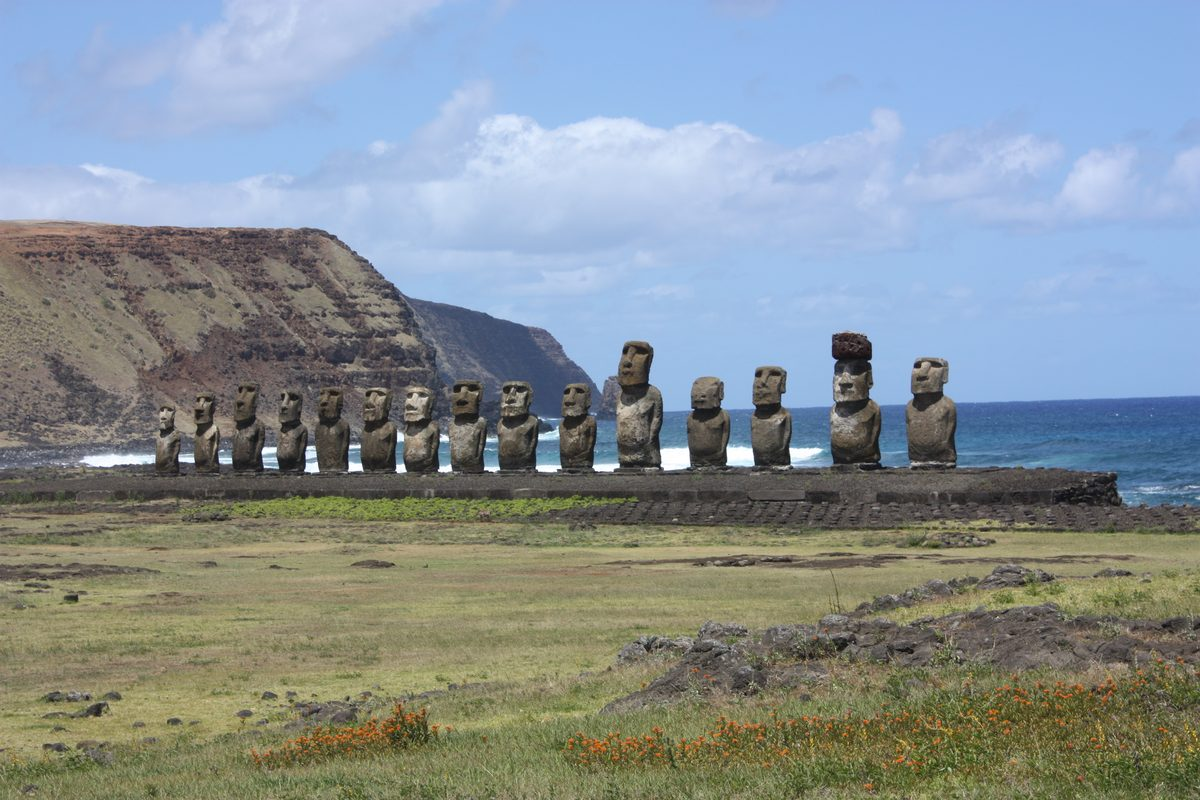
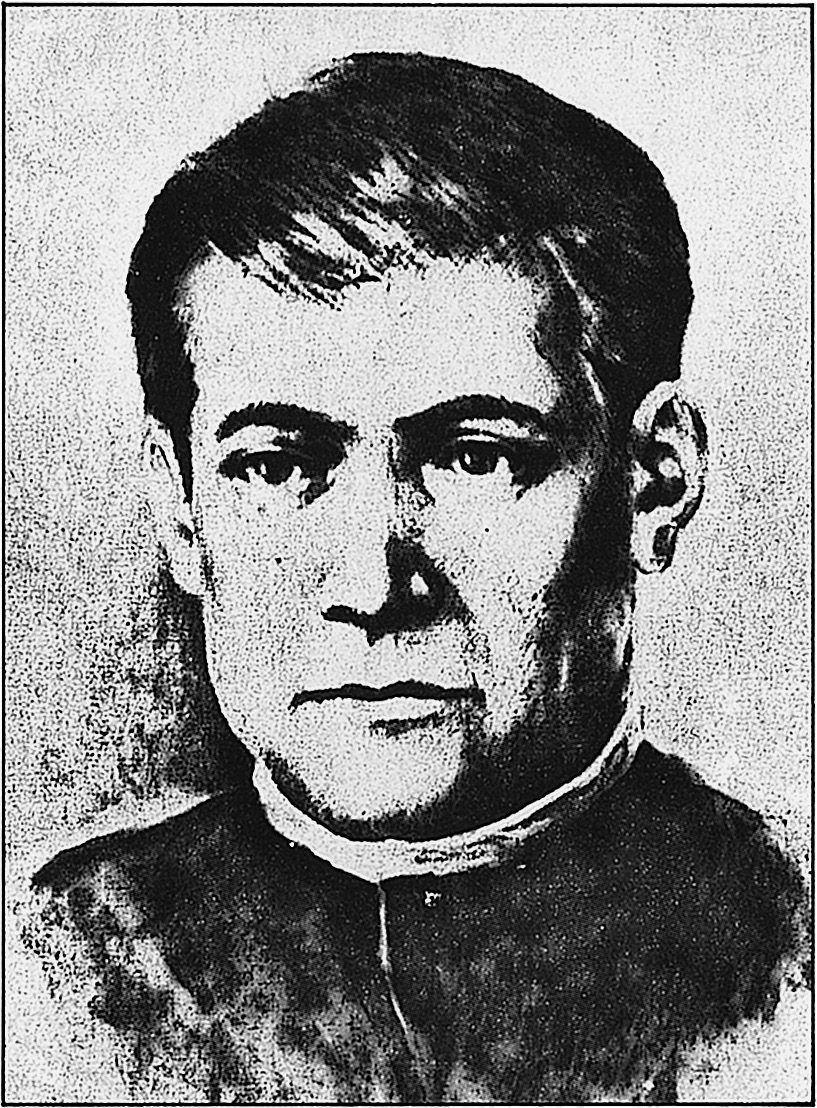
The written record starts almost by accident. Eugène Eyraud, a lay brother with the Congregation of the Sacred Hearts, lived on Rapa Nui for nine months in 1864 while trying to establish a mission. In his report back to Paris he noted, in a single passing sentence among much longer descriptions of the island’s poverty and the difficulty of his work, that almost every house held wooden tablets or staffs covered in carved figures, which the islanders seemed to treat as significant without being able to explain what the figures meant.
Nobody in Europe acted on it for four years. By the time a follow-up expedition took an interest, the demographic base that might have explained the tablets was gone. In 1862 and 1863, Peruvian ships raided the island for forced labour, taking on the order of 1,500 people — among them the reigning king and a large share of the class of chiefs and specialists who would have held ritual and genealogical knowledge. International pressure eventually forced a partial repatriation. Most of the roughly 15 people who made it back brought smallpox with them, and the epidemic that followed cut the remaining population to a few hundred within a generation. Whatever institution had trained people to read the tablets did not survive that decade.
Twenty-six objects, one reading direction nobody else uses
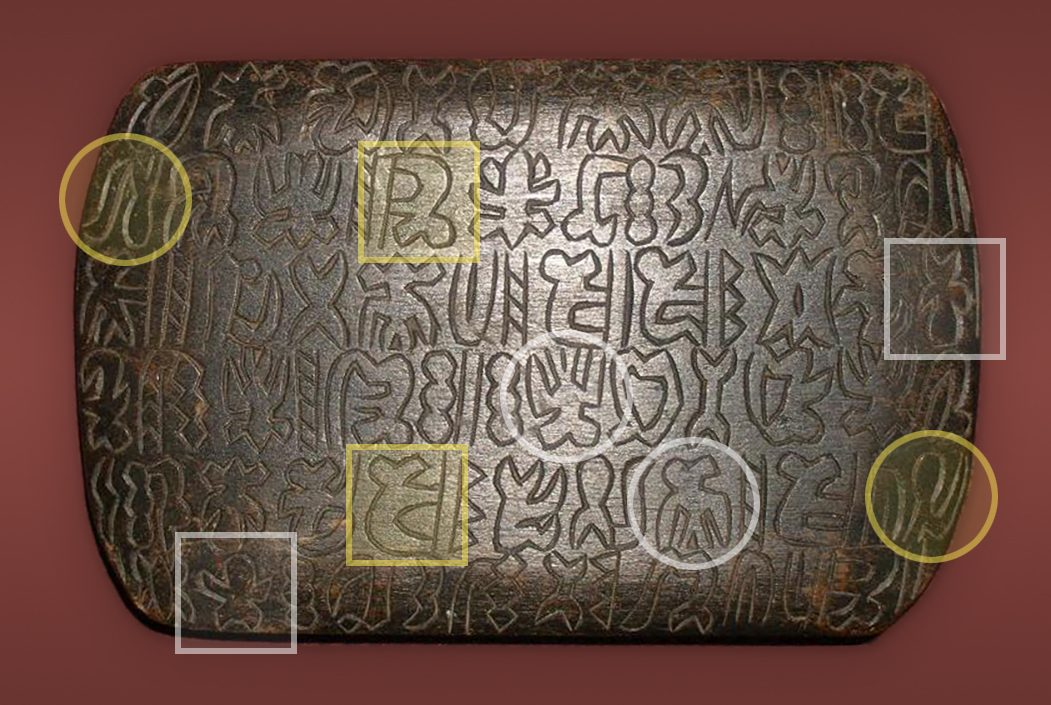
What survives today is usually put at around 26 authenticated objects, held mostly in Rome, Santiago, London, Saint Petersburg and Honolulu, with smaller holdings in Paris, Vienna and Berlin. Most are flat wooden tablets, but the corpus also includes a chief’s staff over a metre long with script running its full length, two crescent-shaped wooden chest ornaments called reimiro, and a carved figure of a birdman with glyphs cut into its crown, chest and thighs. Counts of the total glyph inventory across the corpus run to roughly 14,000–15,000 individual signs.
The reading order is what first tells you this is a deliberate system and not decoration. Rongorongo runs in what’s called reverse boustrophedon: read a line left to right, then rotate the entire object 180 degrees to read the next line, which was carved upside down relative to the one above it. Very few writing systems anywhere have ever worked this way. Its practical consequence is that any photograph of a tablet lying flat shows half its text inverted, which is easy to miss and has occasionally tripped up researchers transcribing the corpus from images rather than the objects themselves.
The one attempt at a native reading collapsed under its own inconsistency
The closest anyone came to a living informant was in 1868, when Bishop Florentin-Étienne Jaussen, based in Tahiti, acquired several tablets and located a Rapa Nui man named Metoro Tau’a Ure who claimed he could read them. Jaussen had Metoro chant through the tablets and transcribed what he said, producing what’s now called the Jaussen list — a set of glyphs matched to spoken phrases.
It did not hold up as a reading. Metoro sometimes worked through a tablet bottom to top rather than following the actual line structure, and gave different chants for the identical glyph sequence on different days, which is not how a stable reading of a fixed text behaves. The prevailing view among later scholars is that Metoro was describing the pictures the glyphs resembled — a bird glyph prompting a phrase about a bird — rather than decoding an underlying language. The Jaussen list is still used as a reference for what certain signs depict. It has never functioned as a key.
Nobody agrees on how many signs the script actually has
Thomas Barthel, a German ethnologist, spent the 1950s building the reference catalogue the field still cites by number: a rongorongo glyph is conventionally labelled with a Barthel code, the way an Egyptian hieroglyph gets a Gardiner number. His catalogue ran past 600 entries, but a large share of those are ligatures — compound signs built by fusing two or more simpler glyphs together — rather than independent characters.
Later statistical work narrowed that down considerably. Konstantin and Igor Pozdniakov’s 2007 frequency analysis of the whole corpus argued for a working inventory closer to 120 base sign shapes once ligatures and minor graphic variants are folded back into their underlying forms, covering the overwhelming majority of everything carved. Other analyses have pushed the count as low as the 50s. That range matters more than it might look: a script with a few hundred signs, each standing for a syllable, looks like language. An inventory in the dozens looks more like a fixed set of mnemonic cues for reciting material a reader already had memorised — a prompt system, not a transcript.
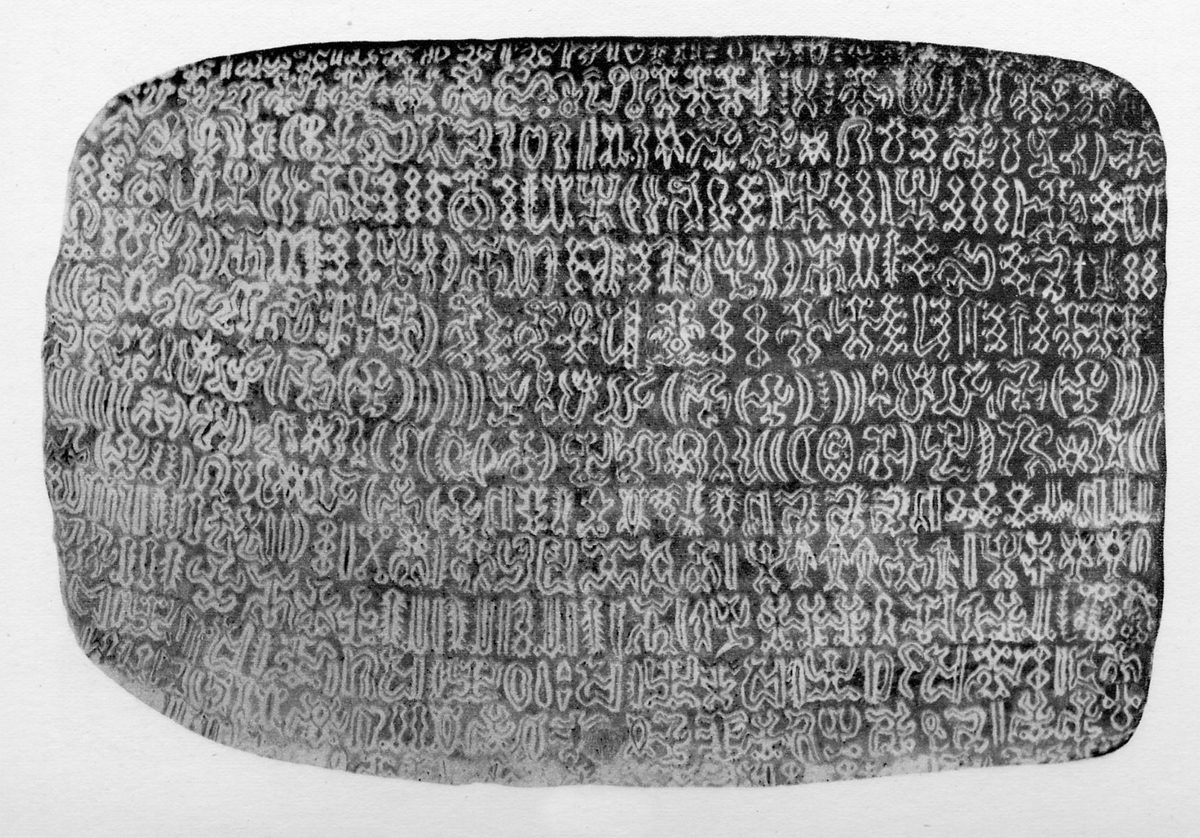
Mamari’s lunar calendar is the one passage the field actually trusts
Set against all that uncertainty, one short run of glyphs has held up for seventy years. On the tablet known as Mamari, two consecutive lines carry a repeating sequence that Barthel first proposed, and that the linguist Jacques Guy later worked out in detail, corresponds to the named nights of the Rapa Nui lunar month — including the extra, irregularly placed nights that Polynesian lunar calendars use to keep the month aligned with the moon’s actual cycle. The glyph pattern tracks the known structure of that calendar closely enough that coincidence is hard to argue.
It is a genuine result, and it is also a very narrow one. It confirms the tablets can encode real, checkable information. It does not give anyone a single verb, a name, or a sentence outside that one calendrical list. Six decades after Barthel’s catalogue, the lunar sequence on Mamari is still the only stretch of rongorongo that a working majority of specialists agree they can actually read.
Steven Fischer’s ‘procreation’ reading persuaded almost no one
The most publicised claim of a fuller decipherment came from Steven Roger Fischer in the 1990s. Working from the Santiago Staff — the longest inscribed object in the corpus — and from a creation chant that had been recorded from a Rapa Nui elder named Ure Va’e Iko decades earlier, Fischer proposed that repeating three-glyph groups on the staff followed a fixed pattern: a first glyph naming an entity, a linking glyph he read as a copulation marker, a second entity, and a fourth glyph for the offspring produced. On that reading, long stretches of the staff amount to a genealogical creation narrative, chaining pairing after pairing.
The pattern is real — the staff does contain long runs of repeating triads. What other rongorongo researchers have not accepted is that Fischer’s proposed readings of the individual signs hold up consistently across the rest of the corpus, or that the chant he anchored it to can be shown to match the glyphs rather than being fitted to them after the fact. Three decades on, the ‘procreation’ reading remains Fischer’s alone rather than a consensus finding, and most specialist treatments of the script cite it as an unresolved proposal rather than a solved passage.
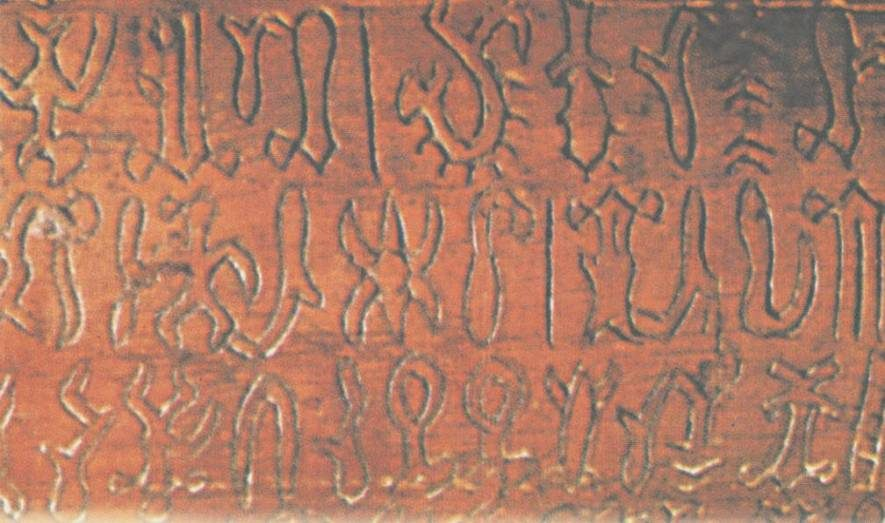
Some linguists doubt it is a full writing system at all
Underneath the specific disputes sits a harder question: is rongorongo glottographic — encoding actual language, word by word or sound by sound — or semasiographic, a system of symbols that convey meaning directly without being tied to any specific spoken sentence, the way a knotted khipu cord or a heraldic blazon can carry real information without being a transcript of speech? The computational linguist Richard Sproat has been the most visible skeptic on the glottographic claim, arguing in a widely read 2010 critique that statistical patterns used to argue rongorongo behaves like language are also produceable by symbol systems that are not language at all, and cautioning that general-science outlets had been too quick to publish decipherment claims without that distinction being ruled out.
This is not a fringe position. Since Barthel’s era, a substantial share of philologists working on the script have described rongorongo as proto-writing — a genuine notational system, but one built to jog the memory of someone who already knew the recitation, rather than a full transcript a stranger could sound out cold. If that reading is right, no decipherment in the ordinary sense — the Rosetta Stone kind, where a bilingual text hands you the key — may ever be possible, because there may be no full text sitting behind the glyphs to recover.
A 2024 radiocarbon date pushed the timeline back two centuries
The newest piece of evidence does not settle the writing-versus-mnemonic question, but it reframes the origin question. In February 2024, a team led by the philologist Silvia Ferrara radiocarbon-dated wood from four rongorongo tablets held in a religious archive in Rome. Three of the four came from trees felled in the eighteenth or nineteenth centuries, consistent with a script that developed after, or around the time of, European contact in 1722. The fourth did not fit that pattern at all: its wood dated to between 1493 and 1509, more than two centuries before any European ship is known to have reached Rapa Nui.
The team was careful about what that does and doesn’t show. Wood can be reused long after the tree that produced it was cut, so a fifteenth-century felling date is not itself proof the glyphs were carved that early. But it is the first physical evidence, as opposed to inference from the glyphs’ style, that at least one surviving object could predate any contact event that might have inspired the idea of writing. If later dating work on more of the corpus holds that pattern up, it would put Rapa Nui on a very short list of places — alongside early Mesopotamia, Egypt, China and Mesoamerica — where a society appears to have invented writing with no contact-driven model to copy.
Watch the full history
The short version of this story, with the corpus and the reading order laid out visually, runs about three minutes.

Related reading
- Why a Corn Crib’s Walls Lean Outward, and Why It Never Fell Over — another documented case where the physical evidence outran what anyone can definitively explain.
- How Home Food Drying Fed American Farms for 150 Years — another documented case where the physical evidence outran what anyone can definitively explain.
- Who Really Invented the Rickshaw? Three Rival Claims, One Vehicle — another documented case where the physical evidence outran what anyone can definitively explain.
- The Stereoscope Craze That Swept Victorian Parlours — another documented case where the physical evidence outran what anyone can definitively explain.
Twenty-six objects. Around 14,000 glyphs. One passage anyone trusts. The people who might have read the rest were taken from the island within living memory of the camera, and the record closed before anyone thought to ask them the right questions. Whether rongorongo was ever a full transcript of Rapa Nui speech, or a disciplined set of cues for reciting things its readers had already memorised, is still open. What is no longer in serious doubt is that someone on a small, isolated Pacific island worked out a way to fix meaning onto wood — possibly, per the 2024 dates, without anyone from outside ever showing them it could be done.
Shop
Steven Roger Fischer’s RongoRongo, the Easter Island Script is the standard English-language monograph on the corpus. His own proposed reading of the Santiago Staff is contested, as covered above, but the book remains the fullest catalogue and history of the script in print. Find it on Amazon.
Works cited
- Fischer, Steven Roger. RongoRongo, the Easter Island Script: History, Traditions, Texts. Oxford University Press, 1997.
- Barthel, Thomas S. Grundlagen zur Entzifferung der Osterinselschrift [Foundations for the Decipherment of the Easter Island Script]. Cram, de Gruyter, 1958.
- Pozdniakov, Konstantin, and Igor Pozdniakov. “Rapanui Writing and the Rapanui Language: Preliminary Results of a Statistical Analysis.” Forum for Anthropology and Culture, no. 3 (2007): 3–36.
- Guy, Jacques B. F. “The Lunar Calendar of Tablet Mamari.” Journal de la Société des Océanistes 92–93 (1990): 135–149. (Reprinted in Writing from Invention to Decipherment, Oxford University Press — publisher blocks automated access, cited as print.)
- Sproat, Richard. “Last Words: Ancient Symbols, Computational Linguistics, and the Reviewing Practices of the General Science Journals.” Computational Linguistics 36, no. 3 (2010): 585–594. Link.
- Ferrara, Silvia, et al. “The Invention of Writing on Rapa Nui (Easter Island). New Radiocarbon Dates on the Rongorongo Script.” Scientific Reports 14 (2024): art. 3037. Link.
- “Kōhau Roŋoroŋo: Talking Tablet.” Australian Museum. Link.
- Fischer, Steven Roger. Island at the End of the World: The Turbulent History of Easter Island. Reaktion Books, 2005. On the 1862–63 Peruvian labour raids and their demographic toll.