
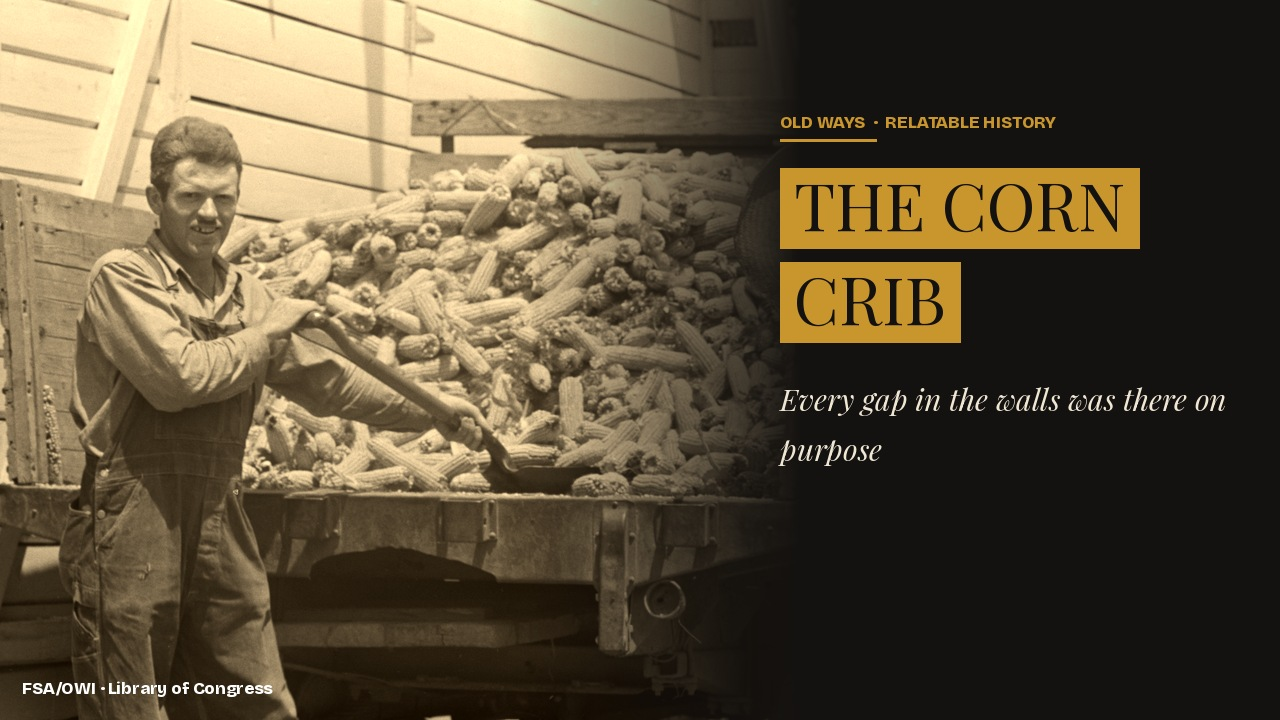
Ear corn brought in from the field in October carries about twenty percent moisture, and corn at twenty percent moisture will heat, mold and turn unfit to feed even a hog within a few weeks if it is piled somewhere the air can’t move through it. That is the entire problem a corn crib exists to solve, and it solves it with no motor, no fuel and no moving parts — only a shape.
A crib looks, at first glance, like a badly built shed: narrow, raised a foot or two off the ground on posts, its walls made of boards nailed an inch apart so daylight shows straight through, and leaning outward from bottom to top instead of standing plumb. None of that is neglect. Every element of a corn crib’s odd shape is doing a specific, measurable job, and the building disappeared from American farms almost overnight once a machine made its whole design unnecessary.
A pile of wet corn is a spoilage problem, and the crib’s shape is the answer
Corn left whole on the cob, rather than shelled loose, leaves gaps for air even when it is packed tight, and a crib exploits that by staying narrow enough that wind can reach the middle of the pile from both sides. The standard small crib ran about four feet across the floor, with sides roughly six feet high, holding about twenty-five bushels of ear corn for every foot of the building’s length. Wider than that and the center of the pile never dries; the moisture stays locked in and the corn rots from the inside while the outer layer looks fine.
The outward lean did two separate jobs at once. Water running down slats that tilt outward drips clear of the boards underneath instead of soaking into them, so the siding lasted far longer than a vertical wall would have in the same weather. And as the corn settled over the winter, it pressed outward against the walls; a crib built with that lean already built in stayed tight, where a straight-sided bin would have bulged and eventually failed at the seams. Later cribs, once machine-milled beveled boards became widely available, sometimes squared the sides off — but the taper is the older and more common form, and it is the one still standing along back roads today.
Raising the floor on piers did a third job, keeping the bottom layer of corn off ground damp that would otherwise wick straight up into it. Put those three decisions together — narrow, tapered, elevated — and a crib full of twenty-percent corn in October would be down to the thirteen or fourteen percent moisture that keeps indefinitely by the time deep winter set in, entirely on wind.
The design predates European settlement in North America
The corn crib is not a colonial invention. Native farming peoples across the eastern half of the continent stored maize in raised, ventilated structures well before European contact, and settlers adopted the approach directly rather than working it out themselves. The National Park Service, which maintains a crib at Maryland’s Thomas Stone National Historic Site, describes the building’s overall function as continuous with what “was first created by the American Indians as a means of storing and drying corn.”
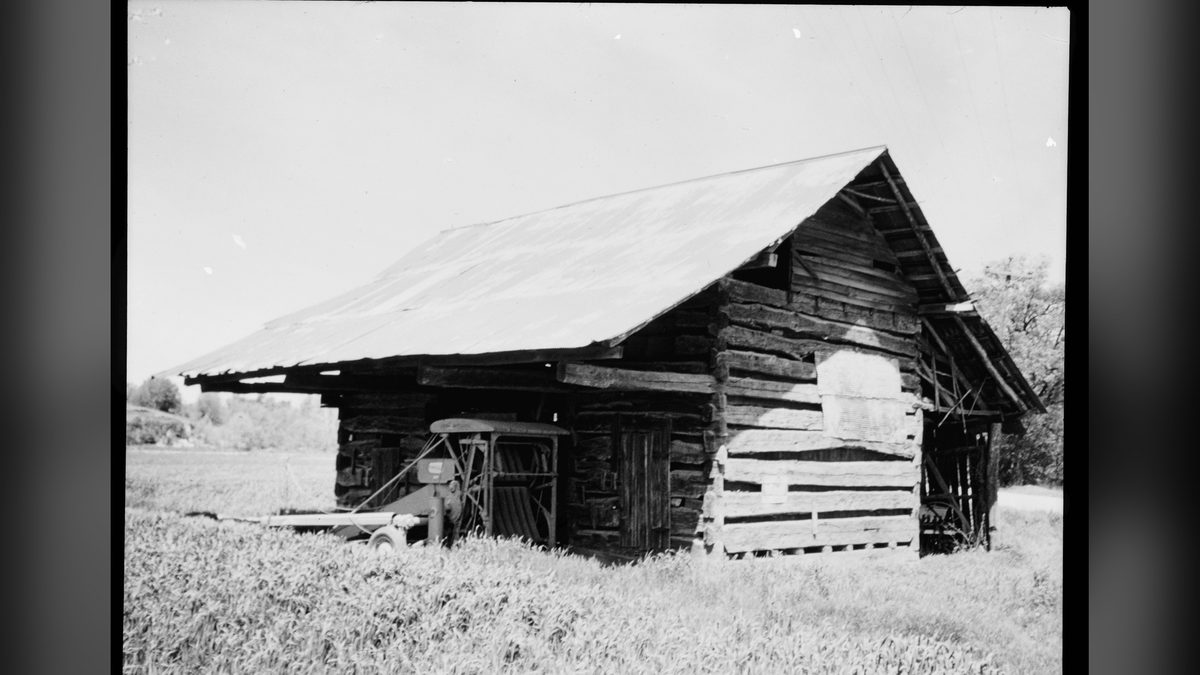
The earliest cribs built by colonial and early-Republic farmers were simple pens of unchinked logs — stacked without the mud-and-stick sealing used on a cabin wall, so the gaps between logs did the same ventilating job that milled slats would do later. In parts of what became West Virginia, log cribs were commonly built in a V-shaped plan, walls slanting inward toward the floor so the base was smaller than the roofline above it — the same taper principle, worked out independently in log rather than board construction. Sawn lumber and regularly spaced slats did not become standard until well into the nineteenth century, and log construction persisted on smaller farms alongside it for decades after.
Filling a crib by hand was the hardest stretch of the farm calendar
Before mechanical pickers were common, every ear that went into a crib was pulled from the stalk and stripped of its husk by a person walking the rows, usually wearing a metal hook strapped to the palm or thumb to tear the husk open faster. A good husker could clear an ear roughly every two seconds and cover eighty to ninety bushels in an eight-hour day, a pace kept up for weeks at a stretch through October, November and sometimes into December. In 1917, American farmers had 111 million acres planted to corn, the largest corn acreage the country has ever recorded — and essentially all of it, at that date, still came off the stalk by hand.
That labor became competitive sport in its own right. State and national husking contests ran from 1924 to 1941, judged not just on speed but on cleanliness — points were deducted for ears left behind in the field or husks left clinging to the ear. The contests grew from a local curiosity into a genuine spectator event: the 1940 national final in Iowa drew roughly 126,000 people to watch twenty-one competitors from eleven states. A top contestant could strip and throw an ear toward the wagon in a little over a second, a motion fast enough that photographs of the era often catch three ears at once — one in the air, one just released, one being torn open.

Rats were the one problem the design never fully solved
Every feature aimed at drying corn also made it easier for a rat or field mouse to reach it, since the same gaps that let wind through let a small animal through too. Farmers answered this the way they answered most crib problems, with the shape of the building rather than a chemical or a trap: piers were capped with an inverted metal pan or a sheet-metal collar, since a rodent cannot climb past an overhang it cannot get its claws around. Some cribs were further lined with hardware cloth along the lower courses of siding.
None of it was airtight defense, and farm accounts from the period describe the crib as much a small ecosystem as a building — the place the barn cats were expected to patrol, and occasionally the place a black snake was deliberately caught elsewhere on the farm and released into the corn pile to hunt. A crib that fed the family also, in a modest way, fed whatever could get past the rat guards.
Larger operations scaled the same idea up with double cribs and elevators
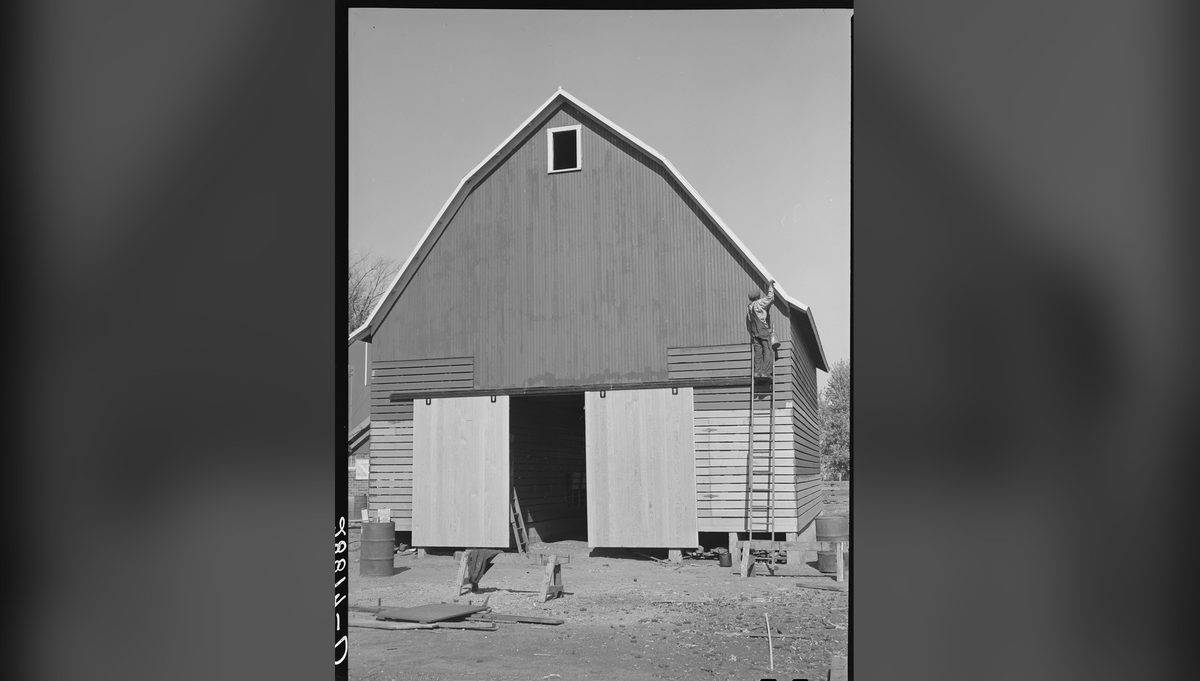
Where a farm grew enough corn to need more than one small crib, the standard solution was the double crib: two long bins built side by side, eleven or twelve feet apart, joined under a single roof with a loft above and a center driveway wide enough to back a loaded wagon into, out of the rain. Each bin in a double crib was typically around eight feet wide, still narrow enough for the wind to reach the middle, with loading and unloading doors facing the sheltered driveway rather than the open yard.
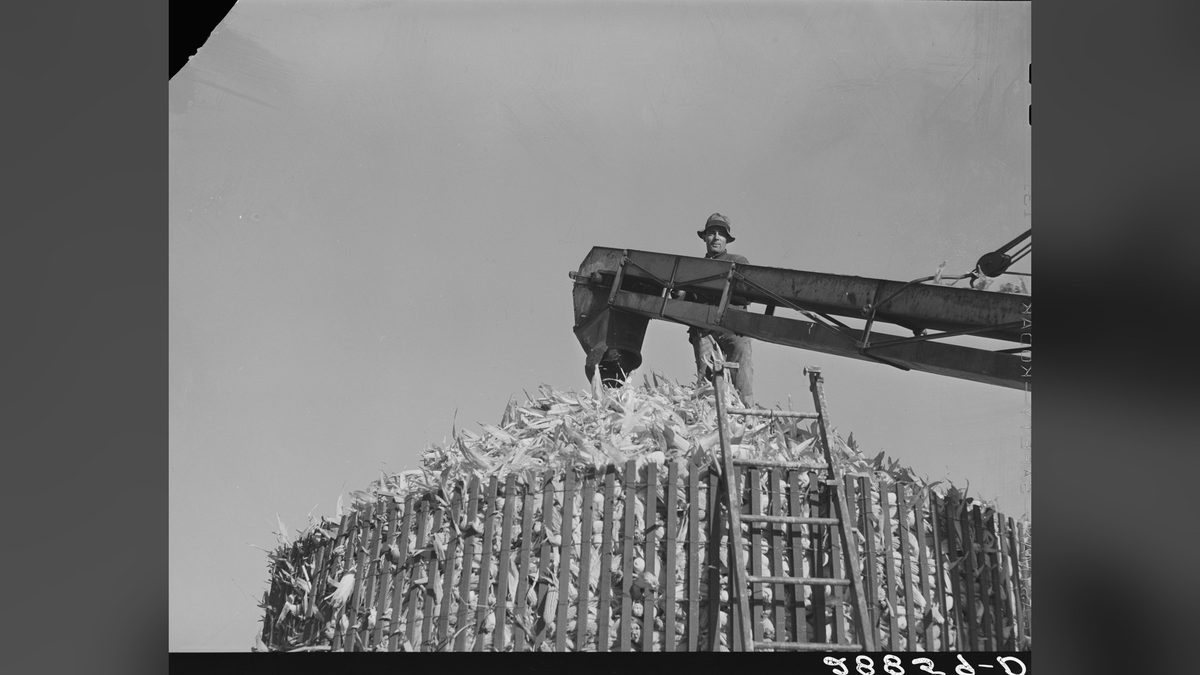
Loading itself mechanized well before the crib did. Portable elevators, first horse-powered and later run off a tractor, appear in farm photographs from the 1890s onward, lifting ear corn up a chute and dropping it through a hatch cut into the crib’s roof instead of requiring it to be pitched by hand through a side door. On the largest operations, a central bucket elevator paired with a cross-conveyor in the driveway could move a wagonload into storage with no hand scooping at all. The crib’s basic shape never changed to accommodate any of this; only the method of getting corn to its door did.
One harvesting machine ended three centuries of cribs within a decade
What finally retired the corn crib was not a better crib. It was a machine that removed the reason a crib needed to exist at all. In 1955, John Deere introduced the No. 10 corn attachment for its self-propelled Model 45 combine, letting a single pass through the field pick, shell and clean corn the same way a combine already threshed wheat or oats. Shelled kernels, unlike ears on the cob, pack tight enough that air cannot move through a deep pile — the entire physical principle a crib depends on stops working the moment the corn is off the cob. A crib had nothing to offer shelled corn.
The USDA estimated roughly 650,000 mechanical corn pickers were still in use on American farms in 1955, the year the corn combine arrived, which gives a sense of how total the changeover still had to be at that point. Deere’s own sales literature framed combining as an efficiency argument as much as a labor one: field losses roughly halved compared to a picker, a week or two gained at the start of the harvest window, and an end to paying a commercial sheller three to five cents a bushel to shell ear corn afterward. Farmers who switched needed a new kind of infrastructure instead — sealed steel bins and propane-fired dryers to bring early-harvested, wetter shelled corn down to safe storage moisture artificially, since the wind could no longer be relied on to do that job for free.
The Pennsylvania Historical and Museum Commission’s agricultural field guide puts the outcome plainly: corn cribs “became uncommon after the mid-1950s,” and by the end of that decade the wooden, slatted crib that had stood on American farms in some form for roughly three hundred years was no longer being built. The ones that survive today mostly do so by accident — too solid to bother tearing down, repurposed for machinery storage or simply left standing, leaning outward on their piers exactly as designed, long after the corn that shape was built to dry stopped coming.
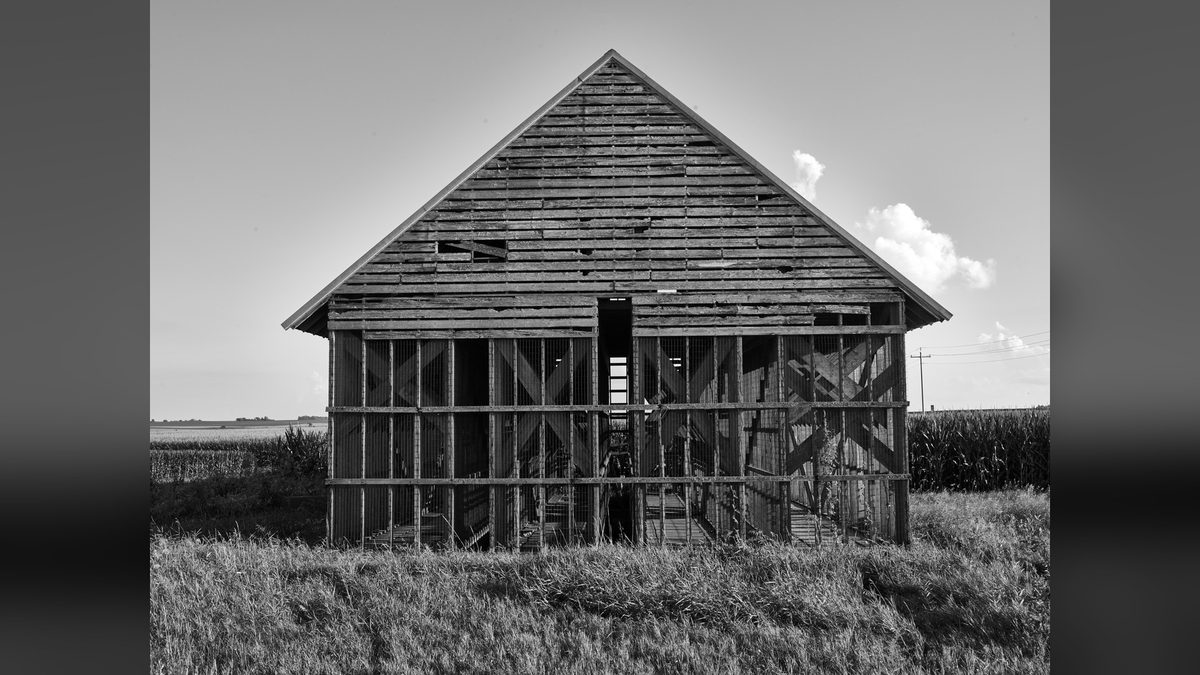
What makes the corn crib worth stopping for is how little technology its solution required. Nobody had to invent a material, a chemical or a power source to keep a farm fed through winter — the whole answer was choosing the right proportions for a wooden box and putting it on stilts. That is also exactly why the building vanished as fast as it did: the moment shelled corn and mechanical drying became the norm, a shape built entirely around ear corn and moving air had nothing left to do.
It is worth noticing, too, how short the overlap was between the crib’s three centuries of use and the tools that finally beat it. Mechanical pickers had already been common for twenty or thirty years before the 1955 combine attachment arrived, and none of them threatened the crib at all — a picker still delivered whole ears that needed exactly the storage a crib provided. It took a machine that changed the physical form of the harvested corn itself, not just the speed of harvesting it, to make the building obsolete. The lesson generalizes past corn: a tool can automate a task for decades without threatening the infrastructure built around the old way of doing it, right up until something changes what the infrastructure was actually built to hold.
Watch the full history
The video version walks through the same taper, the husking pace and the 1955 turning point in just under four and a half minutes.

Related reading
- How Home Food Drying Fed American Farms for 150 Years
- Who Really Invented the Rickshaw? Three Rival Claims, One Vehicle
- The Full History of the German Beer Stein
- The WPA Sanitary Privy Program That Built Two Million Outhouses
From the shop
The one book written entirely about this building type: Keith E. Roe’s Corncribs: In History, Folklife, and Architecture (Iowa State University Press) traces the form from its Native origins through the wire-mesh cribs of the 1950s. See it on Amazon.
Works cited
- Roe, Keith E. Corncribs: In History, Folklife, and Architecture. Ames: Iowa State University Press, 1988.
- Rikoon, J. Sanford. Review of Corncribs: In History, Folklife, & Architecture, by Keith E. Roe. Indiana Magazine of History 85, no. 2 (1989): 175–177. Link.
- Moore, Sam. “The Disappearing Corncrib.” Farm Collector, September 5, 2014. Link.
- “Corn Crib.” Pennsylvania Agricultural History Project, Pennsylvania Historical & Museum Commission, Field Guide. Link.
- “Corn Crib.” Thomas Stone National Historic Site, National Park Service. Last updated July 24, 2024. Link.
- Hughes, Ralph. “Happy 50th, Corn Combine.” Farm Collector, January 26, 2006. Link.
- McKinley, Don. “The Right Tool for the Job: Husking Corn by Hand.” Farm Collector, October 14, 2015. Link.
- Long, Scot E. “Corncribs.” e-WV: The West Virginia Encyclopedia, West Virginia Humanities Council. Last revised February 20, 2024. Link.