
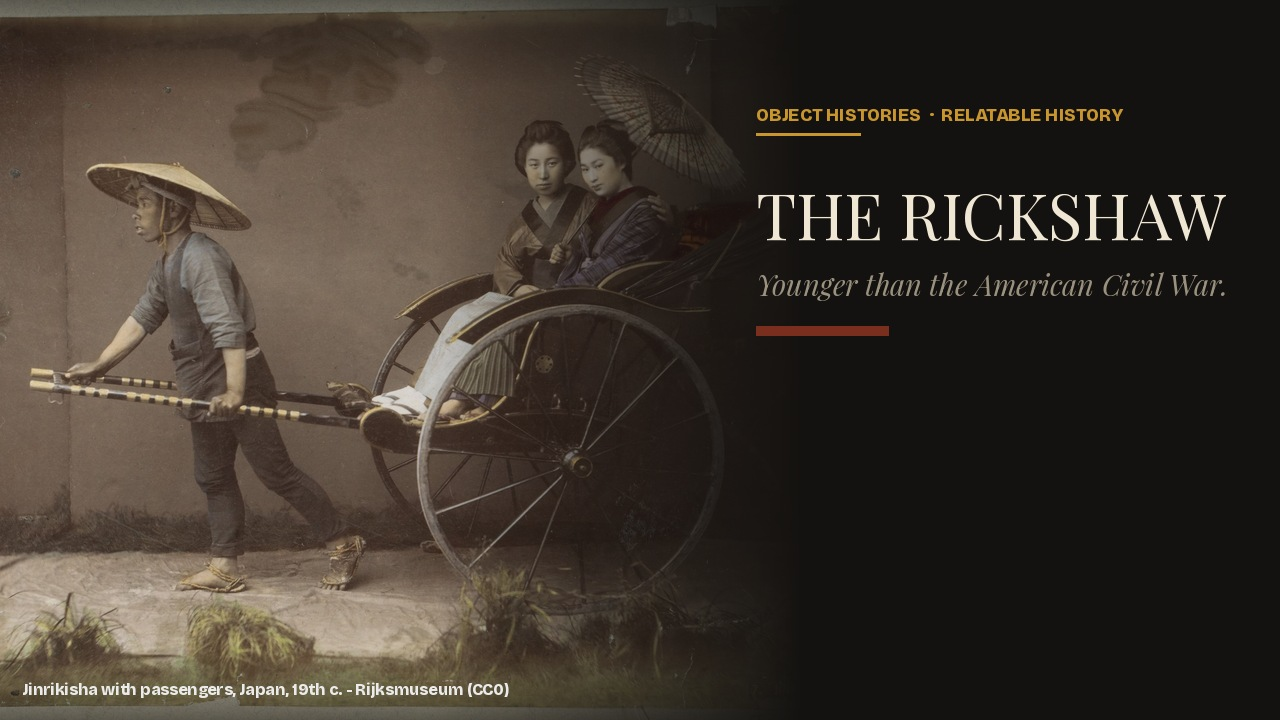
In the summer of 1869, in and around Tokyo and the port of Yokohama, at least three different parties built a light, two-wheeled, human-pulled cart within a few months of one another, and each was convinced the idea was theirs alone. Two of them were Japanese tradesmen who had never met the third: an American Baptist missionary trying to solve a domestic problem for his sick wife. Japan had no patent office in 1869, so there was no registry to consult and no priority date to point to. A century and a half later, the argument still has not been settled, and it probably never will be.
That dispute is worth taking seriously rather than shrugging off, because it says something true about how the rickshaw actually came to exist: not as one inventor’s flash of insight, but as an answer several people reached at almost the same moment, because Japan had just removed the one thing stopping anybody from reaching it.
Nobody agrees on who built the first one
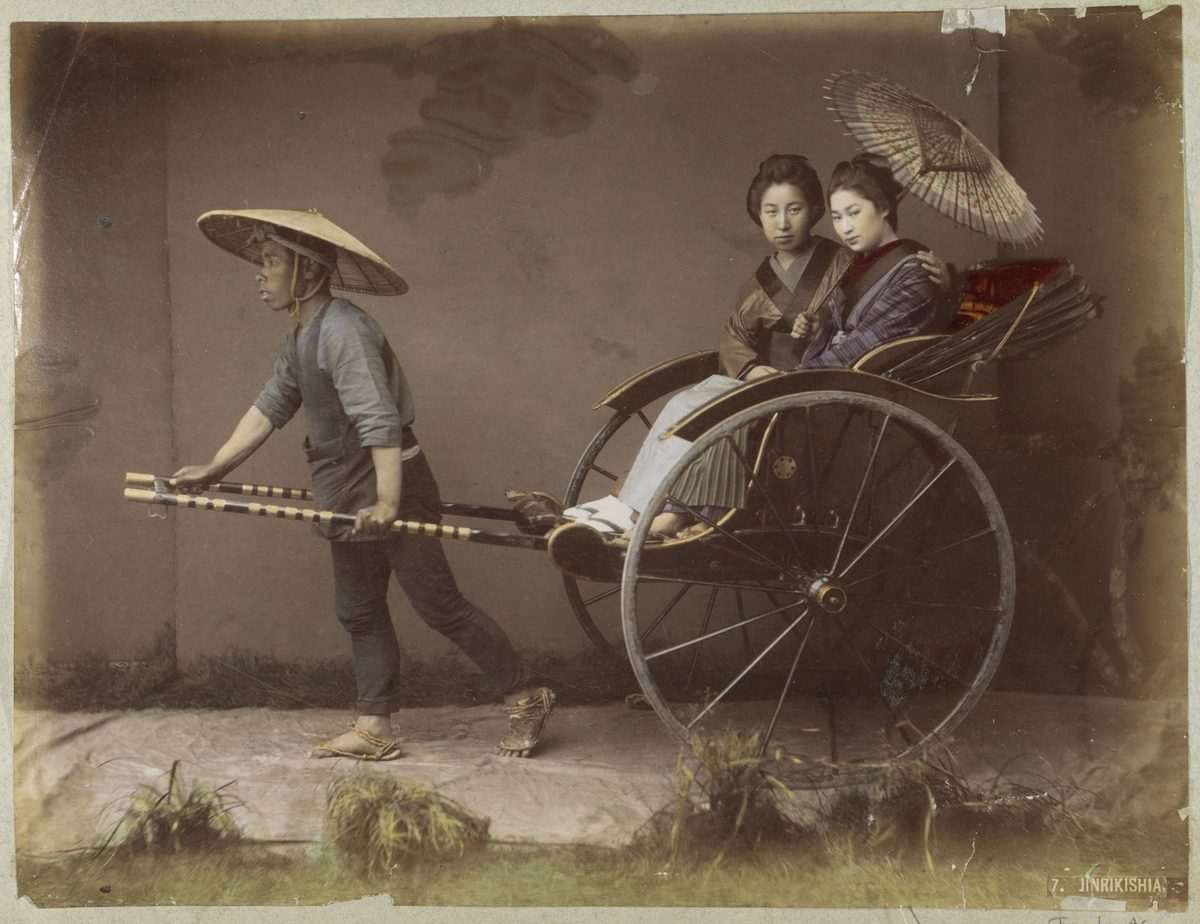
The version accepted across most of Asia names three Tokyo tradesmen: Izumi Yosuke, a man variously described as a chef or day-labourer; Suzuki Tokujiro; and Takayama Kosuke, a cartwright. Suzuki is said to have raised the idea with Izumi in February 1869, and by July the pair had brought in Takayama to actually build a working prototype. What survives in the record is not the workshop conversation but the paperwork: on 22 March 1870 the trio applied to the Tokyo city government for a licence to manufacture and operate the vehicle, and for a time afterward anyone who wanted a new jinrikisha built needed their authorisation.
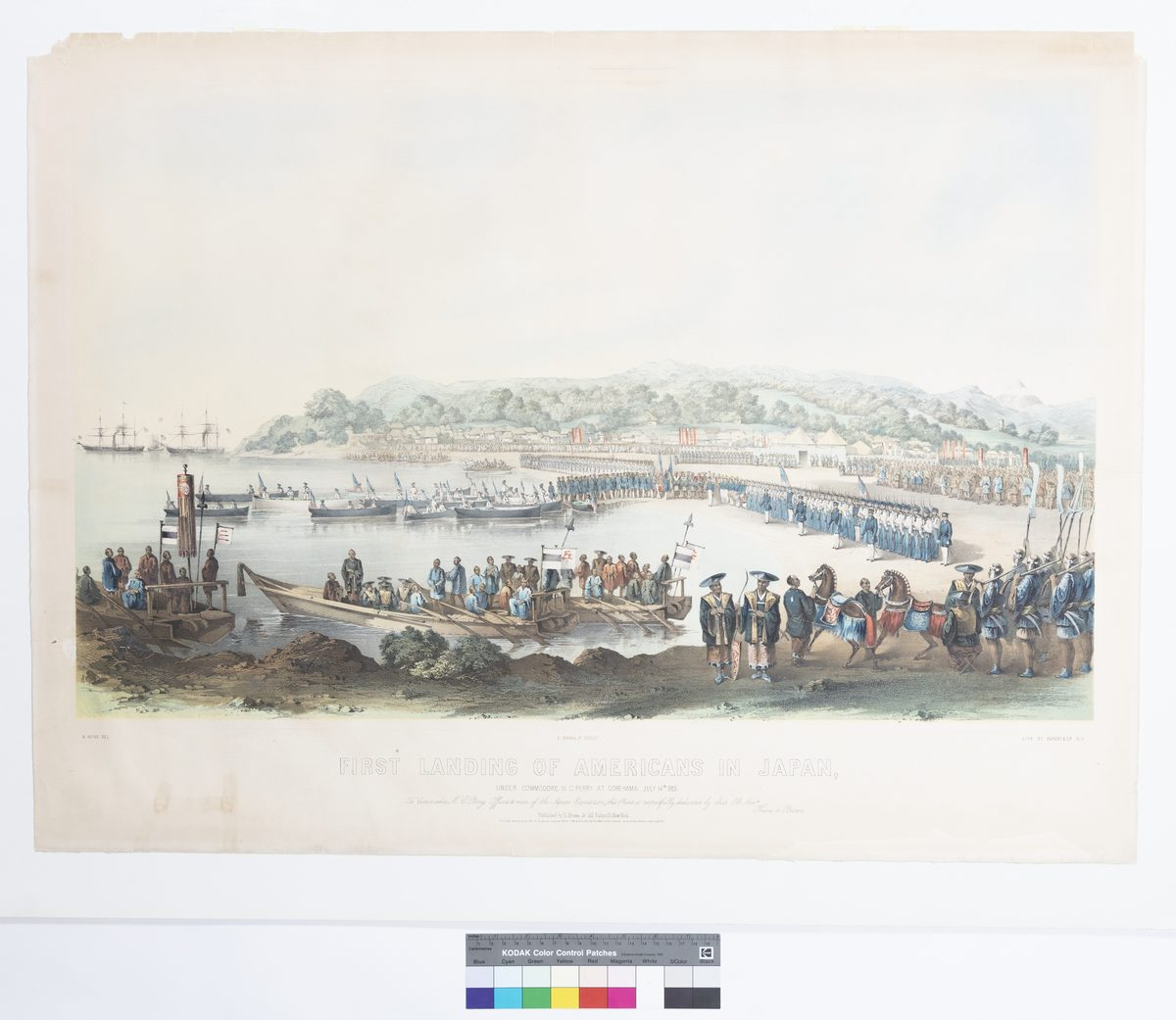
Set against that is the story told for generations in a cluster of villages on Keuka Lake in upstate New York, about a local man named Jonathan Goble. Goble had first seen Japan in 1853, as a United States Marine aboard the ships of Commodore Matthew Perry’s expedition — the one that forced the country’s ports open at gunpoint. He returned years later as a Free Baptist missionary in Yokohama, and his wife Eliza was an invalid who struggled to get around the city on foot. According to the family account, Goble wrote to a wagonmaker back home, Frank Pollay, describing a light two-wheeled carriage a man could pull, and had a Japanese carriage-builder construct one to the same design in Yokohama in 1869 — a year, on this telling, ahead of the Tokyo trio’s licence.
Neither claim rests on much beyond testimony. Goble’s original letter to Pollay has not survived, and Goble had a reputation, even among people sympathetic to him, as a self-promoter prone to exaggeration. But Charles O. Shepard, the American consul in Yokohama at the time, wrote a quarter-century later that the jinrikisha had been unknown in the city before Goble introduced it. In 1952 a newspaper tracked down Andrew Wheeler, the grandson of the North Urbana blacksmith who cast the ironwork, who recalled seeing the wooden pattern for Goble’s carriage still hanging in his grandfather’s shop rafters as a boy. It is thin evidence, but it is not nothing.
And there is a third possibility that both origin stories tend to flatten: the idea of a passenger cart pulled by one man was not new anywhere in 1869. A British diplomat in Japan described people riding in human-drawn freight carts as early as 1867. Some historians have pointed to an illustration of a baby carriage in an 1860 issue of the American magazine Godey’s Lady’s Book as a possible model Goble could have seen; the Encyclopaedia Britannica, for its part, has suggested the whole concept descends from the eighteenth-century French brouette, a one-wheeled passenger barrow. The honest position is that the rickshaw did not require a genius to invent it in 1869 — it required only that wheeled passenger transport stop being illegal, which is a very different kind of event, and one with a single, well-documented cause.
Two and a half centuries of banned wheels made the invention possible
From 1603 until 1868, Japan was governed by the Tokugawa shogunate, a military government that ruled from Edo and kept the country almost entirely closed to the outside world. The shogunate also kept tight control over its own domestic roads, for a reason that had nothing to do with comfort or convenience: a government worried about rebellion among its regional lords does not want those lords moving troops and supplies quickly. The five great highways radiating from Edo were genuinely well engineered, stone-paved in long stretches and lined with regularly spaced inns and checkpoints, but they were built for people on foot. Wheeled vehicles for passengers were banned outright, and only the highest-ranking samurai were even legally permitted to travel on horseback.
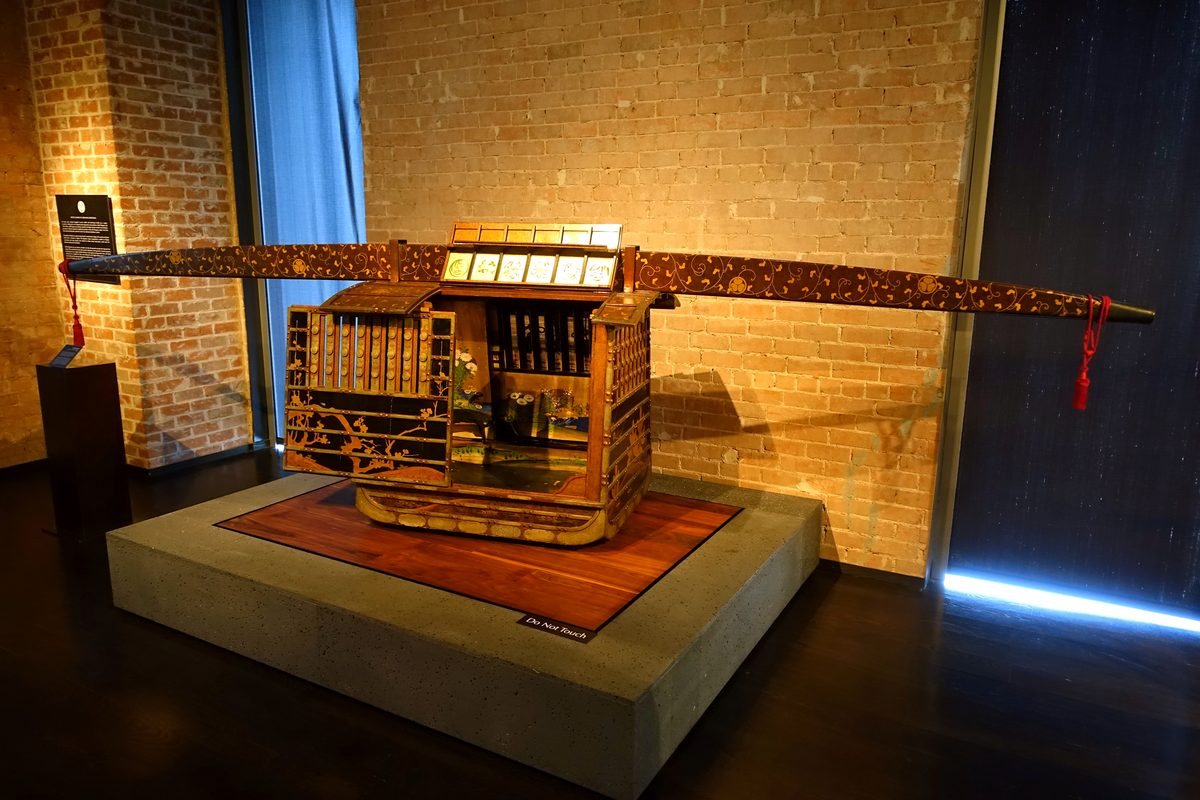
Everyone else who could afford not to walk travelled by kago: a basket or box slung from a single pole and carried at a jog by two bearers. The grander version, the norimono, was a fully enclosed, lacquered palanquin reserved for daimyo and senior officials. Both were slow by any standard that mattered later — a pair of men carrying a load on their shoulders cannot sustain a fast pace for long, which is why relays of fresh bearers waited at post stations along the busiest routes.
The Tokugawa shogunate collapsed in 1868, toppled in the upheaval that installed the Meiji emperor and became known as the Meiji Restoration. Among the huge volume of feudal law the new government dismantled in its first two years was the ban on wheeled passenger vehicles. Roads that had been kept deliberately foot-friendly began to be built and resurfaced for wheels. The jinrikisha, whichever workshop actually produced the first one, is best understood as the single fastest response to that one specific legal change: take the kago off the bearers’ shoulders, and put it on an axle.
The maths of running a man instead of feeding a horse
What happened next is the part almost nobody argues about, because the numbers were tracked at the time. By 1872, three years after the first prototypes, Tokyo alone had roughly forty thousand jinrikisha on its streets. By 1876 the whole of Japan had something on the order of one hundred and thirty-six thousand. No patent constrained any of this growth: once the Tokyo trio’s original licensing requirement lapsed, workshops anywhere in the country could and did copy the design freely, which is exactly why adoption looks less like a product launch and more like a wildfire.
The economic logic was blunt. A horse needs stabling, feed, a groom and, in a country that had barely begun importing them at scale, was simply not widely available as private transport. A man needed no capital outlay beyond the vehicle itself and was, in the labour market of 1870s Japan, available in large numbers at low wages. The kago bearers who had made a living carrying palanquins were the trade’s most natural recruits, and most of them simply swapped their pole for a set of shafts. A single puller on a reasonable road could move one passenger several times faster and farther than two exhausted bearers, which is the entire commercial case for the vehicle in one sentence.
The empire exported it faster than almost any vehicle in history
The jinrikisha left Japan within four years of being invented. In 1873 a French national named Menard petitioned the authorities of the French Concession in Shanghai for permission to bring the vehicle to China; the following year he imported three hundred of them and opened what amounted to China’s first rickshaw company. Chinese contemporaries translated the Japanese name directly as renliche, human-power vehicle, but in Shanghai the everyday name became huangbaoche, the yellow hire-car, after the paint colour licensed vehicles were required to carry. Hong Kong received its first rickshaws the same year, 1874. Singapore followed in 1880, its first consignment shipped in from Shanghai; Beijing got them by 1886.
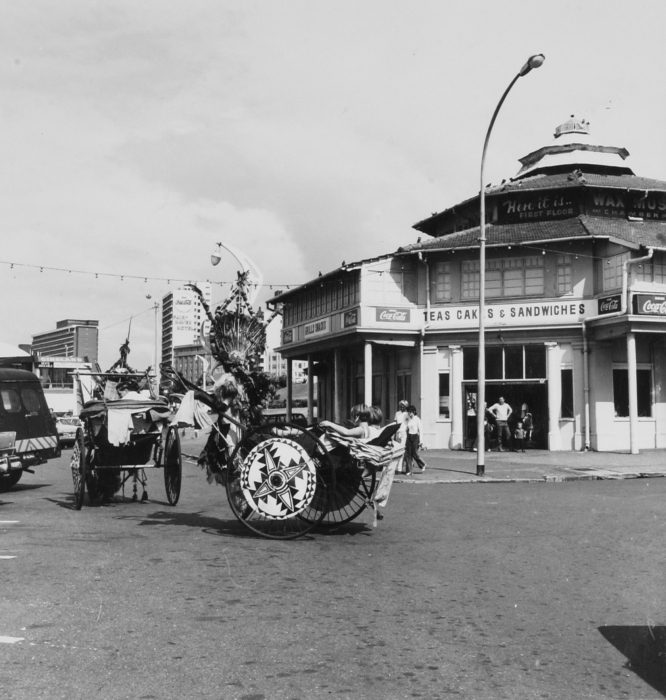
The vehicle kept travelling well outside Asia’s treaty ports. In 1892 it reached Durban, in the British colony of Natal, brought in to solve an ordinary transport shortage around the docks and town centre. Zulu and Mpondo migrant labourers took up pulling as work, and the vehicle picked up a name that had nothing to do with Japan or England: amahashi, the horse. Around the turn of the century, Durban’s pullers began wearing an increasingly elaborate headdress of beadwork, feathers and a double set of cattle horns, one pointing up and one down. The scholar Hlonipha Mokoena has argued that this was not a colonial costume imposed on the men but a form of self-presentation they built themselves, drawing on the cultural weight of cattle in Zulu life to claim a visible authority that the job itself did not otherwise carry. The look became so associated with Durban that it now appears on postcards and tourist board material with barely a mention of where the men or the practice actually came from.
Pulling a rickshaw was some of the hardest paid work in Asia
None of this spread was gentle on the men doing the pulling. In 1920s Beijing, the historian David Strand has calculated, something like sixty thousand men were taking as many as half a million fares a day in a city of just over a million people; the sociologist Li Jinghan, surveying the trade at the time, estimated that one in six Beijing men between sixteen and fifty pulled a rickshaw for a living. Very few of them owned their vehicle. Most rented one by the shift from a garage owner, sometimes sleeping in the garage itself when they could not afford lodging elsewhere, which meant a slow day left a puller not merely unpaid but in debt for the rental by nightfall.
The physical toll was severe and well documented: pullers routinely covered twenty to forty kilometres a day through unpaved streets and dense traffic, breathing the dust and exhaust of every city they worked in, and respiratory disease shortened careers that were rarely long to begin with. Lao She’s 1937 novel Rickshaw Boy — still the single most widely read account of the trade, in China or outside it — follows a young Beijing puller whose entire ambition is to own the vehicle he pulls, and whose attempt at that modest goal is ground down by exactly the economics Strand later quantified. It is fiction, but the arithmetic in it is not invented.
It never really died — it just changed its engine
The pulled rickshaw’s decline followed directly from the same force that had produced it: a cheaper way to move a person. Electric trams, then motor buses, then taxis undercut the one advantage the rickshaw had ever offered, which was simply being available where nothing else was. Japan’s own pullers were largely gone by the 1940s. In the People’s Republic of China the trade was abolished as a matter of policy after 1949, and Shanghai’s last licensed pulled rickshaws came off the streets in the mid-1950s.
Kolkata is the conspicuous exception, and its holdout has been a source of civic embarrassment to the West Bengal government for decades rather than a point of pride. Officials there have been announcing the imminent end of hand-pulled rickshaws since at least 1976; a formal ban was legislated in 2006 on the grounds, as the state’s chief minister put it at the time, that it was offensive to see one man sweating to pull another. Two decades on, thousands of pullers — mostly seasonal migrants from Bihar with no better paid alternative on offer — are still working the city’s narrower lanes, in the one major world city where the original vehicle, not a descendant of it, remains part of daily transport.
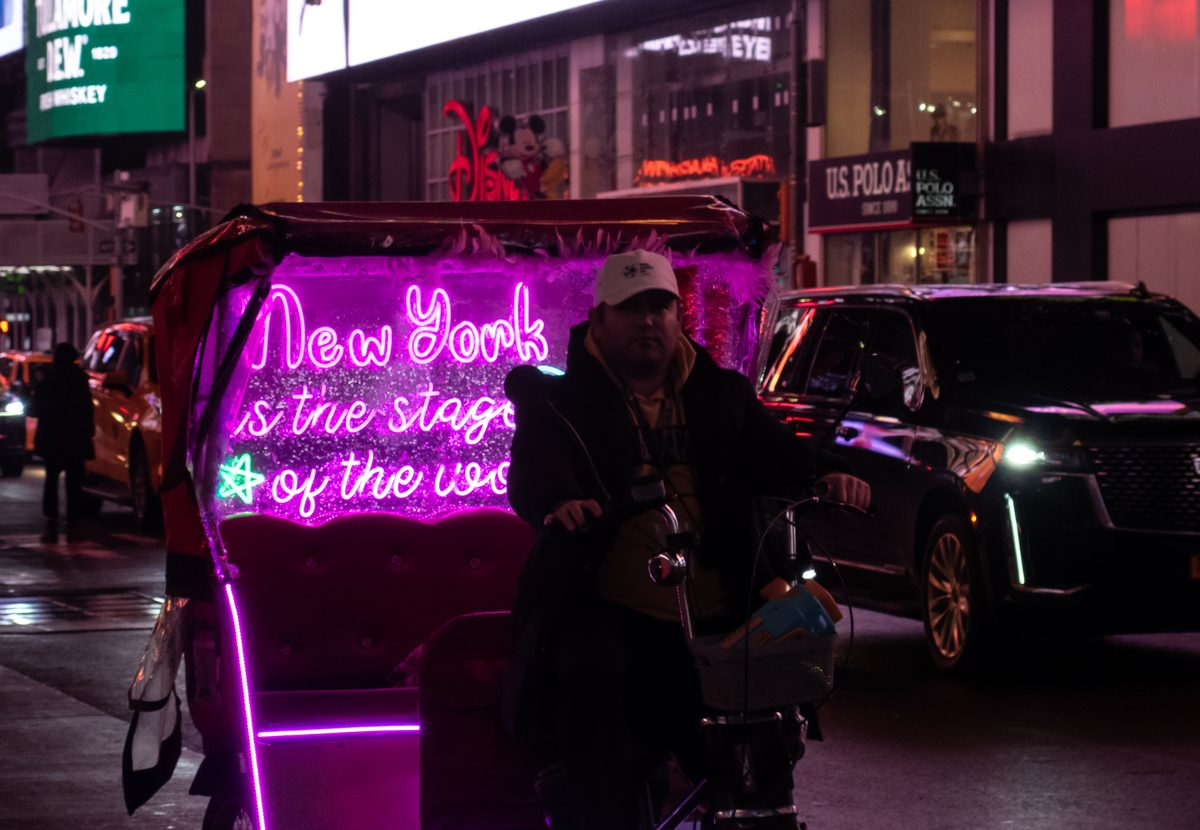
Everywhere else, the idea outlived the running man by putting him on a bicycle. Cycle-powered versions appeared in Singapore as early as 1914, crudely built and short-lived, but a second wave from 1929 caught on for good: within six years pedal-powered trishaws outnumbered hand-pulled rickshaws on Singapore’s streets, and the format spread on to Bangkok, Jakarta and beyond through the 1930s. That vehicle, not the original, is the one still working tourist districts and courier routes from Manila to Manhattan today. The wheels stayed. The shafts stayed. It is only the man between them who no longer has to run.
Watch the full history
The video version covers the same invention and the same spread in about seven minutes, built entirely from period photographs and prints.

Related reading
- The Clothespin Patent History Behind America’s Favorite Free Dryer
- The Full History of the German Beer Stein
- The WPA Sanitary Privy Program That Built Two Million Outhouses
- How the Sedan Chair Actually Worked, and Why It Started as a Scandal
Shop
Books referenced above, or in the video’s own research:
- Lao She, Rickshaw Boy: A Novel
- David Strand, Rickshaw Beijing: City People and Politics in the 1920s
- W. G. Beasley, The Meiji Restoration
Works cited
- Steele, M. William. “Mobility on the Move: Rickshaws in Asia.” Transfers 4, no. 3 (2014): 88–107. Link.
- Strand, David. Rickshaw Beijing: City People and Politics in the 1920s. University of California Press, 1989. Link.
- Fung Chi Ming. Reluctant Heroes: Rickshaw Pullers in Hong Kong and Canton, 1874–1954. Hong Kong University Press, 2005.
- Lao She. Rickshaw Boy [Luotuo Xiangzi], 1937. Translated by Howard Goldblatt. Harper Perennial, 2010.
- Harrison, Kirby J. “The Yankee Rickshaw.” Invention & Technology, Fall 1991. Link.
- Mokoena, Hlonipha. “The Rickshaw Puller and the Zulu Policeman: Zulu Men, Work, and Clothing in Colonial Natal.” Critical Arts 31, no. 3 (2017): 1–16. Link.
- National Library Board Singapore. “Trishaw.” Infopedia.
- Perrottet, Tony. “The Way of the Shogun.” Smithsonian Magazine, July 2020. Link.
- Trillin, Calvin. “Last Days of the Rickshaw.” National Geographic, April 2008. Link.