
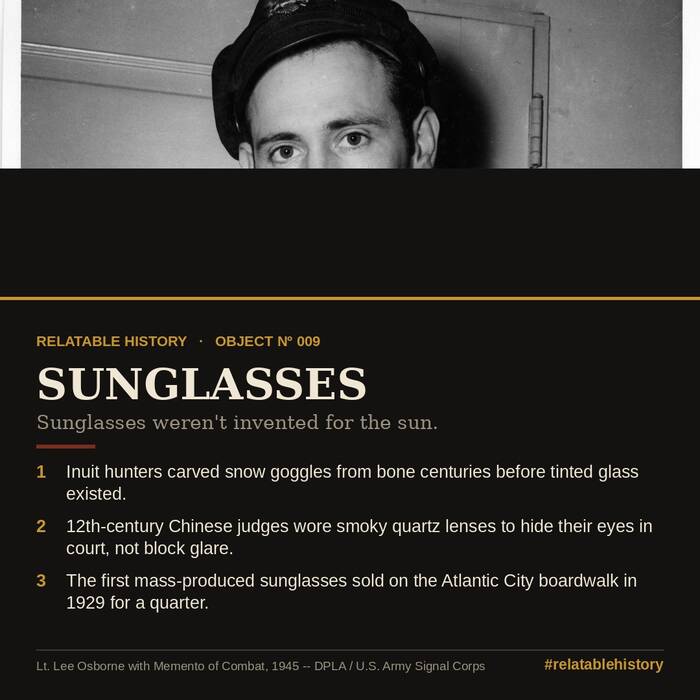
In the courtrooms of twelfth-century China, a judge who needed to keep his verdict unreadable did not practice a poker face. He put on a pair of sunglasses. The lenses were ground from smoky quartz, dark enough to hide where his eyes had gone — toward a witness, away from a confession, back to the clerk recording the testimony. A British museum that holds a later pair of Chinese tinted eyewear describes precisely this use: judges wearing dark lenses in court so that witnesses and litigants could not read their reactions.
A later pair in the same museum’s collection, lensed with gauze mesh rather than quartz and sourced from the household of a Chinese official in Zhenjiang before 1842, shows the practice persisting for centuries after the original smoky-quartz version.
That is roughly eight hundred years before anyone called the object sunglasses, and it already has almost nothing to do with the sun. For most of the next eight centuries the pattern barely changes. The lenses got darker, the materials got cheaper, and the reasons people put them on kept circling back to the same idea: not blocking light, but hiding something — an expression, a bloodshot eye, a hangover, a glance. Even the most famous ancient story about tinted eyewear, involving a Roman emperor and an emerald, turns out on closer reading to probably not be about eyewear at all.
What follows is the documented sequence that actually explains why sunglasses were invented: a legal disguise in twelfth-century China, a mistranslated Roman anecdote, two centuries of European opticians selling tinted glass as medicine, a boardwalk salesman who made it cheap, a military contract that two companies still argue over, and a 1952 patent that turned surplus hardware into a fashion object. The sun shows up surprisingly late.
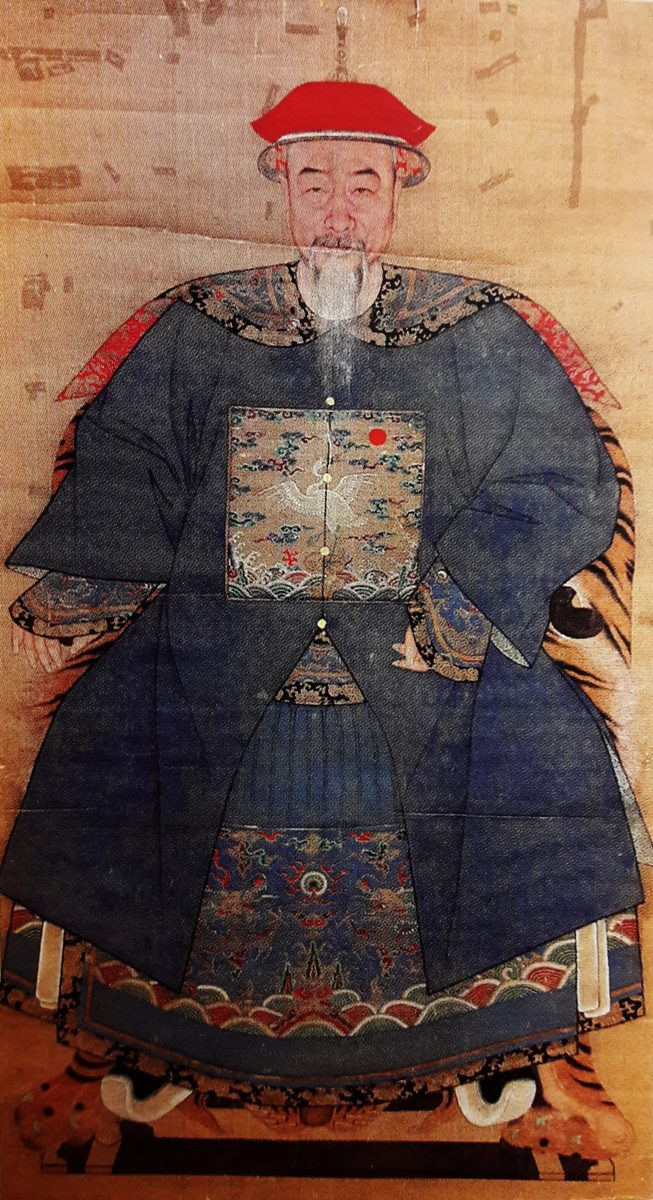
The “Nero wore emerald sunglasses” story is probably a mistranslation
The most widely repeated ancient precedent for sunglasses comes from Pliny the Elder, the Roman encyclopedist, who wrote in his Natural History that “the emperor Nero watched gladiatorial combats in an emerald” — in Latin, gladiatorum pugnas spectabat in smaragdo. For generations that line has been read as proof that Nero watched the fights through a polished gemstone lens, and it turns up in almost every casual history of sunglasses written since.
The classicist David Woods re-examined the claim in a 2006 paper in the journal Arctos. Pliny’s line about Nero sits immediately after a passage explaining that polished emerald could work as a mirror, and Woods argues the “watching through an emerald” story is best explained as a garbled translation of an earlier source that described Nero watching the games covertly — like someone using a reflective surface to spy, not a man wearing a lens. If Woods is right, Nero’s emerald was never an optical aid, and the sunglasses connection is a two-thousand-year-old reading error still being quoted as fact.
The specific dispute matters less than what it shows: how thin the evidence for tinted eyewear outside China actually is in this period. The dark lenses in Chinese courtrooms have a documented object and a documented purpose. The dark lens in Rome may be a mistranslation that has circulated as settled history for so long that even careful popular accounts repeat it without the caveat.
The error is an easy one to keep making: a two-word Latin phrase, a plausible mental image of an emperor squinting through green stone at blood in the sand, and no competing claim colorful enough to dislodge it. Real tinted eyewear from Rome, if it existed at all, left no surviving example and no second independent account.
Europe’s tinted lenses came out of glassmaking, not medicine — though the opticians who sold them thought otherwise
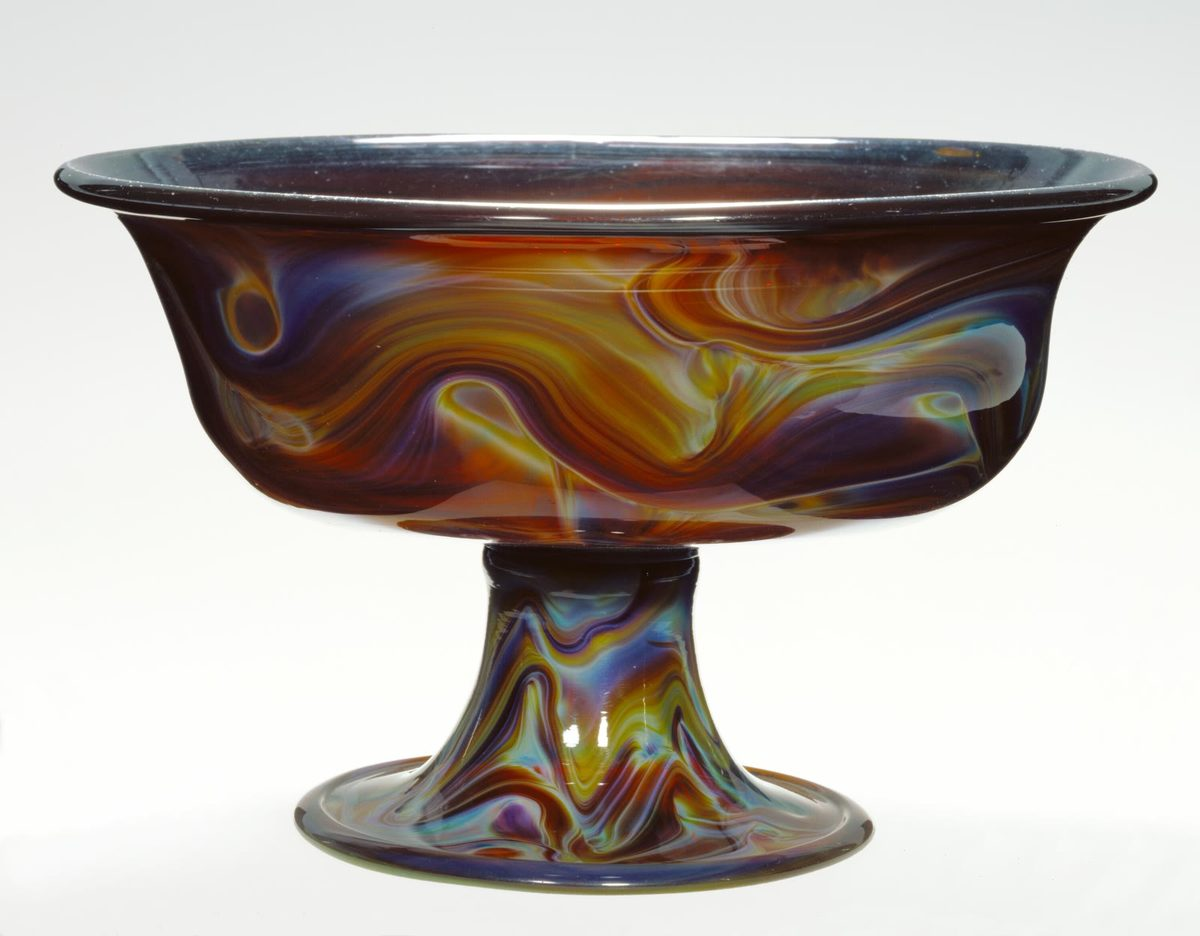
Europe’s version of tinted eyewear grew out of a different industry entirely: colored glass. By the fifteenth century Venice was the center of European glassmaking, and craftsmen on the island of Murano were producing elaborately swirled colored glass — calcedonio, mottled to imitate semiprecious stone — for drinking vessels, vases, and eventually spectacle lenses. Grinding that glass for people who already needed corrective lenses was a short step, and tinted spectacles stayed a Venetian specialty, hand-ground and expensive, for roughly two centuries — the same slow, hand-finished pace that kept early lens-based technologies out of ordinary households long after they were technically possible.
English buyers were seeking tinted lenses for comfort rather than fashion by the 1660s. The diarist Samuel Pepys, a meticulous recorder of his own household expenses, noted buying a pair of green spectacles in 1666 for eyes made sore by years of reading and writing by candlelight — a purchase about eye strain, not sunshine, and one modern historians have had to correct against a persistent rumor that Pepys bought them to treat a venereal complaint instead.
The clearest commercial pitch for tinted lenses as a health product came nearly a century later from James Ayscough, a London optician, who in 1752 published a book on the eye and nature of vision advertising double-hinged spectacles with lenses tinted blue or green. Ayscough argued, incorrectly, that ordinary white glass produced an “offensive glaring Light, very painful and prejudicial to the Eyes” and that colored glass corrected the problem at its source. He was wrong about the mechanism — a tint does not fix an optical defect — but his spectacles were among the first tinted eyewear sold commercially, marketed as medicine rather than sunshade.
That framing stuck for a long time. Nineteenth-century advertisements for tinted spectacles routinely promised relief for what they called “weak eyes,” vague language covering everything from genuine light sensitivity to the eye strain of reading by candlelight. They were sold in pharmacies and by traveling opticians, still a hand-crafted good, still not really understood as sun protection in the way the phrase means today.
A boardwalk salesman turned a four-hundred-year-old luxury item into a quarter apiece
Tinted eyewear stayed slow-moving and relatively expensive for roughly four centuries after the Murano glassmakers first ground a lens. That changed in 1929, when a salesman named Sam Foster set up a stand on the Atlantic City boardwalk and began selling inexpensive sunglasses with molded plastic frames and lenses to sunbathers for about a quarter a pair.
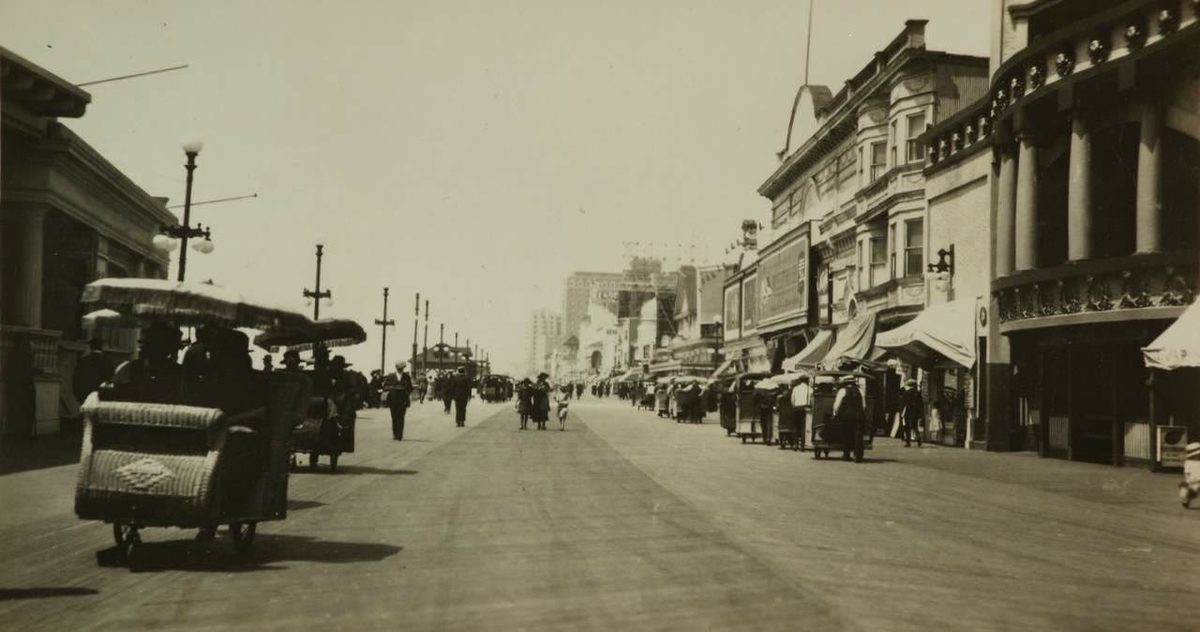
Foster’s company, Foster Grant, had worked out how to mold plastic cheaply enough to make sunglasses disposable rather than precious, which meant the object could finally be sold to a vacationer instead of only a patient with weak eyes. Within a few years factories were turning them out by the million — a genuinely industrial transformation of what had been a craft good since the first Venetian glassblower ground a tinted lens.
The military funded two separate “first” pairs of sunglasses, and the companies still argue about it
The familiar teardrop Aviator shape is usually credited entirely to Bausch & Lomb and the US Army Air Corps in the mid-1930s, but the procurement record is messier than the shorthand version. The eyewear historian Moss Lipow has documented that the Army Air Corps’ D-1 sunglasses, made by American Optical and standardized on 13 August 1935, were the first sunglasses ever contracted for by the US military — made by a company that was not Bausch & Lomb at all. “1935 was before Ray-Ban even existed,” Lipow writes, calling the popular shorthand that Ray-Ban invented military sunglasses flatly wrong — the same kind of tidy-but-wrong origin story that follows other nineteenth-century optical inventions with more than one claimant.
Bausch & Lomb’s version came slightly later and became far more famous. Around 1936 the company produced a plastic-framed “Anti-Glare” prototype for Army Air Corps pilots, addressing the headaches and temporary blindness glare caused at high altitude. A metal-framed, gold-rimmed redesign followed in 1937 and went on public sale under a name that described exactly what it did — Ray-Ban, because it banned the rays. That shape, essentially unchanged, is the Aviator still sold today.
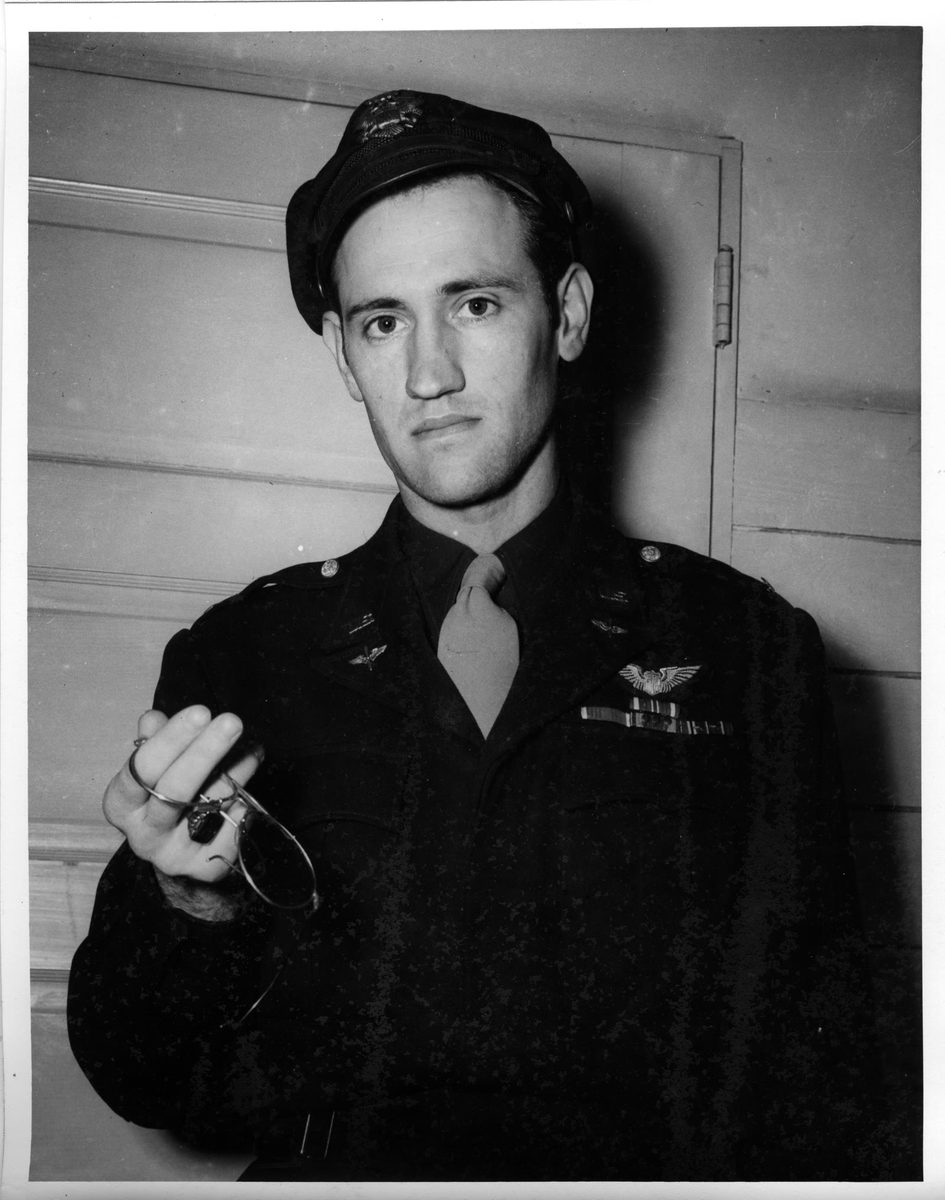
The two stories are not actually in conflict — American Optical held the first military contract, Bausch & Lomb built the shape that became a consumer icon — but popular accounts routinely collapse them into one tidy invention story. A separate, unrelated breakthrough was happening in optics at almost the same moment: in 1936 the American physicist Edwin Land, who founded the Polaroid Corporation the following year, patented an inexpensive sheet polarizing filter. Polarized lenses cut the specific glare that bounces off flat surfaces — water, snow, pavement — in a way ordinary tinted glass cannot, and Land’s filter is the technical ancestor of most polarized sunglasses sold today, including ones with no connection to either military contract.
One 1952 patent and one movie explain why sunglasses were invented for fashion, not just glare
Sunglasses crossed over into fashion once Hollywood found a second use for them that had nothing to do with glare: hiding a face. Studio photographs from the 1940s and 50s show stars wearing large dark glasses indoors and on overcast days, obscuring bloodshot eyes and discouraging photographers, and the object became visual shorthand for celebrity rather than for weather.
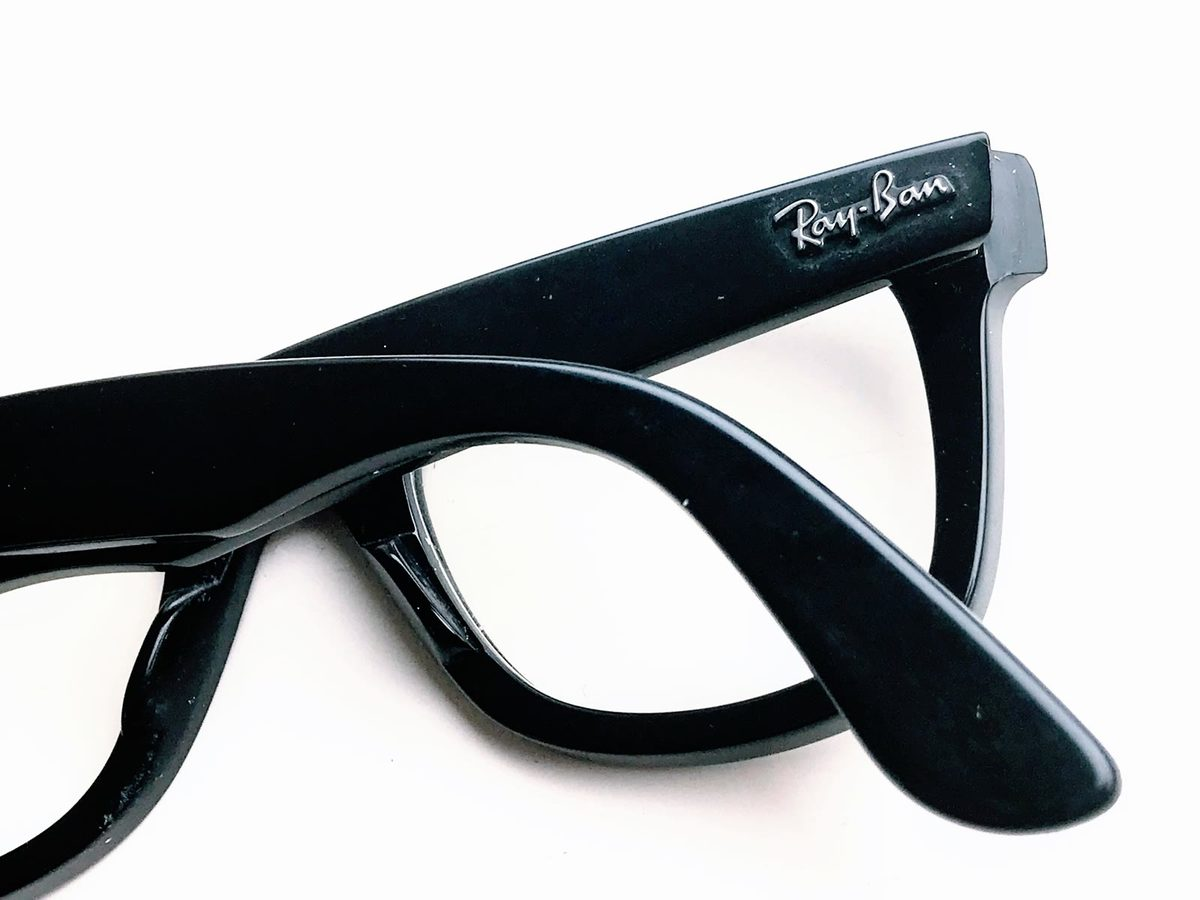
The frame that cemented that shift was patented on 22 July 1952 by Raymond Stegeman, a Bausch & Lomb optical designer, and granted the following July as US Design Patent D169,995 for a “front for spectacle frames.” The trapezoidal plastic shape went on sale as the Wayfarer — a deliberate break from the metal Aviator, aimed at a younger, more casual buyer, and durable enough to survive decades of reissues essentially unaltered.
The Aviator got its own second life on screen in 1986, when Top Gun put Tom Cruise in a pair throughout the film. Ray-Ban’s sales of the Aviator reportedly rose by close to 40 percent in the seven months after the film’s release — a jump that had nothing to do with engineering, just a wardrobe decision, exactly fifty years after Bausch & Lomb designed the shape for a different kind of pilot entirely.
The one genuine advance since then has had nothing to do with fashion. Modern lenses rated “UV400” block light up to the 400-nanometer wavelength, covering essentially the full UVA and UVB range — a real, measurable safeguard against cataracts and long-term eye damage that nobody buying smoky quartz, green Venetian glass, or a quarter pair on the Atlantic City boardwalk had any way of knowing they needed.
Watch the short version
The video below covers the Inuit goggles, the Chinese courtroom, and the Army Air Corps in about a minute and a half; the sections above go considerably deeper, including the Nero myth and the military contract dispute this short doesn’t have room for.

Line up the whole sequence and the sun is almost an afterthought. A Chinese judge wore tinted lenses so a courtroom couldn’t read his face. A Roman emperor probably never wore any at all. An English optician sold colored glass as a cure for eye strain. A boardwalk vendor made the object cheap enough to be disposable. Two branches of the same military each built a version for pilots going blind at altitude, for reasons that had nothing to do with each other. And a Hollywood instinct — that dark glasses hide more than glare — did more to make sunglasses an everyday object than either invention actually built to block the sun.
What finally arrived, after people had already been wearing tinted lenses for the better part of a thousand years, was the actual science of what unfiltered sunlight does to an eye. The disguise came first by a wide margin. The protection was close to an afterthought — a strange way for an object sitting on most people’s faces by age ten to have ended up this functional.
Related reading
- The Stereoscope Craze That Swept Victorian Parlours
- Who Invented the Zoetrope? Three Men Have a Claim
- How the Daguerreotype Actually Worked, and Why It Was Dangerous
- How Carrier Pigeons Carried Messages Through Two World Wars
Shop the styles/items featured in this video
Works cited
- Woods, David. “Pliny, Nero, and the ‘Emerald’ (NH 37,64).” Arctos: Acta Philologica Fennica 40 (2006). Link.
- Pliny the Elder. Natural History, Book 37, §64. Trans. Bill Thayer, LacusCurtius, University of Chicago. Link.
- Torquay Museum. “Chinese Sunglasses.” Collections Spotlight. Link.
- Fitzharris, Lindsey. “Ray-Ban’s Predecessor? A Brief History of Tinted Spectacles.”
- “History of FosterGrant, Inc.” International Directory of Company Histories, vol. 30. FundingUniverse. Link.
- Lipow, Moss. “The First Aviator Sunglasses Revealed: Were They Ray-Bans? Part Four.” The Eyewear Blog. Link.
- Stegeman, Raymond F. E. “Front for Spectacle Frames.” U.S. Design Patent No. D169,995, filed 22 July 1952, granted 7 July 1953. Assigned to Bausch & Lomb Optical Co. Link.
- “These Snow Goggles Demonstrate Thousands of Years of Indigenous Ingenuity.” Smithsonian Magazine.
- “Tom Cruise’s Ray-Ban Aviators in ‘Top Gun’ Are Selling Like Hotcakes.” Robb Report. Link.
- Barden, Carolyn. “What is the Highest UV Protection for Sunglasses?” All About Vision. Link.