
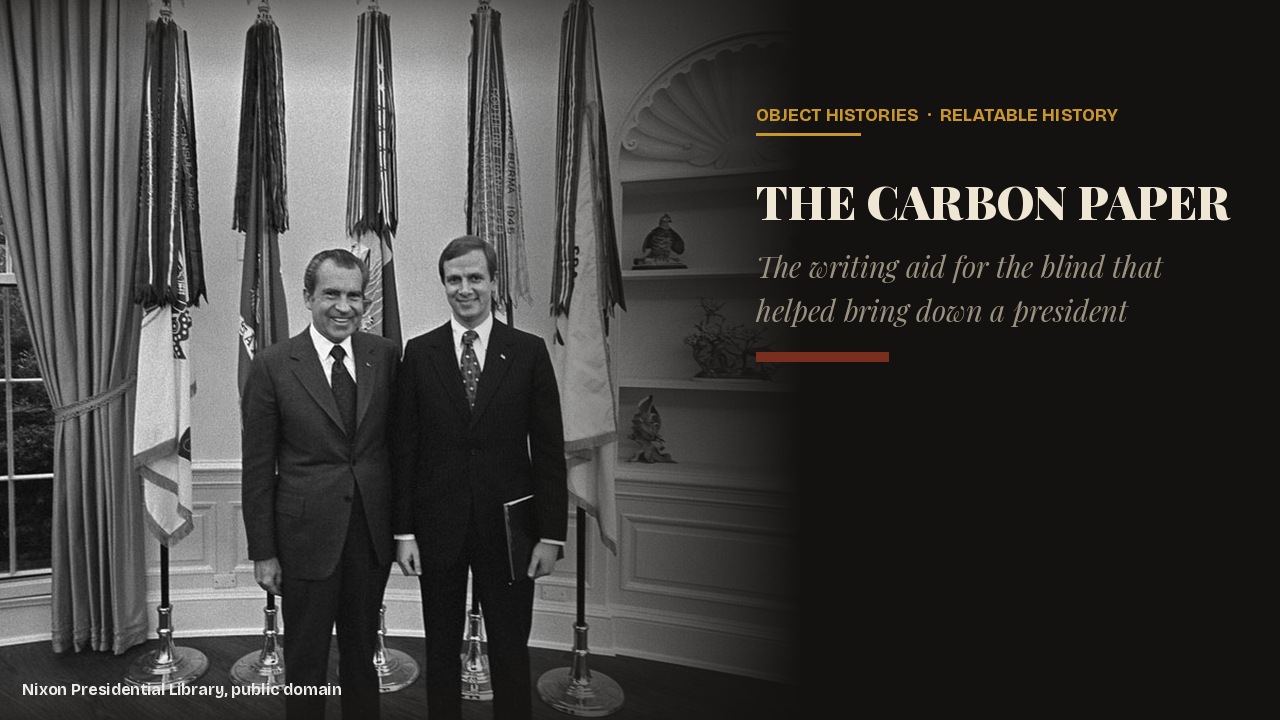
Carbon paper does not have one credited inventor. Ask who invented carbon paper and you get at least four defensible answers, spread across nearly seventy years, and none of the four claimants seem to have known the others existed. An Italian mechanic built it to ink a writing machine for a blind countess. An English pottery heir patented it so people could write letters by touch, in the dark. An American deviser came up with his own version seventeen years later with no apparent knowledge of either. And a Cincinnati-born clerk, who invented none of it, turned the stuff into an industry — by selling it to exactly the kind of federal office that would spend part of 1973 trying to reconstruct, from paper, what had actually been written.
None of this is folklore. Each claim rests on a patent number, a museum record, a dated letter, or a court case. What follows is the real sequence: who has the strongest claim, how the material actually worked, how it built an office-supply industry before most offices even had a typewriter to put it in, and how a habit of filing one extra copy, just in case, ended up outliving the administration that came to regret it most.
Start with the earliest and least certain claim, which survives mostly because one half of an affectionate correspondence happened to be kept.
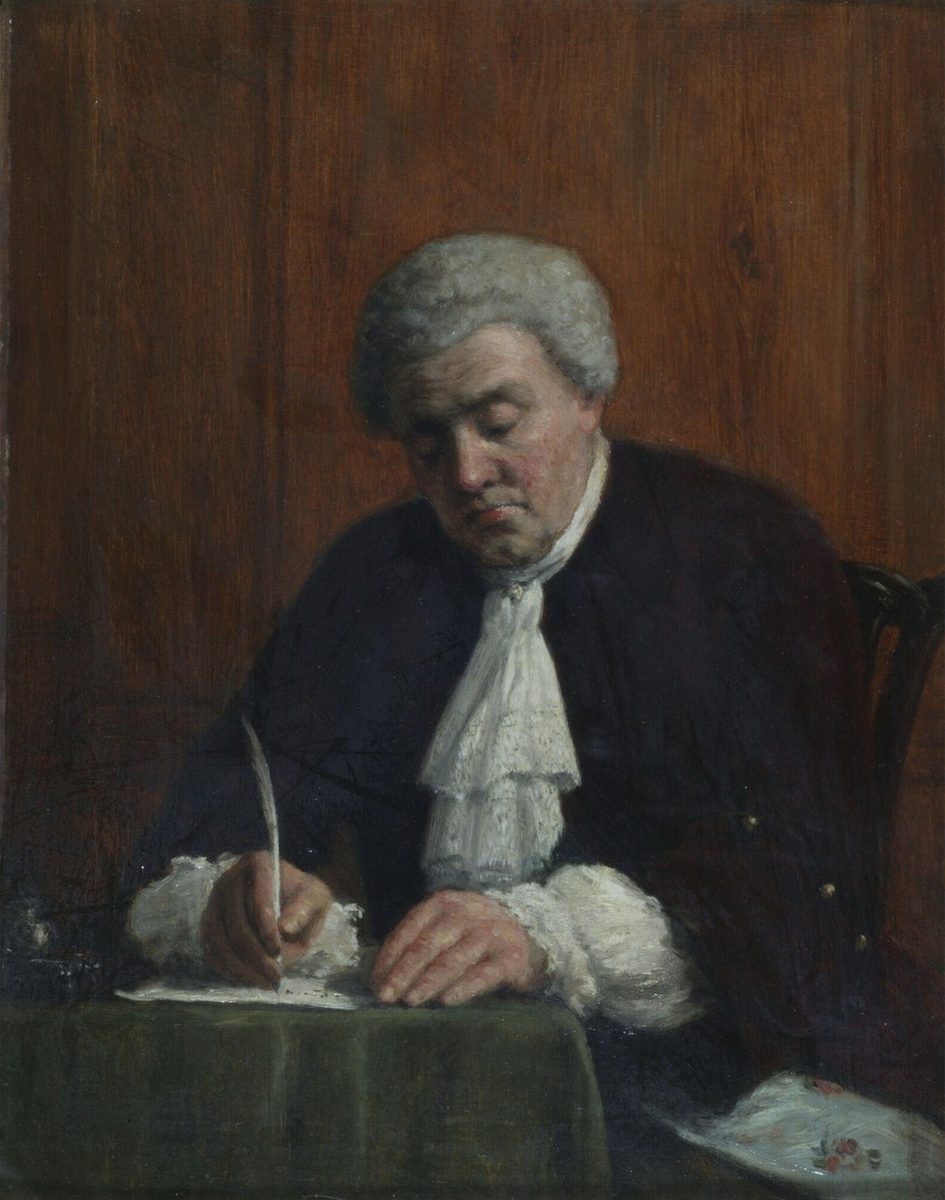
A Blind Countess’s Letter, Complaining About Running Out of “Black Paper”
The earliest claim belongs to Pellegrino Turri, a mechanic in northern Italy who built one of the first machines that let a person type rather than write by hand. He built it for a friend, Countess Carolina Fantoni da Fivizzano, who had lost her sight and could no longer write letters herself. Sources disagree on exactly when — accounts place the machine anywhere from 1801 to 1808 — but they agree on the problem it created. A blind woman operating a mechanical writer could not dip a pen, ink a ribbon, or check that anything had printed at all. The machine itself had to leave the mark.
Turri’s fix was a sheet coated on one side with pigment, laid face-down against a blank page, so the machine’s striking mechanism transferred an impression by pressure alone — no inkwell, no blot the writer could not see to correct. Several of the countess’s letters to Turri survive, written on his machine, and one records her running short on supplies: “I am desperate,” she wrote, “because I find myself almost without black paper.” It may be the first recorded complaint in history about running out of carbon paper — from the one person the whole invention existed for.
The Best-Documented Claim: an English Patent for Writing in the Dark
The strongest documented claim belongs to Ralph Wedgwood, an English potter and inventor who was a cousin of the famous Josiah Wedgwood and leaned on the family fortune to fund his own ideas — Josiah Wedgwood II lent him £200 to develop this one. On 7 October 1806, Wedgwood registered British Patent No. 2972, “Apparatus for Producing Duplicates of Writings.” He called the device a stylographic writer; it became better known as the Noctograph, the “night-writer,” and the name says exactly what it was built to do.
The mechanism replaced the pen entirely. A sheet coated on one side with a lampblack-and-lard pigment sat against a blank page, held flat on a metal board fitted with raised guidelines a writer could feel with a fingertip. The user wrote with a blunt metal stylus instead of a nib — nothing to dip, nothing to spill, nothing that needed to be seen to work. That made it usable by a blind or partially sighted writer, and just as usable by a sighted one writing in a dark room with no lamp to spare. One surviving example — a red leather, gilt-bronze writing box fitted with Wedgwood’s copying rollers, acquired by George IV — is now held by the Royal Collection Trust.
The invention did well without making Wedgwood rich. The Royal Collection’s own catalogue and the Wedgwood family archive both put its profit at roughly £10,000 in the first seven years, a serious sum in 1806, though by most accounts Wedgwood was a poor businessman and saw little of it himself. He did get one dramatic personal use out of it: in 1824 he defended his daughter against a theft accusation in court, using his own drawing book — duplicated page for page with his carbonised paper — to prove that evidence against her had been falsified.
So Who Invented Carbon Paper? A Third Claim Complicates It
None of this happened in a vacuum. Offices already had a way to duplicate a letter, and it had nothing to do with carbon pigment. In 1780, the Scottish engineer James Watt — decades before his steam engines made him famous for something else — patented a letter-copying press: a damp, unsized sheet pressed against a freshly inked original in a screw or roller press, pulling off just enough ink to leave a legible, reversed copy on the sheet underneath. George Washington owned one. He received his copying machine in the second half of 1782 and had aides use it to duplicate his wartime orders and council minutes; by the early 1790s his household was ordering paper made in three separate weights specifically for journals, ledgers, and press copies.
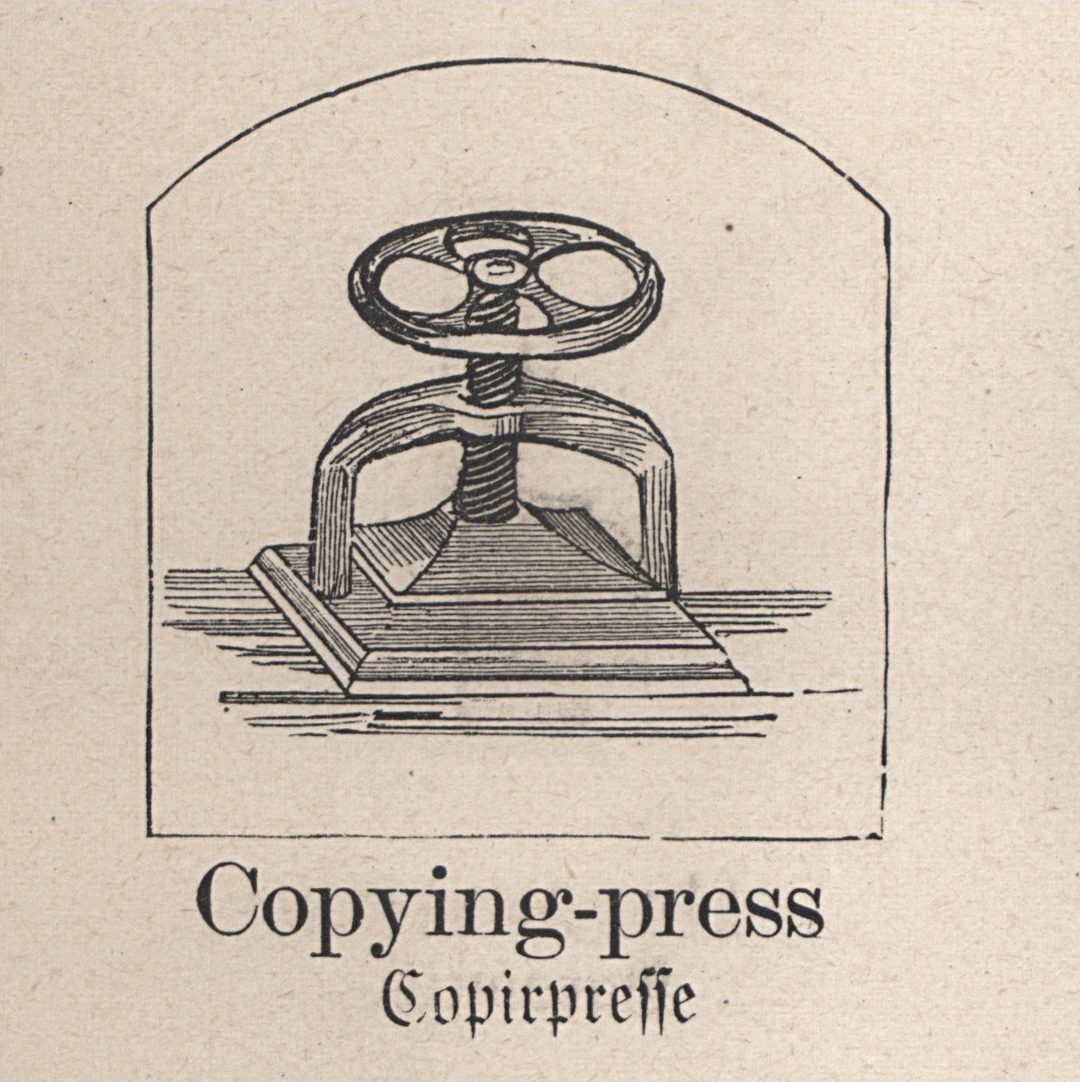
The press worked, but it needed a freshly wet original, a water source, cloths, and a practiced operator, and it could only be run once per letter. Carbon paper solved the same problem differently — the copy happened at the moment of writing, with no separate pressing step. That is roughly where a third, independent claim enters. Cyrus Parkman Dakin, working in New York City in 1823, seventeen years after Wedgwood’s patent with nothing to suggest he knew of it, devised his own carbon-coated paper from scratch, brushing a hand-mixed pigment of lamp-black, oil, and paraffin wax onto thin sheets.
The chemistry barely changed after that. What eventually changed was how the coating got applied, and that part of the story has nothing to do with chemistry at all.
The Clerk Who Turned It Into an Industry
The man who actually built carbon paper into a business invented none of it, and seems to have known nothing about Wedgwood, Dakin, or the countess in Italy. Lebbeus Harding Rogers was born in Cincinnati on 26 July 1847, and on his twenty-first birthday he visited the office of the New York Associated Press, where he watched clerks churn out carbon copies of wire-service stories with an existing, crude form of carbon paper. He did not invent what he saw. He noticed that nobody had worked out how to make it well, or sell it properly, and spent the next two years deciding to be the one who did.
In 1870 he organized the Rogers Manifold Carbon Paper Company in New York, likely funding it himself. His first major sale, that same year, went to the United States War Department, for $1,500 of carbon paper — a federal office buying in bulk, a full century before carbon paper would have anything to do with a presidential scandal. His real contribution was mechanical, not chemical: he built the first carbon-coating machine, replacing hand-brushed pigment with hot wax applied by rollers, which is what made volume production possible. He patented the improvement in October 1872.
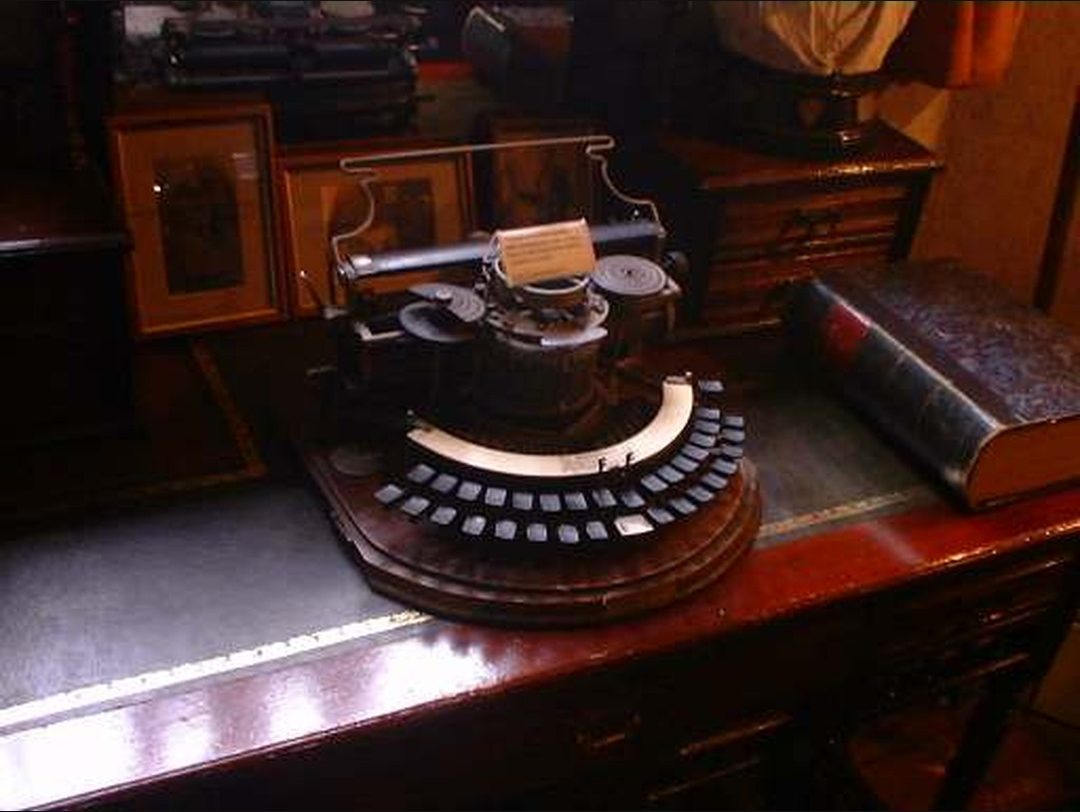
The piece still missing was a machine worth copying from. Rogers found it on 14 February 1873, at a hotel in Ilion, New York, where the inventor James Densmore demonstrated an early Sholes & Glidden typewriter. Also in the room were two men from E. Remington & Sons, who would go on to manufacture it; one of them judged, on the spot, that “this idea will revolutionise business.” He was right, and carbon paper is a large part of why — a typewriter struck hard and consistently enough to push a legible impression through seven or eight stacked sheets at once, something a handwritten original never reliably could.
Where “CC” Actually Comes From
“CC” is one of the few pieces of office jargon whose literal meaning outlived the technology behind it by decades. The term predates the habit it is usually credited with: “carbon copy” first appears in print in 1867, in a photography context — a print made by the carbon printing process, unrelated to paperwork. The meaning familiar today, a copy made by interleaving carbon paper, took hold through the 1870s and 1880s; Scribner’s Monthly used it that way in 1876, and the Chicago Daily Tribune used it for a duplicated news article in 1888.
By the twentieth century, “cc,” typed below a signature and followed by a list of names, was standard business practice — it told the main recipient of a letter exactly who else had been sent a copy. A second convention covered copies the primary recipient was not told about: the “blind carbon copy,” recorded in dictionaries by the 1950s. Both habits were really about managing carbon paper logistics. A typist running eight sheets through a machine had to decide, before a single key was struck, exactly who was getting which numbered copy down the stack.
Email didn’t invent the habit; it inherited the terminology intact. The earliest documented use of “cc” as an email verb — “I CC’d the list” — appears in a Usenet post from March 1985. “Bcc” followed as a verb by 1990. By then, the paper itself was most of the way to extinct in the very offices still using the word for it.
The Memoranda Nobody Thought to Burn
By the early 1970s, the same logic that had organized typewritten correspondence for a century had become one of the more inconvenient features of how the Nixon White House and his re-election campaign did business — because it meant a memo rarely existed in only one place. Chief of Staff H. R. Haldeman ran an operation built on written reports, routinely copied up the chain, and one of the aides doing the reporting was Gordon Strachan, Haldeman’s liaison to the Committee for the Re-Election of the President, who prepared what the files called “political matters memoranda.”
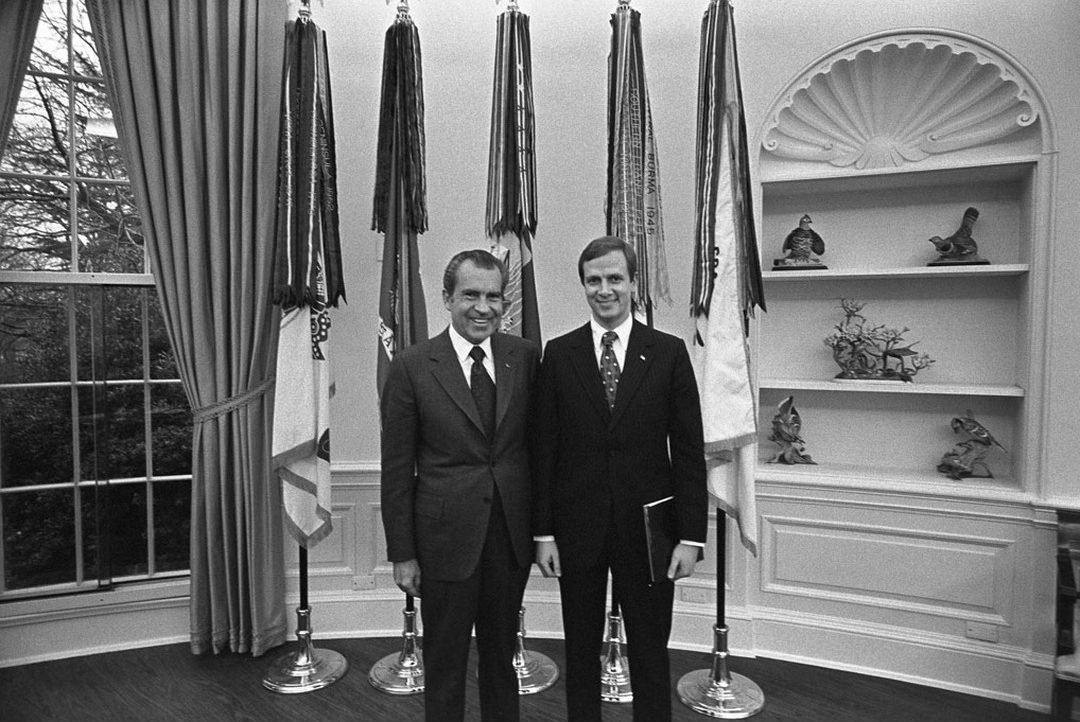
When Watergate Special Prosecutor Archibald Cox issued a grand jury subpoena to the White House on 23 July 1973, its schedule did not ask generally for “documents relating to the campaign.” It asked, specifically, for Strachan’s political matters memoranda to Haldeman covering November 1971 through 7 November 1972 — a full year of one named category of internal paperwork. That level of precision was only possible because investigators already knew, by title, roughly what should exist and in what sequence — the kind of institutional record-keeping that routine office copying made close to unavoidable, whatever any individual recipient later preferred to do with their own copy.
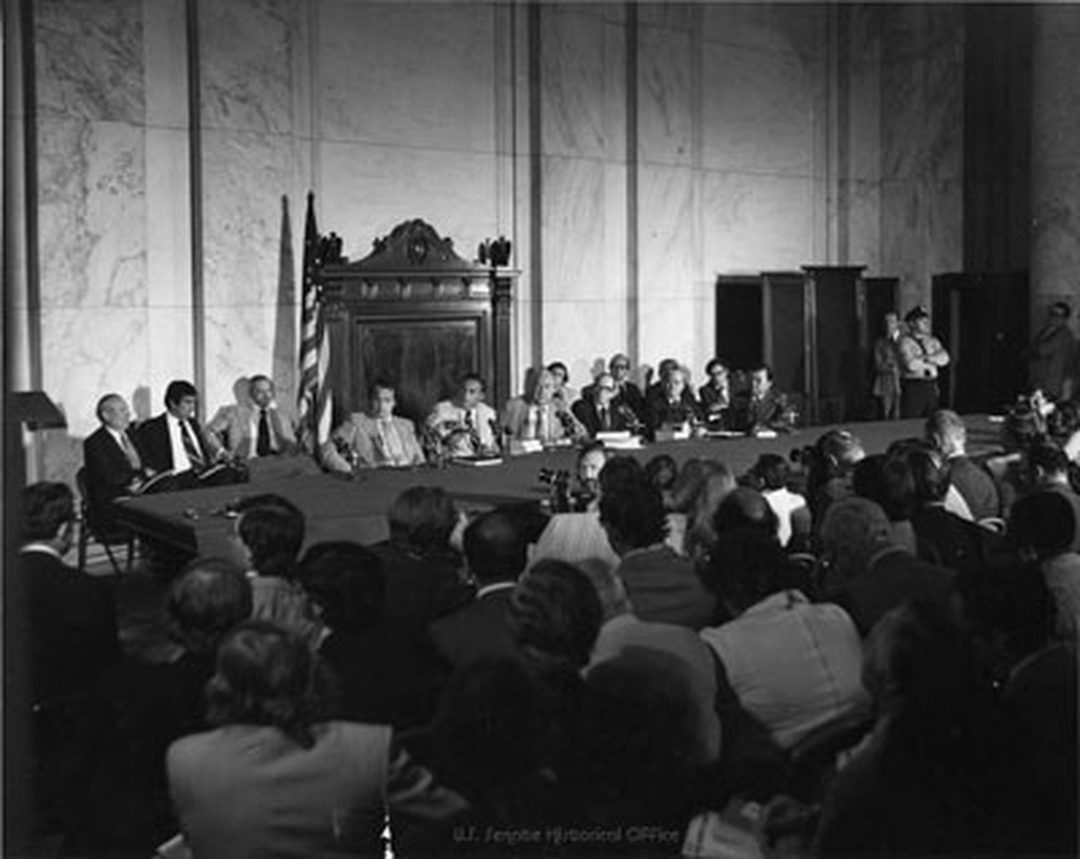
None of this means carbon paper alone brought down a presidency — the White House tapes, whose existence Alexander Butterfield had revealed exactly a week earlier, did far more damage once investigators knew to ask for them. But the paperwork mattered because it was redundant by design. A single-copy filing system can be emptied by one person with a shredder. A “cc” list cannot, not reliably — and the investigators looking for Gordon Strachan’s memoranda that summer were relying, whether they thought of it this way or not, on a filing habit carbon paper had made routine for a hundred years.
Watch the full history
The video version covers the “cc” origin story and the Watergate subpoena in about five minutes; this piece covers the three centuries and four rival inventors around it.

Carbon paper did not die from one single killer. Two technologies arrived within a few years of each other and took it apart from opposite directions. In 1953, two chemists at the National Cash Register Company, Lowell Schleicher and Barry Green, patented a way to coat paper with microscopic capsules of dye that burst under pressure and reacted with a clay coating on the sheet beneath — carbonless copy paper, which did the same job without the smudging or the sheet someone had to remember to throw away. NCR began producing it commercially with the Appleton Coated Paper Company the following year.
The second blow came from the opposite direction. The Xerox 914, introduced in 1959, did not copy as a person typed — it copied afterward, from a single clean original, as many times as anyone wanted. Writer Lynn Peril’s description of what that meant for office workers is blunt: no more dealing with “all the lousy carbon paper.” It took decades, not years, for either machine to finish the job, but the direction from there was one-way.
What survived is the vocabulary, not the material. Every “cc” field at the top of an email is a fossil of a habit built around physical, coated sheets, stacked under a typewriter platen, sent in duplicate because duplication used to be expensive and deliberate. The countess who complained about running out of “black paper,” the potter’s cousin who patented a way to write in the dark, the New Yorker who rediscovered the same trick without knowing either man existed, and the clerk who turned it into a product the federal government bought by the crate — none of them could have guessed that the one piece of their invention still in daily use, two centuries later, would be two letters at the top of a message none of them would recognize as writing at all.
Related reading
- The History of Ticker Tape Parades Starts With a Broken Wall Street Machine — another paper technology Wall Street relied on before it had a better alternative
- Why the 1787 Constitutional Convention Met Entirely in Secret — a much earlier case of American government paperwork built around who was allowed to see it
- How Fire Alarm Telegraph Boxes Worked — another everyday communication device from the same mechanical era
- Why Belgium’s Just Judges Panel Investigation Has Never Closed — a theft investigation that, like Wedgwood’s own, turned on documentary proof
Shop real carbon paper
Shop the item featured in the video version of this story:
Works cited
- “Writing Box with Copying Mechanism.” Royal Collection Trust, RCIN 35490. Link.
- Barnes, Alan. “Ralph Wedgwood: Pioneer of Office Copying.” Revolutionary Players, Black Country Museums. Link.
- “Ralph Wedgwood Invents Carbon Paper.” HistoryOfInformation.com. Link.
- Messenger, Robert. “Put a Black in for Me, It’s Carbon Paper, It’s…” oz.Typewriter, 6 May 2014. Link.
- “Carbon Paper.” How Products Are Made, vol. 1. Gale, via Encyclopedia.com. Link.
- “Sector Mourns Paper Pioneer Schleicher, 78.” PrintWeek.
- “On the History of ‘CC’ and ‘BCC.’” Merriam-Webster.
- “The Watergate Files.” Gerald R. Ford Presidential Library and Museum. Link.
- “Happy Birthday, Copy Machine.” WGBH News, 23 Oct. 2013. Link.
- “Copy Press.” George Washington’s Mount Vernon, Digital Encyclopedia. Mount Vernon Ladies’ Association.