
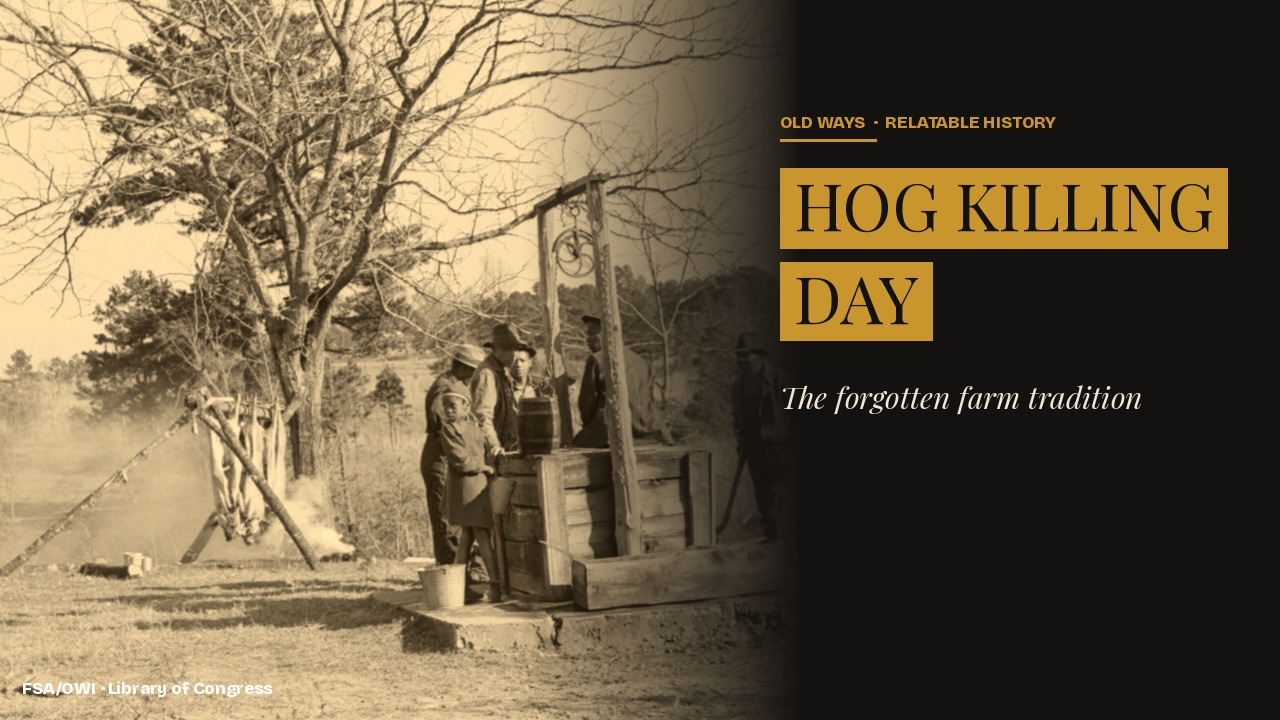
In the hills of West Virginia, the job of killing the first hog of the day went to whoever on the crew could shoot straightest. One shot between the eyes, no second attempt, because a botched kill meant a struggling animal and meat nobody wanted to eat. In North Carolina, families fattened as many as a hundred hogs through the fall on field peas, sweet potatoes, and acorns gleaned from the woods, penning the whole herd until the first hard frost made it safe to turn it into a winter’s meat supply in the space of a week. That is how hog killing day worked almost everywhere east of the Mississippi: a tightly run piece of seasonal engineering, timed by the thermometer, with no refrigerator waiting as a backup if the timing went wrong.
The video covers what the day felt like. This is the paperwork behind it: the hogs bred specifically to make the whole operation worth running, the order the butchering actually followed on different farms, the parts of the animal nobody could afford to waste, and the fairly precise, documented reason the entire institution collapsed within about three decades.
Fattening Season Decided How Big Hog Killing Day Would Be
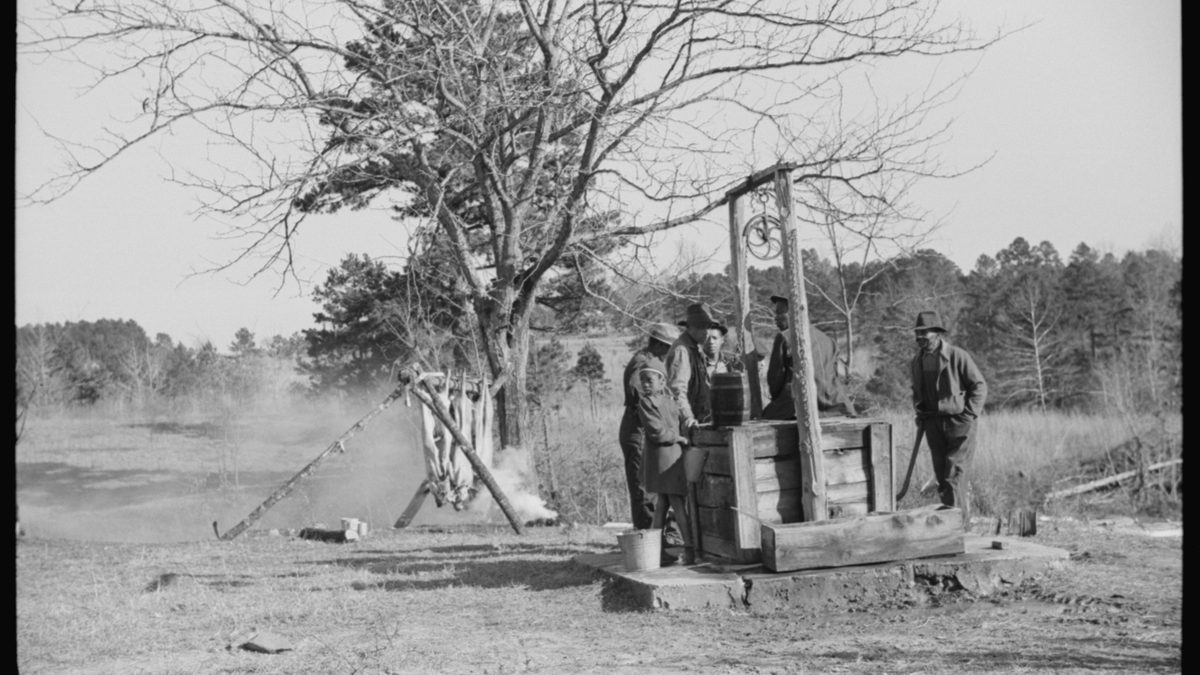
Hog killing day didn’t start in November. It started months earlier, when a farm turned its hogs loose or penned them on whatever cheap feed was at hand — field peas, sweet potatoes, corn gleaned after harvest, mast fallen from oak and beech trees in the woods. A mid-sized operation might be feeding anywhere from a handful of hogs to, by some nineteenth-century North Carolina accounts, close to a hundred head headed for a single killing. That scale is what made the communal structure necessary rather than optional: no one household had enough hands to butcher, scald, and render that much meat before it spoiled. The fix was a running arrangement between farms: a crew worked one family’s hogs this week and showed up at a neighbor’s place the next, settling the debt in labor instead of cash.
Every crew sorted itself into roles that got repeated from farm to farm. In West Virginia accounts, the actual kill went to the best marksman in the group, who shot the hog between the eyes while the water heated in iron kettles over an outdoor fire; a crew working efficiently could have three hogs killed, scalded, and hung by noon. Other hands managed the fire, others the scraping, others the butchering table once the carcass came down. None of it was written down anywhere — it was a skill set passed on entirely by doing it alongside someone who already knew.
A Hog Bred to Carry Fat, Not Muscle, Was the Entire Point
None of this made economic sense without the right animal. Pigs reached the Americas with Columbus in 1493 and Hernando de Soto in 1539, and colonists kept importing stock afterward — breeds like the Berkshire and the so-called Big China were widely crossed into local herds to improve them. By the nineteenth century, nearly every American breed on a farm was what breeders call a lard type: compact, deep-bodied, and bred to fatten quickly on corn, carrying heavy fat because a household with no store-bought substitute treated lard as a kitchen staple in its own right, not a byproduct. Only two American breeds, the Yorkshire and the Tamworth, were bred the other way, long and lean for bacon. Poland China, Duroc, and Berkshire hogs — the names that show up again and again in old farm records — were lard hogs, through and through.
That whole arrangement fell apart fast after World War II. Lard demand had been strong during the war, when it was used in explosives manufacturing; afterward, vegetable oils were marketed as the healthier alternative, and petrochemicals replaced lard in most of its industrial uses. Demand for fat hogs collapsed, breeders pivoted hard toward leaner muscle, and most of the old lard breeds were simply abandoned. Today only three traditional lard-type breeds — the Choctaw, the Guinea Hog, and the Mulefoot — survive at all, kept going mostly by small pasture farms rather than any commercial need for what they were originally bred to do.
Killing and Scalding Left No Room for a Second Attempt
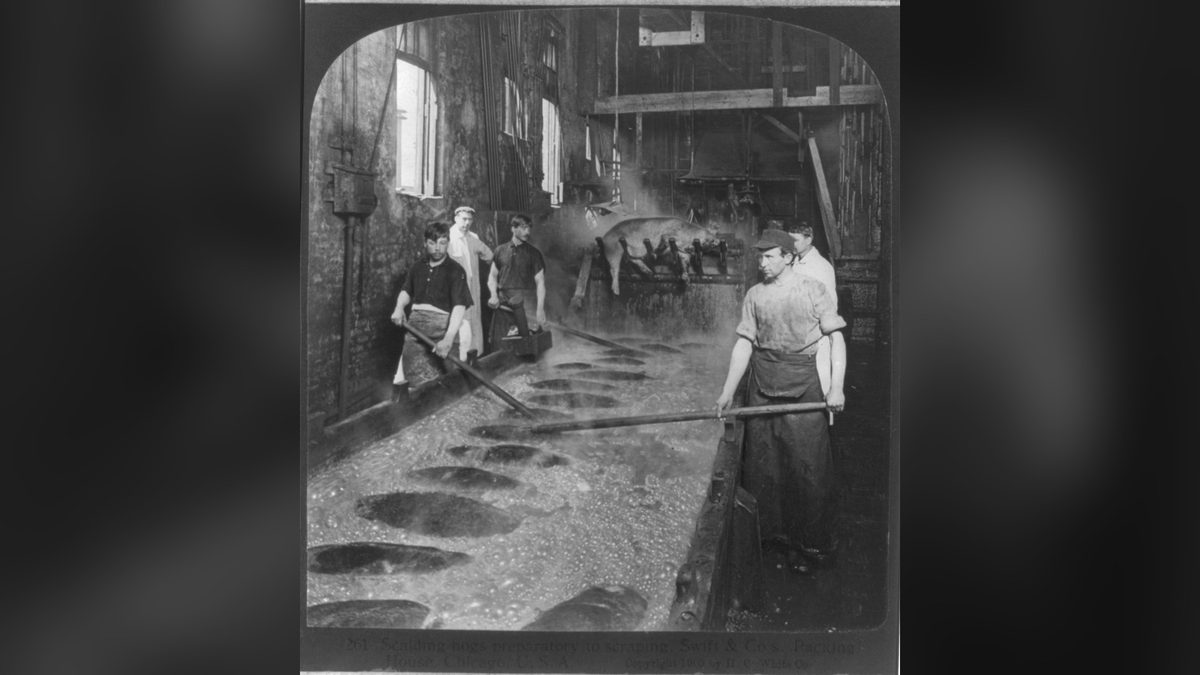
Killing happened in the earliest, coldest part of the morning. The animal was bled, then scalded in a tub or trough so its bristles would loosen for scraping. Here the sources actually disagree, in a way that says something true about how this knowledge was held: production notes for this series put the scalding water at a precise 150 to 160 degrees Fahrenheit, while a Tennessee farmer documented at a hog killing in 2003 judged it by feel, drawing his fingers through the water and timing how long he could stand to keep them there, landing closer to 140 degrees. Go too hot and the skin cooks and tears; stay too cool and the hair stays put no matter how hard you scrape. In practice almost nobody was reading a thermometer — they were going on years of having already done it.
Scraping came next, with burlap sometimes laid over the hide to trap heat while a crew worked — at the 2003 Tennessee kill it took twenty to thirty minutes per animal. From there the carcass went up on a gambrel, suspended from a tripod, a sturdy limb, or a rope and pulley, split, and gutted before it had a chance to cool through with the organs still in it. Dressed carcasses were then left to hang overnight in the cold, and the actual cutting into hams, shoulders, sides, and loin happened the following day, once the meat had firmed up enough to handle cleanly.
Nothing Was Wasted, Down to the Brine and the Bladder
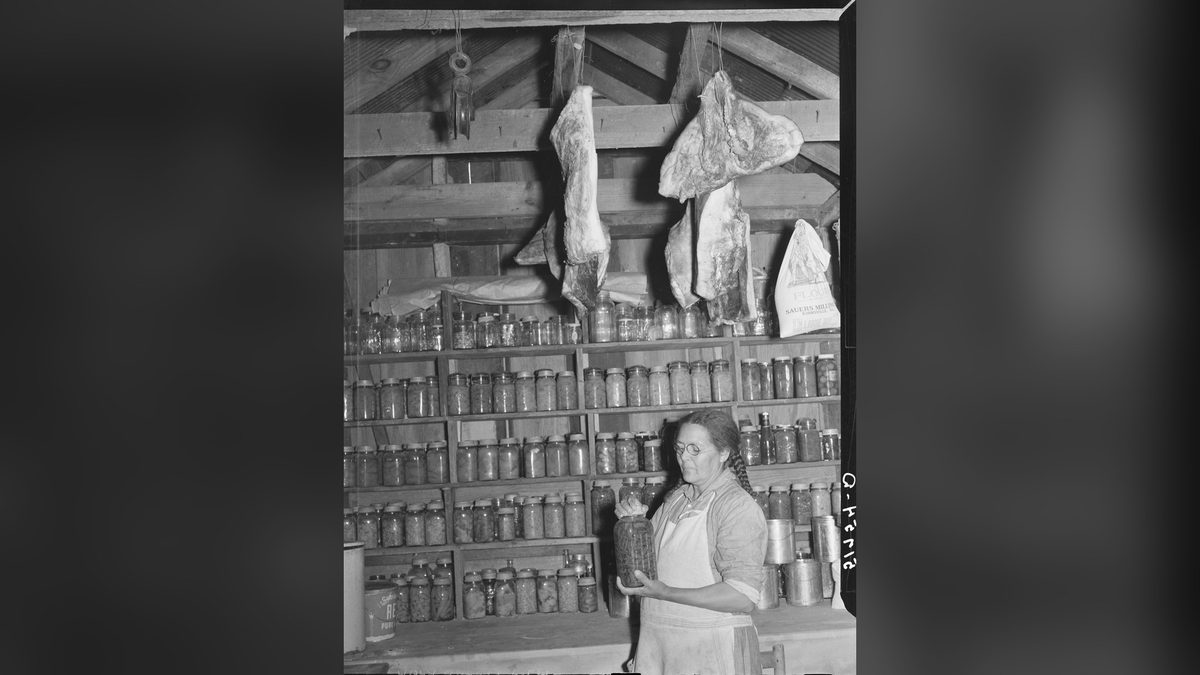
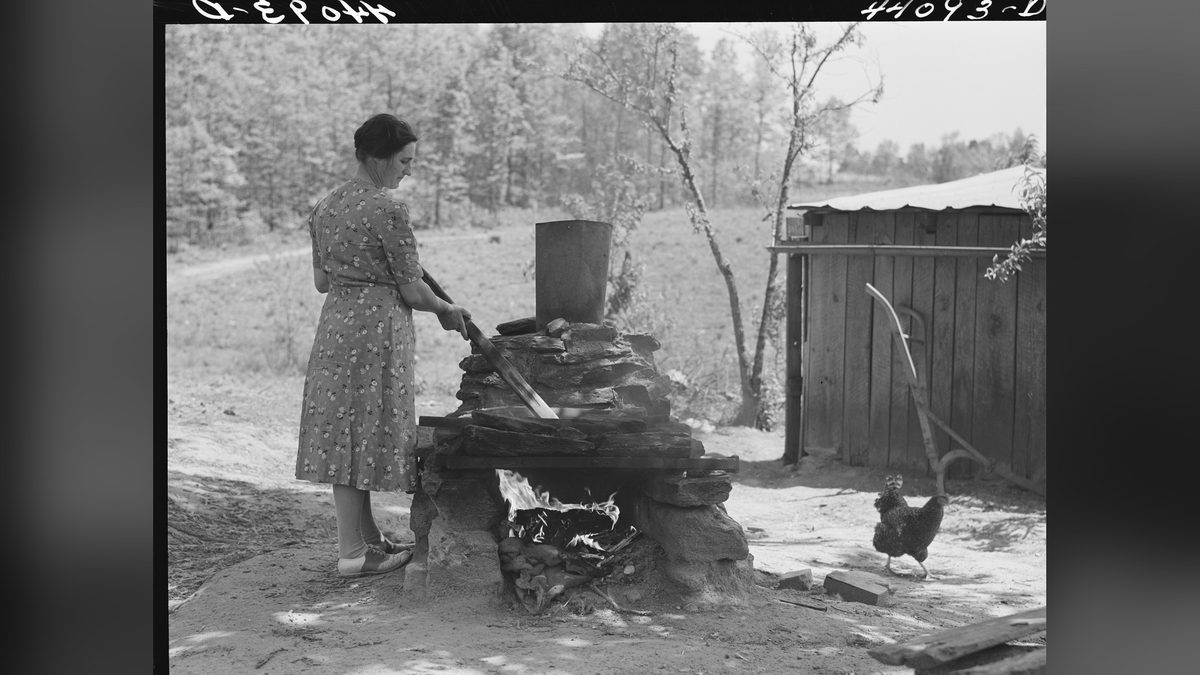
Big iron kettles ran over wood fires most of the day, rendering trimmed fat down into lard and leaving behind crisp cracklings. The same kettles, scrubbed out, boiled leftover tallow into soap a few weeks later — one set of equipment doing two completely different jobs in the same season. In North Carolina smokehouses, meat was packed on a platform tilted at least a foot off the floor, with troughs underneath to catch the dripping brine; that brine was later evaporated down and the recovered salt fed back to the livestock, so even the curing runoff had a second use. In West Virginia households, even the bladder went somewhere: washed, inflated, and dried into a ball for the children.
Hams and shoulders spent anywhere from a single week to six sitting in dry salt, longer for a bigger cut, before moving into the smokehouse, where a low hickory or oak fire kept burning for a month or longer until the meat was judged finished. Meat that wouldn’t keep that long — spare ribs, liver, fresh sausage — got eaten in the days right after the kill, which is part of why the whole event doubled as a feast. None of this was sentimental thrift — it was the same unsentimental frugality that, a few decades later, had rural households turning empty feed sacks into Depression-era dresses. A family that let good fat or good brine go to waste was eating less in February.
A Federal Photography Program Happened to Be Watching
Much of what survives to document any of this visually comes from one federal project. Between 1935 and 1944, a unit that moved from the Resettlement Administration to the Farm Security Administration to the Office of War Information, led for most of its run by the economist Roy Stryker, sent photographers including Walker Evans, Dorothea Lange, and Gordon Parks out to document rural American life. The project generated roughly 175,000 black-and-white negatives before it wound down and the collection transferred to the Library of Congress — which is why so many of the clearest surviving images of hog killing day, scalding troughs, and smokehouse interiors carry an FSA or OWI credit line rather than a farm family’s own camera. Nobody was documenting this for a farm’s personal record; they were documenting it because a government photography program happened to think rural foodways were worth recording.
What Actually Ended It Was the Thermometer in the Kitchen
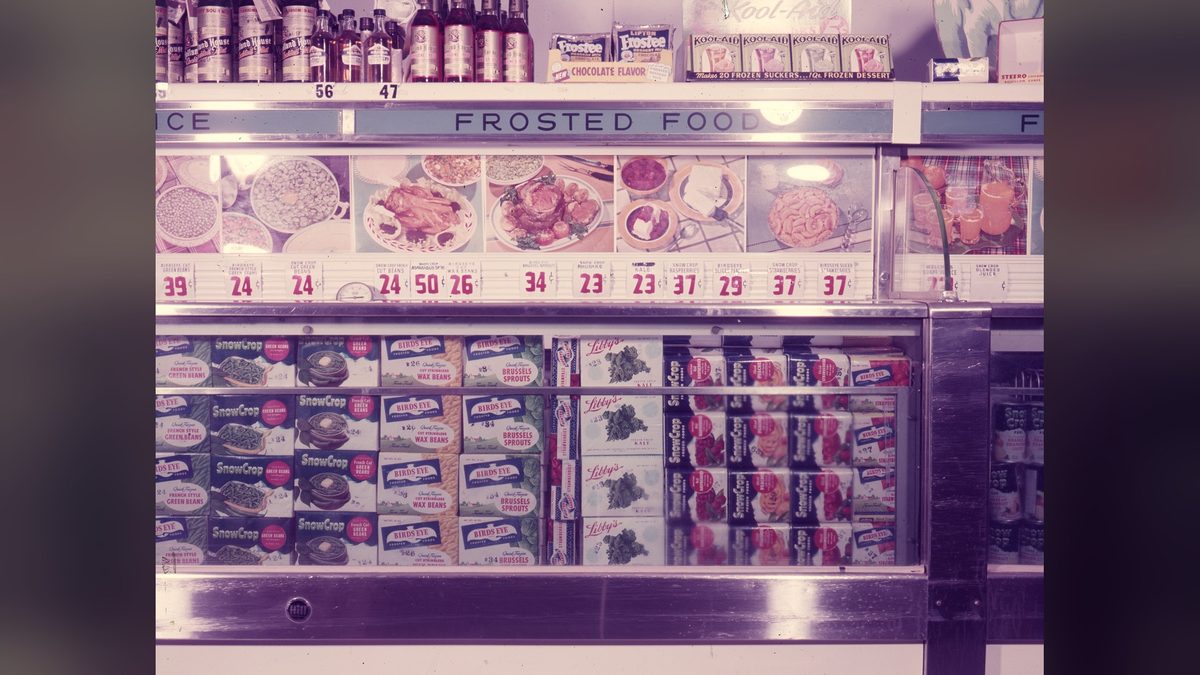
The practice didn’t fade because tastes changed. It faded because the infrastructure under it changed. Before the Rural Electrification Administration began extending loans to local cooperatives in 1935, roughly ten percent of rural American homes had central electricity, against about ninety percent of urban homes. By 1953, more than ninety percent of rural homes had it too, almost entirely because of those REA-financed cooperative lines. Once the wires reached a farm, a refrigerator followed, and in time a freezer — machines with no precedent in that household — finally doing year-round what a shrinking block of winter pond ice in an icebox had only ever managed seasonally. Commercial meatpacking and refrigerated trucking expanded at almost the same moment, so a drive to the nearest store could put pork on the table in July as easily as January — no borrowed labor, no fire tended all day, no smoke required.
Most of that collapse happened inside those two decades, but it wasn’t simultaneous everywhere. The communal version of the day needed two things to keep running: a household with no other way to keep meat cold, and neighbors still willing to trade a week of labor for it. Electrification knocked out the first condition region by region, as REA lines reached some counties years before others, so the custom didn’t end on any single date so much as it quietly ran out of places where it was still necessary.
Some Farms Never Stopped, and Historians Disagree About Why That Matters
Appalachia kept the tradition alive longest, and not by accident. The historian Jessica Wilkerson, writing about the Foxfire book project that sent students around rural Georgia in the 1970s to record disappearing skills, points to one well-known exchange: Aunt Arie Carpenter, an eighty-four-year-old woman the students interviewed, matter-of-factly instructing them on how to clean a hog’s head, down to pulling the eyeball and cutting it. Wilkerson argues that curing your own hog meat only became a “revered” skill once ham was something you could simply buy at a supermarket — that the reverence is itself a product of the very industrial food system that made hog killing day unnecessary, not a straight line back to some older, purer tradition. It’s a genuinely unresolved argument: is a heritage-farm hog killing today a continuation of the practice, or a performance of it for an audience that no longer depends on it?
Either way, the practice persisted. In January 2003, Ronald Lawson hosted a hog killing at his farm in the Short Mountain community near Woodbury, Tennessee — six hogs, a crew of named participants, and a process one observer described as unchanged for hundreds of years apart from a backhoe and a .22 rifle doing jobs a sledgehammer and a straight razor once did. Events like it still happen on heritage farms and at living-history museums today, kept going now by choice rather than need, mostly to stop both the craft and the lard-type breeds it depends on from disappearing for good.
What a shopper picks up pre-cut and shrink-wrapped today used to demand a specific animal bred over generations to carry extra fat, a week built entirely around a cold snap, and a neighborhood’s worth of borrowed hands to pull off safely. Most of the breeds built specifically for that job are gone now too, retired along with the need for them. Would you want a hand in hog killing day, or just a seat at the dinner after?
Watch the full history
The video version covers the day itself in about eight minutes — the frost, the fire, and the dinner at the end of it.

Related reading
- How Farms Rendered Lard to Last a Whole Winter
- How Arbuckle’s Ariosa Coffee Ended a Weekly Farm Kitchen Chore
- Inside the 19th-Century Ice Harvesting Industry’s Boom and Bust
- The Cotton Bag Sewing Contest That Outlived the Great Depression
If you want to try curing your own
The modern reference most people reach for:
Works cited
- Powell, William S. “Hog Killing.” In Encyclopedia of North Carolina, edited by William S. Powell. Chapel Hill: University of North Carolina Press, 2006. Via NCpedia, State Library of North Carolina. Link.
- Stanley, Eileen Cain. “Hog Butchering.” e-WV: The West Virginia Encyclopedia. West Virginia Humanities Council, December 12, 2023. Link.
- Lasseter, Mary Beth, and Evan Hatch. “A Tennessee Hog Killing.” Southern Foodways Alliance, Center for the Study of Southern Culture, University of Mississippi, January 9, 2003. Link.
- Wilkerson, Jessica. “Reading Foxfire.” Southern Cultures 28, no. 1 (Spring 2022). Link.
- The Livestock Conservancy. “History of Heritage Pigs.” Excerpted from A Rare Breeds Album of American Livestock. Link.
- “Rural Electrification Act.” New Georgia Encyclopedia. Georgia Humanities, University of Georgia Press, and the Office of the Governor. (Site reachable but returns a certificate error from this network; content verified independently — cited as print.)
- “About This Collection: FSA/OWI Black-and-White Negatives.” Prints and Photographs Division, Library of Congress. (Returns 403 to automated requests; cited as print.)