
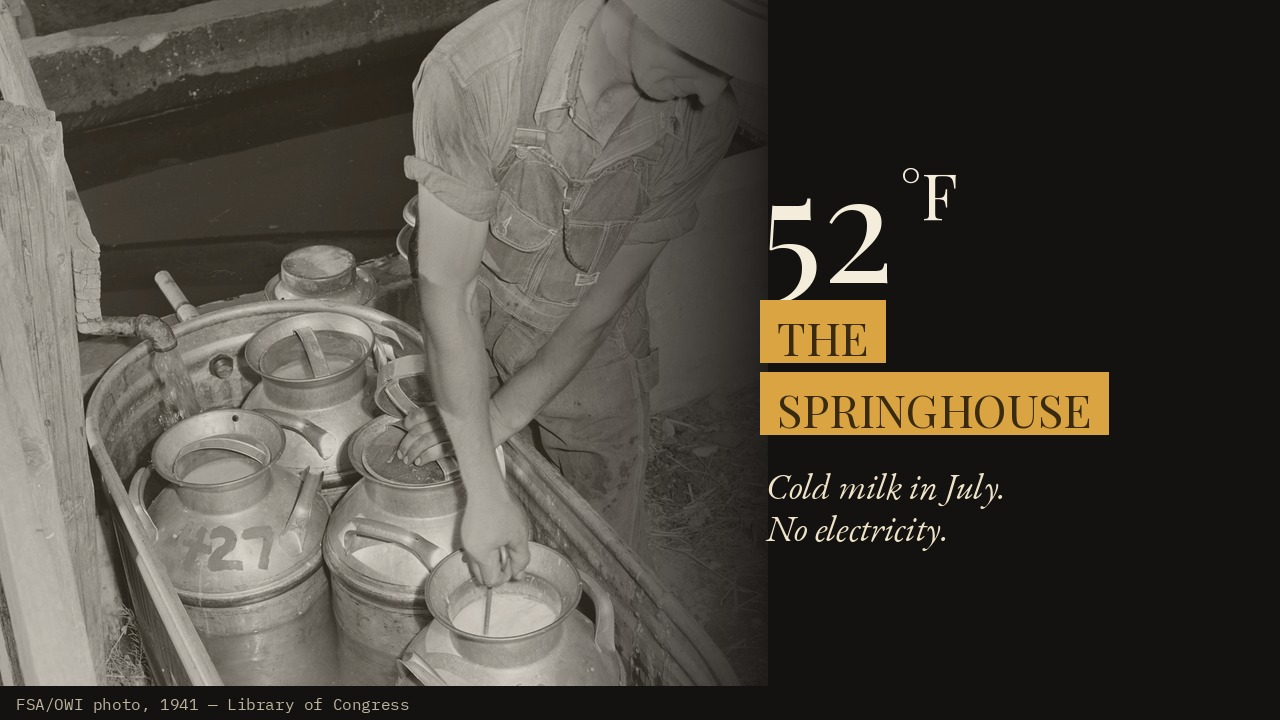
In 1822 the dairy at Hampton, a plantation outside Baltimore, sold 4,300 pounds of butter for $1,764. Every pound of it had been chilled, skimmed and worked in a stone building with no mechanical cooling of any kind. The building was set over a spring, and the spring did the work. That is how a springhouse worked, and the National Park Service, which now owns the site, notes that the same structure stayed in service until the 1940s.
A piece of geology, roofed over, doing the job of a refrigerator for a century and a half. This article is about the mechanism: where the cold came from, why it did not run out, what the trough and the pans and the crocks were each doing, and why the temperature inside was closer to 55°F than the 38°F your kitchen fridge runs at now. It also covers the part the building rarely gets credit for, which is that it was the farm’s water supply before it was the farm’s cold room.
And it settles what killed it. The short answer is a power line. The longer answer involves a federal loan programme, a milk ordinance, and a creamery lorry.
The cold came from the ground, and the ground does not have seasons
Air temperature in the eastern United States swings by eighty degrees or more over a year. Groundwater does not. Once you get a few dozen feet below the surface, the earth settles at roughly the average annual air temperature of the place above it, and water that has spent time down there comes out at that temperature regardless of the month.
The U.S. Geological Survey measured this directly in a set of wells in central Delaware in 1980–81. At eight feet down the water ran from 45°F in February to 70°F in September — shallow water follows the weather with a lag. At thirty-five feet the same well moved between 56.0°F and 57.8°F over the entire year. Across all twenty wells the annual average at twenty-five feet sat between 54.6°F and 57.8°F, and the survey attributed the small differences mostly to whether the ground above the well was forested.
A spring is simply a place where that deep, stable water reaches the surface on its own. Which is why the figures on historic springhouses cluster so tightly: the Park Service gives 56°F for the spring at Hopewell Furnace in Pennsylvania, and the Mercersburg Historical Society, in the same state, puts a springhouse spring at about 50°F on the hottest day of summer. Further north the number drops; further south it climbs. But on any given farm it barely moved, and that consistency — not any particular degree of cold — is what made the building useful.
Mid-fifties is not modern refrigeration. It is enough to slow the bacteria that sour milk, enough to keep butter from going to grease, and — the part people forget — warm enough to keep everything from freezing solid in January. A springhouse was a two-way thermostat, and the winter half of the job mattered nearly as much as the summer half.
How a springhouse worked: the trough in the floor was the machine
Strip away the walls and a springhouse is a channel. The Pennsylvania Historical and Museum Commission’s field guide to farm buildings describes stone-lined channels or tanks “carefully engineered to take full advantage of running or spring water,” and that engineering is the entire point of the structure. Water rose or entered at one end, ran a few inches deep along a trough cut in bedrock or built up from flat stones, and left through the far wall.
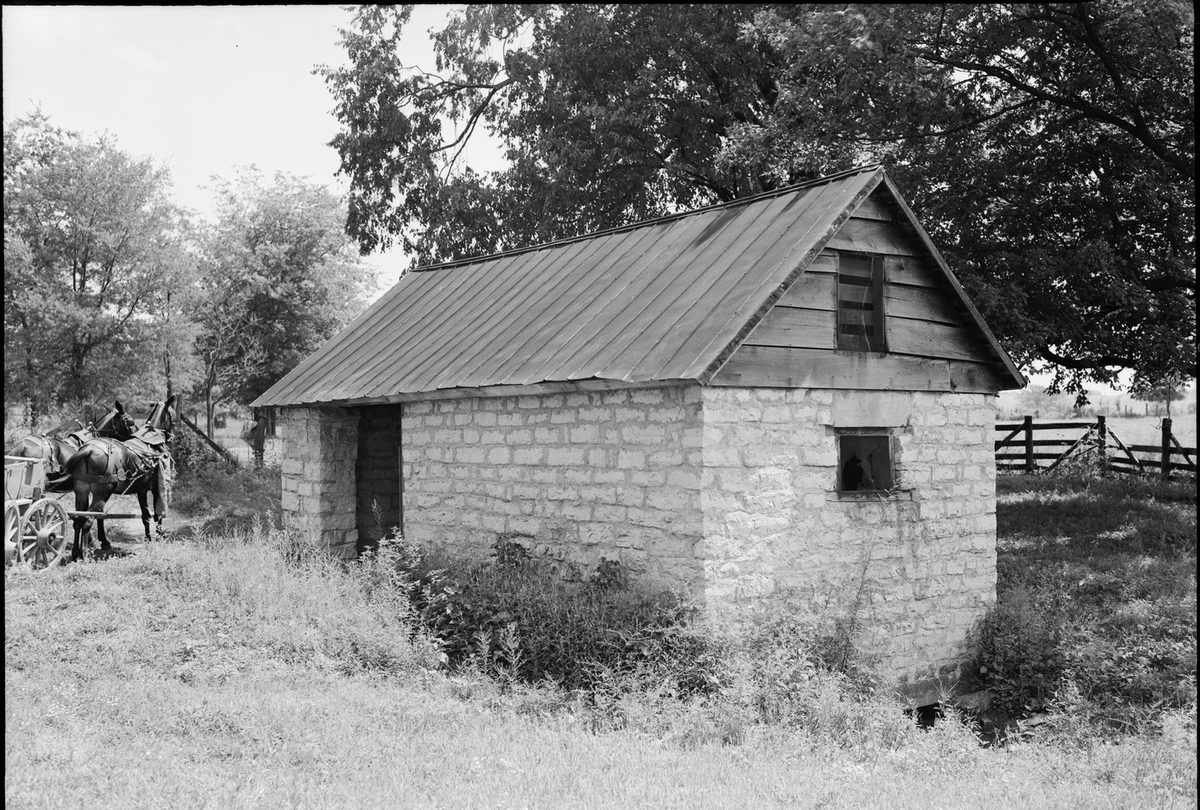
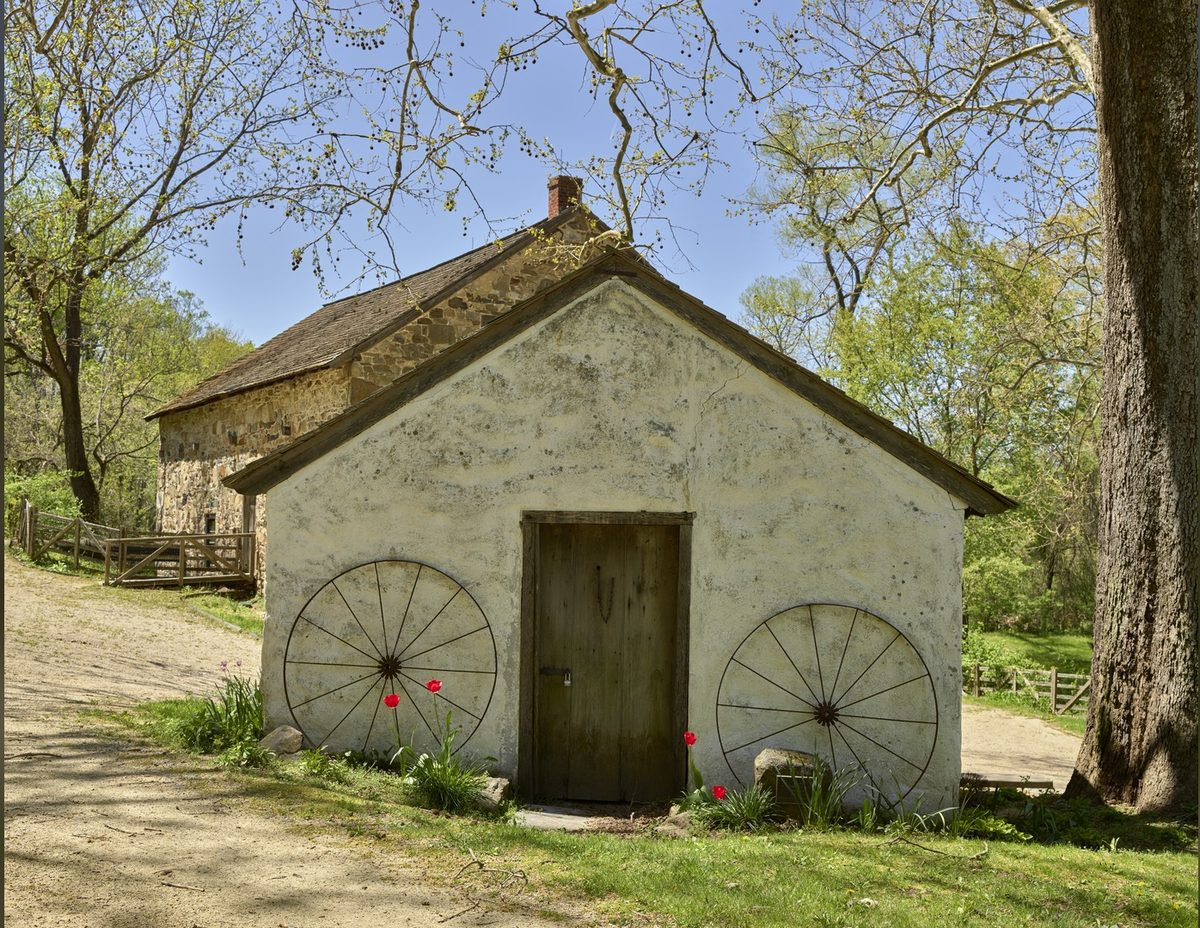
The Hampton dairy shows the fully developed version. Built over a spring between 1790 and 1800 and altered in the 1830s, it was dug into a hillside so the earth insulated three sides. Water came in under a Gothic stone arch at the head of the spring, was directed by channels into a trough that ran right around the perimeter of the floor, and drained out to a creek on the north side. Stoneware milk pails stood in that trough with the water against their sides.
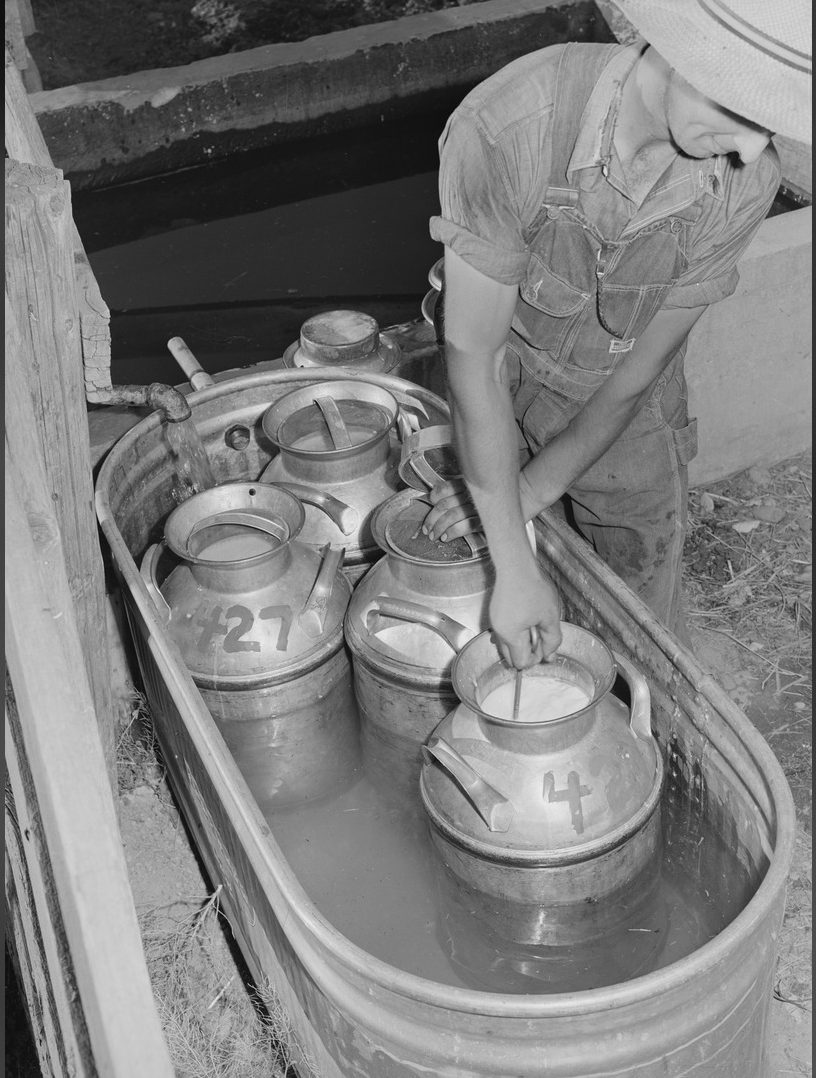
The detail that matters is moving water. A tub of still water at 55°F would warm up as it drew heat out of the milk; a trough that is constantly refilled from below never gets the chance. Every gallon that flowed through carried away the heat the milk had given up and was replaced by a gallon at spring temperature. A 1920 farm-paper guide to cooling milk made the same point about well water in a concrete tank: bring it in at the bottom, let it overflow at the top, and keep it coming.
Everything else about the building served the trough. Thick fieldstone walls soaked up the cold of the water and held it. The bank the building was set into kept the sun off. Nancy Bender of the Mercersburg Historical Society records that early springhouses were sometimes built of logs, and that the logs rotted in the permanent damp, which is why the survivors are almost all stone: it held the cold, it did not rot, and in a flood it stayed put.
Pans for cream, crocks for butter, and a locked door
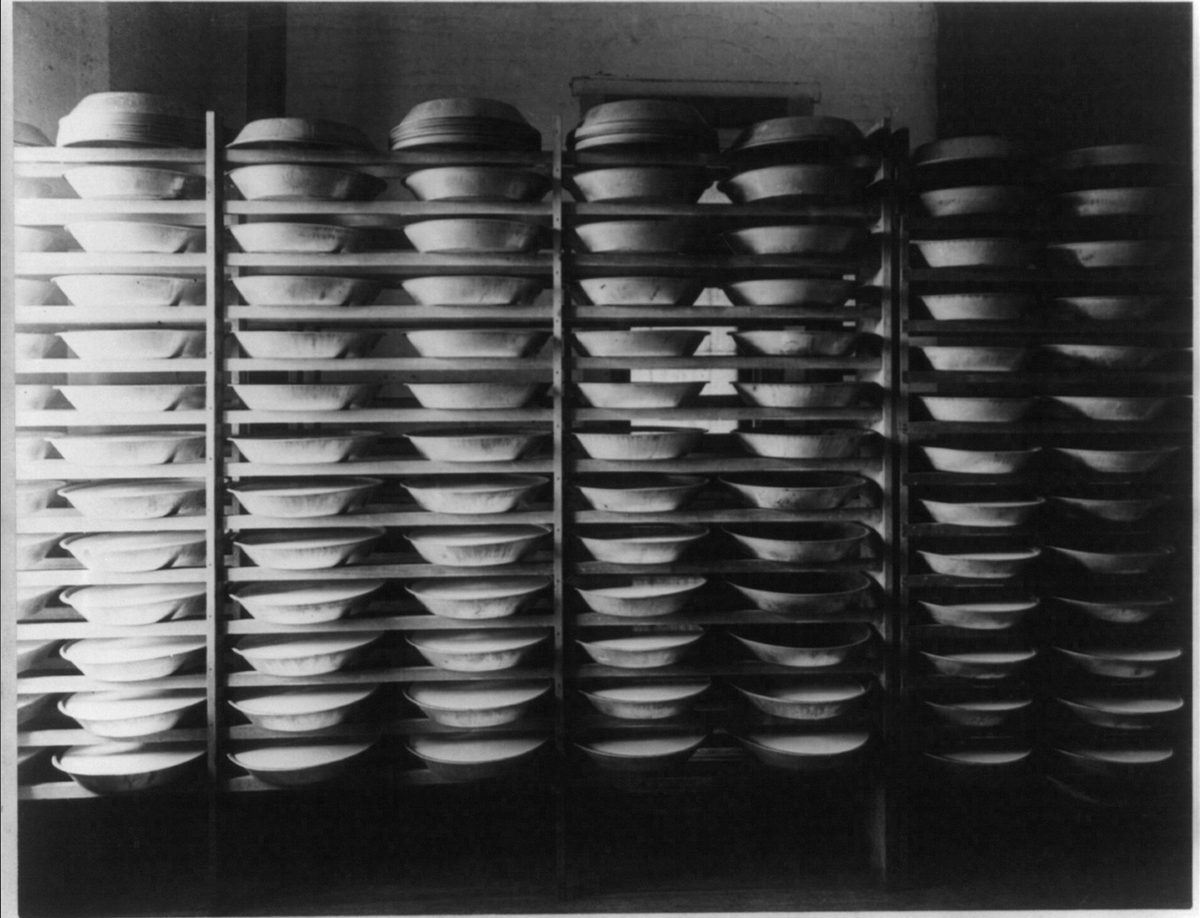
Inside, the work was organised around what milk does when you leave it alone. Fresh milk poured into a wide, shallow pan and left cool overnight separates on its own: the cream floats. The PHMC guide notes that springhouses had shelves “arranged so that milk pans could be set on them, and cream could rise,” and that churning, salting and working the butter happened in or beside the building. The springhouse was less a cupboard than a small dairy plant, and the same guide observes that they were more common in districts where per-farm butter production was higher.
Finished butter, salted and packed into covered stoneware crocks, went into the water itself. So did anything else that spoiled: the Park Service describes the cooling room at Hopewell Furnace holding “milk, dairy products, meats, fruits and vegetables in crocks, half submerged in the flowing spring water.” Bender adds gravel in the channel, a deeper pool dug for the largest containers, and — on some farms — that pool stocked with fish for the table.
Hopewell also preserves a detail that tells you what the contents were worth. Its springhouse, built around 1806–07 on the site of an earlier one, had two original rooms: a water room, open day and night to anyone who wanted a drink, and a cooling room that was kept locked, with access limited to the ironmaster’s household. The cold was a shared utility. The food in it was not.
Where the building had a second storey, it earned its keep too. The PHMC lists storage, dairy processing and even living quarters upstairs; Hopewell’s later addition, built before 1830, was a “lard kitchen” with a large hearth used for laundry, soap-making, rendering lard and boiling apple butter. Wet, smelly, hot jobs were done in the one building that could take them, and the results went straight into the water a few feet away. The skimmed cream, meanwhile, went to a dash churn.
The spring chose where the farm went
It is tempting to picture the springhouse as an outbuilding added to a finished farm. The evidence runs the other way. The PHMC field guide states plainly that spring sites “were important determinants in farm selection and siting” and were “much prized and carefully protected, either by simple roofs or by elaborate spring houses.” A settler looking at land looked first for water that came out of the ground on its own, because that water needed no digging, no pump and no bucket.
Bender describes the same logic from the ground up: the house and barn were placed on a different level from the spring and at a distance from it, specifically so that nothing from the barnyard could drain into the water. The springhouse existed first to keep leaves, mud and livestock out of the drinking supply; the cold storage was the bonus. That is why the water room at Hopewell was left open around the clock, and why, around 1850, the furnace installed a hydraulic ram there to push water uphill to the mansion through wooden pipes. The springhouse was the waterworks.
Farms without a spring managed differently — a cistern to catch rain, a dug well with a pump, an icehouse filled from a frozen pond, a root cellar for the vegetables — but none of those gave you cold running water for nothing. Bender’s estimate is that springhouses were probably outnumbered on the Pennsylvania landscape only by barns and privies.
Amos Long Jr., who wrote up the springs and springhouses of the Pennsylvania German country for Pennsylvania Folklife in 1960, collected the beliefs that grew up around them, and they are a decent index of how central the building was. If there were no bullfrogs in the springhouse, the water was no good. Bathing the feet in spring water every evening kept them healthy. A spring that went dry and then turned damp again meant heavy rain was coming. Whatever one makes of the medicine, the frogs were a reasonable water-quality test.
The creamery raised the bar before the wire arrived
The springhouse did not die in a single year, and the first blow was not electrical. By the second half of the nineteenth century milk was increasingly leaving the farm raw, to be made into butter, cheese or condensed milk somewhere else, and the buyer set the terms. The 1920 Farmer’s Advocate guide is blunt about what those terms were: condenseries and milk-powder plants “demand a milk that is cooled to at least 65 degrees Fahrenheit,” and a single condensery had turned back 18,000 pounds of soured milk on one June Monday.
Sixty-five degrees is a target a good springhouse could hit. The problem was that the article’s model dairyman was already doing better: a milk house on the north side of the barn, a twenty-five-foot well delivering water at 45°F, a coil cooler that ran the fresh milk over cold water before it ever reached the can, and a concrete tank in the floor that held milk “until Monday morning at a temperature of 55 degrees.” The installation cost him $800 in 1913. It was a springhouse rebuilt in concrete and galvanised iron, with a gasoline engine standing in for the hill.
Then the rules changed. In 1924 the U.S. Public Health Service issued the Standard Milk Ordinance, a model code for state and local governments to adopt, and Alabama adopted it that same year. Its descendant, the Grade “A” Pasteurized Milk Ordinance, is still the national benchmark. The Department of Agriculture had been telling farmers how to cool milk since 1918, in a Farmers’ Bulletin that stayed in print until 1955. Once the buyer could measure temperature at the roadside and the ordinance said what the number had to be, a building that produced whatever the spring happened to produce was on borrowed time.
A federal loan programme finished it in twenty years
What the springhouse could not survive was a cheap alternative, and for most farms the alternative did not exist until the 1930s. The National Rural Electric Cooperative Association’s own history puts it simply: as late as the mid-1930s, nine out of ten rural homes had no electric service. Private utilities would not string line to farms that were miles apart, and where they did, rural rates in the 1920s ran about twice the urban rate, according to economic historian Laurence Malone’s account of the period.
Franklin Roosevelt created the Rural Electrification Administration by executive order on 11 May 1935, and Congress funded it the following year with $410 million over ten years. Morris Cooke’s 1934 planning report had costed rural line at $500 to $800 a mile; the REA lent that money to farmer-owned cooperatives at low interest over twenty-five years, and the cooperatives built the lines themselves. By the end of 1938, Malone records, 350 cooperative projects in forty-five states were delivering power to 1.5 million farms.
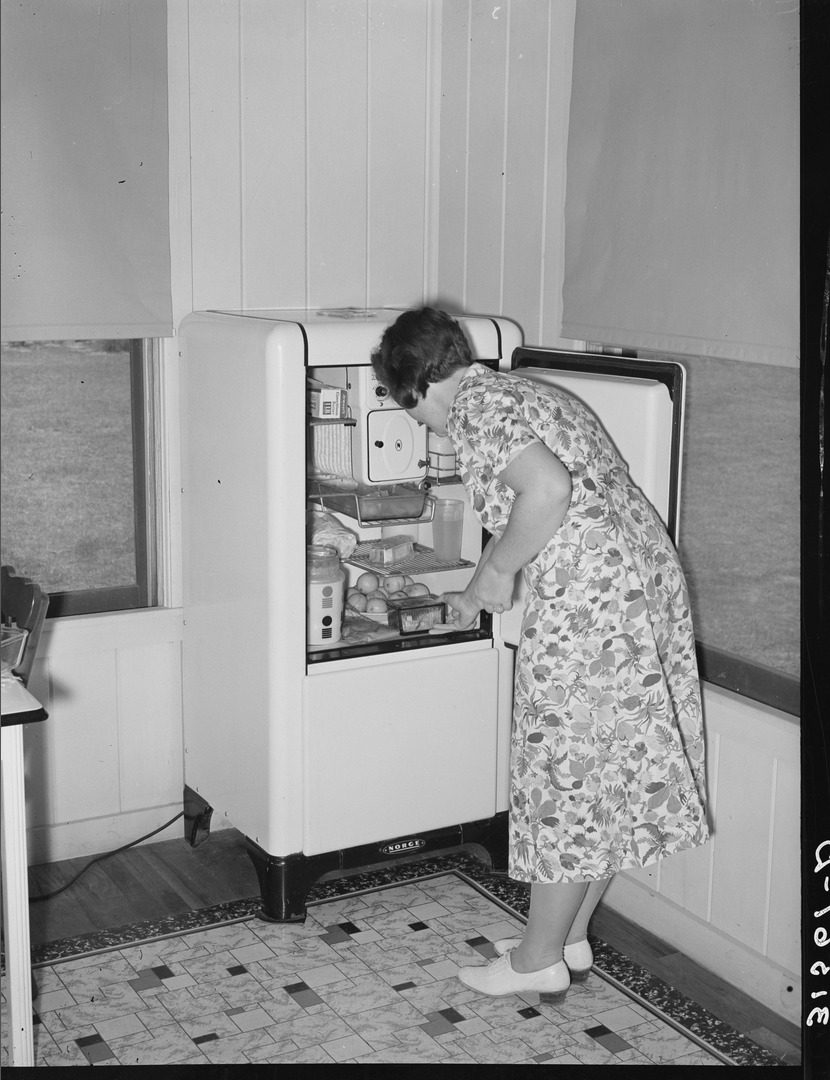
By 1953 more than ninety per cent of American farms had electricity, and by the mid-1950s nearly all of them did. An electric refrigerator in the kitchen, a mechanical cooler in the milk house, and a state inspector with a thermometer between them removed every job the springhouse had. Hampton’s dairy, chilling milk since the 1790s, stopped in the 1940s. Bender dates the end of the Pennsylvania springhouse as a working cooler to roughly the 1930s. The two accounts bracket the same twenty years.
What is left, and what it tells you
Nobody demolished them. Fieldstone is expensive to remove and useless to salvage, so the buildings stayed where the spring put them, and the spring is still running through most of them. The PHMC notes that you can often spot one from the road by the willows, which like their feet wet. Hopewell and Hampton keep theirs open to visitors; thousands of others are pump houses, garden sheds and the one room on the property that is cool in August without anyone paying for it.
The springhouse is the clearest case in the Old Ways series of a technology that was not improved upon so much as bypassed. Nothing about it stopped working. The water is the same temperature it was in 1790. What changed was that a wire made the location of the spring irrelevant and a regulation made its temperature insufficient, and between them a building that had decided where the farmhouse stood became a shed.
So the question the video ends on still stands. If the power went off and stayed off, how would you keep milk cold?
Watch the full history
The four-minute video walks the building room by room, from the trough to the loft, and ends on the crews who strung the wire.

Related reading
- The Icehouse — the other half of the farm’s cold chain, and the one that needed a frozen pond.
- The Icebox — the kitchen appliance that bridged the gap between the spring and the plug.
- The Root Cellar — the same buried-in-the-earth logic, applied to potatoes instead of milk.
- The Hand Pump — what farms without a spring used to lift their water instead.
- The Dash Churn — what happened to the cream once it had been skimmed in the springhouse.
Shop the items in this history
Works cited
- Long, Amos Jr. “Springs and Springhouses.” Pennsylvania Folklife 11, no. 1 (Spring 1960). Pennsylvania Folklife Society; digitised by Ursinus College. Link.
- Pennsylvania Historical and Museum Commission. “Springhouse.” Pennsylvania Agricultural History Project: Field Guide. Harrisburg, 2015. Link.
- Pennsylvania Historical and Museum Commission. “Springs.” Pennsylvania Agricultural History Project: Field Guide. Harrisburg, 2015. Link.
- National Park Service. “Spring House.” Hopewell Furnace National Historic Site, Elverson, Pennsylvania. Updated 4 February 2025. Link.
- National Park Service. “Farm Support Structures.” Hampton National Historic Site, Towson, Maryland. Updated 20 September 2024. Link.
- Hodges, Arthur L. Ground-Water Temperature of the Wyoming Quadrangle, Delaware, with Application to Ground-Water-Source Heat Pumps. U.S. Geological Survey Water-Resources Investigations Report 82-53, 1982. Link.
- Malone, Laurence J. “Rural Electrification Administration.” In EH.Net Encyclopedia, edited by Robert Whaples. Economic History Association, 16 March 2008.
- National Rural Electric Cooperative Association. “History.” America’s Electric Cooperatives. Arlington, Virginia, 2023. Link.
- U.S. Food and Drug Administration. “Pasteurized Milk Ordinance Centennial.” 2 December 2024. Link.
- “Practical Methods of Cooling Milk on the Farm.” The Farmer’s Advocate, 3 June 1920. Reproduced in Farms.com, Reflections on Farm and Food History. Link.
- Bender, Nancy. “Spring Houses, Important Buildings in the Past.” Mercersburg Historical Society, Mercersburg, Pennsylvania. Link.
- Grant, Fred M. Farm Methods of Cooling Milk. U.S. Department of Agriculture, Farmers’ Bulletin 2079, March 1955; supersedes Farmers’ Bulletin 976, Cooling Milk and Cream on the Farm (1918).