
The tomb of Genghis Khan is, on the evidence, a decision not a mystery — not a matter of missing coordinates so much as missing agreement. In the summer of 1227, the most powerful man alive stopped being alive, somewhere between the hills of Gansu and the rivers of northern Mongolia — and even that sentence is more certain than the sources allow. What happened next is usually told as a story about murder and secrecy. Most of it turns out to be wrong, or unearned by anything anyone wrote down at the time.
A Death Nobody Agreed On
The medieval accounts don’t even agree on the country. The Secret History — the only chronicle written for the Mongol royal family itself — says he fell from his horse while hunting and sickened. Rashid al-Din and the Chinese History of Yuan both describe an illness instead, the Yuan Shi dating a fever to August 1227, with death within eight days. Marco Polo, writing decades later from secondhand report, says an arrow to the knee. A 1662 Mongolian chronicle — four centuries later — adds a captive Tangut princess who did him fatal harm before drowning herself, a legend most historians treat as fiction invented long after the fact. Even the place is split: Chinese annals put the death in Gansu; the History of Yuan’s own annals put it at a palace in northern Mongolia. Modern medicine has added a theory rather than settled one: a 2021 paper argues the fever fits bubonic plague better than the long-assumed typhoid, citing a documented outbreak among his troops the year before — a retrospective diagnosis, not a resolved cause.
One Sentence, and a Mountain
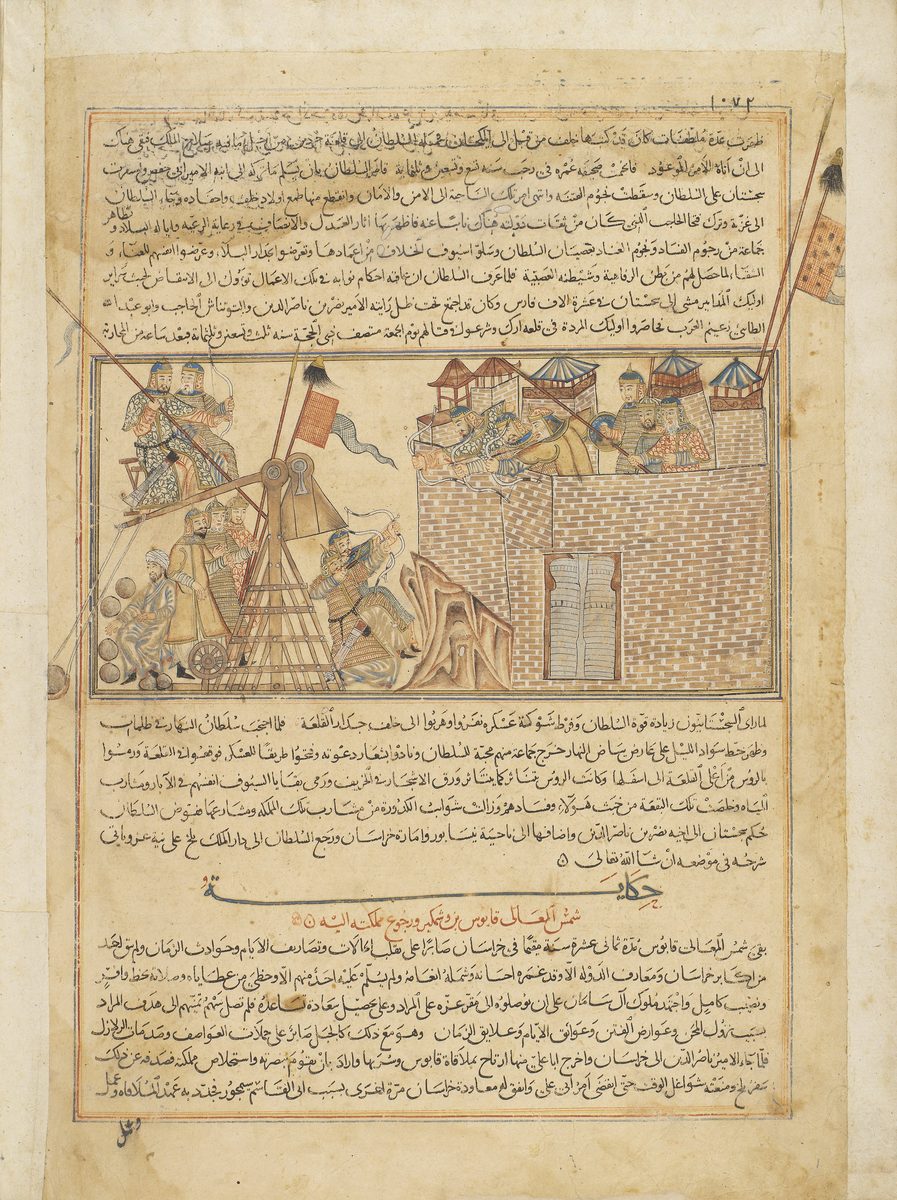
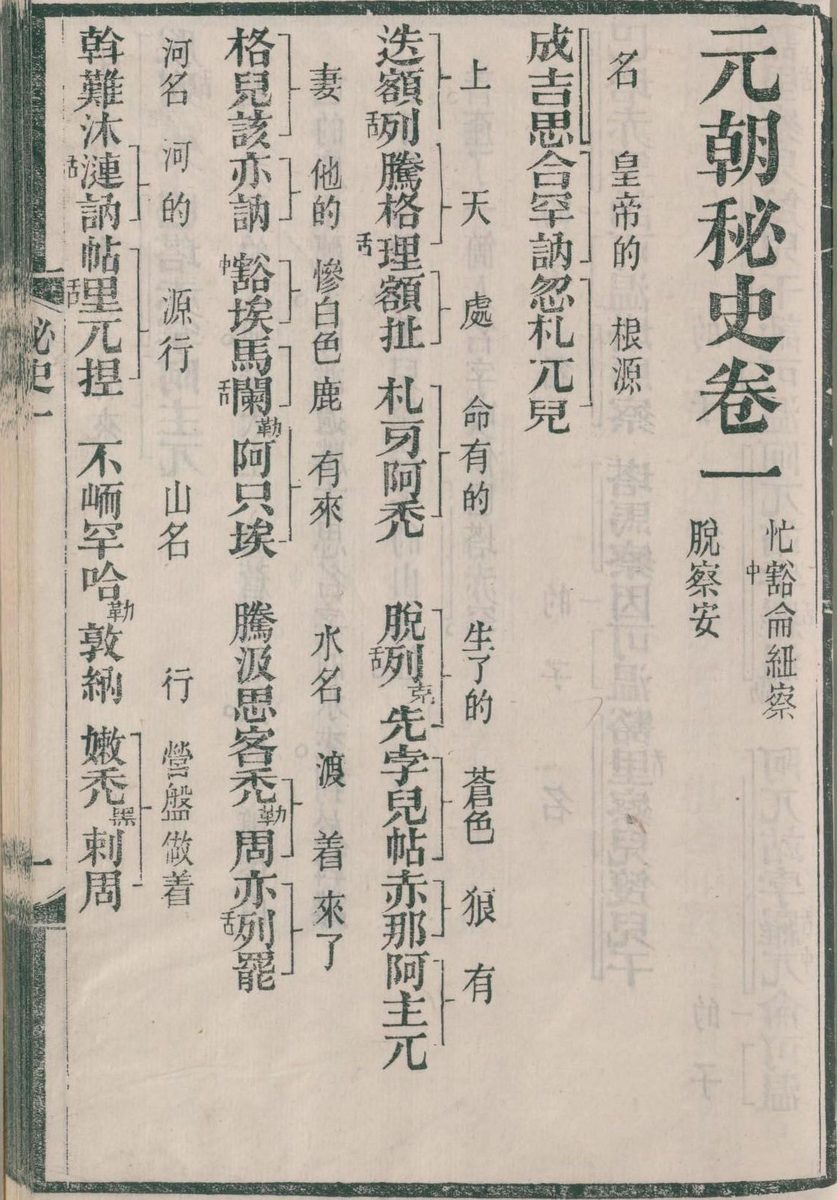
His death was kept quiet until the war against the Western Xia was won. Then the record goes strange. The Secret History survives only indirectly: the Mongolian original is lost, and what remains is Middle Mongolian spelled out phonetically in Chinese characters, with a Chinese gloss beside it, produced in the 1380s as a language-training text for Ming officials learning Mongolian. Twelve chapters, two hundred and eighty-two sections — and on the burial of its own subject, the text gives one sentence: in the Year of the Boar, Genghis Khan ascended to heaven.
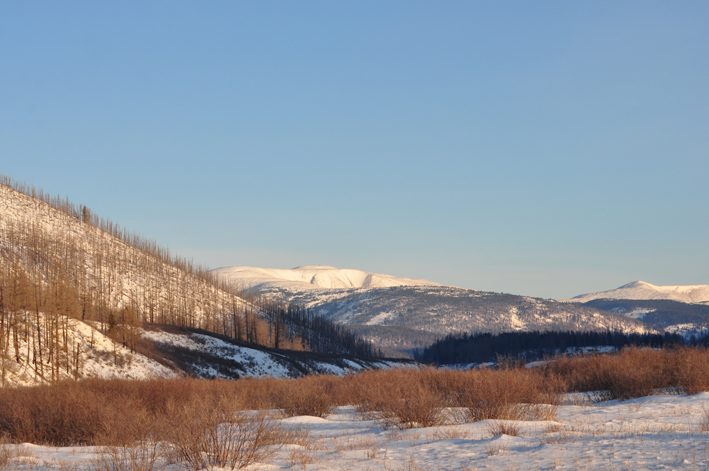
What the Secret History gives instead is a mountain. Burkhan Khaldun, in the Khentii range, appears repeatedly: hunted as a young man by the Merkid, Temujin hid on its slopes, survived, and came down swearing to honour the mountain every morning for life, and to have his descendants do the same. The first text to name a burial place wasn’t written until around 1307, by Rashid al-Din. His Compendium of Chronicles survives only in pieces — 151 folios in Edinburgh, 59 more in London’s Khalili Collection — and it places the Khan at Burkhan Khaldun, giving the area a second name: the Great Forbidden Precinct. Rashid al-Din also supplies the only concrete image of the grave anyone wrote down: out hunting, the Khan admired a particular tree and said he wished to lie beneath it. He was buried there, and the forest grew in until the tree could no longer be told apart from any other. No engineering. Just trees.
A Decision Not a Mystery: What the Legends Get Wrong
The chain-of-murders story — gravediggers killed by soldiers, the soldiers killed by a second party who then kill each other — circulates widest today, and appears in no account written anywhere near the event; it traces instead to popular histories written in the current century. Marco Polo, who gets credited with it most, didn’t say it. Polo’s actual claim describes convoys carrying the Grand Khans to a mountain he calls Altai, killing anyone they meet — and his figure, more than twenty thousand slain, belongs explicitly to the funeral of Mongke Khan, Genghis Khan’s grandson and the fourth Great Khan, not to this one. A river supposedly diverted over the grave has no source earlier than the twentieth century; the same story gets told about Gilgamesh and Alaric the Goth, usually a sign of folklore making the rounds rather than reportage.
Some other practices are real, if less dramatic. Horses driven across the burial ground to disguise it appears in the History of Yuan’s own chapter on funerary rites. A camel killed at the grave, so its mother could later lead mourners back, is attested too — though the memoir recording it already calls the detail hearsay. There’s also a structural reason the mass-murder version doesn’t hold up: someone had to keep knowing where the grave was. Generations of the royal family were buried in the same precinct, so the location was never a one-time secret — it was maintained, guarded continuously for centuries. A secret kept by killing everyone who knows doesn’t survive seven hundred years of planned re-use.
Seven Centuries of Guards
That guarded precinct had a name — the Great Taboo, or Ikh Khorig — covering roughly two hundred and forty square kilometres of Khentii province. The fullest named account of who held it names the Uriankhai tribe: warriors exempted from taxation and military service for the duty, entry restricted to Genghis Khan’s own line, trespass a death sentence. (A separate group, the Darkhad, are consistently identified instead as keepers of a different site — the ceremonial shrine holding Genghis Khan’s relics at Ordos. The two get blurred together often, this video’s script included.) The Khentii guard reportedly held until 1924, when the closure changed hands: fearing nationalism, the Soviets declared the area restricted, and archaeologists weren’t let back in until the late 1980s. Mongolia has since formalized the protection three times over — a strictly protected area in 1992, a 1995 decree making worship at the mountain a matter of state, and a July 2015 UNESCO inscription worded, in Mongolia’s own nomination, as the probable rather than confirmed site of his birth and burial. UNESCO kept that hedge.
Everything the Searching Has Found, Except Him
The modern hunt starts in 1915, when a Chinese scholar argued the tomb lay in the Ordos instead — an idea with real traction, since explorers had already found tented shrines there that later became the Ordos mausoleum. From 1990 to 1993, a joint Mongolian-Japanese team, Gurvan Gol (Three Rivers), surveyed the Khentii and catalogued over a thousand candidate noble graves; public objection halted it before it finished, in the first years of Mongolian democracy.
In 2001, a US-Mongolian team under historian John Woods and investor Maury Kravitz announced a walled enclosure near Batshireet with at least twenty unopened tombs, surface pottery giving ambiguous dates that could predate Genghis Khan’s own 1162 birth — unconfirmed, Woods said, pending excavation. The dig didn’t get the chance: in 2002, former prime minister Dashiin Byambasuren alleged the ground had been desecrated — vehicles on sacred ground, remains stored in a pan. Woods disputed the specifics, but authorities ordered the team off that August, and Kravitz ended the season rather than escalate.
In 2004, a Japanese-Mongolian excavation at Avraga turned up a large timber-framed building dated to around 1200 — not a tomb, but possibly a residence. Twenty radiocarbon dates published by ANU researchers in 2020 confirmed occupation during Genghis Khan’s own lifetime and just after his death. The team’s archaeologist stopped short of certainty, calling Avraga “more likely than not” his winter camp — confirmation people lived there at the right time, not proof of whose building it was.
The search went digital between 2010 and 2012. The Valley of the Khans project, built around engineer Albert Lin and backed by National Geographic, put satellite imagery online and asked the public to flag anything man-made, choosing non-invasive methods specifically because that secured Mongolian permission to survey at all. More than ten thousand volunteers flagged 2.3 million features; roughly a hundred were checked on the ground. The project confirmed fifty-five genuine sites, found a mound and possible shrine on the summit, and settled nothing about whether either holds a body. Lin has been explicit the remaining question isn’t technological — it’s a decision for Mongolians, not outsiders.
The Hoax, and the Headline That Outran the Paper
The gap between what gets published and what gets reported has produced its own small, recurring mystery. In 2014, the fabrication site World News Daily Report claimed workers near the Onon river had found a mass grave of slaves, massacred to protect the secret, plus twelve horses. It resurfaced on Mongolian television in 2015 and social media in 2018, until the Mongolian Police Department declared it false — in effect, Marco Polo’s account re-enacted with new props.
Something similar, if less deliberate, happened in 2026. Geneticists published genomes from four elite tombs in Kazakhstan’s Ulytau region, tied to Golden Horde nobility, and headlines ran with framing like “new DNA clue to the tomb of Genghis Khan.” The paper claimed nothing of the kind: it found a shared Y-chromosome lineage across three male burials, linked to the Mongolian Plateau, and used it to narrow — not confirm — claims about how that lineage spread. Researchers didn’t identify any individual, and didn’t confirm the most prominent Ulytau mausoleum belongs to Jochi, Genghis Khan’s eldest son, as local tradition holds. Without his own remains to compare against, there was never a route from this data to his grave; the authors say a conclusive answer would need a documented tomb with a clear inscription, sampled directly — which this wasn’t.
The Tomb You Can Actually Visit
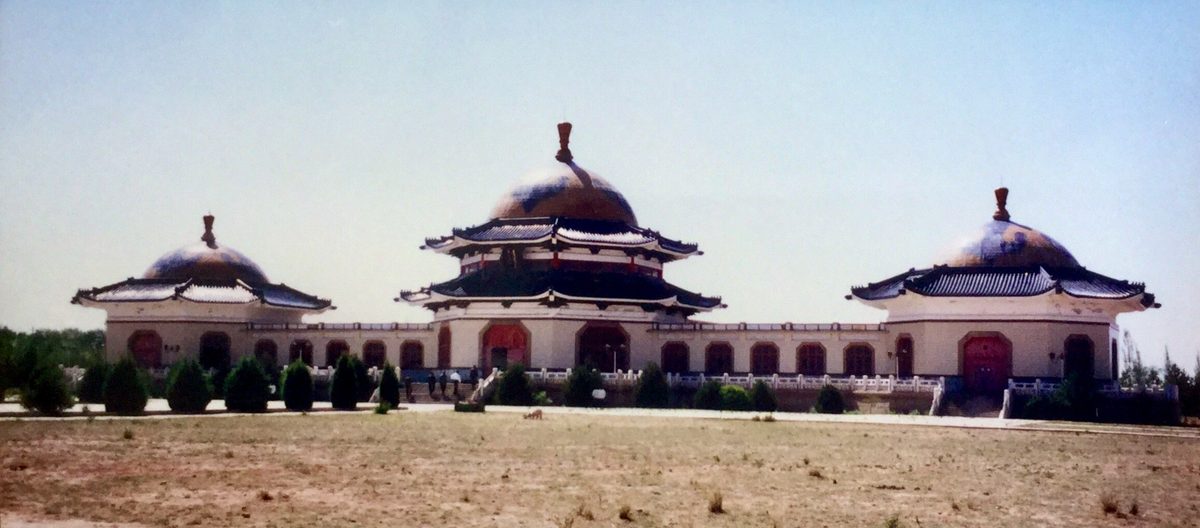
There is a tomb you can visit, and it isn’t his. The Ordos mausoleum draws thousands of visitors a day; the relics on display are replicas, the originals destroyed by Red Guards in 1968. It has never held his body. Not every historian accepts the real burial lies in the Khentii mountains at all: Paul Ratchnevsky argued that since the Mongols did not embalm their dead, a body could not have survived the weeks-long journey north, and suggested a burial nearer the Ordos instead. Christopher Atwood rejects that, noting the Chinese record places the khans’ shared burial ground in the north, and that the Ordos was land the Mongols had only just taken from the Tangut when he died — not yet theirs long enough for a dynastic burial site. It’s a live, unresolved disagreement between serious scholars.
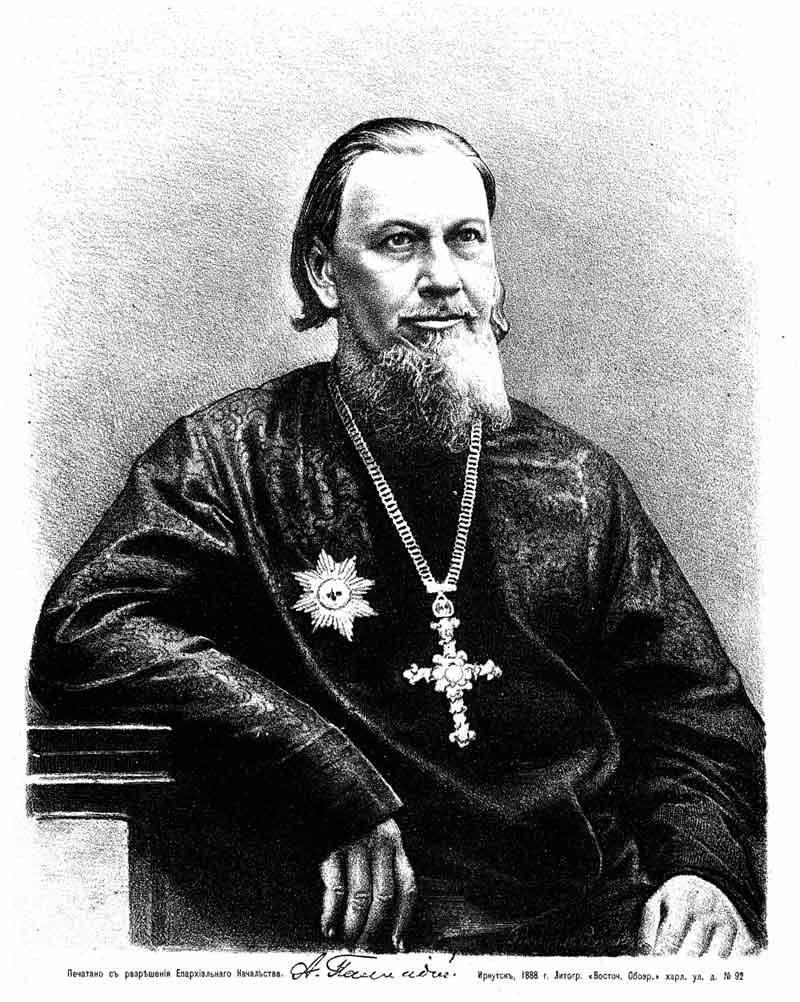
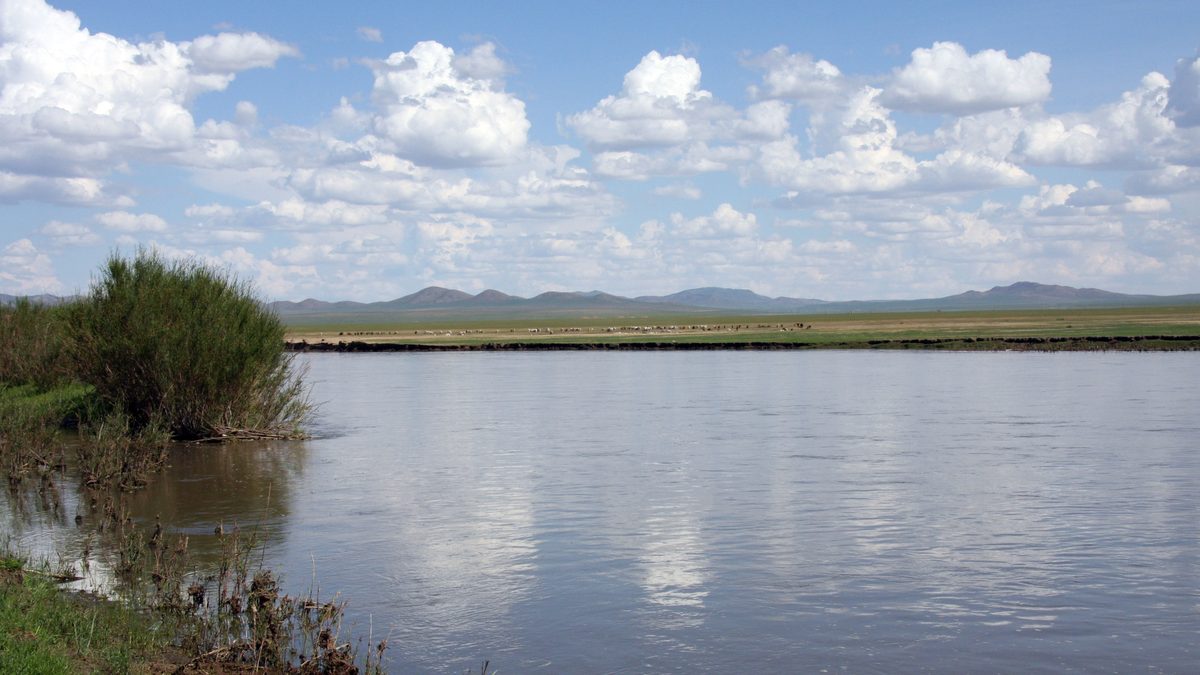
The one specific geographic lead in the entire primary record traces to a Russian Orthodox monk. Pyotr Kafarov, known by his monastic name Palladius, spent decades in Beijing working through Chinese sources on Mongol history. Noticing that a Ming military diary from 1410 placed the Yuan sovereigns’ burial ground at a mountain northeast of the Kherlen river, and that the History of Yuan calls the valley by a name — Qinian — found nowhere else, Palladius proposed in the 1880s that the Chinese name might simply be a contraction of the river itself. Nobody has significantly improved on the guess since.
A Decision, Not a Mystery
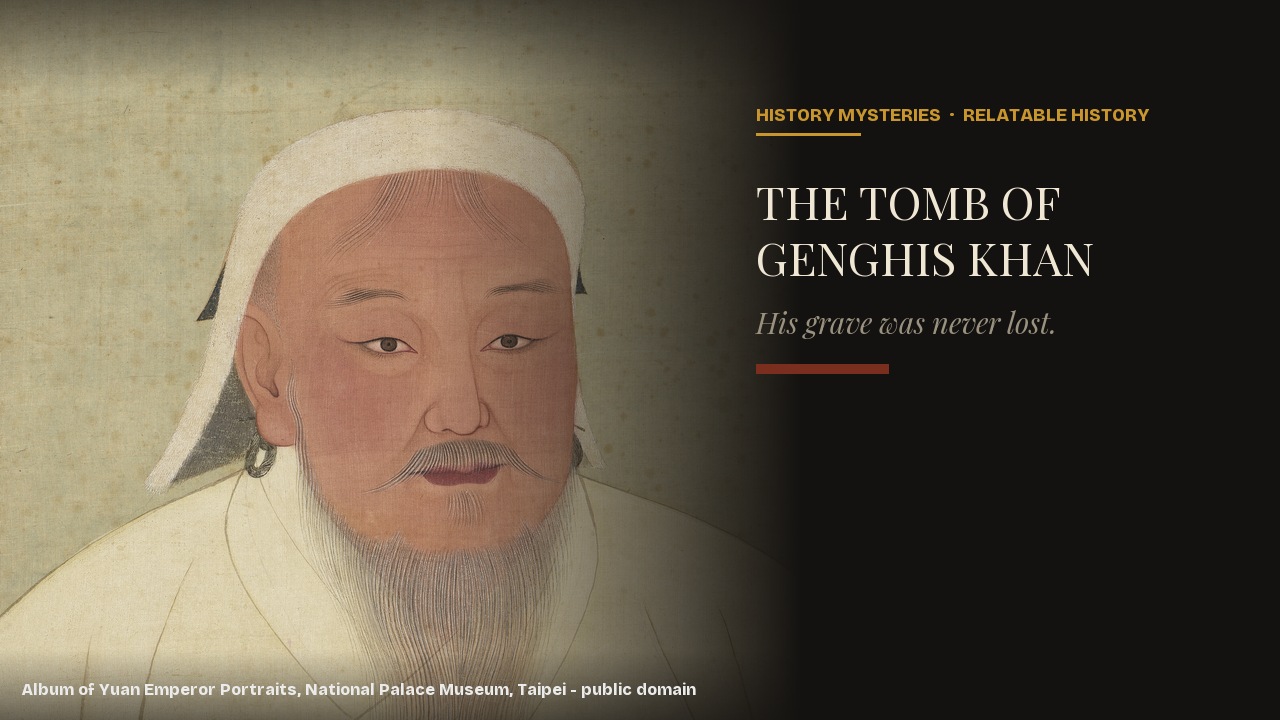
Here is the honest ledger, after eight centuries of looking. Historians do not know the day Genghis Khan died, the country he died in, or the medical cause. They do not know whether his body reached Mongolia, or whether the mound on Burkhan Khaldun’s summit is a grave, a shrine, or a pile of stones — a 2015-2016 French drone survey concluded a formation there looks man-made, but it was flown without permission and never formally published, the whole access problem in miniature. No description of his face survives from anyone who saw it; every portrait was made after his death.
What scholarship offers instead is modest: probably the Khentii mountains, probably not found soon. Every organized search since 1915 has turned up something — a cemetery predating him by centuries, a winter camp, fifty-five confirmed sites nobody went looking for — except the one thing it was looking for. The people who live on that ground have not asked for it to be opened. Three separate searches across thirty years were stopped by Mongolian objection, not failing technology. The grave, on the evidence, is not lost. It is being left alone: a decision not a mystery, re-asked by people who weren’t the ones asked to make it.
Watch the full story

Related reading
- The Plain of Jars: Older Than the Burials Inside Them
- Why Was Göbekli Tepe Buried? What the Evidence Actually Shows
- What Caused the English Sweating Sickness?
- The True Story Behind the Flannan Isles Lighthouse Mystery
Works cited
- Ackroyd, Robin. “The Burial Place of Genghis Khan.” Royal Society for Asian Affairs. Link.
- “Fact Check: Posts Claim 2,000-Plus People Were Executed to Keep Genghis Khan’s Burial Site Secret. Here’s What We Found.” Snopes. Link.
- “Fake News: Chinggis Khan Tomb Found in Mongolia.” News.MN. Link.
- “Folios from the Jami al-tavarikh (Compendium of Chronicles).” The Metropolitan Museum of Art.
- “Researchers Confirm Site of Genghis Khan’s Winter Home.” Australian National University, Research School of Earth Sciences. Link.
- “Mongolia Stops Search for Genghis Khan Tomb.” VOA News, 20 August 2002. Link.
- Romey, Kristin. “Where Is Genghis Khan’s Tomb? What Science Reveals About This Centuries-Old Mystery.” National Geographic. Link.
- “Ancient DNA Reveals Golden Horde Elites’ Mongolian Roots and Ties to Central Eurasian Populations.” Archaeology Magazine, February 2026. Link.
- “Genghis Khan Died of the Plague, Researchers Suggest.” Medievalists.net. Link.