
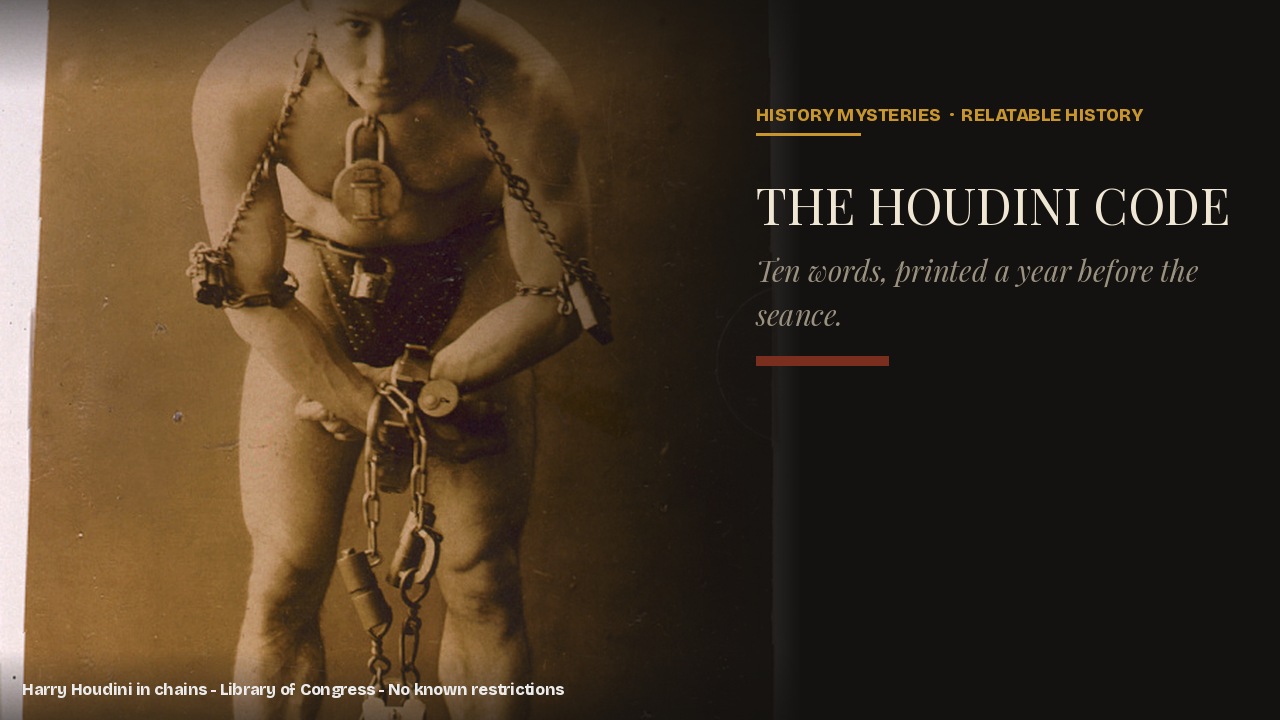
Harry Houdini spent the last years of his life exposing mediums on stage, in print and in a Congressional hearing room. Then he built a device meant to prove, after his own death, that one of them might actually be real. It was a code, ten words long, and he gave versions of it to more than one person he trusted. For a decade almost nobody could break it. Then a library book did.
How Houdini’s code worked is a more interesting question than whether Arthur Ford really spoke to the dead in 1929, because the mechanics explain why the whole scheme was doomed before anyone sat down at a séance table. It also connects to a part of Houdini’s life the famous version of this story tends to skip: he was running what amounted to a private intelligence agency against American spiritualism, years before his widow ever needed a code to test anyone.
How Houdini’s Code Worked
Harry and Bess Houdini were a stage act before they were a marriage. In their early years on the variety circuit they performed a “second sight” mind-reading routine, the same genre of act made famous by duos like Julius and Agnes Zancig: one partner handled an object or a spectator while speaking a patter of ordinary-sounding questions and instructions, and the other, blindfolded or facing away, announced what it was. The trick was never psychic. According to the magic historian Michelle Ainsworth, these acts ran on pre-arranged verbal codes — a performer’s choice of phrasing (“what object” versus “which object,” for instance) silently flagged which item was in play, with numbers and names relayed the same way. Mastering one took enough memorisation and drilling that Ainsworth notes some performers simply gave up on the form.
The substitutions themselves were plain on purpose. In the Houdinis’ version, the word answer stood for the letter B, tell stood for E, look stood for I, and so on down a short private alphabet — close enough to ordinary stage patter that a listening competitor heard nothing but chatter. The whole point of a code like this was that it had to sound like nothing at all.
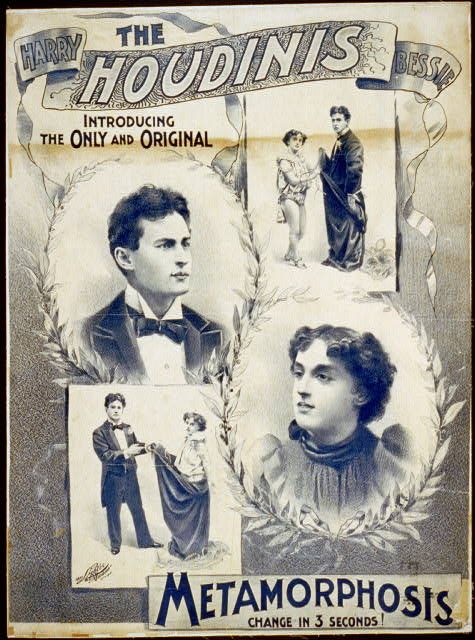
The Houdinis built their own version of that system around a simple substitution: specific words stood for specific letters. Years later, dying, Houdini and Bess agreed to reuse it for one last message. The code did not need to carry much information — it only had to spell a single word, under conditions where the person receiving it could not have simply read the sender’s mind. That was the entire design brief, and it is also exactly why the test could only ever work once, in secret. The moment the key existed anywhere outside two people’s memory, a correct answer stopped proving anything except that someone had found the key.
Houdini Was Running a Sting Operation on American Spiritualism
The Bess code is the famous half of this story. The less famous half is that Houdini tested the same idea on more than one person. According to a 2025 account in Mental Floss, drawing on the papers of his undercover investigator Rose Mackenberg, Houdini gave a version of his private after-death code to several close friends, not just his wife. Mackenberg was one of them, and more than twenty years after his death she was still reporting, flatly, that “his message has not come through.”
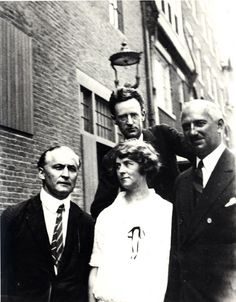
Mackenberg herself is worth knowing, because she is the reason Houdini could stand on stage and name the mediums in his own audience. A former stenographer turned private investigator, she worked undercover for Houdini from 1925 onward, posing city after city as a grieving widow, sitting for readings, and collecting certificates that ordained her as a spiritualist minister under a string of invented names — “Frances Raud,” a pun on “fraud,” among them. By the time of her death in 1968 she had, by her own account, sat through readings with more than a thousand mediums and judged every one of them a fraud. Houdini’s circle called her “The Rev.” It was not entirely a joke; spiritualist churches kept ordaining her.
Her very first case for Houdini, in 1925, had nothing to do with séances at all: an investor had lost money acting on a psychic’s advice, and Mackenberg’s digging into the case impressed Houdini enough that he put her on permanent retainer. From there she worked a city ahead of every tour stop, so that by the time Houdini walked out on stage he already knew the local mediums’ names, their going rates and their methods — intelligence gathered entirely by one woman, travelling alone, under a rotating cast of fake identities.
He Took the Fight to Congress, and It Did Not Go Well for Anyone
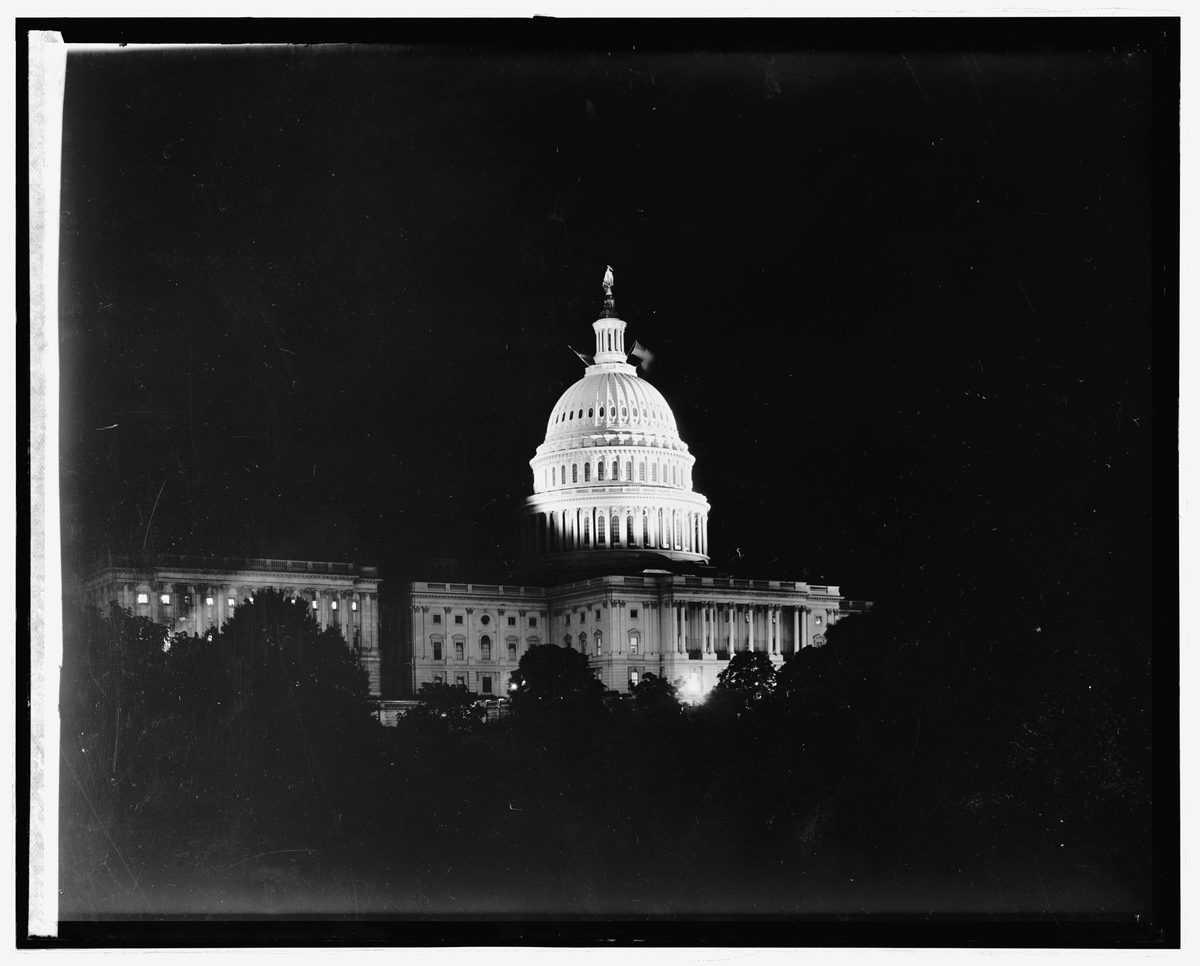
In 1926 Houdini brought Mackenberg’s files to Capitol Hill. Across four non-consecutive days that February and May — documented in the official record of the hearing, Fortune Telling, held before a House District of Columbia subcommittee on H.R. 8989 — he argued for a bill, known in the press as the Copeland-Bloom bill, that would have fined a convicted fortune-teller roughly $250 (something like $4,500 today) or jailed them for up to six months. Mackenberg testified alongside him and, according to Mental Floss, named sitting U.S. senators among the mediums’ paying clients.
The hearings did not stay solemn. An astrologer calling herself Madame Marcia told the subcommittee she had predicted President Harding’s death and warned Houdini he himself would die by November — he died on the last day of October, five months later. A spiritualist minister argued the whole bill violated freedom of religion. The bill went nowhere in committee. Houdini never got his statute. What he got, by every account of the room, was the undivided attention of the press — which had been the actual point all along.
What Arthur Ford Delivered, and How It Came Apart
The ten words Harry and Bess agreed on spelled, letter by letter, a single word: believe. “Rosabelle” opened the message not as a cipher but as a signature — the song Bess sang the night they met, engraved inside her wedding ring — and the rest followed the old stage code. In February 1928, the medium Arthur Ford announced that his spirit guide had produced half of it. A year later, in January 1929, at a séance in Bess’s own home while she was sick and medicated, Ford’s circle delivered what they said was the rest. Bess signed a statement calling it genuine. The signature was not in her own hand.
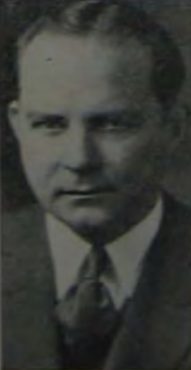
Two days later a rival paper, the New York Evening Graphic, set a trap: a reporter named Rea Jaure invited Ford to her apartment while two colleagues, Edward Churchill and William Plummer, listened from the next room. All three later signed sworn statements that Ford offered Jaure money to keep quiet and admitted, in so many words, that he hadn’t gotten the code from any spirit. Ford denied ever being in the apartment and called it a blackmail scheme. He never collected Bess’s $10,000 reward. And the detail that made the whole contest moot had been sitting in print since the year before: Harold Kellock’s 1928 biography of Houdini, written with Bess’s own cooperation, laid the full code out on page 105, a year ahead of the séance Bess had insisted no one else could possibly solve.
The Flaw in the Test, and the Theory That Won’t Die
There is a reason the published code mattered more than any argument about Ford’s honesty: a secret that exists in a book anyone can borrow stops being a secret, and a code only proves identity for as long as it stays one. Houdini, of all performers, had built his career on exactly that principle — that a trick explained is a trick finished — and the instrument he designed to settle the biggest question of his life turned out to be the one effect he forgot to protect.
The cause of Houdini’s own death carries a smaller, parallel dispute. The standard account, laid out by physician-historian Howard Markel in a 2019 PBS NewsHour piece, is that a McGill student’s punches to his unguarded stomach in Montreal — blows Houdini had agreed to take — were followed days later by a ruptured, infected appendix, treated too late at Grace Hospital in Detroit. Markel notes that a 2013 medical literature review found blunt trauma a rare cause of appendicitis, and suggests the punches and the illness may have been a coincidence that Houdini himself conflated. A more dramatic reading, argued by the authors William Kalush and Larry Sloman in their 2006 biography The Secret Life of Houdini and repeated by the magic-research organisation Conjuring Arts, holds that Spiritualists poisoned Houdini deliberately, and that Ford’s later approach to Bess was part of the same campaign. Mainstream medical opinion has not moved off the appendix. The poisoning theory remains exactly that: a theory, argued but not demonstrated, built partly on the same circumstantial instinct that made the code seem airtight before anyone checked the library.
Neither dispute will be settled by rhetoric alone, and that is rather the common thread running through this whole case. A code is only as good as the secrecy around it; a diagnosis is only as good as the evidence behind it. Both the Houdinis and Ford’s critics eventually ran into the same wall: a confident public claim that outran what anyone could actually verify at the time it was made.
The Candle Went Out, but the Séance Didn’t
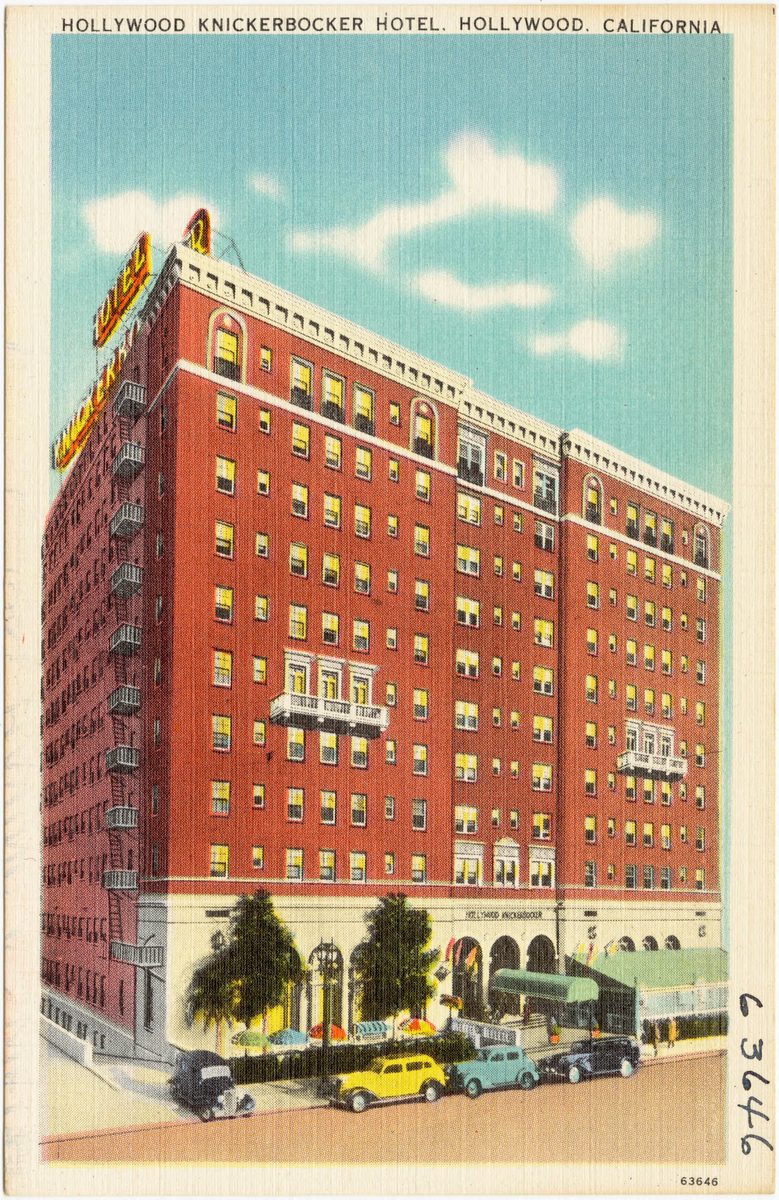
Bess held the test open for ten Halloweens, sitting with whoever would join her in hotel rooms and private houses, waiting for the one word to arrive honestly. On October 31, 1936, on the roof of the Hollywood Knickerbocker Hotel, she broadcast what she called her final séance to a national radio audience, got nothing, and blew out the candle she had kept burning beside Houdini’s photograph for a decade.
The public version of the ritual did not end with her candle. According to the Houdini historian John Cox, the Houdini Museum in Scranton, Pennsylvania — run by magicians Dorothy Dietrich and Dick Brookz, with the Society of American Magicians — has carried a Halloween Houdini séance forward into the present, now streamed free online, timed to begin at 1:26 p.m. Eastern: the hour, Cox writes, that Houdini actually died.
Watch the full history
The video version follows the whole chain of events in just over eight minutes, from the vaudeville act to the library book that ended it.

Related reading
- The 1962 Tanganyika Laughing Epidemic: What the Investigation Actually Found — another case where witnesses swore to something investigators could never fully pin down.
- Why Belgium’s Just Judges Panel Investigation Has Never Closed — a different unsolved case built around a missing original and decades of claimed confessions.
- Who Invented Carbon Paper, Really? Four Credible Answers — on how ordinary records-keeping objects end up with disputed, multi-claimant origin stories.
- The Secret Code of Victorian Calling Card Etiquette — a lighter-weight example of a social code built, like Houdini’s, entirely on shared secrecy.
No single piece of evidence ever arrived to settle what Bess Houdini believed, or ought to have believed, about the message she signed her name to while sick in bed. What the record does settle is the code itself: a device built to be unbreakable that broke the moment it was printed, by the one channel its designer never guarded — a bookshelf.
Ninety years on, the people who still gather every Halloween to try are not really testing whether Arthur Ford cheated in 1929. That part of the record is about as settled as these things get. They are testing something closer to what Houdini was actually after when his mother died and no medium ever brought him a real word from her: whether love is the kind of thing a code, or anything else, could ever be built to prove.
The reward was never claimed. The candle has been out for ninety years. What would you accept as proof?
Works cited
- Kellock, Harold. Houdini: His Life-Story, from the Recollections and Documents of Beatrice Houdini. Harcourt, Brace and Company, 1928, p. 105.
- Carroll, Robert Todd. “Arthur Ford.” The Skeptic’s Dictionary, skepdic.com. Link.
- Jaeger, Marley. “Rose Mackenberg, Houdini’s Undercover Co-Investigator.” Mental Floss, October 22, 2025. Link.
- Fortune Telling: Hearings Before the Subcommittee on Judiciary of the Committee on the District of Columbia, House of Representatives, Sixty-Ninth Congress, First Session, on H.R. 8989. U.S. Government Printing Office, 1926. Catalogued by the McCord Museum, Montreal; consulted via the museum’s collection record.
- Ainsworth, Michelle. “Second Sight: Theatrical Mindreading Acts.” Skeptic, May 26, 2023.
- Markel, Howard. “What Caused Harry Houdini’s Mysterious Death?” PBS NewsHour, March 24, 2019.
- Conjuring Arts Research Center. “Was Houdini Murdered?” conjuringarts.org, January 5, 2010.
- Kalush, William, and Larry Sloman. The Secret Life of Houdini: The Making of America’s First Superhero. Atria Books, 2006.
- Cox, John. “Houdini Museum’s Annual Houdini Séance, Online.” Wild About Houdini, October 26, 2024. Link.
- Gettins, Elizabeth. “Harry Houdini’s Rare Magic Books.” Library of Congress Blog: Inside Adams, October 28, 2014. Link.