
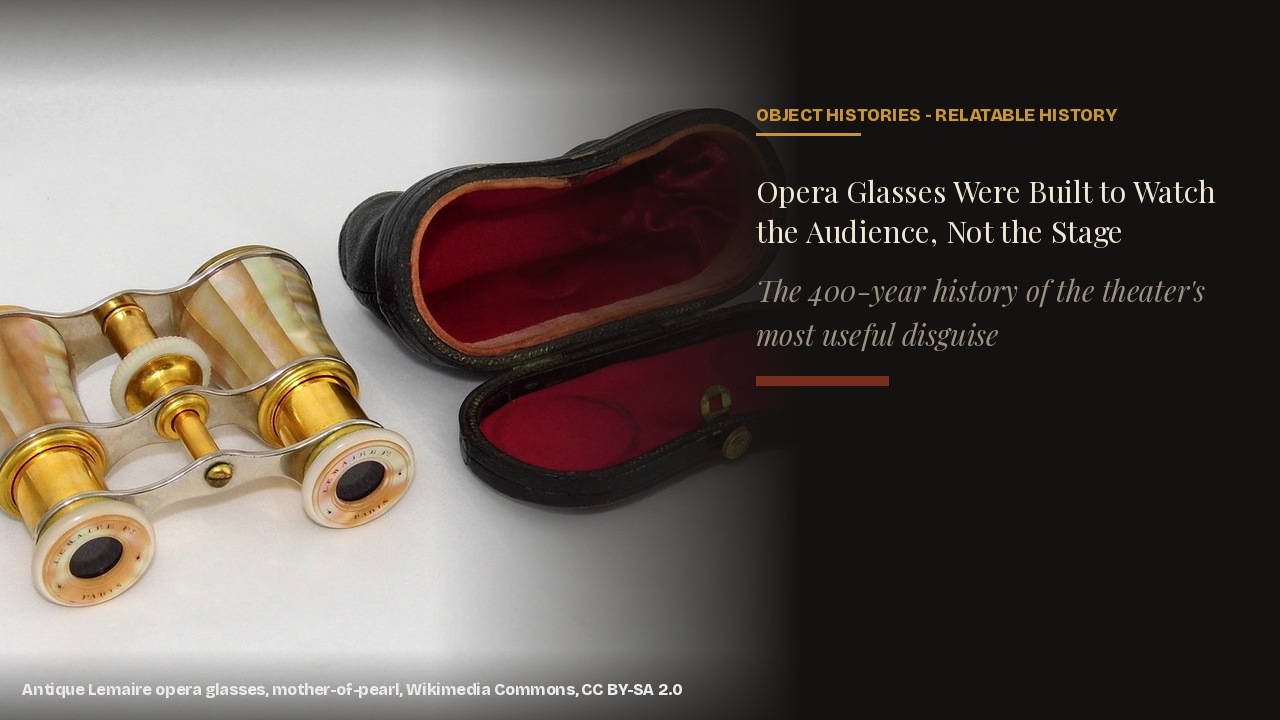
In 1749, an optician to the queen of France named Marc Thomin described a device that, to a stranger across the theater, looked like an ordinary spyglass raised politely toward the stage. It was not. A small mirror, tilted inside the barrel at an angle, redirected the view ninety degrees to one side. “It is sufficient,” Thomin wrote, “to turn this opening in the direction of whatever one wishes to observe.” The person using it could study the box across the aisle in perfect comfort, convinced by everyone watching that they were absorbed in the performance.
Collectors and curators call this object a jealousy glass, and surviving examples turn up in maritime and optical collections as plainly labelled “diagonal spy glasses” — a description of their engineering rather than their real purpose. That purpose only makes sense once you understand what a night at the theater actually was, for roughly a century and a half, before anyone thought to dim the lights.
The jealousy glass is the extreme case of something true of opera glasses generally: the object marketed for looking at the stage spent most of its working life looking somewhere else.
The jealousy glass hid its mirror at forty-five degrees
A surviving example in the Science Museum Group’s collection, catalogued simply as a “diagonal spy glass,” shows the construction plainly: a black lacquered metal tube, built to be held and sighted exactly like a conventional single-barrel opera glass. Inside, instead of a straight optical path from objective lens to eyepiece, an oval mirror is set across the tube at roughly forty-five degrees, and a second opening is cut into the side of the barrel. Light entering that side opening bounces off the angled mirror and travels out through the eyepiece to the viewer’s eye.
The effect is a simple optical periscope, decades before anyone used that word for it. Hold the tube level and sight along its apparent axis — toward the stage, say — and what actually reaches your eye is whatever sits off to the side, at roughly a right angle from where you appear to be looking. A companion object, catalogued at Oxford’s History of Science collection as a “jealousy glass in case,” made the illusion portable: it fit in a pocket like any other folding spyglass, identical in size and finish to the hundreds of unmodified ones sold for actually watching the stage.
Nobody needed to be told how to use one. The entire design brief was concealment, and the only skill involved was holding your head still while your eyes did something your head was not doing.
Watching the room was never a secondary activity
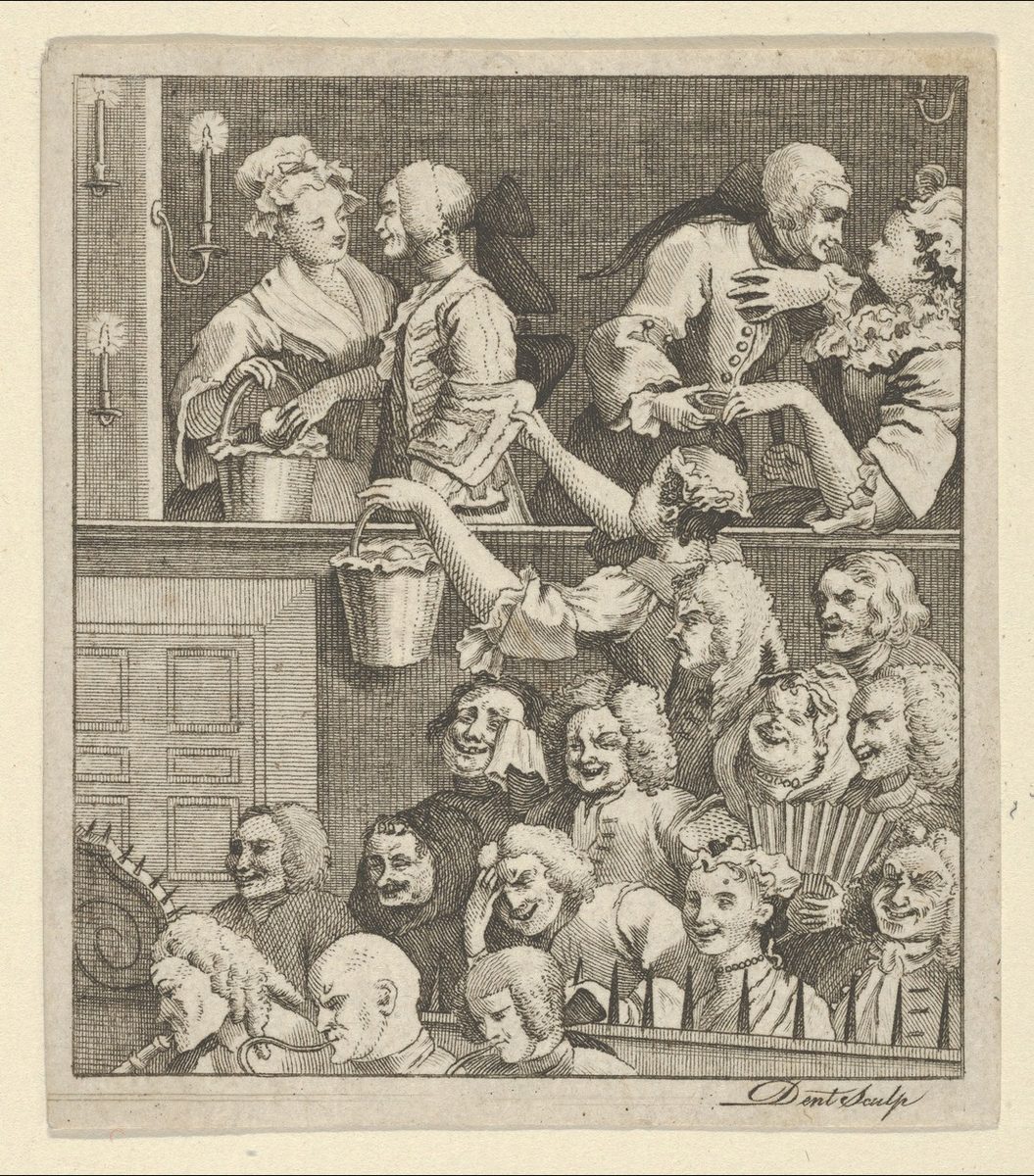
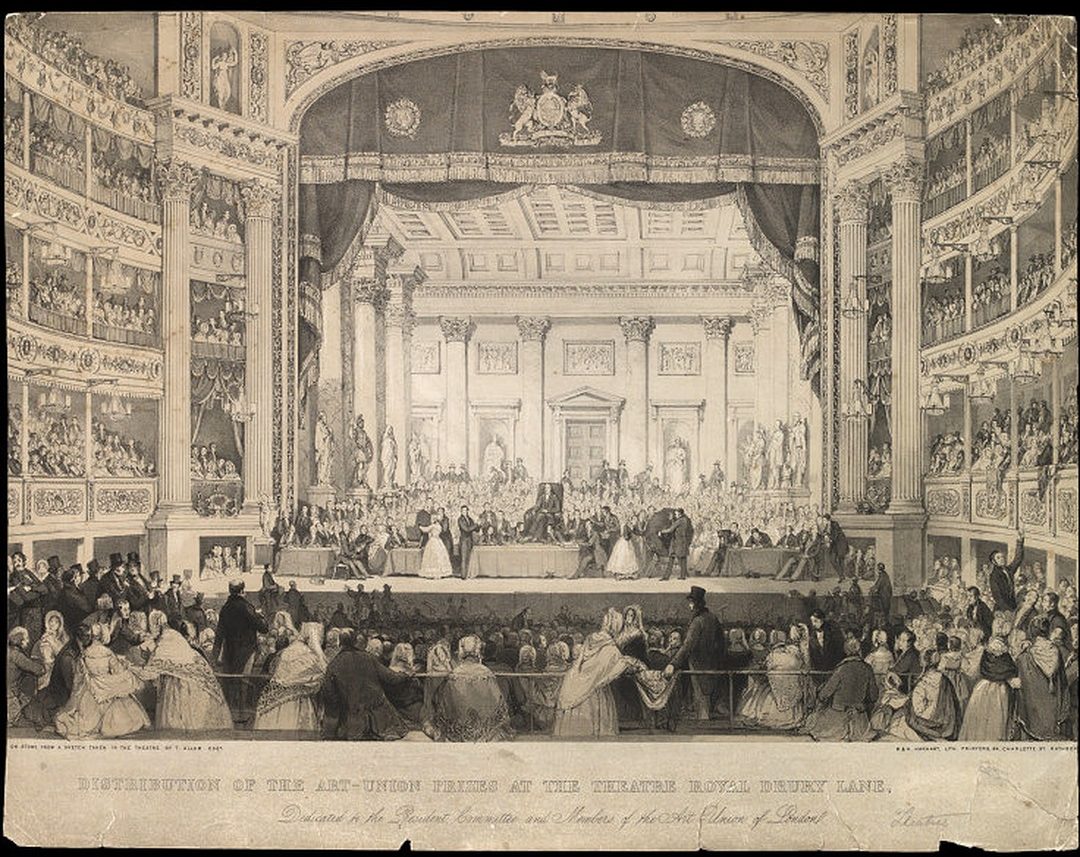
The jealousy glass only makes sense against the ordinary, undisguised habits of the Georgian and early Victorian theater, which the Victoria and Albert Museum’s own account of eighteenth-century opera-going describes plainly: chandeliers lit the auditorium exactly as brightly as the stage, for the entire performance, so that the house itself remained part of the show. Being seen mattered as much as seeing.
The architecture of a theater building reflected that. The aisles running alongside the pit at London’s opera houses earned the nickname Fop’s Alley, defined in Brewer’s Dictionary of Phrase and Fable as the passage between the tiers of seating “frequented by mashers and other exquisites” — a walkway built for parading past an audience that was, itself, doing the same thing in its boxes. People paid for seats in a theater and then spent a meaningful share of the evening looking at each other rather than at the performers they had ostensibly come to see.
Audiences in this period were not quiet, either. Theatergoers talked through performances, moved between boxes, and in some documented cases played cards during the show, treating the auditorium less like a concert hall and more like a drawing room with better acoustics. A fully lit room made all of that behavior visible and, within limits, socially acceptable. The jealousy glass simply gave that visible-room culture a covert gear: a way to stare without appearing to.
An entire etiquette grew up around who was allowed to stare
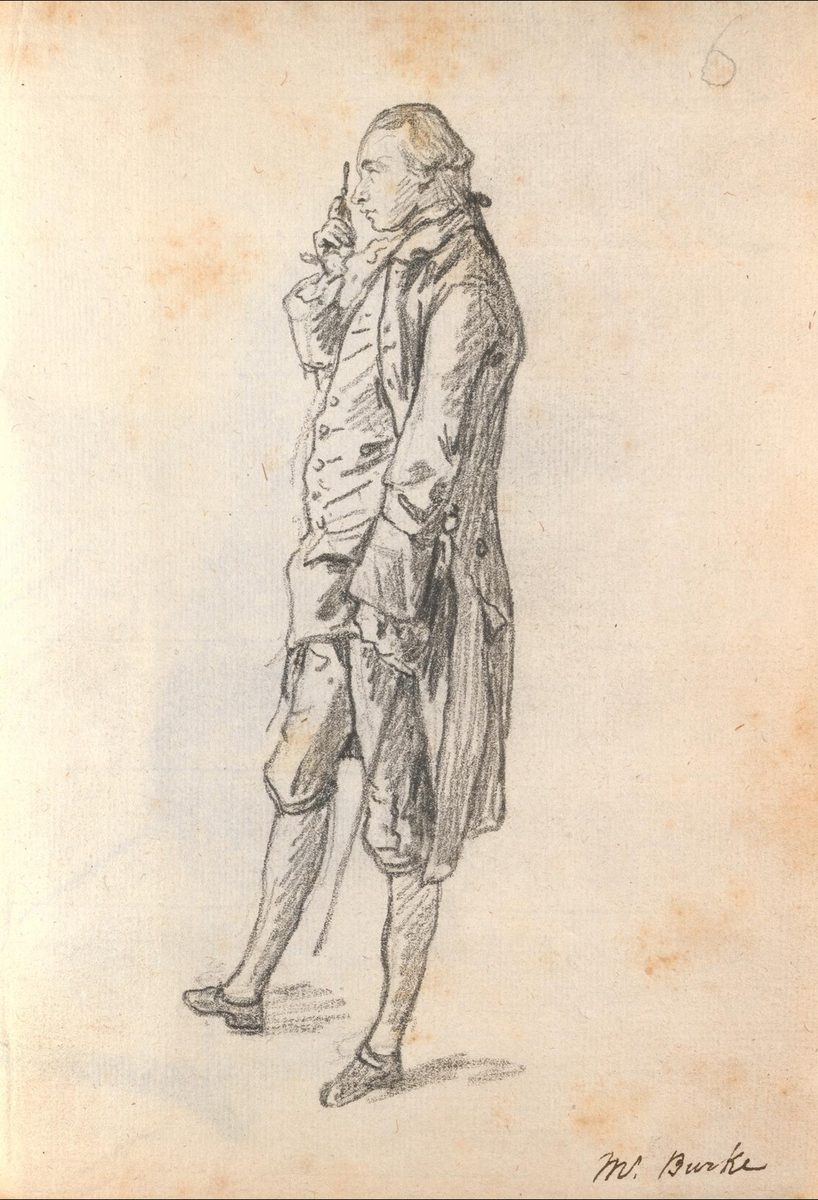
Not every instrument of theater-watching needed a hidden mirror, because staring itself had rules, and those rules were gendered and contested. Susan Vincent’s 2018 study of the eyeglass in Fashion Studies traces how, from roughly the 1770s, a hand-held lens called a quizzing glass became a fixture of fashionable life in exactly the venues — theaters, opera houses, pleasure gardens — where strangers of different classes were suddenly mixed together in large, paying crowds. Conduct writers of the previous generation, Lord Chesterfield among them, had treated a direct stare at someone’s face as a plain breach of manners. The quizzing glass, Vincent argues, inverted that rule: raising one to your eye turned staring into a performance of fashionable confidence rather than an insult, at least when a man did it.
The word itself is barely older than the habit. The Oxford English Dictionary dates “quizzing glass” to 1802, and Vincent identifies an 1801 spoof letter using the term even earlier, right as “quiz” was entering English as slang for someone odd or mocking. Caricaturists of the day treated the object as shorthand for a certain kind of man: James Gillray’s 1795 print of William Douglas, fourth Duke of Queensberry, is literally titled Quiz-zing a Filly, built on the pun between the duke’s own name and the new word. Beau Brummell, the defining dandy of Regency London, and the memoirist Rees Gronow both appear in the record associated with the gesture of the raised glass, and Vincent notes army officers under Sir John Dalling using long-stemmed eyeglasses to watch dancers in Madras in the mid-1780s — the same object, the same stare, carried to a colonial ballroom.
Women occupied a stranger position in this etiquette. Princess Sophia, genuinely and severely nearsighted, was recorded by Fanny Burney as having been urged by her sister to wear spectacles openly at the theater rather than suffer without them — a sign of how unacceptable ordinary corrective eyewear was for a woman in public, even as a man’s quizzing glass read as rakish rather than infirm. By the following generation, satirists had reversed the charge: an 1817 issue of La Belle Assemblée mocked the eyeglass as an absurd female affectation, while an earlier critic in 1809 complained that women who carried one were behaving in a “masculine” manner. The same object could be read as rakish, infirm, fashionable, or improper depending entirely on who was holding it.
The two-eyed opera glass took a hundred years to arrive
The familiar double-barrelled opera glass — a lens for each eye, joined by a bridge, focused by a single wheel — is a much later and much more mechanically awkward object than it looks. According to the optical historians John Greivenkamp and David Steed, the earliest recorded attempt at a genuine two-eyed telescope was demonstrated by the Dutch instrument maker Hans Lipperhey in 1608, within a year of the first working telescopes themselves. For two centuries afterward, nobody could make the idea reliable: the two barrels had to be aligned to the same point at every distance, focused in step with each other, and matched closely enough in magnification that the brain would fuse the two images rather than fight them, and eighteenth-century makers kept failing at some combination of the three.
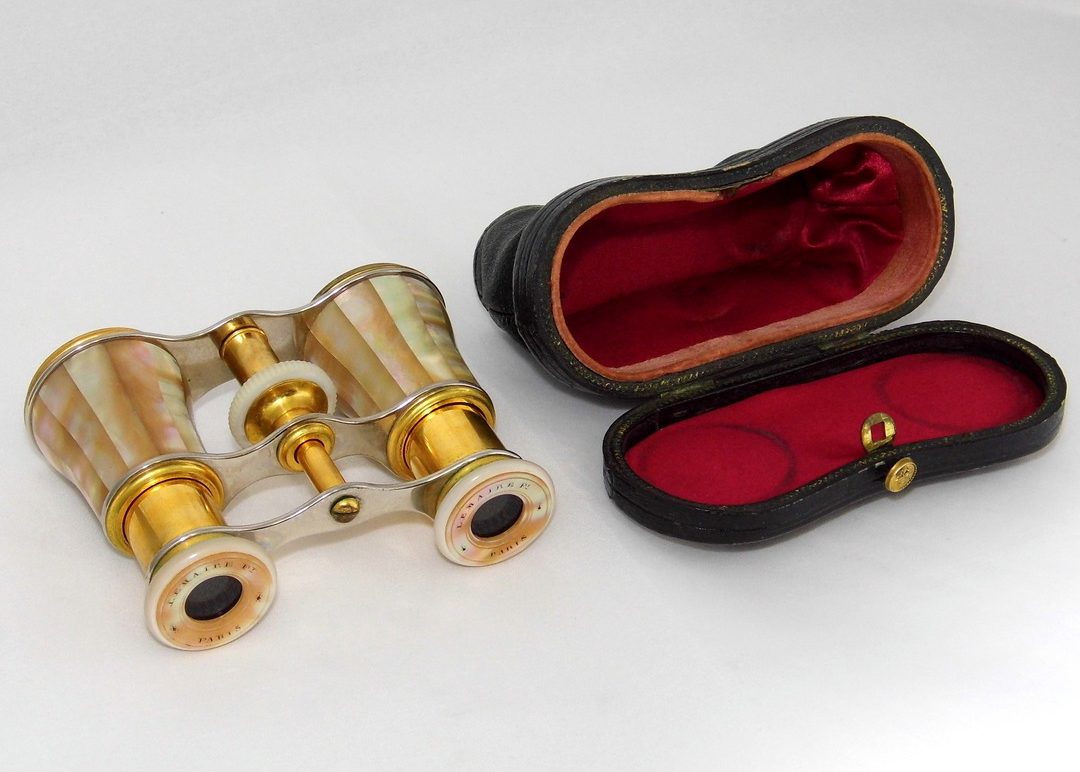
The breakthrough, per Greivenkamp and Steed, came from the German maker J. F. Voigtländer, who patented a design in 1823 that simply joined two existing achromatic spyglasses with a pair of metal bridges — solving the alignment problem by building the whole thing as one rigid unit rather than trying to match two separate instruments by eye. The Paris firm of Lemaire refined it further, adding a third bridge between the eyepieces and gearing the two focusing barrels to turn together, the ancestor of the single central focus wheel that opera glasses still use. A Lemaire pair in the McClung Museum’s collection, dated to around 1875 and finished in gold and mother-of-pearl, shows how fast the instrument became a jewelry item rather than a purely optical one: a surviving pair at the Victoria and Albert Museum from the following few decades is plain brass and leather by comparison, a reminder that opera glasses were made, and sold, across the entire range from workaday to ostentatious.
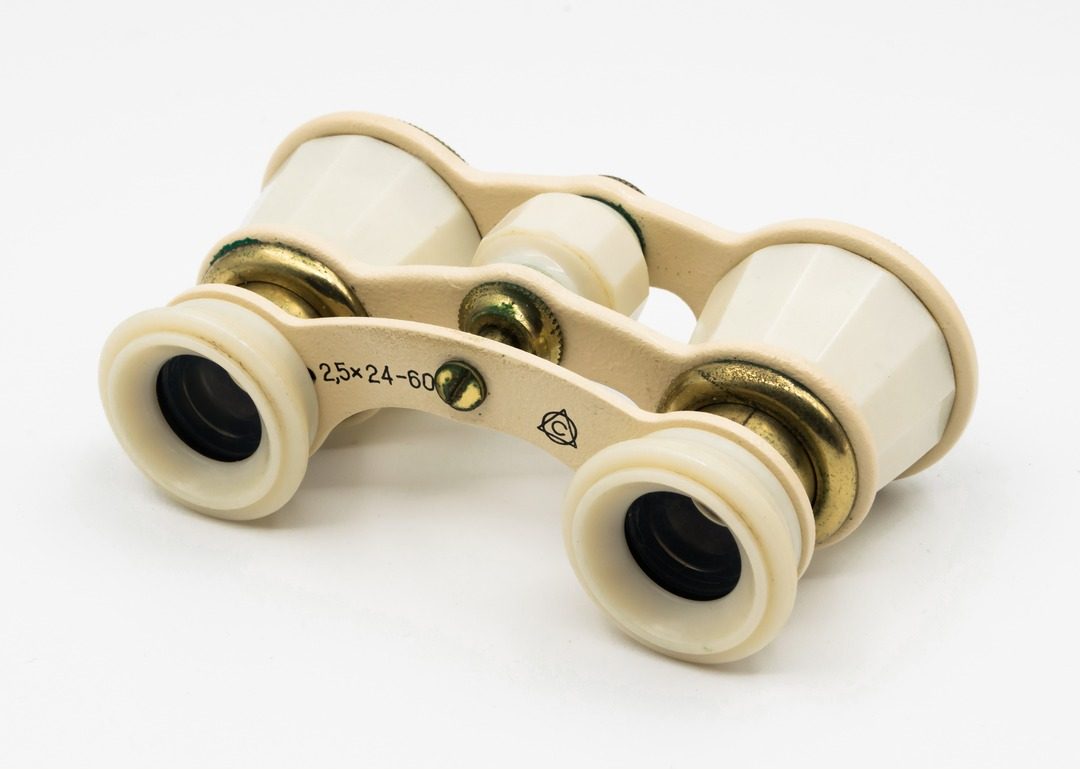
Later nineteenth-century refinements added extra lens elements to widen the field of view and reduce color fringing, and folding, collapsible versions appeared around the turn of the twentieth century. Through all of it, magnification stayed low, usually around three times, because an opera glass only ever needed to close the distance from a balcony seat to a stage — not to compete with the far more powerful Porro-prism field glasses that the optical industry was developing for entirely different customers in the same decades.
When the house lights finally dropped, people complained
The fully lit, fully visible auditorium did not end quietly. The historian John F. Kasson, writing in City Journal, traces the long fight over what an American audience was entitled to do in its seats: Washington Irving, visiting New York’s Park Theater in 1802, was already complaining about boxholders who treated the place as a lounge, filling it with “loud conversation, without any regard for the pain it inflicts on their more attentive neighbors.” The British writer Frances Trollope, touring American theaters a generation later, was startled by behavior she judged to “disdain the restraints of civilized manners.” Reform came slowly and from several directions at once: the 1849 Astor Place riot hardened attitudes toward crowd conduct, the conductor Theodore Thomas spent the 1860s and after pushing concert audiences toward silence, and by the turn of the century vaudeville managers Keith and Albee were printing cards asking patrons not to stamp their feet or talk during the acts.
Electric light arrived in the middle of that long argument and forced the issue technically rather than socially. London’s Savoy Theatre opened on 10 October 1881 wired for electricity throughout both the stage and the auditorium — a genuine novelty the builders trusted so little that they wired the entire building for gas as a parallel backup, in case the new system failed outright. The Gilbert and Sullivan Archive’s account of the opening describes the reception as a mix of “admiration and scepticism” rather than simple triumph; even enthusiasts for the new technology were not yet willing to stake a production on it alone. What electric light made practical, in a way gas chandeliers never quite had, was turning the house lights down low enough that the audience could no longer see each other — and once that became routine across the following decades, theatergoers who had spent a century and a half performing for the room as much as for the stage lost the room as an audience entirely.
What survived the dark
The jealousy glass itself did not survive much past the nineteenth century as a functioning trick; once the house lights dropped, there was far less to see in the next box, and a gadget built to disguise a stare loses its purpose in a room where staring is already invisible. The plainer, double-barrelled opera glass outlived it by a wide margin, partly because it still did a genuinely useful job — closing the distance to a dim, distant stage — and partly because, mother-of-pearl case and all, it had become a piece of jewelry people liked owning whether or not the theater strictly required one.
What the mirror-in-a-tube and the raised quizzing glass both point to is a simple fact modern theater etiquette tends to erase: for most of the history of public performance, the audience was never only an audience. It was also, for itself, the show, lit exactly as brightly as the stage and watched just as closely — sometimes through a lens built for exactly that purpose, and sometimes through one built to make the watching look like something else.
Watch the full history
The video version covers the jealousy glass, Fop’s Alley, and the arrival of electric light in under five minutes.

Related reading
- Why Sunglasses Were Invented to Hide Things, Not Block the Sun
- The Secret Code of Victorian Calling Card Etiquette
- The Kaleidoscope Patent That Failed Its Own Inventor
- How the Sedan Chair Actually Worked, and Why It Started as a Scandal
Works cited
- Vincent, Susan. “Ogling, Quizzing, and Spying: The Eyeglass.” Fashion Studies 1, no. 1 (2018): 1–41. DOI: 10.38055/fs010102. Link.
- Ross, Greg. “Side-Eye.” Futility Closet, June 15, 2018, discussing Marc Thomin’s 1749 account of the jealousy glass and Hanneke Grootenboer’s Treasuring the Gaze (University of Chicago Press, 2012). Link.
- Science Museum Group Collection. “Diagonal Spy Glass [Jealousy Glass].” Object no. 1993-1152, National Maritime Museum, c. 1850. Link.
- Victoria and Albert Museum. “A Night at the Opera.” Link.
- Victoria and Albert Museum. “Opera glasses,” S.319-1981, Theatre and Performance Collection. Link.
- McClung Museum of Natural History and Culture, University of Tennessee. “Opera Glasses.” Object of the Month. Link.
- Greivenkamp, John E., and David Steed. “The 300-Year Quest for Binoculars.” Proceedings of SPIE-OSA, International Optical Design Conference 2010, vol. 7652, 76520J. DOI: 10.1117/12.870953. Link.
- Brewer, E. Cobham. Dictionary of Phrase and Fable, s.v. “Fop’s Alley.” Link.
- Kasson, John F. “Disciplining the Audience.” City Journal, Autumn 1990. Link.
- The Gilbert and Sullivan Archive. “The Savoy Theatre.” Link.