
The Department of National Defence never closed its file on what happened off Shag Harbour, Nova Scotia, on the night of October 4, 1967. Fifty-nine years on, the paperwork is still sitting in Library and Archives Canada, digitized and searchable, because this is one of the very few reports of its kind that a government agency treated as a real incident rather than a crank call: it dispatched a rescue coordination centre, tasked a naval dive unit, and generated a written record at every step.
What that paper trail actually contains is more mundane, and more interesting, than the version of the story that most retellings settle on. Eleven witnesses on shore agreed that something came down over the water. Nobody who searched the water afterward found anything at all. And the two most ordinary explanations on offer were never tested, let alone ruled out, by anyone who was there that night.
Eleven witnesses gave police the same basic story within the hour
Earlier that same evening, other people across Nova Scotia had reported lights in the sky: the crew of an Air Canada flight over Quebec logged a rectangular object with a trailing string of smaller lights, a family at Mahone Bay watched something manoeuvre over the horizon, and a fishing captain and his crew of nearly twenty men counted four bright shapes on the northeastern horizon. None of that has anything demonstrably to do with what happened at Shag Harbour later that night — it is a separate set of reports from a clear night when, evidently, a number of unrelated things were visible in the sky.
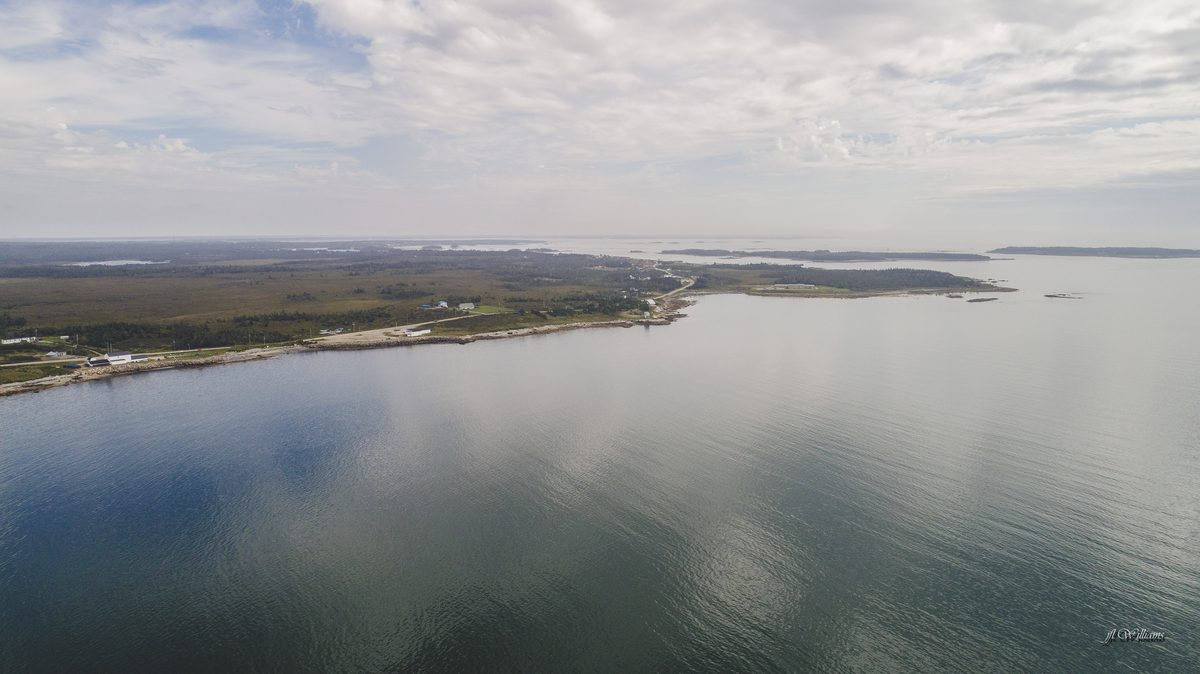
At Shag Harbour itself, just after 11:20 p.m., seventeen-year-old Laurie Wickens was driving four friends home along Highway 3 when they saw an object with four sequential amber lights descend at roughly a forty-five-degree angle toward the Sound, the body of water beside the village. Wickens followed the road to the shore of an Irish moss processing plant and watched a dark shape floating on the water, eight or nine hundred feet out, showing a single pale light. Rather than backtrack ten miles to the police detachment, he used a pay telephone in the next village to call RCMP Corporal Victor Werbicki, who asked if he had been drinking and told him to stay by the phone.
Werbicki did not have to take Wickens’s word for it. Within minutes a second call came in from a woman on the far side of the Sound reporting the same thing, then two more from other points along the coast. Constable Ron Pound had independently spotted the same lights from his own patrol car on the way in and estimated the object at about sixty feet long. Werbicki and constables Pound and Ron O’Brien reached the shore within about fifteen minutes of the first call and watched the same pale light the civilians had described, sitting low on the water and drifting with the tide.
Ottawa treated it as a downed aircraft until the numbers ruled that out
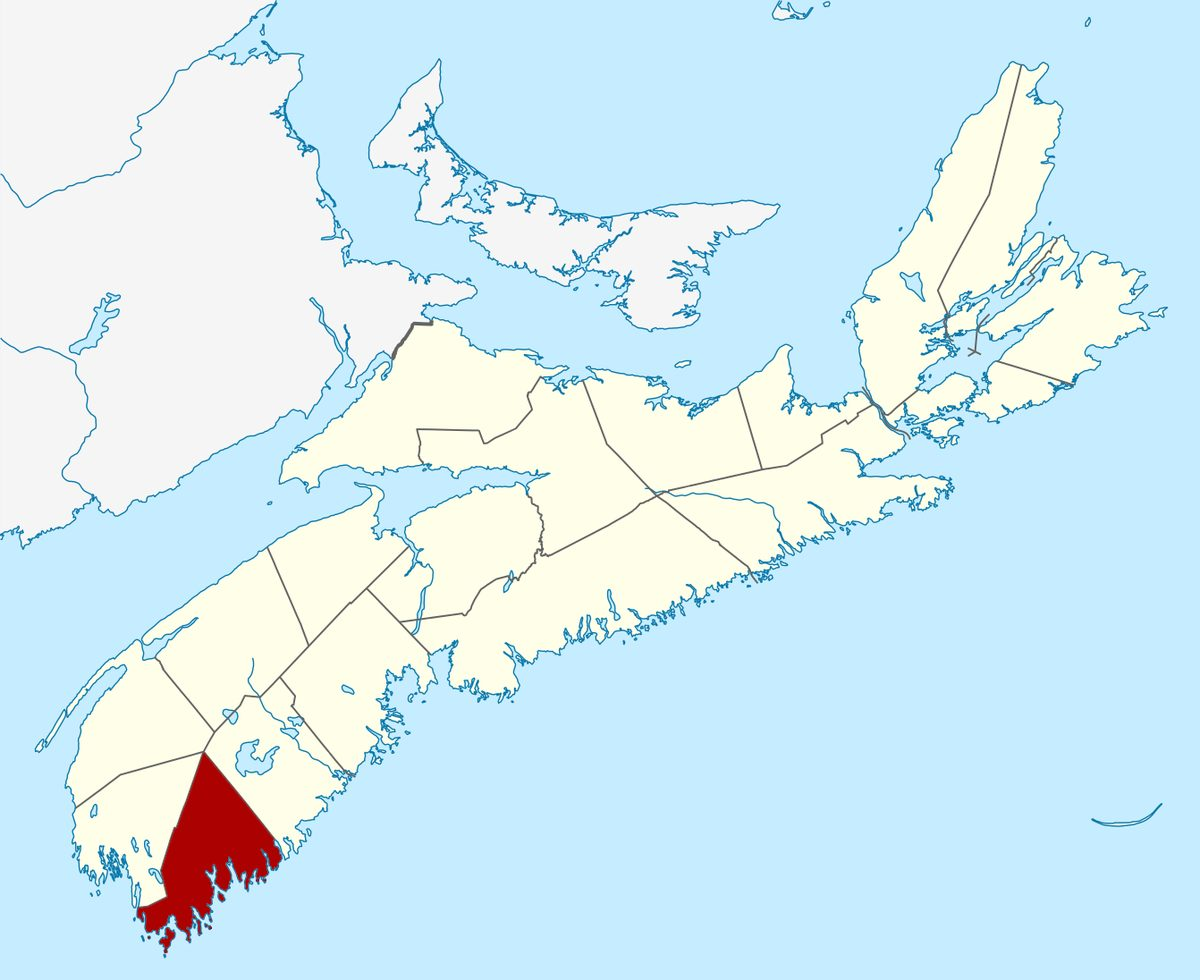
Every step of the response makes sense only on the assumption that this was a plane crash, because that is what everyone on scene believed. Werbicki sent Constable O’Brien to telephone the Rescue Coordination Centre in Halifax and ask what aircraft might be missing. He himself recruited two local fishermen, Bradford Shand and Lawrence Smith, to launch their own boats and search for survivors, since nothing could be done from shore before the object went under.
The object sank within five or six minutes of the first sighting, well before any boat reached it. What the search boats found instead, roughly a mile out, was a patch of thick, glittery yellow foam stretching about half a mile down the Sound and some eighty feet across, with bubbles surfacing through it and a faint smell described afterward as sulphurous. A Coast Guard cutter arrived from Clark’s Harbour about an hour later and joined the search. No bodies, no survivors, and no wreckage of any kind turned up.
By morning, Halifax had confirmed that every commercial, private and military aircraft on the eastern seaboard, from Atlantic Canada down through New England, was accounted for. That single fact converted the file from a plane-crash search into something else entirely: the Rescue Coordination Centre sent a priority telex to the Air Desk in Ottawa, the Royal Canadian Air Force office that logged every UFO report in the country, and the Air Desk’s Squadron Leader Bain told the Halifax Chronicle-Herald a few days later that the Air Force was “very interested,” adding that of the hundreds of reports the office received every week, Shag Harbour was one of the few where investigators expected to find something concrete.
The Navy’s divers spent three days finding nothing at all
Bain’s office forwarded the case to Royal Canadian Navy headquarters with a recommendation for an underwater search, and the Navy tasked Fleet Diving Unit Atlantic. Two days after the sighting, a team of clearance divers began working the seafloor of the Gulf of Maine off Shag Harbour in the area where the object had gone down. They spent three days at it.
The result was unambiguous in the way that only a completed, unsuccessful search can be. The Navy’s own summary of the operation said no trace of an object had been found, and the Chronicle-Herald‘s follow-up story on October 9, headlined “UFO Search Called Off,” put the same finding more bluntly: not a trace, not a clue, not a bit of anything. The Canadian Press carried the same wire story to other papers, including the Winnipeg Free Press, the same week.
Two mundane explanations fit the evidence about as well as anything
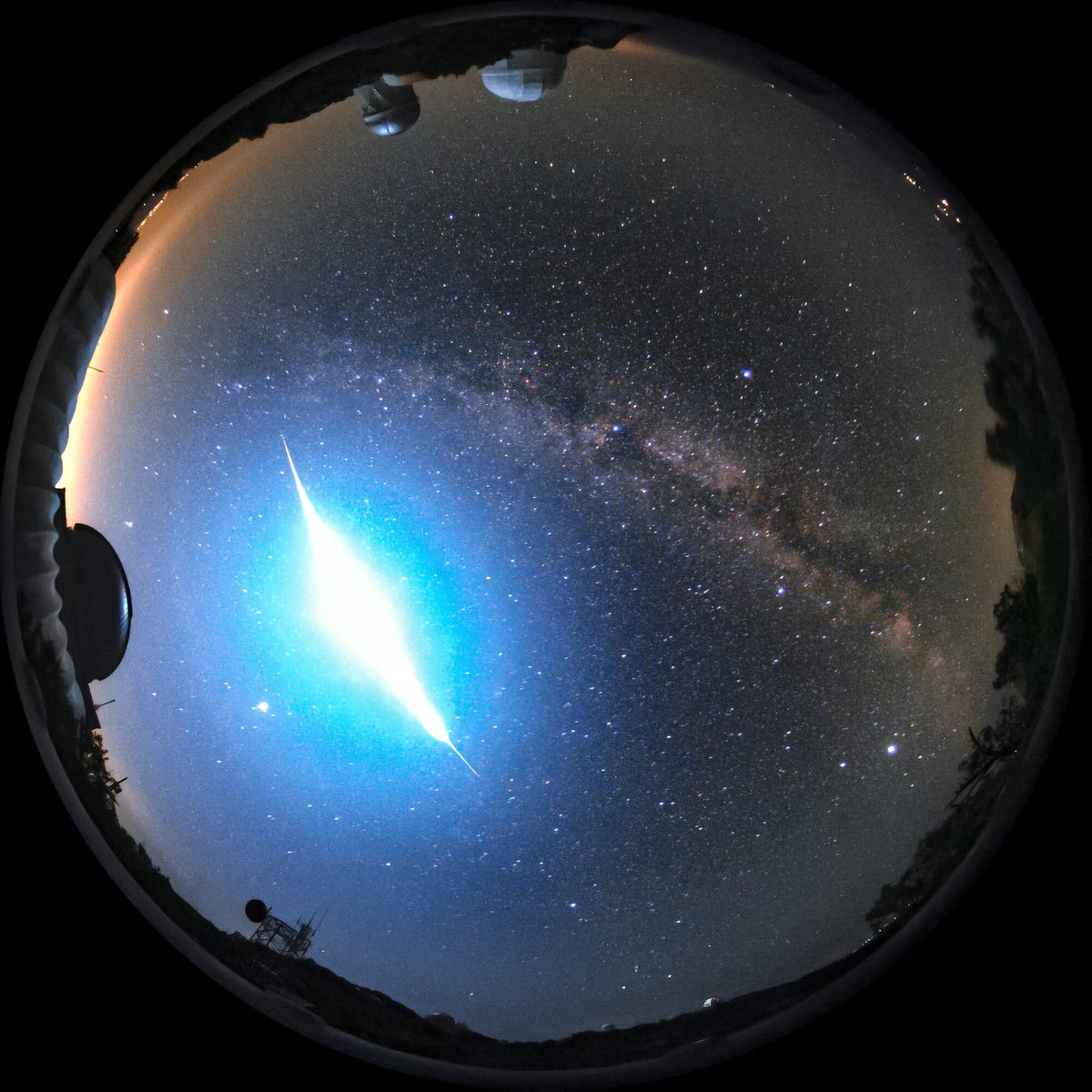
No investigator on the scene in 1967 claimed to have identified the object, but two ordinary candidates were on the table from the start, and neither one was ever tested. A meteoric fireball breaking up as it enters the atmosphere often separates into a line of several glowing fragments, falling at a shallow angle and appearing, from a distance, to move slowly — a reasonable match for a sequence of lights descending at forty-five degrees. Fireballs are also silent from far away, which fits some but not all of the witness accounts.
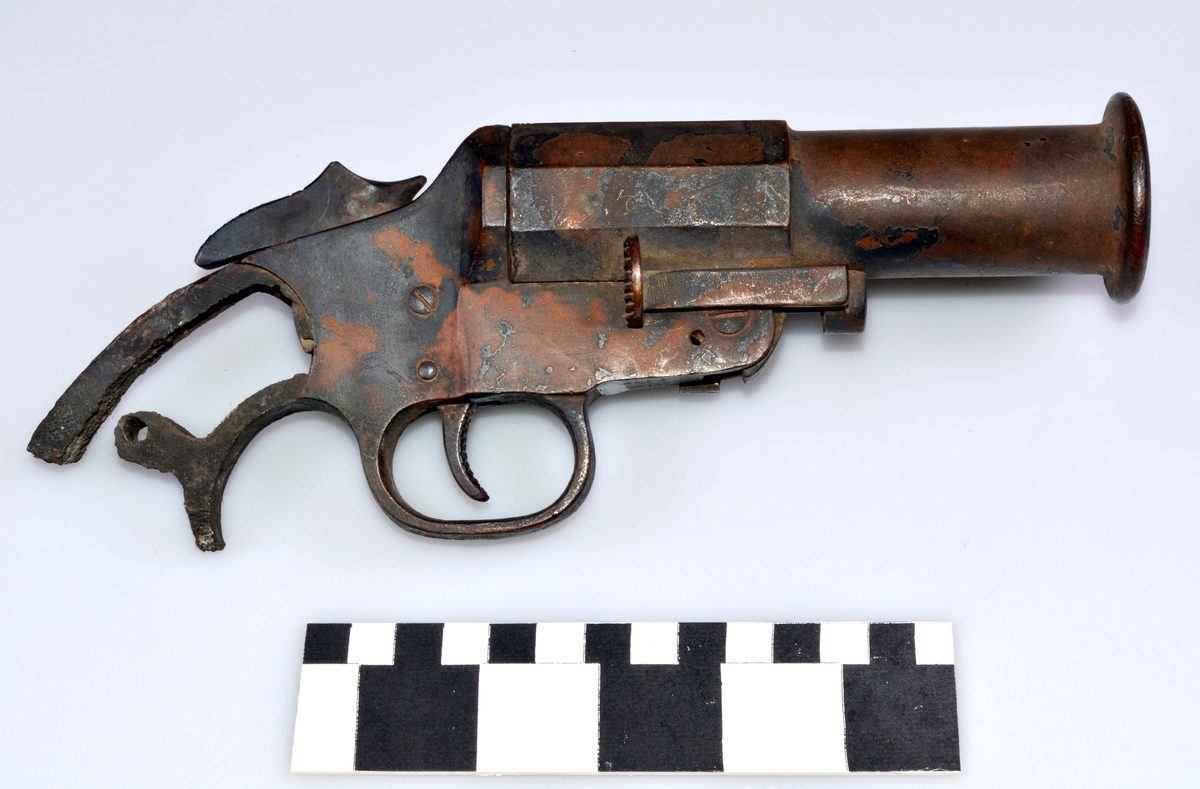
The second candidate is a marine distress flare, standard equipment on any fishing boat working that coast, fired from a plastic pistol that launches a burning 12-gauge cartridge into the air. A flare can ignite only after a delay, sometimes not until it is already falling, which would produce exactly the kind of light-then-descent sequence several witnesses described, followed by a hiss or whistle as it burned down toward the water.
Proponents of a more exotic explanation have long claimed that the government specifically ruled out flares and aircraft. The claim traces to a single internal memo, dated October 6, from a Colonel W. W. Turner, which states that the search coordination centre “discounted the possibilities that the sighting was produced by an aircraft, flares, floats, or any other known objects.” But the document Turner was apparently summarizing, an October 5 telex from the Coast Guard cutter conducting the search, says only that many small boats searched with nil results and that other possible leads, including aircraft and flares, were checked with nil results. Finding no evidence of a flare in the dark, in the Atlantic, after midnight, is not the same as ruling one out, and no document has ever surfaced showing a more rigorous elimination than that.
The witness accounts themselves do not agree closely enough to settle the question either way. Some counted three lights, some four. Some described them as reddish-orange, others as white or yellow. One witness reported a whistling sound before impact; several others, standing nearby, reported none. Taken as a group, the only thing every account agrees on is that a small number of bright lights descended toward the water and that something remained visible, floating, for a few minutes afterward.
The case survives on paper because Canada happened to write it down
What makes Shag Harbour unusual is not the sighting itself — thousands of UFO reports were filed across North America in 1967 — but the amount of contemporaneous government paperwork it generated and kept. The RCMP incident reports, the Rescue Coordination Centre telexes, the Air Desk correspondence and the Navy’s dive-search summary all survive in the Department of National Defence’s UFO files, now digitized as part of Library and Archives Canada’s roughly 9,500-document collection on government UFO investigations.
The case even drew a look from the American side: the Condon Committee, the University of Colorado’s Air Force-funded UFO study that closed out in 1968, logged Shag Harbour as Case 34. Its own assessment was that no further investigation by the project was justified, given how immediate and thorough the RCMP and Canadian Maritime Command searches had already been — a conclusion based, by the Committee’s own account, on a handful of phone calls rather than any independent fieldwork. The Condon Report nonetheless left the case listed among its unexplained residue, which is the category Shag Harbour has occupied ever since: investigated promptly, documented thoroughly, and never explained.
A submarine chase was added a quarter-century later, and no document backs it
The story that circulates most widely today goes well beyond the 1967 file. Starting in 1993, the researcher Chris Styles, later joined by writer Don Ledger, began re-interviewing surviving witnesses and published their findings in the 2001 book Dark Object. Their account holds that the object that sank at Shag Harbour resurfaced days later roughly seventy kilometres away near HMCS Shelburne, a naval facility supporting an undersea sonar array, where it was allegedly joined by a second craft and tracked by military vessels before both broke the surface and flew off.
No document in the Department of National Defence’s own files, digitized and public, corroborates any part of that sequence. The claim rests entirely on the later interviews, several of them attributed to unnamed military and civilian sources who reportedly asked not to be identified. That does not make the claim impossible, but it does mean it belongs to a different category of evidence than the RCMP reports and Navy telexes that document the original night — and reviewers examining the same record, including the podcast Skeptoid, have concluded that the underwater-chase narrative is a later addition with no supporting paperwork of its own.
Watch the full history
The video companion walks through the same night minute by minute, from the first phone call to the divers coming up empty.

Related reading
- How Semaphore Flags Actually Worked at Sea
- Why Nobody Can Read Easter Island’s Own Writing System
- Why a Corn Crib’s Walls Lean Outward, and Why It Never Fell Over
- How Home Food Drying Fed American Farms for 150 Years
Works cited
- Library and Archives Canada. Canada’s UFOs: The Search for the Unknown, a digitized collection of government UFO-investigation records, including the Department of National Defence file on Shag Harbour.
- Condon, Edward U., et al. Scientific Study of Unidentified Flying Objects. University of Colorado, 1968. Prepared for the United States Air Force; Case 34 covers Shag Harbour. Link.
- Ledger, Don. “The UFO Crash at Shag Harbour.” International UFO Reporter, Center for UFO Studies, January 1998 (reprinted from Unopened Files, Fall 1997). Link.
- Ledger, Don. Maritime UFO Files. Nimbus Publishing, 1998.
- Ledger, Don, and Chris Styles. Dark Object: The World’s Only Government-Documented UFO Crash. Dell, 2001.
- MacLeod, Ray. “Could Be Something Concrete in Shag Harbour UFO — RCAF.” The Chronicle-Herald, Halifax, 7 October 1967, p. 1.
- “Search for Object Called Off.” Winnipeg Free Press (The Canadian Press), 9 October 1967.
- Clark, Jerome. The UFO Encyclopedia, 2nd ed. Omnigraphics, 1998.
- Dunning, Brian. “The Shag Harbour UFO.” Skeptoid podcast, episode 565, 4 April 2017. Link.
- Municipality of the District of Barrington. “Shag Harbour UFO Incident.” Link.