
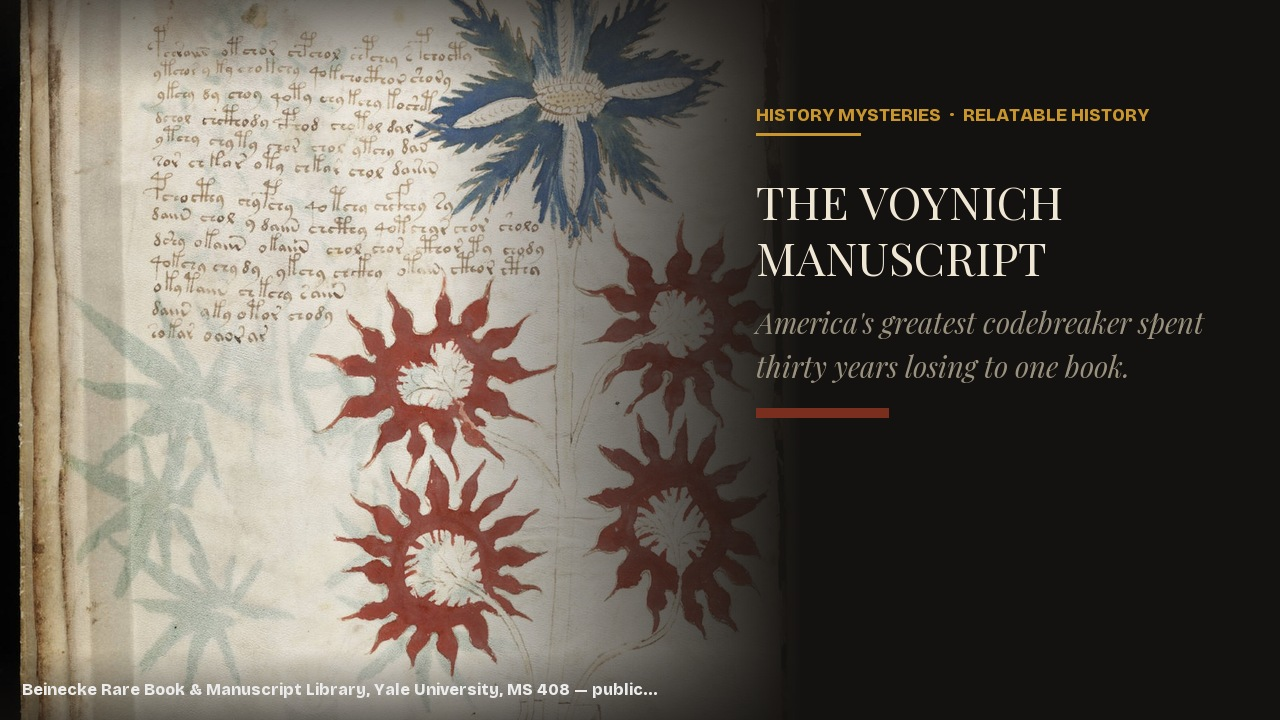
In May 2019, a research associate at the University of Bristol named Gerard Cheshire announced that he had solved the Voynich manuscript. It was, he said, a compendium of women’s health advice written in a lost proto-Romance language, and he had translated whole passages of it. The university’s own press office put out a release calling the work a “highly plausible explanation.” Medievalists and linguists, including several who had spent years on the manuscript’s actual statistics, took the proposed translation apart within about 48 hours. Bristol quietly withdrew the release days later.
That scene has played out, in some form, roughly once every few years since the manuscript surfaced in 1912: a confident claim, a wave of coverage, a fast and specific rebuttal, and the manuscript sitting exactly where it was. What makes it worth taking seriously anyway is that the rebuttals are not defending a mystery for its own sake. They are checking each new claim against a real, detailed body of evidence about the text — evidence precise enough that every proposed solution can be tested against it, and so far has failed a specific, nameable part of that test.
That evidence, not the latest headline, is the actual story: what has been established about Beinecke MS 408, by whom, and exactly where each attempt to go further has come apart.
It Reads Like a Reference Book, Split Into Sections Nobody Can Name
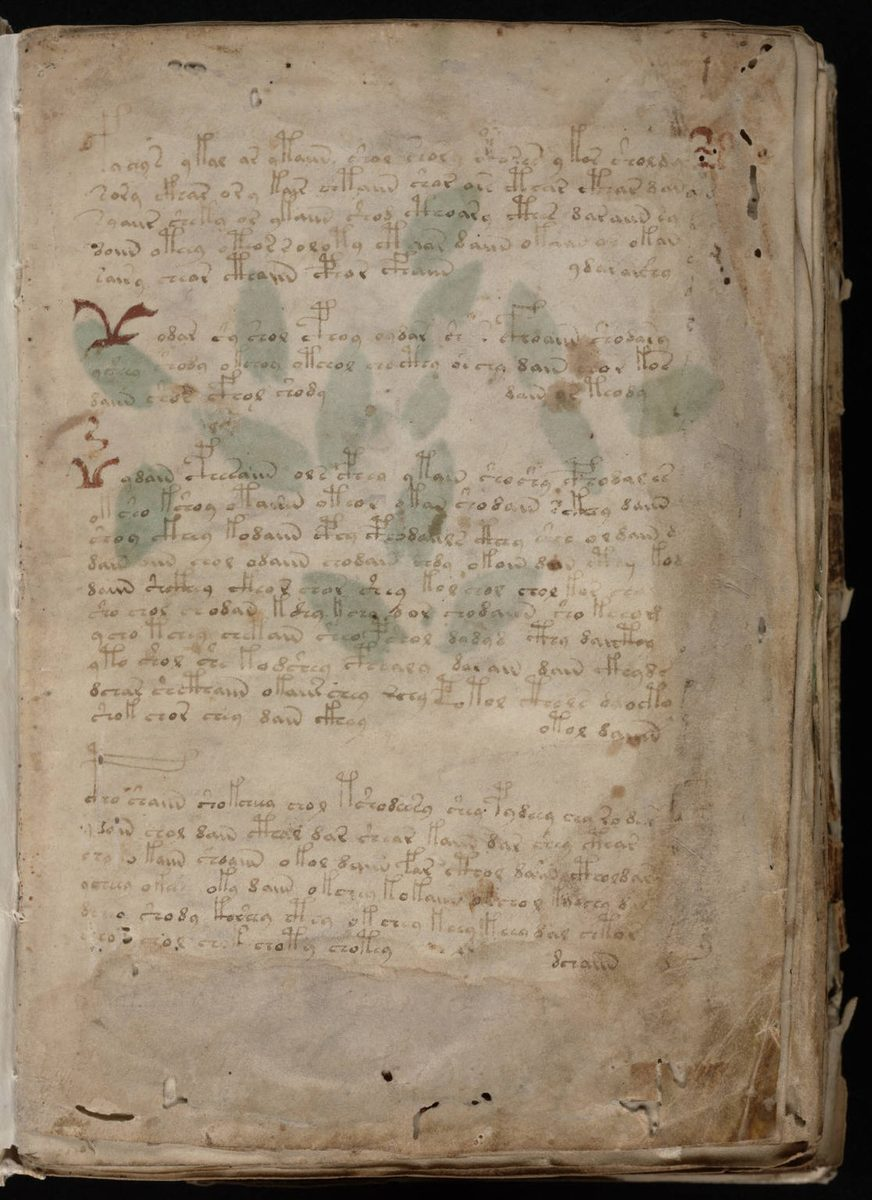
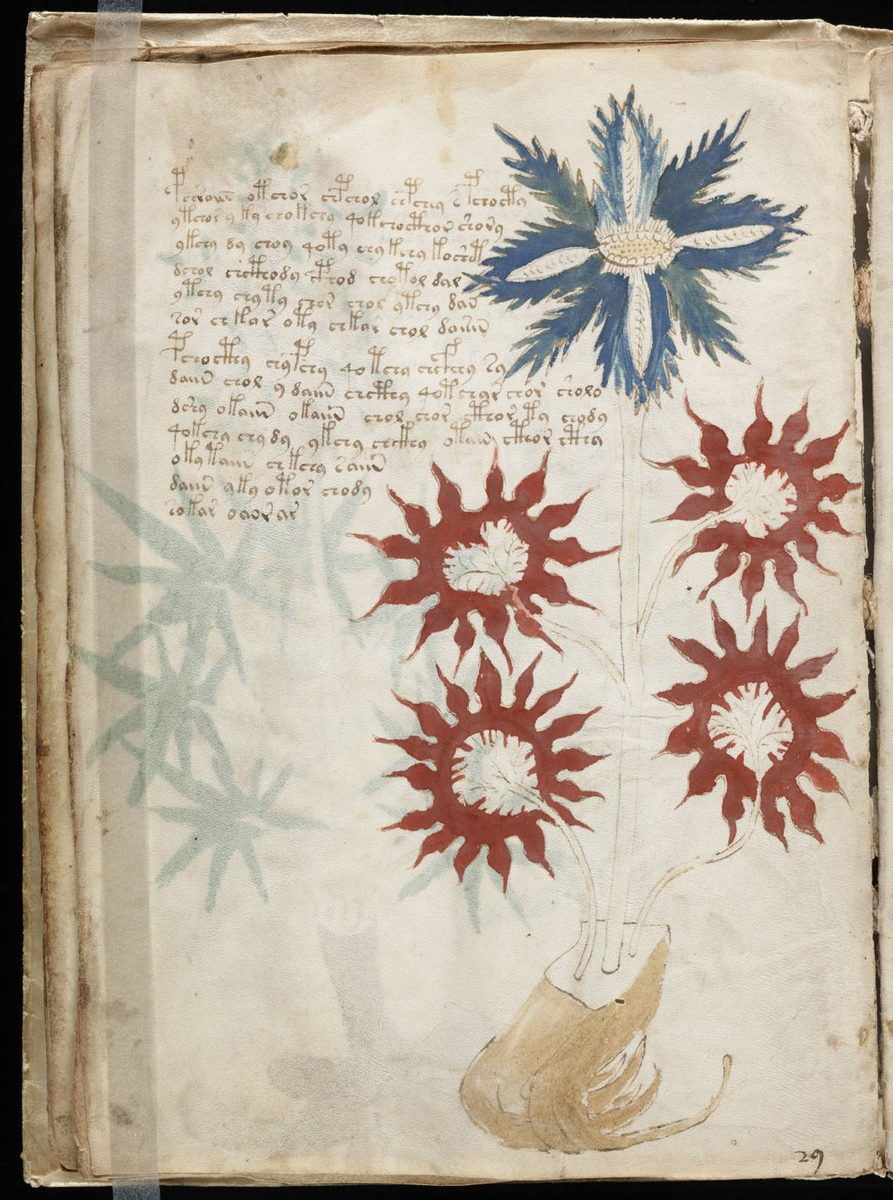
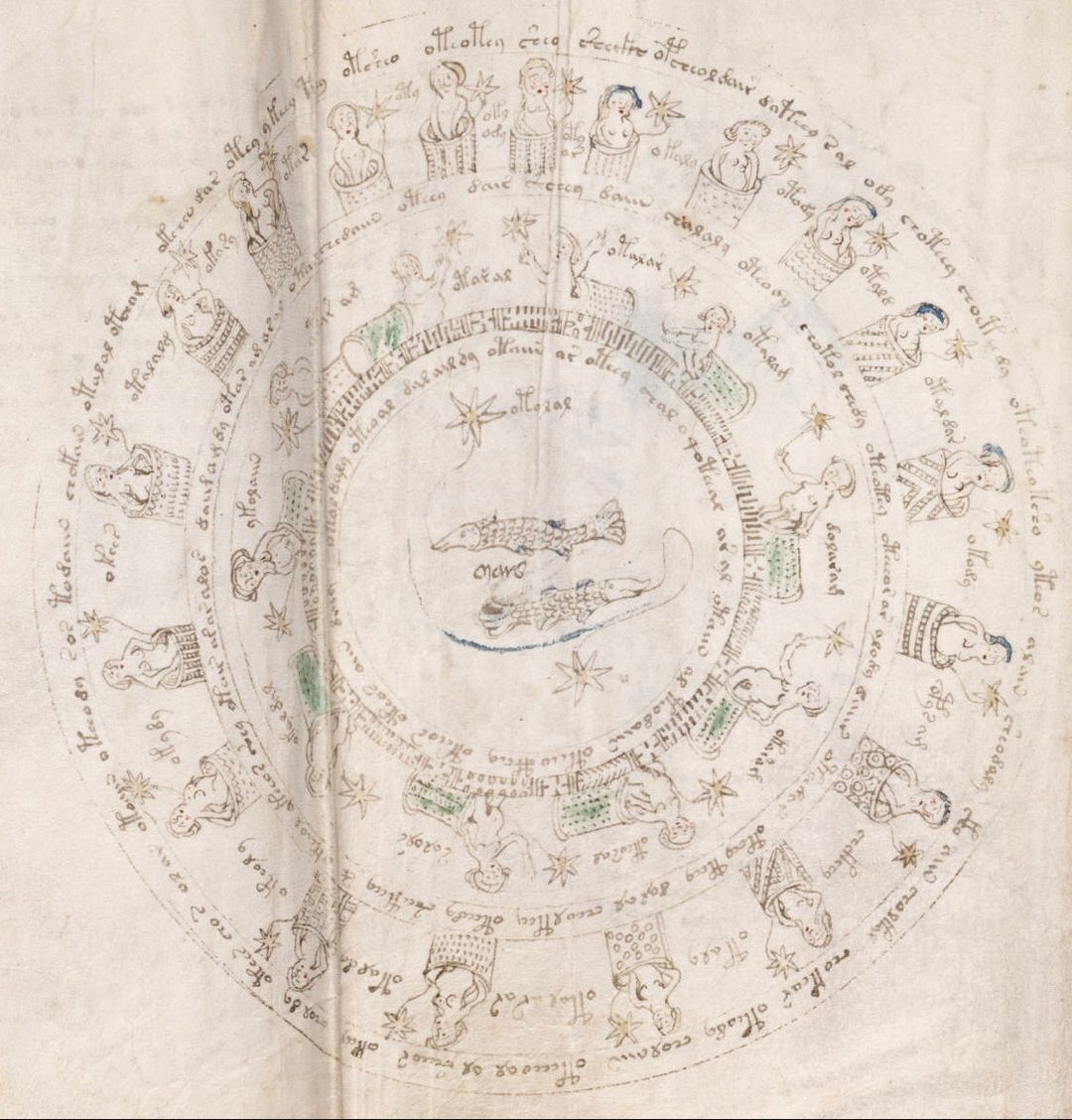
The manuscript runs to 234 vellum folios, organized into roughly six content sections that researchers have long since identified by their illustrations alone, since the text itself is unread: an herbal section of more than a hundred pages pairing plant drawings with blocks of text; an astronomical section of circular star diagrams; a short, strange “balneological” section showing nude women bathing in interconnected tubs and pipework; a cosmological section of further diagrams; a pharmaceutical section of labeled jars and isolated plant parts; and a final, dense section of unillustrated paragraphs, each marked with a small star, usually read as a recipe collection.
In nearly a century of scrutiny, botanists have been unable to match more than a handful of the herbal section’s plant drawings to real species with any confidence; several appear to combine the roots, leaves and flowers of more than one plant into a single invented specimen. Other undeciphered scripts, like Linear A or Easter Island’s rongorongo, survive in only a few hundred short inscriptions, far too little text to run real statistics on. The Voynich manuscript, at roughly 170,000 characters across 234 pages, is unusually data-rich for this kind of analysis, which is exactly why it has been tested so thoroughly instead of simply shelved as noise.
The first researcher to test it rigorously was the American cryptologist Prescott Currier, who concluded in the 1970s that the handwriting itself split into two statistically distinct “languages,” labeled Currier A and B, that map loosely onto different sections of the book. That finding held, largely unrevised, for the next forty years.
Its Words Pass Nearly Every Statistical Test for a Real Language
In 2011 the computational linguists Sravana Reddy and Kevin Knight ran the manuscript’s Currier-B text through the same statistical tests used to separate natural language from noise. The text obeys Zipf’s law for word frequency, and a related Zipf-like pattern linking word length to frequency. Its unigram word entropy measured 9.666 bits, close to Arabic’s 9.645 and not far from English’s 10.07 or Chinese’s 10.31. Letter-level predictability, measured as bigram accuracy, came out at 40.02 percent — well above English’s 22.62 percent and close to romanized Chinese’s 38.92 percent. Reddy and Knight are careful to call this “a necessary, though not sufficient, test of linguistic plausibility,” not proof of meaning.
The manuscript fails the test in the other direction just as specifically. Word order carries almost no information: knowing one Voynichese word barely helps predict the next, with two-word context improving prediction by only 8.85 percent over guessing from single-word frequency alone, and almost no measurable correlation between words that aren’t adjacent. A text this structured at the level of individual words, and this structureless at the level of sentences, is the specific anomaly every decipherment theory has to explain — not simply the fact that nobody has read it yet.
Radiocarbon Dating and a New Scribal Count Closed Off Two Centuries of Guessing
For most of the twentieth century the manuscript’s age was argued from handwriting style and convenience. Wilfrid Voynich, the bookseller who brought it to public attention, favored attributing it to the thirteenth-century English friar Roger Bacon, a claim with little basis beyond the manuscript feeling old and strange enough to fit him. In 2009 a University of Arizona team led by the physicist Greg Hodgins settled the question with radiocarbon dating of four separate vellum samples taken from different sections of the book. All four returned a range of 1404 to 1438 at 95 percent confidence, tight enough across sections to show the whole volume was made from vellum prepared within a few decades, not assembled from older, reused skins. Yale states plainly that the result ruled out the Bacon attribution outright: a man who died in 1292 could not have commissioned a book written on fifteenth-century parchment.
Radiocarbon dating only fixes the age of the skin, not the year the ink went on it, so in principle the writing could postdate the vellum by some years. Nobody studying the manuscript seriously argues that it does; the ink, pigments and book hand are all consistent with an early-fifteenth-century production, with no gap evident between parchment and text.
Who actually wrote that text stayed an open question until 2020, when the manuscript scholar Lisa Fagin Davis ran a letter-by-letter digital paleography study of the handwriting, comparing the shape of individual characters — stroke angle, crossbar form, loop closure — across the whole manuscript. Where Currier had found two hands, Davis identified five: Currier’s original two, plus three more she labeled Scribes 3 through 5. In the herbal section specifically, she found the work of different scribes alternating by physical sheet of parchment rather than by subject or gathering, a pattern that reads less like one eccentric author working alone and more like a small, organized workshop producing the book to a plan, possibly on several sections at once.
Its Real Provenance Was Hidden Behind a Cover Story for a Century
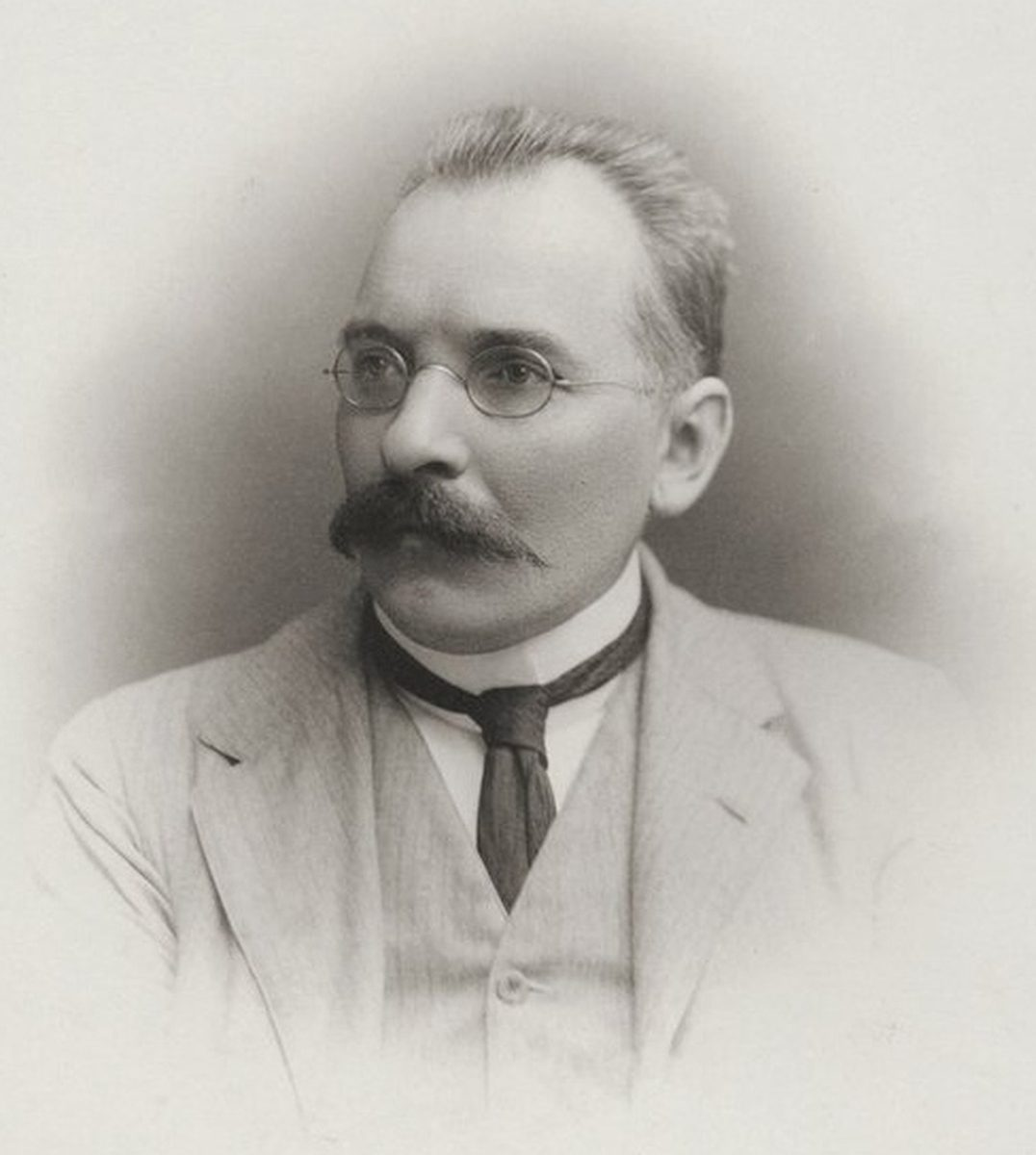
How the manuscript reached the twentieth century is almost its own separate mystery, and for decades even careful historians told it wrong. The earliest solid documentary trace is an August 1665 letter from the Prague physician Jan Marek Marci to the Jesuit polymath Athanasius Kircher in Rome, sent along with the manuscript itself. Marci explained that it had been bequeathed to him by a friend, Jiří (Georgius) Baresch, who had understood it once belonged to the Holy Roman Emperor Rudolf II, said to have paid 600 ducats for it in the belief it was the work of Roger Bacon. Rudolf’s court physician and herbalist, Jacobus Horčický de Tepenec, is usually placed between the emperor and Baresch; his signature is visible on the manuscript’s opening folio under ultraviolet light, though exactly how the book passed from him to Baresch was never recorded.
Kircher kept the manuscript, and it stayed in the library of the Jesuits’ Collegium Romanum in Rome until 1870, when Italy annexed the Papal States; the new government moved to confiscate Jesuit property, including the college library, in 1873. Jesuit librarians got ahead of the seizure and quietly moved several collections out beforehand, including, researchers now believe, the one holding the Voynich manuscript. The standard account for most of the twentieth century placed that hidden collection at the Villa Mondragone, a former Jesuit school in Frascati outside Rome — the same building where Wilfrid Voynich claimed in 1912 to have personally discovered the manuscript, by his own telling, in a chest “of which the guardians themselves did not know what they contained.” Archival research by Francesca Potenza at the Vatican Library has since shown that story doesn’t hold up: the collection containing the Voynich manuscript was in fact sheltered at a different Jesuit property, the Villa Torlonia in Castel Gandolfo, and Voynich’s locked-chest discovery tale was an invention. The real transaction, reconstructed from the Jesuits’ own records, was a private sale: in 1911 or 1912, Voynich bought a group of valuable manuscripts from the Society of Jesus, brokered by a Jesuit priest named Joseph Strickland who worked in Voynich’s adopted city of Florence, on condition the sale stay secret. Voynich kept that promise for the rest of his life and told the chest story instead.
America’s Best Cryptanalyst Lost Four Decades to It
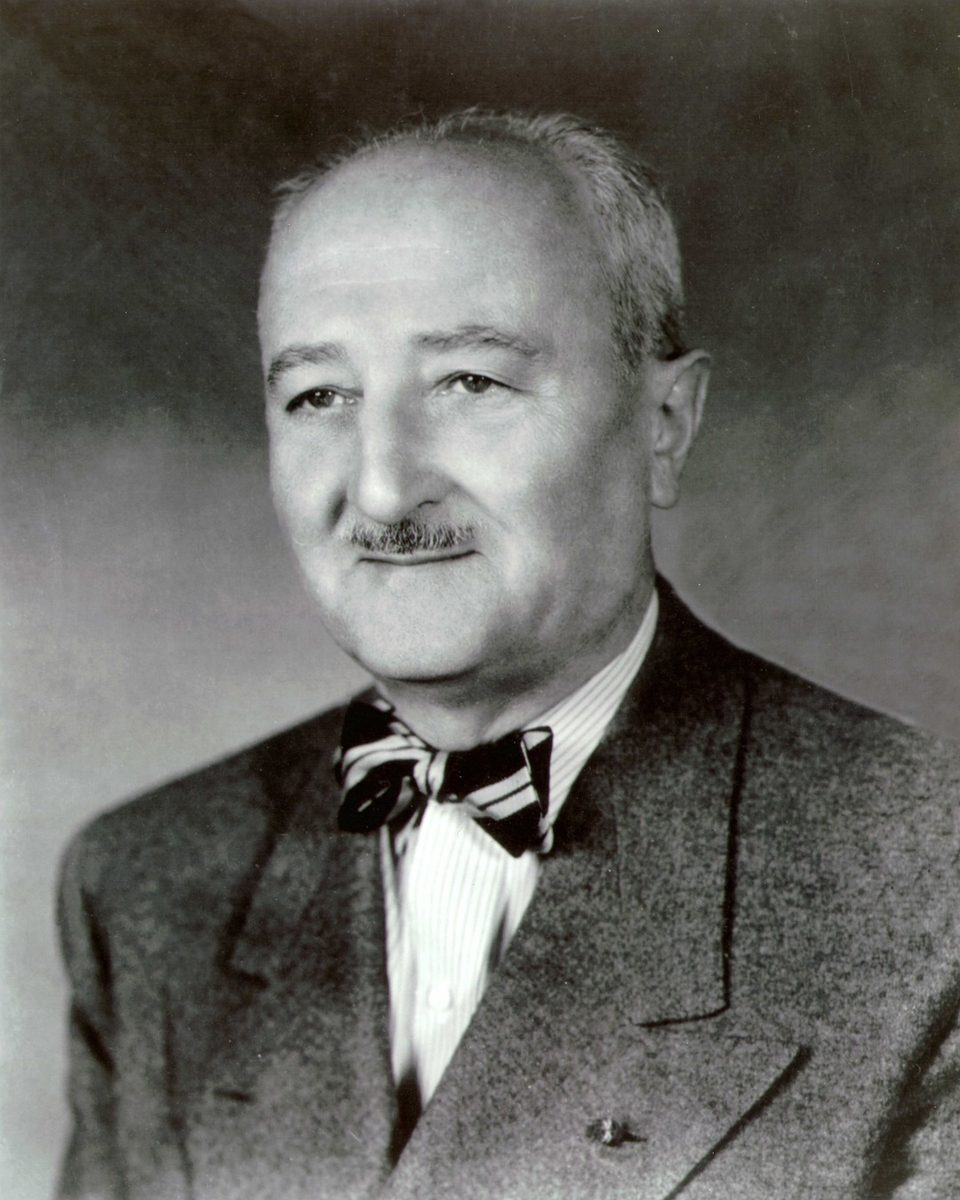
The manuscript’s most famous failed reader encountered it in the 1920s, after an earlier amateur’s claim to have partly translated it had already collapsed. William F. Friedman went on to lead the Army’s break of Japan’s Purple cipher machine before Pearl Harbor, a feat that made him the most accomplished cryptanalyst in the country, and he kept returning to the Voynich manuscript for the rest of his career. In 1944 he organized a First Study Group of fellow Army cryptanalysts, an after-hours club that transcribed the entire manuscript onto IBM punch cards for statistical analysis and disbanded in 1946 without an answer. In 1962 he assembled a Second Study Group and tried again, feeding the transcription into an RCA computer, with the same result. His one firm public conclusion appeared almost as a private joke: a short anagram tucked into a footnote of an unrelated 1959 journal article on wordplay in Chaucer, which unscrambled to state his view that the manuscript was an early attempt to construct an artificial, “a priori” philosophical language rather than an encoded version of any real one. His health declined not long after, and he did no further major work on the manuscript before he died in 1969.
Every Proposed Solution Since Has Failed in a Different, Specific Way
Friedman’s artificial-language idea has a modern descendant that doesn’t require the text to be a language at all. In 2003 the psychologist Gordon Rugg proposed that a sixteenth-century hoaxer with no linguistic training could have generated Voynichese using nothing more than a table of word-building syllables and a perforated card known as a Cardan grille, sliding the card across the table and reading a nonsense “word” off through its holes, one card-width at a time. Rugg built a working version and produced text sharing several of the real manuscript’s statistical quirks, including Currier’s two-hand split; the result made it into Nature under the headline “elegant gibberish,” reported carefully as a demonstration of what was possible rather than proof of what happened. Other researchers, notably Torsten Timm and Andreas Schinner, have proposed variants of the same basic idea — a generative method in which scribes reused and lightly altered words already on the page, in effect a medieval version of placeholder text — arguing this explains why Voynichese looks structured at the level of single words while carrying almost no sentence-level information. No hoax theory is considered settled either; it has its own unresolved problem, which is explaining why anyone would spend five scribes’ labor, and this much vellum and ink, on an elaborate forgery with no evident buyer.
Against that backdrop, Cheshire’s 2019 claim, and a similarly short-lived announcement by Nicholas Gibbs in 2017 that the text was a women’s-health compendium readable through standard medieval Latin abbreviations, look less like isolated embarrassments and more like a recurring failure mode. Both proposed a translation method, applied it to a handful of words or captions rather than the running text, and left unaddressed the two statistical anomalies — Zipf-law word structure paired with near-zero word-order information — that any real solution has to account for. The linguist Mark Liberman’s Language Log dissected both claims in detail and reached the same verdict each time: a plausible story about a handful of words is not a decipherment.
That is the honest shape of the mystery as it stands: not an absence of evidence, but an unusually precise body of it, describing a text that behaves like language in ways too specific to be accidental, and refuses to behave like language in ways too specific to ignore. A hoax table, an invented grammar and two separate translation claims have each been measured against that evidence and come up short in a different, identifiable place. Whatever clears that bar next will have to do more than sound convincing for 48 hours.
Watch the short
No long-form video exists yet for this topic. The 46-second short that started it covers the find, the dating and Friedman’s dead end in one breath.

Related reading
- Why Linear A Still Can’t Be Read — a Bronze Age script that can be pronounced but still not translated — the opposite failure mode from Voynichese.
- Why Nobody Can Read Easter Island’s Own Writing System — another undeciphered script, with far too few surviving examples to run this kind of statistical test at all.
- Who Really Invented the Telegraph Key (It Wasn’t Samuel Morse) — how a real 19th-century code system was actually built, for contrast with an invented one.
- How Wooden Tally Sticks Ran England’s Treasury for 600 Years — a medieval record-keeping system that encoded real information in a way historians did eventually crack.
Works cited
- Beinecke Rare Book & Manuscript Library, Yale University. Beinecke MS 408 (“Voynich Manuscript”). Digital facsimile. Link.
- Reddy, Sravana, and Kevin Knight. “What We Know About The Voynich Manuscript.” Proceedings of the 5th ACL-HLT Workshop on Language Technology for Cultural Heritage, Social Sciences, and Humanities, 78–86. Portland, OR: Association for Computational Linguistics, 2011. Link.
- Davis, Lisa Fagin. “Digital Paleography and the Voynich Manuscript.” Manuscript Studies: A Journal of the Schoenberg Institute for Manuscript Studies 5, no. 1 (2020). Link.
- “University of Arizona Experts Determine Age of Book ‘Nobody Can Read.’” University of Arizona Communications, February 10, 2011. (Reprinted via EurekAlert; returns a non-200 status to automated link checks from this machine specifically — cited as print.)
- “Mysterious Voynich Manuscript Reborn in Facsimile Edition.” Yale News, October 31, 2016. Link.
- Reeds, Jim, ed. “William F. Friedman’s Transcription of the Voynich Manuscript.” Annotated research notes. Link.
- Fagone, Jason. The Woman Who Smashed Codes: A True Story of Love, Spies, and the Unlikely Heroine Who Outwitted America’s Enemies. New York: HarperCollins, 2017.
- Rugg, Gordon. “An Elegant Hoax? A Possible Solution to the Voynich Manuscript.” Cryptologia 28, no. 1 (2004): 31–46. (tandfonline.com returns 403 to automated requests; cited as print.)
- Whitfield, John. “World’s Most Mysterious Book May Be a Hoax.” Nature, December 17, 2003. Link.
- Zandbergen, René. “History of the Manuscript.” Voynich MS. Link.
- Liberman, Mark. “Yet Again the Voynich Manuscript.” Language Log, University of Pennsylvania. Link.