
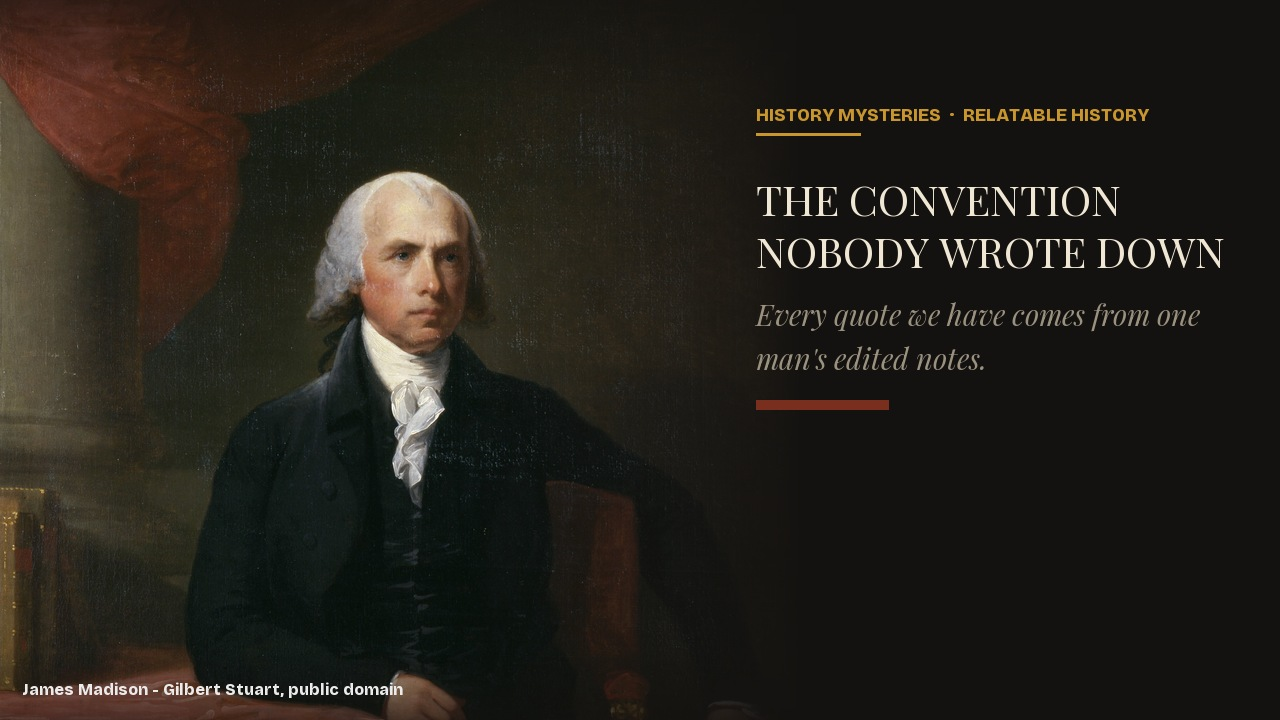
For four months in the summer of 1787, fifty-five men met behind locked doors in Philadelphia and built the government the United States still runs on — and almost nothing any of them said inside that room survives in an official form. No stenographer worked the floor. No newspaper got a seat. The convention’s own secretary wrote down votes and motions, not words, and when it was over he burned what was left. Nearly everything historians can quote from the Constitutional Convention comes from one delegate’s private notebook, which he kept revising for the next fifty years.
That is not a conspiracy. The delegates voted for exactly this outcome in their second week of work, deliberately and almost unanimously, and several of them later defended it as the only reason the Constitution got written at all. But the secrecy rule also means that two and a half centuries of argument over what the framers intended rests on a documentary record that is thinner, later, and more personally edited than most people assume.
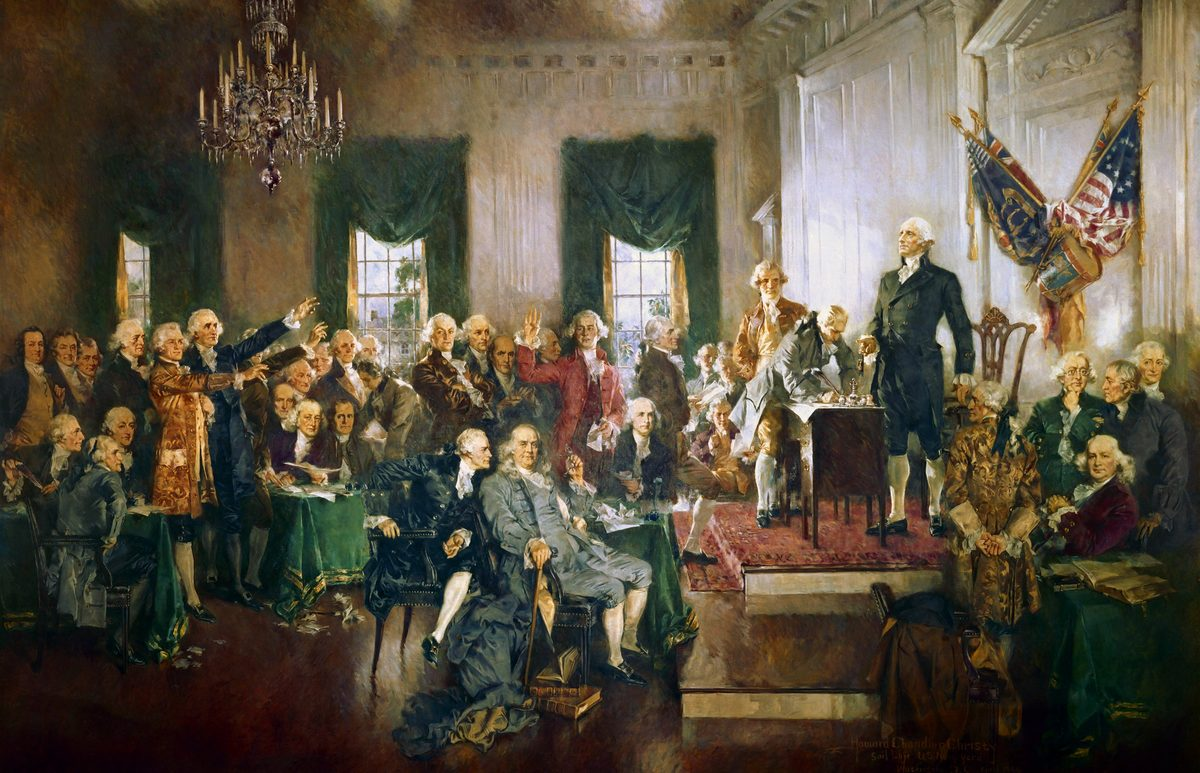
Delegates voted to gag themselves before they had debated anything
The Constitutional Convention opened on May 25, 1787, in the Pennsylvania State House, the same building where the Declaration of Independence had been adopted eleven years earlier. Within days, before any substantive debate began, the delegates adopted a formal rule of secrecy: nothing said on the floor was to be printed, published, or communicated to anyone outside the room without the convention’s own permission. Members who leaked a vote or a speech risked formal censure.
James Madison, writing to James Monroe on June 10, defended the rule as a practical necessity rather than a cover-up: “I think the rule was a prudent one,” he told Monroe, “not only as it will effectually secure the requisite freedom of discussion, but as it will save both the Convention and the Community from a thousand erroneous and perhaps mischievous reports.” His argument was that delegates would only change their minds in public if they could do so without it being reported back home as a flip-flop.
Not every founder agreed. Thomas Jefferson, serving as minister to France and reading about the convention from across the Atlantic, wrote to John Adams on August 30 that he was “sorry they began their deliberations by so abominable a precedent as that of tying up the tongues of their members,” adding that “nothing can justify this example but the innocence of their intentions, & ignorance of the value of public discussions.” Jefferson was not in the room and never had to weigh the trade-off Madison described; the disagreement between two of the era’s sharpest political minds is itself part of the story.
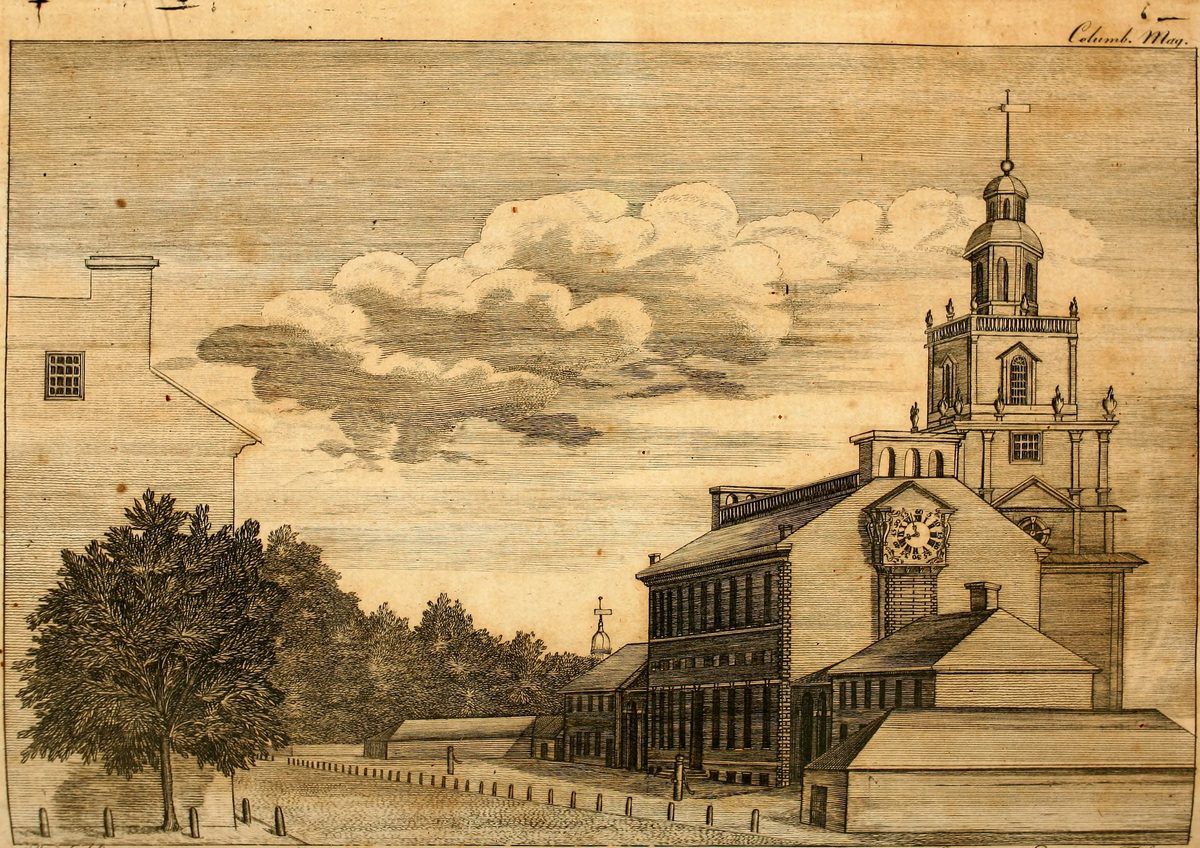
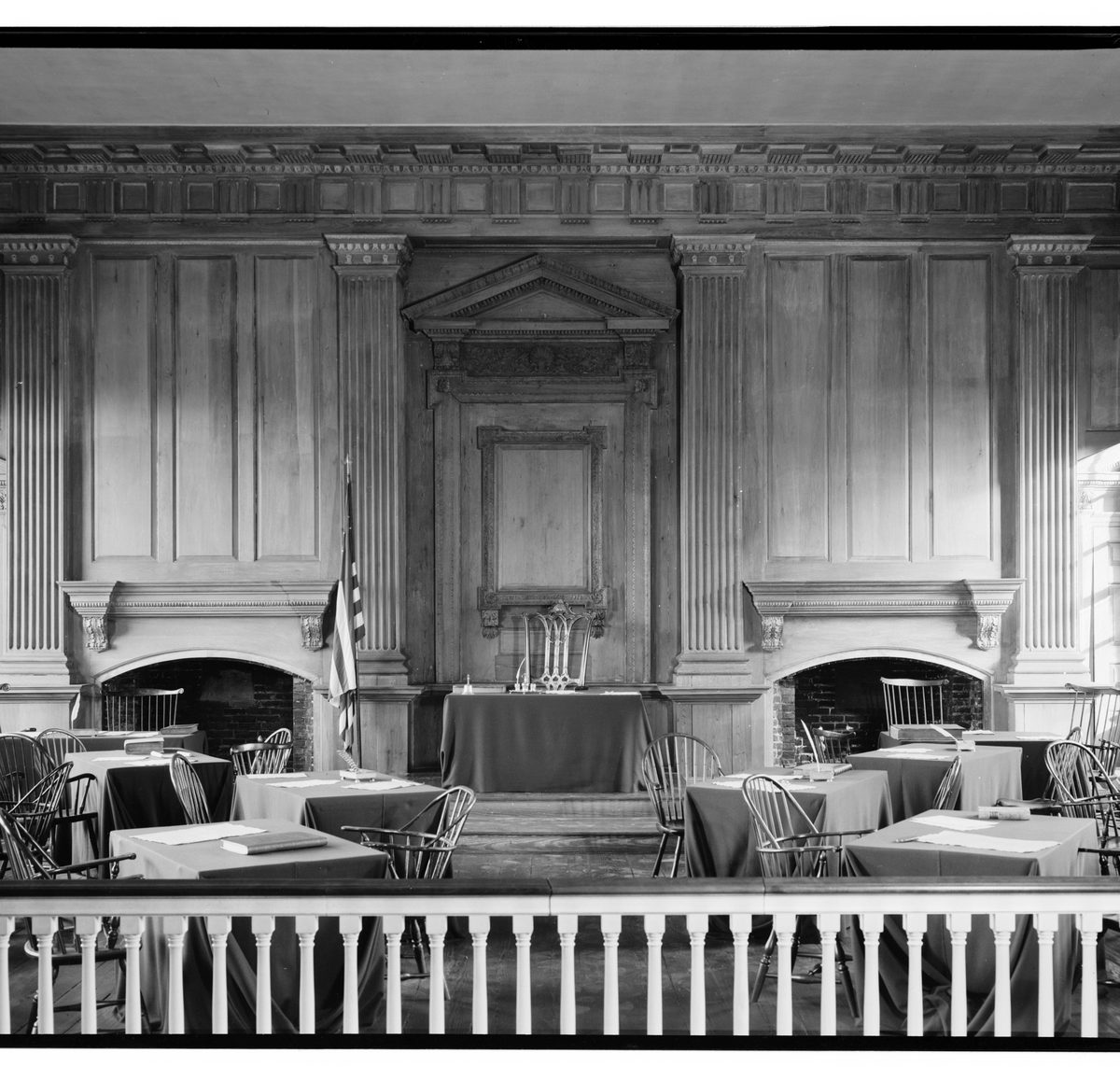
The physical precautions were as serious as the rule itself
A rule is only as good as its enforcement, and the convention did not leave secrecy to good manners. The Assembly Room’s tall windows were kept shut through one of Philadelphia’s hot, humid summers so that no passer-by could overhear a raised voice from the street. Sentries were posted at the doors. Delegates were asked not to discuss the day’s proceedings even with their own families in their lodgings, on the theory that a half-remembered fragment repeated at dinner could travel faster than any of them could control.
The arrangement worked remarkably well for four months, in an age with no recording technology and no legal mechanism to compel silence beyond the delegates’ own sense of obligation to each other. The most famous near-breach is also the most anecdotal: Pennsylvania delegate James McHenry’s personal notebook records that on the convention’s final day, a Philadelphia society hostess named Elizabeth Willing Powel asked Benjamin Franklin what the delegates had produced, a republic or a monarchy, and that Franklin answered, “A republic, if you can keep it.” McHenry wrote the exchange down and named Powel as its source. Decades later, in 1814, Powel herself told a correspondent she had “no recollection of any such conversations” but could not rule out that one of them had happened, given how often she hosted convention delegates at her home. The anecdote is widely repeated as settled fact; the honest version is that it is well documented and plausible, not certain.
The official secretary recorded votes, not words — and burned the rest
The convention’s one paid administrative officer was William Jackson, a 29-year-old former army officer nominated for the job by Alexander Hamilton on May 25 over Benjamin Franklin’s own candidate, his grandson William Temple Franklin. Jackson’s duties were to keep the convention’s minutes, hold its papers securely, and guard its secrecy. He was not asked to transcribe debate, and by every account he did not attempt to.
What Jackson produced was a bare procedural journal: who moved what, how each state voted, when a committee was appointed. It names no speakers and records no arguments. At the close of the convention Jackson destroyed a portion of the loose working papers rather than preserve them, on the understanding that the convention’s business was to end as privately as it had been conducted. His surviving journal then sat unpublished for more than three decades. Congress finally ordered it printed, and the resulting volume, Journal, Acts and Proceedings of the Convention…which formed the Constitution of the United States, appeared in Boston in 1819. John Quincy Adams, then Secretary of State, personally arranged for copies to be distributed to Thomas Jefferson and to every college and university in the country under a congressional resolution of January 1820 — a strikingly late and formal way for the nation’s founding deliberative body to acknowledge its own written record existed at all.
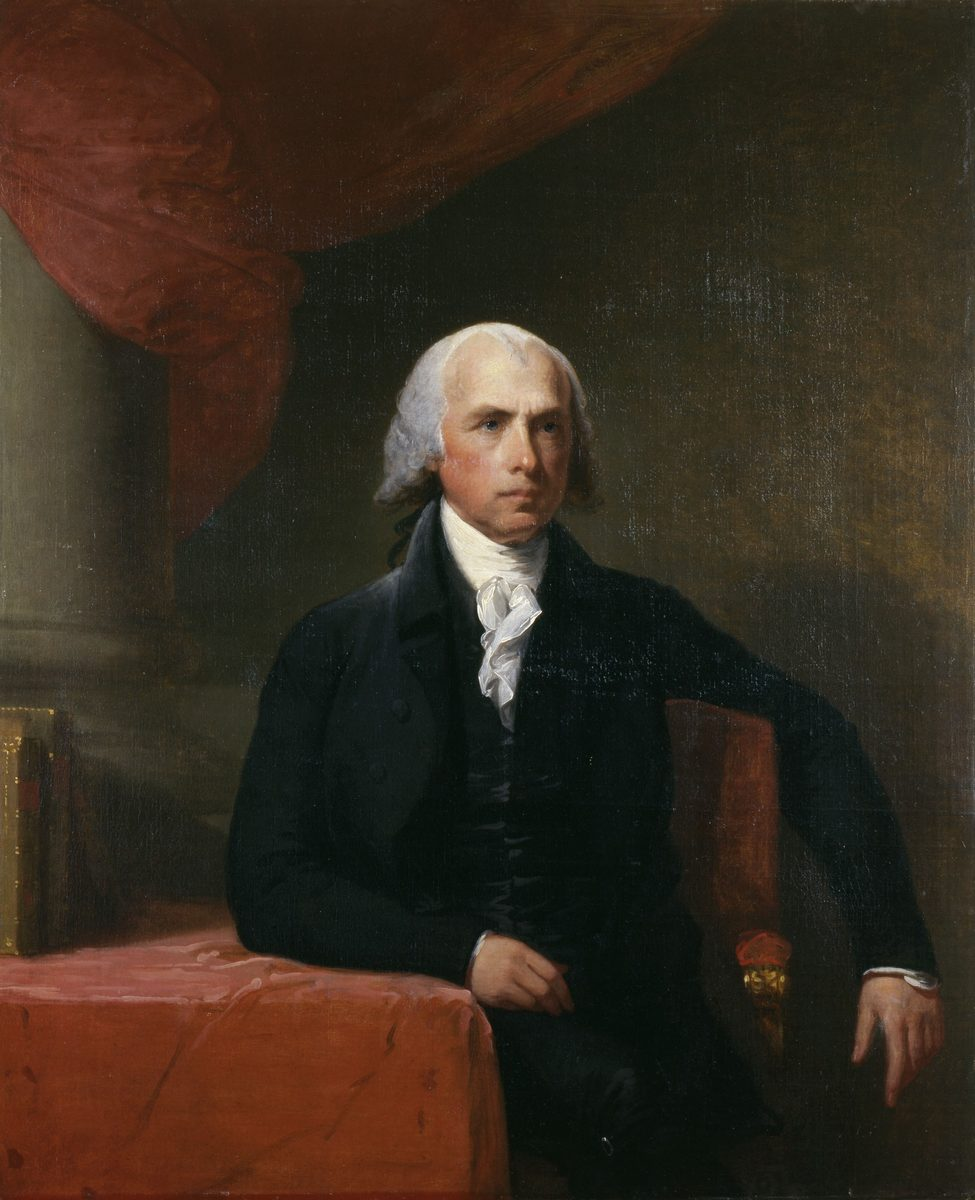
One delegate’s private notebook filled the gap Jackson left
James Madison, the 36-year-old delegate from Virginia, took on a task nobody assigned him. He arranged to sit immediately in front of the presiding officer’s chair for every session, within easy hearing distance of whoever was speaking. Using a private shorthand of abbreviations and marks legible only to himself — private enough that, taken to an extreme, this kind of personal code is exactly what leaves a document as stubbornly hard to read as the Voynich Manuscript — he logged speeches and motions as they happened, then went back to his lodgings each evening and wrote the day’s notes out in full with a quill pen while they were still fresh. By his own later account, and by the testimony of colleagues, he missed no session and barely a quarter hour of any day across the entire convention.
No rule required this. Madison was not the secretary, had no official standing to produce a record, and kept the existence of his notes largely to himself for the rest of his life. He turned down requests to publish or even describe them, repeatedly, for the next five decades. The result is that the convention’s single most detailed account of who said what exists purely because one ambitious young delegate privately decided the official record was not going to be enough, and said nothing about it for as long as he lived.
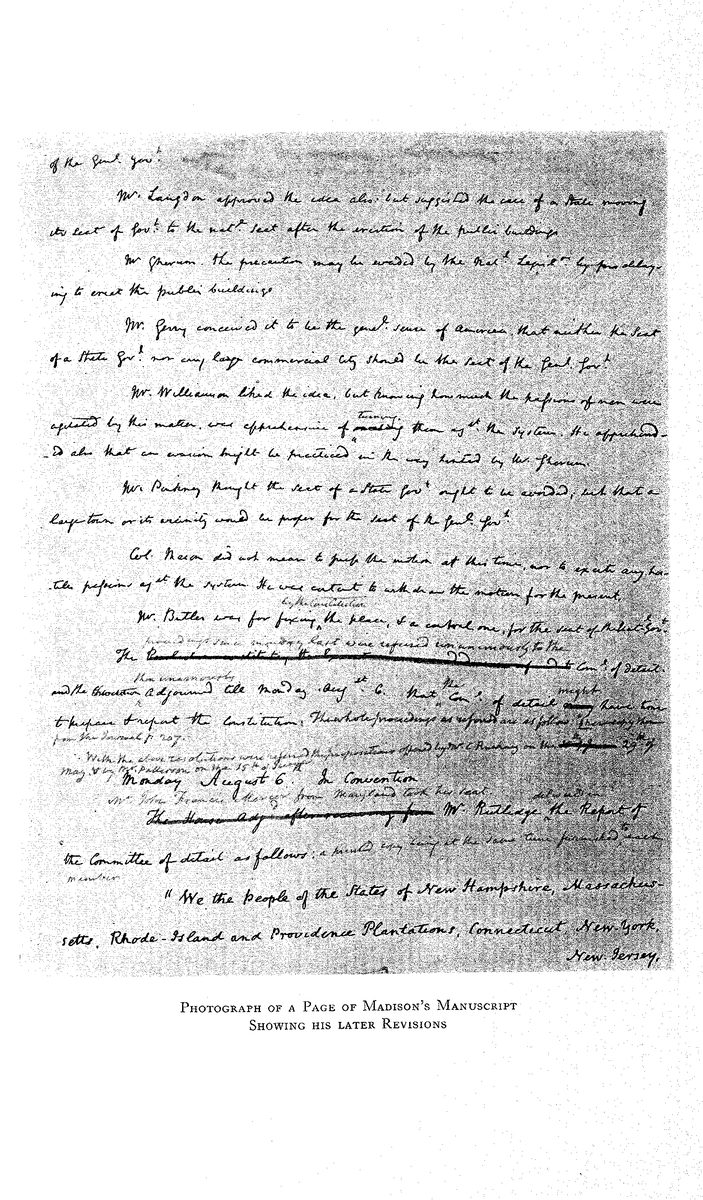
He kept revising that notebook for the rest of his life
Madison’s notes were not simply filed away and left untouched until his death in 1836. In Madison’s Hand (2015), legal historian Mary Sarah Bilder examined the physical manuscript itself — its paper, its ink, and the layered handwriting — and found that Madison had gone back into the text repeatedly over roughly the next fifty years: adding slips of paper, writing in the margins, and crossing out and rewriting earlier passages. Her analysis won the 2016 Bancroft Prize, one of the most significant awards in American history scholarship.
Bilder’s larger point is less about any single fabricated fact and more about tone and emphasis. Madison’s earliest passages, closest to 1787, read as more anxious, more combative, and more frustrated with his fellow delegates than the version that eventually reached print. Over decades of revision — much of it coinciding with Madison’s later political battles over how the Constitution should be interpreted — the sharper edges were smoothed. The notebook that scholars now treat as the nearest thing to a transcript of 1787 is better described, in Bilder’s framing, as something closer to a diary Madison kept returning to and rewriting for the rest of his life, shaped as much by his later political needs as by what was actually said in the room.
Madison’s notes were finally published in 1840, four years after his death, edited for the press by John C. Payne, his widow Dolley’s brother. They found an immediate second life neither Madison nor Payne intended: antislavery advocates in the 1840s mined the record of the convention’s debates over representation and the slave trade for ammunition in the sectional arguments of their own decade, more than fifty years after the words were first spoken.
What the gap between the two records means today
No single, neutral transcript of the Constitutional Convention has ever existed, and after Jackson’s bonfire and five decades of Madison’s private editing, none ever will. What historians actually work from is a patchwork: Jackson’s bare official journal; Madison’s notes, published 53 years after the fact and revised across most of that span; and scattered fragments from a handful of other delegates, including Robert Yates, James McHenry, and Rufus King, none of whom attended every session. The scholar Max Farrand spent years cross-referencing all of it into a single three-volume compilation, The Records of the Federal Convention of 1787, published by Yale University Press in 1911 and still the standard reference every historian of the Constitution uses today.
That patchwork is also, inescapably, the foundation of every modern argument about constitutional “original intent.” Judges and scholars who cite what “the framers meant” are almost always citing Madison’s notes, because they are the fullest account available — not because anyone has ever been able to check them against an independent record of what was actually said. The room that produced the Constitution was sealed on purpose, stayed sealed for fifty-three years, and when it finally opened, the account that came out had spent decades in the hands of one of the men who had been inside it.
The parchment itself survived better than the debate did. The four signed pages now sit in the National Archives rotunda in Washington, sealed since 1999 in titanium-framed, argon-filled cases built with NASA and the National Institute of Standards and Technology specifically to replace an earlier generation of helium-filled cases whose glass had begun to crack and cloud. The document that came out of a room nobody was allowed to describe is now one of the most closely monitored physical objects in the country, checked for gas pressure and humidity the way the room that produced it was once checked for open windows.
Watch the full history
The short video that first told this story is embedded below; a long-form video has not been produced for this topic.

Related reading
- The Mystery of the Beale Ciphers, Explained
- How Wooden Tally Sticks Ran England’s Treasury for 600 Years
- Why No One Can Read the Phaistos Disc, or Agree That It’s Real
- Why Linear A Still Can’t Be Read
Works cited
- Bilder, Mary Sarah. Madison’s Hand: Revising the Constitutional Convention. Harvard University Press, 2015.
- Farrand, Max, ed. The Records of the Federal Convention of 1787, 3 vols. Yale University Press, 1911.
- Madison, James. “Debates — Monday, September 17, 1787.” Notes of Debates in the Federal Convention. The Avalon Project, Yale Law School. Link.
- “Major William Jackson.” George Washington’s Mount Vernon, Digital Encyclopedia. Link.
- Madison, James. Letter to James Monroe, June 10, 1787. Teaching American History. Link.
- Jefferson, Thomas. Letter to John Adams, August 30, 1787. ConSource. Link.
- “‘A republic if you can keep it’: Elizabeth Willing Powel, Benjamin Franklin, and the James McHenry Journal.” Library of Congress, Manuscript Division blog, January 2022. Link.
- Adams, John Quincy. Letter to Thomas Jefferson transmitting the printed Journal of the Federal Convention, June 12, 1820. Founders Online, National Archives.
- “September 17, 1787: A Republic, If You Can Keep It.” National Park Service, Independence National Historical Park. Link.
- “Fact Sheet: New Encasements for the Charters of Freedom.” National Archives, November 1999. Link.