
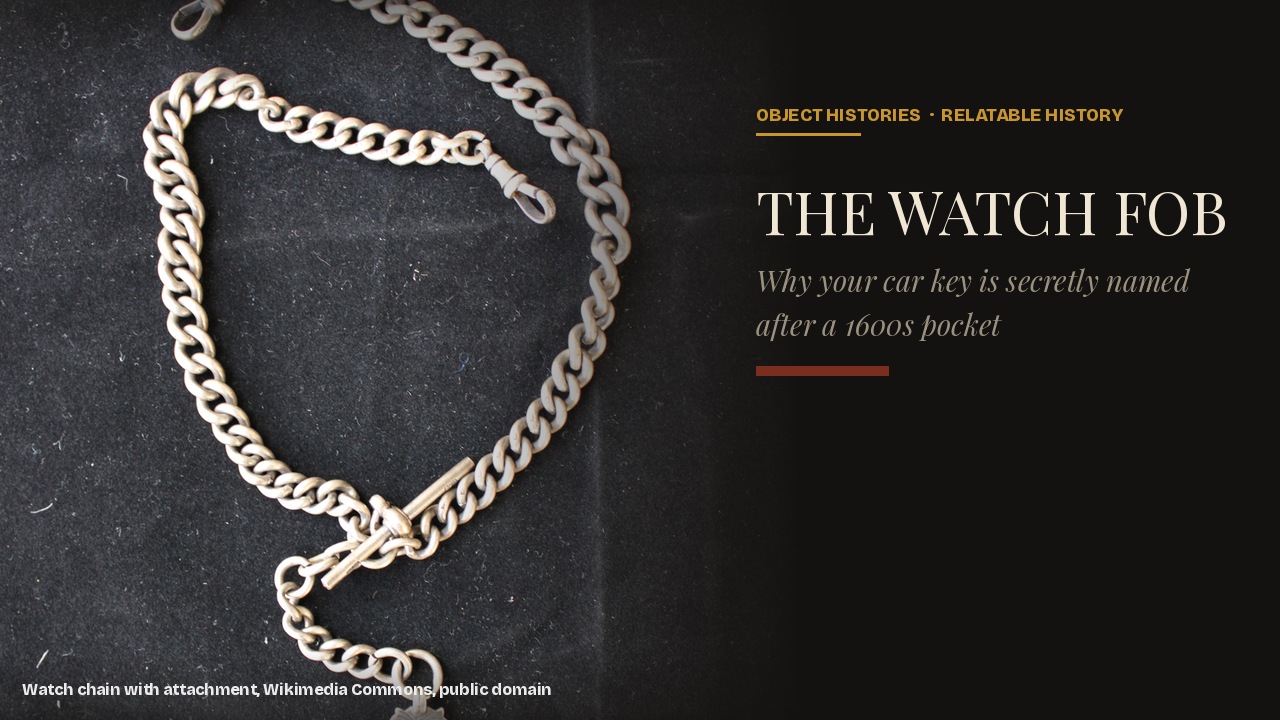
A car key fob has nothing to do with a chain, and for its first two hundred years, neither did the word. “Fob” started out naming a pocket — a small, snug waist pocket built into a man’s garment specifically to carry something valuable — and it kept that meaning for more than two centuries before it drifted onto the chain, then the seals and keys hanging from the chain, and finally the plastic remote in your hand today.
The video covers that whole journey in about five minutes. This is the slower version: the king whose wardrobe decree happens to line up with the word’s rise, the actual museum objects that once filled a fob pocket, the women’s equivalent that did the same job from the other side of the waist, and the 1982 French hatchback that is, by its own maker’s account, the real reason your car key still has one.
Why Is It Called a Fob? It Started as a Pocket
According to the Online Etymology Dictionary, “fob” is attested from the 1650s meaning a man’s small waist pocket for valuables, and its origin is uncertain — most likely related to the Low German fobke, “pocket.” For more than two hundred years after that, a fob was a place, not a thing you wore or carried. The meaning most people assume today — a chain, or the ornament hanging from one — is much younger: it only appears by 1888, as a shortening of “fob chain.”
That gap matters. A fob pocket existed, and was being talked about, for over two centuries before anyone called the chain itself a fob. What finally filled that pocket, and later hung from a chain outside it, is the actual subject of this article.
The King Who Decreed a New Pocket
The 1650s pocket and a famous piece of Restoration court fashion line up closely enough that the two are worth setting side by side, even though neither source claims the other caused it. On Monday, 8 October 1666, Samuel Pepys recorded in his diary: “The King hath yesterday in Council declared his resolution of setting a fashion for clothes, which he will never alter. It will be a vest, I know not well how; but it is to teach the nobility thrift, and will do good.” Pepys, writing the day after the announcement, admits he doesn’t yet know what the garment will actually look like — only that Charles II meant it to replace the shorter, more extravagant doublets of the previous fashion and to set an example of restraint among his nobles.
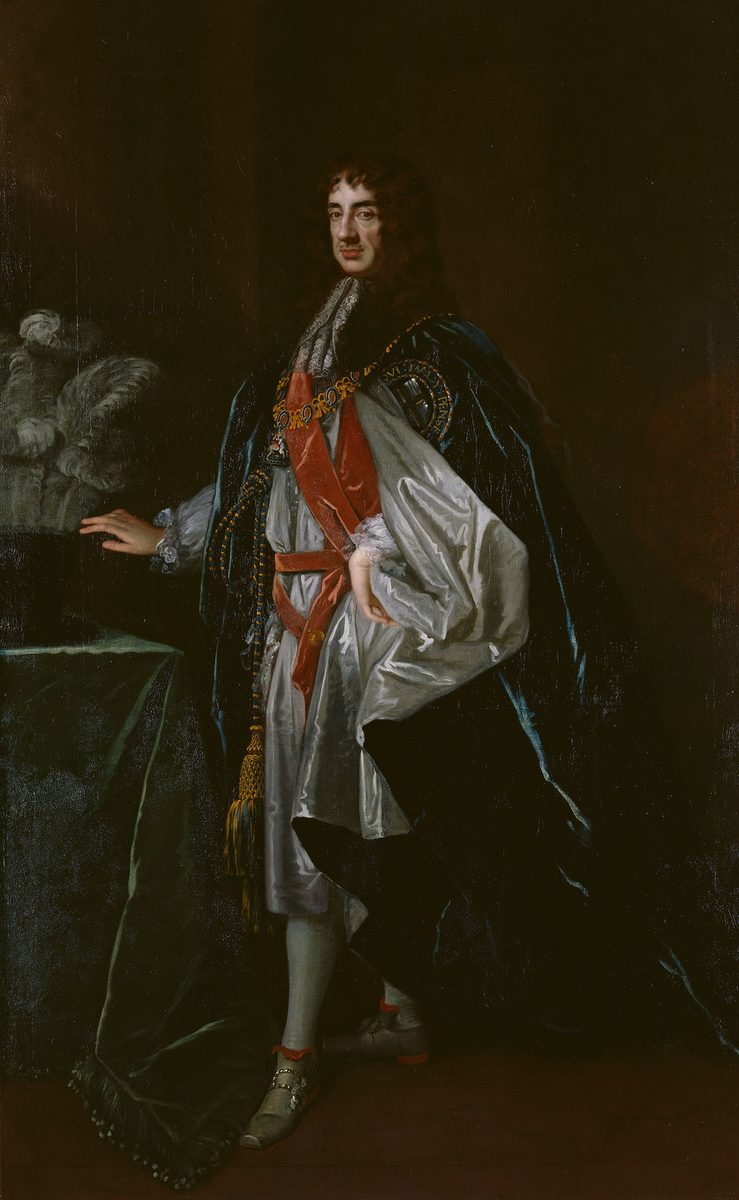
The vest that emerged from that decree was a long, close-fitting coat worn under a looser overcoat, the direct ancestor of the three-piece suit’s waistcoat. It is this garment, and the shorter coats and breeches that went with it over the following decades, that carried the small waist pocket the word “fob” had already started to describe by Pepys’s own time. Whatever hung in that pocket had to be small enough to disappear into it entirely — which is exactly the constraint that shaped everything that eventually filled one.
What Actually Hung From a Gentleman’s Fob
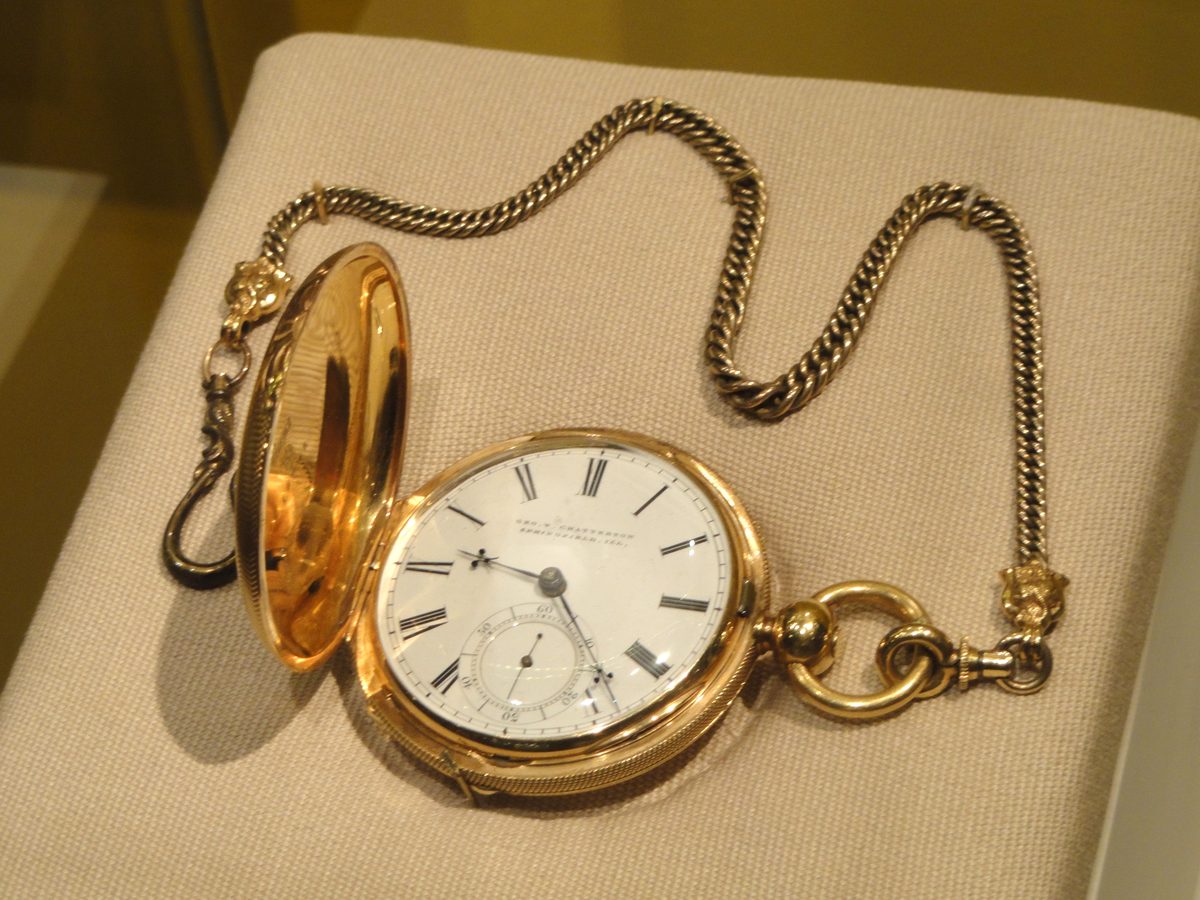
Once pocket watches became common enough for a comfortably-off man to own one, the fob pocket became the watch’s home, and a short chain or ribbon looped out of it to keep the watch from being pulled free by accident. The Victoria and Albert Museum’s record for a gold and citrine seal, engraved around 1815–20 with a scene from the Battle of Trafalgar, describes exactly how that chain was put to work: “it would have been attached to a gentleman’s watch chain and worn just below the waist,” tucked into the small trouser pocket the museum’s own record calls a “fob.”
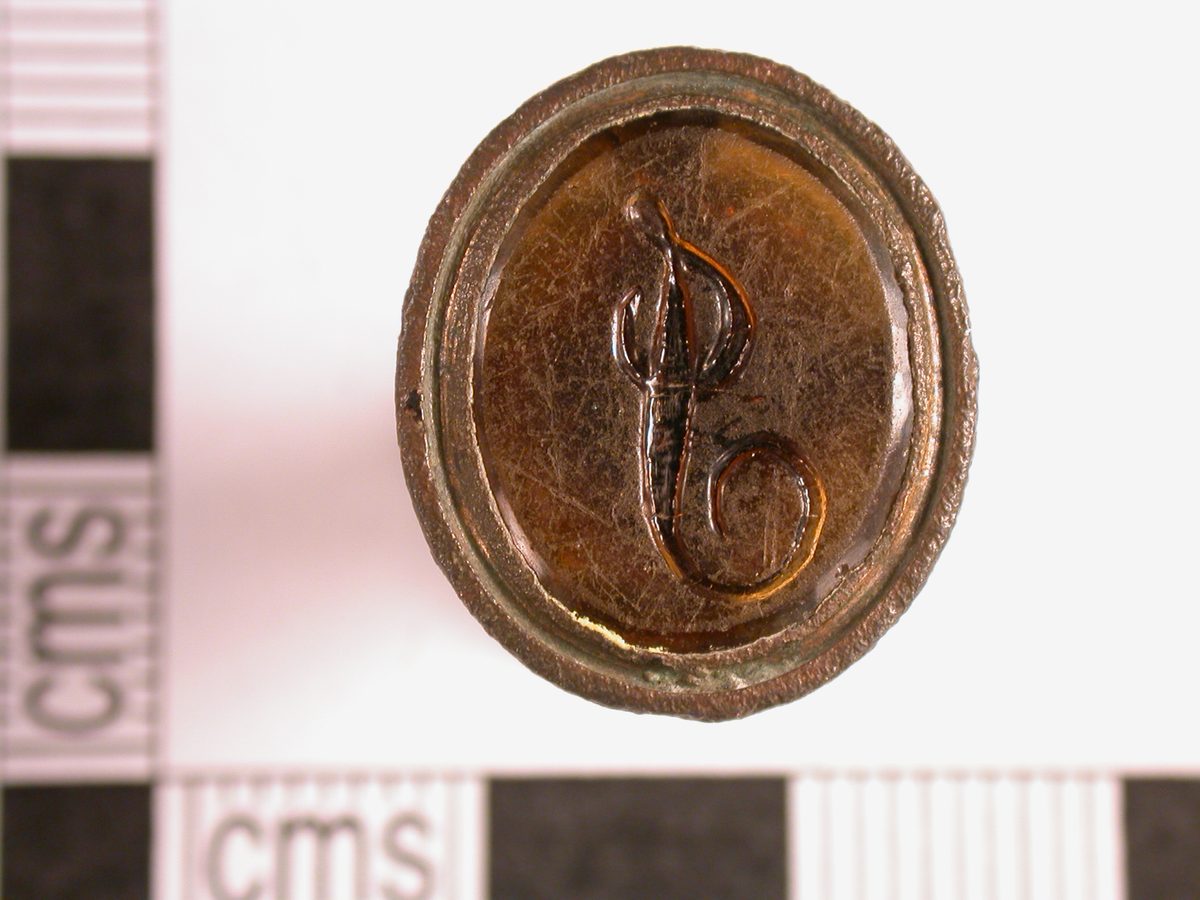
A fob seal wasn’t purely decorative. As the V&A’s record puts it, “seals were functional as well as decorative items, at a time when letters had to be sealed with wax,” and the design was “engraved in reverse so that they would be the right way round on the sealing wax.” A man’s fob seal, in other words, did real clerical work: pressed into a blob of hot wax on a folded letter, it left his initials, crest, or a scene like that Trafalgar intaglio stamped the right way round, proof the letter hadn’t been opened in transit. It just happened to also swing from the same chain as his watch.
Winding the Watch Itself
Before the winding crown built into a watch’s stem became standard late in the 19th century, a pocket watch had to be wound with a separate key, and that key usually rode on the fob chain right alongside the seals. The Portable Antiquities Scheme’s record for one such key, found by a metal detector in St. Issey, Cornwall in 2013 and catalogued as CORN-9B6406, describes a small, ornate object: a sub-rectangular brass frame with waisted, bifid sides, a central triangular knop, and cross-hatched decoration around an oval winding aperture, dated broadly to the 19th century. It weighs barely two grams — light enough to disappear into a waistcoat pocket alongside everything else competing for space there.
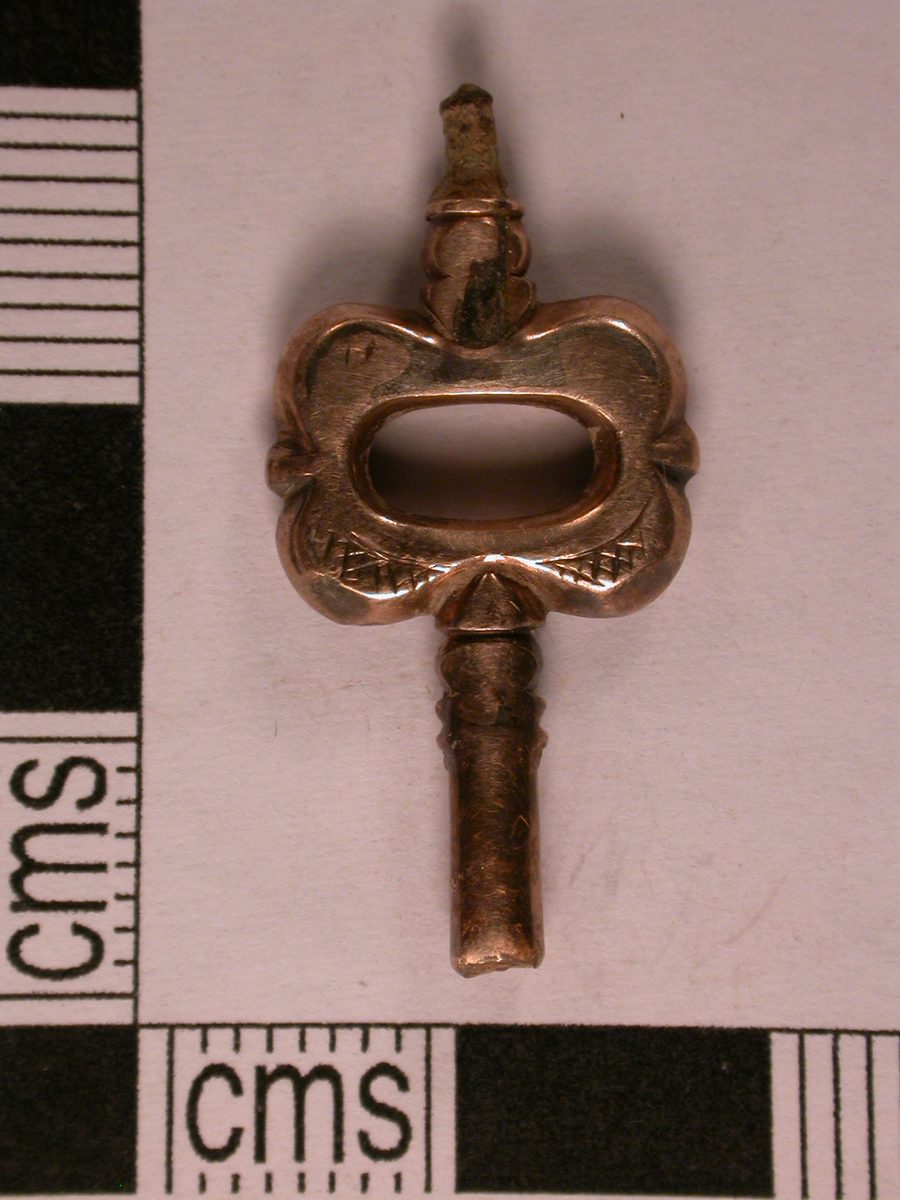
That crowding was the whole problem with the fob by the Victorian era. A seal for sealing wax, a key for winding the watch, and the watch itself were already three objects sharing one chain and one pocket before anyone added a vesta case for matches or any other small tool a gentleman wanted within reach. The fob pocket that started as a single discreet hiding place in 1666 had, by the 1800s, become a small hardware store a man wore on his hip.
The Woman’s Equivalent: The Chatelaine
Women’s fashion solved the same problem differently, with an accessory that makes the fob’s own history easier to read. The V&A’s record for an enamelled 18th-century example, made in the West Midlands around 1765–75, explains that the object is “commonly called a chatelaine, but this term was adopted only in the early 19th century” — in the 1700s, the same kind of object went by the French-derived name “equipage.” The word chatelaine itself traces back to the medieval châtelaine, the lady of a castle, and by extension her bunch of keys and the useful items that went with them.
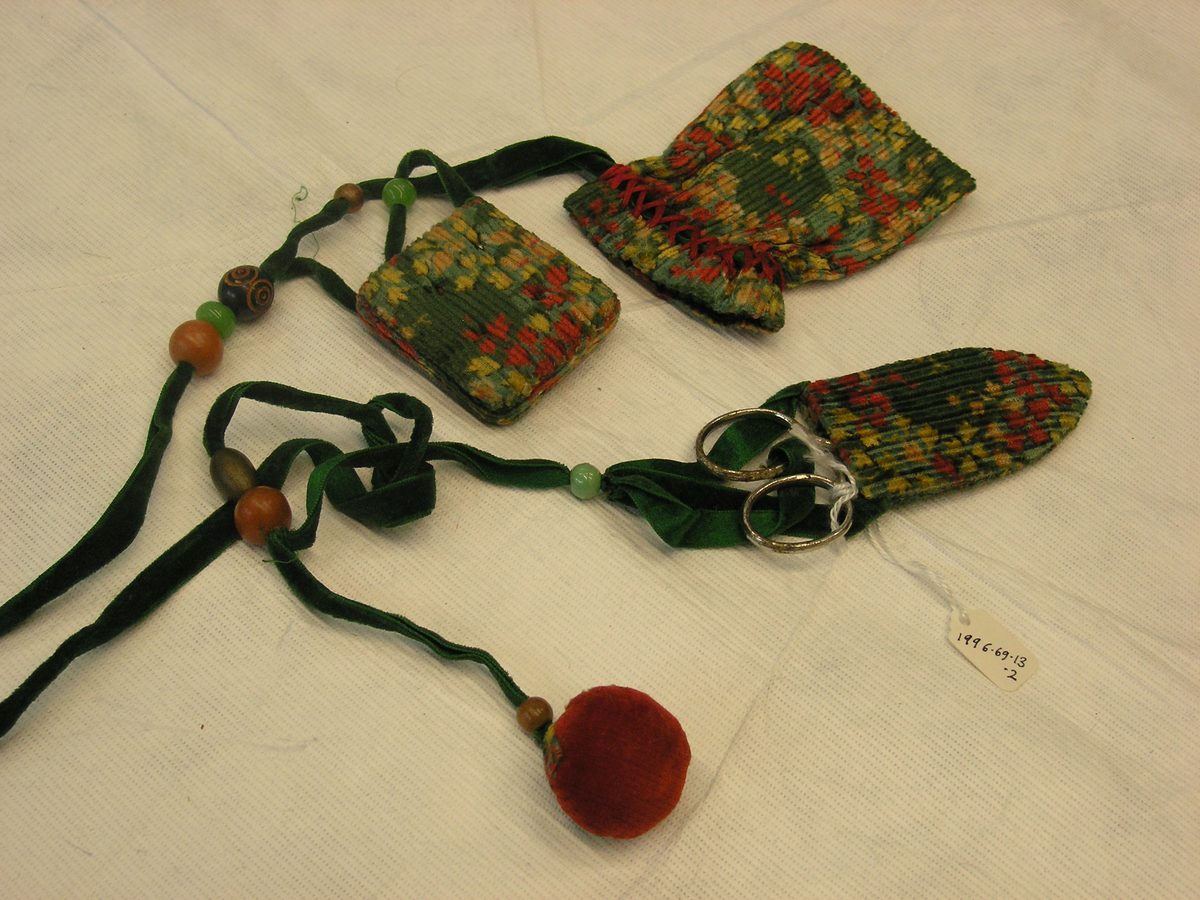
What hung from that particular chatelaine was, in miniature, a woman’s whole toolkit: a small case called an étui holding a penknife, a bodkin, a combined nail-file and tweezers, and a combined toothpick and ear scoop, plus four framed plaques and two small egg-shaped, screw-top containers, possibly used to carry breath-freshening sweets. A fob pocket hid its contents inside a man’s coat; a chatelaine put the same category of small, indispensable tools on open, decorative display at a woman’s waist. Both were solving the identical problem — what to do with a watch, a seal, and a handful of small necessities — for two wardrobes that didn’t share a single pocket in common.
The Pocket That Lost a War
The fob pocket’s decline tracks almost exactly with the pocket watch’s own. Reporting for Task & Purpose and republished by the Doughboy Foundation, Jeff Schogol describes how most Americans still carried pocket watches before the United States entered the First World War, and how that began to change once American troops went overseas. Stan Czubernat, a WWI watch expert quoted in the piece, explains the practical reason: a wristwatch let a soldier glance at his own wrist in the middle of combat instead of digging through a pocket under a uniform and webbing. By the spring of 1917, Schogol writes, nearly all military watch advertising in the United States had already shifted from pocket watches to wristwatches.
A watch worn on the wrist has no use for a fob pocket at all, and no fob chain to hang a seal or a winding key from, either — a wristwatch of this era wound from its own stem. In less than a generation, the garment feature that had organized a sizable category of men’s accessories for two hundred and fifty years became a pocket with nothing left to do.
Why Your Car Key Is Still a “Fob”
The word survived its own pocket by attaching itself to whatever dangled from a key ring next, and the clearest modern turning point has a precise date. According to Renault’s own heritage archive, The Originals, “in 1982, Renault Fuego was the first car in the world to come with a remote keyless central-locking system,” a handheld transmitter the manufacturer called the “PLIP remote control,” later carried over to other Renault models. A small object, carried separately from the rest of a set of keys, that did one specific job and announced its owner’s status while doing it — that is a near-exact functional match for a Georgian fob seal, just built out of plastic and radio parts instead of gold and carnelian.
Nobody formally renamed the pocket watch’s old fob seal into a car’s remote control. The word just migrated, the way it had already migrated once before, from the pocket to the chain to whatever useful thing happened to be riding on the chain at the time. The vest pocket is long gone. The habit of calling whatever hangs off your keys a “fob” is the part that stuck.
Watch the full history
The video covers the same journey — Charles II’s vest, the chatelaine, the WWI wristwatch, and the modern key fob — in about five minutes.

Related reading
- How Snuff Boxes Became the Currency of 18th-Century Courts
- The Secret Code of Victorian Calling Card Etiquette
- The Real History of the Fountain Pen Is Older Than You Think
- How Hourglasses Were Made, and What Was Actually Inside Them
Works cited
- Harper, Douglas. “fob (n.).” Online Etymology Dictionary.
- Pepys, Samuel. Diary entry for Monday, 8 October 1666. The Diary of Samuel Pepys, edited by Phil Gyford. Link.
- “Seal.” Victoria and Albert Museum collections, object O74149. Link.
- “Chatelaine.” Victoria and Albert Museum collections, object O77943. Link.
- Tyacke, Anna. “Incomplete Post Medieval Watch Key/Winder” (record CORN-9B6406). Portable Antiquities Scheme, Royal Institution of Cornwall.
- Schogol, Jeff. “How World War I Soldiers Gave America the Wristwatch.” Task & Purpose, via the Doughboy Foundation. Link.
- “Fuego Turbo.” The Originals, Renault Group heritage collection.