
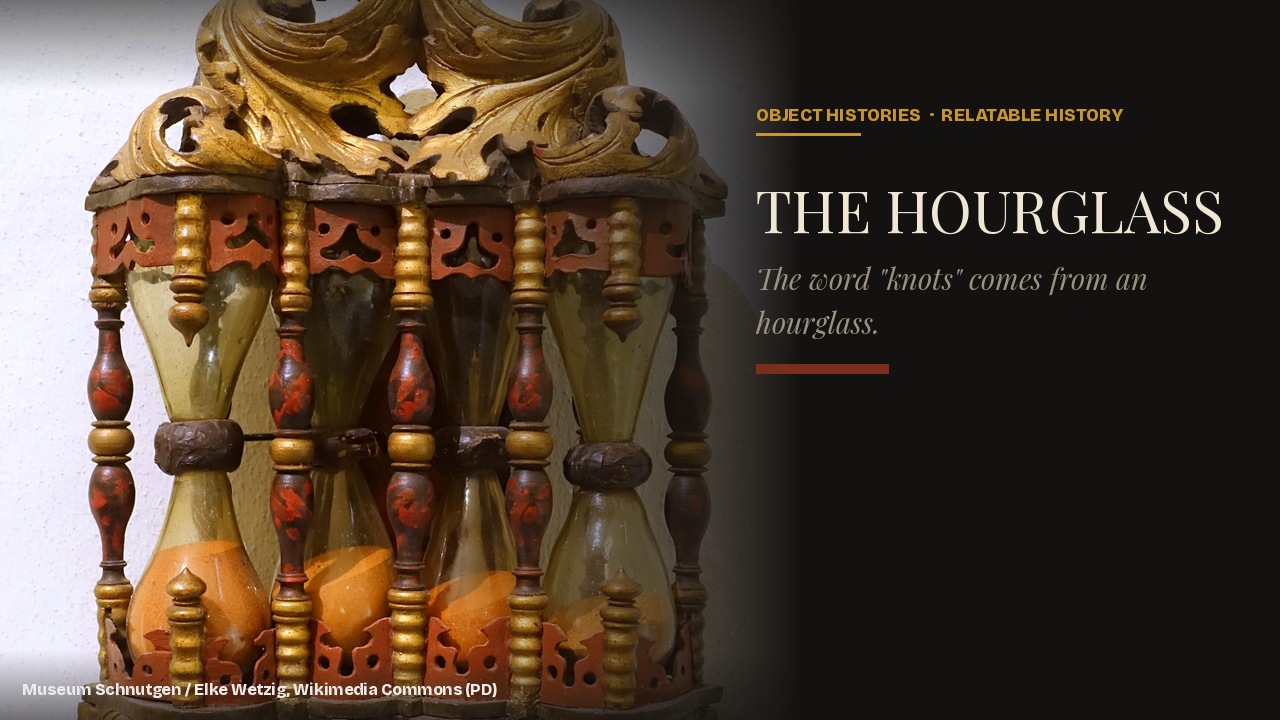
No one has ever found an hourglass older than a painted one. Not a shard, not a fragment, not a reference in a shipping manifest from a civilization that otherwise used sundials and water clocks for millennia. The earliest hard evidence anyone has is a fresco painted in Siena in 1338, showing a woman holding one in her hand.
That is startlingly recent for an object that feels ancient and self-evident — flip it, and time runs. It is also, it turns out, routinely not full of sand. For most of its working life, the material running through an hourglass’s neck was more likely to be ground eggshell, powdered black marble, or lead dust washed in brine, because ordinary beach sand is a poor fit for a narrow glass tube and jams badly.
What follows is how hourglasses were made once plain sand wouldn’t do, where the first ones actually came from, and why a ship’s deck and a church pulpit both came to depend on one.
No Hourglass Has Ever Been Found Older Than a 1338 Fresco
The hourglass’s ancestor, the water clock or clepsydra, is genuinely ancient — examples survive from Babylon and Egypt dating back to the sixteenth century BCE, more than two thousand years before anyone is known to have built a sand-driven equivalent. That gap is one of the odder facts in the history of timekeeping: the mechanism of a sand clock is simpler than a water clock’s, and the materials — glass, a fine filler, a narrow neck — were available to the Romans, yet no hourglass survives, is depicted, or is mentioned in any surviving inventory from the ancient world.
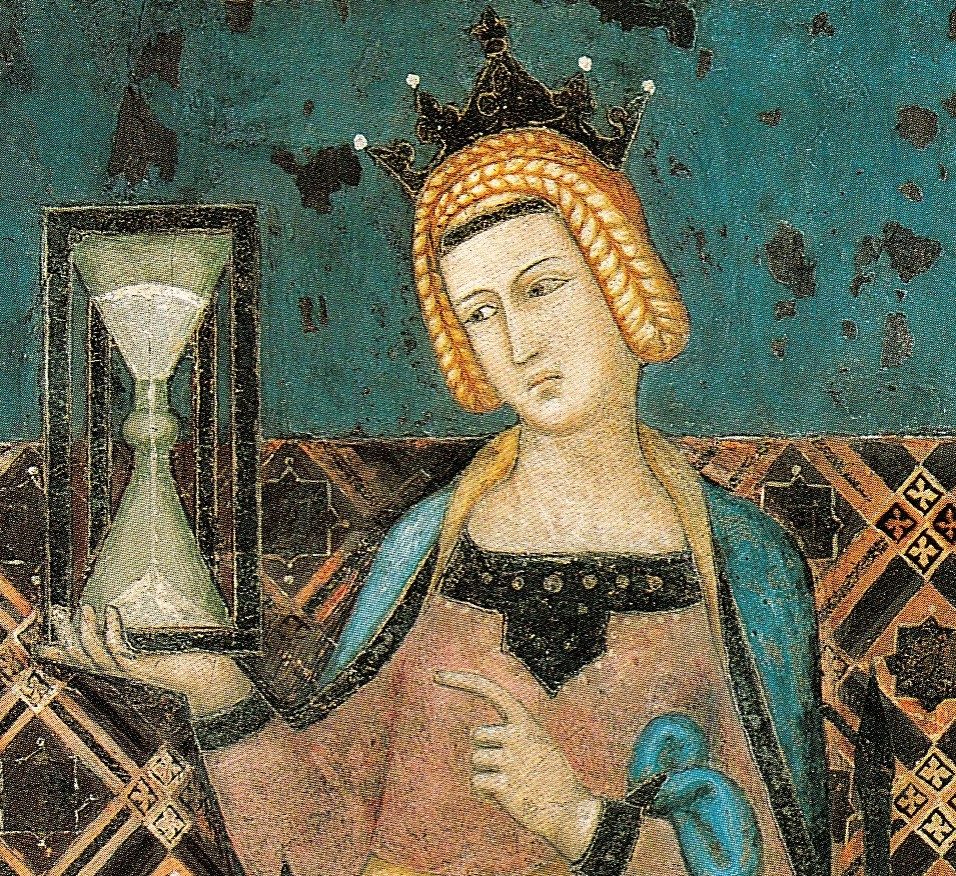
The first unambiguous evidence turns up in Italy in the Late Middle Ages. In Ambrogio Lorenzetti’s fresco cycle Allegory of Good Government, painted for the Palazzo Pubblico in Siena between 1337 and 1339, the figure of Temperance holds a sand-glass in her right hand. The Science Museum Group’s own catalogue record for a reproduction of the detail describes the instrument as “a typical early form,” with two separate bulbs joined at their necks — the oldest known construction method, and a noticeably more fragile one than what came later.
Documentary evidence follows within a decade. A receipt survives from 1345, made out to Thomas de Stetesham, clerk of the king’s ship La George under Edward III of England, recording the purchase of a dozen glass “horologes” from a glazier at Lescluse, in Flanders. By 1380, an inventory of the property of Charles V of France lists a large “sea clock” fitted with two sand-filled phials — evidence that within two generations of the Lorenzetti fresco, the instrument had already found its most important early use: at sea, where a water clock could not survive the motion of a ship.
The “Sand” Was Usually Eggshell, Ground Marble, or Lead Washed in Brine
Ordinary sand is a poor choice for an hourglass, and medieval glassmakers knew it. Beach or river sand is irregular in grain size and shape, and a physics study of sandglass flow, published centuries later, found roughly why that matters: the grains have to fall within a fairly narrow band relative to the width of the neck’s bore — on the order of a twelfth to half of it — or the flow jams, surges, or stops rather than running at a constant rate. An hourglass that measures a different interval every time it is turned is useless as a clock, so the filler had to be engineered, not merely collected.
The household manual known as Le Ménagier de Paris — The Goodman of Paris, written around 1393 by an older husband instructing his young wife in running their household — gives one surviving recipe: grease rendered from the sawdust of black marble tombstones, boiled in wine, skimmed repeatedly, and dried in the sun nine separate times before it ran fine and even through a glass neck. A separate manuscript recipe calls for molten lead mixed with finely ground common salt, then washed in water until the salt dissolves out and the remaining powder runs clear. Seventeenth-century recipes turn up calling for pulverized eggshell, or powdered plumbago — essentially graphite — instead. By the end of the fourteenth century, a research project cataloguing historical craft recipes at Columbia University notes, preparing hourglass filler of this kind had become a routine household task, not a specialist’s trade secret.
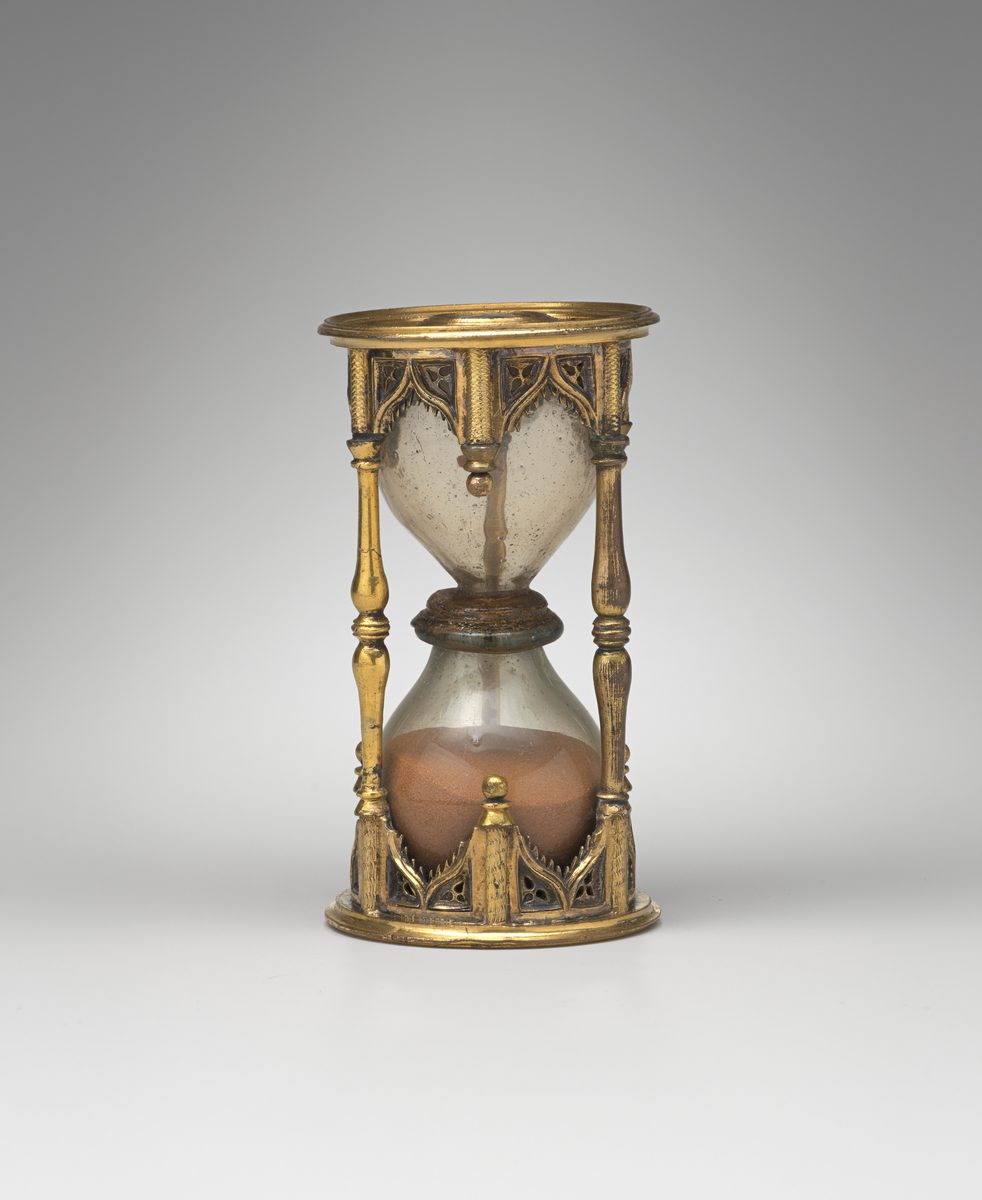
None of this was decorative. A badly graded filler doesn’t just run slower or faster — it clumps in a damp neck, scours the glass into a wider bore over years of use, or cakes against the inside of the bulb. The recipe was the instrument’s actual precision, more than the glass itself ever was.
How Hourglasses Were Made Changed Once, Around 1760
The earliest hourglasses, like the one Lorenzetti painted, were built from two separate glass bulbs, their necks fitted together and bound with wrapped cord or wire, then sealed with wax where they met. It worked, but the join was also where the instrument failed: wax dries and cracks, humidity gets in through the seam, and even a slight pressure difference between the two chambers changes how the filler drains.
Glassblowers eventually solved this by shaping the whole bulb-neck-bulb form in one continuous blown piece, with no seam at all. The change is usually dated to around 1760 — more than four centuries after the Siena fresco. A sealed, one-piece glass kept moisture out entirely and let makers control the air-pressure difference between the two bulbs as the filler fell from one to the other, a detail that affects flow rate more than most people assume, since material falling into a sealed lower bulb has to displace the air already there.
It also meant the narrowest, most consequential part of the whole object — the bore of the neck — had to be shaped correctly on the first attempt, with no second seam to adjust afterward. Cut it too wide and the glass runs faster as the upper bulb empties and the column of filler above the neck gets lighter; too narrow, and ordinary-sized grains jam it outright. Getting that one measurement right, for a filler recipe that might change gauge between one grinding and the next, was most of the actual skill in the trade.
A Half-Hour Glass Ran the Ship’s Watch; a Much Smaller One Clocked Its Speed
At sea, the hourglass solved a problem no clock of the period could: a pendulum or balance-wheel mechanism does not keep time on a rolling, pitching deck, while a sandglass, with nothing to swing, runs exactly the same tipped at any angle. From the fourteenth century onward, ships ran their watches on a half-hour glass. A ship’s boy or the helmsman turned it the instant it emptied and logged the time; the ship’s bell was struck once for every glass that ran out, building to eight bells — a four-hour watch — before the cycle began again. Christopher Columbus’s crew logged time this way, and the inventory for Ferdinand Magellan’s fleet listed eighteen hourglasses bought in Barcelona, enough to keep every watch running for a voyage that would take the surviving ship nearly three years to complete.
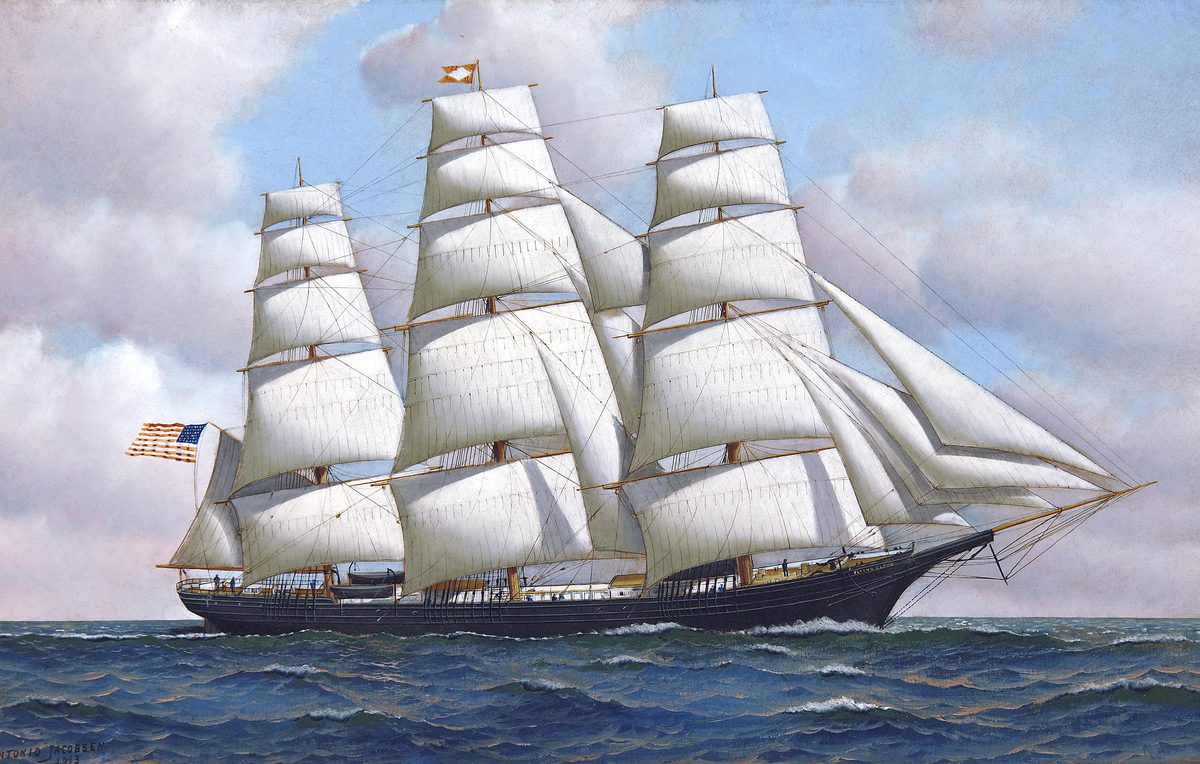
A half-hour glass alone was never precise enough to fix longitude, but it was exactly what a separate, much smaller glass needed for an entirely different job: timing a ship’s speed. William Bourne’s 1574 navigation manual, A Regiment for the Sea, gives one of the earliest printed descriptions of the method — a weighted wooden board, called the log, thrown over the stern on a line, with a sailor counting the knots tied into that line as it ran out over a fixed interval. Because a nautical mile of the period did not divide evenly by the minute, that interval worked out to an oddly specific 28 seconds for a line with knots spaced eight fathoms apart, which is exactly why two sailors stood at the rail with a small glass rather than guessing by eye. The count of knots in that short run became the ship’s speed, in the unit sailors started calling, and aircraft and vessels still call today, knots.
Churches Mounted a Second Hourglass Where the Whole Room Could See It
The clearest surviving evidence that English churches used pulpit hourglasses dates to the Elizabethan period, and the paper trail is oddly precise for something so ordinary. The churchwardens’ accounts for Christ Church, St Catherine’s, Aldgate, record a 1564 payment for an hour-glass hung beside the pulpit, specifically so the preacher could watch the hour pass without consulting anyone else. At St Helen’s, Abingdon, in Berkshire, churchwardens paid fourpence in 1591 for “an houre-glasse for the pulpit.” An actual Elizabethan example survives today at St Mary’s Church in Pilton, mounted on a metal arm that projected out from the pulpit into the preacher’s eyeline — and, just as pointedly, into the congregation’s.
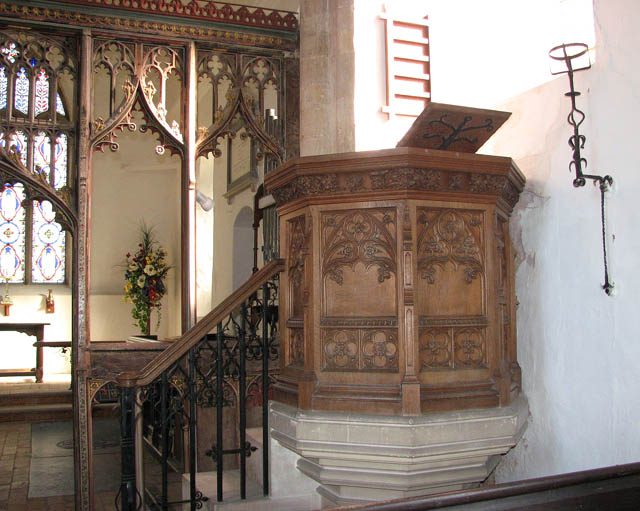
That visibility was the entire point. George Herbert, writing guidance for country clergy, held that a parson who “exceeds not an hour in preaching” was simply meeting what every earlier generation had expected, and a glass made that expectation enforceable by everyone in the pews, not just the preacher. It didn’t always work: an account of a rector at Bibury, in Gloucestershire, has him turning the glass himself and preaching for two full hours, while a local squire in the congregation got up partway through, went outside to smoke a pipe, and came back in time for the final blessing.
The custom provoked its own backlash. In 1681, a splinter religious group in Edinburgh calling themselves the Sweet Singers of Israel explicitly renounced the practice of limiting God’s will by “glasses” — a telling complaint, since it only makes sense against a congregation that had gotten thoroughly used to watching a sermon’s allotted time visibly run out, grain by grain, in front of them.
The Mechanical Clock, Then the Marine Chronometer, Finally Retired It
On land, the hourglass’s decline started earlier than most people assume. After roughly 1500, mechanical clocks became smaller, cheaper and more accurate at a pace the sandglass never matched, and household and workplace timing shifted to clock faces well before the pulpit hourglass’s Elizabethan heyday — which is really a story about a device being used precisely because church services were one of the last settings where a clock’s steady accuracy mattered less than visibility to a seated crowd.
At sea, the hourglass held on far longer, for the reason it was adopted in the first place: no mechanical clock of the period could survive a ship’s motion. That changed with John Harrison’s marine chronometer. Tested on a round trip to Jamaica in 1761, Harrison’s instrument kept time accurately enough that, even after months at sea, navigators calculated the timekeeping error for the entire voyage at under five seconds — a level of precision no sandglass, however carefully its neck was ground, could approach. Once reliable chronometers were standard shipboard equipment, the sandglass’s one genuine advantage at sea stopped mattering.
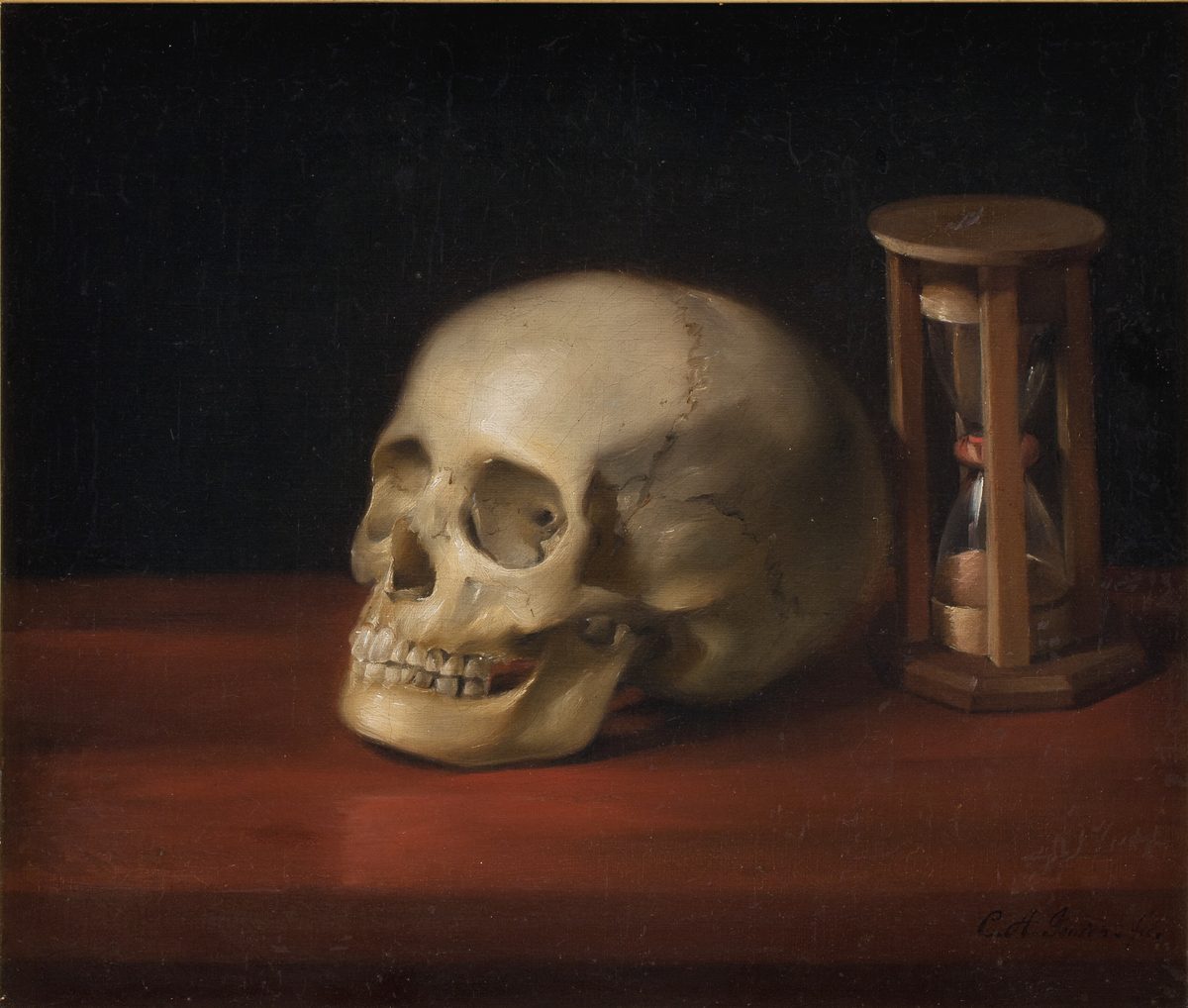
What survived afterward was mostly the image rather than the instrument. By the time it had been retired from ships and churches alike, the hourglass had already settled into European painting as the clearest available shorthand for time running out — paired, again and again, with a human skull in the vanitas still-life tradition, a genre built almost entirely around objects that mean exactly what they appear to mean.
What’s striking about the hourglass’s working life is that it was never the most accurate way to measure time available in its own era. Water clocks predate it by millennia. Mechanical clocks overtook it on land within two centuries of the Siena fresco. A chronometer beat it decisively at the one job — timing a ship — where it had genuinely mattered. What it offered instead was legibility: anyone standing in a room, a church, or on a ship’s deck could look at the level of filler in the top bulb and know, without being told, exactly how much time was left.
That is probably also why it has outlasted every device that replaced it, long after it stopped being anyone’s actual clock. A phone’s countdown timer does the same arithmetic with none of the same legibility — you have to unlock the screen and read a number. An hourglass just sits there, visibly draining, and makes the passage of time something everyone in the room can watch together, the way a Jacobean congregation once watched a sermon’s allotted hour run out.
Would you want your own meetings timed that way, where everyone in the room could watch exactly how much time was left?
Watch the short version
No long-form video exists yet for this object. The short below runs under a minute and covers the knotted-rope method and the pulpit timer in brief.

Related reading
- How an Abacus Actually Works, Bead by Bead — another everyday measuring instrument whose precision came from craft, not technology
- Who Was the Man in the Iron Mask? — the same Early Modern world of courts and ships the hourglass timed
- Sealing Wax and Signet Rings: The Secret History — another small, precisely made Early Modern object built around a single physical constraint
- The Furcula: The Science and Superstition Behind the Wishbone — another object that split science and belief between the same two audiences
If you want one for your desk
- AKAKA MUNING 60-Minute Wooden Hourglass — a modern reproduction built the same way the Elizabethan originals were, just with a factory-graded sand fill instead of eggshell.
Works cited
- Balmer, R. T. “The Operation of Sand Clocks and Their Medieval Development.” Technology and Culture 19, no. 4 (1978): 615–632.
- Mills, A. A., S. Day, and S. Parkes. “Mechanics of the Sandglass.” European Journal of Physics 17, no. 3 (1996): 97–109.
- Turner, Anthony John. Of Time and Measurement: Studies in the History of Horology. Variorum, 1993.
- Nicolas, Nicholas Harris. A History of the Royal Navy, vol. 2. Richard Bentley, 1847.
- Pigafetta, Antonio. The First Voyage Round the World, by Magellan. Translated and edited by Lord Stanley of Alderley. Hakluyt Society, 1874.
- Bourne, William. A Regiment for the Sea and Other Writings on Navigation. Edited by E. G. R. Taylor. Hakluyt Society, 1963.
- Sobel, Dava. Longitude: The True Story of a Lone Genius Who Solved the Greatest Scientific Problem of His Time. Walker, 1995.
- “On the Use of the Hour-glass in Pulpits.” Notes and Queries, no. 190 (18 June 1853): 589–90. Link.
- “Elizabethan Hourglass from St Mary’s Church, Pilton.” The Pilton Story. Link.
- “Good Government” [reproduction of a detail from Ambrogio Lorenzetti’s fresco]. Science Museum Group Collection, object co876. Link.
- “Powder for Hourglasses.” Making and Knowing Project field notes, Columbia University, Spring 2015. Link.