
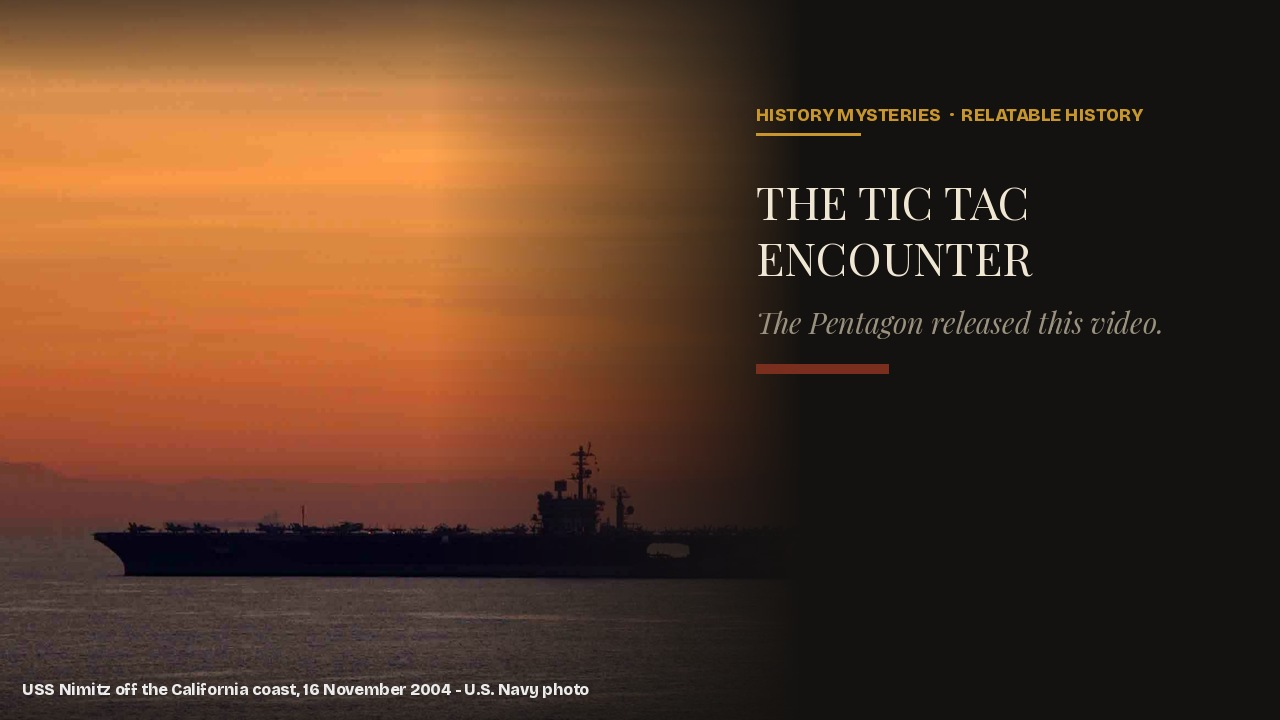
The most striking fact about the Nimitz Tic Tac encounter is not anything in the video. It is that, by the account of the squadron commander who flew the intercept, nobody in the United States Navy asked him a single question about it for five years. No investigation, no tapes collected, no interviews; within days it had settled into what he later called a good story to tell friends.
That detail comes from David Fravor’s written statement to Congress in 2023, and it sets the tone. The 2004 encounter off southern California is the best documented case of its kind precisely because the documentation arrived so late and so grudgingly: a leaked clip, a newspaper investigation, a reluctant Navy confirmation, a Pentagon press release, a nine-page intelligence assessment, and a historical review by an office that did not exist when any of it happened.
This article walks that paper trail in order. It does not tell you what the object was. Nobody with access to the files has either.
A cruiser had been watching the tracks for two weeks
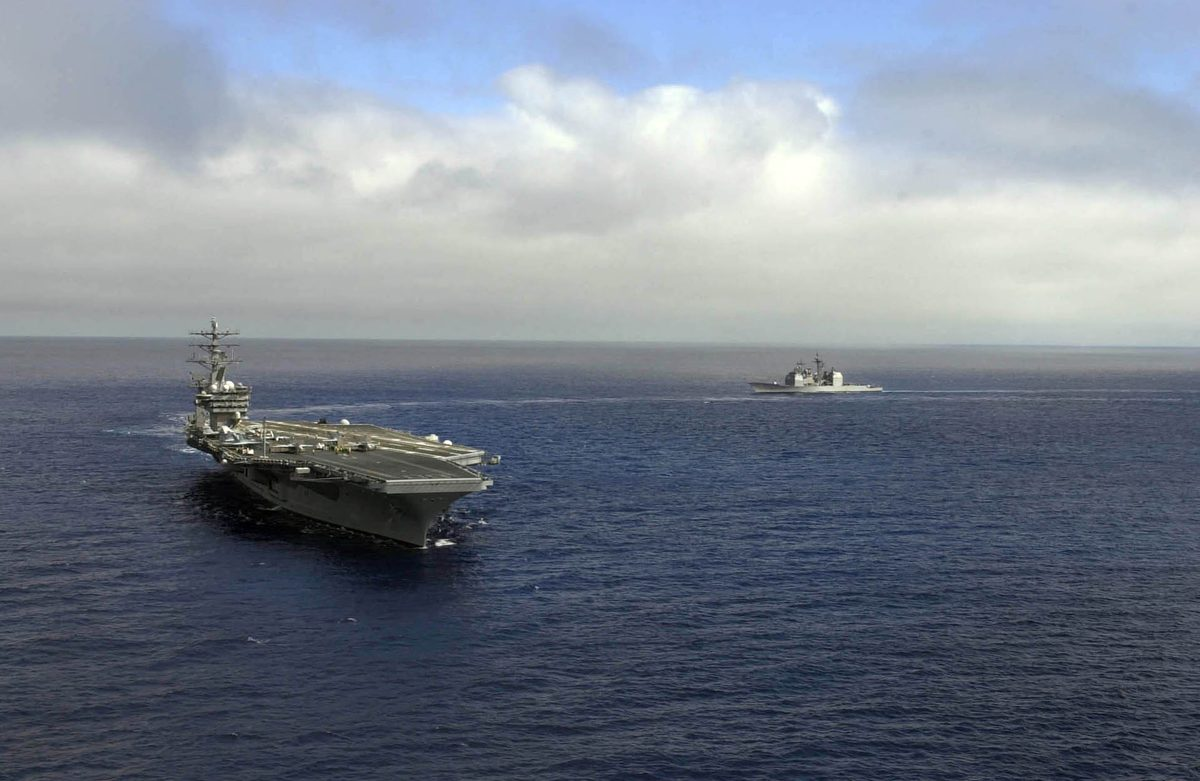
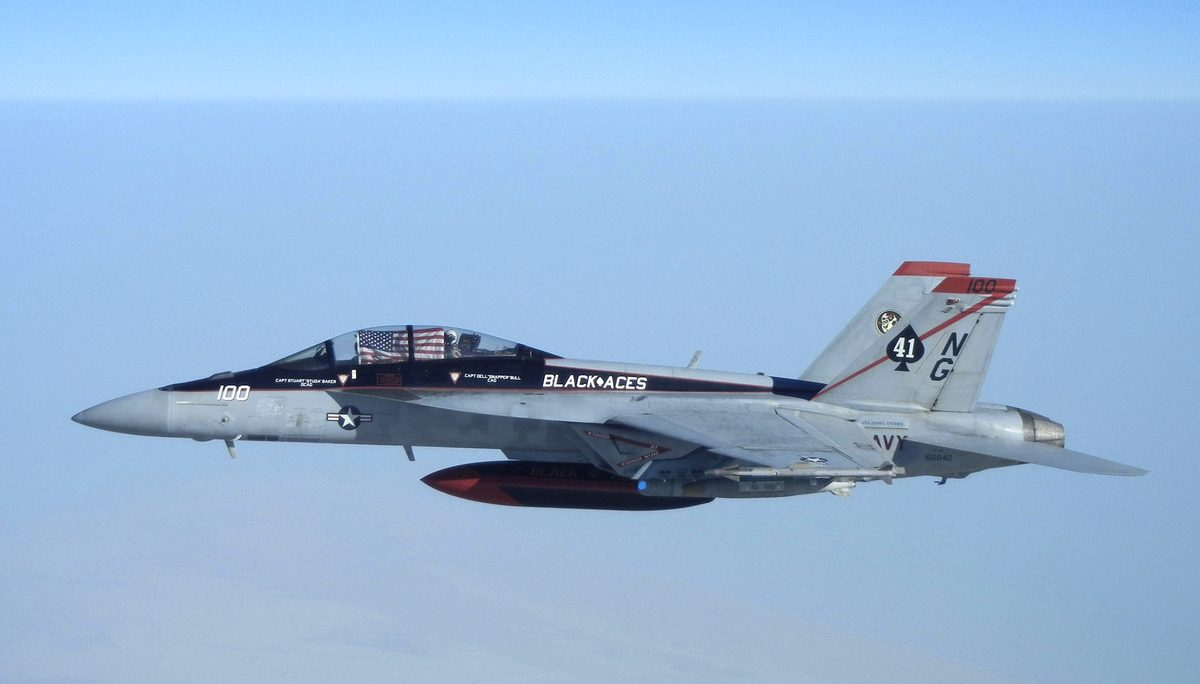
In November 2004 the Nimitz Carrier Strike Group was at the start of its work-up cycle, the at-sea training a battle group completes before a combat deployment, in this case to the Persian Gulf. Fravor, then commanding officer of Strike Fighter Squadron 41, the Black Aces, says the group had been out roughly two weeks.
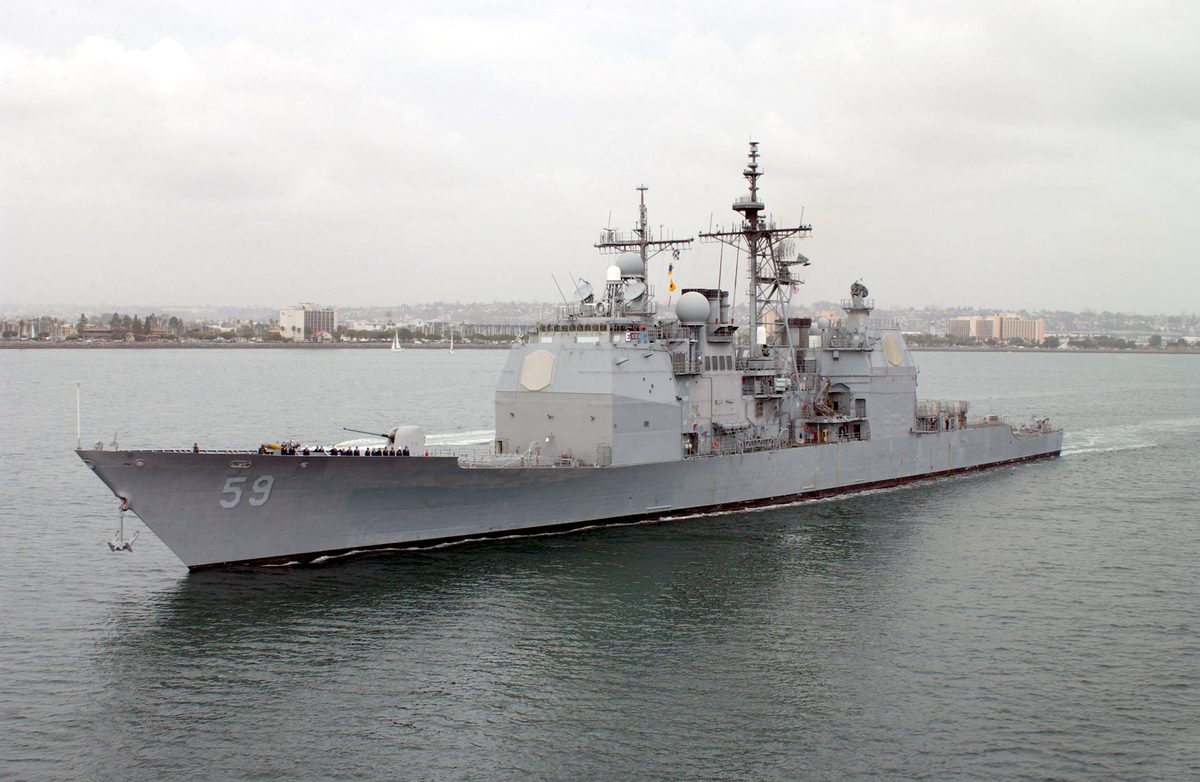
Sailing with the carrier was USS Princeton, a Ticonderoga-class guided-missile cruiser built around the Aegis combat system and its SPY-1 phased-array radar, the four flat panels on the superstructure. In a strike group, her job is to see further than anyone else. According to Fravor, Princeton’s air controllers had been observing objects on that system for the previous two weeks: tracks that descended from above 80,000 feet to about 20,000 feet, held there for hours, then went straight back up.
Eighty thousand feet is far above where aircraft normally fly, and a track that drops from there to 20,000 feet in moments is exactly the reading an operator would be inclined to distrust. They kept seeing it regardless; CBS News summarised the 2023 testimony as radar detecting “multiple anomalous aerial vehicles.”
On 14 November Fravor was scheduled to lead a two-versus-two air-to-air training exercise, his pair of F/A-18F Super Hornets controlled by Princeton. The F/A-18F is a two-seat aircraft, a pilot in front and a weapons systems officer behind, so there were four people in the flight. As they checked in with the cruiser after launch, they were told the training was suspended for what the controller called real-world tasking.
Four aviators watched it for about five minutes
Princeton vectored the pair west of their combat air patrol point, about 40 miles south of the ship, counting down the range as they closed. Their own radars showed nothing. When the controller called “merge plot” — fighters and contact now inside the same radar resolution cell — the crews looked around and saw, off to the right, a patch of white water. Fravor is specific that the day was near perfect, clear and calm with no whitecaps, which is why the disturbance stood out.
Above it was a small white object shaped like a Tic Tac, its long axis pointing north-south, moving abruptly over the churned water. No rotors, no rotor wash, no wings or visible control surfaces. In the New York Times interview that first put the story on the record in December 2017, Fravor estimated it at around 40 feet long, hovering about 50 feet above the disturbance. He and his weapons officer began a clockwise descent while the second aircraft, flown by Lieutenant Commander Alex Dietrich, stayed high to watch both.
Part way round the circle, the object turned its long axis to align with Fravor’s jet and began climbing in a mirror-image turn. He cut across to meet it. At roughly 15,000 feet, with the object at about 12,000 and half a mile off his nose, it accelerated and was gone. Dietrich’s aircraft, some 8,000 feet above, lost sight of it at the same moment. The white water had gone too.
The coda is the part that gets repeated most. Heading back toward their patrol point, some 60 miles east, the flight was told by Princeton that the contact had reappeared on the SPY-1 — at the patrol point, less than a minute later. The distances vary a little between Fravor’s tellings, but the claim is consistent, and it rests on the ship’s radar, not on anything the aircrews saw. When they arrived, there was nothing there. The whole episode, he said in 2021, lasted roughly five minutes.
The famous footage was shot by a different crew
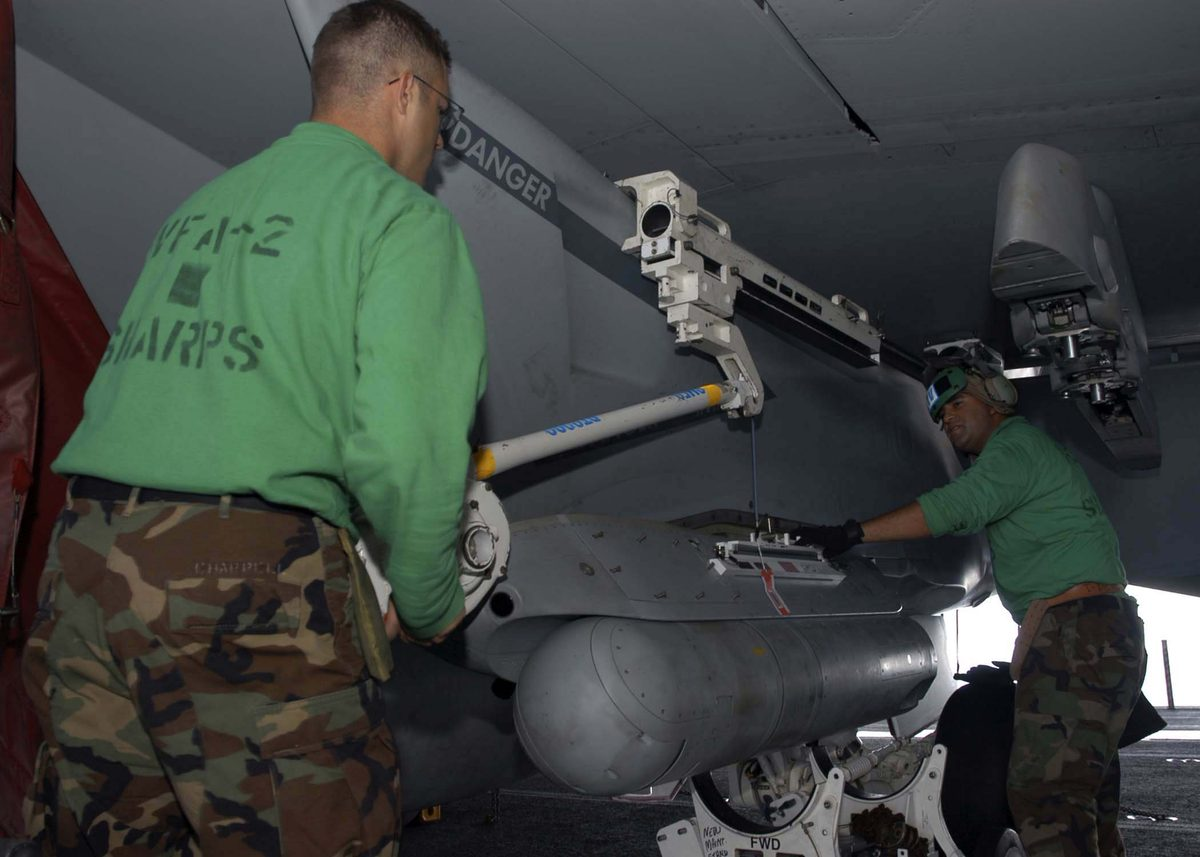
This is the point most retellings blur. Fravor’s flight recorded nothing. Back aboard Nimitz they mentioned what they had seen to a crew preparing to launch, and it was that crew, flying a Super Hornet fitted with an AN/ASQ-228 Advanced Targeting Forward Looking Infrared pod, that shot the clip the world knows. Fravor describes it as approximately 90 seconds long. Navy photographers, as it happens, documented an ATFLIR pod being fitted to a Black Aces jet on the Nimitz flight deck on 13 November 2004, the day before.
An ATFLIR is a pod carried under the fuselage that gives the crew an infrared camera for finding and tracking targets: a weapons-aiming tool, not an identification tool, and the 2021 assessment makes the general point that military sensors are not well suited to identifying unknown objects. What the pod recorded is a small, featureless oblong against the sky which, near the end of the clip, appears to dart left and out of frame. Fravor notes that it shows no infrared plume of the kind an engine produces, and says the aircraft’s own APG-73 radar tape showed jamming. That tape has never been made public, so the claim cannot be checked.
For thirteen years the clip stayed inside the Navy, apart from an unauthorised copy that surfaced online in 2007. Then, in December 2017, the New York Times published articles by Helene Cooper, Leslie Kean and Ralph Blumenthal revealing a Pentagon programme that had studied such reports, and the footage was released alongside them by To The Stars Academy, a private company whose board included the former Defense Department official Luis Elizondo. The form Elizondo had used to obtain the videos, later released under Freedom of Information, described their subjects as unmanned aerial vehicles and balloons and cleared them for government use only. The most famous official footage in the subject’s history reached the public through a door nobody had opened.
The Navy used the word ‘unidentified’ before the Pentagon released anything
The first official characterisation came not from a press conference but from a spokesman answering the researcher John Greenewald’s questions in September 2019. “The Navy designates the objects contained in these videos as unidentified aerial phenomena,” said Joseph Gradisher, spokesman for the Deputy Chief of Naval Operations for Information Warfare. In the same exchange the Navy confirmed that the three videos then circulating — FLIR1, Gimbal and GoFast — had never been cleared for public release; a Pentagon spokesperson, Susan Gough, had said earlier that year that they should still be withheld.
Seven months later the Department of Defense reversed itself. On 27 April 2020 it issued a short statement authorising the release of the three unclassified videos, one from November 2004 and two from January 2015, noting that they had circulated after unauthorised releases in 2007 and 2017. A review had found that releasing them would not reveal sensitive capabilities or impinge on any subsequent investigation; the stated purpose was to clear up misconceptions about whether the footage was real and whether there was more to it. The last sentence has been quoted ever since: the phenomena in the videos “remain characterized as ‘unidentified.’” The files went up in the Naval Air Systems Command’s Freedom of Information Act reading room, where they still live.
It is easy to read more into that than it contains. The department confirmed the footage was real and that it had not identified the objects. It did not say they were unusual, and it did not say they were not.
The 2021 assessment explained one case out of 144
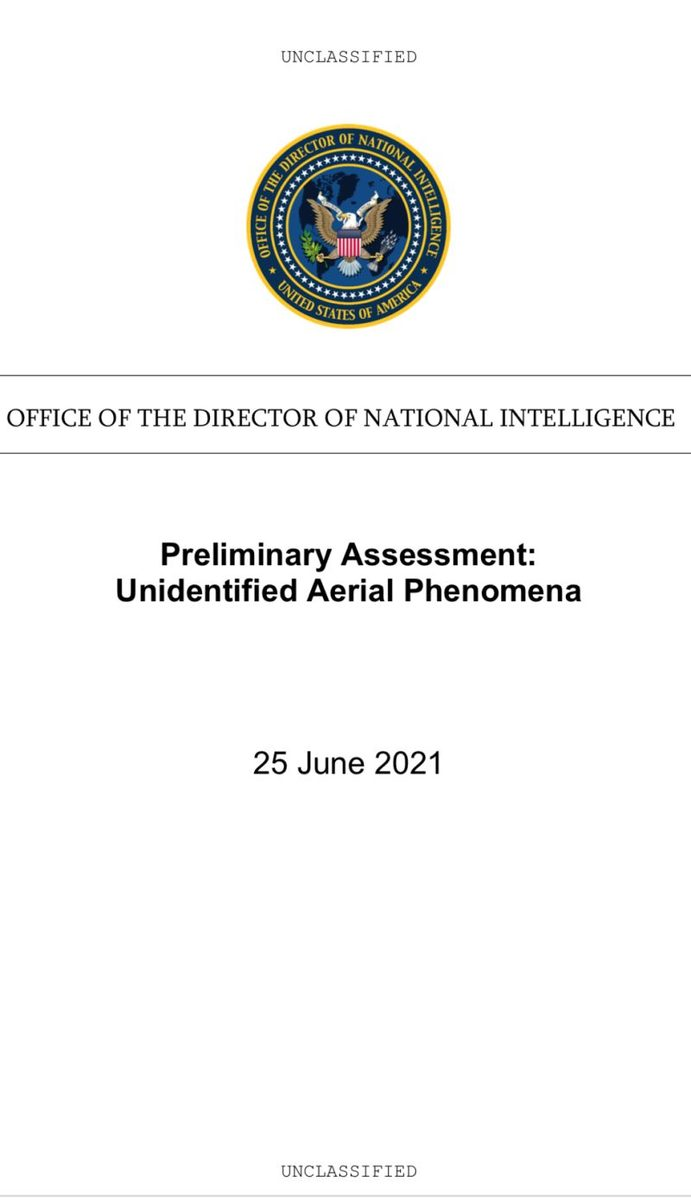
The release had consequences. A Senate report accompanying the Intelligence Authorization Act for 2021 directed the Director of National Intelligence to assess the threat posed by UAP and the progress of a new Unidentified Aerial Phenomena Task Force. The unclassified result, published on 25 June 2021, is nine pages long, and its dataset begins, pointedly, in November 2004.
Its numbers are the ones that get quoted, so they are worth getting right. The task force examined 144 reports from U.S. government sources, 80 involving more than one sensor. It identified exactly one with high confidence: a large, deflating balloon. In 18 incidents, described in 21 reports, observers described objects that stayed stationary in wind, moved against it, manoeuvred abruptly or moved at speed with no discernible means of propulsion. Eleven reports documented near misses with military aircraft.
The assessment is at least as interesting for what it says about the data. No standardised way of reporting such encounters existed anywhere in the military until the Navy created one in March 2019. Aviators described being disparaged for reporting at all. The sensors on military aircraft are “not generally suited for identifying UAP,” and unusual flight characteristics “could be the result of sensor errors, spoofing, or observer misperception.” The report proposes five bins for future explanations — airborne clutter, natural atmospheric phenomena, U.S. government or industry programmes, foreign systems, and a catch-all “other” — and, with one balloon-shaped exception, declines to sort any case into any of them.
The skeptical case is about the camera, not the pilots
The most developed ordinary explanation for the footage comes from Mick West, a former video-game programmer who has analysed the three Navy clips frame by frame. His argument, set out to Vice in May 2020, is that FLIR1 most likely shows a distant aircraft: a low-resolution, out-of-focus, backlit object that does not actually move on screen except when the camera moves. The famous dash to the left coincides, he points out, with the pod losing its track and switching from one-times to two-times magnification, which makes a steadily moving object look as if it has jumped.
His companion argument is about the shape: in an infrared sensor the hot exhaust of a jet engine can saturate the detector into a bright, featureless blob larger than the aircraft, so a smooth white oval with no visible wings is roughly what a distant jet might look like at that resolution. He is careful about what this does not cover. “I don’t know what David Fravor saw,” he told Vice. “I don’t know what the radar saw. But it’s not what’s shown in this video.”
That is the honest shape of the dispute. The video analysis, if correct, resolves the video. It does not resolve two weeks of radar tracks, four aviators’ descriptions, or the reappearance at the patrol point, all independent of the clip and all resting on records the public has never seen. The pilots reject West’s reading; Fravor told Congress the object was “far superior to anything that we had at the time, have today, or are looking to develop in the next 10+ years.” Neither view has been adopted as an official finding.
What the Pentagon’s own office concluded in 2024
The task force did not last. In July 2022 the Deputy Secretary of Defense, Kathleen Hicks, established a permanent successor, the All-domain Anomaly Resolution Office, with a remit covering space, air and sea, under a Defense Intelligence Agency scientist, Sean Kirkpatrick. Congress then required it to review the government’s whole record on the subject back to the 1940s.
Volume one of that review appeared in March 2024. Its central finding, in its own words, was that the office “found no evidence that any USG investigation, academic-sponsored research, or official review panel has confirmed that any sighting of a UAP represented extraterrestrial technology.” It attributed the vast majority of reports to misidentification and a lack of domain awareness, and tied a case’s chances of resolution directly to the amount of good data on it. A NASA study team had reached a similar position the previous September: no evidence of an extraterrestrial origin, and no idea what the unexplained cases are.
The review did not close the Nimitz case; it does not attempt case-by-case findings. Christopher Mellon, a former deputy assistant secretary of defense for intelligence who has campaigned on the subject, told Space.com that many witnesses had declined to speak to the office, and that “no recovered alien technology” is not the same statement as “no unexplained encounters.” Both can be true at once, and on the current record both are.
Where the Nimitz Tic Tac encounter record stops
Strip away the speculation and the Nimitz Tic Tac encounter reduces to a short list of documented things. A cruiser logged tracks it could not account for over roughly two weeks. Four trained aircrew described a white, wingless object that departed faster than they could follow. A second crew recorded a short infrared clip of something. The Navy called it unidentified in 2019, the Pentagon repeated the word in 2020, and two government reports since have found no evidence of anything beyond the ordinary while explaining almost nothing in particular.
What the case really illustrates is how an institution handles an observation it has no category for. In 2004 the answer was to laugh about it and move on, which is why there is no contemporaneous investigation to consult. By 2021 it was a reporting system, a task force and a nine-page admission that the data were not good enough to say. That is the road every file of this kind travels, from Project Blue Book and the Roswell balloon reports to the Rendlesham Forest memo: dismissed, then catalogued, then unresolved on purpose.
So the question the video ends on is still the only one that fits the evidence. What do you think that camera was pointed at?
Watch the full history
The video tells the story in under four minutes, from Princeton’s radar room to the 2024 review.

Related reading
- Project Blue Book — the Air Force’s official catalogue of sightings, and the cases it left open.
- Roswell and Project Mogul — the 1947 balloon crash that the government explained twice.
- The Rendlesham Forest memo — a deputy base commander’s official report of lights in an English wood, 1980.
- Why Blowing a Shofar at the Western Wall Was a Crime — another documented history from this site.
Works cited
- Fravor, David. “Statement for the House Oversight Committee.” Written testimony to the Subcommittee on National Security, the Border, and Foreign Affairs, U.S. House of Representatives, hearing of 26 July 2023. Link.
- Office of the Director of National Intelligence. Preliminary Assessment: Unidentified Aerial Phenomena. 25 June 2021. Link.
- U.S. Department of Defense. “Statement by the Department of Defense on the Release of Historical Navy Videos.” Press release, 27 April 2020.
- U.S. Department of Defense. “DoD Announces the Establishment of the All-domain Anomaly Resolution Office.” Press release, 20 July 2022.
- All-domain Anomaly Resolution Office. Report on the Historical Record of U.S. Government Involvement with Unidentified Anomalous Phenomena, Volume I. U.S. Department of Defense, March 2024.
- Cooper, Helene, Leslie Kean and Ralph Blumenthal. “2 Navy Airmen and an Object That ‘Accelerated Like Nothing I’ve Ever Seen.’” The New York Times, 16 December 2017 (syndicated by the Anchorage Daily News). Link.
- Greenewald, John. “U.S. Navy Confirms Videos Depict ‘Unidentified Aerial Phenomena’; Not Cleared For Public Release.” The Black Vault, 10 September 2019. Link.
- Gault, Matthew. “The Skeptic’s Guide to the Pentagon’s UFO Videos.” Vice, 6 May 2020. Link.
- Chasan, Aliza. “The story behind the ‘Tic Tac’ UFO sighting by Navy pilots in 2004.” CBS News, 26 July 2023. Link.
- Tingley, Brett. “Pentagon UFO office finds ‘no empirical evidence’ for alien technology in new report.” Space.com, 8 March 2024. Link.