
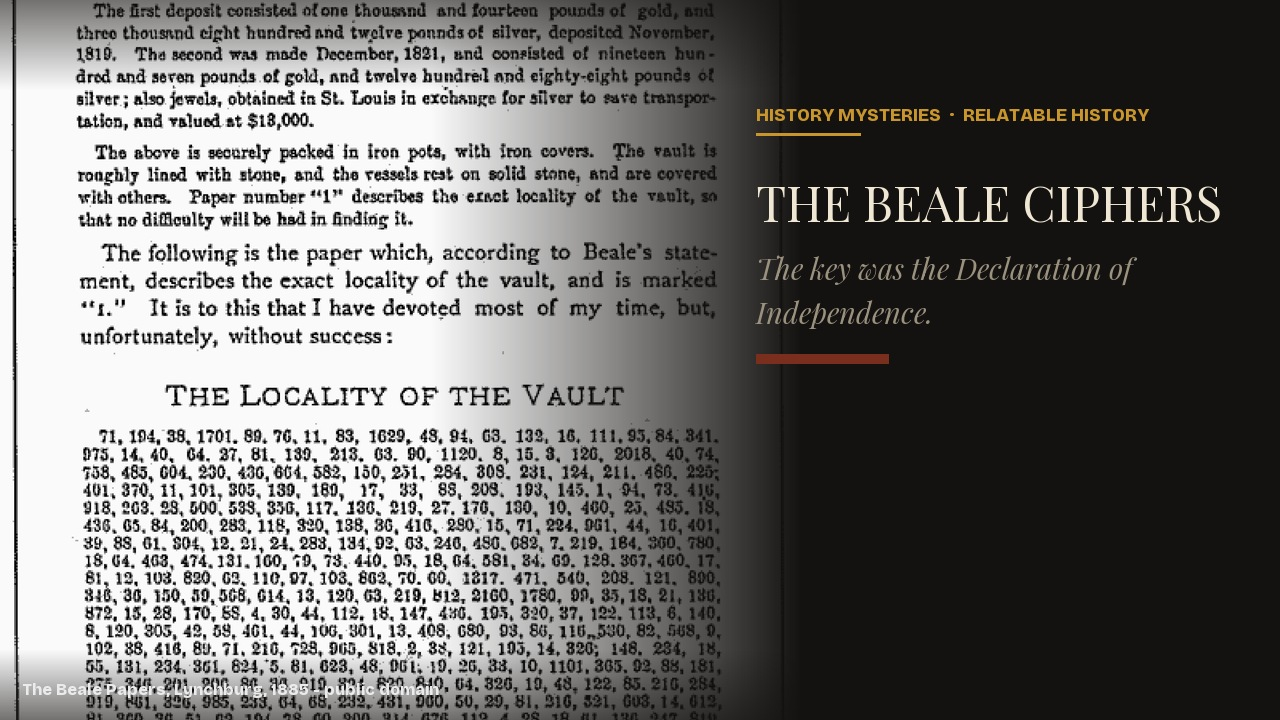
Somewhere in Bedford County, Virginia, according to a document published in 1885, there is a stone-lined pit six feet underground holding roughly three thousand pounds of gold and silver and a small fortune in jewels. Two of the three documents needed to find it have never been read by anyone. That is the mystery of the Beale ciphers in one sentence, and it has drawn treasure hunters, cryptographers and the National Security Agency into the same argument for well over a century.
The one cipher that has been solved does not give a location. It gives an inventory — a plain, oddly bureaucratic list of pounds and dates that reads like a shipping manifest. The two that remain unsolved are the ones that would actually matter: where the vault is, and who is entitled to open it. Whether either of those papers contains anything real, or whether the whole story was invented wholesale by the man who published it, is the argument that has never been settled.

The story the pamphlet tells
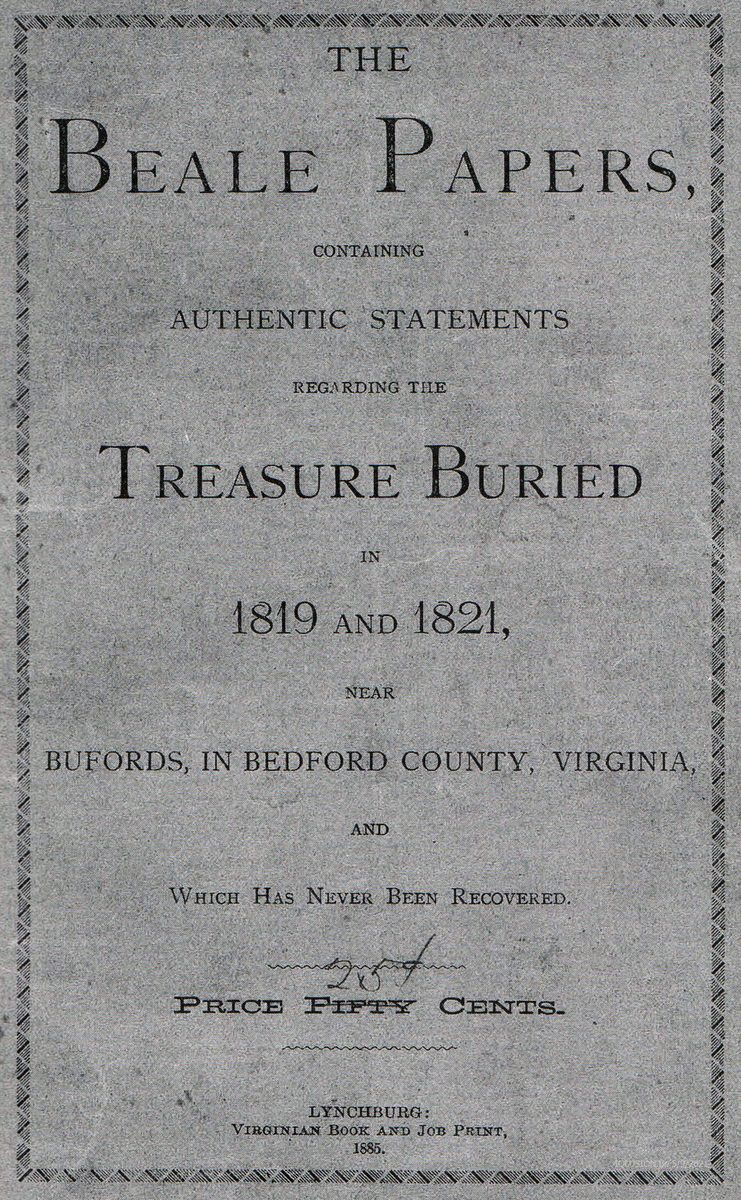
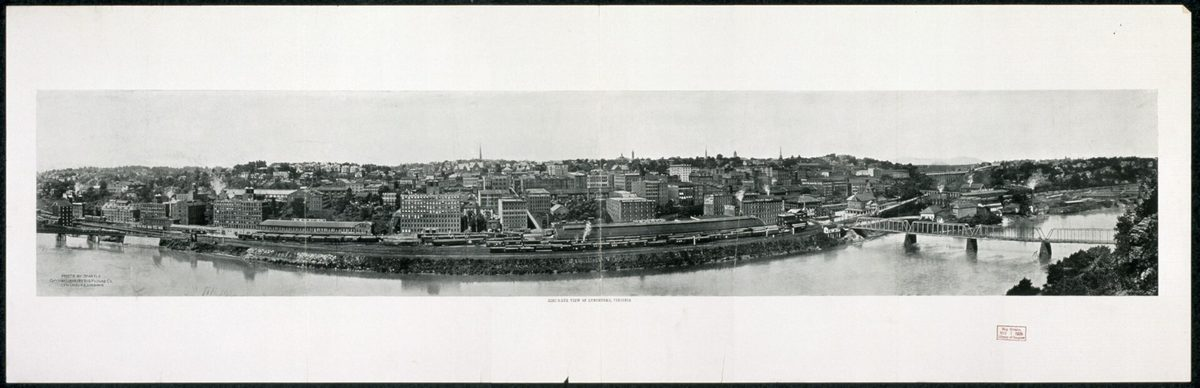
The only source for any of this is a fifty-cent pamphlet, The Beale Papers, printed in Lynchburg in 1885 by a local man named James B. Ward. Ward wrote that a stranger calling himself Thomas J. Beale had checked into Lynchburg’s Washington Hotel in January 1820, stayed the winter, and befriended the innkeeper, Robert Morriss. Beale left in the spring, returned in January 1822, and before leaving again handed Morriss a locked iron box, asking him to keep it safe.
A letter from Beale reached Morriss soon after, postmarked St. Louis, May 1822. It explained that the box held papers vital to Beale and a group of associates, and that if Morriss heard nothing within ten years he should have the lock broken. A second, sealed letter containing the key to reading the papers had been left with a friend in St. Louis, to be delivered to Morriss in June 1832.
Beale was never heard from again. No letter arrived in 1832. Morriss waited anyway, and did not force the lock until 1845 — twenty-three years after he had taken the box, and thirteen years past the date he was authorized to open it. Inside were two letters addressed to him and three sheets covered edge to edge in nothing but numbers.
Whatever else is true about the story, Morriss himself was a real and well-documented figure, and that matters to how seriously the pamphlet was taken at the time. Born in Maryland in 1778, he built one of Lynchburg’s first brick buildings, ran the city’s two leading hotels in succession, and counted Andrew Jackson, Henry Clay and Chief Justice John Marshall among his guests and friends. The pamphlet leans hard on that reputation: a man of Morriss’s standing, the argument goes, was not the sort to fabricate a story for attention. Whether that logic extends to Ward, the far less documented man who actually published the papers four decades after Morriss died, is exactly where the case starts to come apart.
What the letters claimed
According to Beale’s letters, he had led a party of roughly thirty Virginians west in April 1817 to hunt buffalo. Somewhere north of Santa Fe they found gold, and mined it on and off for about eighteen months with tools they improvised on the spot. Rather than keep the growing hoard in what Beale called “a wild and dangerous locality,” the party decided to move it east.
Two shipments followed. The first, in November 1819, carried one thousand and fourteen pounds of gold and three thousand eight hundred and twelve pounds of silver. The second, in December 1821, added nineteen hundred and seven pounds of gold and twelve hundred and eighty-eight pounds of silver, along with jewels bought in St. Louis to make the rest easier to transport. All of it, the letters said, went into iron pots inside a stone-lined vault near Buford’s Tavern, in Bedford County — a cave the party first considered and rejected because local farmers were using it to store sweet potatoes.
The numbered sheets were meant to record everything the letters left out: paper one, the vault’s exact location; paper two, a description of its contents; paper three, the names of the thirty-odd men entitled to a share, and the relatives who should inherit if they did not return to claim it themselves.
How one cipher actually broke
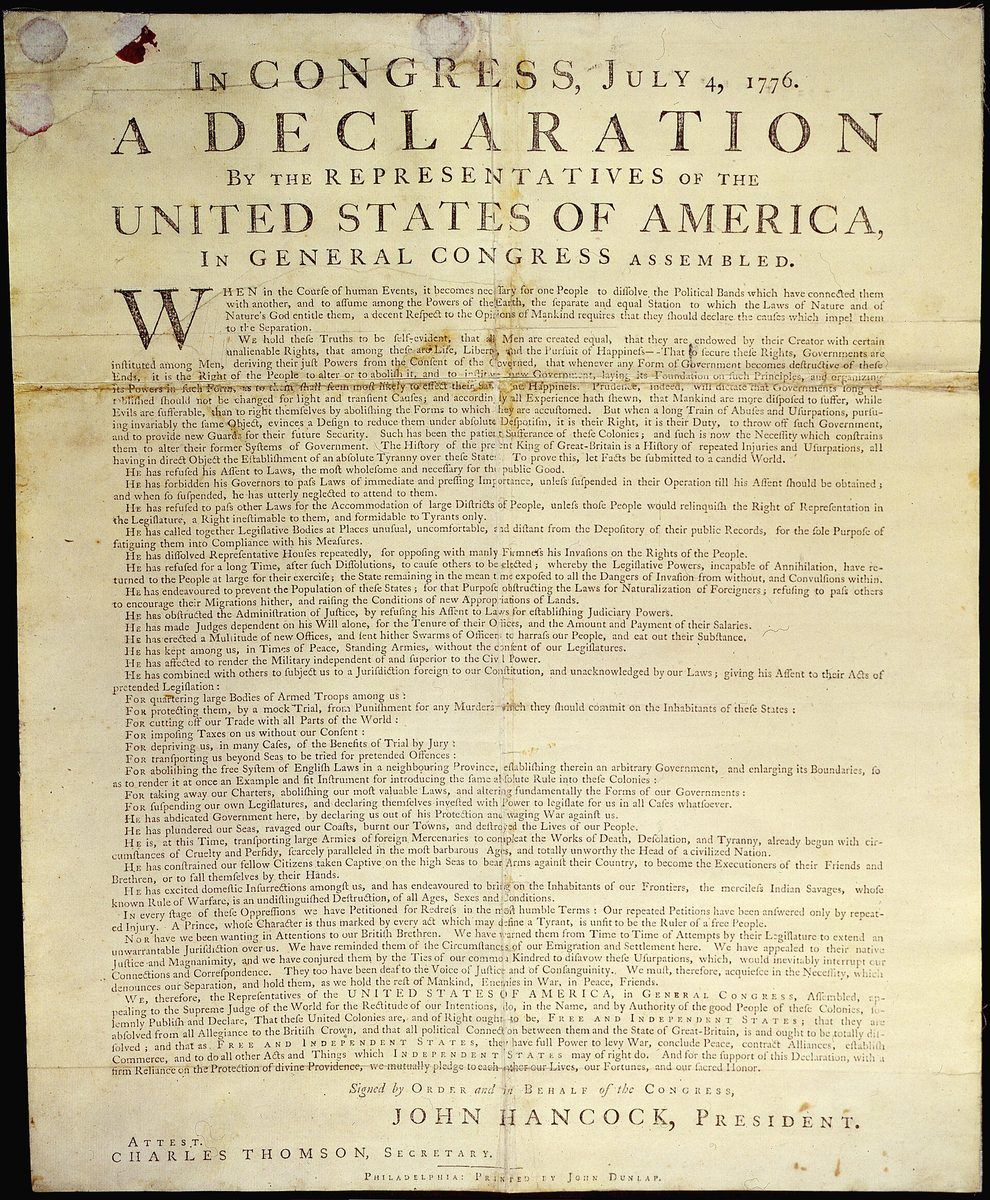
Morriss died in 1863 without solving any of it, but not before confiding the whole affair to Ward in 1862. Ward inherited the papers and spent years testing them against book after book, working from the guess that each number stood for a letter, keyed to the first letters of the words in some specific text. Most attempts produced nothing. Then, as Ward tells it, he tried the Declaration of Independence.
Paper two broke. Numbered the words of the Declaration in order, one through the low thousands, then read each number in the cipher as an index into that list and took the first letter of the word it pointed to — and the result was legible English, right down to the exact pound counts and dates given above. It is the only one of the three papers anyone has ever produced a coherent reading of, solved or invented, in a hundred and forty years of trying.
Papers one and three did not yield to the same key, or to any key anyone has since proposed. The Declaration explains paper two and nothing else, which is itself strange: if paper two used it, the other two probably should too, and they simply don’t.
Why serious people think it’s a hoax
The case against the Beale papers is built from the same pamphlet that tells the story. In 1982 the researcher Joe Nickell published a detailed stylistic and historical analysis in The Virginia Magazine of History and Biography, arguing that no documentary trace of a Thomas J. Beale from the right place and time has ever surfaced, and that turns of phrase and vocabulary in Beale’s supposed letters — including the word “stampede,” which was not yet current in that sense in 1822 — match Ward’s own writing far more closely than they match a Virginia planter’s. Two years later, Louis Kruh made a parallel case in the cryptology journal Cryptologia, adding close statistical comparison of the two men’s prose.
If Nickell and Kruh are right, Ward did not decode paper two so much as write it: build an inventory in plain English, number the words of the Declaration, and reverse the process to generate a string of numbers that would later look, to a credulous reader, like a code broken through patient labor. On that reading, papers one and three were never meant to be solved, because there was never anything in them to solve.
The evidence that keeps the argument alive
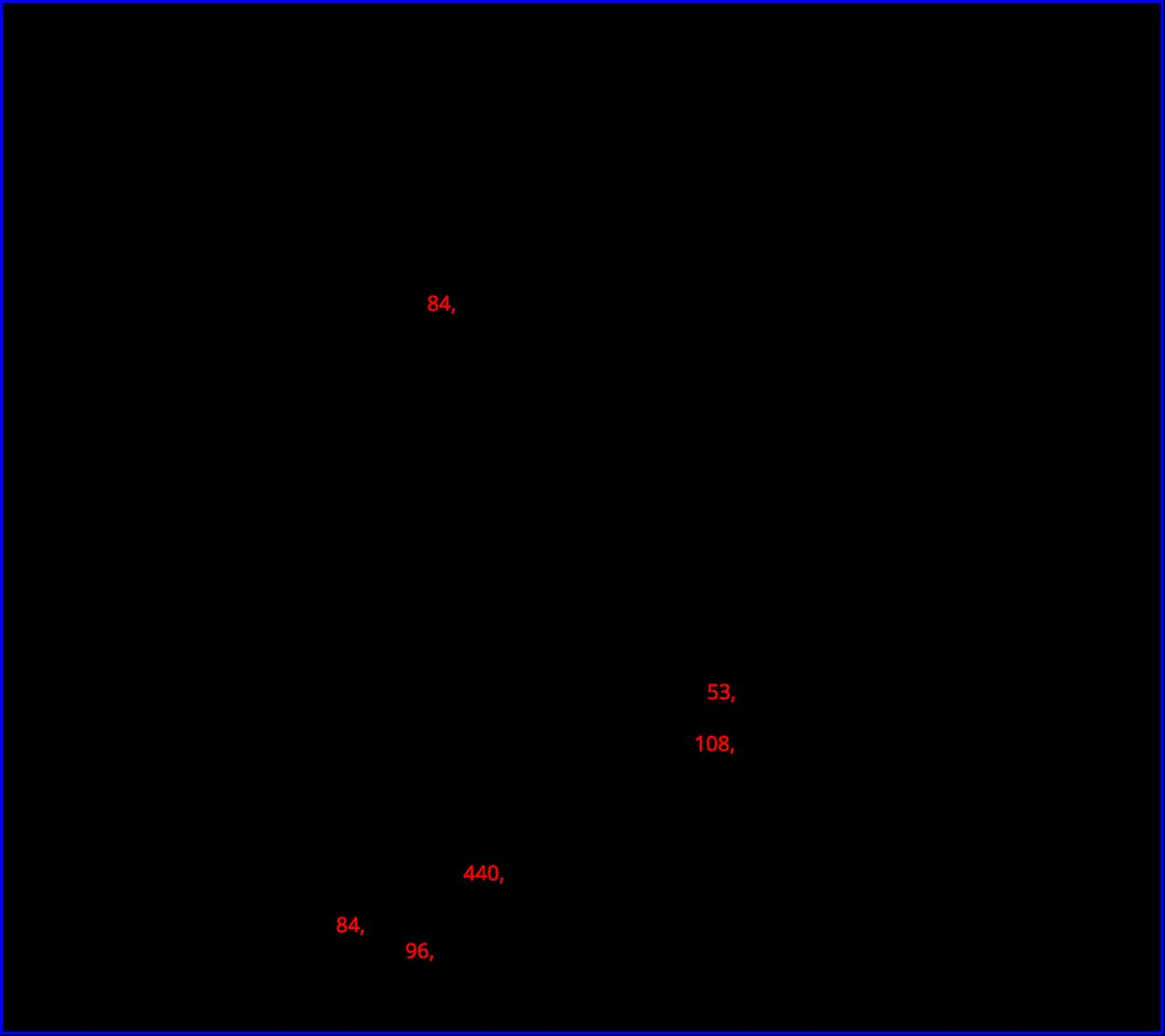
What has kept the Beale ciphers from being dismissed outright is a single finding from 1980. The cryptanalyst James Gillogly, running computer searches against paper one using the same Declaration key that solved paper two, found that although the output was overall meaningless, a run of consecutive characters came out in very nearly alphabetical order — a statistical event that would be extraordinarily unlikely in genuine ciphertext or in random numbers alike. Gillogly published the finding as a dissenting note in Cryptologia, and it has never been fully explained by either side of the hoax argument.
One reading is that whoever built paper one, genuine encoder or hoaxer, was using the Declaration as a numbering source and simply grew careless partway through, accidentally picking a run of words whose first letters happened to march through the alphabet. If that’s right, paper one is not solved, but it is built the same way paper two is — which argues against pure invention and for a real, if botched, cipher. The alternative is that it’s coincidence, in a data set already saturated with people looking for patterns. The National Security Agency’s own historical files on the case, declassified and released through its FOIA reading room, take the dispute seriously enough to have generated internal analytical memos on it going back to the 1970s, without reaching a public conclusion.
A 2022 statistical study by the physicist Leonardo Campanelli, published in Cryptologia, revisited the digit distributions of all three papers and argued that their internal statistics are not obviously consistent with a text generated the way Nickell and Kruh proposed — without settling the question either way. Forty years after Gillogly’s note, the alphabetical run in paper one is still the single fact that neither the hoax case nor the treasure case can fully absorb.
What is actually still buried, if anything
People have been digging around Bedford County for the vault since at least the early twentieth century, with a noticeable spike after each wave of press coverage. Landowners near Montvale, the modern town nearest Buford’s Tavern, have spent decades filling in holes left by treasure hunters working from their own readings of paper one. None of it has produced gold, silver, or a stone-lined vault. It has produced a great deal of local irritation, and, more usefully, a durable regional tourist attraction built almost entirely on two unread pages of numbers.
Even professionals have taken a run at it. Mel Fisher, the salvager famous for finding treasure from a sunken Spanish galleon off the Florida coast, dug at a Bedford County site he believed matched paper one’s description of the vault — and came up empty, claiming the treasure had already been moved. It is a revealing result either way: moved by an earlier finder, never there at all, or simply in the wrong hole, since paper one has never actually been read.
What is genuinely unresolved is not whether a fortune sits under a Virginia hillside — most historians doubt it does — but whether the ciphers themselves are what a code is supposed to be: a message someone meant to be read eventually, by someone with the right key. Paper two reads like one. Paper one, on the strength of seventeen characters that should not line up the way they do, might be trying to.
That is also why the Beale ciphers have outlasted almost every other American treasure legend. Most such stories collapse the moment anyone checks the underlying documents; this one has been checked, hard, by professional cryptanalysts and a national signals-intelligence agency, and the checking has produced a genuine anomaly rather than a clean verdict. A hoax that a working cryptologist cannot fully rule out, a century and a half after the fact, is a rarer thing than buried gold.
Watch the full history
The video version walks through the box, the letters, and the two papers no one has read in about three and a half minutes.

Related reading
- Why the Penny-Farthing’s Wheel Had to Be So Big
- How a Hand Pump Worked: Lifting Well Water With Nothing but Air Pressure
- How the Daguerreotype Actually Worked, and Why It Was Dangerous
- Who Invented the Mousetrap? The Rat War That Made It Necessary
Works cited
- Ward, J. B. The Beale Papers, Containing Authentic Statements Regarding the Treasure Buried in 1819 and 1821 near Bufords, in Bedford County, Virginia, and Which Has Never Been Recovered. Lynchburg, VA: Virginian Book and Job Print, 1885. Link.
- Nickell, Joe. “Discovered: The Secret of Beale’s Treasure.” The Virginia Magazine of History and Biography 90, no. 3 (July 1982): 310–324. Link.
- Gillogly, James J. “The Beale Cipher: A Dissenting Opinion.” Cryptologia 4, no. 2 (1980): 116–119.
- Kruh, Louis. “A Basic Probe of the Beale Cipher as a Bamboozlement.” Cryptologia 6, no. 4 (1982): 378–382.
- Campanelli, Leonardo. “A Statistical Cryptanalysis of the Beale Ciphers.” Cryptologia 47, no. 5 (2022).
- National Security Agency, Center for Cryptologic History. The Beale Papers, declassified document collection. NSA FOIA Declassification & Transparency Initiatives, Historical Releases.
- Grymes, Charlie. “Beale Treasure.” Virginia Places. Link.
- Reilly, Lucas. “The Quest to Break America’s Most Mysterious Code—And Find $60 Million in Buried Treasure.” Mental Floss, June 4, 2018. Link.