
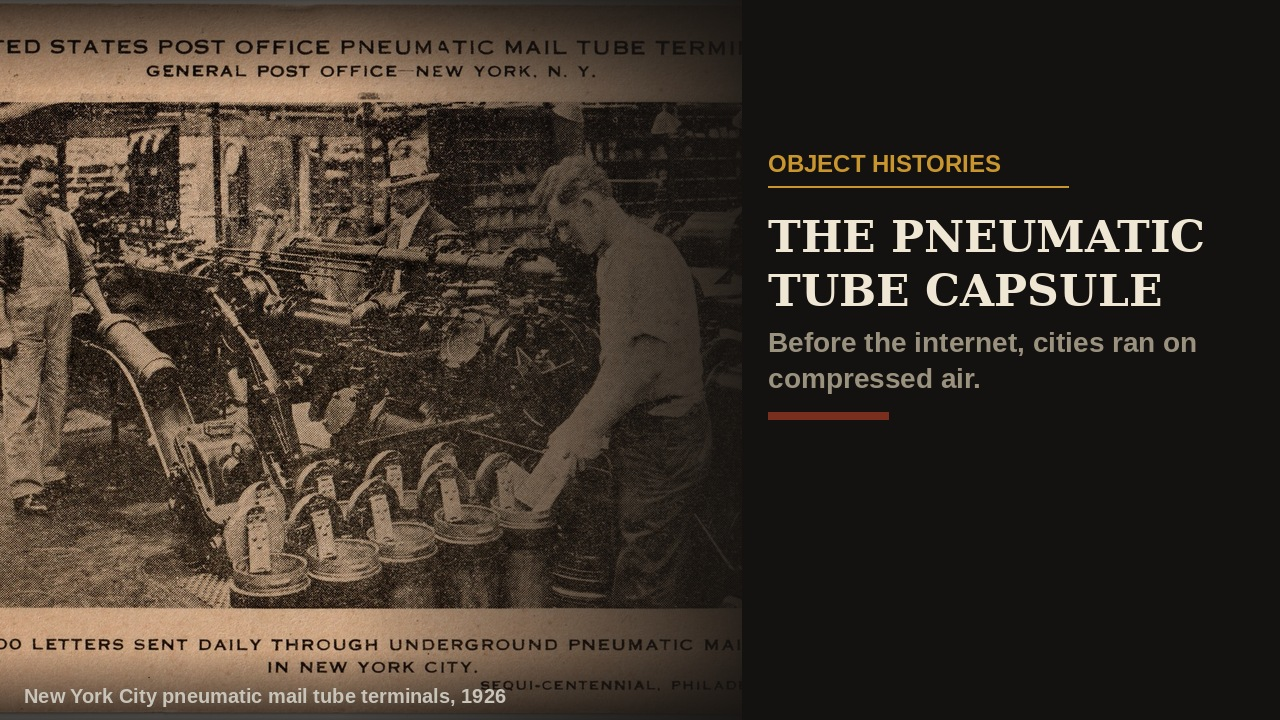
In February 1954, a United States senator threatened to open hearings into a ten-year-old government contract that, in his words, smelled of “something worse than stupidity.” The contract in question paid a private company to blow letters through pipes buried under Manhattan. That a Cold War-era Senate showdown could turn on a decade-old piece of Victorian plumbing says something about how seriously cities once took the idea of mailing things through the air.
Between the 1850s and the 1980s, more than a dozen cities — London, Paris, Berlin, Vienna, Prague, New York, Philadelphia, Boston — built networks of pressurized iron tubing under their own streets and used them to fire canisters of letters, telegrams and cash between offices at up to 35 miles an hour. At their peak, these pneumatic tube mail networks moved more than half of a major city’s correspondence without a single truck, horse or human runner leaving the building.
This is the story of how a shortcut for the telegraph became civic infrastructure, why department stores adopted a version of it to move cash before the post office ever touched it, and why the machine that finally killed it wasn’t a truck. It was the telephone.
It started as a way to move telegrams the last few hundred yards
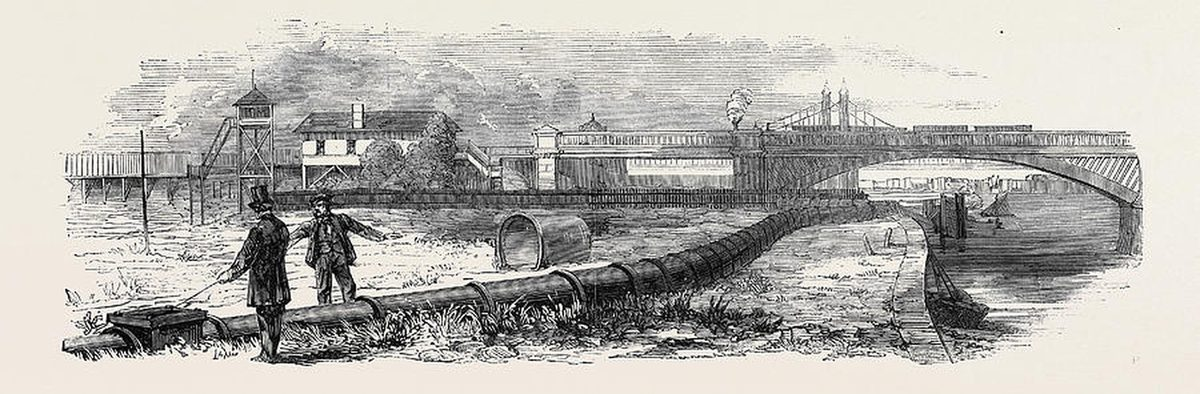
The problem the first pneumatic line solved had nothing to do with the mail. By the 1850s, London’s Electric Telegraph Company could move a message across the country in minutes, but getting that message the last few hundred yards — from the telegraph office to the people who needed it — still meant a clerk on foot. In 1853, engineer Josiah Latimer Clark built a short pneumatic line connecting the telegraph company’s office to the London Stock Exchange, so that stock prices could reach subscribers by capsule instead of by messenger.
It worked well enough that a dedicated company followed. The London Pneumatic Despatch Company, formed in 1859 with the Duke of Buckingham and Chandos as its chairman, expanded the idea into genuine underground tube railways for parcels and mail, running lines out of Euston into the mid-1870s. The ambition briefly outpaced the business case — big, wide tubes built for parcel traffic were expensive to run for the amount of freight London actually wanted to send through them — but the underlying principle, that compressed air could move a sealed capsule faster than any runner, had been proven at city scale.
The mechanics were simple, which is why they scaled so well
A pneumatic mail network’s basic unit was a felt- or leather-wrapped capsule a few inches across, small enough to hold folded paper or a handful of coins. Loaded into an airtight iron tube, it moved only because a pump at one end changed the air pressure behind or ahead of it — a steam-driven compressor blowing air in to push the capsule forward, or a vacuum pump sucking air out ahead of it to pull the capsule along. Either way, the pressure difference did all the work; nothing mechanical touched the capsule once it was sealed in.
Because the physics scaled with the size of the pump rather than the length of the pipe, a network could grow one branch at a time without redesigning anything. Stations along a route could intercept a passing capsule and redirect it down a side line, which meant a citywide network functioned less like a single pipe and more like a switched circuit — the same principle a telephone exchange used for voice, applied a generation earlier to physical objects. That is also why the technology was so easy to shrink back down once cities stopped wanting the citywide version: a hospital or a bank just needed the pump and one short run of pipe, with none of the junctions and switching stations a public network required.
Paris made it a citywide habit, not just a business tool
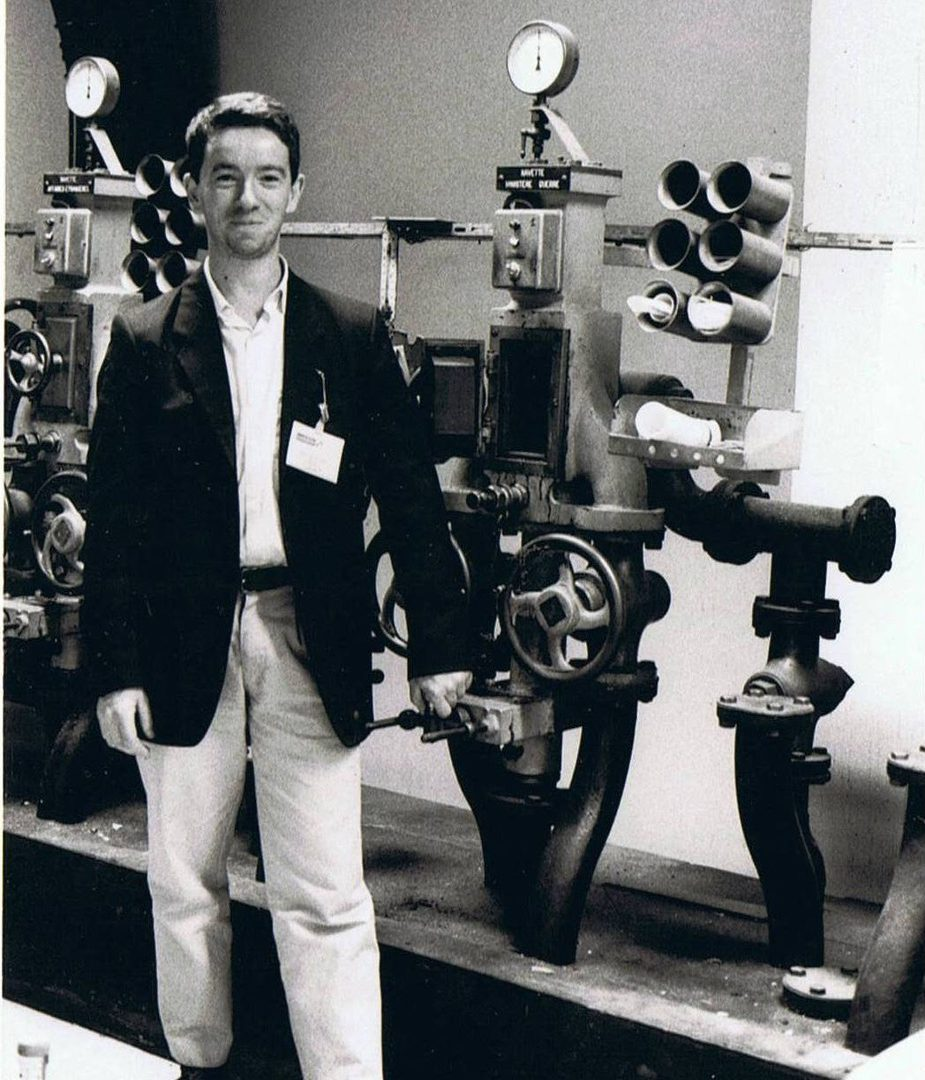
It was Paris, not London, that turned the pneumatic tube into something ordinary Parisians used every day. An experimental kilometre of line opened between the Bourse and a hotel on the Boulevard des Capucines in 1866, and the network was taken over by the state postal service in 1879 and opened to the public. By its peak in the 1930s, the poste pneumatique stretched across hundreds of kilometres beneath the city, linking well over a hundred post offices, and Parisians could write a note, called a pneu, and have it delivered across town in well under an hour — faster, in practice, than a phone call could be placed in the network’s early decades.
The habit went deep enough to leave a mark on literature. Marcel Proust relied on the pneumatique for his most urgent messages, well enough documented a habit that the device turns up by name in his own fiction: in Swann’s Way, a character’s petit bleu — the pale blue pneumatic telegram form — arrives with the particular urgency the medium implied. A pneu wasn’t just faster than a letter. It read as more important, the way an urgent text does today.
Department stores wired themselves for cash years before the post office got involved
Long before any of this reached the mail, retailers had their own version of the problem: how do you move cash from a dozen sales counters to one locked cashier’s desk without a clerk walking it over by hand every time? In 1881, William S. Lamson of Lowell, Massachusetts patented a solution — and it is worth noting that his original patent, for what he called an “automatic cash-carrier,” wasn’t pneumatic at all. It described a hollow wooden ball, split into two locking hemispheres, rolling down inclined wooden tracks under gravity, with a foot-pedal elevator to send the empty ball back.
The gravity system worked well enough that the Lamson Company grew into the dominant supplier of store cash-carriers in the United States and Europe, and it was Lamson’s later engineering — adding compressed-air tube systems alongside the original wire-and-gravity carriers — that put a genuine pneumatic tube in thousands of shops before most of those cities had one for their mail. The whoosh-and-clunk of a canister landing at a cashier’s cage, a fixture of department stores well into the twentieth century, was standard retail hardware, not a Hollywood invention.
New York built the largest network of all, and Washington nearly killed it twice
New York’s system, opened in 1897 by the Tubular Dispatch Company, eventually grew into roughly 27 miles of cast-iron tube laid beneath Manhattan and Brooklyn. Steel capsules about two feet long, weighing 21 pounds empty and holding up to 400 letters, travelled the tubes at around 30 miles an hour; at peak times, operators could launch a new capsule every 6 to 15 seconds. By the mid-1920s the tubes were carrying an estimated 55 percent of the mail moving between the city’s connected post offices.
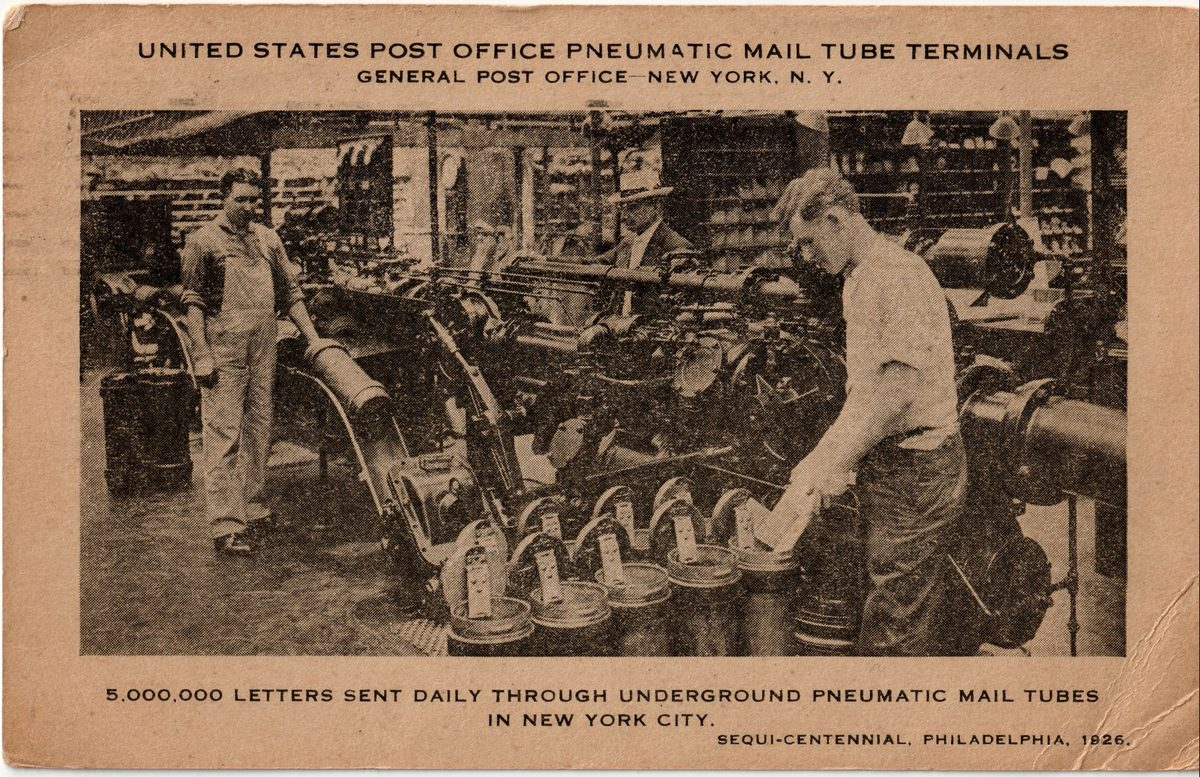
The system survived two near-death experiences in Washington. Congress simply declined to fund it for a year starting in 1901, shutting the tubes down until money was restored in 1902. Then, in 1918, Postmaster General Albert Burleson — who called the rental cost “exorbitant, unjustified and an extravagant waste of public funds” — got Congress to cut off funding entirely, closing every pneumatic mail system in the country. Public pressure over mail-choked streets brought New York’s tubes back in 1922. They ran for another three decades, brushed up against the McCarthy-era Senate in 1954 over a cost dispute, and were finally shut down for good by Postmaster General Arthur Summerfield on December 31, 1953, replaced, in the government’s own accounting, by two delivery trucks costing $25,000 a year against the tube system’s roughly $1 million.
Berlin and Prague kept theirs running well into the television age
Germany’s network, centred on Berlin’s main telegraph office, reached its largest extent in 1941 at over 250 kilometres of tube. The city’s division in 1945 split the network in two: the eastern half, run out of the same telegraph building, still held roughly 43 kilometres of working tube by the end of 1951, and pneumatic connections at that site remained in occasional service until October 1976.
Prague went further still. Its municipal system, dating to 1889 and eventually covering about 55 kilometres, is generally regarded as the last full municipal pneumatic post in the world, still used by banks, government offices and the media into the twenty-first century. It did not close by decision. In August 2002, catastrophic flooding across Central Europe put five of the network’s eleven underground engine rooms under water, and the system has not carried a message since.
The telephone didn’t kill pneumatic tubes, it just shrank them
Every one of these networks fell to the same competitor. A telephone call was cheaper to route, easier to extend to a new address, and required no buried ironwork at all. City after city let its tubes go quiet through the middle of the twentieth century, and the grand civic version of the idea — a public utility that moved paper the way wires moved voice — never came back once it went.
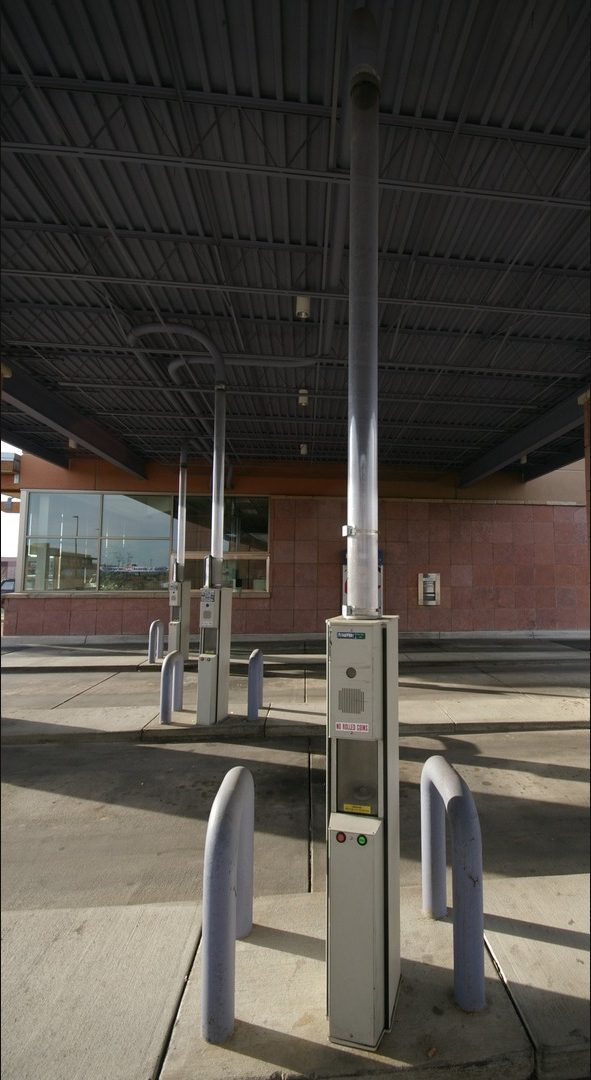
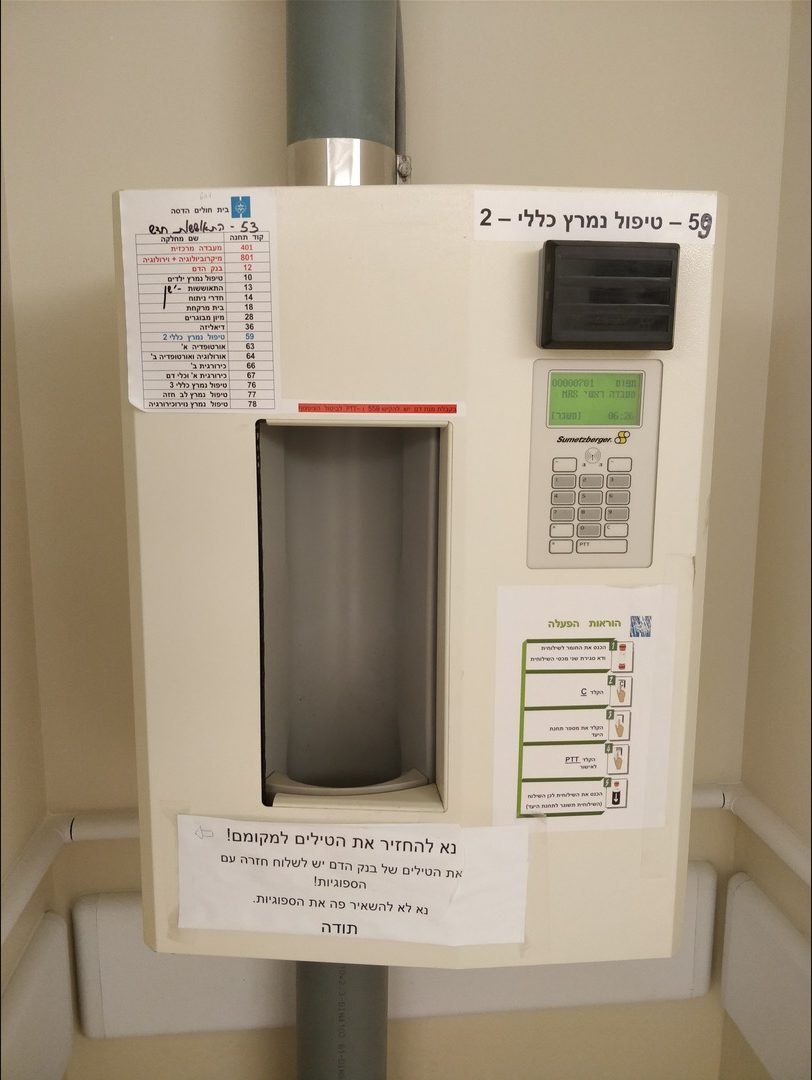
But the mechanism itself was too useful to disappear. Hospitals still run pneumatic tube systems today to move blood samples, medications and lab specimens between departments in seconds, on exactly the physics that once carried Proust’s pneus across Paris. And the canister that shoots your deposit slip to a teller at a bank drive-through is the same idea again, just scaled down from a citywide network to a single parking lot — the part of the pneumatic tube mail network that never actually stopped running.
What is easy to miss, looking back, is how reasonable the whole enterprise was at the time. A pneumatic network was not a novelty act competing against a mature alternative; for several decades it was genuinely the fastest way to move a physical object across a crowded city, faster than a horse cart and, in dense downtown traffic, often faster than an early automobile. Cities that built one were not being credulous. They were making the same bet anyone makes on new infrastructure — that the advantage would hold long enough to justify the cost of burying it. For the better part of a century, in half a dozen major cities, it did.
Watch the full history
The video version covers the London origins, the Paris network, and New York’s rise and fall in about six minutes.

Related reading
- The Public Health Panic That Made Baby Cages Seem Safe
- How the Farm Windmill Pumped Water on the Great Plains
- The Mystery of the Beale Ciphers, Explained
- The Real History of Rainwater Cisterns
Works cited
- Arlinghaus, Sandra Lach. Down the Mail Tubes: The Pressured Postal Era, 1853–1984. Ann Arbor: Institute of Mathematical Geography, Monograph #2, 1985.
- Carter, William C. Marcel Proust: A Life. Yale University Press, 2013.
- Smithsonian’s National Postal Museum. “Pneumatic Tube Mail.” Customers and Communities: Serving the Cities exhibition.
- Armstrong, Vanessa. “When a Labyrinth of Pneumatic Tubes Shuttled Mail Beneath the Streets of New York City.” Smithsonian Magazine, December 22, 2023. Link.
- The Postal Museum (UK). “The Beginnings of the Pneumatic Railway.” Postal Museum blog.
- Lamson, William S. “Automatic Cash-Carrier.” US Patent 243,451, filed February 14, 1881, granted June 28, 1881. Link.
- National Museum of American History, Smithsonian Institution. “Lamson Pneumatic Delivery Terminal.” Object record.
- Forum an der Museumsinsel. “Rohrpost.” Former Berlin Haupttelegraphenamt pneumatic tube system, technical monument record. Link.
- “New Owner Promises Bright Future for World’s Largest Pneumatic Post System.” Radio Prague International.
- United States Postal Service. “The Pneumatic Mail Tubes: New York’s Hidden Highway and Its Development.” Official postal history. Link.