
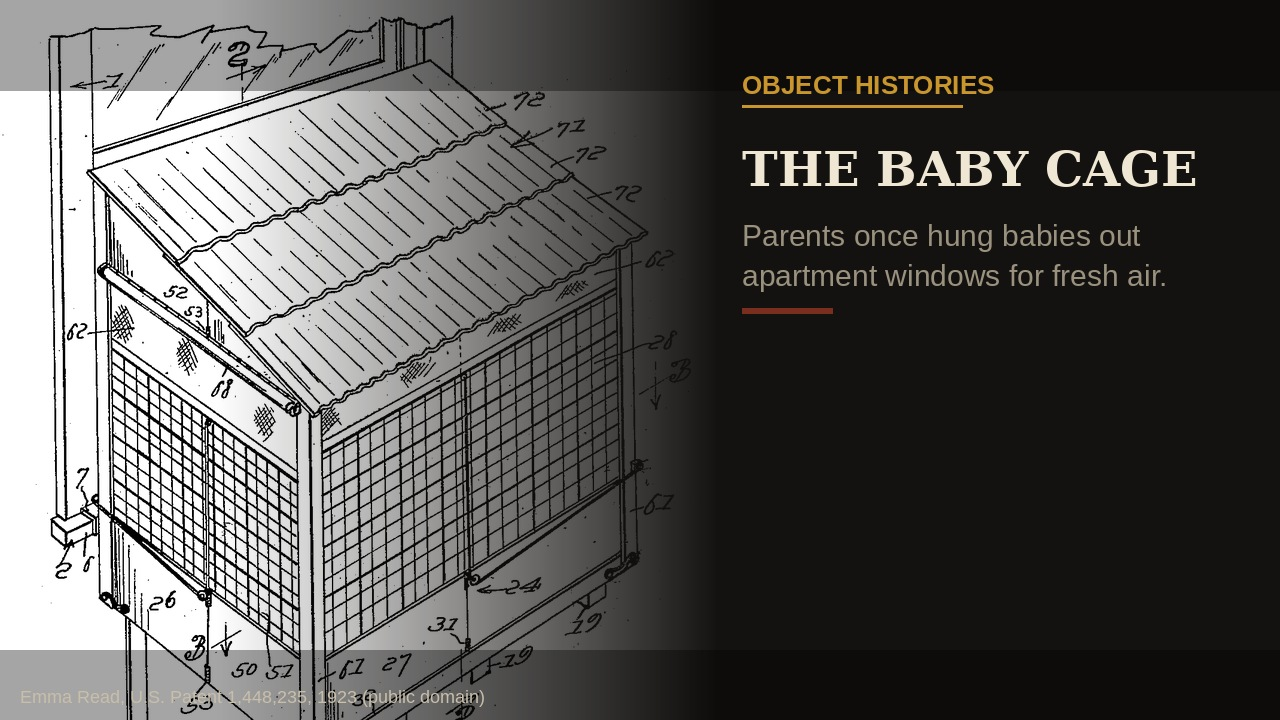
In 1906, a young mother in New York bolted a wire box to the outside of her back window so her newborn daughter could nap in fresh air, exactly as her doctor had advised. Neighbors heard the baby crying and threatened to report her to the New York Society for the Prevention of Cruelty to Children. The mother was Eleanor Roosevelt, and she wrote later that she was genuinely baffled by the complaint. As far as she knew, she was simply being a modern, well-informed parent.
She was not exaggerating the science of the moment. By the time Emma Read patented a version of that wire box sixteen years later, and by the time a London charity was handing out hundreds of them to mothers with no garden, the window cage was not a fringe eccentricity. It was a reasonable, doctor-endorsed answer to the deadliest infectious disease of the age — one that happened to also suspend a sleeping infant several storeys above a city street.
Understanding why nobody thought that was strange requires understanding what tuberculosis had done to the way an entire generation of doctors thought about air.
The tuberculosis panic that made an airing box look like medicine
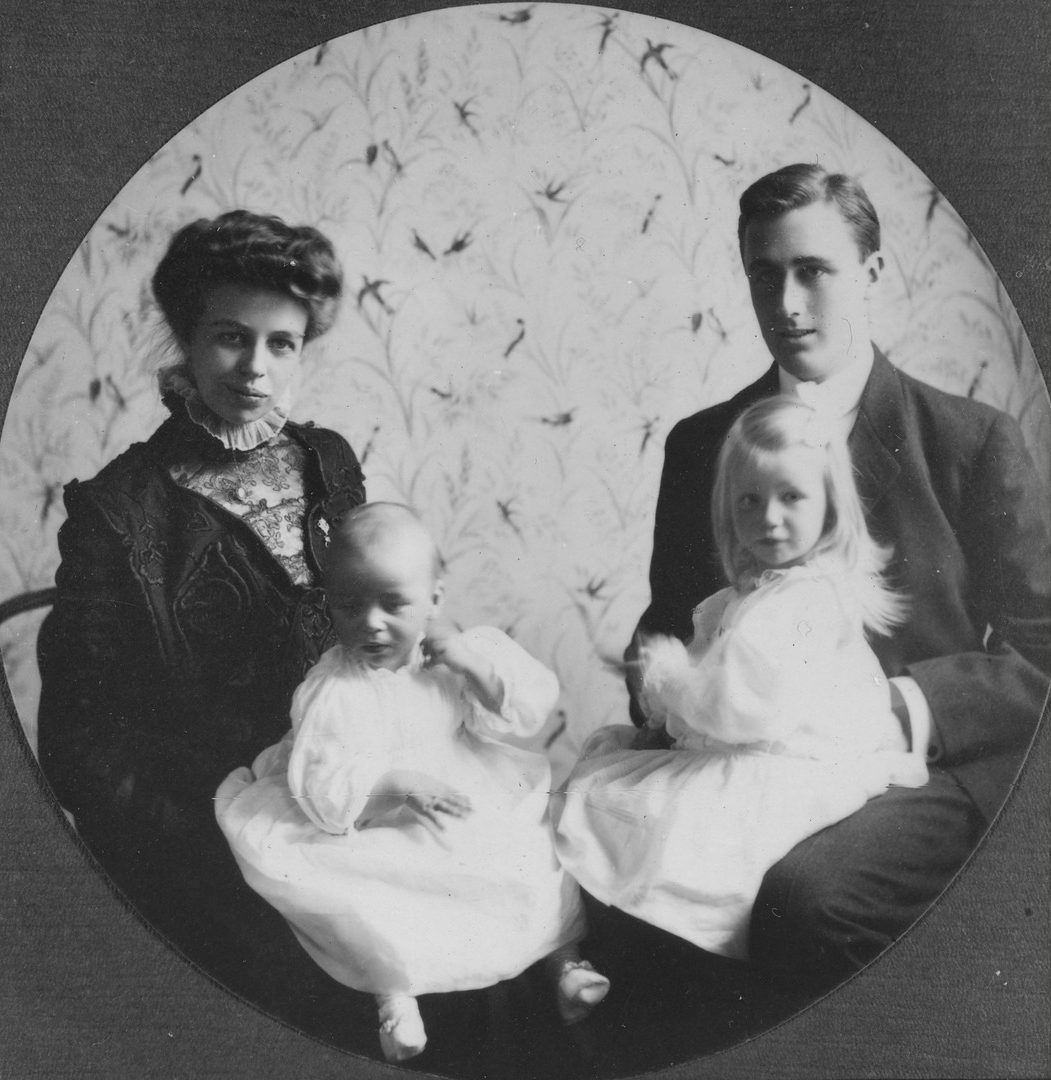
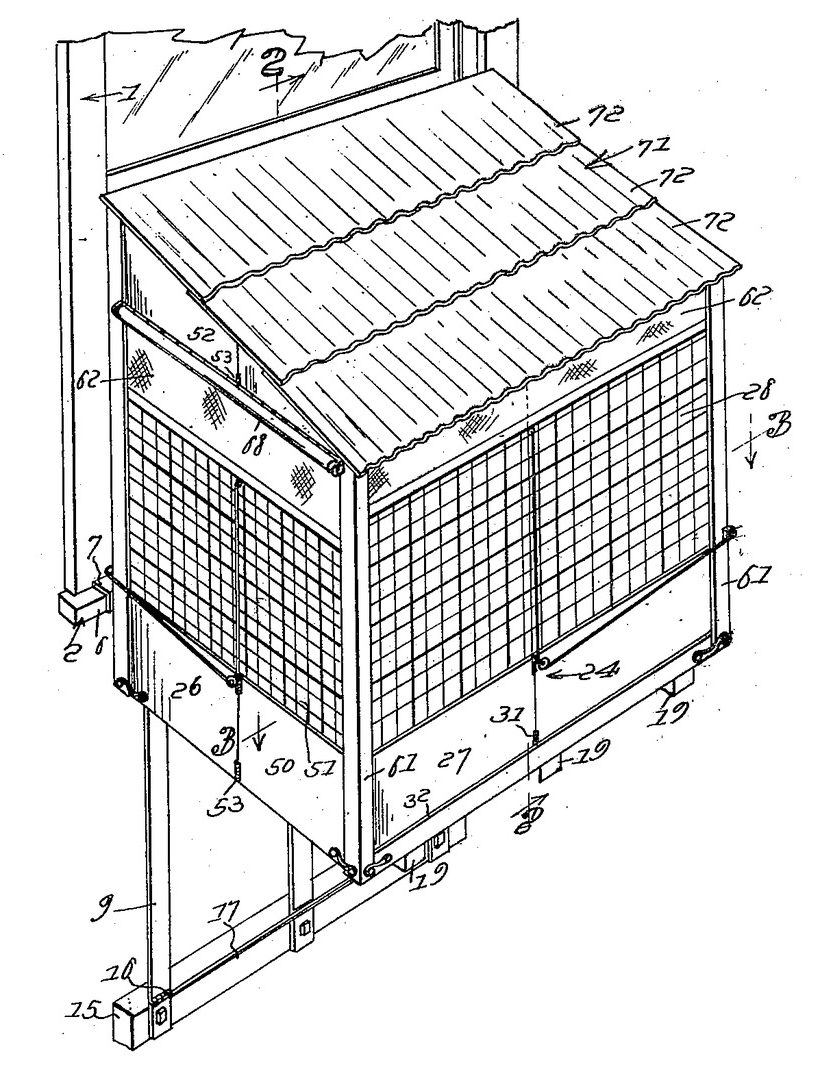
Tuberculosis was, for decades around the turn of the twentieth century, one of the deadliest diseases in industrial cities, and with no antibiotic yet to treat it, doctors reached for the one tool they had: air. Fresh air and sunlight, they believed, starved the bacillus and strengthened a weak chest, and that belief was not a fringe theory. It restructured institutions. Sanatoriums were built on breezy hillsides. Public health campaigns warned against spitting in the street. And starting in 1904, when pediatrician Bernhard Bendix and school inspector Hermann Neufert opened an outdoor Waldschule in a pine forest near Berlin, whole schools were rebuilt around the same idea: move children outside, even in winter, and the classroom itself becomes a kind of treatment.
The idea reached the United States by 1908, when two of Johns Hopkins’ first female medical graduates, Mary Packard and Ellen Stone, opened an open-air school in Providence, Rhode Island, tearing a wall out of an existing building and bundling children in wool mittens and sleeping bags so they could take lessons in the cold. By the eve of the First World War, roughly 150 open-air schools were operating in 86 American cities, each one backed by a local anti-tuberculosis association — and there were, by 1920, some 1,500 of those associations nationwide, up from twenty in 1905.
Families in cramped tenement apartments had no yard, no sanatorium and often no school willing to take an infant. What they had was a window. If fresh air was the only available medicine, the exterior sill was the only available dispensary.
None of this was fringe medicine. Robert Koch, who had identified the tuberculosis bacillus in 1882, told the Nobel committee in his 1905 acceptance lecture that even the smallest droplets from a cough or a cleared throat could carry infection through the air — a finding that made ventilation, not just diet or rest, a frontline defense. Public officials responded with the tools available to them: placards warning against spitting on the sidewalk, calls for wider classroom windows, and, eventually, infrastructure built specifically to maximize a person’s exposure to outdoor air. The Waldschule’s founders even installed a “cure gallery,” a shed angled to catch the sun, decades before anyone thought to put an equivalent structure on the side of an apartment building for an infant too young for school.
A patent turned the idea into a bolt-on product
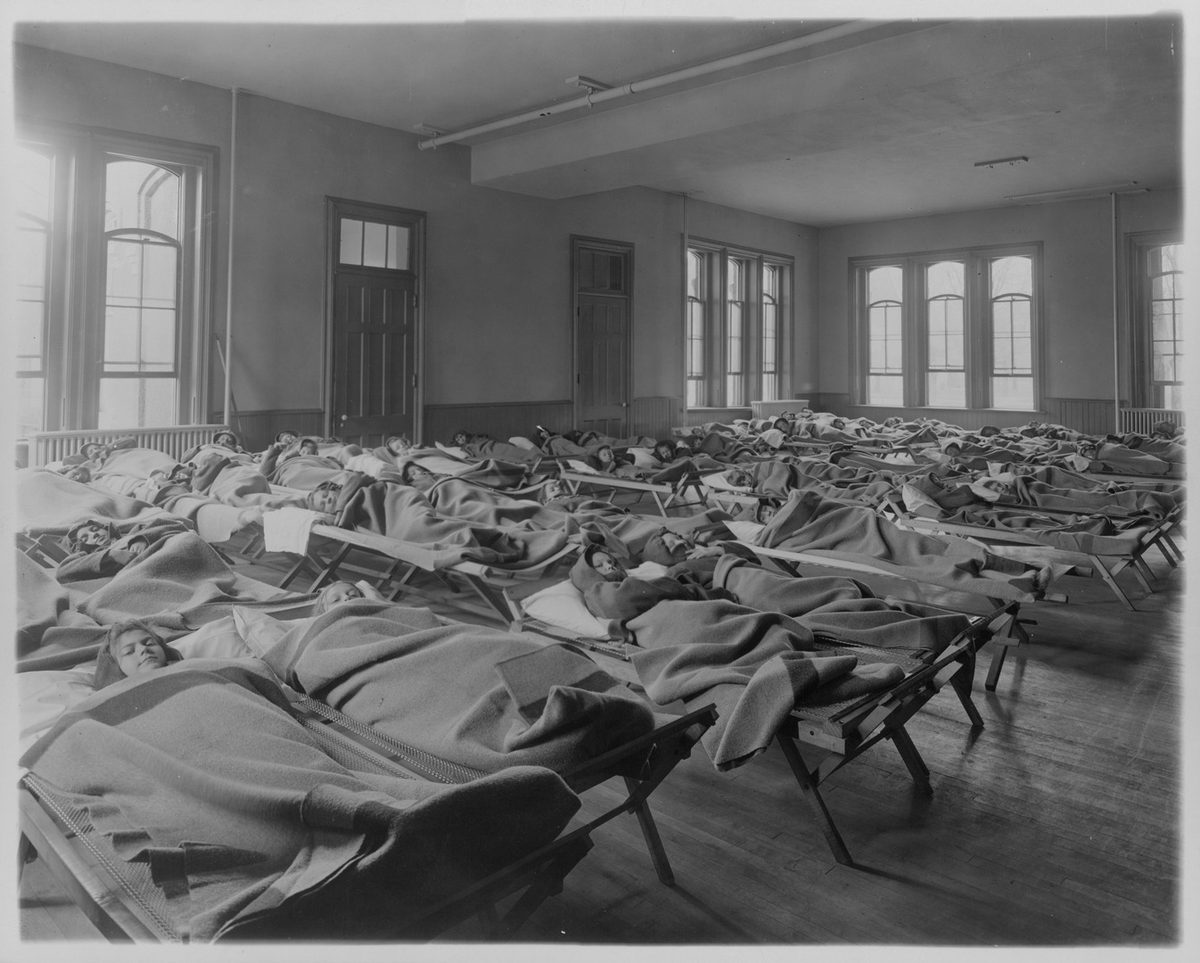
Roosevelt’s improvised chicken-wire box was not unique, but it took until 1922 for someone to turn the idea into a manufactured, patentable product. Emma Read, of Spokane, Washington, filed U.S. Patent 1,448,235, “Portable Baby Cage,” that July; it was granted the following March. Her application is almost touchingly plain about the problem it was solving: “a great many difficulties rise in raising and properly housing babies and small children in crowded cities,” she wrote, and her invention was “an article of manufacture for babies and young children, to be suspended upon the exterior of a building adjacent to an open window.”
The design itself was simple sheet-metal-and-wire engineering: a braced frame that bolted to the window sill, wire mesh walls open enough to let air through while, in theory, keeping a baby from falling out, and a slanted metal roof to shed rain and snow. Read’s patent even specifies room inside for “proper toys” and bedding, so that when nap time came the cage doubled as an outdoor crib. What the drawings do not specify is a weight rating, a bracket standard, or any inspection regime at all — because none existed. A cage was sold, a parent bolted it to whatever window frame they had, and the whole arrangement rested on the hardware included in the box.
Almost nothing else is known about Read herself. City directories and newspaper archives in Spokane turn up no further trace of her, a gap the region’s own newspaper of record has noted while trying, and failing, to reconstruct her biography.
A London charity turned it into a civic program
The idea crossed the Atlantic and found its widest adoption in London in the 1930s, where flats were just as cramped and gardens just as scarce as in any American tenement district. A press photograph taken on June 23, 1937, and distributed by Fox Photos shows a nanny supervising a baby suspended in a wire cage outside a high tenement-block window; the caption identifies it as one of the cages “distributed to members of the Chelsea Baby Club who have no gardens and live at the top of high buildings.” That detail matters, because it means the cages were not just a novelty item a handful of eccentric parents bought — they were organized, community-level welfare provision, handed out by a neighborhood association to exactly the families who had nowhere else to put a baby outdoors.
For a few years, this was simply how conscientious, health-minded parents in a crowded city did things. Newspapers ran cheerful photographs of infants dozing in mid-air, wrapped in blankets, several storeys above the pavement below. There was no safety inspection behind any of it, no weight limit, no age minimum — only the same fresh-air logic that had already rebuilt schools and sanatoriums, now applied to a box the size of a filing cabinet.
A punchline now, and a reasonable choice then
In 2010, TIME magazine put the baby cage at number twenty on its list of the “50 Worst Inventions,” describing it as a “creepy wire contraption.” It is an easy image to mock from a century’s distance: an infant, alone, held over a city street by a handful of bolts nobody tested. But judged by the standards of the people who used it, the cage was not reckless. It was patented. It was distributed by a respected neighborhood charity. It solved a real, well-documented public health problem — a lack of fresh air for infants in cities with no green space — using the only exterior surface most tenement families had.
What changed was not the cage. It was the disease it was built to fight. Antibiotics effective against tuberculosis arrived after the Second World War, and the same shift in medical thinking that closed the open-air schools moved infant care back indoors, toward regulated nurseries and, eventually, monitored cribs. A hazard that had mattered less than the fear of tuberculosis while that fear was acute — a rusted bracket, a storm-loosened bolt, a curious toddler leaning against wire mesh — mattered a great deal more once the disease that justified the risk had faded.
It is worth being precise about what the cage actually got right and wrong by the science of its own time. The fresh-air theory of tuberculosis prevention was not baseless: ventilation and avoiding crowded, poorly aired rooms genuinely did reduce airborne transmission, which is part of why the open-air school movement produced real, if inconsistent, improvements in the children who attended. Where the baby cage went wrong was never the premise. It was the complete absence of any engineering standard for the one part of the design that had nothing to do with tuberculosis at all: keeping a sleeping infant attached to the side of a building.

What actually protects a baby at a window today
The baby cage disappeared decades before anyone built a formal safety framework for what it was actually risking: a fall from a height. New York City did not require window guards in apartments with children ten years old or younger until 1976, and only after its health department ran a program called “Children Can’t Fly,” tracking falls reported by hospitals and police precincts, campaigning door to door, and handing out free guards in high-risk buildings. The Board of Health’s own data, published in the American Journal of Public Health, showed falls dropping by more than half within three years of the law taking effect. That is, in effect, the regulatory apparatus a device like the baby cage never had: reported incidents, a public information campaign, engineered hardware and a legal mandate, arriving roughly forty years after Chelsea mothers were bolting wire boxes to their own sills with no requirement to do anything at all.
Nothing about a modern window guard looks dramatic, which is rather the point. The baby cage promised fresh air and, as a side effect, put a child at height with no safety margin. A window guard promises nothing except that the window can open without the gap being wide enough for a child to fit through it. It is the unglamorous, well-tested descendant of a much stranger idea: that the cure for what made a city unhealthy could simply be bolted to the outside of it.
Watch the full history
The video version covers Emma Read’s patent, the Chelsea Baby Club photographs, and the practice’s disappearance in about seven minutes.

Related reading
- How the Farm Windmill Pumped Water on the Great Plains
- Clothes Wringer History: From Courtship Gift to ‘Wringer Arm’
- The Real History of Rainwater Cisterns
- How a Smokehouse Cured a Year’s Worth of Meat With Only Salt, Smoke, and Time
Shop
- A history of childhood and parenting advice (book)
- 1920s New York photography (book)
- Modern window guards for children
Works cited
- Roosevelt, Eleanor. This Is My Story. New York: Harper & Brothers, 1937. Link.
- Read, Emma. “Portable Baby Cage.” U.S. Patent 1,448,235, filed July 19, 1922, issued March 13, 1923. Link.
- “Nanny Supervising a Baby Suspended in a Wire Cage” (Chelsea Baby Club, London, June 23, 1937).
- Vestal, Shawn. “How Did Portable Baby Cage Not Catch On?” The Spokesman-Review, January 4, 2013. Link.
- Blei, Daniela. “When Tuberculosis Struck the World, Schools Went Outside.” Smithsonian Magazine, September 1, 2020. Link.
- Meckel, Richard A. “Open-Air Schools and the Tuberculous Child in Early 20th-Century America.” Archives of Pediatrics & Adolescent Medicine 150, no. 1 (1996): 91–97. (JAMA Network access wall; cited as print.)
- Fesler, Diane M. “Open-Air Schools.” The Journal of School Nursing 16, no. 3 (2000): 3–9. (Publisher access wall; cited as print.)
- “The 50 Worst Inventions.” TIME, May 27, 2010. Link.
- Spiegel, Carol N., and Frederick C. Lindaman. “Children Can’t Fly: A Program to Prevent Childhood Morbidity and Mortality from Window Falls.” American Journal of Public Health 67, no. 12 (1977): 1143–1147. Link.