
Exploration & Empire
Voyages, colonies, frontiers and the collisions between peoples that followed them.
-

The Tomb of Genghis Khan: A Decision Not a Mystery
Genghis Khan died in 1227, and even that sentence is contested: the sources disagree on the country, the cause, and the day. What follows is stranger. A Russian monk’s river theory from the 1880s, a satellite project with ten thousand volunteers, a 2014 hoax, and a 2026 genetics paper that found less than its headlines…
-
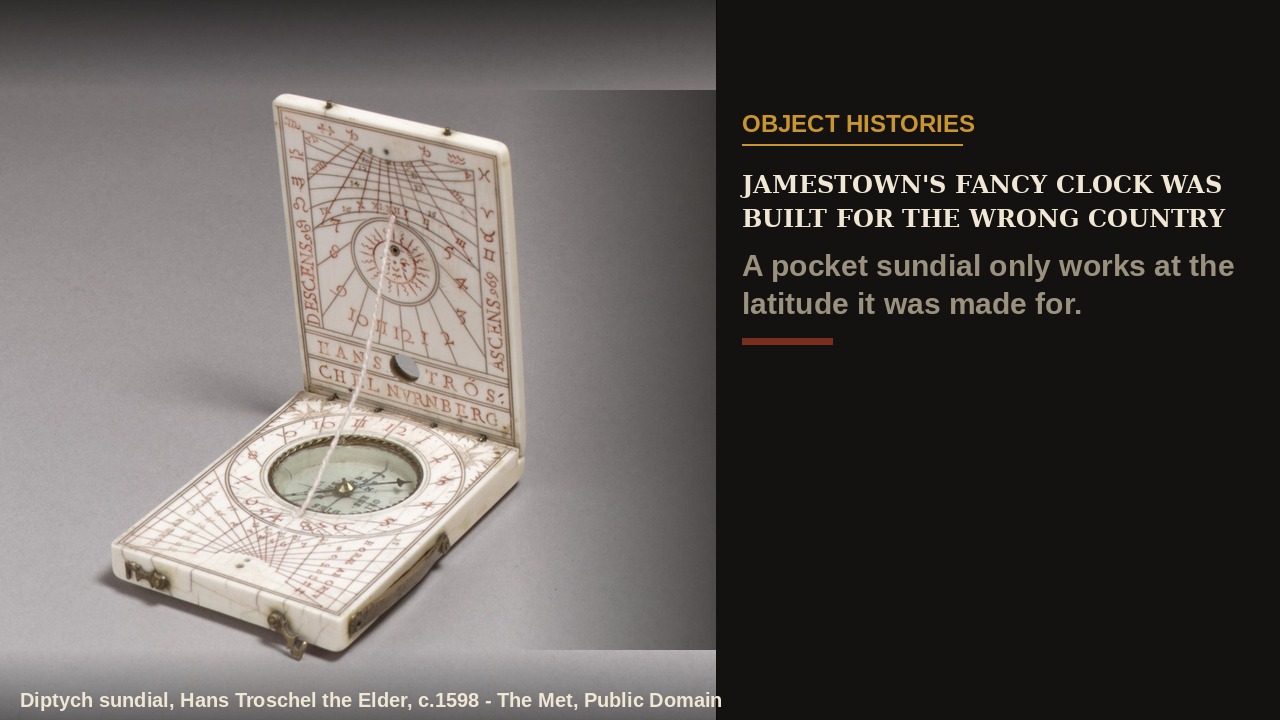
The Jamestown Pocket Sundial That Told the Wrong Time
Archaeologists have pulled at least four ivory pocket sundials from the ruins of James Fort, each one engraved for a European latitude — Nuremberg, Venice, and beyond — thousands of miles from Virginia. Captain John Smith owned one too, a sphere-shaped version he once held up to buy himself an extra hour of life in…
-
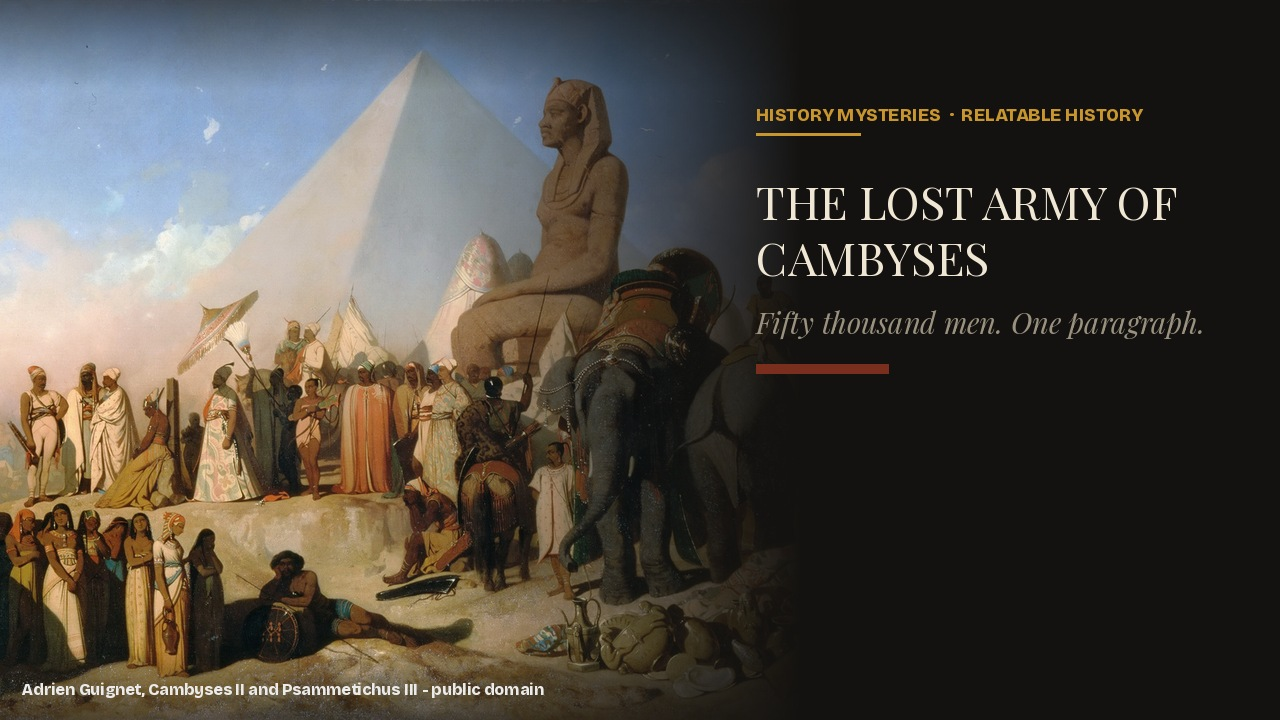
The Theories Behind Cambyses’ Lost Army
In 525 BC a Persian army is said to have vanished into the Egyptian desert without a trace. Four separate searches have gone looking for it since, and found almost nothing conclusive.
-
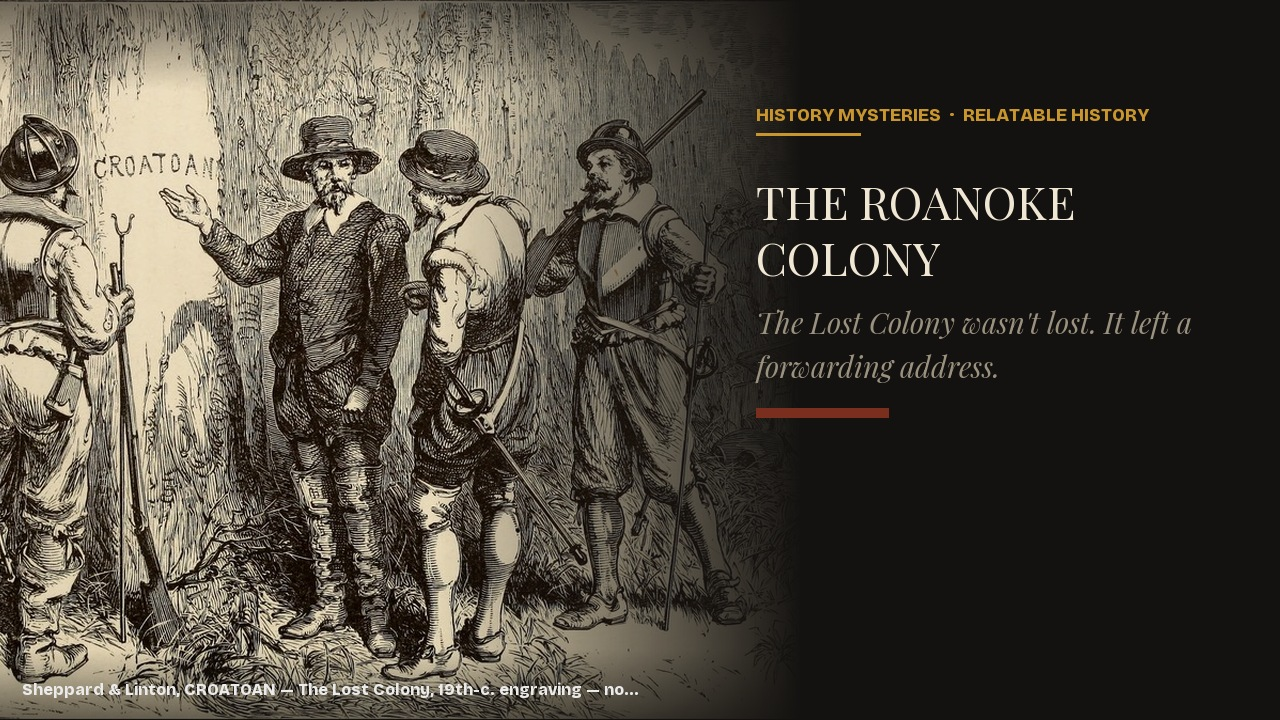
What Happened to the Lost Colony of Roanoke?
No bodies. No ash. No sign of a fight — just one word carved into a gatepost. Four centuries on, archaeology is finally starting to answer why.
-
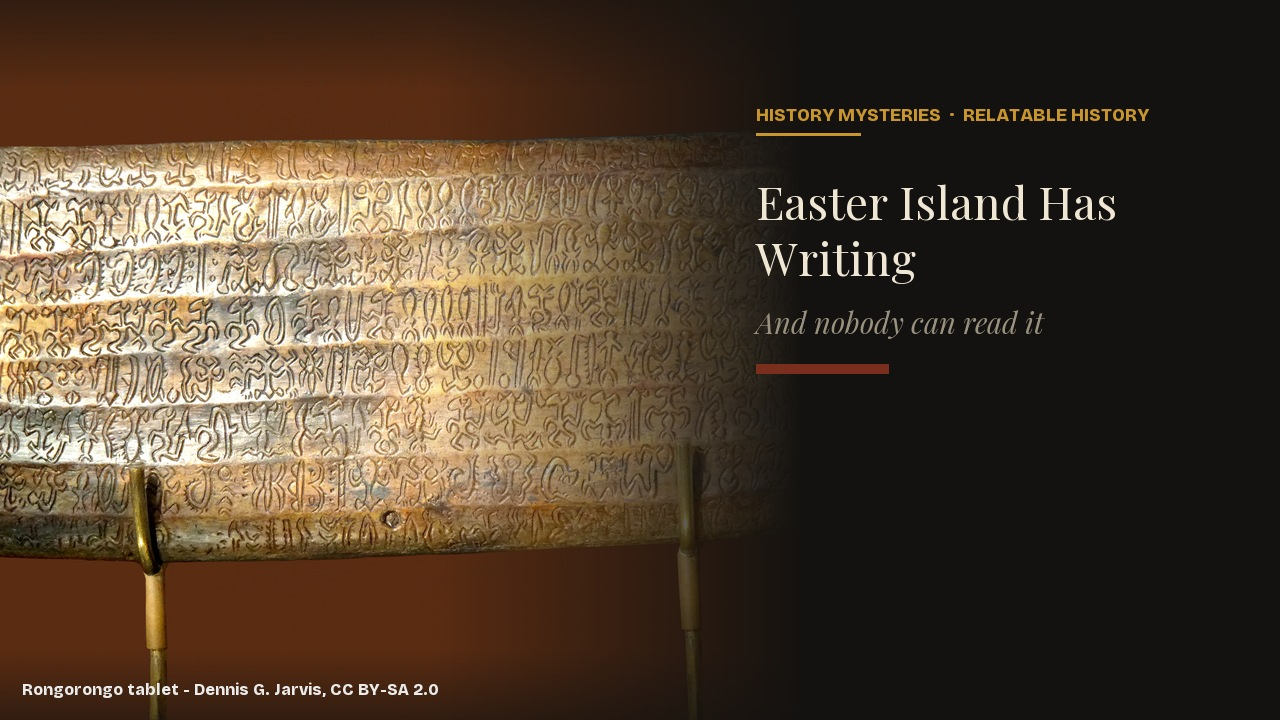
Why Nobody Can Read Easter Island’s Own Writing System
Twenty-six objects, about 14,900 carved glyphs, and one short passage anyone agrees on. Inside the 150-year failure to read Easter Island’s own writing system.
-
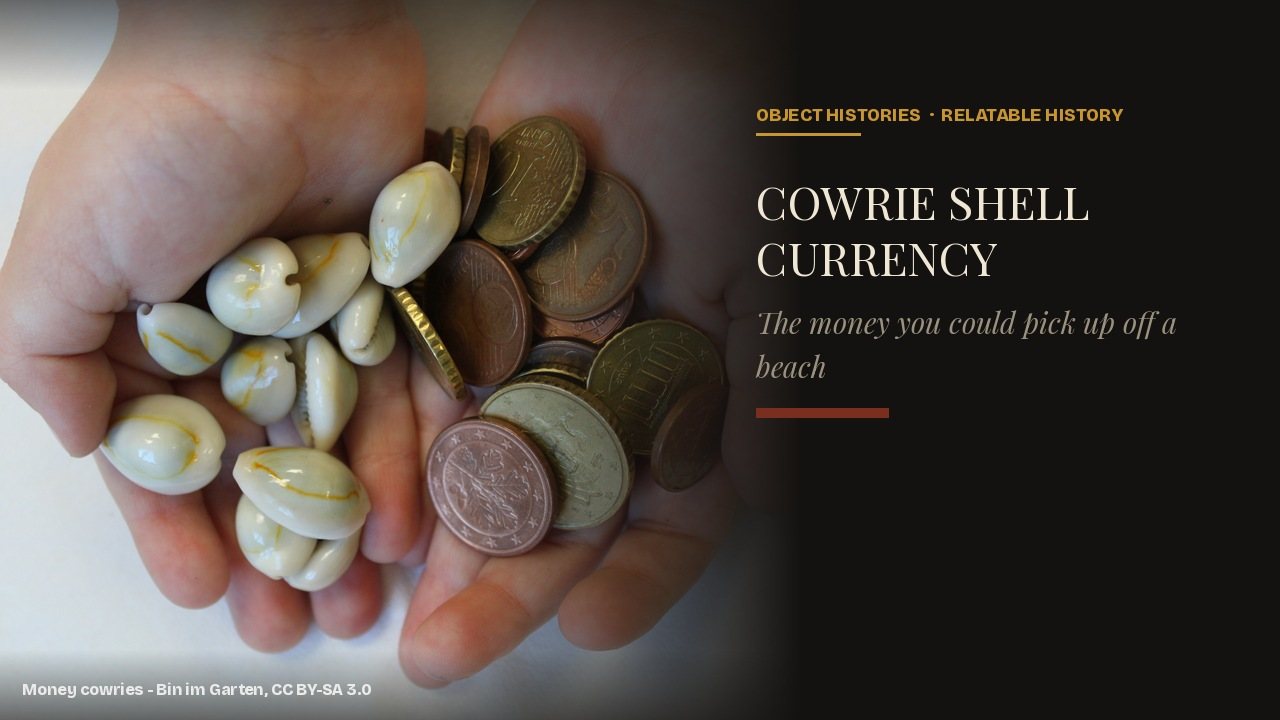
Cowrie Shell Money: How a Sea Snail Financed Four Continents
A shell you could pick up off a beach was money on four continents for roughly four thousand years, until one Hamburg trading firm undid it in a single generation.
-

Who Really Invented the Rickshaw? Three Rival Claims, One Vehicle
In 1869 Japan, at least three different people claimed credit for inventing the rickshaw. Thanks to a total absence of patent law, none of them ever won the argument.