
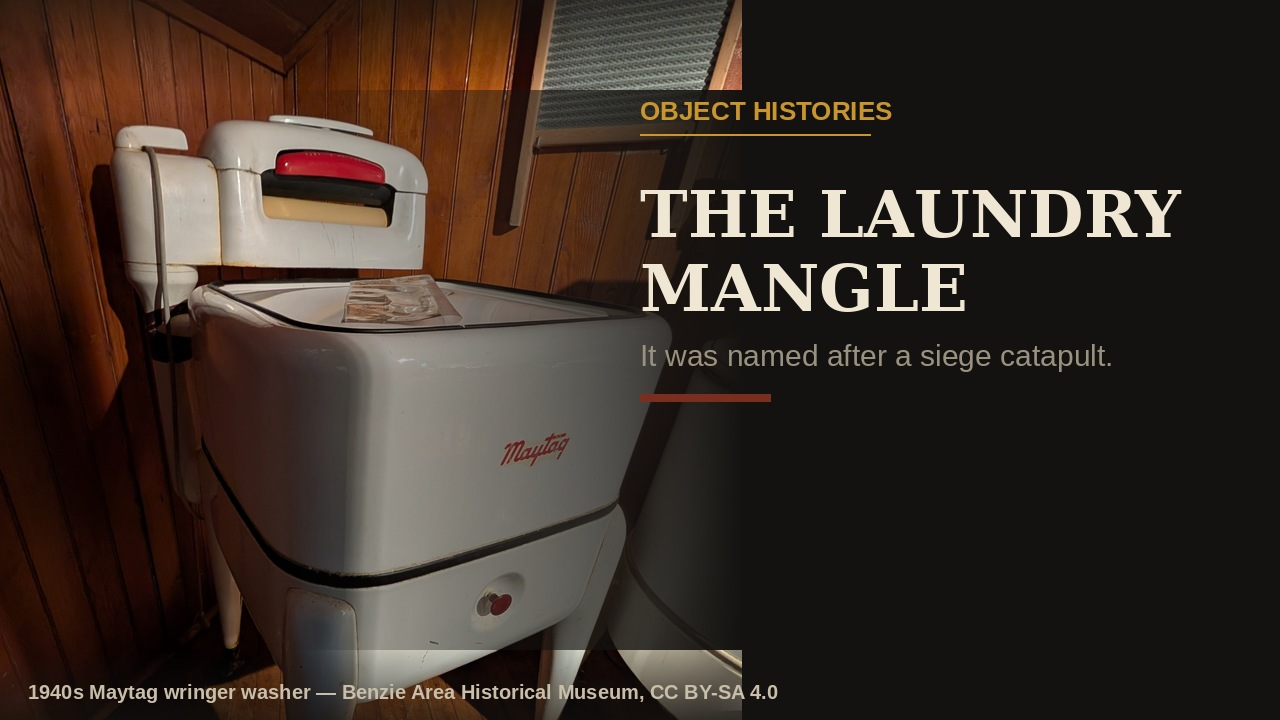
A clothes wringer history search usually starts with the funny part: the machine that squeezed the wash dry was named after a medieval siege weapon. That part is true. What it leaves out is everything the name did not explain — a folk-art courtship tradition, a string of nineteenth-century patents, and a specific childhood injury that made it into the pediatric medical literature under its own name.
The word travelled a long way to get to the laundry room. Mangle reached English through Dutch mangel, “to press,” which runs back through medieval Latin manganum to the Greek manganon: an engine, a contrivance, a means of trickery. That same Greek root produced mangonel, the torsion catapult armies wheeled up to castle walls. The English verb to mangle, meaning to hack or mutilate, is a separate word entirely, arriving by way of Old French. That the laundry machine and the injury eventually landed in the same syllable is one of the stranger coincidences in the dictionary, and the Oxford tradition dates the laundry sense of mangle in English to 1598, centuries before anyone had bolted a crank to it.
The Greek word behind all of this, manganon, did not originally mean a specific weapon at all. It meant almost any clever mechanical contrivance, and by extension a trick or a piece of deception — the same suspicion of ingenious machinery that survives in the English word “chicanery.” The mangonel borrowed the word because a torsion catapult, with its wound ropes and sudden release of stored energy, was exactly that kind of clever device. The laundry machine borrowed the same word centuries later for the same reason: it, too, was an unfamiliar mechanism that did something a human hand could not do alone.
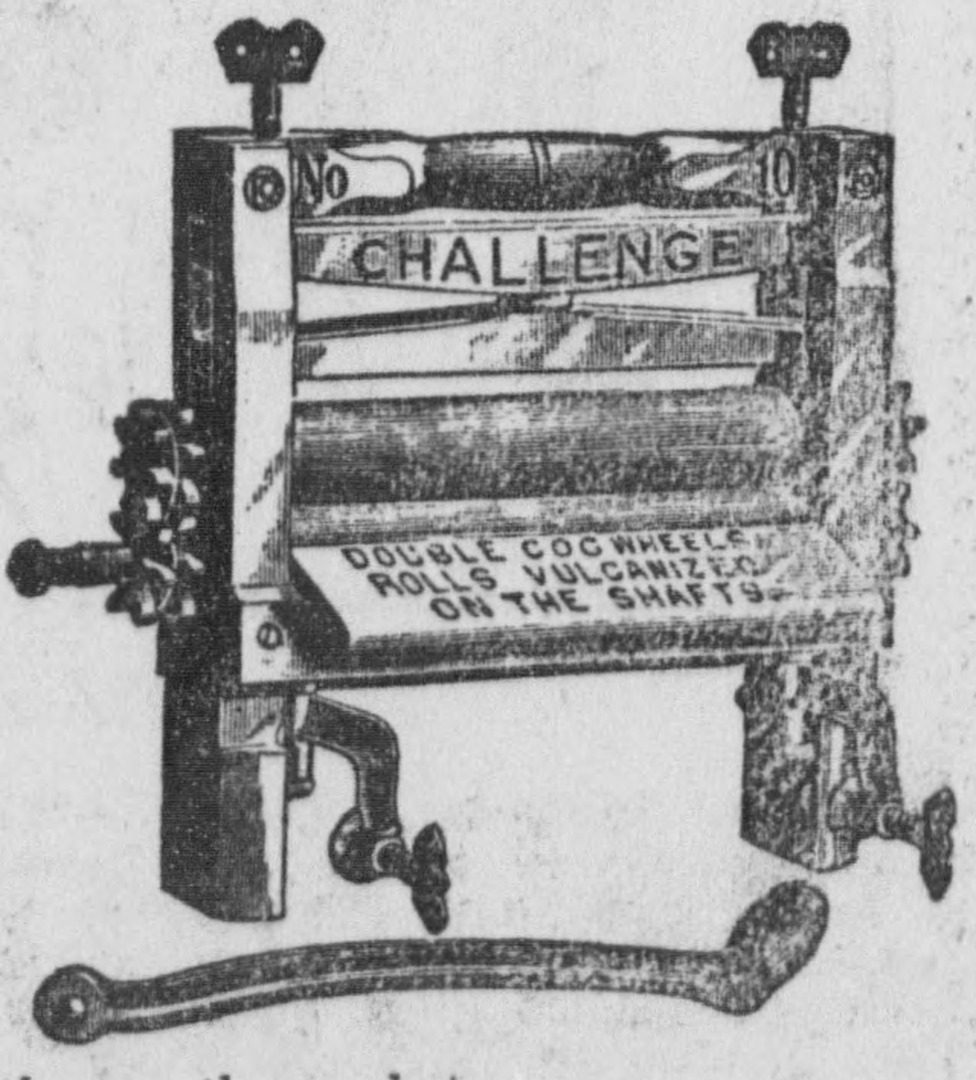
Before the machine, a carved board was the proposal
Long before rollers and cranks, wet linen was pressed flat by hand, with a board. From at least the sixteenth century in Scandinavia and Friesland, a damp sheet was wound around a wooden roller and a heavy, flat slab of birch or beech — the mangle board — was dragged back and forth across it, squeezing the wrinkles out through weight and friction alone.
Using one took two people, or one person and considerable patience. The damp cloth was rolled tightly around a separate wooden roller, and the board was laid flat on top of it and pushed and pulled along a table or bench, the roller turning underneath with each stroke. The board’s own weight supplied the pressure; a longer, heavier board pressed harder and finished the job faster, which is one reason surviving examples are often surprisingly substantial pieces of furniture in their own right, not the light domestic tool the word “board” suggests.
By the seventeenth century these boards had become something more than tools. They were carved with rosettes, dates, initials, and handles shaped like horses, lions, and mermaids, and it became a recognised courtship custom for a young man to spend a winter carving one to give to the woman he hoped to marry. The Metropolitan Museum of Art holds a Dutch or Frisian example, carved in oak and dated 1728, acquired in 1911 — one of roughly ten such boards in its collection, evidence that museums have taken the tradition seriously enough to date and preserve individual pieces rather than treat them as generic domestic tools. A well-made board was hung on the wall where visitors could see it. It was a marriage proposal you could also use to do the ironing.
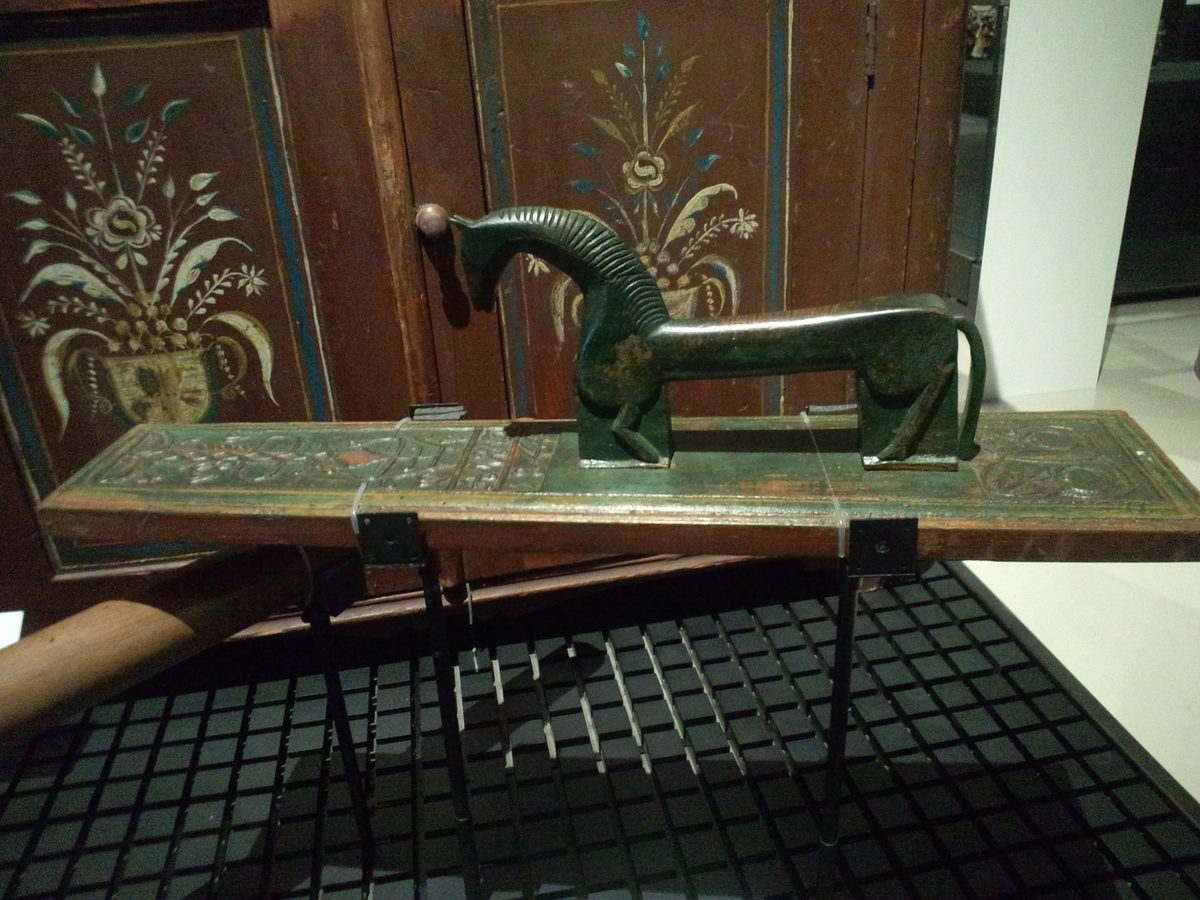
The box mangle turned pressing laundry into a piece of furniture
The mechanical version, which appears in the seventeenth century, abandoned any pretence of romance. The box mangle was a heavy wooden chest, sometimes ten feet long, filled with stones or sand until it weighed several hundredweight, resting on a bed of wooden rollers with the linen wound around them. One or two people hauled the box back and forth with cranks and levers, and the sheer dead weight pressed sheets glassy and smooth. It did not wash anything, and it did not wring anything out. It only flattened — and it did that better than any iron of the period could.
A machine that size and expense was out of reach for an ordinary household, so households sent their linen out to it instead. Grand houses and commercial laundries kept their own box mangles, and in towns the machine created a specific, recognised occupation: the mangle woman, very often a widow, whose machine had been bought for her by neighbours clubbing together after her husband died. She put a card in the window reading mangling done here, and the street brought her its sheets. English census returns as late as 1851 still record streets and houses named simply Mangle House, after the trade practiced inside.
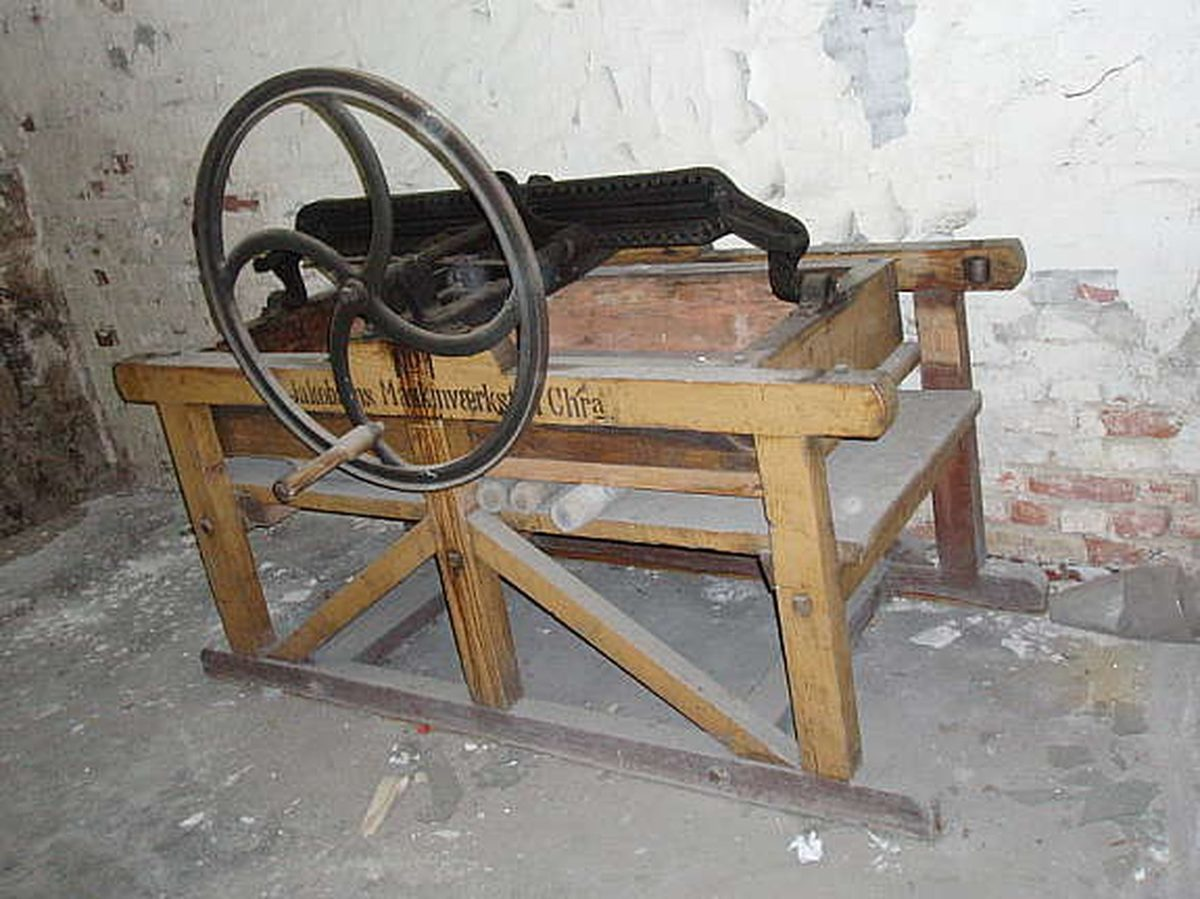
Patents chased the wringer through the nineteenth century
The rollers themselves, not the box, were the part worth patenting once the goal shifted from pressing sheets flat to actually squeezing water out of them. In 1774, Hugh Oxenham patented a mangle built for exactly that: heavy wooden rollers under enough pressure to wring water from cloth rather than merely flatten it, a design that stayed the standard for roughly a century and a half. In 1843, on the other side of the Atlantic, John E. Turnbull of Saint John, New Brunswick, patented a clothes washer with wringer rolls attached — a spring-loaded top roller that rose and fell to accommodate whatever thickness of fabric ran through it — joining washing and wringing into a single machine for the first time.
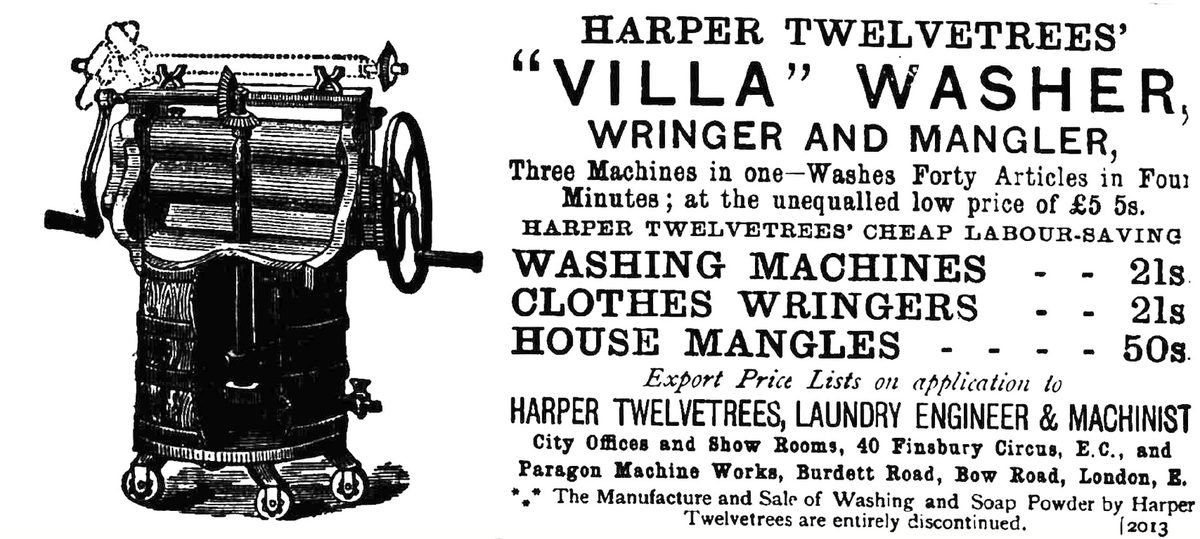
Manufacturers marketed the results hard, and at least one surviving advertisement shows exactly how hard. In March 1863, the Stamford Mercury carried a notice for Harper Twelvetrees’ Portable India Rubber Clothes Wringer, sold from his works at Bromley-by-Bow in east London, claiming it would “wring three blankets or six sheets in a minute,” alongside his Patent Washing Machine, promised to do in a few hours what hand-rubbing took a woman two days to finish. The rubber in that wringer mattered as much as the marketing: once Charles Goodyear’s 1839 discovery of vulcanisation reached commercial scale in the 1840s, wringer rollers could be made of rubber instead of bare wood, gripping wet cloth better and treating buttons and seams far more gently. That combination of cheap rollers and aggressive advertising put a wringer within reach of an ordinary household, and by 1900 the plain hand-cranked wringer, not any washing machine, was the single most common piece of laundry equipment in the home.
Cost was the deciding factor. A box mangle needed a room, a washing shed, or a small business to justify it. A rubber-roller wringer, once cast-iron frames and gears could be produced in quantity, needed only a stand and a tub, and it could be bought on instalments, as Twelvetrees’ own advertisements offered. The box mangle’s mangle woman did not disappear overnight, but the wringer moved the same job from a specialist’s shed back into every kitchen and scullery in the country, which is exactly the kind of quiet, unglamorous mechanisation that rarely gets remembered as part of the Industrial Revolution, even though it changed far more ordinary lives than the machines that usually get the credit.
Electricity removed the one safety feature the crank had
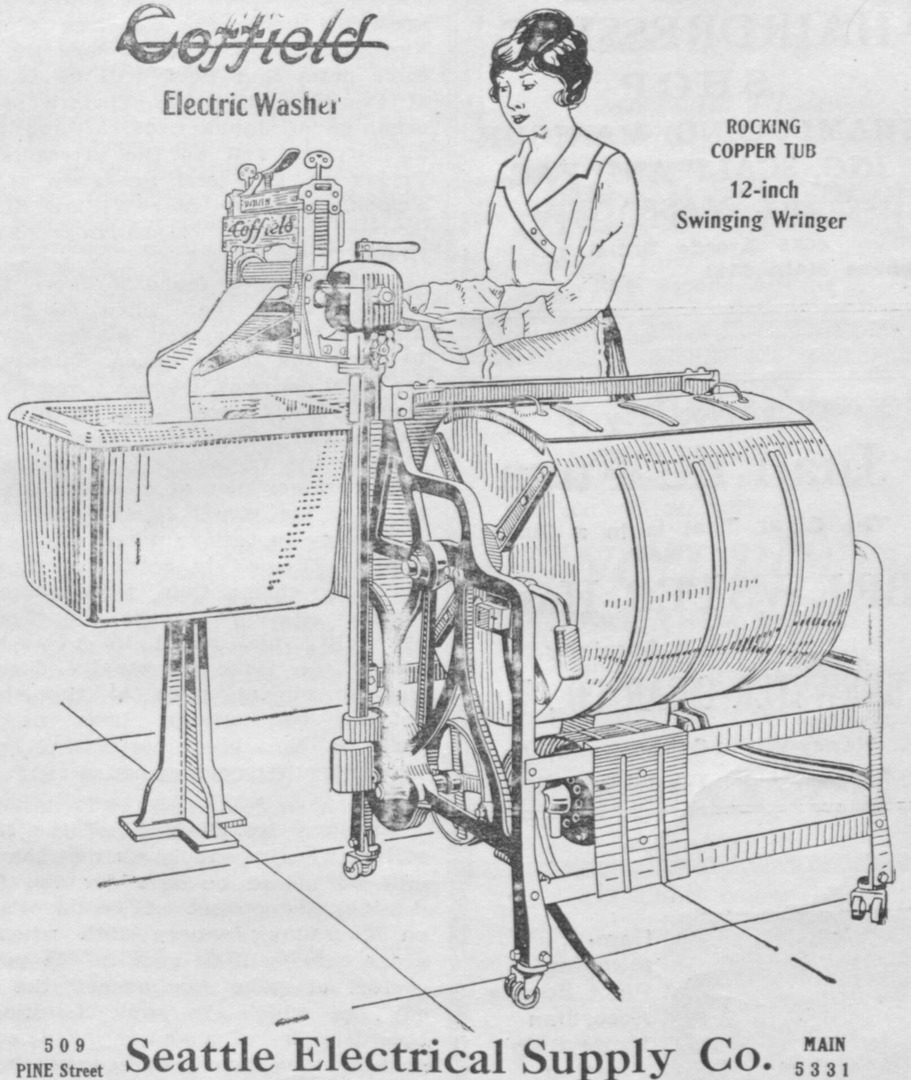
A hand crank has a built-in safety limit: a human arm turning it, which tires, hesitates, and stops. Bolt a motor behind the same rollers and that limit disappears. An electric wringer pulls in whatever is fed to it at a constant, indifferent speed, whether that is a sheet, a sleeve, or a child’s hand. In 1938, the surgeon D. W. MacCollum described the result in the New England Journal of Medicine under a name that stuck in the medical literature afterward: wringer arm.
It was not a rare complaint. A 1952 follow-up in the same journal reported that 116 children had been treated for wringer-arm injuries at the Children’s Medical Center in Boston between 1937 and 1951 alone, and a later retrospective published in the Journal of Pediatric Surgery in 1976 tallied 483 children aged sixteen or younger hospitalised for the injury over a twenty-year span at a single institution. A heated mangle attachment could add a burn to the crush. Surgeons wrote papers on the resulting skin grafts, nerve damage, and dislocated knuckles, and on how deceptively minor the injury could look in the first hour, before the swelling caught up with it.
The mechanism was straightforward and hard to design around. Wringer rollers are built to grip, because gripping is what squeezes water out of cloth, and a set of rollers designed to grip cloth firmly enough to wring a wet sheet grips a forearm just as firmly, with no way to tell the difference. Once a hand or sleeve entered the nip point, the same motor torque that pulled in laundry kept pulling, and a young child, standing at exactly the wrong height beside the machine, had neither the strength nor the reach to pull free before an adult reached the switch.
The response was engineering, then the wringer simply vanished
Manufacturers answered with emergency-release bars that sprang the rollers apart at a touch and safety catches that cut the motor before a limb could be drawn in past the wrist. That helped, but the problem was really solved by a different machine entirely: the spin dryer, and then the fully automatic washing machine, spread through homes across the 1950s, 60s, and 70s, and the wringer that had been the most ordinary object in the laundry simply stopped being bought. The injury it caused declined with it, not because the wringer got safer but because it disappeared.
It did not disappear completely. Commercial laundries still run heated roller ironers and still call them mangles. Hand-cranked wringers, with wooden or rubber rollers, are still manufactured today for off-grid living and camping, built to the same two-roller principle Hugh Oxenham patented in 1774. And the word outlived the object by a wide margin: most people who describe a wrecked car as “mangled” have no idea they are reaching, however indirectly, for a machine that pressed bedsheets and was named for a catapult that knocked down castle walls.
What is easy to miss, looking back from a kitchen with a front-loading washing machine in it, is how ordinary the mangle’s whole seven-hundred-year run actually was. A carved courtship board, a widow’s box mangle, a Victorian patent wringer bolted to a washtub, and a chrome-plated 1950s model sitting beside an electric washer are, mechanically, the same idea repeated with better materials each time: two surfaces, pressed together, squeezing water or wrinkles out of cloth between them. Almost nothing about the underlying physics changed between 1600 and 1960. What changed was who turned the crank, how hard the machine could grip, and how quickly a household could get a hand out of the way once it stopped needing one.
Watch the full history
The video companion covers the same machine in under six minutes, with the box mangles, the patents, and the injury reports laid out against the images that survive of each.

Related reading
- The Mystery of the Beale Ciphers, Explained
- The Real History of Rainwater Cisterns
- Why the Penny-Farthing’s Wheel Had to Be So Big
- How a Hand Pump Worked: Lifting Well Water With Nothing but Air Pressure
Shop the styles/items featured in this video
Works cited
- Harper, Douglas. “Mangle.” Online Etymology Dictionary. Link.
- Harper, Douglas. “Mangonel.” Online Etymology Dictionary. Link.
- “Mangle, n.” Yorkshire Historical Dictionary, University of York. Link.
- Mangle-board, Dutch/Frisian, dated 1728, oak, 32 3/8 x 4 3/4 in. The Metropolitan Museum of Art, accession no. 11.140.20, Rogers Fund, 1911.
- British Antique Dealers’ Association. “Early 18th Century Danish Carved Birchwood Mangle Board.” Link.
- “Harper Twelvetrees,” quoting Stamford Mercury, 13 March 1863. The Stamford Mercury Archive. Link.
- Ingenium — Canada’s Museums of Science and Innovation. “Wringer Washer.” Ingenium Channel.
- “Charles Goodyear’s Machine for Making Rubber Fabrics.” Connecticut History, CTHumanities. Link.
- MacCollum, D. W. “Wringer Arm: A Report of Twenty-Six Cases.” New England Journal of Medicine 218, no. 13 (1938): 561–563.
- “The Treatment of Wringer-Arm Injuries.” New England Journal of Medicine 247, no. 19 (1952): 703–706.
- Stone, H. H., Cantwell, D. V., and Fulenwider, J. T. “Wringer Arm Injuries.” Journal of Pediatric Surgery 11, no. 3 (1976): 375–379.