
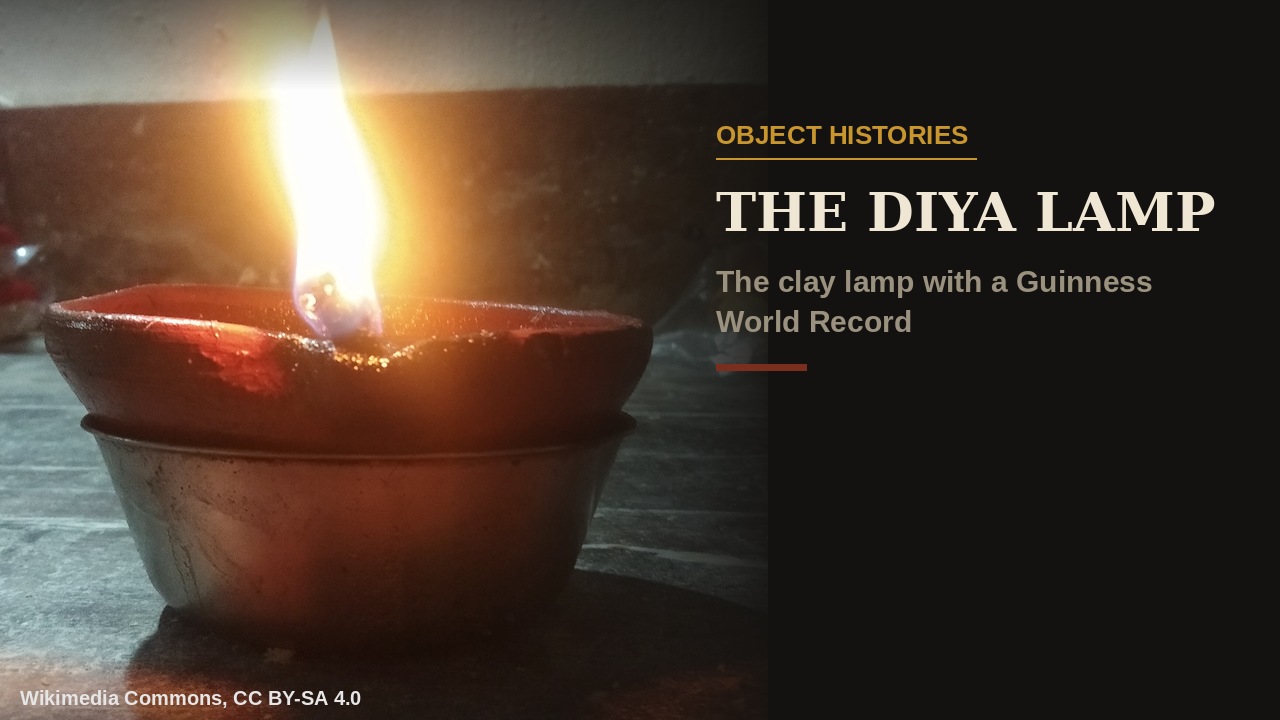
Every object in a museum case eventually stops being used for its original purpose. The diya is the exception that swallowed the rule: the basic design — a shallow clay cup, a twisted cotton wick, a few spoonfuls of oil — has been in continuous, unbroken use for roughly five thousand years, and in October 2025 a single night in the Indian city of Ayodhya saw 2,617,215 of them lit at once, verified by Guinness World Records drone footage.
That number is the headline. The more interesting fact is everything underneath it: an archaeological lineage stretching back to the Indus Valley, a scriptural origin story that turns out not to be where most people assume it is, a seventeenth-century Sikh prison escape still marked with a 400-year-old robe, and a scholarly dispute over the Jain calendar that is still unresolved. Four unrelated religious communities light the same unassuming lamp on the same handful of autumn nights, for four different reasons, and almost none of those reasons are as simple as the gift-shop version.
The diya is a 5,000-year-old design that never needed fixing
The oldest lamps that match the diya’s basic shape — a shallow, pinched-spout clay bowl — come from Indus Valley Civilization sites and date to roughly 3300 to 1800 BCE. The Chhatrapati Shivaji Maharaj Vastu Sangrahalaya in Mumbai holds one such example from Rangpur in Gujarat, cataloguing it as the earliest lamp in its collection and noting, in its own catalogue language, that the form “continues to be in use till date.” The object is known by two names depending on region and language: panti in Marathi, diya in Hindi.
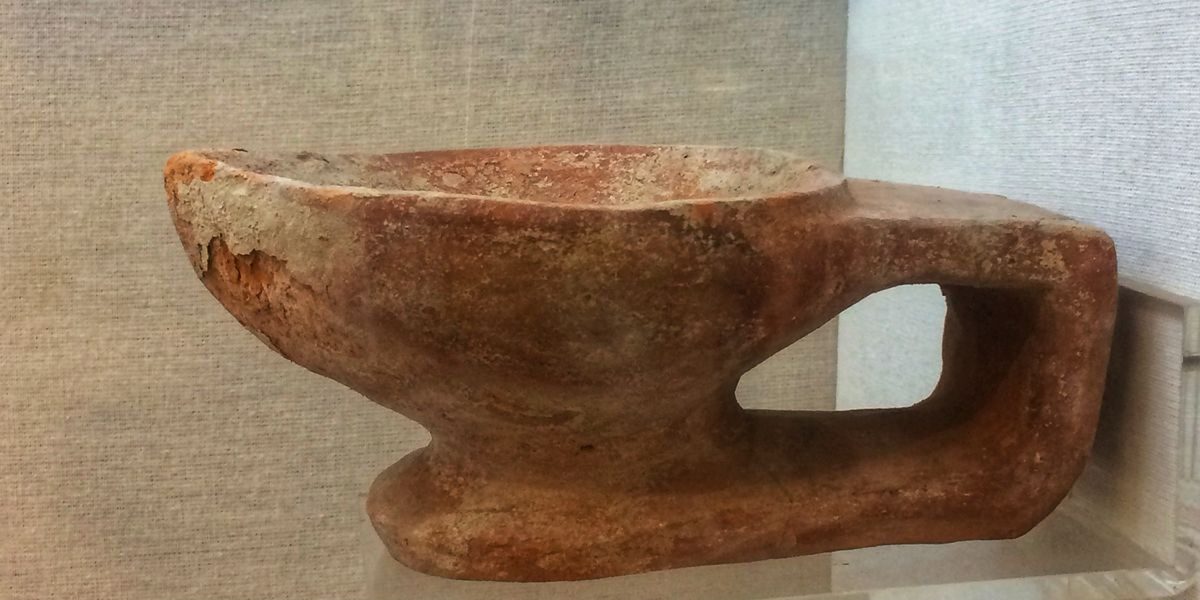
Making one has never required much. A potter throws or pinches a shallow bowl, usually with a lip drawn out on one side to park the wick clear of the pooling oil. It is fired once, unglazed, in a simple kiln. There is no separate spout to attach, no handle to throw, nothing that needs a second firing. A length of cotton is twisted into a wick and laid across the lip; the bowl is filled with mustard oil, sesame oil, or ghee, the traditional fuels depending on region and occasion; the wick is lit. The whole object survives being dropped, survives decades of reuse, and costs almost nothing to replace when it finally cracks — which, for an unglazed clay shell exposed to open flame, it eventually does. For most of the subcontinent’s history, before kerosene lanterns and electric bulbs, this was not a decorative object. It was the lighting.
That total absence of moving parts is exactly why museum examples from the Gupta period and later — centuries after those first Harappan lamps — look essentially identical to the ones sold in markets today. There was nothing left to improve.
The homecoming story isn’t where most people assume it is
Ask most Hindu households why the lamps are lit at Diwali and you’ll get a version of the same answer: Prince Rama returned to Ayodhya after fourteen years of exile, having rescued his wife Sita and defeated the demon king Ravana, and the people lit rows of oil lamps to guide him home on a moonless night. It’s a vivid, widely told story. It is also, as far as textual scholars can establish, not in the oldest surviving core of the Ramayana.
The homecoming-with-lamps detail belongs to the Uttara Kanda, the seventh and final book of the Ramayana, which Sanskrit scholars generally treat as a later appendix to Valmiki’s original composition rather than part of its earliest core. The festival’s own name tightens the timeline further: Deepavali — shortened in everyday speech to Diwali — is Sanskrit for “a row of lights,” built from deep (lamp) and avali (row), and the festival’s clearest early textual anchors are the Padma Purana and the Skanda Purana, both compiled well into the first millennium CE — hundreds of years after Valmiki’s main narrative is thought to have taken shape. None of that makes the Rama story less meaningful to the people who tell it every year. It does mean the lamp-lit homecoming is better understood as a later layer added onto an older epic, rather than an event the epic originally recorded.
A robe with fifty-two corners
Diwali season carries an entirely separate, unrelated story for Sikhs, who mark the same days as Bandi Chhor Divas, the “Day of Liberation.” The sixth Sikh Guru, Guru Hargobind, had succeeded his father at around age eleven in 1606, after the Mughal emperor Jahangir had his father, Guru Arjan, arrested and executed for refusing to convert to Islam. Accounts of exactly when and why Hargobind himself was later imprisoned at Gwalior Fort differ in the historical record — some trace it to an unpaid fine inherited from his father’s case, others to Mughal suspicion over the Guru’s growing army — and even the release date is contested: Sikh tradition places it in October 1619, while some Persian-sourced academic accounts suggest a date as early as 1611 or 1612. What isn’t disputed is the detail that gives the day its name.
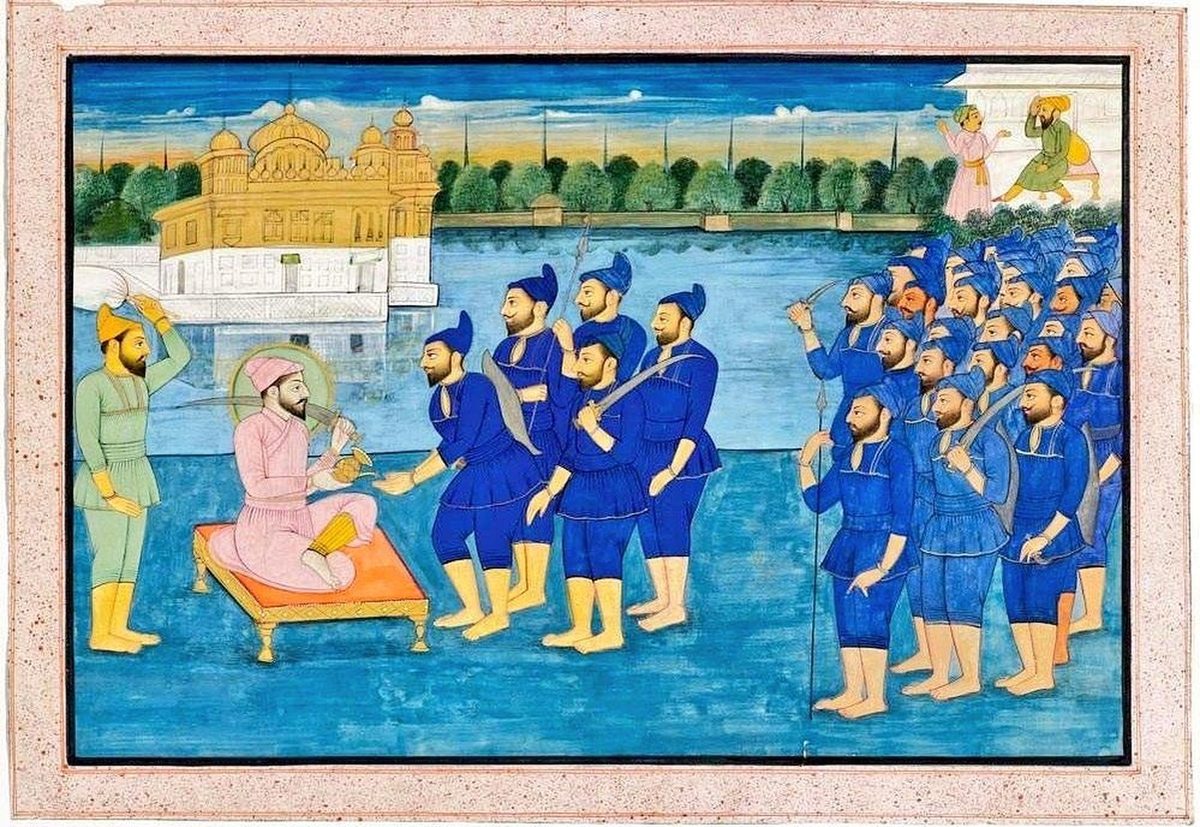
Jahangir was also holding fifty-two Hindu hill chieftains at Gwalior. Sikh tradition holds that when Hargobind was freed, he refused to leave without them, and arranged for each one to hold onto a tasselled corner of his cloak so that all fifty-three men could walk out together under the terms of his own release. That cloak is said to survive: a roughly 400-year-old robe known as the Chola Sahib, with fifty-two corners, preserved today at a gurdwara in Ghudani Kalan, a village in Punjab’s Ludhiana district. Historians disagree about whether the surviving garment is literally the one worn in 1619 or a venerated relic built around the memory of it — the evidence is old references and strong local tradition rather than an unbroken chain of custody — but it was significant enough that villagers brought in a professional textile conservator in 2011 to treat fungus damage and decades of wear before the fabric degraded further. The Golden Temple at Amritsar, where Hargobind is said to have arrived to a city already lit for Diwali, is still illuminated for both occasions every year, its reflection doubled in the water around it.
A date even Jain scholars disagree on
For Jains, the same handful of nights mark something else again: the night the twenty-fourth and final Tirthankara, Mahavira, is said to have attained nirvana at Pawapuri, in Bihar, at age seventy-two. Jain literature calls the observance Dipalikaya — “the light leaving the body” — a term traced to the eighth-century scholar Acharya Jinasena’s Harivamsha Purana. The Jain calendar era counting from this event, the Vira Nirvana Samvat, is conventionally pinned to 527 BCE by Svetambara tradition, with Digambara sources giving 510 BCE.
That traditional date is not settled scholarship, even within Jain studies. The Jainologist Sagarmal Jain has argued at length that the chronology underpinning 527 BCE doesn’t line up well with other fixed points — the reigns of Chandragupta Maurya and King Samprati, datable Mathura inscriptions, and the conventionally accepted date for the Buddha’s death — and that the evidence fits better if Mahavira’s nirvana is placed around 467 BCE instead, sixty years later than tradition holds. The disagreement has never touched the religious observance itself: Swetambara Jains still fast for the three days of Diwali, and the day after is the start of the Jain new year, regardless of which calendar underlies it.
One lamp, a hundred regional shapes
Away from any single festival, the diya’s basic form has spent centuries branching into local variants that barely look related. In Kerala and parts of Tamil Nadu, the nilavilakku — literally a “floor lamp” — is a freestanding brass fixture roughly two and a half feet tall, with a tapering stem connecting a wide base to an oil reservoir at the top, its rim angled so the wick meets the oil at the correct pitch and designed to limit soot. Five wicks are typically laid out clockwise, one pointing in each cardinal direction and one toward the sky. With a little oil, a well-made nilavilakku will burn through an entire night.
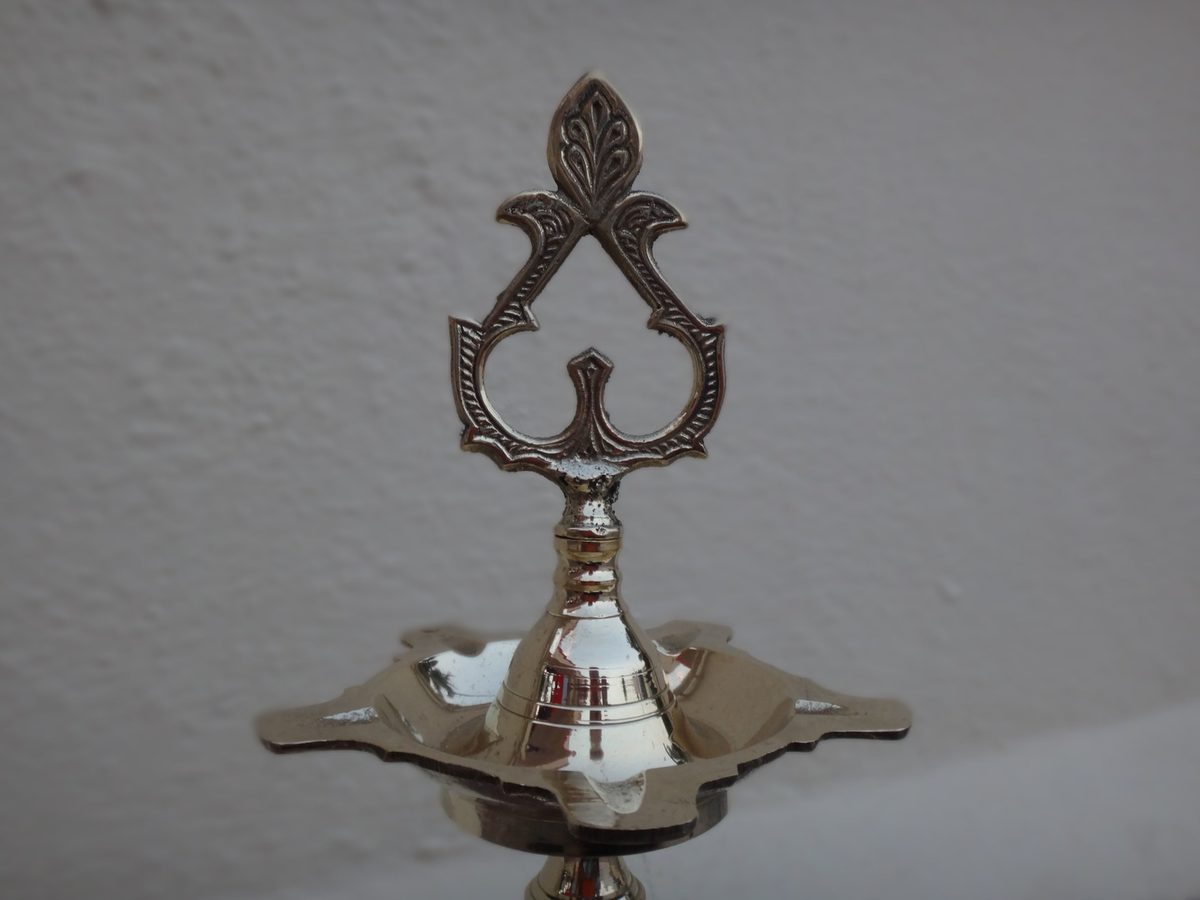
Tamil Nadu’s temple tradition produced an even more elaborate branch: the Nachiyar Koil lamp, nicknamed “Annam” after the Tamil word for a swan-like bird, cast by craftworkers of the Kammalar community in the temple town it’s named for. These lamps carry enough symbolic weight that one became an actual diplomatic gift: in October 2019, India’s prime minister presented a Nachiyar Koil Annam lamp, alongside a Thanjavur painting, to China’s president during a state visit to Mamallapuram — a piece of temple craft, directly descended from the same shallow clay form, representing an entire regional tradition on a diplomatic stage.
From a few thousand flames to 2.6 million
The modern spectacle that now anchors most people’s image of the diya is a recent invention layered onto an ancient object. Since 2017, Uttar Pradesh’s state government has run an annual civic program in Ayodhya restaging the Ramayana homecoming at growing scale, lighting lamps along the banks of the Saryu River on the eve of Diwali. The count has climbed nearly every year: roughly 1.71 lakh (171,000) lamps the first year, 25 lakh (2.5 million) with 1,121 people performing aarti together in 2024, and 26.17 lakh (2,617,215) lamps with 2,128 people performing aarti simultaneously in 2025 — both verified as Guinness World Records, the lamp count checked by drone footage supplied to Guinness adjudicators. Ayodhya’s Ram Mandir, consecrated at the traditional birthplace of Rama on January 22, 2024, now stands at the physical center of an event that has gone from a few hundred thousand lamps to a government-verified world record in under a decade.
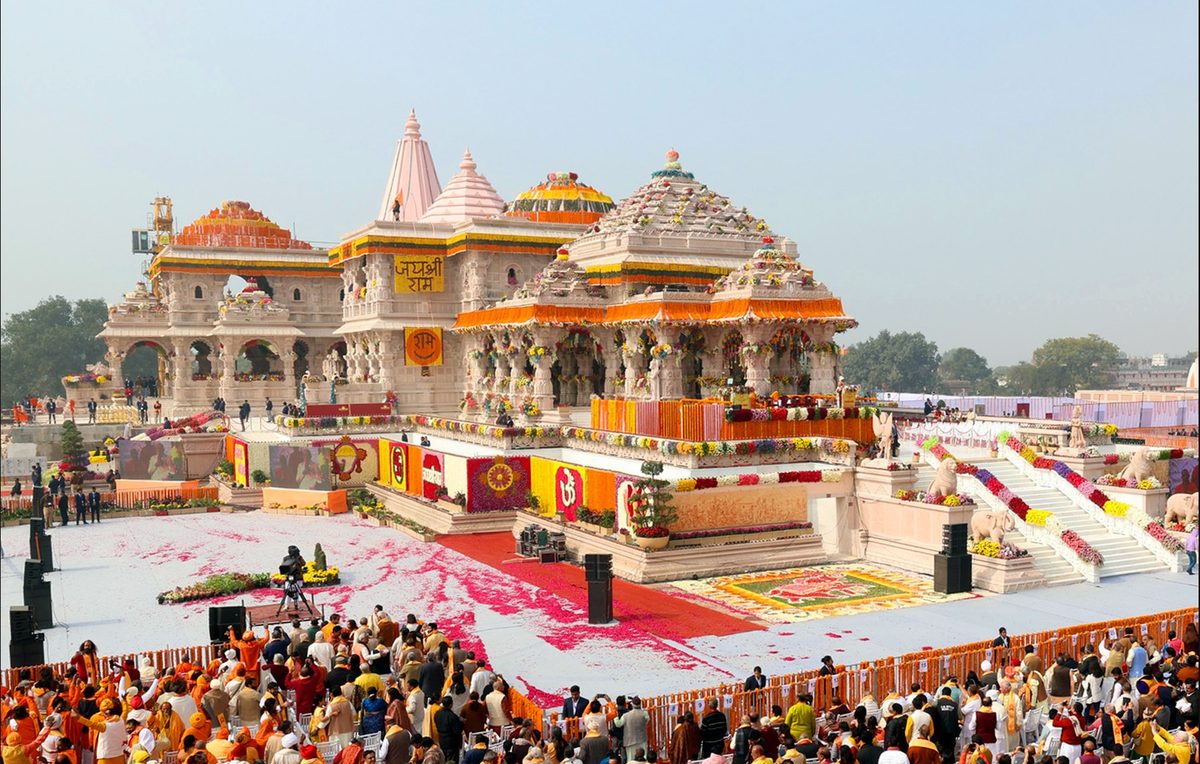
Set the clay lamp beside that footage and the contrast is the whole point. The object a drone is now hired to count has not changed since someone pinched the first one out of river clay in the Indus Valley. Only the scale of the ritual around it has.
Watch the full history
The six-minute video version covers the Ramayana story, the 2025 Guinness record, and the Sikh, Jain, and Buddhist traditions layered onto the same autumn nights.

Related reading
- How Old Is Diwali, Really? What the Written Record Actually Shows
- The Hatpin Peril: How a Fashion Pin Became an Outlawed Weapon
- What Was the Wow! Signal? Inside Astronomy’s Most Famous Unsolved Case
- How Hog Killing Day Worked on the American Farm
Works cited
- Chhabra Marg Vastu Sangrahalaya (CSMVS). “Harappan Clay Panti.” Collections, Ancient Civilisations, Harappan Civilisation (c. 3300–1800 BCE).
- Jain, Sagarmal. “Reconsidering the Date of the Nirvana of Lord Mahavira.” In Aspects of Jainology, Volume VI. Link.
- Haraniya, Krutika. “Dipalika — The Jain Diwali.” Live History India, October 19, 2017. Link.
- Jahangir. The Jahangirnama: Memoirs of Jahangir, Emperor of India. Translated by Wheeler M. Thackston. Oxford University Press, 1999.
- Singh, Pashaura, ed. The Routledge Companion to the Life and Legacy of Guru Hargobind: Sovereignty, Militancy and Empowerment of the Sikh Panth. Routledge, 2024.
- Kaur, Usmeet. “Faith Preserved, Guru Hargobind’s Sacred Robe Restored.” Hindustan Times, October 21, 2014. Republished by SikhNet. Link.
- PTI. “Ayodhya Deepotsav: New World Record with 26.17 Lakh Diyas, 2,128 People Performing Aarti Together.” The Tribune, October 19, 2025. Link.
- “25 Lakh Diyas Lit, 1,121 People Performing Aarti: Ayodhya Sets Two Guinness World Records on Deepotsav 2024.” Business Today, October 31, 2024. Link.
- “Modi Presents Tamil Traditional Lamp and Thanjavur Painting to Xi.” The Week, October 11, 2019. Link.
- Rajagopal, Tishara. “The Nilavilakku on Karthigai Deepam.” Museum of Material Memory. Link.