
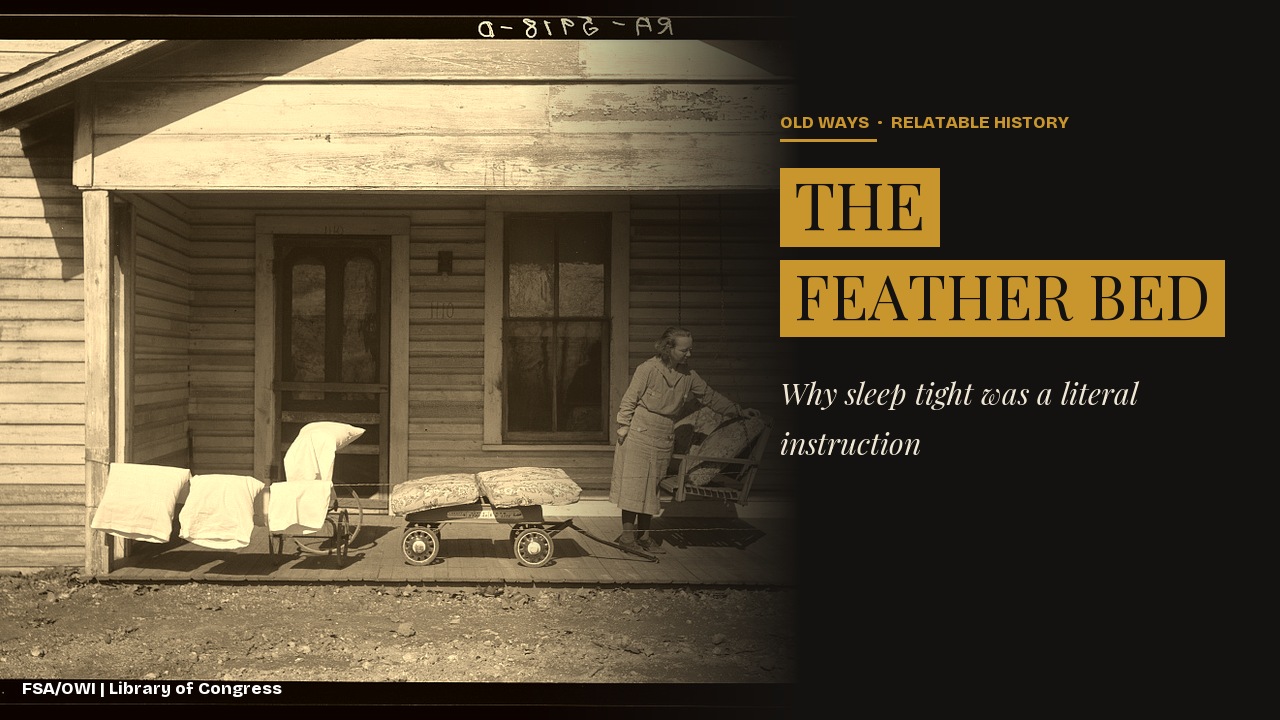
In 1724, a Lancashire farmer named Richard Latham recorded, down to the shilling, how much a feather bed was worth to his household that year: £2 3s for a feather bed and bolster, his single biggest purchase of 1724. Not land, not livestock, not tools — bedding. He was not unusual. Across non-elite English households of the period, beds and linens could account for up to half the value of everything a family owned, according to the historian Holly Fletcher’s analysis of household inventories, and the share of laboring families who owned a feather bed and hangings climbed steadily through the 1600s, reaching roughly two in five by 1700.
The same pattern shows up on the other side of the Atlantic. When appraisers tallied the estate of Francis Cooke — a Mayflower passenger who died in Plymouth Colony in 1663 — they itemized two feather beds at £2 and £3 10s. A pair of sheets in the same inventory came to 12 shillings. A cushion was valued at sixpence. The feather beds alone were worth more than everything else in the bedroom put together, several times over, in a household whose entire estate came to £86 11s 1d.
A sack of goose down, in other words, was not a comfort item. It was closer to a stake someone could sell, will to a named heir, or fall back on in hard times — and that is only the beginning of what made it valuable. Getting there meant years of hand labor, a specific and ingenious piece of furniture underneath it, and, as it turns out, a health risk nobody alive at the time had any way of naming.
A Rope Lattice Did the Job a Steel Spring Would Later Do
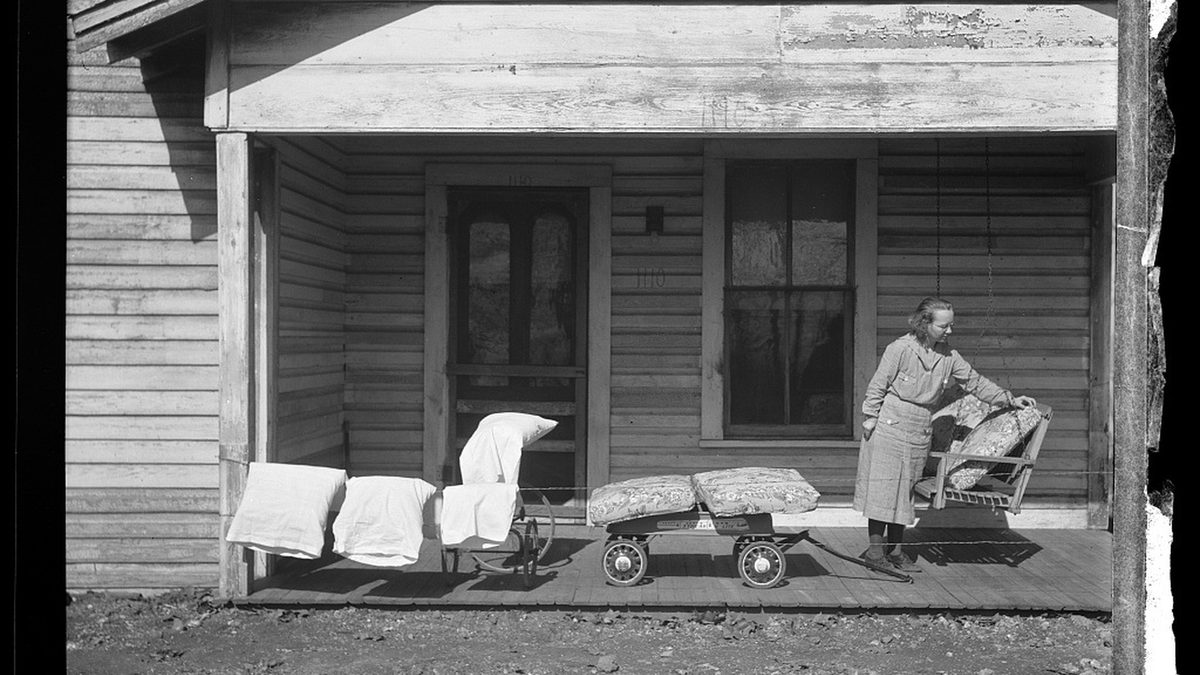
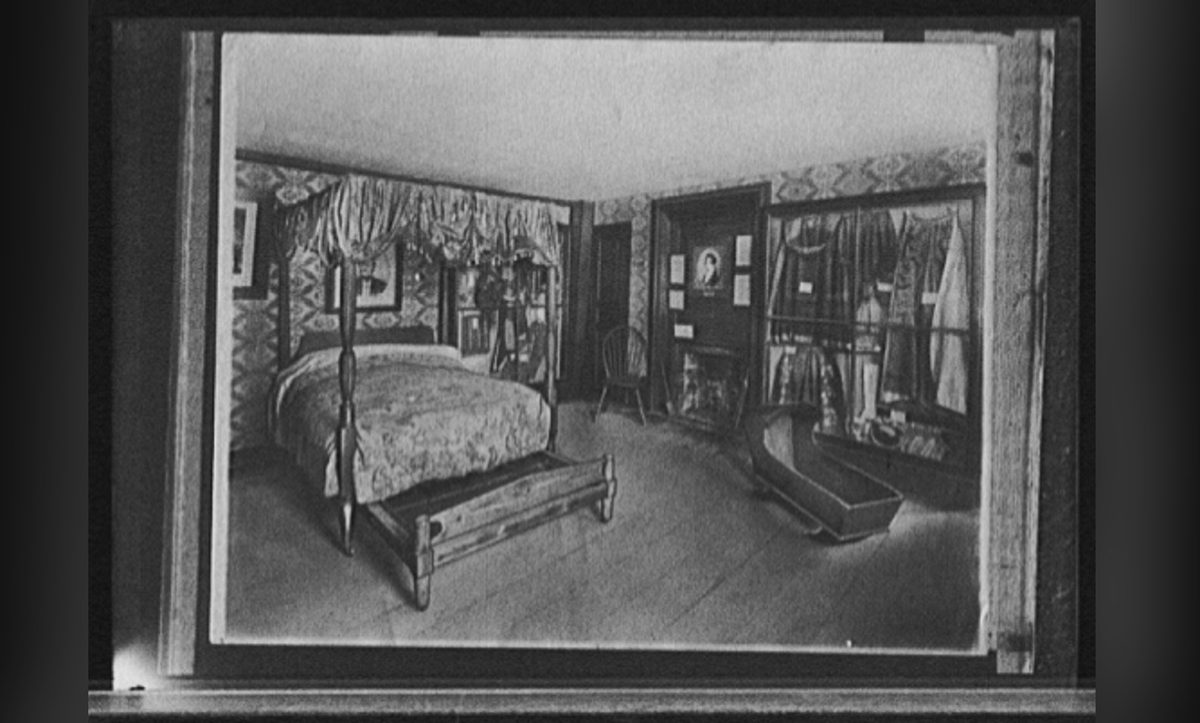
The bedstead under a feather bed was not a passive platform. Rope — usually hemp or linen cord bought by the pound as “bed cord” — was threaded through holes or around pegs drilled along all four rails, crossing and recrossing until it formed a tensioned grid that flexed slightly under weight, the same basic idea a steel coil spring would later mechanize. Fletcher’s research into early modern English bedsteads confirms this was the ordinary construction method: a “system of interwoven cords or ropes” for anyone who could afford a proper bedstead at all, with a plain sacking base for cheaper versions and the bare floor for households with neither.
Rope stretches under load and with humidity, so the grid needed periodic retensioning, done with a dedicated tool. The Concord Museum in Massachusetts holds a steel example, cataloged to the 1800s: an L-shaped wrench with a square socket on one end and two small prongs on the other, sized to grip the knob-headed pegs around the bed rail and turn them without a worker’s bare hands taking the rope burn. It is a strikingly minimal object for the job it did — there is no ratchet, no gauge, nothing to tell a user how tight was tight enough. That judgment call was entirely the owner’s.
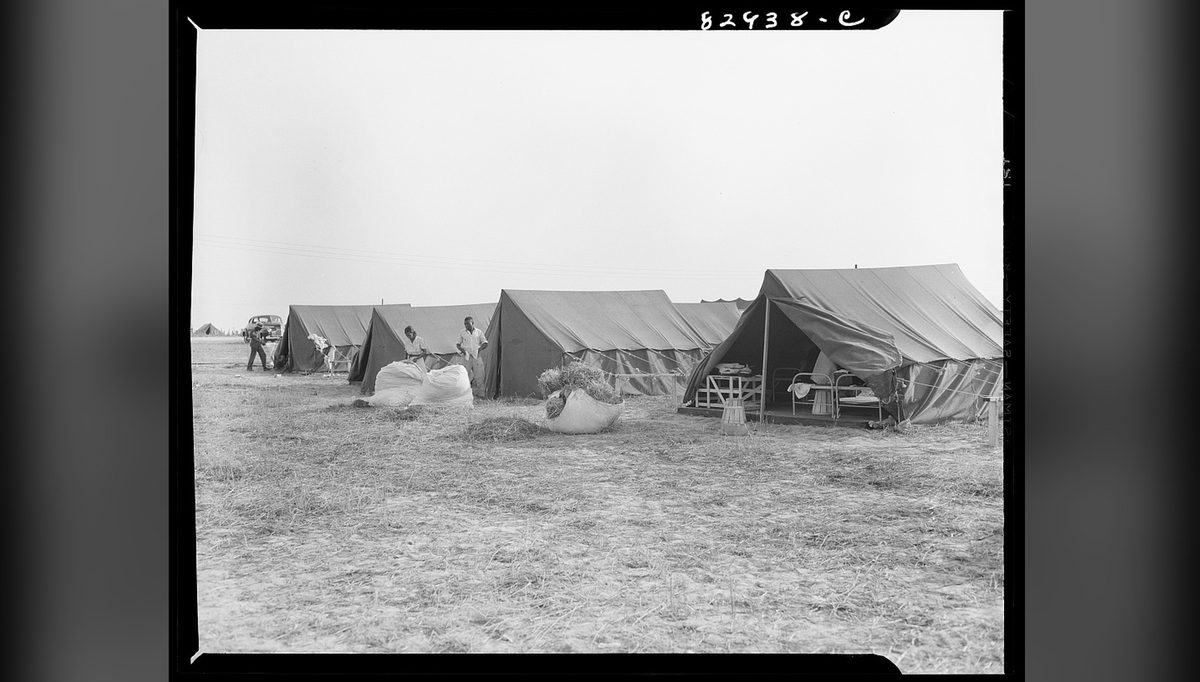
The ticking case resting across that rope grid usually held more than one layer of material, cheapest at the bottom. Loose straw, repacked after each harvest, was the ordinary base filling across rural households that could not stretch to feathers at all, and even households that could afford a feather bed often kept a coarser tick underneath it rather than resting feathers directly on rope.
How Much a Feather Bed Was Worth, Spelled Out in Probate Records
Fletcher’s figures let the scale of the expense come into focus. In Bristol, a man named Robert Lux owned a feather bed valued at £1 15s, next to a flock bed and quilt worth just 15s in the same inventory — a more than doubling in price for what amounted to a different stuffing. Cheaper fillings didn’t disappear once a household could afford feathers, either: a 1604 inventory cited in Fletcher’s research lists a feather bed laid over a fen-down bed, the inferior material demoted to a hidden base layer rather than thrown out.
New feather beds, bought from an upholsterer, were enough of an investment that a used market thrived alongside them — brokers and secondhand dealers who resold beds out of other people’s estates, the way a car might change hands today. That secondhand trade is itself evidence of value: nobody runs a resale market for something cheap enough to throw away. And because a feather bed held its worth, it was the kind of object a will named specifically, left to a particular son or daughter rather than folded into a vague bequest of “household goods.” Even where a will itself stayed general — Francis Cooke left everything movable to his wife Hester in a single clause — the follow-up inventory still itemized each feather bed on its own line, at its own price, the way nothing worth a few pence ever was.
Twenty Pounds of Down, Gathered a Few Ounces at a Time
Filling one feather bed took a flock of geese and years of patience, and the method of collection has its own, uncomfortable history. A 2010 scientific opinion from the European Food Safety Authority draws a sharp welfare line between two practices that look similar from a distance: gathering feathers that are already loose from a natural molt, which the opinion found can be done without pain or injury, and forcibly plucking feathers that are not yet ripe, which it found cannot be done without “at least minor suffering from pain and injuries” under ordinary commercial handling. Both practices have existed side by side for centuries, and from the bird’s point of view the difference was everything.
The same opinion found that the handling around either method carried its own risk, regardless of which one was used — catching, carrying, and restraining a goose by the neck or a single wing, or dropping one during the process, all raise the chance of injury on top of whatever the plucking itself causes. Bloody feathers, torn skin, and an abnormal posture afterward were among the signs the opinion flagged as evidence something had gone wrong — a reminder that the twenty pounds of down in a finished bed represented a great many individual handling events, not just a great many feathers.
That history is exactly why the modern down industry built a certification system around it. The Responsible Down Standard began in 2013 as an internal framework at the outdoor-gear company The North Face, which handed it to the nonprofit standards body Textile Exchange the following year to administer industry-wide. The standard flatly prohibits any removal of feathers from live birds — plucking and molt-harvesting alike — and force-feeding. By 2019 it certified more than 3,600 farms and covered over 550 million birds. None of that existed for Richard Latham or Francis Cooke; the down in their beds came however a supplier chose to collect it, with no label to say which.
The Physics That Let Feathers Beat a Furnace
None of this bedding worked as insulation by accident. A single Canada goose carries somewhere around 20,000 to 25,000 feathers, many of them the soft, structureless down used for stuffing rather than the stiff flight feathers on a wing. Fluffed up, those down feathers trap thin layers of still air between them, and still air is a poor conductor of heat — which is the entire trick. Ornithologists studying how birds survive freezing nights note that even a comparatively thin layer of fluffed feathers can hold a bird’s core body temperature near 104°F in weather well below freezing, with almost no added bulk.
Pack twenty-plus pounds of that same structure into a ticking case and the mechanism scales up directly: a feather bed worked less like a blanket and more like a goose’s own winter coat, spread out and slept inside of. A wool blanket of comparable weight has far less trapped air per ounce, which is the physical reason a feather bed could out-warm bedding that cost less to make but weighed just as much.
A Lung Disease Nobody Could Have Diagnosed at the Time
Here is the part Richard Latham and Francis Cooke had no way of knowing: that same down can trigger a real, documented lung disease. Doctors call it hypersensitivity pneumonitis, and the variety linked specifically to bedding has its own name, feather duvet lung. A 2019 case report in BMJ Case Reports describes a 43-year-old man with three months of fatigue and worsening breathlessness after switching to feather bedding, no pet birds in the house at all. Tests found strongly positive antibodies to avian antigens and a lung pattern consistent with an immune system reacting to inhaled organic dust from the feathers themselves; his breathing improved once the bedding was removed. The authors note that symptoms can take anywhere from three weeks to five years to appear after new feather bedding arrives in a house, which is long enough that almost nobody would think to connect the two.
This is not a laboratory curiosity. The same case report cites UK market figures showing 7.6 million feather duvets sold in just the first four months of 2015, and notes that clinicians are routinely trained to ask a breathless patient about pet birds in the home but not about what fills their duvet or pillows — a gap the authors argue leads to missed or badly delayed diagnoses. Early signs of the disease are as ordinary as malaise, a flu-like ache, night sweats, and a dry cough, which is exactly the kind of thing a person sleeps through for weeks before connecting it to anything in the bedroom at all.
It isn’t that nobody worried about bedding and health before modern immunology existed. Fletcher’s research notes that 17th-century writers on health, including Thomas Tryon and John Locke, raised their own concerns about bedding materials and sound sleep — just for reasons rooted in that era’s medical theory, with no concept of an inhaled antigen behind it. The worry was old. The actual mechanism is recent enough that most doctors still aren’t trained to ask a patient with mystery breathlessness what their pillow is stuffed with.
Sleep Tight: A Phrase That Probably Isn’t About the Ropes After All
It’s a satisfying detail to end on: say “sleep tight” and the story practically writes itself, a bedtime phrase that’s secretly an instruction about rope tension. The etymologist Michael Quinion has traced the actual evidence, though, and it’s thinner than the story deserves. The earliest citation in the Oxford English Dictionary dates only to 1933, and even Quinion’s own earlier finds — in a 1916 L. Frank Baum novel and an 1866 diary — put the phrase’s documented debut centuries after rope beds were already the ordinary standard. “It is possible,” Quinion writes of the rope-bed theory, before adding the catch: “there’s no evidence, and the late date of first appearance of the phrase rather militates against this being the source.” A nice story and a true one aren’t always the same story.
Watch the full history
The video covers the bed’s construction and the bed key in under seven minutes; everything above is the part that wouldn’t fit.

Add it up and a feather bed sat at the intersection of four separate kinds of value that rarely overlap in one household object: it was a financial asset worth naming in a will, a product of years of hand labor from a flock of birds, a genuinely clever piece of applied physics, and, it turns out, a long-delayed medical question nobody was equipped to ask until a doctor started taking a bedding history almost three centuries later. Richard Latham’s £2 3s and Francis Cooke’s itemized feather beds were honest accountings of the first kind of value. They had no way of glimpsing the fourth.
So: if you had no feather bed, no spare wood for the fire, and a bed rope sagging toward the floor, how would you have made it through a night ten degrees below freezing?
Related reading
- The Spinning Wheel’s Economics Were Worse Than You Think
- How Tallow Candles Were Made, and Why Candle Day Was Dreaded
- The Pie Safe That Kept Flies Out With Nothing But Holes
- How Iceboxes Worked Before the Electric Refrigerator
Shop the history
- Goose feather mattress topper — the closest modern equivalent still made and sold today.
Works cited
- Liu-Shiu-Cheong, P., C. R. Kuo, S. W. A. Wilkie, and O. Dempsey. “Feather Duvet Lung.” BMJ Case Reports 12, no. 11 (2019): e231237. Link.
- Fletcher, Holly. “Making Beds in Early Modern England: Sleep, Matter and Environmental Change.” Historical Research 97, no. 277 (2024): 307–328. DOI: 10.1093/hisres/htae001.
- Pilgrim Hall Museum. Francis Cooke Will and 1663 Inventory, 1659/1663. Link.
- Quinion, Michael. “Sleep Tight.” World Wide Words. Link.
- Concord Museum. “Bed Key,” object no. 2006.314, United States, 1800–1899.
- Wood, Frances. “How Feathers Insulate.” Audubon / BirdNote, February 7, 2014. Link.
- European Food Safety Authority, Panel on Animal Health and Welfare. “Scientific Opinion on the Practice of Harvesting (Collecting) Feathers from Live Geese for Down Production.” EFSA Journal 8, no. 11 (2010): 1886.
- Textile Exchange. Responsible Down Standard: 2019 Quick Guide. Link.
- “The North Face Partners with Textile Exchange to Expand Responsible Down Standard.” Fortune, October 21, 2014. Link.