
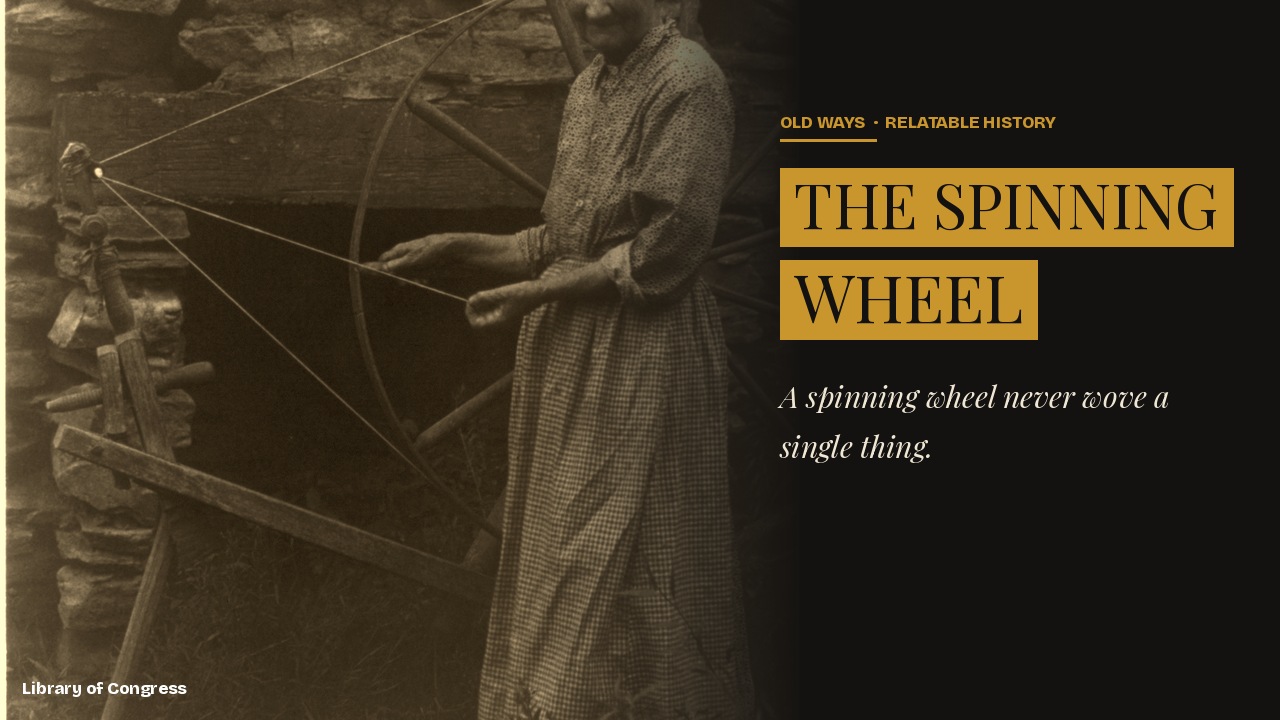
In 2019, two economic historians, Jane Humphries and Benjamin Schneider, published a paper that quietly undercuts one of the most influential explanations for why the Industrial Revolution began in Britain rather than somewhere else. The leading theory, associated with the economist Robert Allen, holds that Britain mechanized first because labor there was unusually expensive relative to capital and fuel, giving manufacturers a strong incentive to replace workers with machines. Humphries and Schneider went looking for that high-wage economy in the one occupation that got mechanized first: spinning. They didn’t find it. Drawing on wage and productivity evidence running from the late sixteenth century to the early nineteenth, they describe spinning as “a widespread, low-productivity, low-wage employment,” performed overwhelmingly by women and children, whose pay simply did not rise the way Allen’s theory required.
That finding matters because it reframes the object sitting at the center of this story. The spinning wheel tends to get remembered as the dignified, almost meditative centerpiece of the pre-industrial household — something closer to a craft than a hardship. Spinning wheel economics say otherwise. For roughly three hundred years it was some of the cheapest, least rewarded labor in the English economy, performed constantly because there was no real alternative, by people who had very few other ways to earn anything at all.
That single fact runs underneath almost everything else worth knowing about the machine: where historians actually think it came from, which is a genuinely live argument; what its most common operator’s job title eventually became as a matter of law; the one stretch of years when spinning briefly turned into a political act rather than a chore; and the courtroom fights that decided which new machine got to put it out of business.
Spinning Wheel Economics Were the Cheapest Labor in England
Humphries and Schneider’s 2019 paper in the Economic History Review set out to test Allen’s high-wage theory against the sector where its logic should have been most visible. If expensive labor really drove British manufacturers to mechanize, spinning — the first major process to be mechanized, starting with the jenny and the water frame in the 1760s — ought to show it. Instead they found wages that had barely moved across two and a half centuries, earned by a workforce of women and children that textile histories had largely written out of the record. Their conclusion reads almost dryly: the motivation behind mechanizing spinning, they write, “must be sought elsewhere.”
What that elsewhere might be is still debated among economic historians, and this article isn’t going to settle the underlying question of spinning wheel economics on its own. What it does settle is the comforting version of the story, in which inventors built labor-saving machines because human labor had become too valuable to waste on repetitive work. For the people actually turning the wheel, labor had never been valuable in that sense. It had been the only thing they had to sell, in an occupation so saturated with available workers that wages stayed flat no matter how much thread the country needed. Girls were set spinning young, old women spun until their hands gave out, and a household with no land and no trade could still, usually, find a wheel.
Historians Still Disagree About Where the Wheel Itself Came From
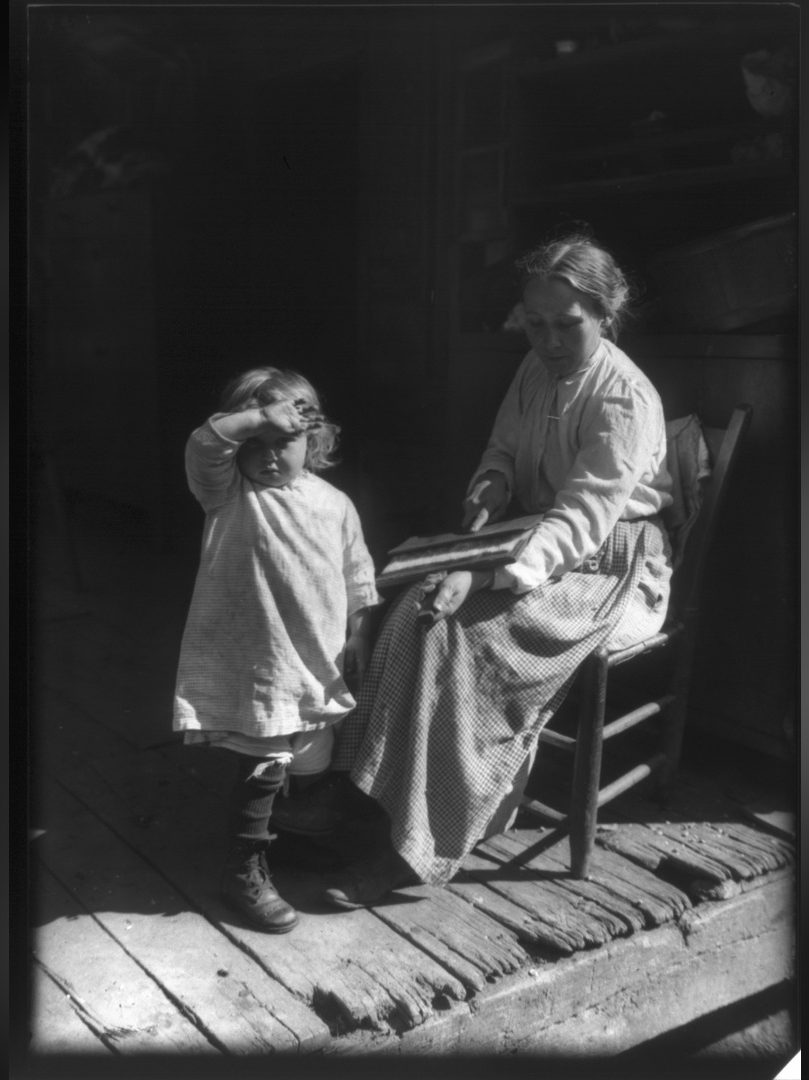
The spinning wheel’s path into Europe is reasonably well mapped: the historian David Landes traced its arrival from the Middle East by the thirteenth century, with the earliest known European illustration dated to around 1280. Where it was invented in the first place is a genuinely open question, and separate research traditions have reached competing answers without anyone settling it.
The historian Dieter Kuhn has argued for an origin in Zhou-dynasty China, pointing to a clear illustration from around 1270. The technology historian Arnold Pacey instead places the invention in the Middle East, citing textual evidence from as early as 1030 and a securely dated illustration from Baghdad in 1237, painted by Yahya ibn Mahmud al-Wasiti for a manuscript of al-Hariri’s Maqamat. Each case rests on the same thin kind of evidence — a single surviving picture or a passing textual reference, centuries before the device turns up everywhere at once — which is exactly why neither claim has managed to dislodge the other.
It’s a useful reminder that “who invented it” is often the least recoverable fact about a very old, very ordinary object. Nobody patented the spinning wheel. Nobody wrote home about it. It shows up the way most household technology shows up in the historical record: suddenly present in a picture or a poem, with no account of how it got there.
“Spinster” Was a Job Description Before It Became a Legal Category
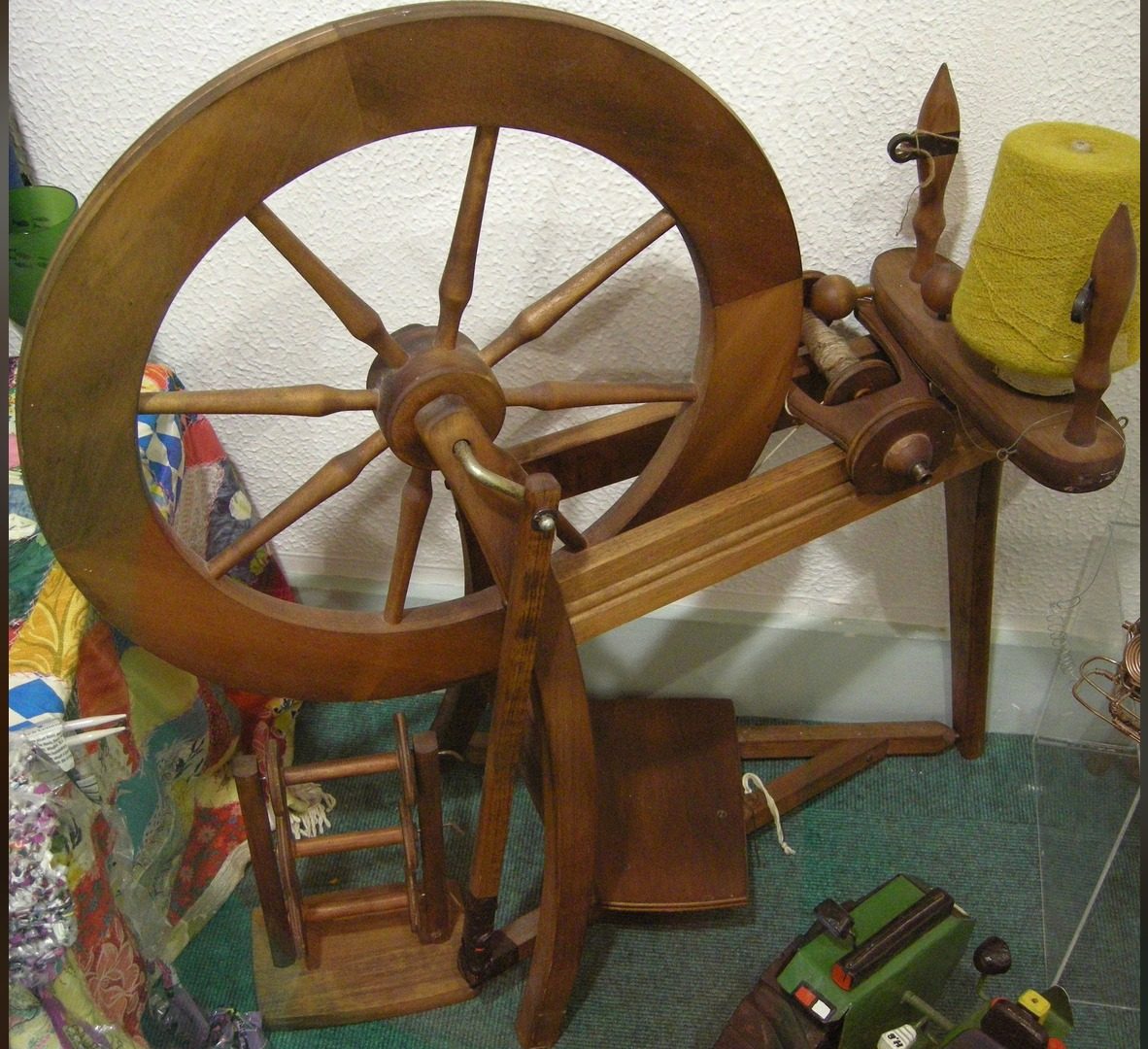
The word itself tracks the economics almost exactly. “Spinster” originally meant nothing more than a woman whose occupation was spinning — a plain job title, the same way “baxter” once meant a female baker. Because spinning was so often the only paid work available to a woman without a husband or a trade, the word drifted in meaning: English legal documents were using “spinster” as the standard designation for an unmarried woman by the late 1600s, and by 1719, according to the lexicographer Douglas Harper, it was already being used generically for any woman “still unmarried and beyond the usual age for it,” whether or not she had ever touched a wheel.
That drift wasn’t incidental. An unmarried woman in early modern England had strikingly few paths to income, and spinning absorbed an enormous share of the women who fell into that category — which is the same population Humphries and Schneider describe as supplying so much of the underpriced labor the industry ran on. The job and the social status became the same word because, for a great many women, they were effectively the same condition: unmarried, and therefore spinning, because there was very little else on offer. The legal sense outlived the economic one by centuries — English and Welsh documents went on using “spinster” as a formal designation for an unmarried woman long after most of those women had never operated a wheel in their lives.
For a Few Years in the 1760s, Spinning Was a Political Act
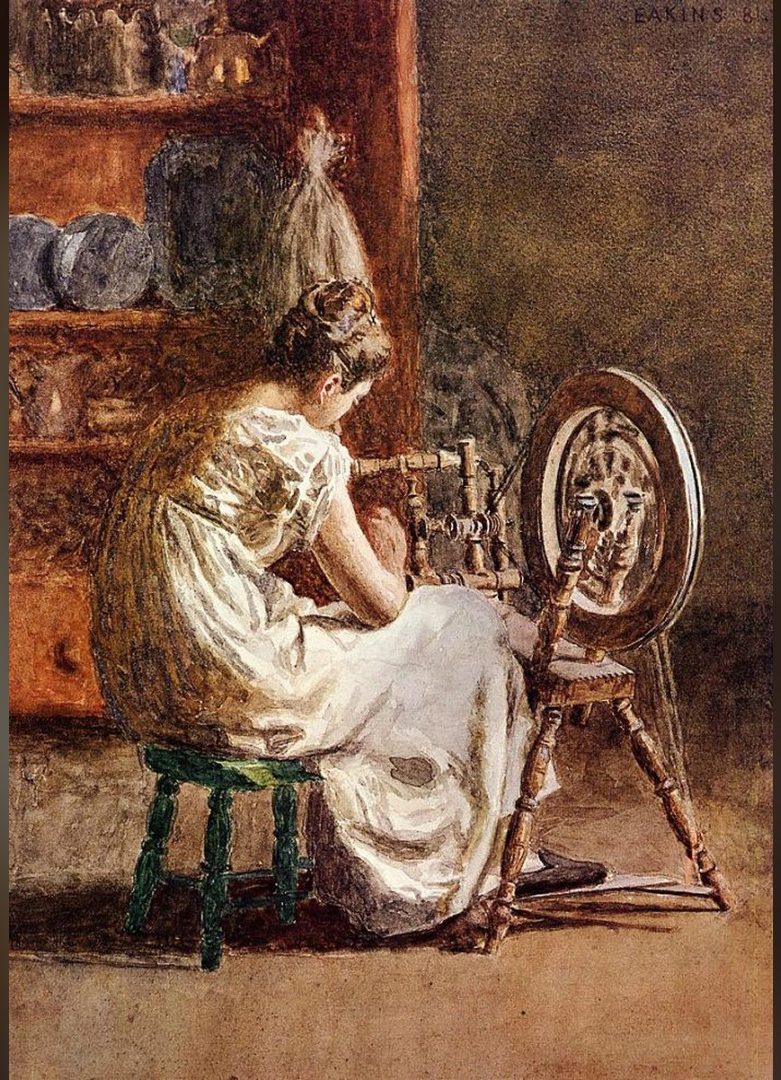
There is one clearly documented stretch when the calculus around spinning briefly inverted, and the historian Laurel Thatcher Ulrich reconstructed it in unusual detail in The Age of Homespun. During the nonimportation boycotts of British goods in the late 1760s, producing cloth at home stopped being merely necessary and became a visible act of resistance, and colonial newspapers started reporting on it the way they’d report a sporting result.
In February 1769, a Mrs. John Vaughan of Lebanon, Connecticut, spun seven skeins and two knots of fine linen yarn in a public match against a neighboring young woman, nearly matching her rival’s output. That August, a gathering of women in Brookfield, Massachusetts began spinning at five in the morning; a young woman in the group produced seventy knots of yarn by the time it broke up, and an older married woman spun fifty-three knots between nine in the morning and seven at night. Newspapers up and down the Massachusetts and Rhode Island coast covered similar gatherings at ministers’ houses, treating a day of spinning as something worth a column inch, which it had essentially never been before.
Ulrich’s reading of the episode is that ministers and newspapers embraced the spinning women specifically because they offered a form of resistance built on “sacrifice, self-discipline, and personal piety” — respectable where the Sons of Liberty’s street demonstrations, toasts, and barbecued pigs were not. It lasted only as long as the boycotts mattered politically. Once nonimportation faded, spinning went back to being what it had always been: unpaid or underpaid household labor, not a headline.
The Machines That Replaced It Were Decided in Court, Not the Market
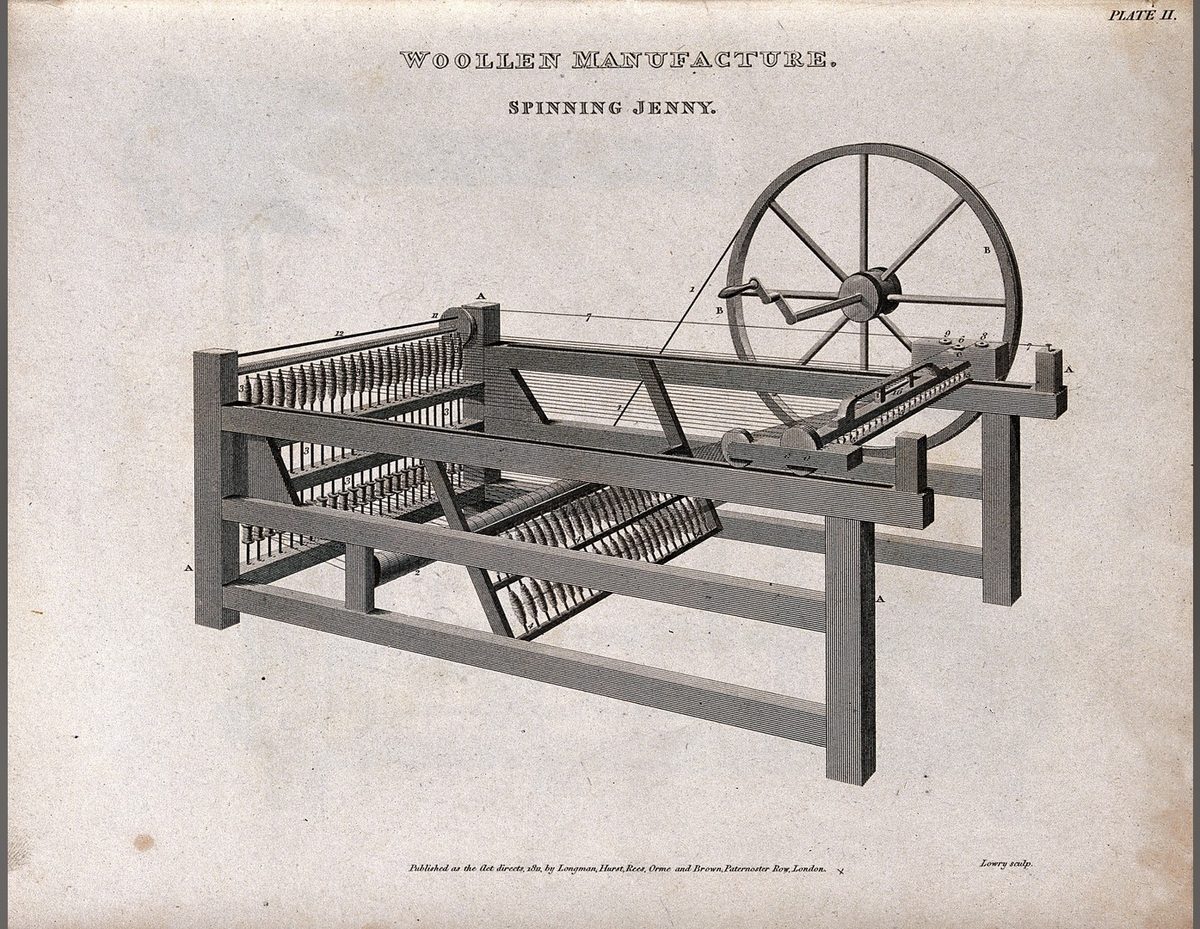
The two machines credited with ending centuries of hand spinning didn’t simply out-compete it in the marketplace — their inventors spent years fighting over who actually owned them. James Hargreaves, born at Stanhill in Oswaldtwistle, Lancashire, built the first spinning jenny around 1764 while working for the manufacturers Robert Peel and Jonathan Howarth; its frame could spin eight threads from eight rovings at once, multiplying a single spinner’s output roughly eightfold. When Hargreaves finally took out a patent on the jenny in 1770, it was already in wide use across Lancashire, and he lost the resulting lawsuits meant to make other manufacturers pay for it. He left for Nottingham, where he spent the rest of his working life building jennies for hire rather than collecting royalties on his own invention, and died there in 1778.
Richard Arkwright’s water frame fared differently in the market and no better in court. Arkwright patented his spinning frame in 1769 and opened what’s often called the first true cotton-spinning factory at Cromford, Derbyshire, in 1771, powered by a waterwheel rather than a worker’s arm. He also spent years defending the patent itself: a rival named Thomas Highs claimed Arkwright had taken the design from him, and a jury agreed. Arkwright’s own patents were separately overturned by the courts in 1781 and again in 1785, and later historians have generally concluded that much of what was genuinely original in those patents had in fact been the work of other men. He was knighted the following year regardless. Both of the machines usually credited with finally outcompeting the household spinning wheel, in other words, spent their formative years not proving themselves against hand labor in the marketplace, but arguing in English courtrooms about who was entitled to own them at all.
Mechanization Relocated the Grind, It Didn’t End It
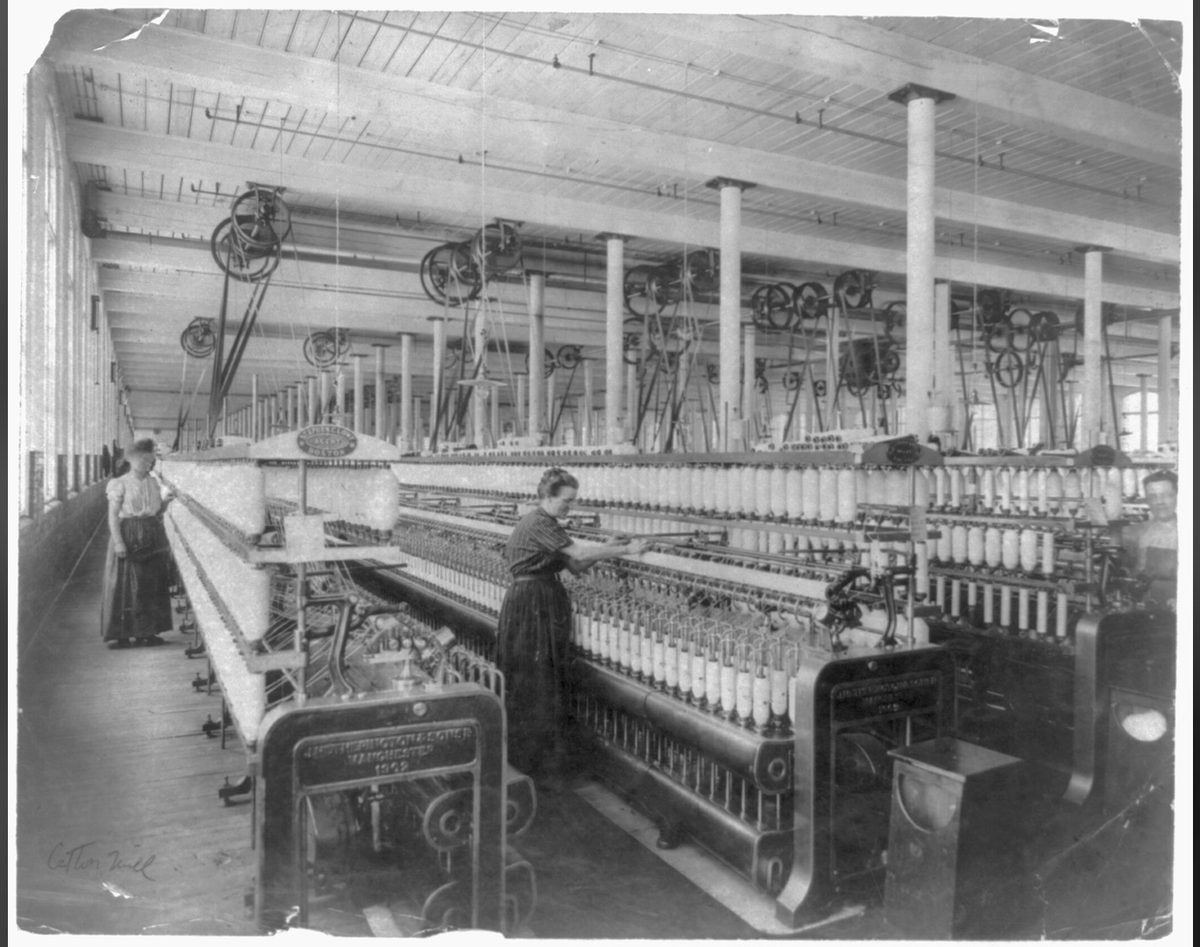
The household wheel didn’t survive the machines it was up against, but the picture of a clean handoff — slow craft replaced by efficient factory — understates what actually happened to the labor itself. At the Lowell mills in Massachusetts, the textile operation most associated with replacing household spinning, the National Park Service’s own figures for the 1830s and 1840s put the average work week at seventy-three hours. The wheel had been slow and underpaid; the mill that replaced it was fast and still demanding nearly every waking hour from the people running it.
What didn’t disappear overnight was the wheel itself as an object of skill and pride, especially in communities that had reasons to keep making things by hand regardless of the factory alternative. The Shaker community at Canterbury, New Hampshire built wool wheels between 1807 and 1847 — one surviving example, now in the collection of The Henry Ford museum, carries the initials of the trustee Francis Winkley and an accelerating head patented by Amos Miner, evidence of a community still refining the mechanism’s performance well after cheap factory thread was available elsewhere.
The popular image of Appalachian hand-spinning quietly surviving into the twentieth century, untouched by the outside world, is also a tidier story than the real one. According to the Southern Highland Craft Guild’s own account of its founding, the region’s pre-industrial craft economy held on largely because of genuine isolation — the railroad didn’t reach Asheville, North Carolina until 1880 — but what followed wasn’t simple continuity. Beginning in 1890, outside reformers like Frances Goodrich arrived specifically to “discover” and organize that craft economy for an external market, founding what became Allanstand Cottage Industries; schools founded at Berea College, at Penland, and at the John C. Campbell Folk School in the 1920s turned mountain spinning and weaving into a curated, marketed revival rather than an unbroken folk tradition left alone. The wheel that lingered longest didn’t simply survive industrialization. In its last American stronghold, it was rediscovered, packaged, and sold back to the rest of the country as heritage.
Watch the full history
The video covers the mechanism itself — the two wheel types, carding and retting, and how a spinner judged thread by feel — in just over seven minutes.

None of this makes the spinning wheel less essential to the world that used it; if anything it makes the object more interesting than the dignified-craft version of its story allows. Every yard of cloth a pre-industrial household wore, slept under, or sold began with hours of low-paid, usually female and often child labor at a wheel, performed not from some old-fashioned love of handwork but because there was close to nothing else on offer. The machines that ended that arrangement didn’t win on efficiency alone; they won after years of lawsuits over who got to own them, and the factories that followed worked their people nearly as hard as the wheel ever had, just under one roof instead of scattered across a hundred farmhouses.
So the question underneath all of it is the same one the video leaves you with: if nobody sold you a single yard of cloth — no store, no mill, nothing at all — how would you even begin clothing a family?
Related reading
- The Maple Sugar Abolition Movement That Almost Worked
- The Clothespin Patent History Behind America’s Favorite Free Dryer
- Who Really Worked in America’s Summer Kitchens
- The Egg Money History of the Farmhouse Henhouse
Works cited
- Landes, David S. The Unbound Prometheus: Technological Change and Industrial Development in Western Europe from 1750 to the Present. Cambridge University Press, 1969, p. 138.
- Kuhn, Dieter. “The Spindle-Wheel: A Chou Chinese Invention.” Early China 5 (1979): 14–24.
- Pacey, Arnold. Technology in World Civilization: A Thousand-Year History. MIT Press, 1991, pp. 23–24.
- Humphries, Jane, and Benjamin Schneider. “Spinning the Industrial Revolution.” Economic History Review 72, no. 1 (2019): 126–155. Link.
- Harper, Douglas. “spinster.” Online Etymology Dictionary.
- Ulrich, Laurel Thatcher. The Age of Homespun: Objects and Stories in the Creation of an American Myth. Vintage Books, 2001, pp. 177–183.
- Grace’s Guide to British Industrial History. “James Hargreaves.” Link.
- Linda Hall Library. “Richard Arkwright.” Scientist of the Day. Link.
- EBSCO Research Starters. “Invention of the Water Frame.” Link.
- National Park Service. “Working Conditions.” Lowell National Historical Park. Link.
- The Henry Ford. “Wool Wheel, Made in the Shaker Community in Canterbury, New Hampshire, 1807–1847.” Object 2017.84.158. Link.
- Southern Highland Craft Guild. “Craft Traditions: A Permanent Collection.”