
In 1898, a Milwaukee hardware manufacturer named Arthur McGeoch built what local newspapers called the largest silo in the world next to his dairy barn: 64 feet across and 60 feet tall, sized to hold the corn harvest of 200 acres in one tower. It was, by every surviving account, a disaster — the silage inside never cured evenly, and McGeoch tore the whole structure down after just three seasons.
McGeoch’s folly is a useful extreme, because it shows exactly what every other American farmer who built an upright silo between the 1870s and the 1940s was actually solving for: not how big a tower you could build, but how to seal a modest amount of green corn away from the air long enough for it to ferment into feed a cow would eat through a northern winter. The shape that answer eventually settled on — a round wooden tower built the way a cooper builds a barrel, banded in adjustable steel hoops — became one of the tallest, most recognizable structures on a working dairy farm for roughly fifty years.
Who actually gets credit for that shape, and for the silo itself, turns out to be far less settled than the historical markers suggest.
An Illinois Farm Boy Brought Home a French Idea
Long before any American built a silo, farmers in sugar-beet country in Germany and France were already burying chopped green leaves and corn tops in stone-and-clay pits to keep them from spoiling over winter. A French farmer named Auguste Goffart spent roughly twenty-five years refining the method and published a monograph on it in 1877 that later writers credited as the founding text of modern silage-making; American farmers came to know his work through an 1879 translation and then through Dr. J. M. Bailey’s influential 1880 Book of Ensilage, which did more than any single publication to spread the idea in the United States.
By then, American farmers had already begun experimenting on their own. According to the agricultural chemist F. W. Woll, writing in 1900, the first true American silo was built in 1876 by a farmer named F. Morris in Maryland. A competing claim, carried by a historical marker the American Society of Agricultural Engineers dedicated in 1984, places the honor three years earlier and roughly six hundred miles northwest: with Fred Hatch, a recent graduate of the Illinois Industrial University, working on his father Lewis Hatch’s dairy farm near Spring Grove, Illinois.
Hatch had learned about silage secondhand. Agriculture textbooks barely existed in the early 1870s, so Willard Flagg Bliss, the university’s lone agriculture professor, translated foreign bulletins himself and passed the ideas on to his students. In the fall of 1873, Fred and his father dug a stone-and-mortar-lined pit ten feet by sixteen feet and eight feet deep inside their own barn, raised its walls another sixteen feet above ground with two layers of flooring board sandwiching tar paper, and packed it with chopped green corn fodder before winter set in. Their cows came through that season fatter and giving more milk than they ever had on dry hay alone. The Hatches added two more silos, with concrete foundations, in 1876 — the same year Woll’s book credits Morris with Maryland’s first — and kept all three in daily use until 1919, when the farm changed hands and the original barn came down.
Whether the record belongs to Hatch, to Morris, or to some farmer neither source names, the two accounts don’t agree, and nothing in the surviving record settles it definitively.
Square Silos Had a Fatal Corner Problem
Whichever of them actually built the first one, the early copies all shared the same shape: square or rectangular, built inside or beside a barn, in direct imitation of Hatch’s original pit. That shape had a real design flaw. Silage packed into a square corner left pockets of trapped air that tamping could never quite squeeze out, and the corn sitting in those pockets rotted instead of fermenting.
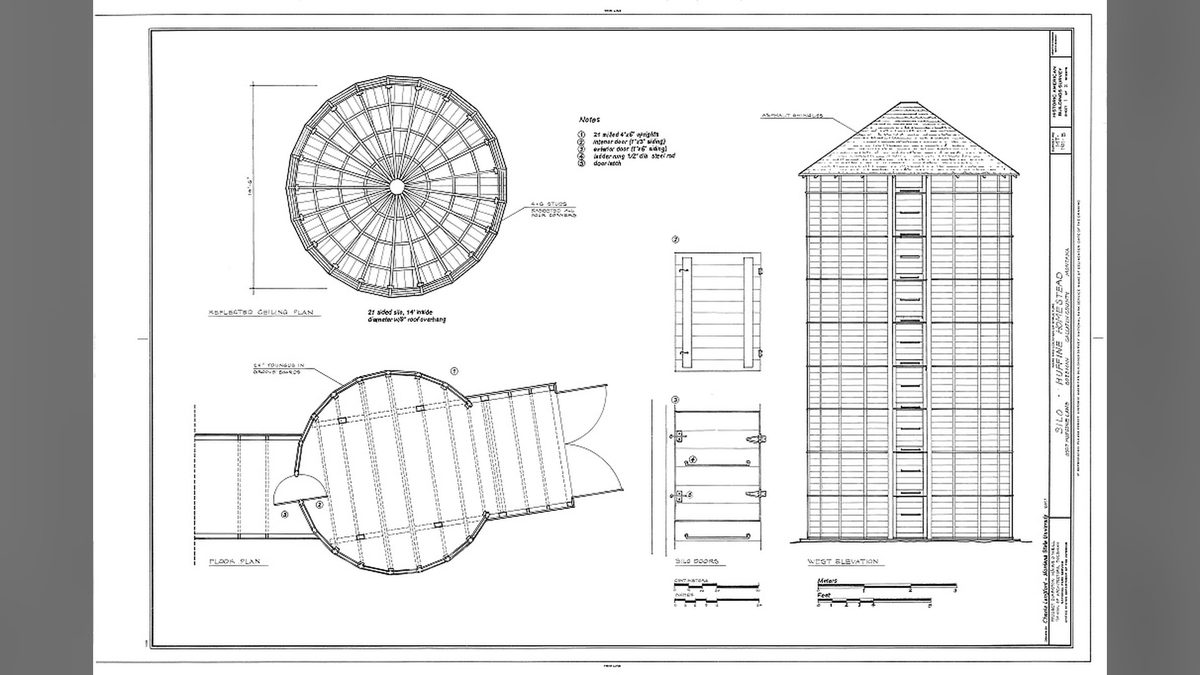
Two different people get credit, depending on which source you read, for fixing that problem by going round. Farm Collector magazine credits a Wisconsin dairyman named John Steele, frustrated with his own square silo’s corner losses, who built a round one instead in 1888: eighteen feet across and thirty feet tall, framed from two-by-six-foot wood staves, and reportedly standing for twenty-seven years. Meanwhile, at the University of Wisconsin’s Agricultural Experiment Station, a researcher named Franklin Hiram King had been studying the same problem since at least 1887, when he toured fifty-eight working silos and took detailed notes. King published Bulletin 28, “The Construction of Silos,” in 1891 — later described as the first bulletin devoted specifically to building a round wooden silo — and the all-wood circular design it promoted became known across the Midwest simply as the King silo, or the Wisconsin silo. When King built his own experimental tower a few years later at the university’s dairy barn, it came out eighteen feet in diameter and thirty feet tall: the same dimensions reported for Steele’s silo three years earlier, whether by coincidence or because that pairing of measurements had already become the practical standard everyone reached for.
Credit for the shape that would define American silo-building for the next fifty years splits, unresolved, between a working farmer who built one and a university scientist who studied, named, and promoted it until it became policy.
How Stave Silos Worked: Barrel-Building at the Scale of a House
However it originated, a wood stave silo was assembled almost exactly the way a cooper builds a barrel, just scaled up to the size of a small house. Vertical boards called staves, each tongue-and-grooved so it locked tight against its neighbors, stood on end in a circle, and steel hoops cinched around the outside held the whole cylinder together. Those hoops were deliberately adjustable: as the green lumber dried and shrank over its first season, a farmer tightened them with a wrench, the same maintenance a cooper performs on an ordinary barrel.
Farmers built from whatever durable species a local sawmill could supply — tamarack, Douglas fir, cedar, cypress, redwood, or plain pine — and the construction itself was usually handled by a local carpenter rather than a dedicated silo company. By the early 1900s the wood stave silo was the standard upright silo on American dairy farms, typically built somewhere between thirty and fifty feet tall. That upper limit wasn’t architectural; it was set by how high a farm’s own filling equipment could physically blow chopped corn into the air. Arthur McGeoch’s sixty-foot Milwaukee tower, built to hold an entire 200-acre harvest at once, blew straight through every one of those practical limits — and failed for exactly that reason, scaled for ambition rather than for what a filling crew, a blower pipe, and fermenting corn could actually sustain.
Filling One Took an Entire Neighborhood
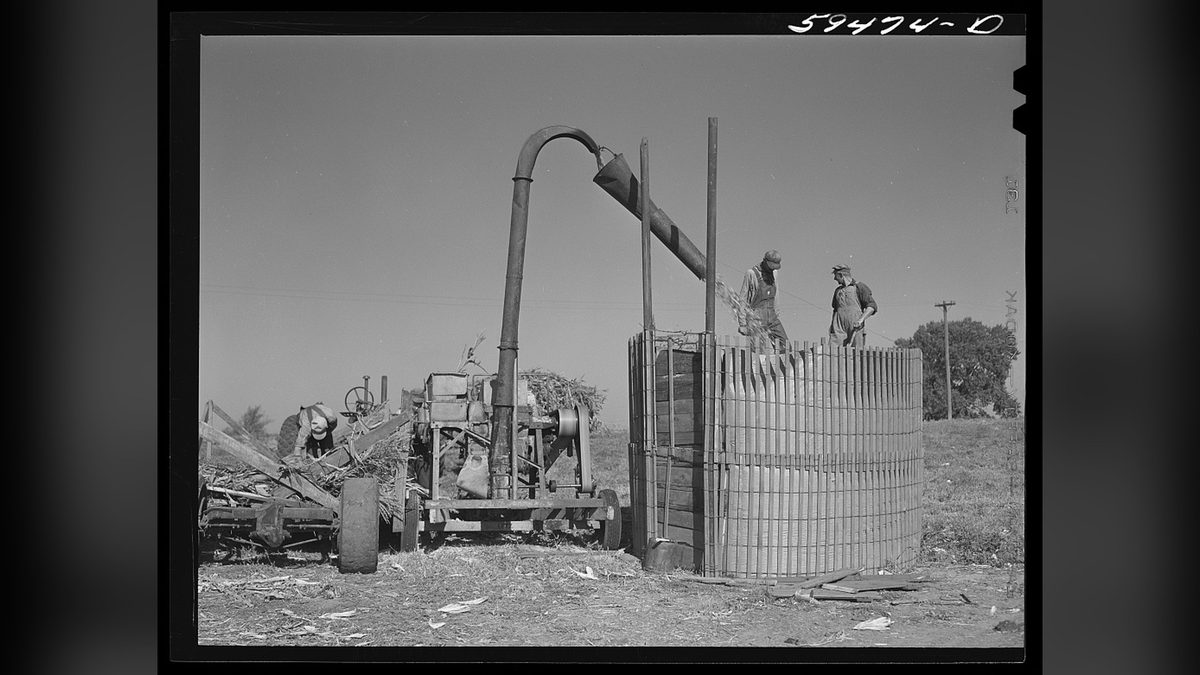
Timing mattered more than almost anything else in filling a silo. Corn had to be cut green — stalk and all, roughly seven to ten days before it would normally be cut and shocked for ordinary dry fodder — while the kernels were well dented but the stalk still held its sap. Cut too dry, the chopped feed simply wouldn’t pack down and ferment properly.
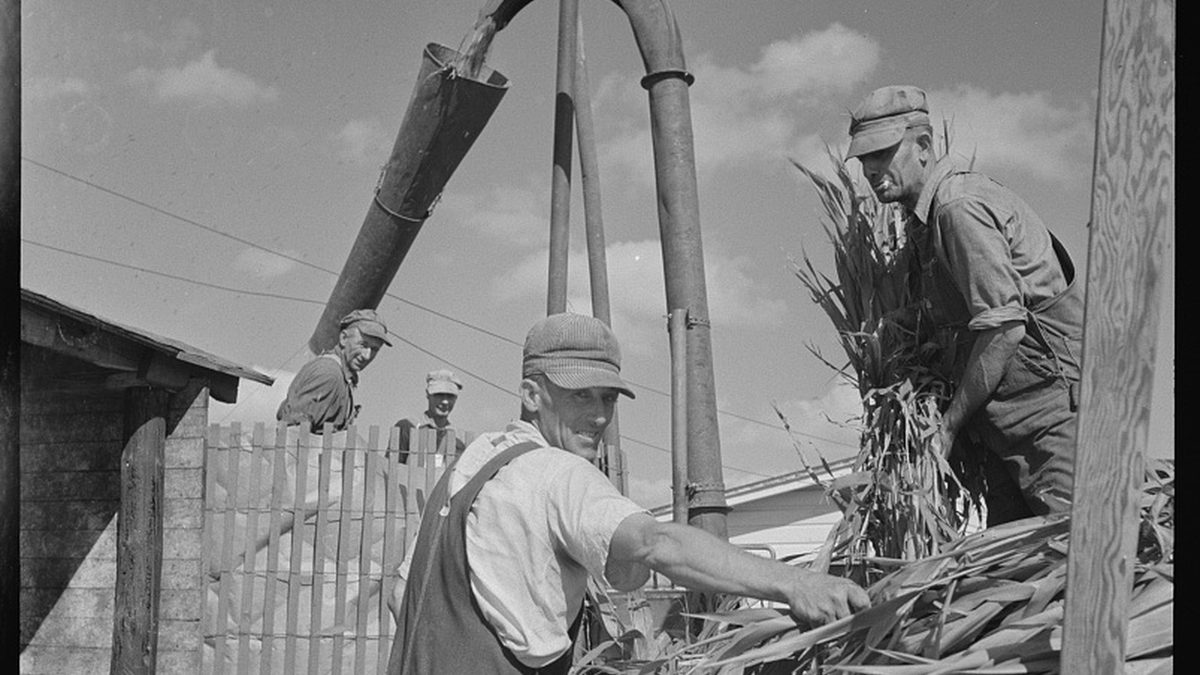
Wagonload after wagonload of whole green stalks went to an ensilage cutter, a machine that chopped the fodder fine and blew it straight up a pipe into the tower’s open top. The earliest cutters turned on a hand crank or a horse walking a treadmill; by the 1890s a steam engine typically drove them, and by the early 1900s a tractor’s belt pulley did the job instead. Inside the silo, one or two men stood in the falling rain of chopped corn, directing the spout and tramping the silage down hard against the walls and corners — unglamorous, occasionally dangerous work that left little room for error.
Because very few individual farms owned their own cutter and engine, neighbors pooled labor and machinery and moved the entire rig from farm to farm, filling each family’s silo in turn before that year’s corn had the chance to dry out standing in the field. It was the same cooperative arrangement that powered threshing crews every July, often with the same families, and it ran on the same unwritten bargain: whoever hosted the filling crew that day fed everyone a hot midday meal in return. Corn’s other great communal harvest custom, the husking bee, grew out of the identical logic — the crop was too labor-intensive to bring in alone, so farms worked it together.
The Chemistry Nobody Fully Understood Yet
Farmers had been making silage successfully for decades before anyone could explain precisely what was happening inside the tower. F. W. Woll’s 1900 textbook on the subject described the broad strokes correctly even without modern microbiology: bacteria already present on the fodder multiply rapidly inside the packed silage, and their activity shows up as heat and acid. Keep air out, Woll wrote, and only the organisms that can tolerate its absence survive; let air in, and rot-causing bacteria take over instead. “No silage fit to be eaten can be made in the presence of air,” he concluded — which is exactly why tramping the silage tight against the walls mattered as much as the cutting and chopping that came before it.
The numbers Woll and his contemporaries worked out were remarkably precise for a process nobody could actually see happening. Fermentation losses ran around ten percent of the stored crop, so farmers packed extra to compensate. A cubic foot of settled silage weighed roughly forty pounds. Professor King, measuring the same silos he had helped design, calculated that silage exerted lateral pressure on a silo’s walls of about 10.94 pounds per square foot for every foot of depth — a figure builders used to size their steel hoops. Feeders were advised to strip two to three inches off the exposed top layer daily and to limit a cow to around forty pounds of silage a day, fed after milking rather than before, since milk absorbs odors easily and silage has a strong one — though testing at the time found the smell never actually carried through into butter or cheese made from that milk.
It would be nearly fifty years after Fred Hatch’s first silo before anyone identified, specifically, which organisms were doing the fermenting. In 1921, researchers P. G. Heineman and Charles R. Hixson published “Bacteria Concerned in the Ripening of Corn Silage” in the Journal of Bacteriology — one of the first studies to name the actual bacteria responsible, work that simply hadn’t existed yet when the first few generations of farmers were already doing it successfully by instinct and trial.
Winter Chores Were Built Around a Thirty-Foot Tower
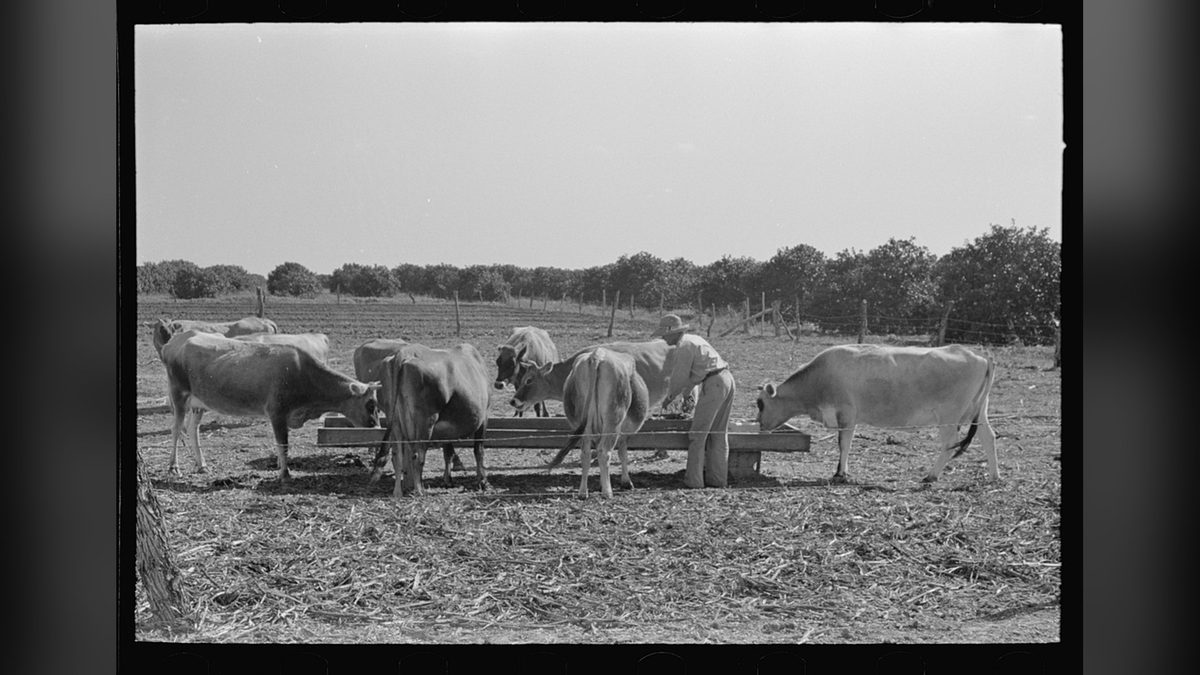
A filled silo didn’t just sit there until spring; emptying it was its own daily chore clear through the winter. A removable door ran up the tower in sections, with a ladder or iron step-rungs built in alongside it, so a farmer could pull the top door as the silage level dropped, climb down inside, and pitch feed out through the opening into a cart or straight down a chute into the barn. In the coldest months the exposed top layer could freeze into a solid cap, and someone had to break it loose with a pick before it could be forked out at all — heavy work, and one where falling frozen chunks were a hazard every climber learned to respect. Every cow in the barn got her share of fermented corn alongside plain hay, morning and night, for as long as the tower still had silage in it, which on a well-filled silo usually meant clear through to spring, on the same farms that, within another decade or two, might add a cream separator to speed up the rest of the dairy work.
Wood Gave Way to Concrete, Tile, and Steel
The wood stave silo’s working life as the standard American upright silo ran roughly from the 1890s through the 1940s, according to the dating chronology the University of Vermont’s historic preservation program has compiled from period field guides. Wood had real advantages — good insulation, lower cost than masonry, and lumber a local mill could supply — but it also rotted, swelled, and needed its steel hoops retightened or replaced every few years. Builders had an alternative on the market by the early 1900s: concrete staves, assembled with the identical adjustable-hoop system but immune to rot, which eventually became the most widely used silo material of all on cost and durability alone. Glazed tile silos caught on through the 1920s and ’30s for similar reasons.
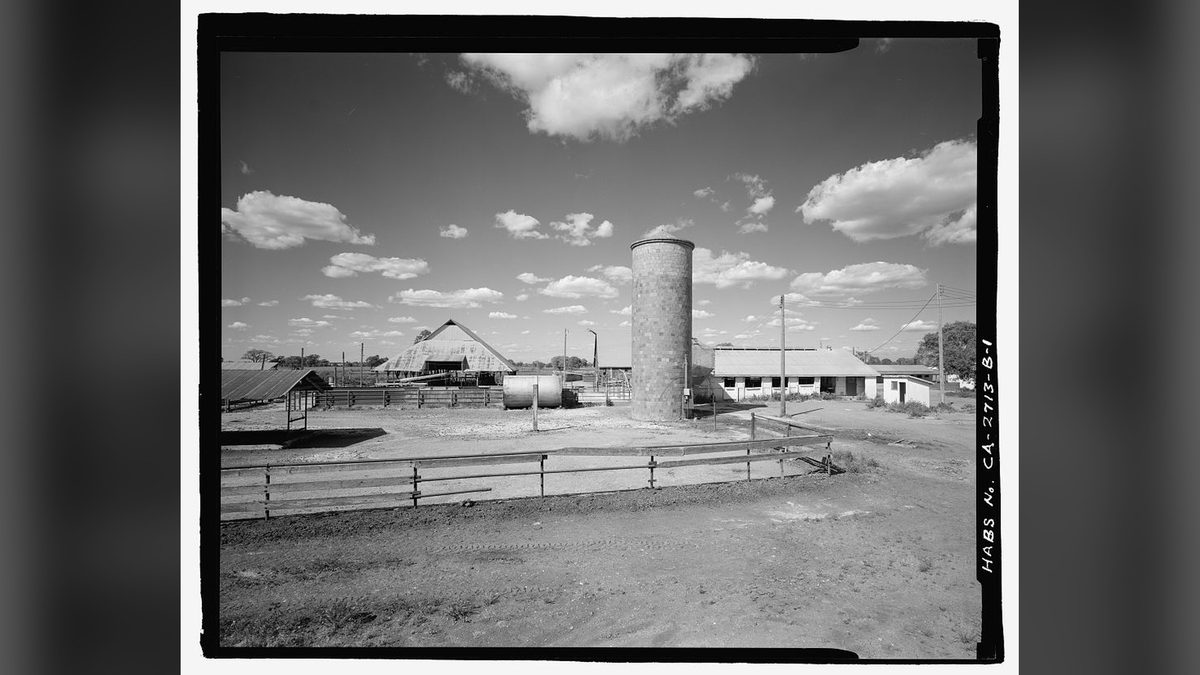
By the 1960s and ’70s, factory-built steel silos had largely taken over, including the glass-lined blue towers built by Wisconsin’s A. O. Smith company — a manufacturer that had previously built beer-brewing tanks and adapted the same acid-resistant glass lining to silage. Today, most large dairy operations have abandoned upright towers altogether in favor of horizontal bunker silos or plastic silage bags roughly eight feet across and a hundred and fifty feet long.
Most of the original wood stave silos are gone now: rotted through, collapsed under their own weight, or pulled down once a farm modernized. A handful survive as restored landmarks — Fred Hatch’s own site near Spring Grove was dedicated as a national historic landmark by the American Society of Agricultural Engineers in 1984 — rare, leaning proof that a shape built to solve one farm’s very specific problem with trapped air ended up standing on nearly every dairy farm in the country for two generations.
Watch the full history
The video above covers the same invention in just under eight minutes — Fred Hatch’s first pit, the shift to round towers, and the daily work of keeping one filled.

Related reading
- Is Water Glassing Eggs Actually Safe? What a Century of Science Found — another Old Ways preservation method the era trusted long before anyone understood the microbiology behind it.
- Threshing Grain by Hand: The Flail, the Floor, and the Riot That Tried to Stop the Machine — the same neighbor-to-neighbor crews who filled a silo in September often moved the threshing rig from farm to farm every July.
- How Cream Separators Worked, and Why Every Farm Wanted One — the other machine that turned a 19th-century dairy farm into a year-round operation.
- What Finding a Red Ear of Corn Actually Meant at a Husking Bee — corn’s other great communal harvest tradition, built around the same crop a silo was built to store.
Works cited
- American Society of Agricultural and Biological Engineers (ASABE). Tower Silo, 1984 ASABE Historic Landmark dedication. Link.
- Porter, Bud. “Fred Hatch’s American Silo.” Farm Collector, Jan. 31, 2011. Link.
- Moore, Sam. “Silo Filling.” Farm Collector, July 20, 2011. Link.
- Iowa Barn Foundation. “2022 Fall Silo History.” Newsletter, 2022. Link.
- Hanou, John T. “The Odd Experiment.” Madison Trust for Historic Preservation, May 31, 2020. Link.
- University of Wisconsin–Madison, Facilities Planning & Management. The Dairy Barn (historical note).
- Woll, F. W. Making and Feeding Silage. Rev. ed. Chicago: Rand, McNally & Company, 1900.
- Heineman, P. G., and Charles R. Hixson. “Bacteria Concerned in the Ripening of Corn Silage.” Journal of Bacteriology 6, no. 1 (1921): 45–51. Link.
- Visser, Thomas. A Field Guide to New England Barns and Farm Buildings. Hanover: University Press of New England, 1997, via University of Vermont Landscape Change Program, “Dating: Silos.” Link.