
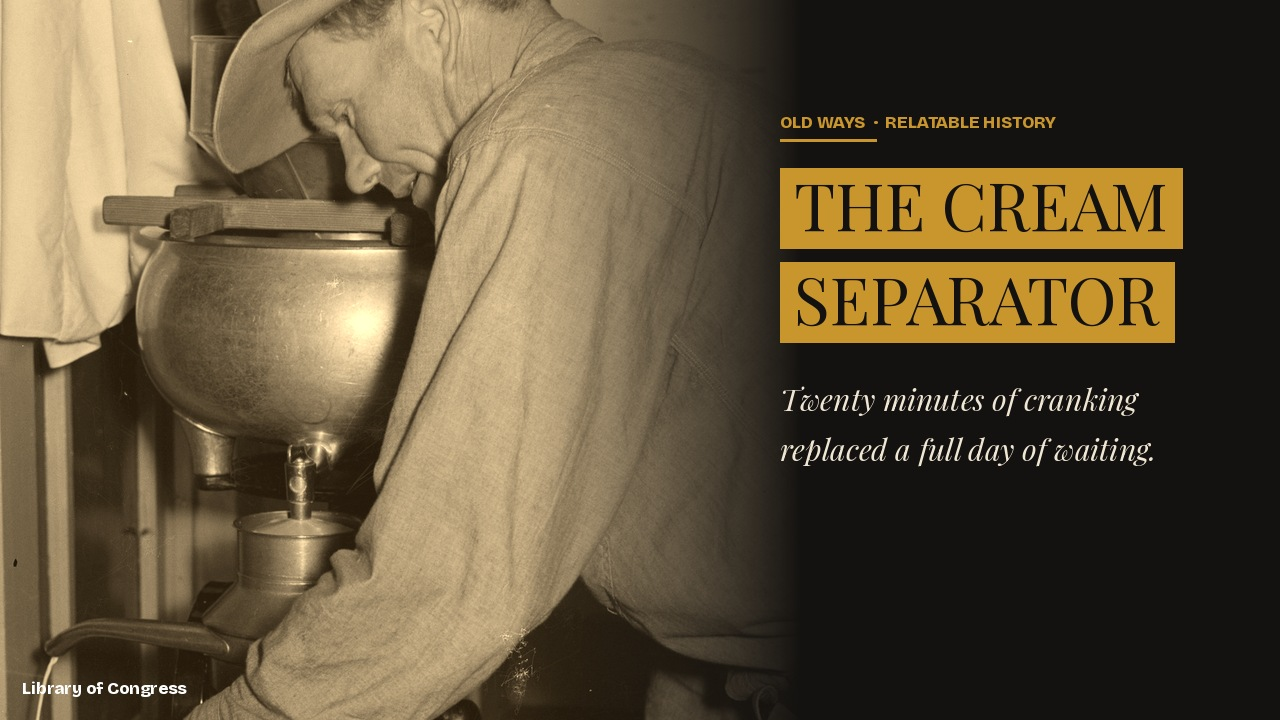
A well-adjusted cream separator left less than one percent of a bucket’s cream behind in the skim milk. The method it replaced — setting the milk in a shallow pan and waiting for the cream to rise on its own — routinely lost a third of it, and the milk often soured before anyone got around to skimming it. That gap is the whole reason a cast-iron machine the size of a sewing table ended up in tens of thousands of American farm kitchens within a single generation.
The device was the centrifugal cream separator, and it did something gravity could never quite manage on its own: it finished the job. By spinning milk hard enough in a sealed bowl, it could pull almost all of the butterfat out of a batch of milk in a few minutes, instead of the hours or the day and a half that settling in a pan or a crock required, and finish more thoroughly than patience alone ever did.
It was not a small change. The machine reorganized the twice-daily rhythm of dairy farming, created a market for mail-order equipment sized to herds of every size, and helped grow the small-town creamery system that bought what it produced. Here is what the machine actually was, how its mechanism worked, and why it eventually disappeared from most farms.
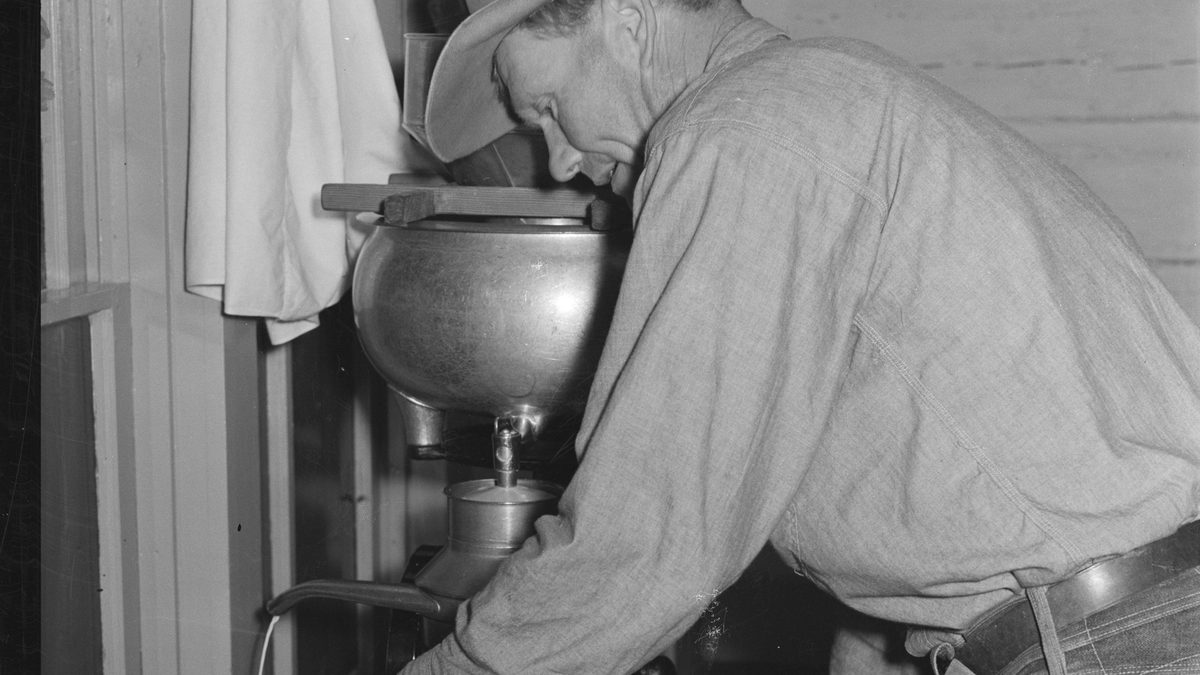
Gravity could separate cream, but never completely
Before the separator, a dairy farm had two real options, and both ran on waiting. The older and simpler one was shallow-pan setting: pour the fresh milk into a wide, flat pan, carry it to the coolest room in the house, and leave it alone for roughly a day and a half while the lighter fat globules rose to the surface on their own. The trouble was that gravity is slow and only partly effective across that much depth of milk — farm records put the loss at as much as thirty percent of the available cream left behind in the skim milk, and milk held that long at room temperature was prone to souring before it was ever skimmed.
The improvement on that, deep-setting, used tall cans of milk submerged in tanks of cold water instead of shallow pans in open air. Cold water slowed spoilage and let more of the cream rise, cutting the loss to somewhere between five and fifteen percent, but it still needed several hours to work and still left real cream behind. Both methods were, in the end, versions of the same bet: that if you waited long enough, gravity would sort fat from milk for free. It would, just never completely, and never quickly.
A Swedish engineer chased a faster separation in 1877
Carl Gustaf Patrik de Laval, a Swedish engineer who had trained at Uppsala University and was working at an ironworks outside Stockholm, read an article in a German dairy trade journal in 1877 describing efforts to separate cream by spinning it rather than by waiting on it. He was not working from nothing — earlier inventors, including Prandtl with a hand-cranked design in 1864 and Lefeldt with a separator in 1874, had already tried centrifugal separation at a small scale. What de Laval chased, and found within about a year, was a design that could run continuously, with fresh milk flowing in and finished cream and skim milk flowing out at the same time, rather than processing one small batch and stopping.
He patented the continuous separator in 1878 together with his business partner, Oskar Lamm, and by 1879 a Stockholm newspaper was reporting on a public demonstration of a machine that could process roughly 130 litres an hour. That same year, the Royal Agricultural Society of England gave the invention its silver medal. De Laval and Lamm founded AB Separator in 1883 to manufacture the machine, and a related American company, the De Laval Separator Company, was producing and selling them in the United States within a few years after that.
The design kept improving well past its first patent. The company added pumps in 1888 to move skimmed milk out of the way faster, acquired a conical-disc patent from the German engineer Clemens von Bechtolsheim in 1889, and in 1890 introduced the stacked-disc bowl that became the standard shape of the machine for the next seven decades. De Laval himself kept inventing elsewhere — by his death in 1913 he held ninety-two Swedish patents and had founded thirty-seven companies — but the cream separator remained the invention that made his name a household word on dairy farms an ocean away from Sweden.
Centrifugal force did in minutes what gravity did in a day
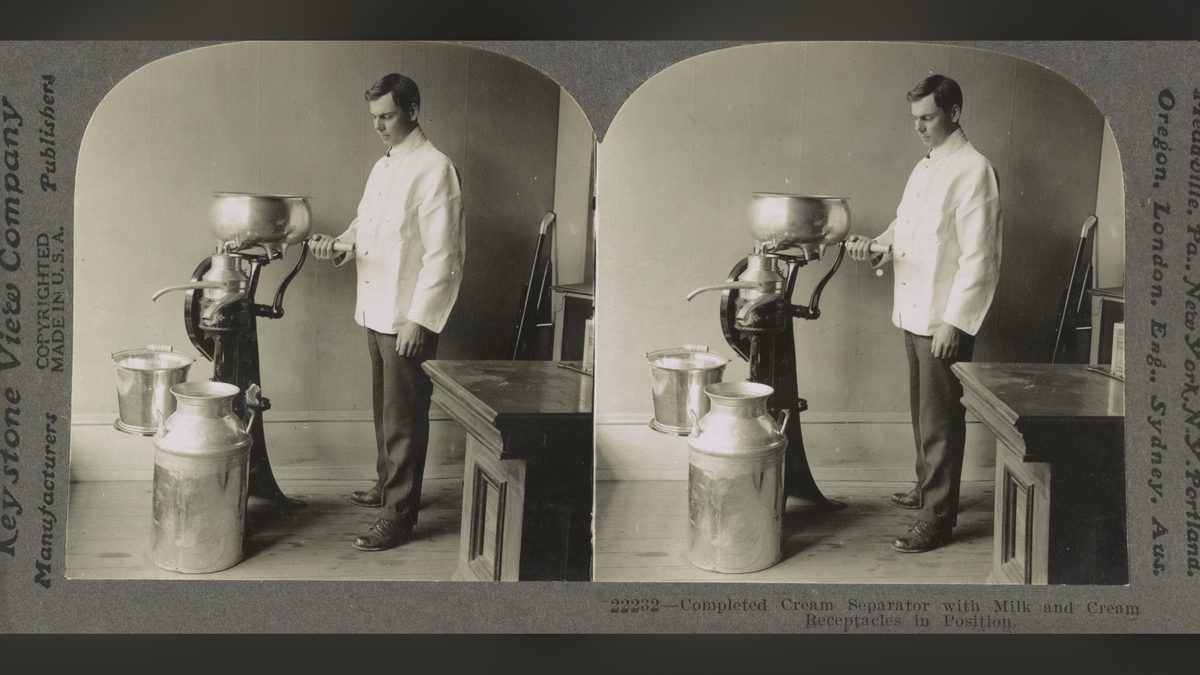
The principle is the one anyone who has swung a bucket of water in a circle already understands intuitively: spin a mixture hard enough and the denser material gets flung outward while the lighter material collects toward the center. In a cream separator, milk was fed from a supply can into a tall spinning drum, where a stack of narrow conical discs — anywhere from thirty to well over a hundred of them, depending on the model — split the flow into thin sheets only a few millimetres apart. Thinner sheets meant any given droplet of fat had a far shorter distance to travel to reach a collecting surface, which is what let the disc-bowl design finish in minutes what earlier, discless centrifugal designs needed much longer to approximate.
How fast the bowl actually spun is one of the few places the record is not perfectly tidy: period accounts and later retrospectives put the top speed anywhere from around six thousand to nine thousand revolutions a minute, depending on the model, the decade, and who was doing the measuring. What is consistent across every account is that the bowl had to come up to that speed gradually, over something like the first half-minute of steady cranking, before any milk could be let in without ruining the separation — feed it in too soon, at too low a speed, and the cream and skim milk simply recombined on their way out.
Two spouts at the base of the machine handled the result: one for the skim milk, flung to the outer wall of the drum, and a narrower one at the center for the cream. A separator sized for a farm herd might run a single stream of milk through in a matter of minutes; the largest machines in the De Laval Separator Company’s own 1913 catalog, built for creameries rather than individual farms, were rated to handle 675 quarts an hour, against 340 quarts an hour for the smallest model the catalog listed.
It was a twice-daily chore, and usually a child’s job
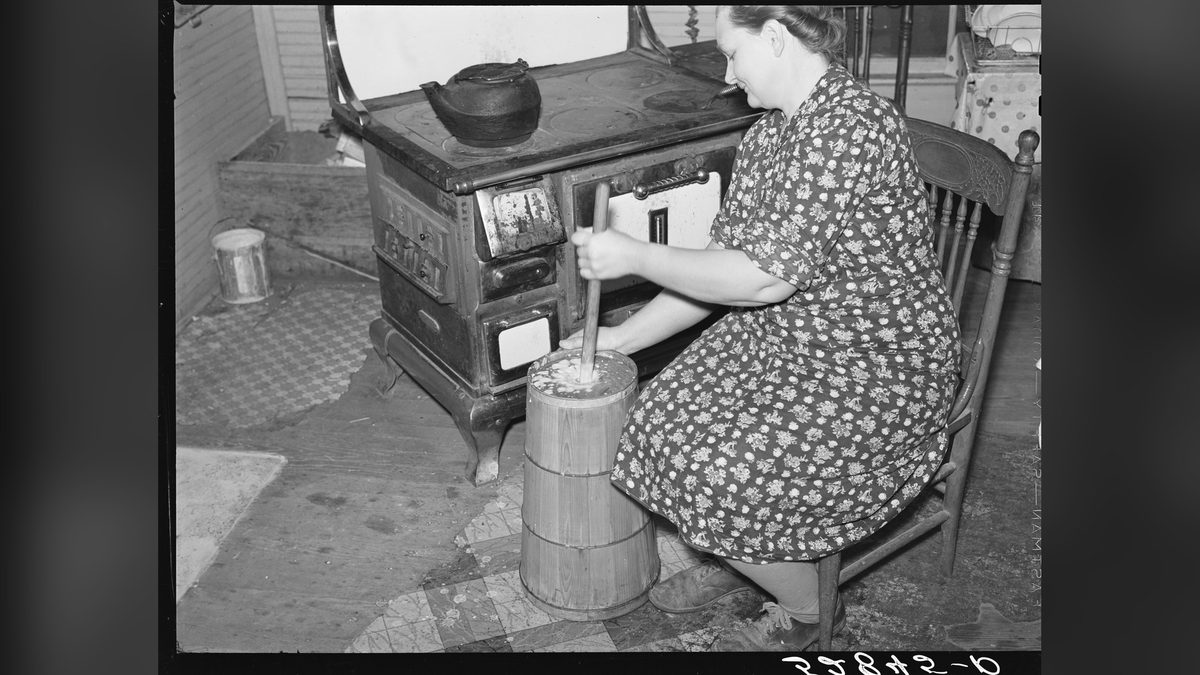
The separator ran right after every milking, morning and evening, because warm milk straight from the cow separated faster and more completely than milk that had already cooled. That timing made it a fixed point in the farm day, and on a great many farms the job of turning the crank fell to whichever child was old enough to keep a steady pace but not yet needed for heavier work. Manufacturers leaned into exactly that in their advertising, promoting machines as “so simple a child can use it” — which was as much a sales pitch about ease of operation as it was an accurate description of who actually ended up cranking one.
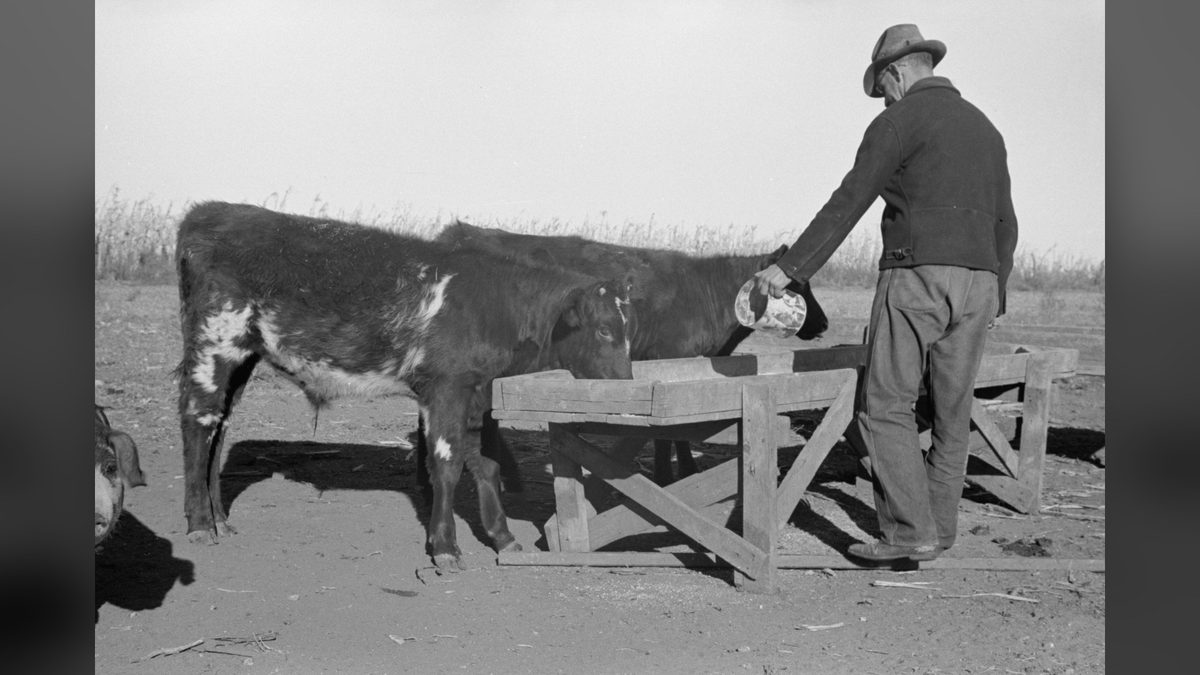
What came out split two ways. Skim milk, with nearly all its fat removed, was not wasted: it went straight to the hog trough and the calf pail, where it did useful work as feed rather than sitting around as a byproduct nobody wanted. Cream went one of two directions depending on the farm and the week — worked into butter in the family’s own churn for the table and for sale, or carried to town to sell outright. Either way, cleaning the machine afterward was close to its own second chore: every disc in the stack had to be pulled apart, scrubbed free of clinging milk fat, and dried before the next milking, which on a large machine could take nearly as long as the separating itself.
Butterfat, not volume, decided what a farm got paid
Once cream started moving from individual farms to central creameries in volume, the industry needed a fast, reliable way to answer a question that had previously been guessed at: how much actual butterfat was in any given farmer’s cream. Milk fat content varies considerably from one herd, breed, and even one cow to the next, which made paying everyone the same flat rate per gallon both unfair and a disincentive to produce richer cream. The Babcock test, developed in the early 1890s, solved that with a quick chemical and centrifugal procedure that gave creameries a reliable butterfat percentage for a sample in minutes rather than days.
Once creameries could test and pay by butterfat percentage rather than raw volume, the incentive structure on every farm shifted. Richer cream meant a better check, which pushed many families toward dairy breeds known for higher butterfat content and toward keeping their equipment, including the separator itself, cleaner and better adjusted than they might otherwise have bothered to. The separator and the butterfat test were not the same invention, but they reinforced each other: one made cream easy to produce in volume, the other made its quality, rather than just its quantity, worth money.
Mail order carried it everywhere, and bulk tanks ended it
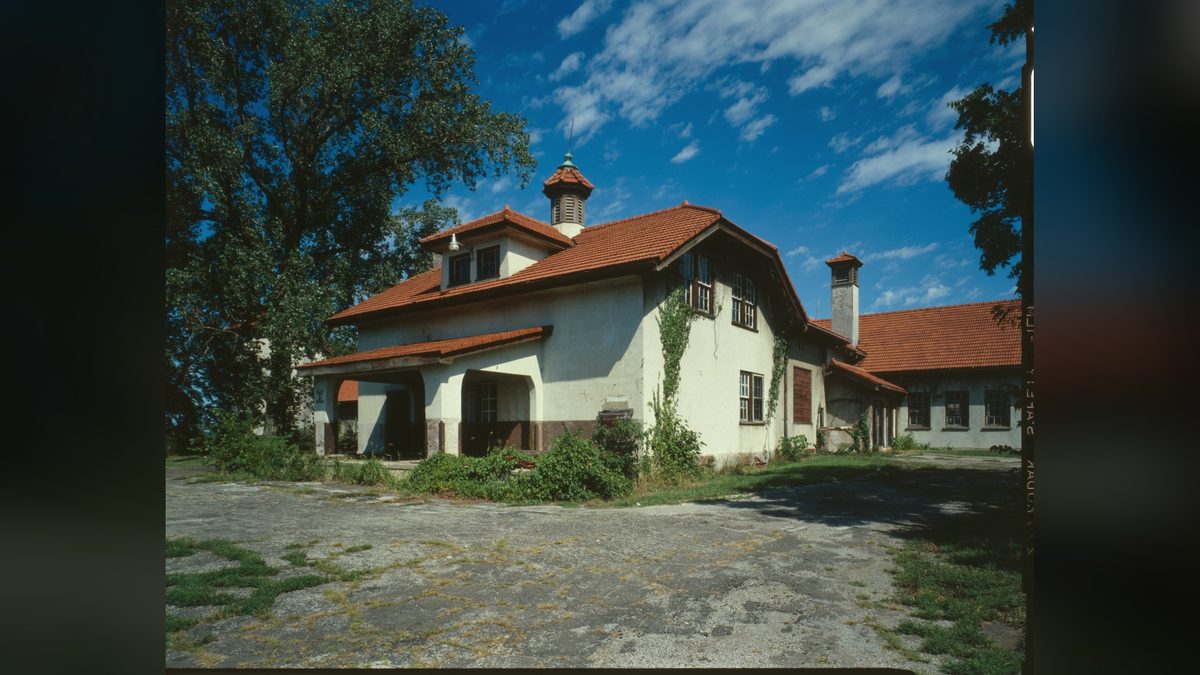
By around 1900, hand-cranked separators were common on dairy farms across the United States and Europe, and the machine had gone from an export novelty to a catalog staple. Sears, Roebuck and Montgomery Ward both sold separators sized for herds from as few as two cows up to a hundred, and kept them in their catalogs for decades — separators were still being sold through mail order as late as the mid-1950s, well after rural electrification had added small electric motors to the same basic disc-bowl design and retired most of the hand cranks.
What finally ended the cream separator’s working life was not a better separator. It was a change to the system around it. Once refrigerated bulk tanks and trucks could collect whole, unseparated milk directly from the farm, keep it cold, and haul it to a central processing plant, creameries stopped wanting farm-separated cream at all — they wanted the whole milk, fat included, and would handle the separating themselves at a much larger scale. Across much of the country, the business of selling cream off the farm had mostly disappeared by the time that transition finished. The machines themselves did not vanish so much as migrate: a good number survive today, repainted and polished, among the more than sixty serious separator collectors active across the United States and Canada, kept running on hobby farms long after the creameries that depended on them closed.
Watch the full history
The video version walks through the machine itself, the discs and the gearing, and the daily chore it created, in just under seven minutes.

Related reading
- How Corn Shellers Worked, and Why American Farms Needed One — another hand-cranked farm machine that turned a slow chore into a fast one
- How Skep Beekeeping Worked Before the Movable-Frame Hive — a different Old Ways craft from the same era, tended by hand on the same kind of schedule
- Who Really Worked in America’s Summer Kitchens — the room where separating and churning actually happened on most farms
- The Storm Cellar Existed Before Tornado Warnings Did — another piece of Industrial Age farm infrastructure built around a daily, practical risk
Shop the period reference
De Laval Dairy Hand Book (Classic Reprint), a period dairy-industry handbook from the company that invented the machine.
Works cited
- De Laval Separator Company. De Laval Dairy Hand Book (Classic Reprint).
- Smithsonian Libraries. “The De Laval Cream Separators Catalog from 1913.” Unbound (Smithsonian Libraries blog), June 19, 2009.
- Alfa Laval. “Where We Come From.” Alfa Laval corporate history. Link.
- “Carl Gustaf Patrick de Laval (1845–1913).” European Route of Industrial Heritage. Link.
- Crowe, L. K., and H. P. Davis. Babcock Testing: Principles and Uses. University of Nebraska Agricultural Experiment Station Historical Circular, 1927. Link.
- “Alexandra Power-Driven Cream Separator, c. 1891.” Science Museum Group Collection, object no. 1935-543. Link.
- Gaines, Tharran. “Cream Separator.” Farm Collector, March 23, 2012. Link.
- “The Cream of the Crop: How the Separator Sparked a Dairy Revolution.” Tetra Pak.