
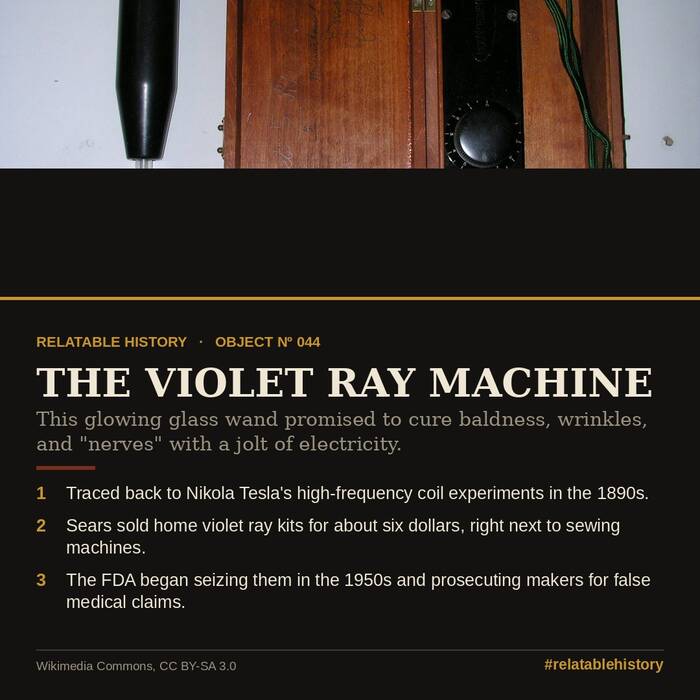
Over more than 14,000 trance readings given between the 1910s and his death in 1944, the popular psychic healer Edgar Cayce recommended one home device more often than almost anything else in his repertoire: a glass wand that glowed faint violet and produced a crackling, tingling jolt when pressed against the skin. By one count he prescribed it nearly 900 times, for ailments running from rheumatism to gonorrhea to what he called “brain fog.” The device was real, it was perfectly legal, and at its peak it sat in a meaningful share of American bathroom cabinets.
It did not do what almost anyone claimed for it. Despite the name, no ultraviolet light came out of a violet ray machine at all — the glow was a high-frequency, low-current electrical discharge arcing through a sealed, low-pressure glass tube, engineered to look and feel like medicine rather than to deliver it. That gap between sensation and substance is most of this story: a technology lifted from a physics laboratory, adapted by French physicians for careful clinical use, then repackaged for a mail-order public by companies that kept it on store shelves for nearly forty years.
What follows is how the device actually worked, who built a business out of it, how far the claims drifted from the electricity itself, and why it took medical and regulatory bodies the better part of four decades to finally catch up with it.
The device came out of Nikola Tesla’s laboratory, not a pharmacy
The underlying technology traces to Nikola Tesla’s work on resonance transformers in the early 1890s. Tesla patented his “System of Electric Lighting” in June 1891 (U.S. Patent 454,622) and kept refining the idea for more than two decades, eventually receiving U.S. Patent 1,119,732, “Apparatus for Transmitting Electrical Energy,” in December 1914. He demonstrated an early version of the coil publicly at the 1893 World’s Columbian Exposition in Chicago, where a high-frequency current was run through a hand-held tube to make it glow without any wire touching the person holding it.
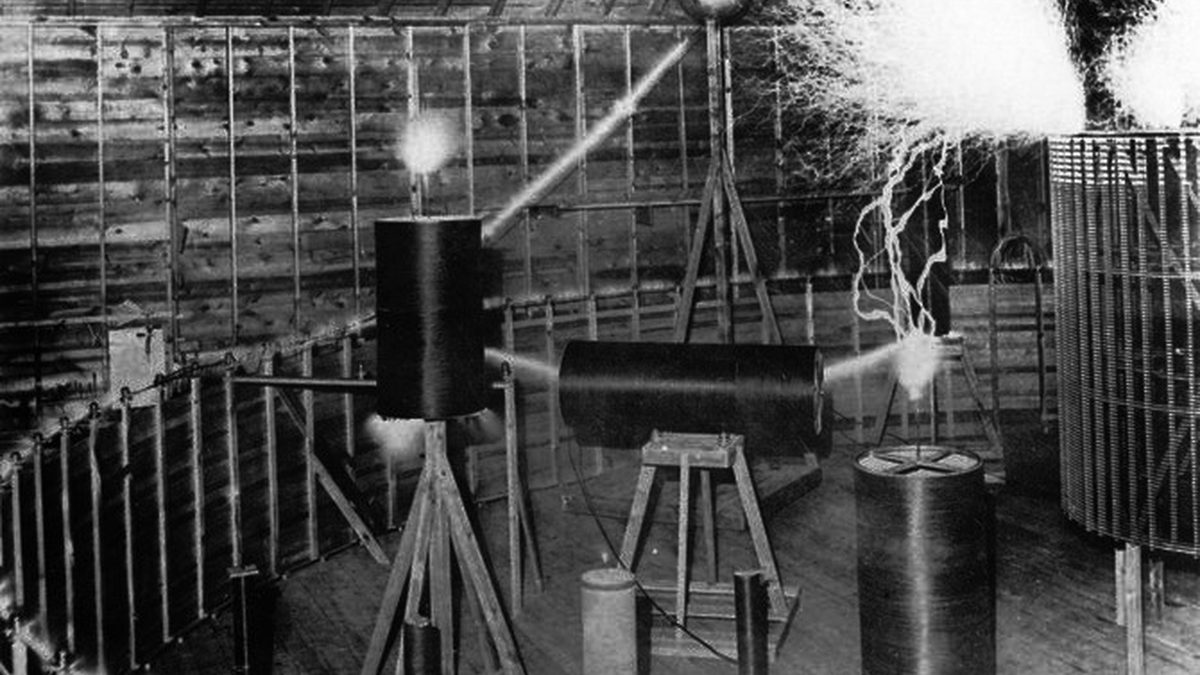
What made that glow was not ultraviolet radiation. A violet ray wand is a sealed, low-pressure glass tube — a Geissler tube — that a high-frequency coil drives at roughly 1 to 2 kilovolts, discharging at around 4 to 10 kilohertz. The current ionizes the thin gas inside the tube, which is what produces the characteristic violet-to-blue glow and the faint ozone smell. Pressed against the skin, the discharge produces a mild warming and tingling sensation, which is as far as its genuine physiological effect goes.
French physicians made it survivable before anyone sold it for the home
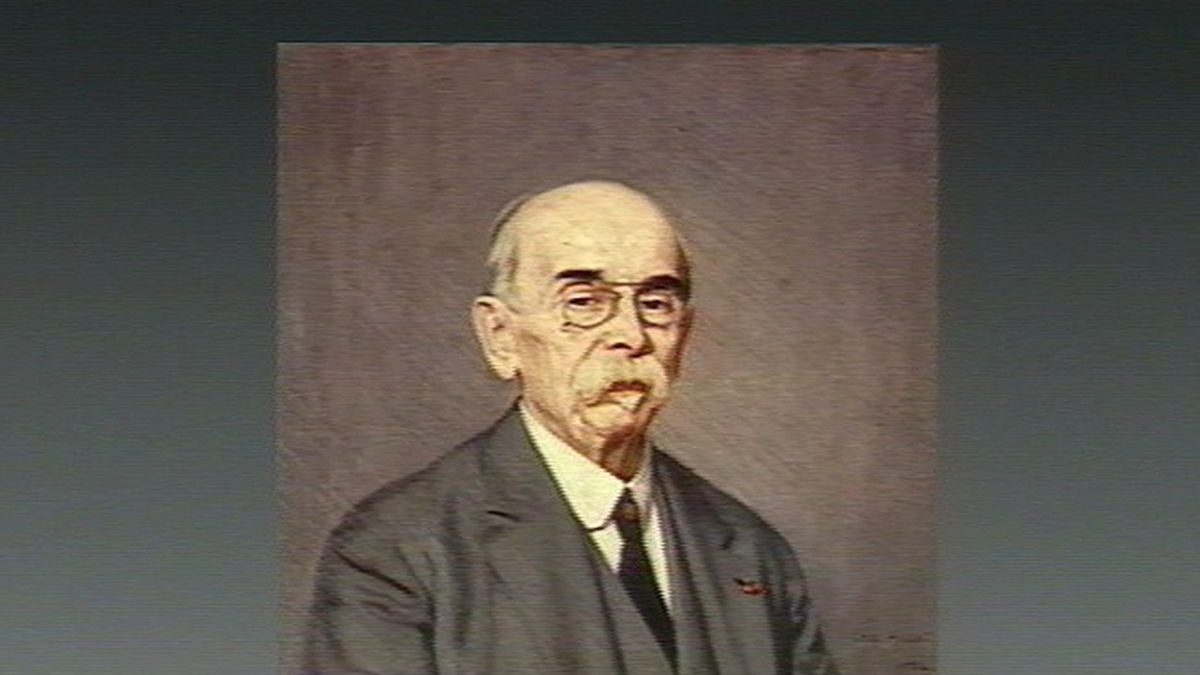
Tesla’s raw coil was designed for lighting experiments, not for being touched. It was two French researchers, Jacques-Arsène d’Arsonval and Paul Marie Oudin, who reworked the circuit into something a patient could tolerate directly. Oudin built the first working prototype of what became the violet ray device in 1893, and an American physician named Frederick Strong produced an adapted version for the U.S. market in 1897.
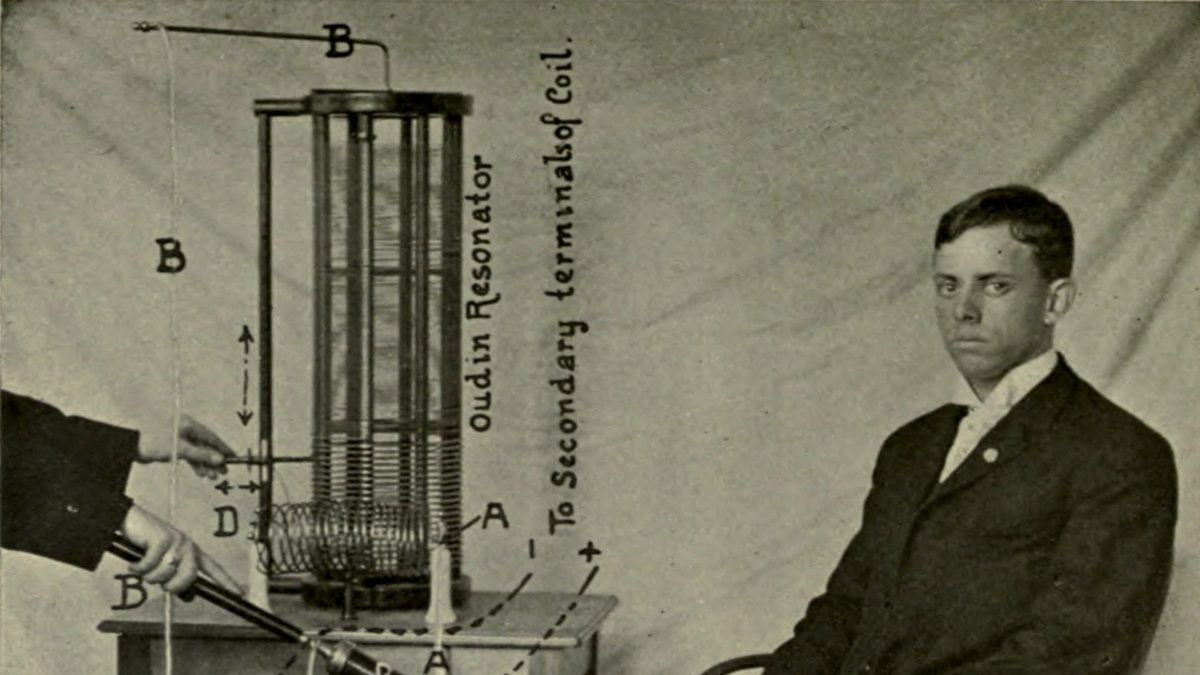
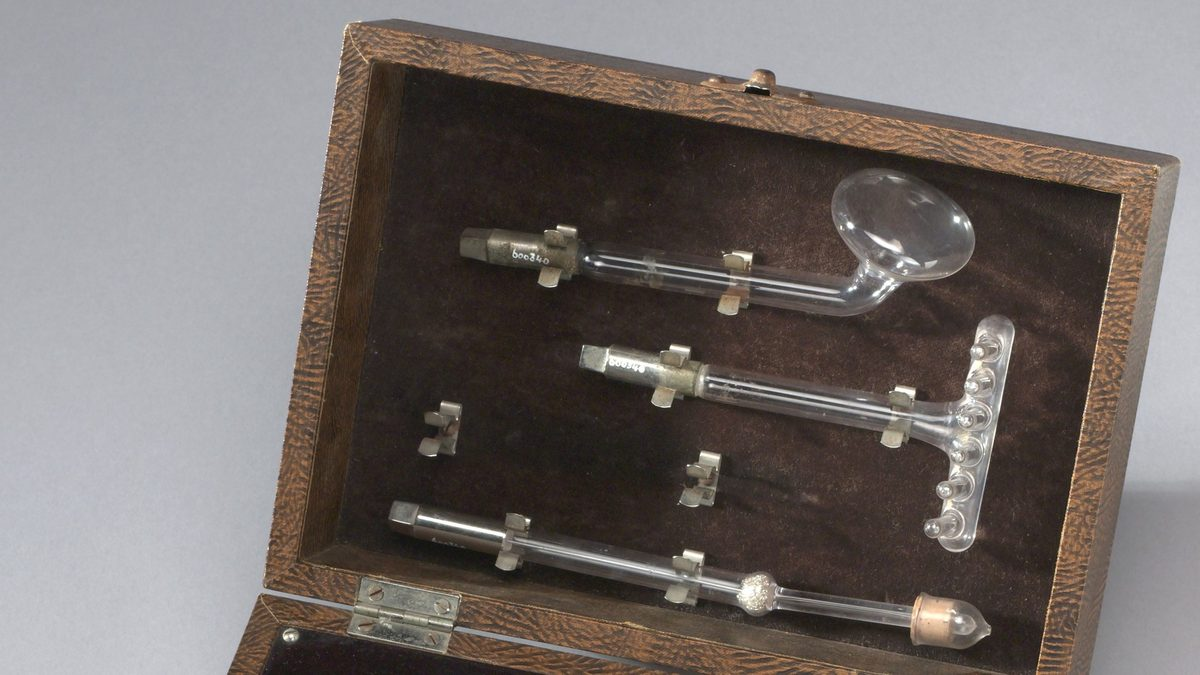
In its original clinical form the device was fitted with a whole family of interchangeable glass electrodes shaped for different jobs — a rake-toothed electrode for the scalp, flatter paddles for joints and larger muscle groups, and narrow tapered tubes for oral or nasal use. That electrode kit is also what later made the device so easy to mass-market: the same wand and transformer could be sold with a dozen interchangeable tips, each one implicitly promising a different cure.
By the 1920s it was marketed to treat nearly anything
Violet ray machines moved into ordinary homes once portable, mains-powered versions became cheap to manufacture after about 1915. Detroit’s RenuLife Electric Company, founded in 1917, became one of the largest American makers, eventually selling seven different models and 44 separate electrode attachments, including specialized dental electrodes marketed for treating pyorrhea. Charles A. Branston Ltd. sold three-mode machines — high-frequency, sinusoidal, and an ozone-inhalation setting — priced from roughly $30 to $100 depending on how many functions the buyer wanted.
The claims attached to these machines were sweeping almost to the point of self-parody. Manufacturer literature promised relief from conditions running, in one company’s own alphabetical list, from abscesses to writer’s cramp, by way of asthma, deafness, infantile paralysis, dandruff, nervous disorders, and enlarged prostates. This was not an unusual approach for the era — the same decades produced the mercury cure for syphilis and a wave of mechanical cure-alls sold on the same logic that a sensation in the body must mean a change underneath it, the same reasoning that kept devices like the vibrating chair on the market for a century and a half.
The medical establishment called one of these devices “bunk” years before the law caught up
Doctors were skeptical of the universal-cure claims almost from the start. The American Medical Association’s Propaganda Department — later renamed the Department of Investigation — spent the 1910s through the 1930s testing and publicly dismantling fraudulent health products, electrotherapy devices among them. One specific violet ray product, the Violetta, sold by the Vi-Rex Company and advertised with the line “from the first treatment you’ll feel like a new person,” was investigated and dismissed by the AMA as fabricated in a 1929 correspondence. The broader skepticism went back even further: by 1917, editors at the Journal of the American Medical Association were already on record rejecting manufacturers’ universal-cure language and pointing out that the devices did not emit any genuinely beneficial ultraviolet radiation, whatever the name implied.
None of that skepticism stopped sales. A device that produces an immediate, physical sensation is a hard thing to argue someone out of, especially when a respected public figure is recommending it and a doctor’s rejection arrives only as a line in a professional journal the buyer never reads.
It took until 1951 for regulators to finally shut the largest maker down
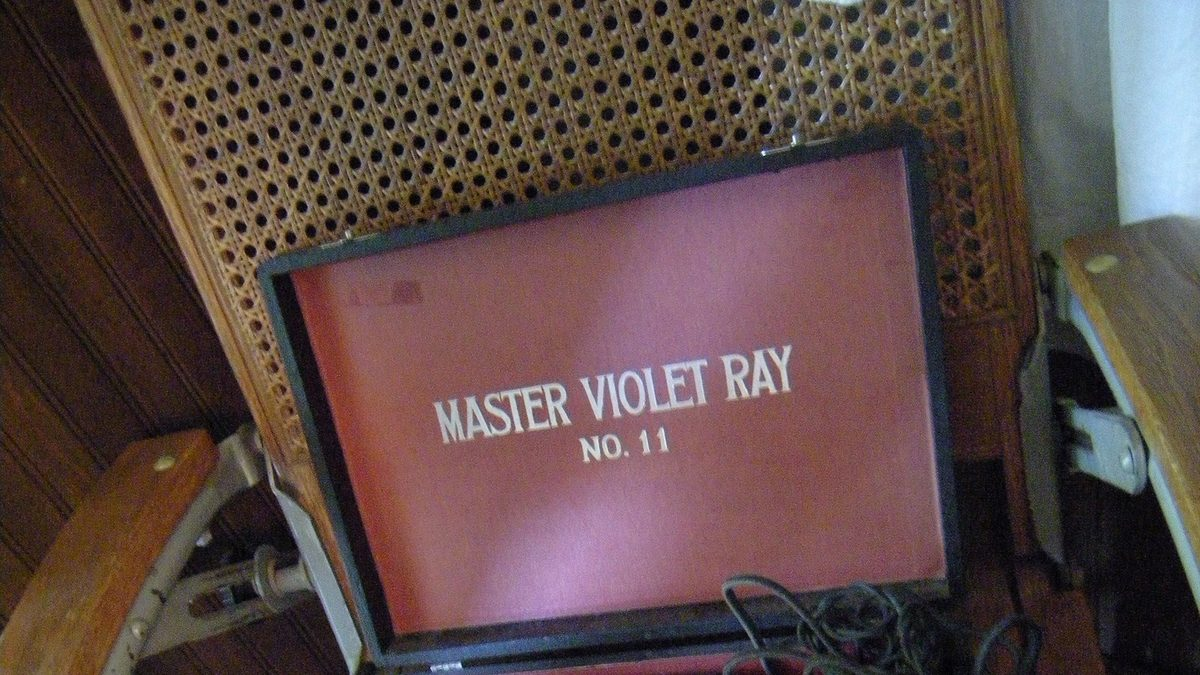
Formal legal action moved far slower than the medical criticism. The federal government’s own Notices of Judgment collection records a case captioned “Misbranding of violet ray device,” U.S. v. 2 Cases, among the thousands of enforcement actions the early FDA brought against mislabeled products. The case that actually ended domestic manufacture came in 1951, when a Maryland district court ruled against Master Appliances, Inc., of Marion, Indiana — by then one of the last major American makers — finding that its violet ray device was “not an effective treatment nor capable of producing the claimed results.” The ruling did not outlaw high-frequency electrodes outright, but it removed the legal ground the biggest remaining seller had been standing on, and large-scale domestic production did not continue past it.
A century later, it is a museum piece and a minor dermatology footnote
Several of these devices now sit in museum storage rather than bathroom cabinets. The Smithsonian’s National Museum of American History holds a Kny-Scheerer Corporation set from around 1925, part of the company’s “Kayess” line introduced in 1917 for its X-ray and electrotherapeutic department; it is currently not on display. Britain’s Science Museum Group holds at least two: a set that belonged to Chisholm Williams, an early British X-ray and electrotherapy practitioner who served as an electrotherapeutist in the Royal Army Medical Corps, and a dental version made by M.W. Austin in the 1920s-40s, built specifically for in-office use on patients’ gums.
Modern high-frequency wands sold to aestheticians are direct descendants of the same circuit, and they are held to a much narrower, much more honest claim: the discharge can dry the skin’s surface and the ozone it generates has some antibacterial effect, which gives it a plausible, minor role in treating acne alongside whatever benefit comes from the ritual itself. That is a long way down from curing deafness, prostate trouble, or baldness, and it took the better part of sixty years — from Tesla’s 1893 demonstration to the 1951 ruling — to arrive at it.
Watch the device in action
The short version of this story runs about a minute and forty seconds and shows the wand itself glowing and crackling; the long-form video on this object has not gone up yet.

Related reading
- Were Tapeworm Diet Pills Real?
- Did Plague Doctors Really Wear Those Beak Masks?
- The Mercury Cure for Syphilis Lasted Four Hundred Years
- Inside the 150-Year History of Vibration Therapy
Shop this object
Shop the styles/items featured in this video:
- Quackery: A Brief History of the Worst Ways to Cure Everything (book)
- Tesla: Inventor of the Electrical Age (book)
- Antique Medical & Scientific Instrument Collector’s Guide (book)
Works cited
- Marsh, Allison. “What Was the Violet Ray Machine?” IEEE Spectrum, 30 September 2022. Link.
- Smithsonian National Museum of American History. Electrotherapeutic Apparatus, Violet Ray. Kny-Scheerer Corporation, c. 1925. Object ID MG.316421.01.
- Science Museum Group Collection. High-Frequency (Violet Ray) Apparatus, used by Chisholm Williams. Object 2008-36. Link.
- Science Museum Group Collection. High Frequency Violet Ray Electrotherapy Apparatus with Three Electrodes. M.W. Austin, c. 1925–1940. Object 1980-158. Link.
- University of Rochester Medical Center, Edward G. Miner Library. “RenuLife Violet Ray Health Generator.” History of Medicine Blog. Link.
- U.S. Food and Drug Administration. “Misbranding of Violet Ray Device,” Notice of Judgment No. 3458 (U.S. v. 2 Cases). FDA Notices of Judgment Collection, 1908–1966, National Library of Medicine. Link.
- Tesla, Nikola. Apparatus for Transmitting Electrical Energy. U.S. Patent 1,119,732, filed 1902, issued 1 December 1914. Link.
- Dushman, Amber. “Ads and Labels From Early 20th-Century Health Fraud Promotions.” AMA Journal of Ethics 20, no. 11 (2018): E1082–1093.
It is worth asking whether you would have pressed that crackling glass tube to your own scalp for fifteen minutes a day on the promise of thicker hair or clearer skin. Millions of people did, for decades, on evidence that amounted to a warm tingle and a company’s say-so.
The violet ray machine is a useful specimen precisely because nothing about it was secret or exotic. The physics were published, the AMA said plainly and repeatedly that the claims did not hold up, and the device was sold anyway, for decades, right up until a single court finally said so in writing. That gap between what the evidence showed and how long the product stayed on shelves is the real subject of this object’s history, and it is not a gap that regulation has closed for good: the same reasoning that sold a crackling wand in 1925 still sells a great many wellness gadgets today.