
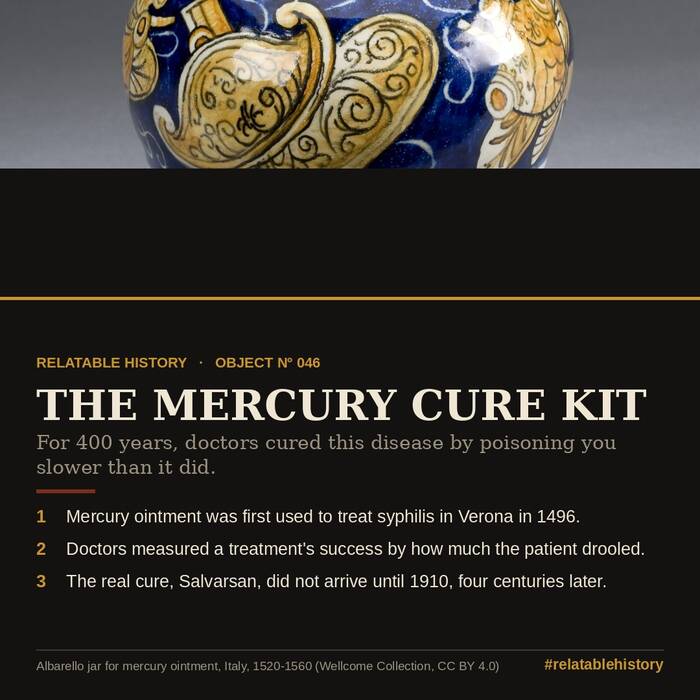
The proof that a mercury cure for syphilis was working, doctors believed for the better part of four centuries, was how much it made a patient drool. A heavy course of treatment — rubbed into the skin, breathed in as vapor, or swallowed as a pill — could push the body to produce several pints of saliva a day, and heavy salivation was taken as the sign that the medicine had reached deep enough to do its job. It had reached deep enough. It just was not doing the job anyone thought it was.
From the early 1500s until 1910, mercury was the default treatment for syphilis across Europe and, later, North America. It was rubbed into the skin for weeks at a stretch, breathed as vapor in sealed fumigation boxes, and swallowed as pills — one proprietary recipe stayed in commercial production for roughly two centuries. It rotted teeth, dissolved gums, caused violent tremors, and in a real number of cases killed the patient outright. People kept taking it anyway, because the alternative, left untreated, was its own slow horror. This is the story of a cure that outlasted most of the Renaissance, the Enlightenment, and the Industrial Revolution before anyone found something safer — and of the second, quieter population it was still poisoning decades after doctors had stopped using it on adults.
How the mercury cure for syphilis took hold
The disease arrived in Europe with brutal speed. In 1495, a mysterious illness tore through French troops besieging Naples, covering soldiers in weeping sores before killing some of them outright. The French called it the Neapolitan disease; the Italians called it the French disease; most of Europe eventually settled on a blunter name, the Great Pox. Exactly where it came from is still argued over by historians — one long-standing theory ties its arrival to Columbus’s return from the Americas in 1493, just two years earlier — but its spread across the continent in the final years of the fifteenth century is not in doubt.
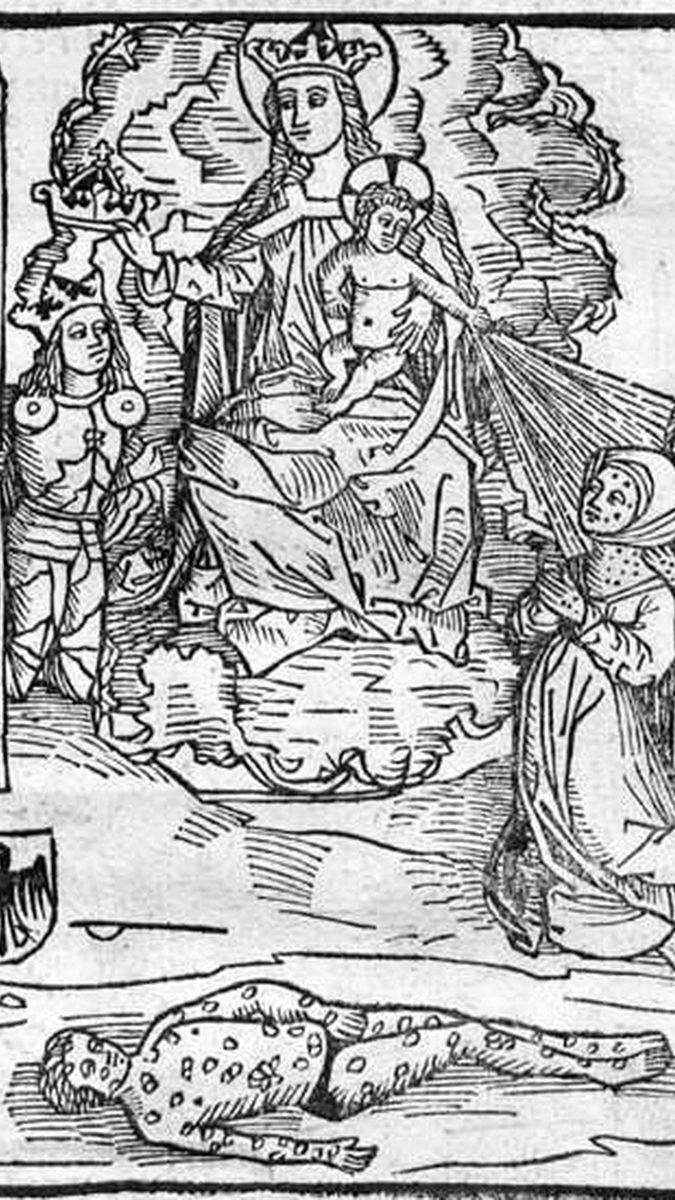
Physicians reached for a remedy they already knew. Mercury had been used against other skin conditions, and against leprosy, since at least the fourteenth century — the French physician Guy de Chauliac recommended it in his 1363 surgical treatise — so applying an existing treatment to a terrifying new disease was a reasonable instinct. By 1514, the Italian surgeon Giovanni da Vigo was describing the new disease’s stages with real clinical precision, and prescribing mercury alongside that description. A generation later, the Swiss physician Paracelsus refined mercury dosing into something closer to an actual protocol, arguing for an idea that still underpins toxicology today: that the poison is in the dose, not the substance. Even Paracelsus, who believed he had tamed mercury, could not make it safe.
What a course of treatment actually involved
There was no single way to take it. Unction meant rubbing mercury ointment directly into the skin — historical dosing guides specify five or six ounces of ointment per application, repeated once or twice a day, sometimes in a heated room meant to help it absorb faster. Fumigation put the patient inside a closed box or cabinet with only their head left free, while mercury vapor, driven off heated cinnabar, filled the space around their bare skin. And there were pills: measured grains of a mercury-based precipitate, taken daily for a stretch of six, eight, or twelve days.
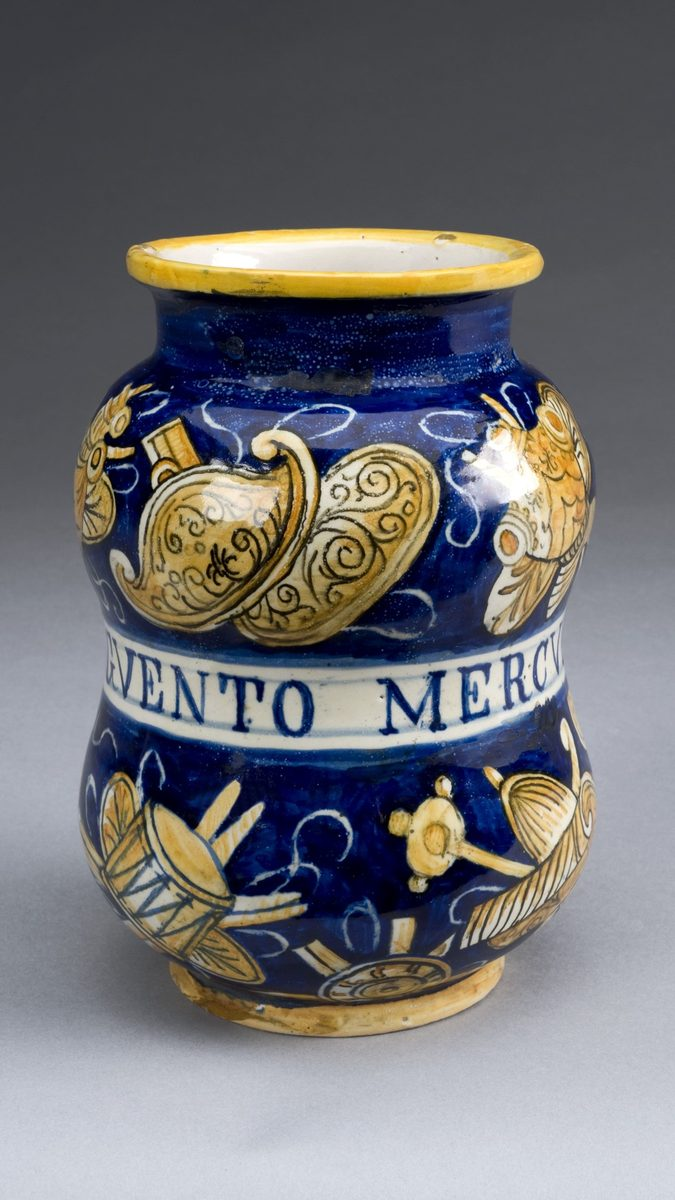
By the early eighteenth century, treatment had become a commercial product. A French physician named Augustin Belloste developed a mercury pill recipe that became famous across Europe for its effectiveness, and the formula made his family considerable money; jars bearing the Belloste name, and later imitators, were still being sold well into the twentieth century. The same pills did double duty as a treatment for gout and urinary stones, which says something about how far mercury’s reputation as a cure-all had spread, independent of whether it deserved it.
Why the cure could be worse than the disease
The toxic cost of a long mercury course was not subtle. Patients lost teeth as their gums rotted away. Tremors set in severe enough and specific enough that physicians gave the shaking its own name, the mercurial tremor. Kidneys failed. Some patients developed painful ulcers that had nothing to do with the syphilis they had come in to treat. Physicians coined a saying that survived for centuries afterward: a night with Venus, a lifetime with mercury.
A meaningful number of patients, historians now generally agree, died of the treatment rather than of the disease it was meant to cure — and whatever genuine benefit mercury did provide likely owed less to the metal itself than to syphilis’s own natural dormant phases, which could look, to a doctor watching a patient’s symptoms fade, exactly like a cure taking hold. Much like the crowds who danced through the streets of Strasbourg in 1518, convinced some unseen force was moving them, nobody involved had the tools to tell a real treatment from a coincidence. And still people queued up for mercury, because the alternative was worse: untreated syphilis could disfigure the face, eat through bone and cartilage, and eventually kill all on its own. The calculation, grim as it was, was rational.
Kings, soldiers, and a president’s little blue pills
Expense kept a long physician-supervised mercury course mostly within reach of people who could afford one, but the treatment reached well beyond the aristocracy. European armies treated venereal disease as a readiness problem: a mercurial cream formulated by a British Army physician, Colonel Lambkin of the Royal Army Medical Corps, was issued for exactly that reason. In 1891 alone, venereal disease accounted for roughly seven percent of all British Army medical discharges, and keeping soldiers fit for service across the empire was reason enough to keep dispensing a treatment everyone already knew was rough on the body.
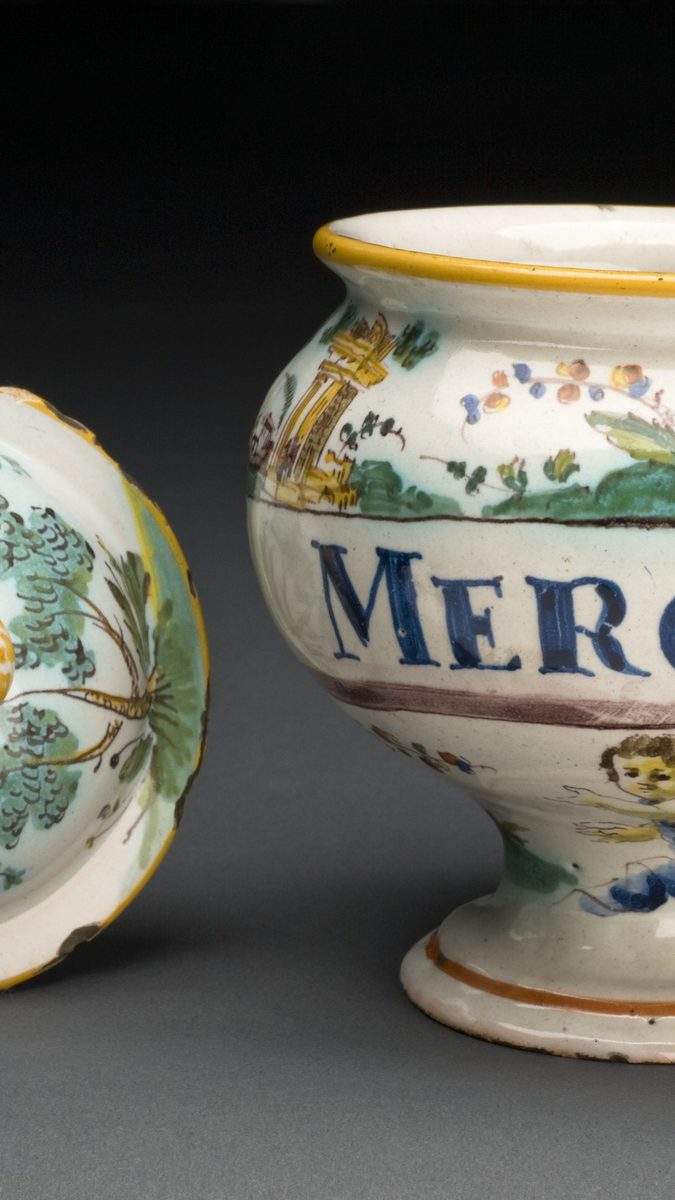
In the United States, mercury’s reach went well beyond syphilis treatment specifically. Nineteenth-century doctors prescribed a mercury compound nicknamed blue mass for everything from venereal disease to constipation to low mood, and Abraham Lincoln is among the more thoroughly documented patients. A 2010 laboratory analysis of surviving mid-nineteenth-century blue mass pills, made to a period recipe, found them to be roughly a third mercury by weight — meaning a patient on the standard dose of two pills a day would have ingested somewhere between eighty and one hundred twenty times the World Health Organization’s current acceptable daily intake. Lincoln reportedly relied on the pills through the stormy 1850s, a period in which he was known for occasional outbursts of temper, and by his own account stopped taking them specifically because they made him cross. The calm, famously even-tempered president who led the country through the Civil War took office only after he had quietly stopped dosing himself with a slow poison.

Mercury’s second, quieter victims
Mercury’s medical reach did not end with syphilis, and its most disturbing chapter did not involve adults at all. From the late nineteenth century well into the twentieth, pharmacies sold calomel teething powders — Steedman’s and Parsons and Ashton’s were two of the best-known brands — marketed directly to parents as a gentle way to soothe a fussy infant. One manufacturer alone was producing an estimated thirty million powders a year, and by the late 1940s, nearly half of all children between one and two years old in parts of Britain had been given them.
What the powders were actually doing was dosing infants with mercury. The condition it caused became known as pink disease, or acrodynia: swollen, painfully burning hands and feet with a distinctive dusky-pink discoloration, profuse sweating, a racing heart, muscle weakness, and in its worst cases, kidney failure. A Swiss physician first connected the symptoms to mercury exposure in 1930, and by 1947 and 1948 researchers had confirmed it as a delayed allergic reaction to mercury, verified by abnormally high mercury levels in patients’ urine. Recorded deaths climbed for years afterward, from a single case in 1923 to a peak of 103 in 1947 alone, before a 1954 report of fatal cases finally forced the issue into public view. Manufacturers began withdrawing calomel from teething products soon after; Australia banned mercury in teething powders outright in 1957, the United States achieved an effective ban by 1960, and recorded pink disease deaths in England reached zero by 1962. The marketing language used to sell mercury to worried parents — gentle, safe for a baby’s delicate system — mirrored almost exactly the overconfidence that had kept mercury in medical use against syphilis for four hundred years, the same way worried parents a few decades later would trust the equally confident, equally wrong advice behind the fresh-air baby cage.
Ehrlich’s magic bullet ends mercury’s reign
By the second half of the nineteenth century, opposition to mercury treatment had been building for decades; physicians were publishing pamphlets arguing plainly that the cure was often worse than the disease. The trouble was that nobody had a real alternative to offer instead. That changed through the methodical work of a German physician named Paul Ehrlich, who set out to find what he called a magic bullet: a compound that could kill the bacterium causing syphilis without poisoning the patient carrying it. Working with the chemist Alfred Bertheim and the bacteriologist Sahachiro Hata, Ehrlich tested hundreds of synthesized arsenic-based compounds, one after another, against infected animals.
The six hundred and sixth compound worked. Ehrlich’s laboratory confirmed its effectiveness in 1909, and the drug — marketed as Salvarsan, with the lab number becoming a kind of nickname in its own right — reached the market the following year. It treated early and middle-stage infection far more effectively than mercury ever had, without the drooling, the tooth loss, or the tremors. The discovery helped win Ehrlich a Nobel Prize, and historians now mark 1910 as the effective end of mercury’s long run as medicine’s default answer to syphilis, even though some clinics kept combining the two drugs out of habit for years afterward. Salvarsan itself was not perfect; it worked poorly against late-stage disease and was notoriously unstable to handle. It would take until 1943, and the arrival of penicillin, for syphilis to get a treatment that was both reliably effective and genuinely safe.
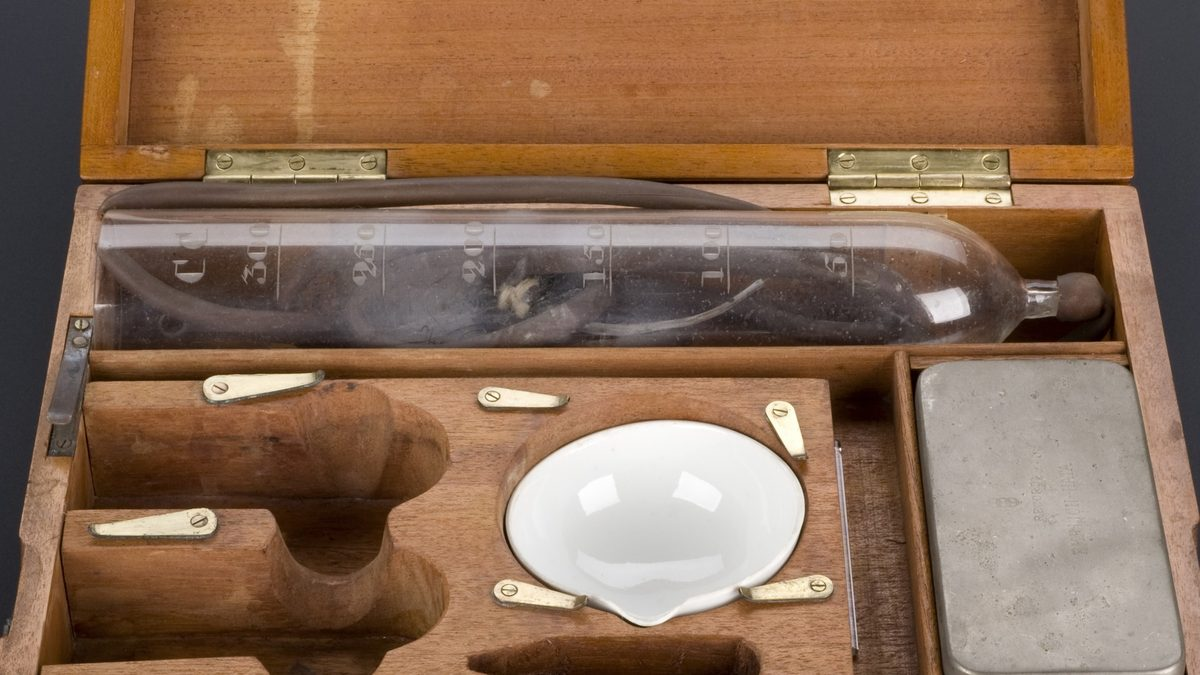
What survives of the mercury cure kit now sits mostly in museum drawers: heavy glazed apothecary jars, folding fumigation boxes, tidy cases of pills and tins of ointment, labeled in Latin and quietly documenting four hundred years of doctors treating their patients with a calculated dose of poison, simply because it was the only tool anyone had.
Watch the full history
The short video version covers the same four-century mistake in about ninety seconds.

Related reading
- What Caused the English Sweating Sickness? — another disease Renaissance-era doctors tried to treat with remedies they barely understood.
- What Caused the Dancing Plague of 1518? — a second medical mystery from the same unsettled century.
- Inside the 150-Year History of Vibration Therapy — how a different questionable cure made the same slow journey from quackery toward real science.
- The Public Health Panic That Made Baby Cages Seem Safe — another case of parents trusting medical advice that, in hindsight, clearly endangered their children.
Works cited
- Frith, John. “Syphilis – Its Early History and Treatment until Penicillin, and the Debate on Its Origins.” Journal of Military and Veterans’ Health 20, no. 4 (2021). Link.
- Black, John. “The Puzzle of Pink Disease.” Journal of the Royal Society of Medicine 92 (September 1999): 478–481.
- Edward Worth Library, Royal College of Physicians of Ireland. “Treatment of Syphilis in Early Modern Europe.” Infectious Diseases exhibit. Link.
- Science Museum Group. “The History of Syphilis, Part Two: Treatments, Cures and Legislation.” sciencemuseum.org.uk.
- Science History Institute. “Early Solution.” Distillations. Link.
- Royal Society of Chemistry. “UK Lab Reveals Shocking Mercury Level in Lincoln’s Blue Pills.” rsc.org, March 2010.
- Science Museum Group Collection. “Drug Jar for Mercury Pills, Italy, 1731–1770.” Object A42768. Link.
- Science Museum Group Collection. “Mercurial Cream Used to Treat Syphilis, England, 1880–1941.” Object 2010-89. Link.
What the mercury cure for syphilis really demonstrates is how medicine judged success before anyone had a reliable way to run a controlled trial. The signs doctors watched for — heavy salivation, a fading rash, a patient who seemed, for a while, to be getting better — were exactly the kind of evidence that a slow-acting poison and a disease with its own dormant phases could both produce. Generations of careful, well-meaning physicians mistook the proof of harm for the proof of a cure, because in the absence of anything better, that was the only evidence available to mistake.
The same compound that failed syphilis patients for four centuries went on causing damage in a second, entirely separate setting, marketed to parents as something gentle rather than something medicinal at all. Both chapters share a quiet lesson: an unquestioned treatment can do enormous damage for a very long time, especially once an entire profession has built its sense of what ‘working’ looks like around the wrong signal.
It is worth sitting, for a moment, with how long that took to correct — four hundred years from a desperate first application in a Renaissance sickroom to a laboratory discovery that finally offered something better, and decades more before mercury was fully out of the nursery as well as the clinic. Given a disease with no real alternative in sight, it’s an open question how many of us, in that position, would have refused the cure everyone around us was taking.