
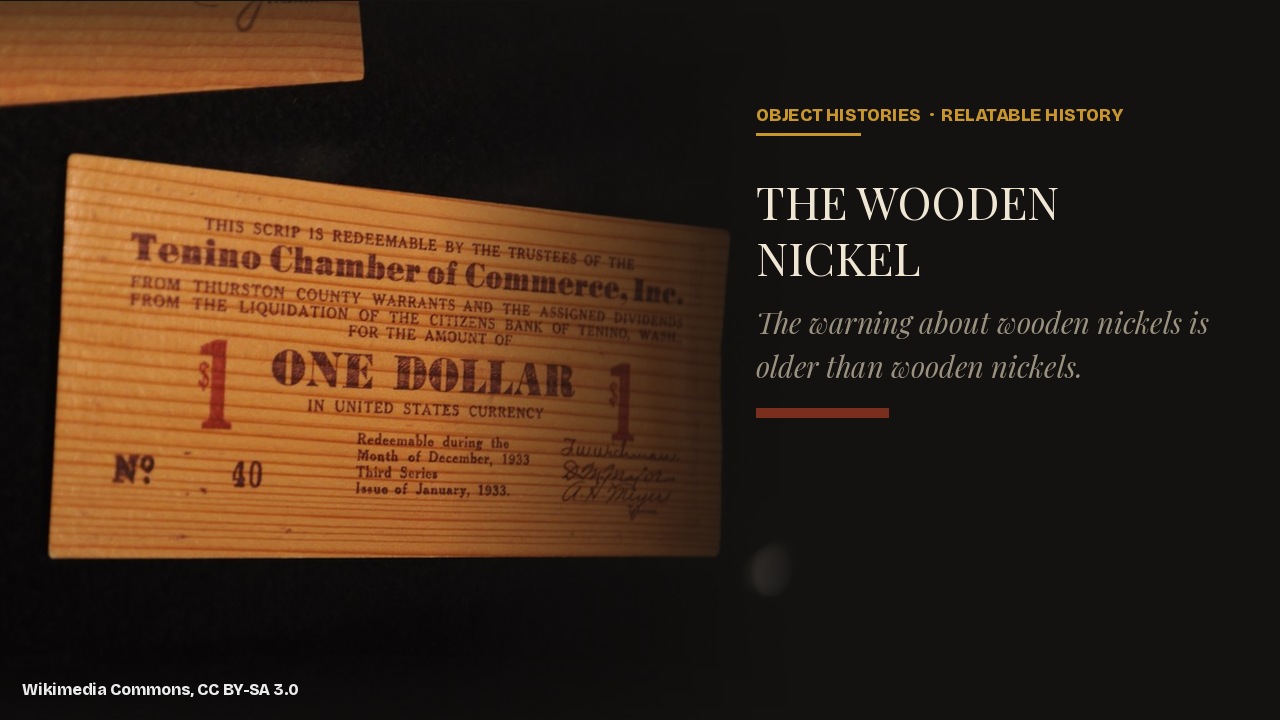
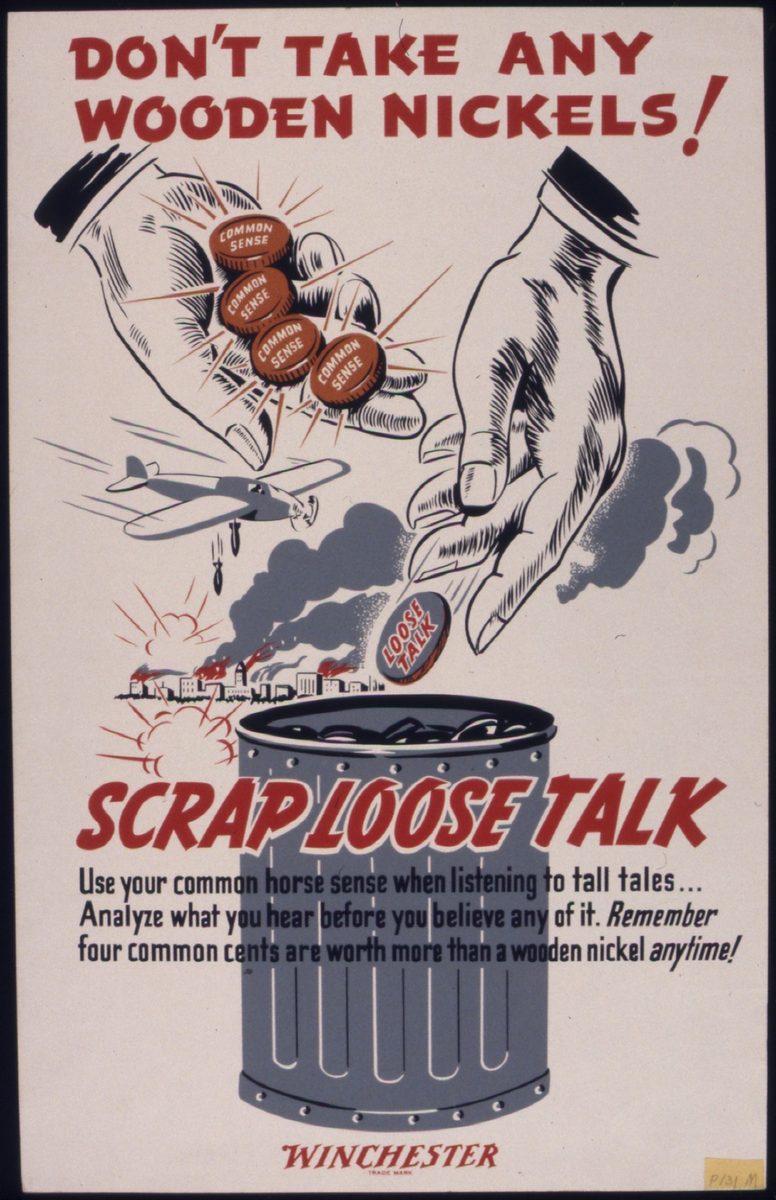
The warning is older than the thing it warns about. “Don’t take any wooden nickels” was already American slang by the mid-1910s — a decade and a half before a five-cent piece made of wood actually existed as money anywhere in the country. Then, in December 1931, the only bank in the logging town of Tenino, Washington failed, and a handful of local businessmen made the old joke literal: they printed real wooden nickels, dimes, quarters and dollar bills to keep their town solvent.
It worked, more or less, though not in the way anyone had planned. Depositors got a slice of their frozen savings back on thin sheets of spruce veneer. The scrip ran in Thurston County for the better part of two years, made the Congressional Record, and turned up in a Smithsonian exhibit nine decades later. What it mostly did not do was circulate: almost everyone who got a piece kept it rather than spent it, which is the detail that makes the whole scheme worth taking seriously.
This is the real story behind the wooden nickel — not a punchline, but an improvised currency built by one Pacific Northwest chamber of commerce, copied and upgraded by its neighbor, and then absorbed into a souvenir fad that outlived the Depression by decades.
A bank failure left an entire town without money
Tenino sat in a sandstone-quarrying and logging district in Thurston County, and like most small Washington towns of the era it ran on one bank. The Citizens Bank of Tenino failed in early December 1931 — the E-Sylum, the numismatic literature society’s journal, dates the closure to December 5 — and its accounts were frozen pending liquidation. For a town with no second bank and no practical way to get cash in or out, that was not a paperwork problem. It was an immediate halt to ordinary commerce: no payroll, no change for the register, no way to buy groceries on credit once the credit ran out.
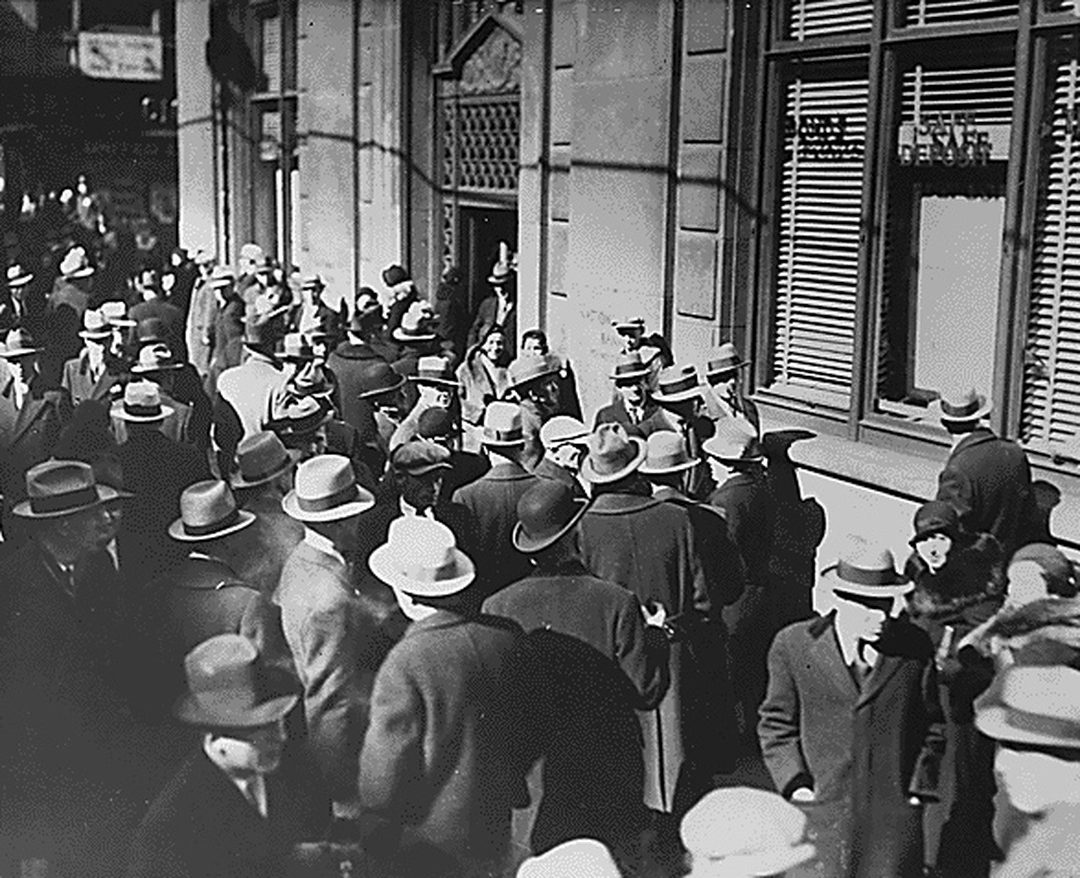
The fix came from Don Major, the Chamber of Commerce secretary, who also happened to publish the town’s newspaper, the Tenino Independent, and therefore owned a printing press. Major proposed letting depositors assign a portion of their frozen balances to the Chamber in exchange for scrip they could spend locally. Sources disagree on the exact share: one account places it at 25 percent of a depositor’s balance, another at 15 percent. Either way, the first notes went out that same month — not yet made of wood, but ordinary paper: engraved $1, $5 and $10 notes plus a 25-cent note on yellow bond, each one signed by the Chamber’s three trustees.
The Chamber switched to wood, and the money became a curiosity
Printing money on paper solved the liquidity problem but did nothing to stop a forger with a decent press of his own. The switch to wood came from Albert Balch, a Seattle supplier of “slice wood” — veneer cut so thin, about a hundredth of an inch in the early sheets, that it could run through a printing press like heavy paper. Balch sent Tenino samples of Sitka spruce and cedar veneer milled by a cutter named Eckersley in Aberdeen, and by February 1932 the Chamber was printing its scrip on that instead.
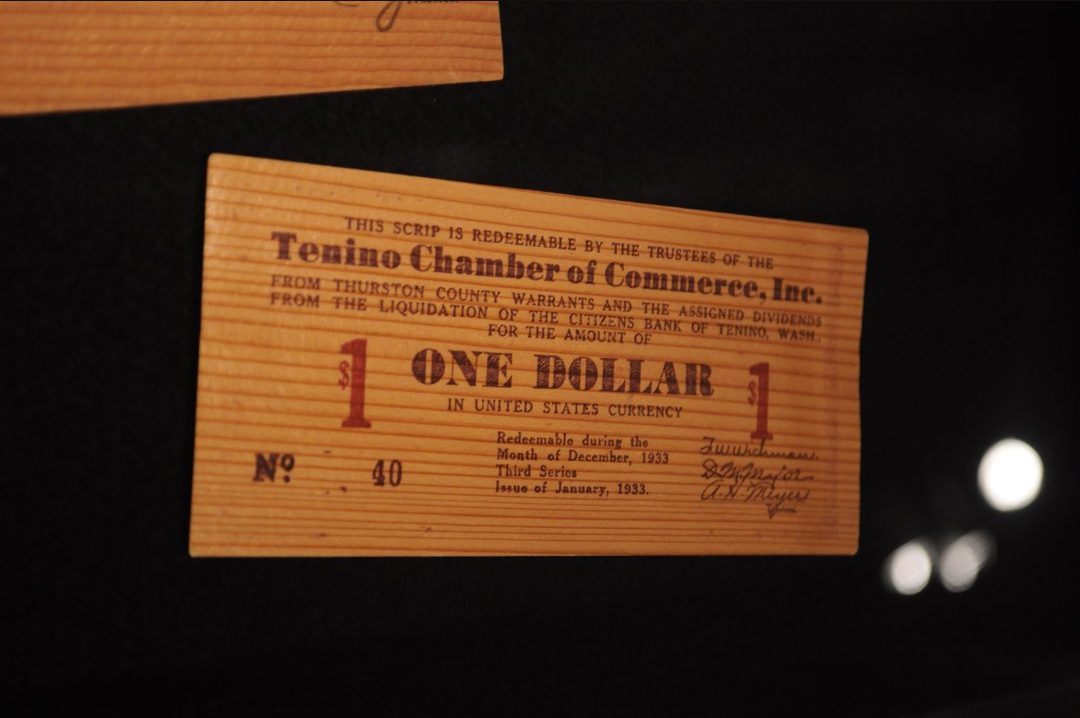
The wood did what paper couldn’t: nobody was going to casually counterfeit a bank note cut from a veneer sheet, and later issues added a watermark for good measure. Each note carried a serial number and the signatures of trustees F. W. Wichman, D. M. Major and A. H. Meyer. Between December 1931 and 1933 the Chamber printed eight separate issues totaling $10,308 — and redeemed only about $40 of it. That gap between what went out and what came back is not a rounding error. It is the whole story in one number: people were not spending Tenino’s money so much as collecting it.
It was, in its odd way, one more entry in a long American habit of improvising local money when the real kind runs short — the same impulse that once made wampum legal tender in colonial Massachusetts and sent cowrie shells circulating as currency across entire trade networks. Tenino’s version just happened to look like a tongue depressor with a signature on it.
Blaine, Washington upgraded the idea into an actual coin
Word of Tenino’s scrip travelled, and Balch — who was also president of the Chamber of Commerce in Blaine, a town hard against the Canadian border — pitched the idea there once Blaine’s own bank failed in 1933. Blaine went a step further than Tenino ever had: instead of flat rectangular notes, it minted round wooden coins, including an actual five-cent piece, stamped with the Peace Arch monument that still stands on the border.
Under mayor C. V. Wilder, the city council backed the scheme with non-interest-bearing warrants, and the Blaine Relief Association did the printing on thin spruce sheets. Reverend Floyd C. Green, the town treasurer, serially numbered and personally initialed every coin by hand — a trust mechanism that mattered more than it sounds, since the whole system depended on residents trusting merchants to honor the coins, merchants trusting the city to honor its warrants, and everyone trusting that no one was quietly printing extras. The city put unemployed residents to work on municipal jobs and paid them in the wooden coins; every business in town had agreed in advance to accept them at face value. According to the Blaine Journal, the smaller denominations — the dimes and nickels — were already trading above face value as collectibles before the year was even out.
A world’s fair turned the emergency fix into a national fad
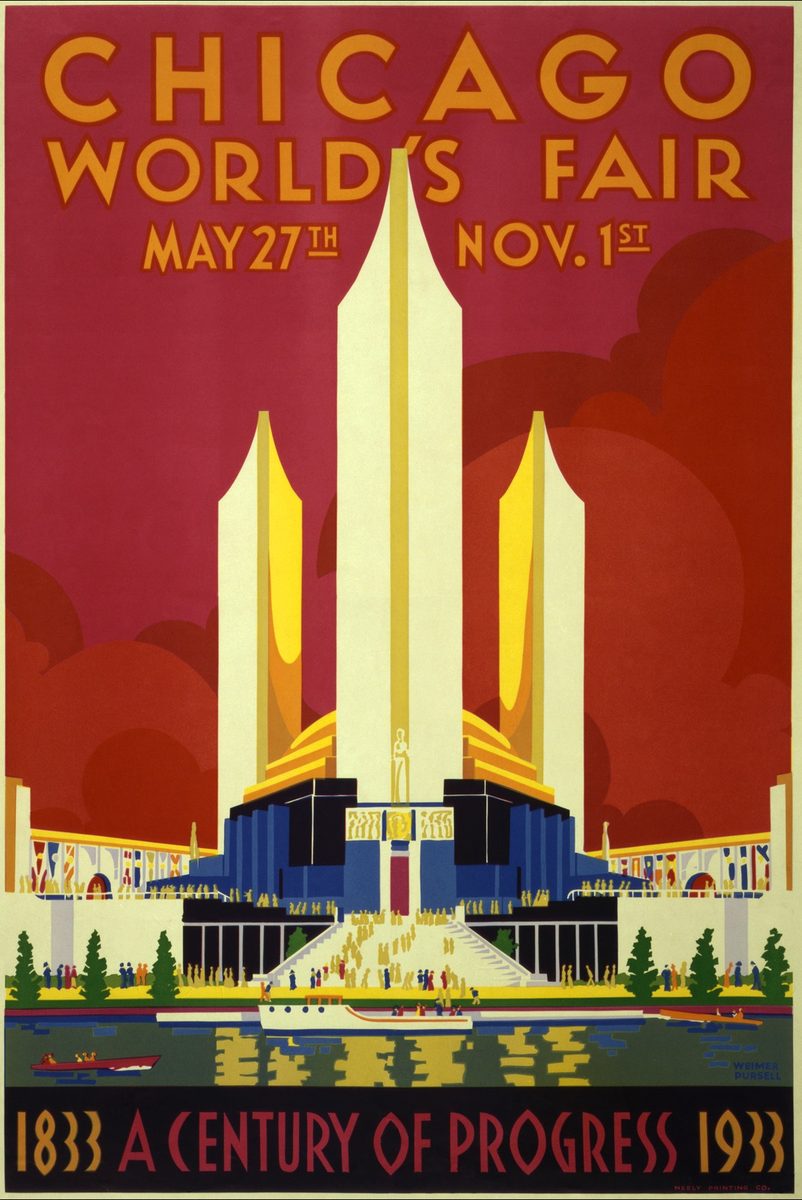
The same year Blaine was minting coins, Chicago opened the “Century of Progress” exposition, a world’s fair built around the theme of industrial optimism in the middle of the Depression. Among its souvenirs, by multiple accounts, were wooden nickels handed out on the fairgrounds — stamped keepsakes with no connection to Tenino’s or Blaine’s actual banking emergencies, just a novelty built on the shape of something real. That is the moment the wooden nickel stopped being a specific Pacific Northwest fix for a specific Pacific Northwest problem and became, instead, a generic American souvenir format — something chambers of commerce, lodges and merchants anywhere could stamp with a date and a local landmark and hand out at anniversaries and grand openings for the rest of the century.
Why almost nobody ever spent theirs
The $40-of-$10,308 redemption rate in Tenino was not an accident of bad bookkeeping. By the Chamber’s own later accounting, it had taken in roughly $7,000 in ordinary U.S. currency from collectors buying up the novelty notes by mail — money that effectively subsidized the town’s recovery and let the Chamber negotiate to reopen a bank. In Blaine, members of the Relief Association mailed sample coins to President Franklin Roosevelt, and national wire services picked up the story, which only accelerated the same pattern: people who received the money as emergency currency treated it as a keepsake instead, framing it or sending it to relatives as a curiosity from the hard-luck Northwest.
That turned the towns’ liability into something closer to an asset. A conventional emergency currency is a promise a town has to keep — every note in circulation is a debt someone can present for redemption. Wooden money, because people wanted to keep it rather than cash it in, let Tenino and Blaine issue far more scrip than they ever had to actually honor. It was an accounting trick nobody had engineered on purpose, not unlike the notched tally sticks that ran England’s exchequer for six centuries on nothing more than mutual record-keeping and trust.
The coins were also, by multiple accounts, fragile enough that the novelty wore off fast in a child’s pocket. Rodney Dement, who was a boy in Blaine when the wooden nickels were current, later recalled that the coins were common among children but that they learned quickly not to carry them loose, since thin wood split and cracked the way a coin never would. That fragility probably helped the collecting instinct along: a wooden nickel that survived intact was already a small accomplishment before it was worth anything to anyone.
A coda: wooden nickels as small change, not just scrip
Tenino’s wooden money did not end cleanly with a single redemption deadline. In April 1935, well after the original scrip crisis had passed, local businesses turned to wood again on a smaller scale: wooden fifth-cent tax tokens, used during a statewide shortage of the metal tokens Washington required for collecting fractional sales tax. It is a minor footnote next to the $10,308 in emergency currency, but it shows that by the mid-1930s wood had become Tenino’s default answer to any small-denomination shortfall — not just a one-time emergency measure, but a material the town had learned to reach for.
What survives: a museum, an archive, and a pandemic sequel
“Don’t take any wooden nickels” is documented in American slang dictionaries from at least 1915 as a lighthearted parting warning against being cheated, which means the phrase had already been in circulation for roughly a decade and a half before Tenino made it literal. The joke gave the object its name. The object never quite returned the favor by becoming ordinary money — it stayed a curiosity, which is exactly why it survived.
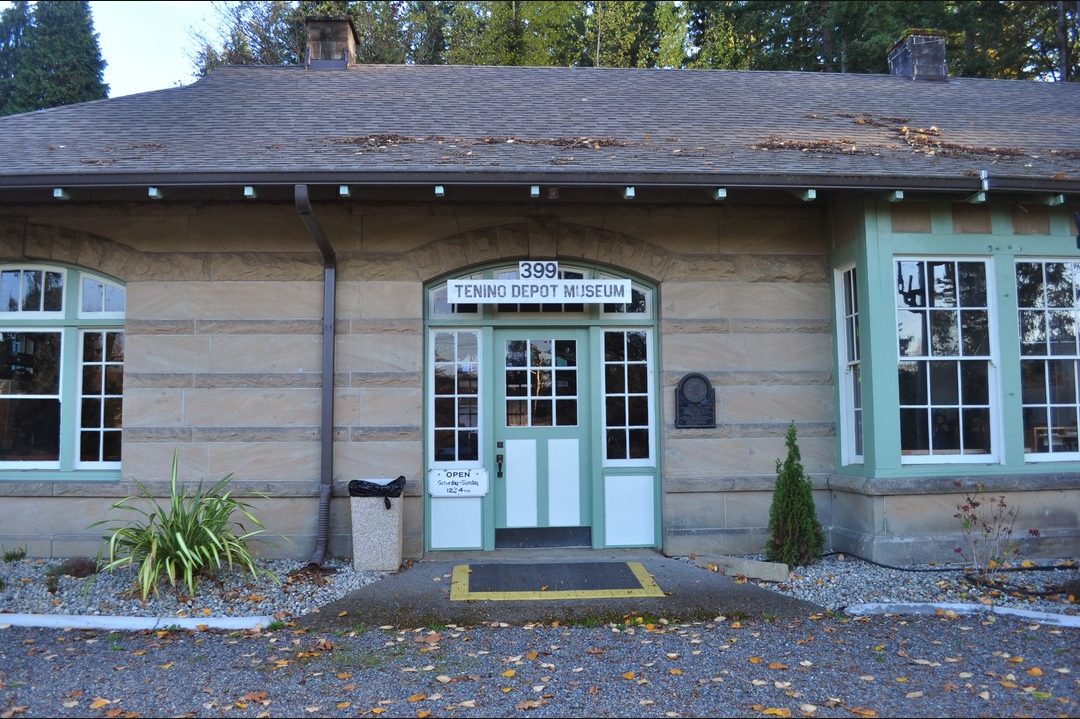
Tenino’s original wooden bills and Blaine’s wooden nickels are both still around: the Tenino Depot Museum keeps the town’s currency history on permanent display, the Washington State Archives holds its own documentation of the issue, and the Smithsonian’s National Museum of American History has paired Tenino’s original 1932 scrip with a newer set of wooden notes in its “Value of Money” exhibit. The newer set exists because in April 2020, as the pandemic shut down Main Street businesses, Tenino’s city council did it again: it approved wooden scrip — eventually backed by about $16,000 in city funds and donations — giving residents with documented COVID-19 income loss up to $300 a month in $25 wooden notes, redeemable dollar-for-dollar at city hall. Collectors were reportedly offering double face value for them within weeks, and most recipients kept their notes rather than spend them — the same pattern repeating itself, word for word in dollars and cents, ninety years later.
Watch the full history
The short video covers the bank failure and the switch to wood in under a minute; the long-form companion, once it ships, will go deeper into Blaine’s coinage and the 2020 revival.

Related reading
- How an Abacus Actually Works, Bead by Bead
- The Egg Money History of the Farmhouse Henhouse
- Cowrie Shell Money: How a Sea Snail Financed Four Continents
- The 24 Years Wampum Was Legal Tender in Massachusetts
Shop the styles/items featured in this video
- The Great Depression in America (book)
- Vintage-style wooden nickel souvenirs
- Local and alternative currency history (book)
Works cited
- “Wooden Money.” Business History Review 9, no. 1 (February 1935): 9–11. Link.
- Washington State Archives, Office of the Secretary of State. “Archives Treasure #2: Tenino Wooden Money.”
- “Former Tenino Mayor Views Historic Wooden Money Display.” Coin World. Link.
- The Numismatic Bibliomania Society. The E-Sylum, vol. 11, no. 50, article 24: Tenino, Washington wooden money. Link.
- Ferguson, Ian. “Wooden Nickels Helped Blaine Weather the Great Depression.” The Northern Light. Link.
- “How Wooden Money Saved This Small Washington Town.” KNKX, October 10, 2020. Link.
- “In Economic Slump, Town Takes New Tack: Printing Its Own Money.” The Christian Science Monitor, July 9, 2020. Link.
- “Smithsonian Looks to Enshrine Tenino’s Wooden Money.” The Chronicle (Centralia-Chehalis, Wash.). Link.
- “Wooden Nickel Proves to Be Priceless Heirloom: Here’s a Brief History of Wooden Nickels in the United States.” Uncharted Lancaster, May 15, 2019.
- Kipfer, Barbara Ann, and Robert L. Chapman. The Dictionary of American Slang. 4th ed. HarperCollins, 2007.