
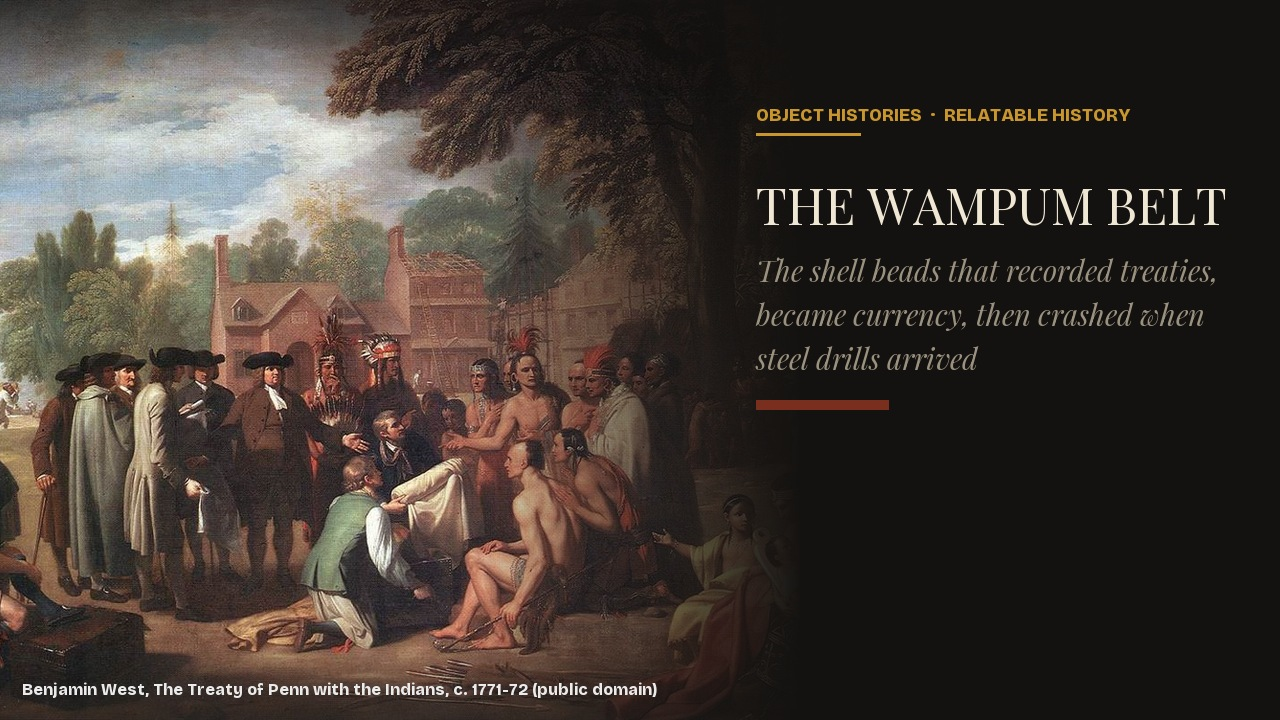
In 1637, the General Court of the Massachusetts Bay Colony made a shell bead legal tender. Not a token, not a trade good tolerated at the margins of the economy — a currency you could use to settle a debt, buy goods at a trading post, and, for a stretch of years, pay your taxes. The beads were wampum, and the law setting their exchange rate against English pence stayed on the books for twenty-four years, until the colony quietly repealed it in 1661.
That a colonial government fixed a formal exchange rate for shell beads is not folklore; it is statute, recorded in the Massachusetts court records the same way the value of a shilling was recorded. And the currency it created did not fail the way currencies usually fail, through war or default. It failed because the tools required to make it got better, which is a strange way for money to die.
The stranger part is what survived that death. Wampum’s run as small change in Boston and New Amsterdam was a twenty-four-year detour. The belts it was cut into had already been doing a different job, as law and memory, for at least as long before the first Dutch trader arrived — and they went on doing that job for more than three centuries after Massachusetts stopped accepting them for taxes.
A single bead could take an hour to drill
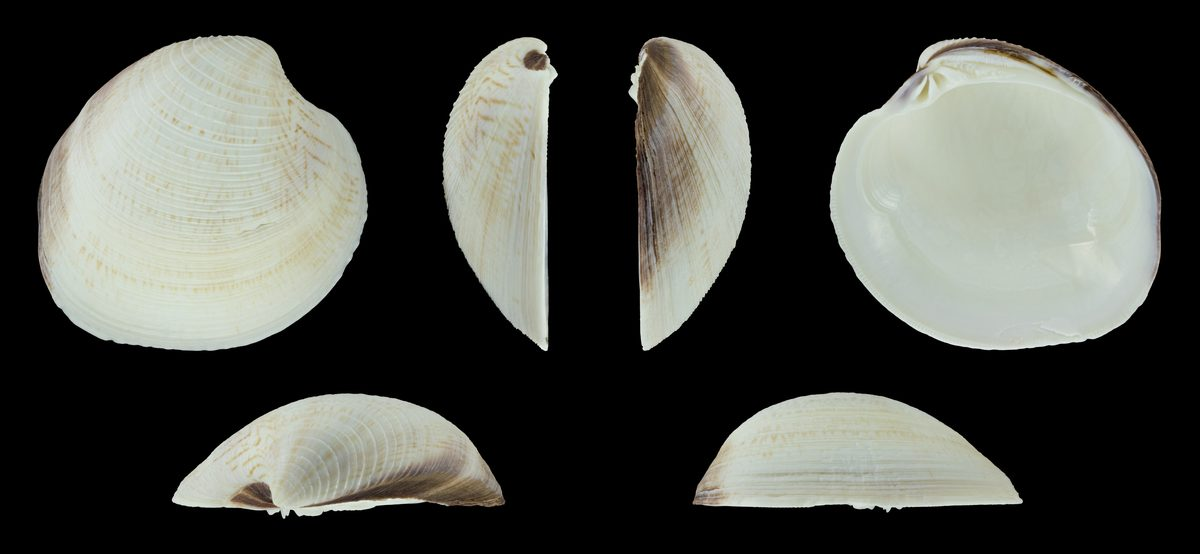
Wampum beads came from two shells with very different yields. The channeled and knobbed whelk, plentiful along the Atlantic coast, supplied the white beads, cut from the columella, the spiral column running through the center of the shell. The northern quahog clam supplied the rarer purple beads, and only from the dense, dark hinge at the base of the shell — a small usable area on an already uncommon source, which is why purple beads generally cost roughly twice what white beads did to produce.
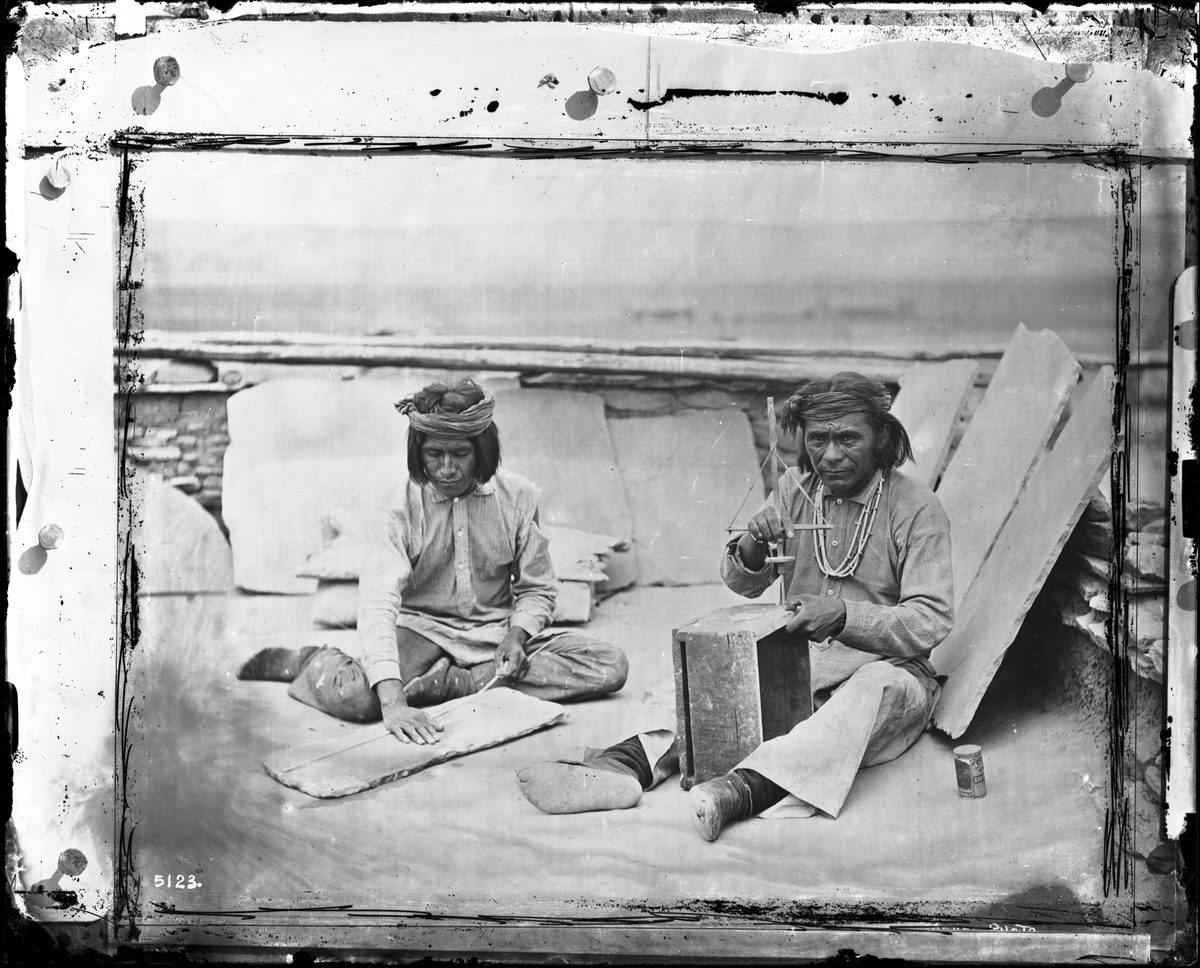
The shell was broken into rough blocks, then drilled from one face and, once the drill was halfway through, flipped and finished from the other side, so the two bores met in the middle rather than blowing out the far wall. A stone or reed-tipped drill was braced against the maker’s chest and spun with a bow, water dripping onto the point to keep friction from cracking the shell, while a thumb and finger cleared shell dust from the widening hole. Only after the block was pierced was it ground down against a stone into the smooth cylinder that got strung and woven. The Smithsonian’s National Museum of the American Indian holds drills from one nineteenth-century wampum works in New Jersey that still used essentially this method, mechanized only at the very end of its life by metal bits.
The belts were law before they were ever mistaken for money
Among the Haudenosaunee, strings and belts of wampum recorded the Great Law of Peace, the oral constitution binding the confederacy’s member nations, and a trained reader could recite the law’s clauses by following a belt’s pattern much as a modern reader follows a page of text. Belts opened and closed councils, certified messengers as genuine, and formally carried condolence at a death; refusing an offered belt was refusing whatever it asked.
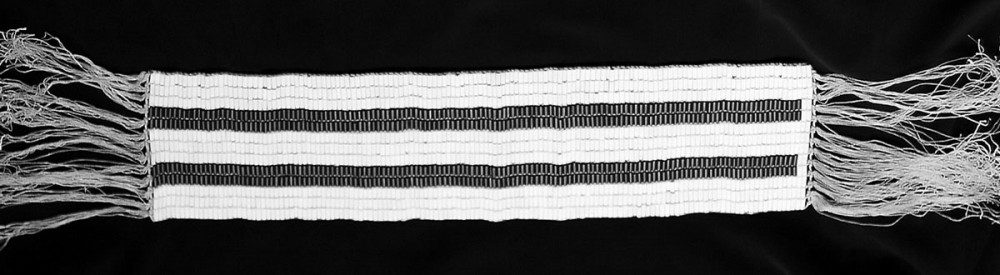
The clearest surviving example of that function is the Two Row Wampum, or Guswenta: two parallel purple lines on a white field, said to record an agreement reached around 1613 between Haudenosaunee representatives and Dutch traders on the Hudson River, one line for a Haudenosaunee canoe and one for a Dutch ship, traveling the same river side by side, neither one steering the other. The Onondaga Nation, which maintains the belt’s interpretation today, describes it as the template for every treaty the confederacy negotiated afterward, including the 1794 Treaty of Canandaigua with the newly formed United States. That is a belt functioning as a filed legal instrument, cited the way a later government might cite precedent.
The 1637 law and the price of a penny
Wampum reached New England’s colonists through Dutch traders working out of New Amsterdam beginning around 1627, and it caught on for an obvious reason: English and Dutch settlers had brought almost no coined money with them, and Indigenous trading partners would reliably accept wampum, so it functioned as a bridge currency between two economies that otherwise had no shared medium of exchange. The Massachusetts General Court formalized that use in 1637, and by 1650 had set specific rates: eight white beads or four black, meaning purple, beads to the penny, legal for debts up to forty shillings, though not accepted for taxes under that later schedule. A string of ninety-six beads was worth a shilling; a string of four hundred eighty was worth five.
Those are not round, ceremonial numbers. They are the kind of figures a treasury sets when it expects a currency to actually circulate, and for roughly two decades wampum did, moving alongside beaver pelts as the two working currencies of the northern colonies, used for everyday debts in a cash-starved economy right up until the colony’s own silver mint, opened in Boston in 1652, finally began supplying enough coin to make shell beads unnecessary.
What actually broke it
Wampum’s value as currency depended on the same slow, skilled labor that made it valuable as craft: an hour or more of careful drilling per bead kept the supply naturally scarce. Colonists broke that constraint from two directions at once. They brought in metal awls and, before long, mechanical drills that cut production time far below what hand-drilling required, and separate accounts from the period describe poor-quality shell and artificially dyed beads entering circulation alongside the genuine article, degrading buyers’ confidence in what a string of wampum was actually worth. Both problems point the same direction: a currency whose entire value proposition was scarcity and consistency lost both at once.
Supply outran demand through the 1650s, purchasing power fell, and colonial governments stopped treating wampum as reliable money one statute at a time. Massachusetts repealed its legal-tender law on May 22, 1661, citing what the record calls the inconvenience the requirement had become. By the 1670s wampum had effectively disappeared from colonial account books.
A belt whose own meaning is still argued over
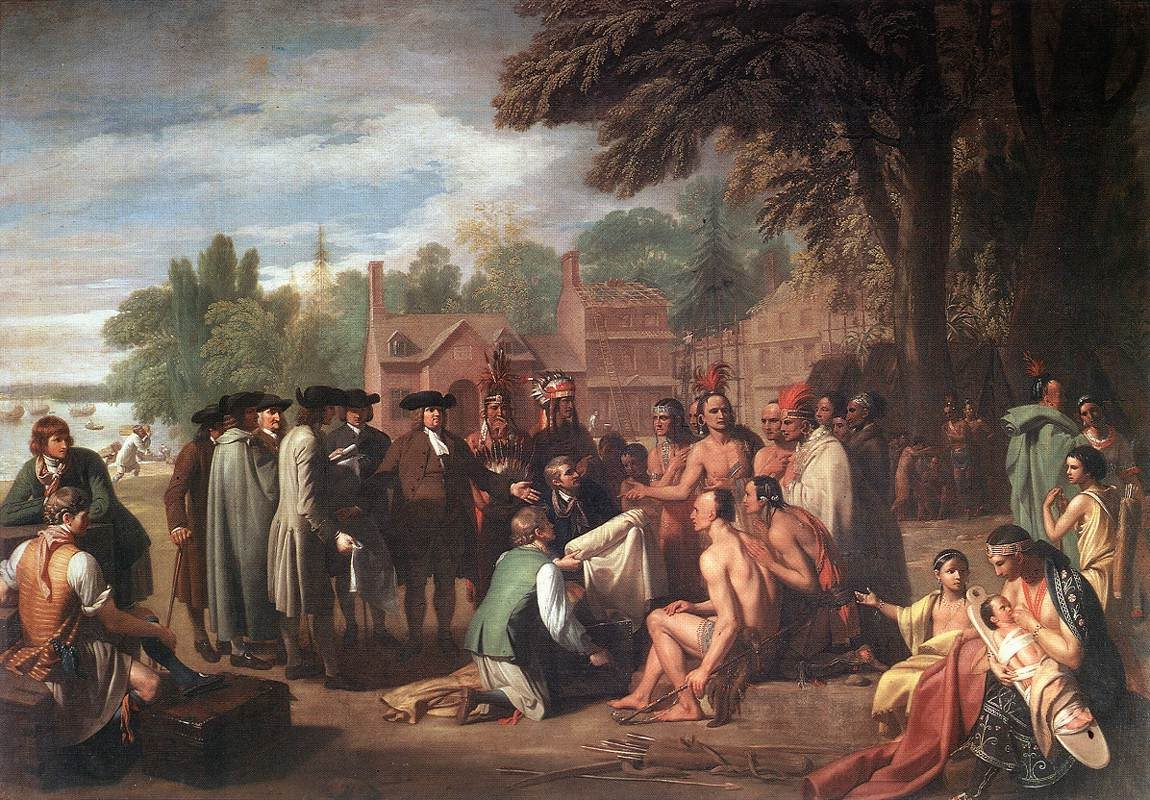
Not every wampum belt’s story is as settled as the Two Row’s. The so-called Penn Treaty Belt, now held by the Historical Society of Pennsylvania and displayed at the Philadelphia Museum of Art, is traditionally tied to a 1682 meeting between William Penn and Lenape leaders at Shackamaxon — but art historian Kerr Houston notes there is no contemporary documentary proof that meeting happened at all, and the belt’s maker, exact date, and early ownership history are all unknown. Most scholars place its manufacture in the 1680s; at least one researcher has argued for a date after 1750, decades later than the treaty it supposedly commemorates.
Even its central image is disputed. The belt shows two figures joining hands, one rendered noticeably larger with an oversized head of ten beads. Two Haudenosaunee chiefs consulted in the early 1900s read that larger head as a feathered headdress marking the Native figure as the more powerful party. Nineteenth-century Anglo-American commentators, including the donor who gave the belt to the Historical Society in 1857, read the same figure as a European in a broad-brimmed hat. Both readings are defensible from the surviving physical object; neither can be confirmed, because no one recorded what the belt’s own maker intended. It is a reminder that a wampum belt communicates through a shared visual code, and that code goes silent the moment the community that could read it is not the one doing the interpreting.
The belts outlasted the law by more than three centuries
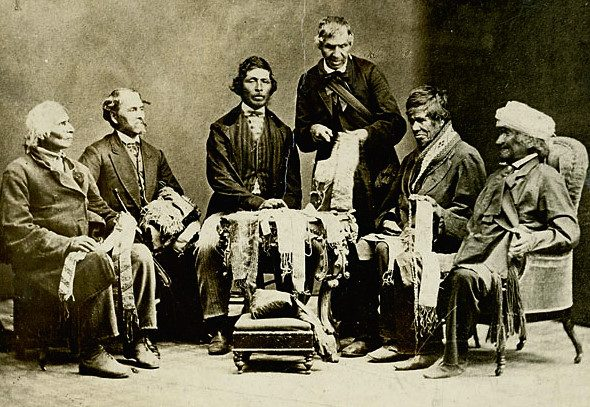
Many historic belts left Haudenosaunee hands in the nineteenth and twentieth centuries, sold under economic pressure or acquired by collectors and museums during decades when Native governance and ceremonial practice were under direct legal suppression. Some of that has been reversed. On October 21, 1989, the New York State Museum returned twelve wampum belts, some held since the 1890s, to the Onondaga Nation at a ceremony in the nation’s longhouse, transferring with them the title of Wampum Keeper — a formal recognition that the belts were never simply museum objects but active legal instruments that belonged with the people still able to read them.
Wampum-making itself has also seen a genuine revival. Haudenosaunee and Algonquian artisans have been relearning and teaching hand drilling and belt weaving, techniques that had nearly disappeared once glass trade beads and, later, industrial substitutes made the old shell-bead craft commercially pointless. What is being revived is not a curiosity. Belts made this way are still read at Haudenosaunee councils today, in the same practical sense the Two Row Wampum was read in 1613.
Set the two timelines side by side and the object’s real significance comes into focus. Wampum’s run as coined-equivalent money in Boston and New Amsterdam lasted twenty-four years by statute, and collapsed the moment industrial tools met a value system built entirely on scarcity and skill. Its use as law, treaty, and memory has now run more than four hundred years, survived the colony that tried to spend it, survived a century of belts leaving Native hands for museum vitrines, and is still, by every available sign, ongoing. The colonists were not wrong that wampum was valuable. They were wrong about which of its two functions actually mattered.
Watch the full history
The video traces wampum from the quahog bed to the colonial ledger in just over six minutes.

Related reading
- The 2,600-Year History of the Chamber Pot, From Athens to the Sewer
- Cowrie Shell Money: How a Sea Snail Financed Four Continents
- The Full History of the German Beer Stein
- What Caused the Bronze Age Collapse?
Works cited
- Shell, Marc. Wampum and the Origins of American Money. University of Illinois Press, 2013. Link.
- Ceci, Lynn. “The Value of Wampum among the New York Haudenosaunee: A Case Study in Artifact Analysis.” Journal of Anthropological Research 38, no. 1 (Spring 1982): 97–107.
- Federal Reserve Bank of Boston. History of Colonial Money. Public education series. Link.
- National Museum of the American Indian, Smithsonian Institution. “Drill for making wampum beads,” catalog no. 142929, from Campbell’s Wampum Factory, Pascack, New Jersey.
- Onondaga Nation. “Two Row Wampum — Gaswéñdah.” Link.
- Onondaga Nation. “The Day that 12 Wampum Belts Returned to Onondaga.” Link.
- Houston, Kerr. “Re-reading Wampum: The Penn Treaty Belt and Indeterminate Iconographies.” Panorama: Journal of the Association of Historians of American Art 9, no. 1 (Spring 2023). Link.
- Historical Society of Pennsylvania, Digital Library. “Belt of wampum delivered by the Indians to William Penn at the ‘Great Treaty’ under the Elm Tree at Shackamoxon in 1682.” Item 14645.