
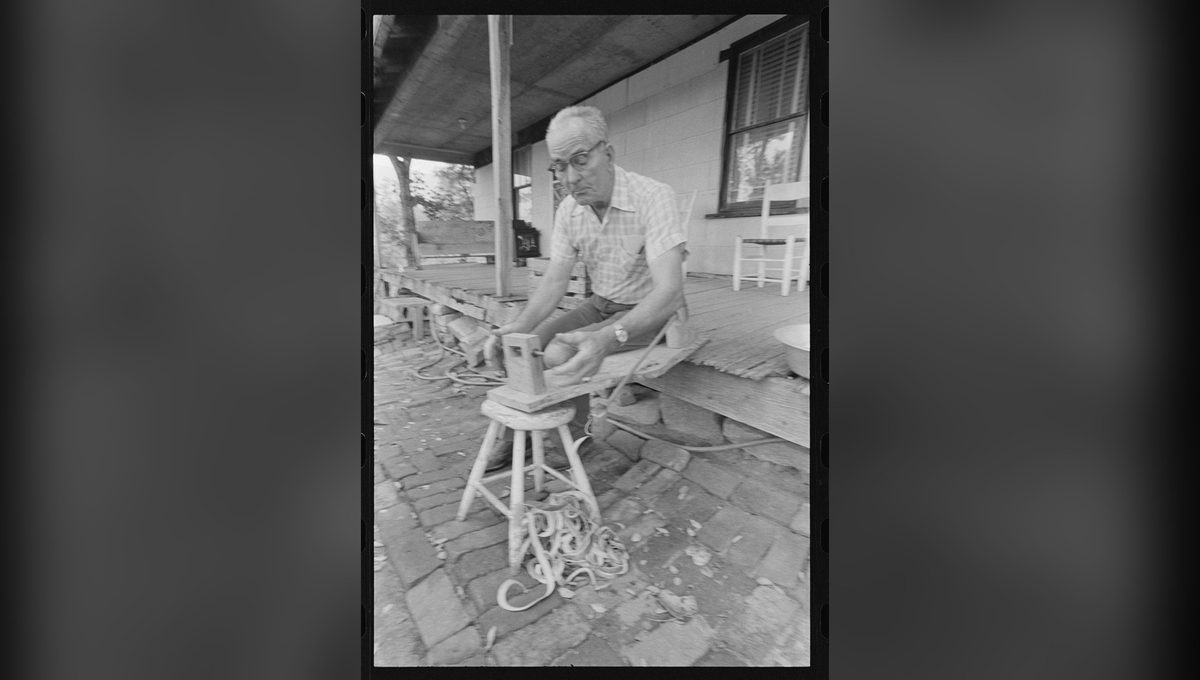
In 1803, a farmer in Chester County, Pennsylvania named Moses Coates patented a hand-cranked machine for paring apples, and wrote to Thomas Jefferson to suggest the federal government simply buy the rights outright and give the device to every household in the country. Jefferson did not take him up on it. But over the following century, more than a hundred and fifty separate patents built on Coates’s idea, because the job it sped up — turning a fall apple harvest into something that would still be edible in March — was one of the most important chores on an American farm.
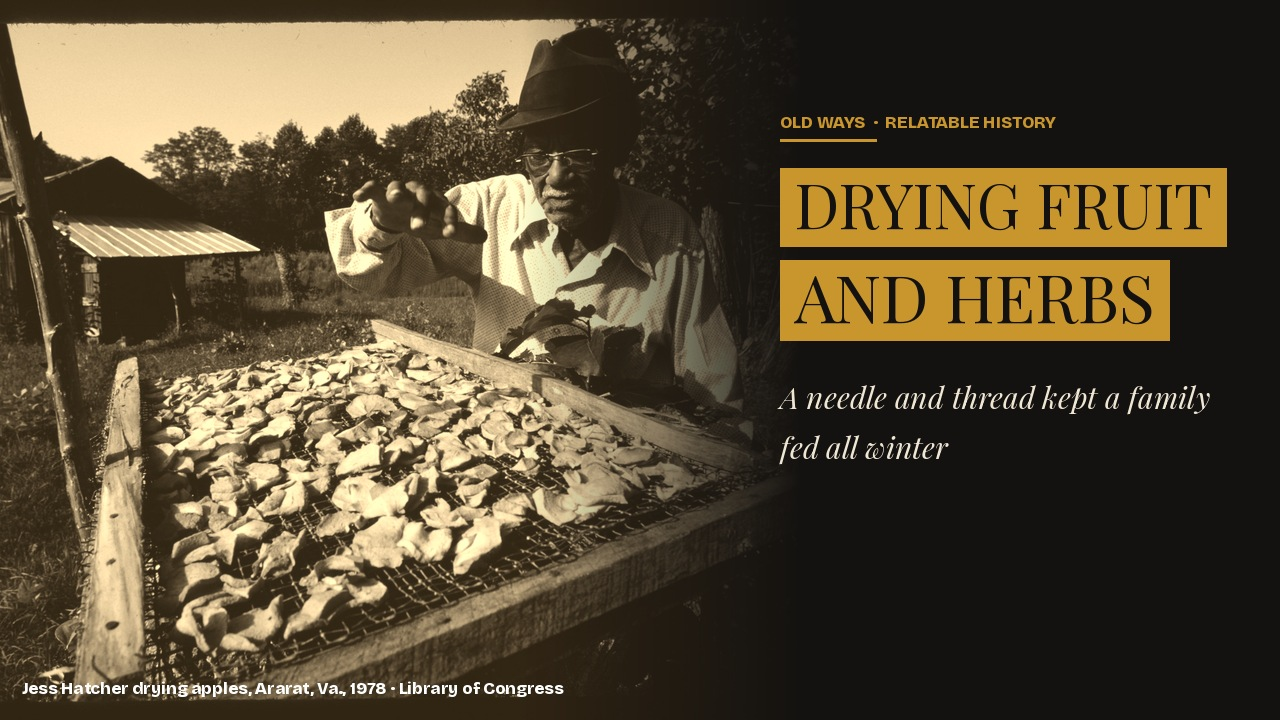
That job was drying. Long before the mason jar was common and long before anyone owned a freezer, farm households preserved the bulk of their fruit, beans and corn by taking the water out of it, over a stove or in the sun, and stringing or racking what was left until spring. It was cheap, it required no special equipment, and it worked well enough that the federal government printed instructions for it twice in thirty years — once for a war, and then again for the same war’s sequel.
This is the fuller story behind that practice: the machine that industrialized it, the New York county that turned it into an export trade, the Appalachian tradition that gave it a name, and the appliance that finally ended it.
Removing water is the entire mechanism
Spoilage organisms — the molds, yeasts and bacteria that rot fruit and vegetables — all need liquid water to grow. Dry a food down far enough, to roughly a fifth of its fresh weight in moisture, and those organisms simply cannot function, whether or not the food is ever heated to a temperature that would otherwise kill them. That is the whole of the science, and it is why drying predates canning, refrigeration and every other preservation method by thousands of years.
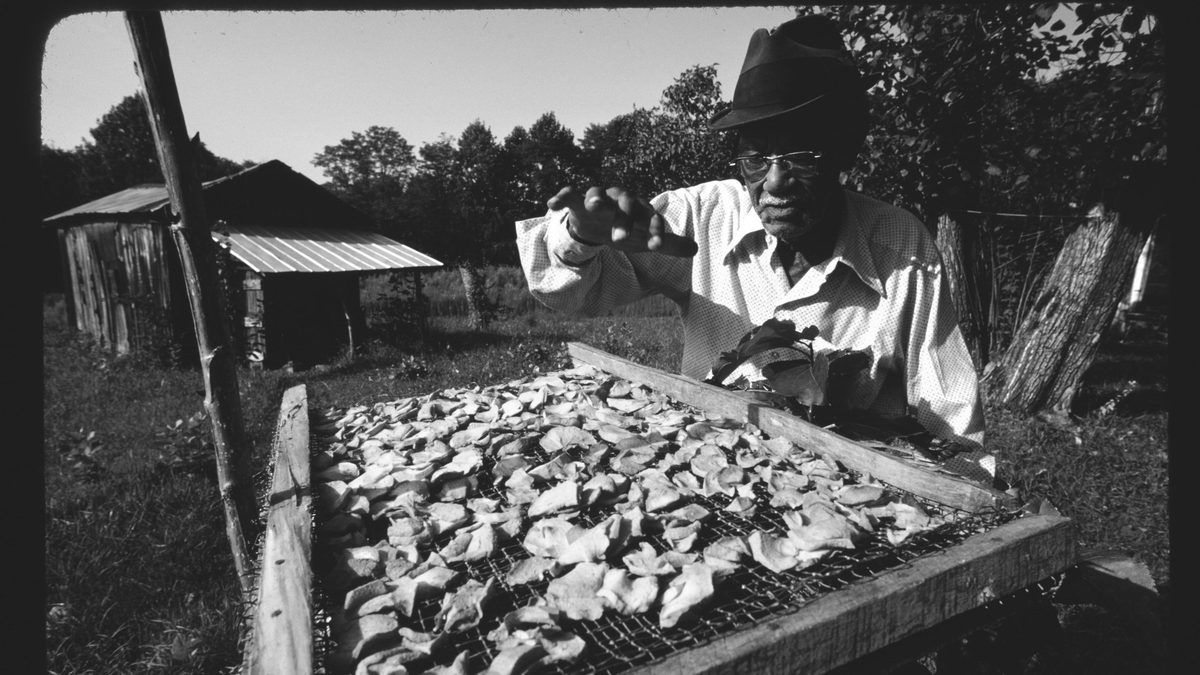
Getting the water out took heat and moving air working together. Sun-drying was free but slow and weather-dependent: fruit had to be sliced thin, spread on cloths or screens, turned by hand through the day, and carried indoors before evening dew could re-wet it. A kitchen cookstove worked faster and worked regardless of weather, which is why so much drying in the northern states happened on strings hung from rods above the stovetop — the same rods used for laundry the rest of the year. Purpose-built dry houses went further still: a small outbuilding with a firebox below and screened trays above could process a whole season’s fruit, corn and beans by the bushel rather than the batch.
A Pennsylvania patent turned a chore into a machine
Before Coates’s parer, preparing apples for drying meant paring, coring and slicing every piece by hand, which is exactly the kind of repetitive task that nineteenth-century American inventors could not leave alone. Coates’s 1803 machine used a hand crank to turn the apple against a fixed blade, stripping the peel in one motion; a prong held the fruit in place. It was, by his own description in a letter to Jefferson, “a little curious and very usefull machine” that “every family must wish to enjoy.” He was not wrong about the demand: apple-parer patents kept being filed for the rest of the century, each one a small improvement on his crank-and-blade design.
The dry house itself became a fixture of larger farms, particularly in Pennsylvania German communities, where a family feeding many mouths or drying fruit for market found it worth building a dedicated structure rather than tying up the kitchen stove for weeks. One survives today as a preserved exhibit at the Alexander Schaeffer farmstead in Schaefferstown, Pennsylvania, where a historical marker describes exactly what went through it: apples, cherries, peaches, pears, grapes, corn and beans, all dried in season on screen trays over a stove.
One New York county shipped fifteen million pounds of apples a year
By the 1890s, drying had moved well beyond the family kitchen in some regions and become a genuine export industry. In an 1895 report to the New York State Agricultural Society, a Wayne County evaporator operator named J. B. Case described a business that had grown, in his own lifetime, from a small home dry house handling six to eight bushels a day to a county-wide trade: in 1894 alone, he wrote, the town of Sodus shipped seven and a half million pounds of evaporated apples, and northern Wayne County as a whole shipped more than fifteen million pounds.
The scale changed the method. Commercial evaporators used sulfur fumes to bleach the fruit pale and heated kiln floors to dry a batch in fifteen to twenty hours rather than days, and dealers graded the output as fancy, choice, prime or common depending on how carefully it had been pared and cured. Case’s report is candid about the industry’s growing pains — he complains at length about operators who dried unripe, worm-eaten or badly bleached fruit and damaged the market for everyone else — which is itself a useful reminder that “traditional” food preservation had its own quality-control disputes and bad actors, the same as any other industry.
Case also lists the range of equipment a Wayne County operator might be running by the 1890s: the hot-air upright tower, which made the finest grade of fruit; the hot-air lay-down flue; the hop-kiln, the cheapest to operate; and the steam drier. Capacity ranged from five bushels a day, not far off the family dry house, up to five hundred bushels a day for the largest plants — a thousandfold range that captures how unevenly “drying” had industrialized even within a single county.
Leather britches carried a preservation method and a name
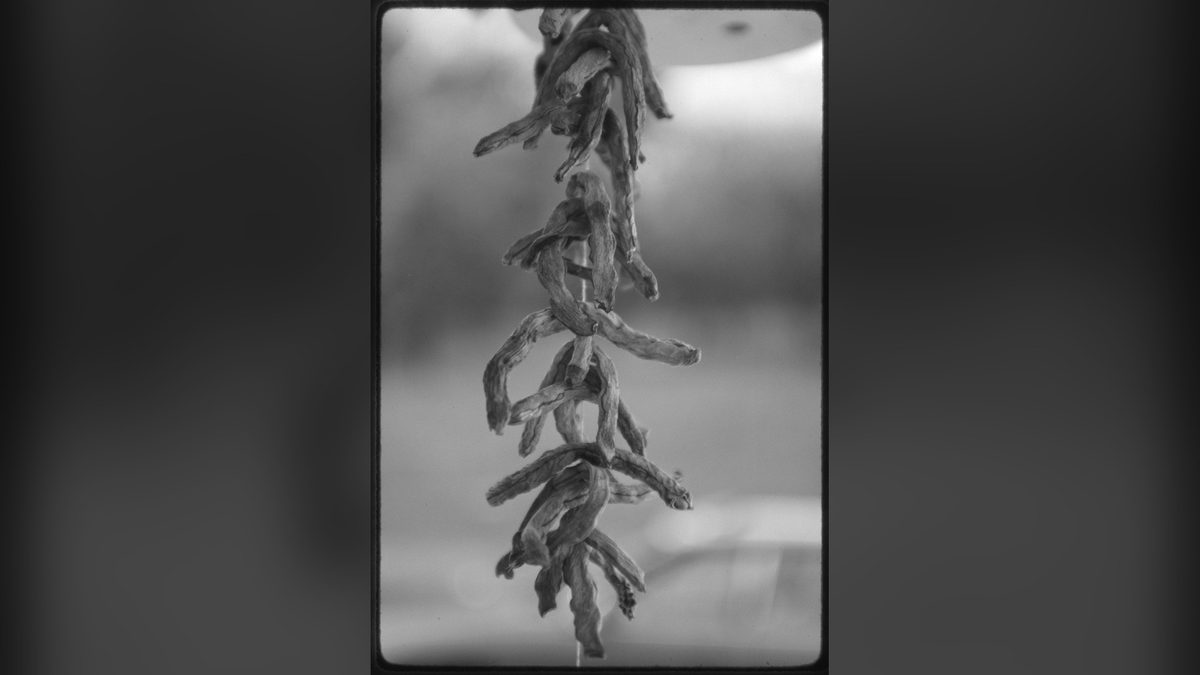
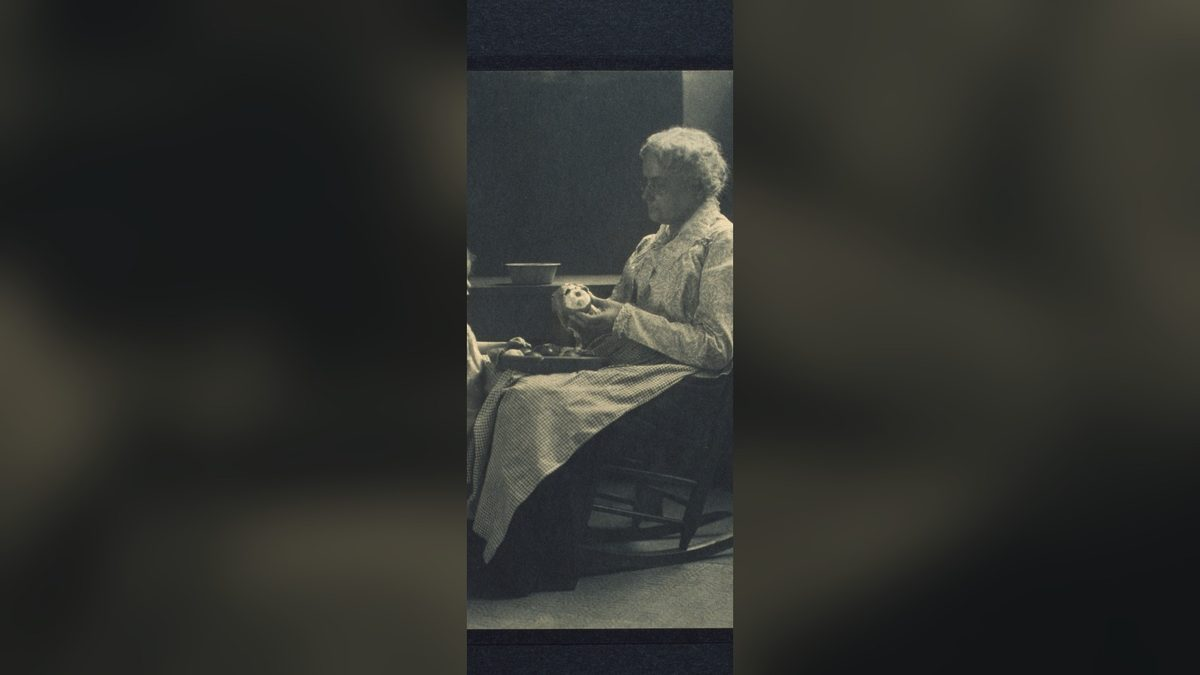
Not every dried food was fruit, and not every drying tradition ran through a Pennsylvania dry house. In the southern Appalachians, whole green beans were threaded on string with a darning needle and hung in the sun or by a window until they shriveled into a dark, tough, leathery version of themselves — hence the name leather britches, sometimes shuck beans. Rehydrated overnight and simmered most of a day with salt pork, they came out with a concentrated, almost beef-like flavor that the fresh bean never had.
Food historians do not agree on a single origin. The likeliest root is a Cherokee method of stringing beans on rawhide cord and drying them over a slow fire; German-speaking settlers in the same mountains also dried beans on strings, a technique some may have brought from the Palatinate, and the two traditions most likely merged as settlers and Cherokee communities lived in close, if unequal, proximity through the eighteenth and nineteenth centuries. What is not in dispute is that the method needed almost no equipment — a needle, thread and a place to hang the string — which made it accessible to households who could not afford enough glass jars to can a bean harvest.
The bean variety mattered too. Traditional leather britches use heirloom “greasy” pole beans — so called for a smooth, almost oil-slicked pod rather than a fuzzy one — with Lazy Wife, a North Carolina heirloom, among the most commonly grown for the purpose. Seed-saving organizations in Appalachia still maintain these varieties specifically to keep the tradition, and the bean itself, from disappearing along with the practice.
Washington taught the whole country to dry food, twice
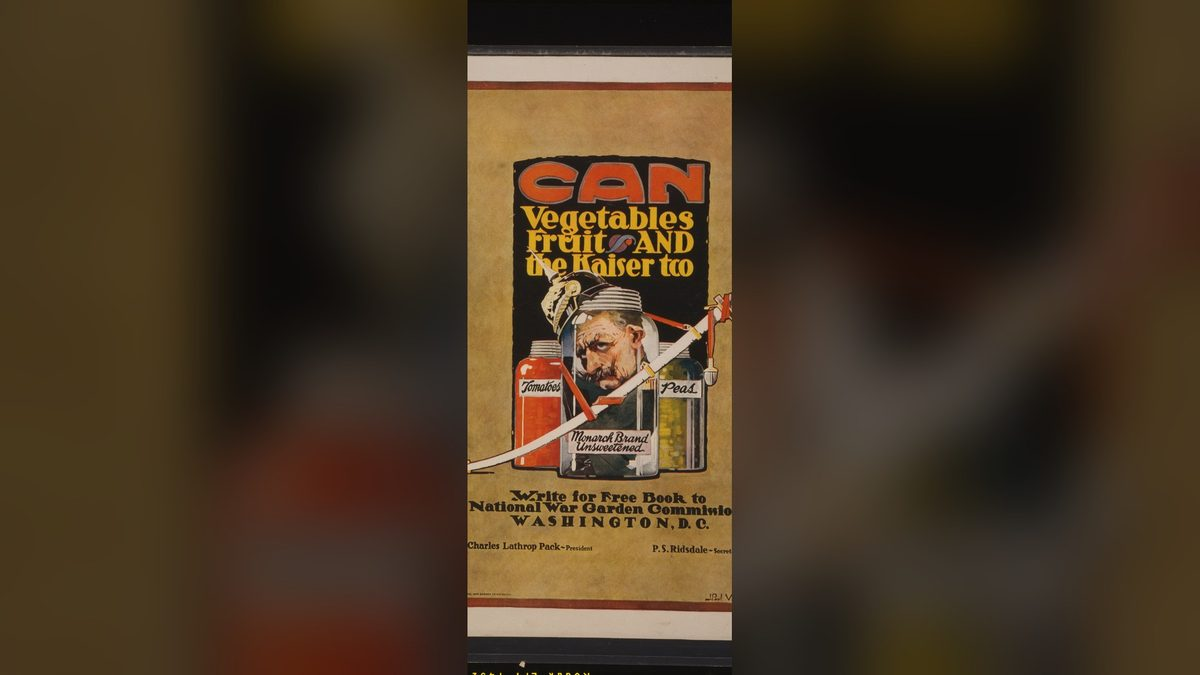
Home drying might have stayed a regional, mostly rural practice if not for two wars. In 1917, with the United States newly in the First World War and canning-jar tin and sugar increasingly needed elsewhere, the Department of Agriculture published Farmers’ Bulletin 841, Drying Fruits and Vegetables in the Home, and distributed it nationally as part of the same food-conservation push that put war-garden posters in shop windows. The bulletin argued the case explicitly: drying let a family save surplus produce that would otherwise go to waste, using equipment most kitchens already had, at a moment when canning supplies were scarce or expensive.
The lesson was repeated for the next generation. The National War Garden Commission’s 1919 Victory edition of Home Canning and Drying of Vegetables and Fruits carried the same instructions forward past the armistice, and when tin and sugar were rationed again in the Second World War, drying resurfaced as a recommended home-front practice for exactly the same reason it had worked for farm families for a century: it needed no purchased container and no purchased preservative, only heat, air and time.
The refrigerator ended in a decade what had lasted a century and a half
What canning, sugar shortages and two world wars could not displace, mechanical refrigeration did, and it did it fast. Research using U.S. Census figures shows the share of American households with a modern refrigerator jumping from 44 percent to 80 percent between the 1940 and 1950 censuses alone — a single decade in which the appliance went from a minority convenience to the norm, in cities and rural counties alike. Once a family could keep fresh food cold for weeks and, soon after, freeze it outright, the entire rationale for spending an autumn evening threading apple rings onto string quietly disappeared. Dry houses came down or were repurposed; the paring bee stopped being a social occasion because there was nothing left that required a crowd.
The taste survived even where the necessity did not. A company founded by Martin Cope in Lancaster County, Pennsylvania in 1900 still dries sweet corn on the same principle — slow, even heat drawing the water out while concentrating the sugar — and still sells it as a Thanksgiving side dish across Pennsylvania Dutch country today, one of the only commercial dried-corn operations left in the country. Today’s version runs on an industrial scale but the same idea: thousand-pound batches of Silver Queen kernels are roasted at low temperature for about eight hours, with workers turning the corn by hand through most of that time so it cooks evenly instead of scorching, caramelizing the natural sugar the way a farm kitchen’s stovetop once did a much smaller batch at a time.
Home cooks who make schnitz un knepp or soak a bag of leather britches today are, in a small way, still running Moses Coates’s kitchen chemistry: take the water out, and the food keeps itself. What changed is not the method so much as its necessity — it moved from how a family survived winter to how a region remembers one particular flavor.
Watch the full history
The video companion walks through the same practice in under five minutes: the schnitz, the leather britches, and the dry house that did it by the bushel.

Related reading
- Who Really Invented the Rickshaw? Three Rival Claims, One Vehicle
- The Full History of the German Beer Stein
- The WPA Sanitary Privy Program That Built Two Million Outhouses
- The Chemistry Inside a Sauerkraut Crock, and Why It Actually Works
Works cited
- United States Department of Agriculture. Drying Fruits and Vegetables in the Home, with Recipes for Cooking. Farmers’ Bulletin 841. Washington, D.C.: Government Printing Office, 1917. Link.
- National War Garden Commission. Home Canning and Drying of Vegetables and Fruits. Victory ed. Washington, D.C., 1919. Link.
- Coates, Moses. Letter to Thomas Jefferson, 3 March 1804, describing his 1803 patent for a machine for paring apples and other fruit. The Papers of Thomas Jefferson, Founders Online, National Archives. (founders.archives.gov consistently returned HTTP 202 to automated verification rather than 200, so the citation is kept but not hyperlinked, per the skill’s bot-wall rule.)
- Case, J. B. “The Evaporated Fruit Industry in Wayne County.” In Fifty-Fifth Annual Report of the New York State Agricultural Society for the Year 1895, 704–708. Albany: Wynkoop Hallenbeck Crawford Co., 1896. Link.
- Cardia, Emanuela. “Household Technology: Was It the Engine of Liberation?” Université de Montréal and CIREQ working paper prepared for the NBER Summer Institute, 2008. On modern-refrigerator adoption rising from 44% to 80% of U.S. households between the 1940 and 1950 censuses. Link.
- “Leather Britches: An Appalachian Culinary Tradition.” Oak Spring Garden Foundation, October 13, 2021. Link.
- “Dry House.” Historical marker, Alexander Schaeffer Farmstead Museum, Schaefferstown, Pennsylvania. Historic Schaefferstown, Inc. Link.
- Kovach, Emily. “PA Food Icons: John Cope’s Dried Sweet Corn.” PA Eats. Link.