
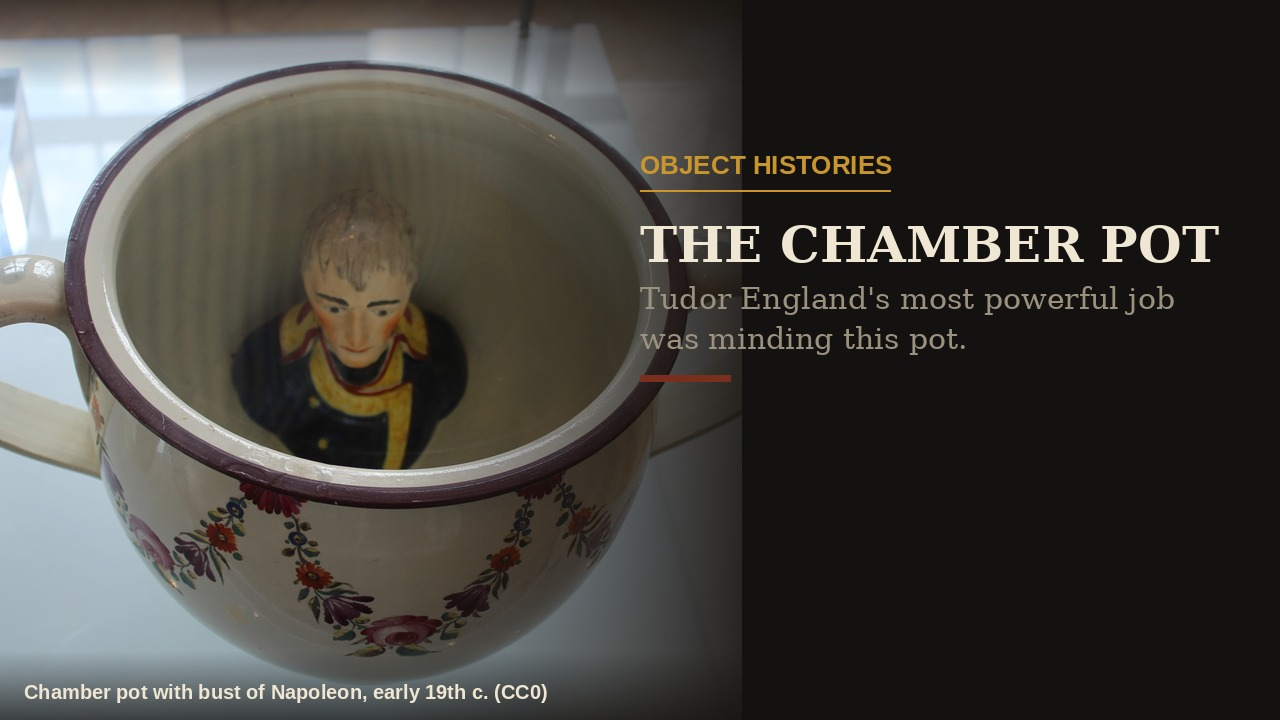
In Tudor England, the single most reliable way for a commoner to become one of the most powerful men in the country was to be put in charge of the king’s chamber pot. The office was real, it had a salary and lodgings attached, and at least one of the men who held it ended up beheaded for it. That is the strangest fact in the story of an object most households owned and almost nobody, until very recently, thought was worth writing down.
The chamber pot’s working life runs at least twenty-six centuries, from a terracotta potty in classical Athens to a stoneware pot still sold today for campers and hospital wards. In between it created a position at court, gave English slang three separate nicknames, carried political cartoons, and was, in the end, undone not by taste or plumbing but by an epidemic nobody in the room understood.
Before plumbing, the pot was the plumbing
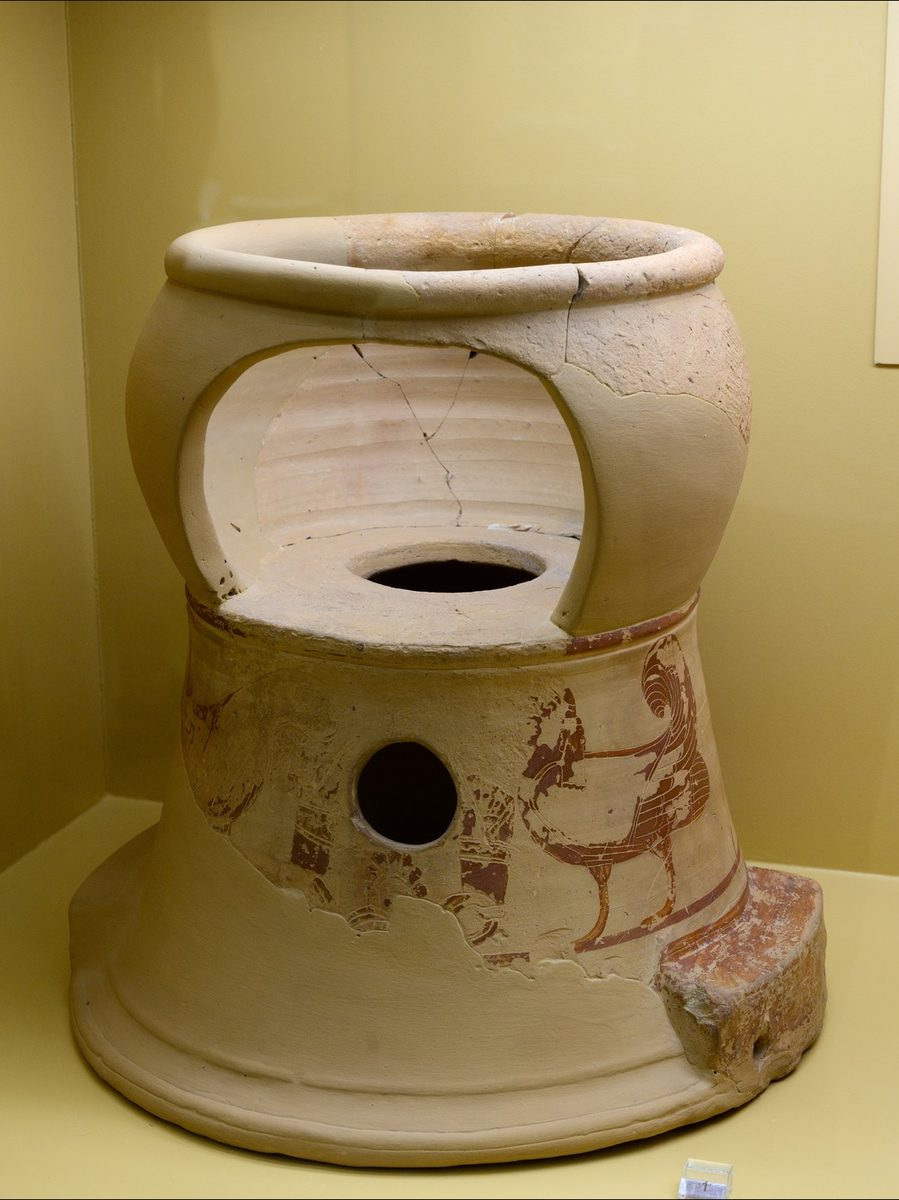
The Greeks called it the amis, and the museum at the Athenian Agora holds a terracotta child’s version made around the sixth century BC — a seat with a hole cut in it, resting on a wide base so it would not tip. Set beside a modern potty chair, the engineering is identical. Adults used a plainer, handled version of the same idea; Greek households had no equivalent of a flush and no expectation of one.
Rome ran two systems side by side. In public, citizens sat in long rows on stone benches over a channel of running water, in latrines like the ones still standing at Ostia, with a shared sponge on a stick for cleaning rather than any sense of privacy. At home, households kept a matella, and in wealthier houses a slave called a lasanophorus had the specific job of carrying it out. When the Western Empire collapsed, the aqueducts and sewers collapsed with it, and for roughly the next thousand years across most of Europe, the pot situation reverted to whatever a household could manage: a bucket, emptied by hand, with nowhere organised for it to go.
Tudor England turned it into an office of state
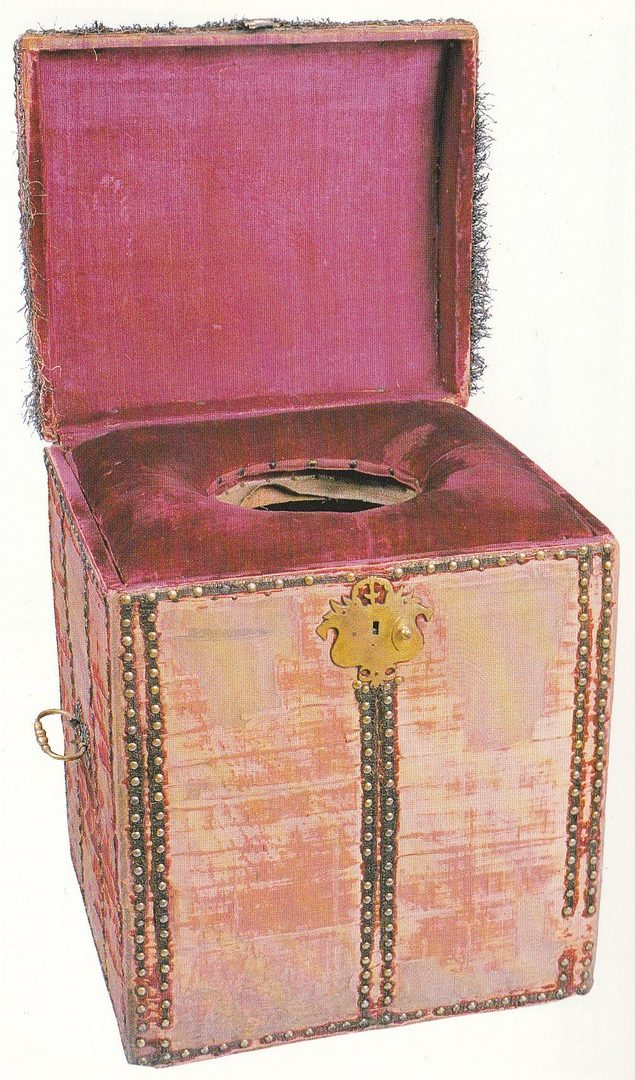
The royal version of the pot was called a close stool: a padded, lockable box, often upholstered in velvet, with a pewter or silver vessel fitted inside the seat. What made it politically important was not the box but the man assigned to attend the king while he used it. The post of Groom of the Stool existed under Henry VII and grew into one of the most sought-after jobs at the court of his son. Historic Royal Palaces, which now runs Hampton Court, still displays the sheepskin-and-velvet stool associated with Henry VIII’s own household.
The mechanism of the power is simple to state and easy to underrate: whoever attended the king in his most private moment was also, by necessity, alone with him, trusted with his body, and positioned to control who else got that access. Grooms of the Stool went on to manage the Privy Purse, the king’s personal funds, and to act as gatekeepers to the royal bedchamber. Sir William Compton held the post early in Henry VIII’s reign; Sir Henry Norris held it later, and was close enough to the king to be trusted with his most private business for a decade. In 1536, when Henry turned on Anne Boleyn, Norris was accused of adultery with the queen alongside four other men and executed on Tower Hill that May — one of the few cases in English history where proximity to the king’s chamber pot put a man’s neck on the block rather than money in his pocket. The office itself outlived the Tudors by three centuries; it was not formally abolished until 1901, when Edward VII, on becoming king, chose not to fill it.
The queen’s toilet that nobody else wanted
Elizabeth I’s godson, Sir John Harington, built something genuinely new in the 1590s: a wooden seat over a cistern that released roughly seven and a half gallons of water through a valve to wash waste down into a vault below. He installed one at his own house in Kelston and a working version for the queen at Richmond Palace, then described the invention in a comic 1596 pamphlet called The Metamorphosis of Ajax — a pun on jakes, the era’s slang for a privy. Scholarship on the pamphlet treats it as a serious hinge point in early modern sanitary writing precisely because Harington wrapped a real engineering proposal inside a joke that made it safe to publish at all.
The design contained two of the three elements a flush toilet still needs: a wash-down mechanism and a valve. What it did not have, and what nobody in London had for another two hundred and fifty years, was anywhere for the waste to go once it left the house. Without a sewer network, Harington’s invention just moved the problem into a vault that still needed emptying by hand, and needed far more water than most households could fetch. It was clever, correctly designed, and functionally useless at scale. Almost nobody copied it, and the pot went right on being the default technology for another two and a half centuries.
Mind the water: the pot in daily life
For most people in most cities, the pot’s contents went out of a window, and the sharpest surviving evidence of that is a single word. In Edinburgh’s Old Town, where tenements were stacked up to a dozen storeys along narrow closes and wynds, residents leaned out at night and shouted gardyloo, a worn-down version of the French gardez l’eau, mind the water, before tipping a pot into the street below. An Edinburgh council ordinance of 1749, the so-called Nastiness Act, tried to impose order on the practice rather than end it: waste could only be thrown out between ten at night and seven in the morning, and the thrower was expected to give the warning shout first. Anyone still on the street had, in practice, about a second to react, and the reply people learned to shout back — haud yer haund, hold your hand — was not always heeded in time. The custom lasted, in diminishing form, into the early twentieth century, until proper sewers made it pointless.
The pot goes fashionable, then political
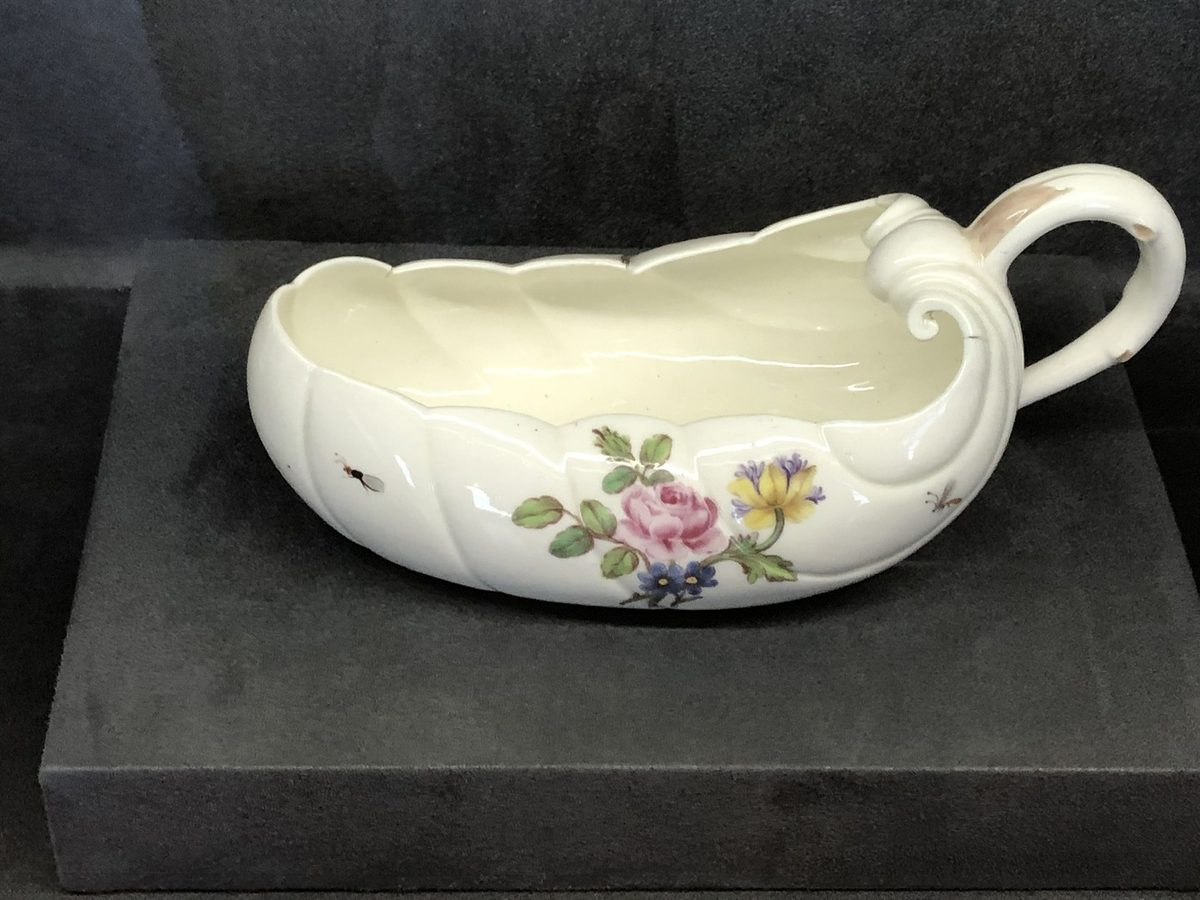
By the eighteenth century, a well-off European woman travelling by coach might carry a slim, oval, lidless porcelain vessel called a bourdaloue, shaped and sized to be used discreetly under wide skirts without undressing. Museum catalogues consistently link the name to Louis Bourdaloue, a Jesuit preacher at the court of Louis XIV whose sermons reportedly ran so long that fashionable women came prepared rather than leave the chapel. No contemporary document actually ties the preacher to the pot, and the etymology is best treated as a well-worn story rather than a documented fact — but the surviving objects are real, hand-painted with flowers and gilded rims, and museums across Europe hold them as a distinct, named category of ceramic.
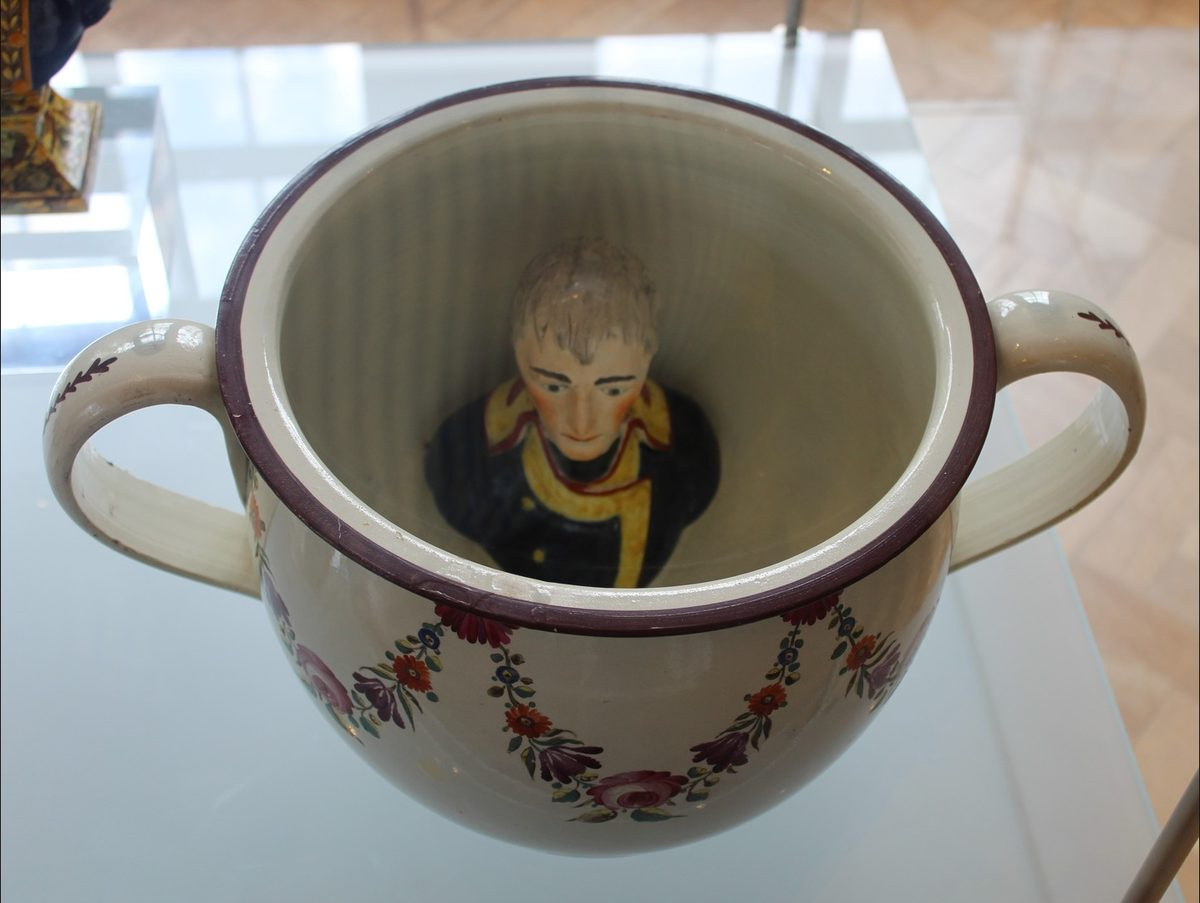
The pot also became a vehicle for cheap political point-scoring. During the Napoleonic Wars, English potteries fired chamber pots with a small sculpted bust of Napoleon glazed into the bottom of the bowl, so that a patriotic household could render its nightly verdict on the French emperor. One such pot, made around 1805 and now in the collection of the Royal Pavilion & Museums in Brighton, survives alongside satirical prints from the same years, including an 1808 caricature showing Napoleon, cast as a doctor, forcing the crowned heads of Europe to sit on pots of their own. It was crude, it was mass-produced by the same industrialising potteries that were making Wedgwood and Spode household names, and it sold.
What actually killed it was disease, not embarrassment
The pot’s end came from epidemiology, not etiquette. When cholera struck Soho in the late summer of 1854, the physician John Snow mapped the deaths address by address and found them clustering tightly around a single water pump on Broad Street, fed by a well sitting next to a leaking cesspit. Snow persuaded local officials to remove the pump handle on 7 September 1854, and new cases fell away almost immediately — a piece of applied statistics now credited as one of the founding moments of epidemiology. It also identified, for the first time with real evidence, exactly why keeping human waste close to drinking water was the actual danger, not merely an unpleasant habit.
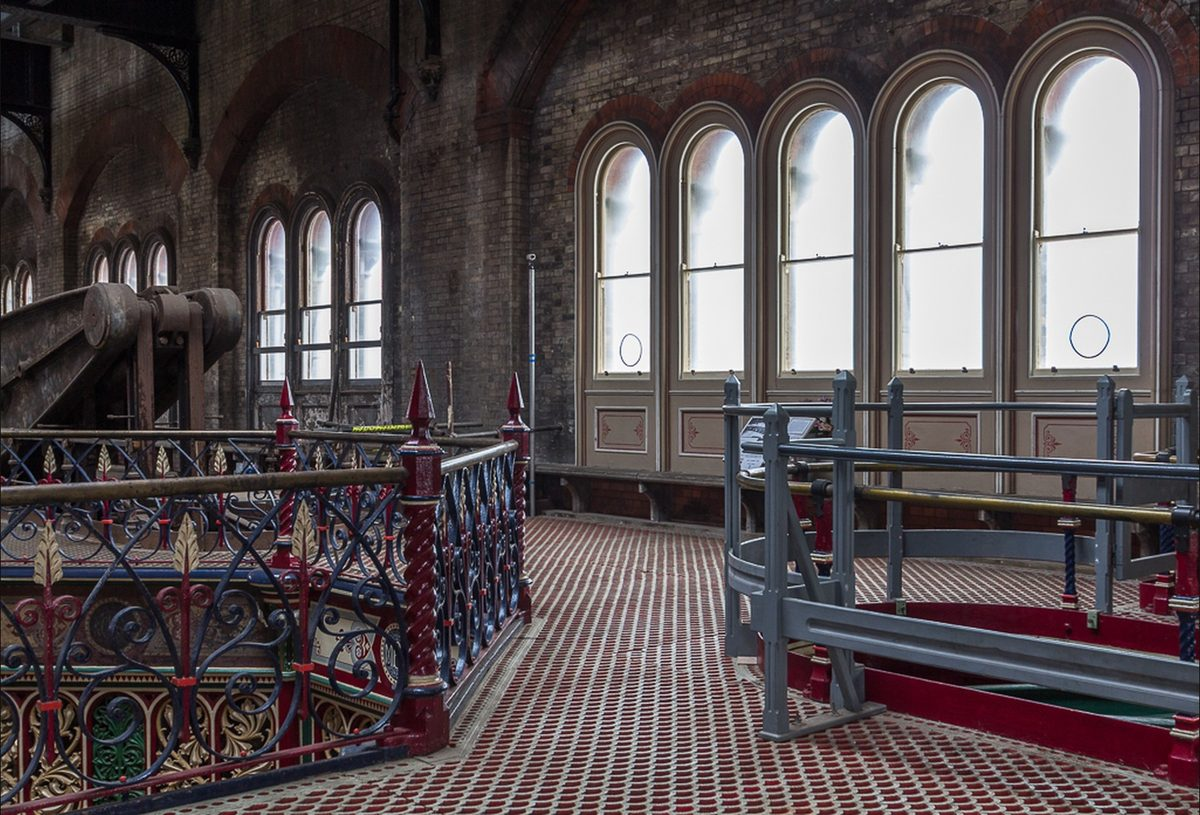
Four years later, the problem became impossible to ignore even without a microscope. The summer of 1858 was unusually hot, and the Thames, thick with untreated sewage, produced a stench so severe that Parliament had its riverside curtains soaked in chloride of lime to make the chamber tolerable, and MPs seriously discussed relocating altogether. Benjamin Disraeli pushed an emergency bill through both houses in eighteen days, funding the civil engineer Joseph Bazalgette’s plan for a citywide network of intercepting sewers. Pumping stations at Crossness and Abbey Mills, opened in the 1860s, lifted sewage clear of central London and carried it downstream, finally giving a flush toilet somewhere real to flush to, more than two and a half centuries after Harington had built one with nowhere to send the water.
The slow, uneven retirement
Even with sewers running, the pot did not disappear overnight. Plumbers including Thomas Crapper, who did not invent the flush toilet but did more than almost anyone to popularise and improve its valve fittings, brought water closets into a growing number of middle-class British homes through the later Victorian decades. Change was far slower elsewhere. The United States Census Bureau’s own historical housing tables record that in 1940, nearly half of all American homes still lacked complete plumbing — hot and cold piped water, a bathtub or shower, and a flush toilet together — and in roughly ten states that figure ran to seventy percent or higher. In large parts of rural America and rural Britain alike, a chamber pot kept under the bed remained the practical, unremarkable answer to a cold night well into living memory.
The object never really vanished; it just stopped being called a chamber pot. Every hospital bedpan is the same idea in stainless steel. Every toddler’s plastic potty is the terracotta Athenian version with a happier paint job. Campers still pack a version of it for the same reason a Tudor household did: because plumbing is a convenience, not a law of nature, and the oldest technology for managing its absence still works exactly as well as it did twenty-six hundred years ago.
Watch the full history
The video version covers the same ground in just under six minutes, from the Greek potty chair to the Great Stink.

Related reading
- How the Well Sweep Drew Water Before There Were Pumps
- How Home Food Drying Fed American Farms for 150 Years
- The Clothespin Patent History Behind America’s Favorite Free Dryer
- The Full History of the German Beer Stein
Shop the styles/items featured in this video
- Enamelled steel chamber pot (the real thing, still made)
- Henry VIII and the Men Who Made Him — Tracy Borman
- Poop Happened! A History of the World from the Bottom Up
Works cited
- Historic Royal Palaces. “The Royal Court in the Tudor Period.” Hampton Court Palace.
- Lavender, Jeff. “Henry Norris and the Boleyn Faction: 1528–1536.” Master’s thesis, Marshall University, 2010. Link.
- Ives, Eric. The Life and Death of Anne Boleyn: ‘The Most Happy’. Blackwell, 2004.
- “The Metamorphosis of Ajax, Jakes, and Early Modern Urban Sanitation.” Early Modern Studies Journal, review essay. Link.
- Science Museum (London). “Flushed Away: Sewers Through History.”
- “Gardyloo: The Grim Story of Unsanitary Edinburgh.” The Scotsman.
- Muzeum Warszawy. “Bourdaloue-Type Chamber Pot,” object record. Link.
- Royal Pavilion & Museums, Brighton & Hove. “Chamber Pot with Napoleon’s Head,” accession DA322140. Reproduced via Age of Revolution.
- London Museum. “John Snow: Cholera & the Broad Street Pump.” Link.
- London Museum. “The Great Stink of 1858.” Link.
- U.S. Census Bureau. “Historical Census of Housing Tables: Plumbing.” Link.