
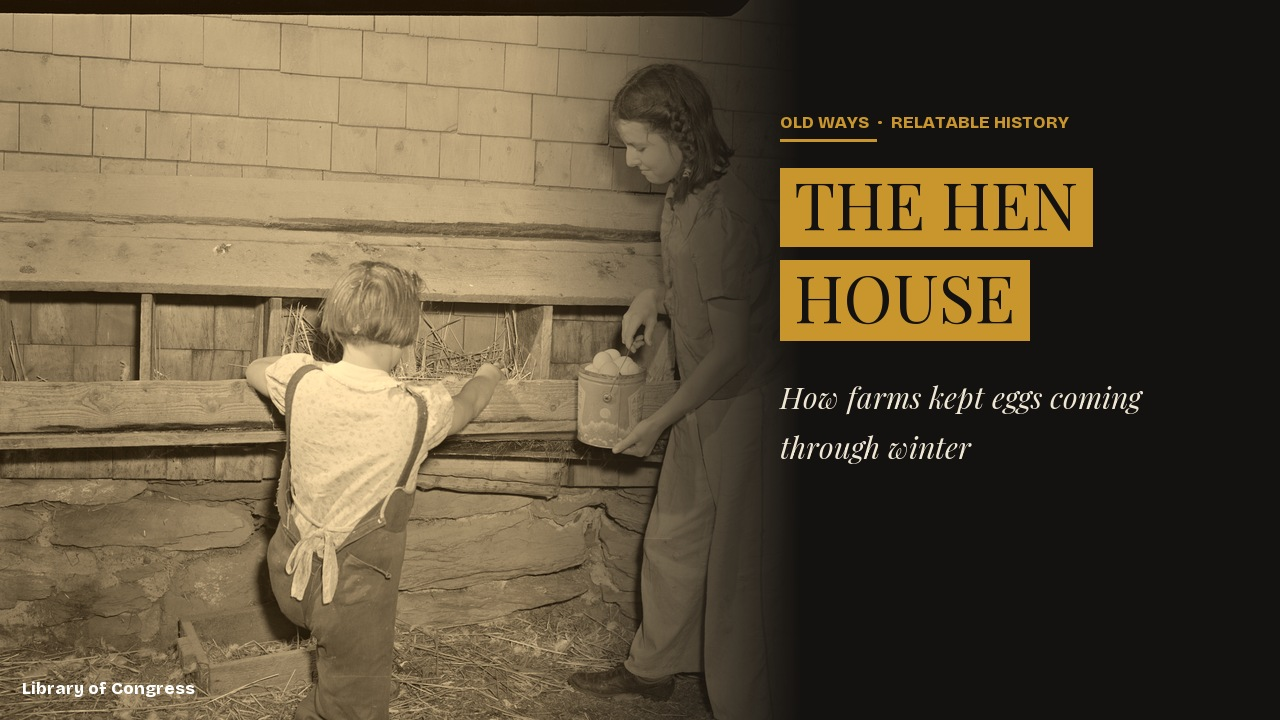
In February 1903, a twenty-nine-year-old poultry farmer in Derry, New Hampshire, published a short, grudging essay in a trade magazine called The Eastern Poultryman. The piece was titled “Trap Nests,” and it described a device he and his wife had built to catch hens in the act of laying — a wooden box with a door that swung shut behind a bird and held her there until someone came to let her out and record the egg. The farmer’s name was Robert Frost. He would spend most of the next decade failing, by his own account, to make much of a living from his flock before giving up poultry for poetry. His trap-nest essay survives today in the U.S. National Agricultural Library’s collection — a small, unglamorous footnote to one of America’s most-read poets, and a useful reminder that the henhouse was, for a working farm family, serious business.
Frost’s problem was the same one faced by nearly every farm in the country before rural electricity reached the barn: a hen’s body is built around daylight, and by December most of the United States offers a chicken barely nine hours of it. Below roughly fourteen hours of light a day, a hen’s reproductive system effectively shuts down. Getting eggs through a hard winter took real design — a building oriented to catch every scrap of low winter sun, a system for tracking which birds were worth feeding, and often a literal trick played on the flock’s internal clock.
What follows is the mechanics of how that worked: the exact measurements farm bulletins recommended for a well-built henhouse, the biology behind why light mattered more than warmth, the record-keeping system that let farmers breed better layers, and the surprisingly well-documented economic fact that egg money was, for generations of farm women, one of the only incomes they controlled outright. That’s egg money history: who controlled this income, how much it was worth, and why one technology — the electric light bulb — quietly ended all of it within about twenty years.
A Henhouse Was a Deliberately Engineered Building, Not Just a Shed
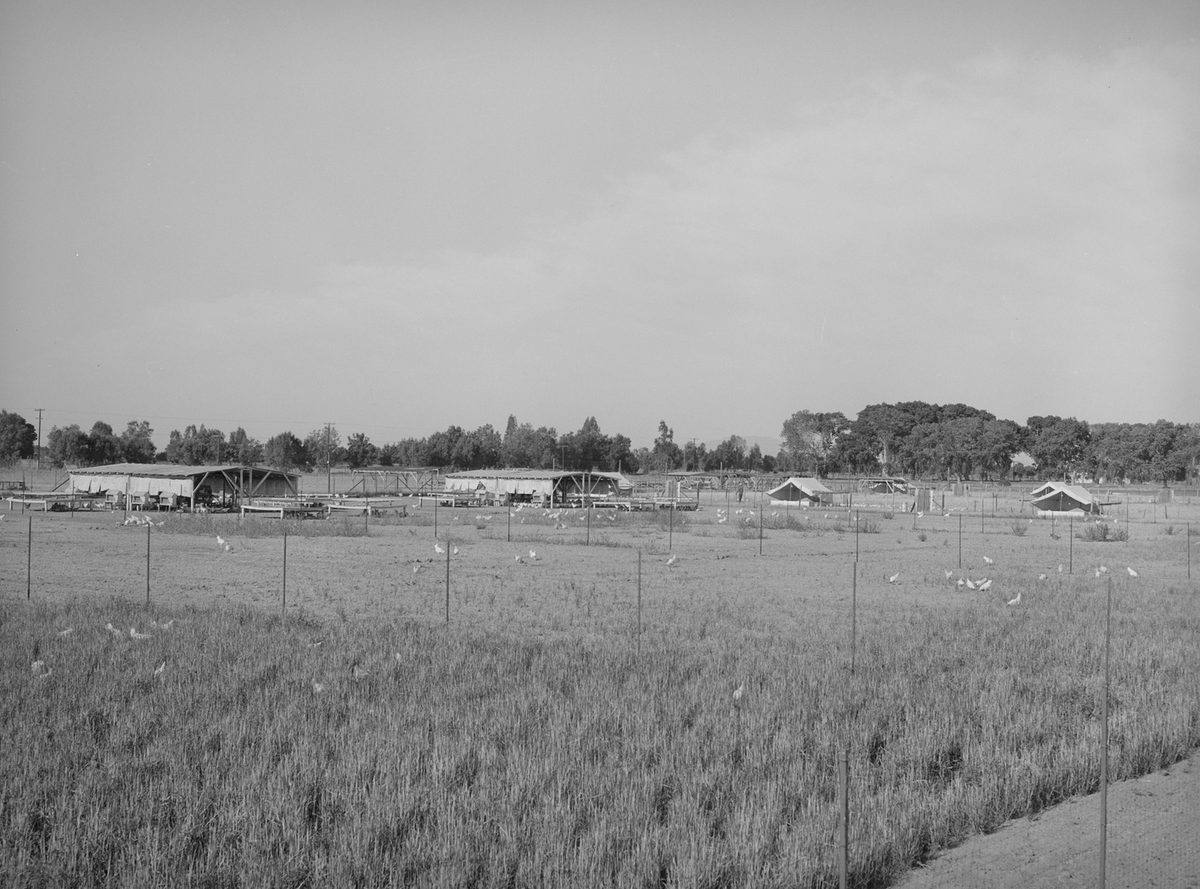
Agricultural extension circulars of the period were unusually precise about henhouse design, because a poorly built coop cost real money in dead or unproductive birds. Ross M. Sherwood’s Chicken Houses, a Kansas State Agricultural Experiment Station circular aimed at the state’s farmers, laid out the specifications in exact terms: a henhouse needed “from three to five square feet of floor space for each hen,” more for heavier breeds or birds kept confined rather than let out to range. Siting mattered as much as size. Sherwood recommended a building set on “a southern or eastern slope,” reasoning that the ground there “dries and warms much more quickly” and sheds snow faster than a north-facing site — a small detail that made the difference between a dry floor and a damp, disease-breeding one. Henhouses weren’t the only farm structure built around one hard physical constraint solved by careful siting; farms that caught their own water off a roof were solving a parallel problem for an entirely different resource.
Inside, roosts — the bars where hens actually slept — were built to a standard: about six to eight inches of perch space per bird, with rails set fourteen inches apart, made from two-by-three lumber with the top edge rounded off so a hen’s feet wouldn’t be injured standing on a sharp corner night after night. Nest boxes were smaller and more numerous: roughly fourteen inches square and six inches deep, built at a ratio of one box for every five hens, often with a hinged lid on the outside wall so eggs could be collected without stepping into the coop. Ventilation was a genuine engineering problem rather than an afterthought — Sherwood’s circular recommended a narrow opening just under the roofline combined with curtained vents thirty to thirty-six inches off the floor, positioned so a draft wouldn’t blow directly on roosting birds. Whitewash wasn’t just cosmetic, either: Sherwood gives an actual recipe, built around lime, salt, zinc sulphate, and skimmed milk, meant to control mites and lice as much as to brighten the inside of the coop.
A Hen’s Body Runs on a Light Switch, Not a Thermostat
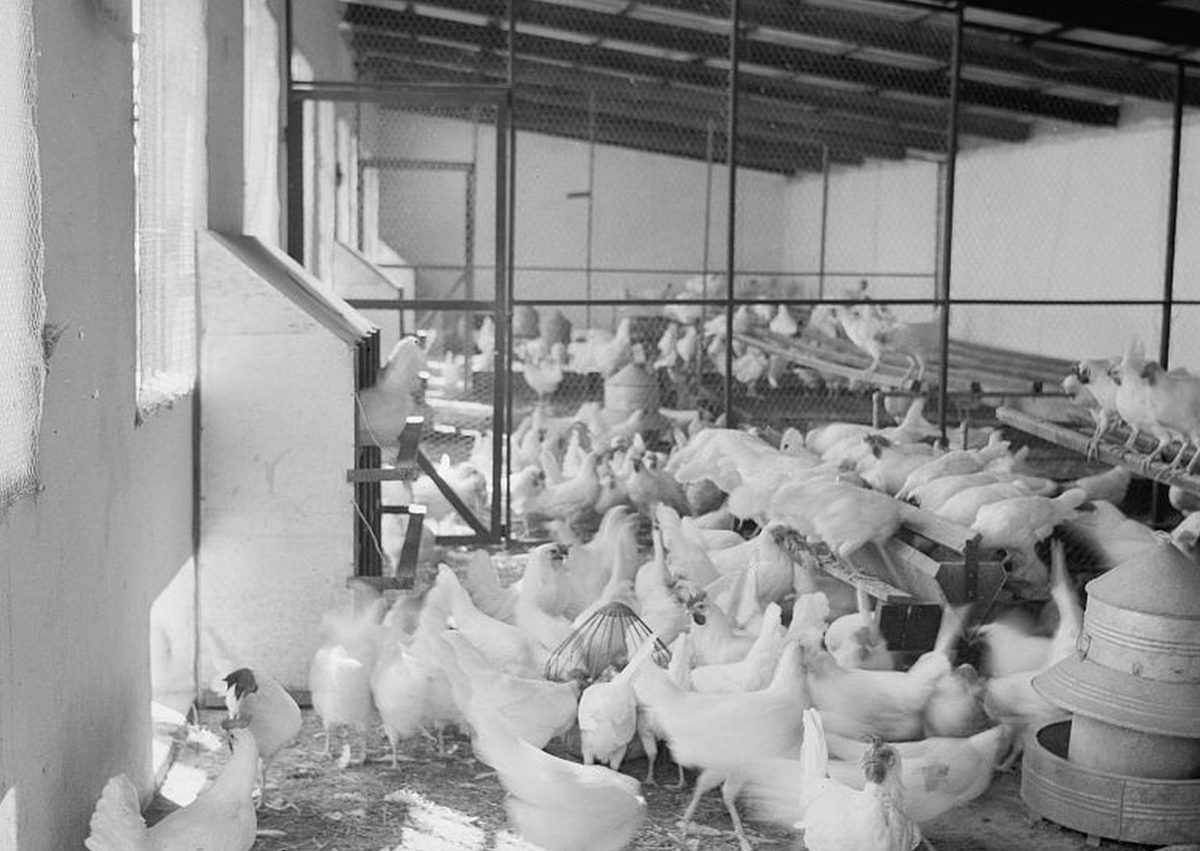
The reason all of this design effort concentrated on sunlight rather than warmth is biological, and it’s one modern poultry science has confirmed rather than overturned. A hen’s reproductive cycle is governed by a light-sensing gland near the center of her brain — the pineal gland — which tracks day length and regulates the hormonal cycle that triggers ovulation. The University of Arizona Cooperative Extension’s current guidance on flock lighting puts the threshold at fourteen to sixteen hours of light a day to sustain peak laying; below that, production declines regardless of temperature. As the extension publication notes, it’s a common misconception that cold weather itself stops hens from laying — in fact, “the decreased daylight length in the winter is responsible for drops in egg production,” not the cold.
Farmers didn’t need the biology to know the pattern, only to work around it. South- and east-facing windows caught the maximum low-angle winter sun, and whitewashed interior walls bounced that light further around the room than bare wood ever could. Some went a step further and lit a lantern in the henhouse before sunrise, artificially lengthening the birds’ perceived day and coaxing them into an earlier start — a crude, pre-electric version of exactly the trick modern coops now accomplish with a bulb on a timer. It’s a rare case where a folk practice, developed with no understanding of pineal glands or photoperiods, turned out to be working on precisely the right lever the whole time.
Farmers Tracked Individual Hens With a Box That Trapped Them Mid-Lay
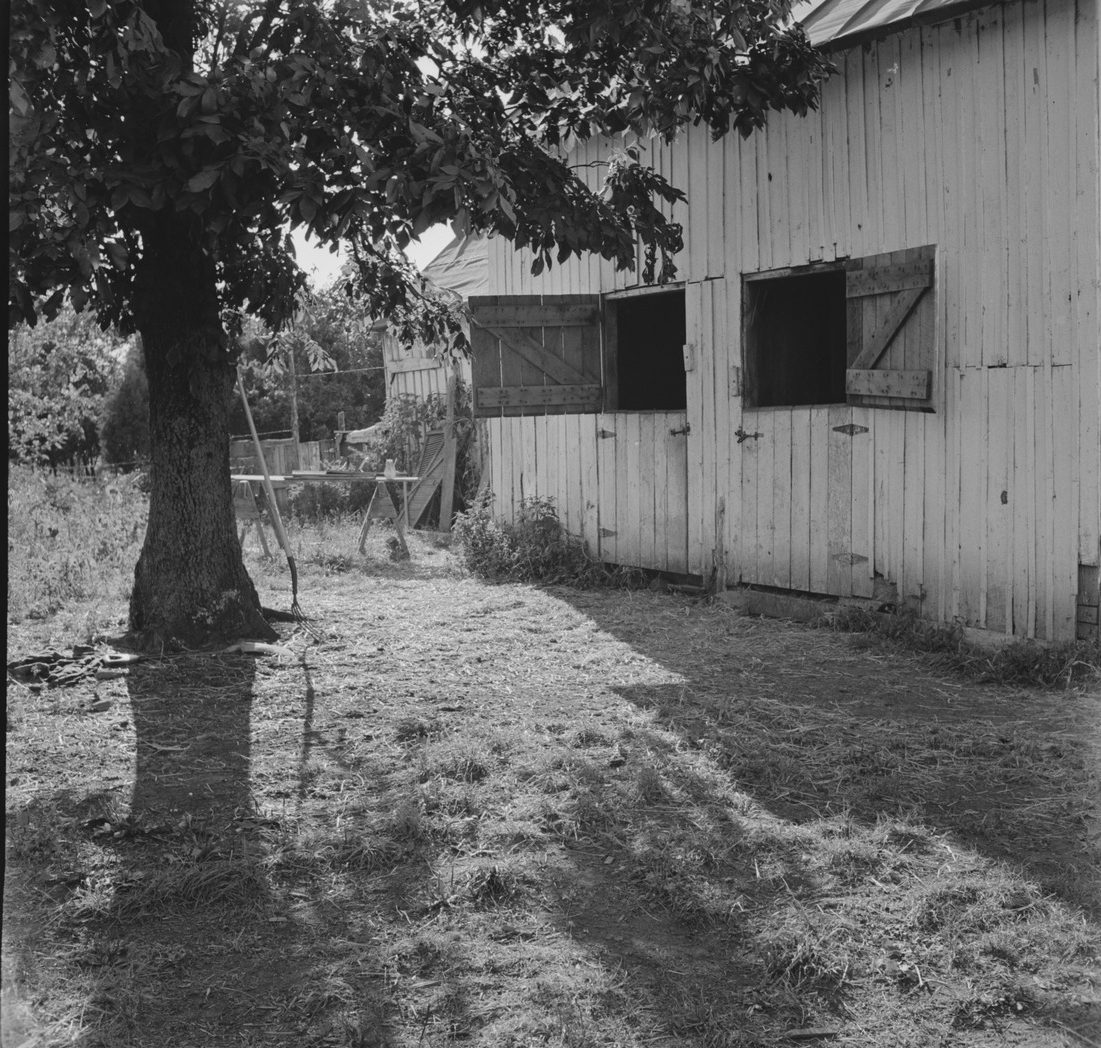
A flock’s overall egg count told a farmer less than it seemed to. Some hens were reliable layers; others ate the same feed and produced almost nothing. The only way to tell them apart, in an era when egg collection and every other henhouse chore was still done entirely by hand, was the trap nest — a nest box fitted with a door, often built so it worked like a bootjack hinged from the top, that let a hen walk in to lay but held her there until someone came to record which bird had used which box and release her. William A. Lippincott, writing in another Kansas State Agricultural Experiment Station circular, Poultry Breeding Records, put the logic plainly: “no means have so far been developed of identifying an individual egg with the hen that laid it, except by making it impossible for her to leave the nest after laying until some one releases her.” Farmers kept an Individual Egg Record for each trapped hen, tracking not just how many eggs she laid but the pattern and pauses in her production over time — data that let a breeder identify genuinely superior layers rather than guessing from a flock-wide total, and pair those hens for the next generation.
It’s here that Robert Frost’s magazine piece becomes more than a curiosity. His 1903 account in The Eastern Poultryman describes exactly this device, built with the same hopeful logic — and the hens, in his telling, resisted it, turning what the extension bulletins presented as a straightforward management tool into a small domestic comedy of birds that refused to cooperate with their own record-keeping. Trap nests remained a serious part of American poultry breeding well into the twentieth century, the main tool available before any geneticist could test a hen’s egg-laying ability except by watching her lay.
Egg Money History: One of the Only Incomes a Farm Wife Kept for Herself
Beyond the henhouse’s engineering, there was its economics, and this is where the record survives in unusually granular detail. The Smithsonian Institution’s research archives hold farm diaries kept by a Maryland farm wife named Elizabeth Bourne Robinson across the 1950s, and her bookkeeping shows exactly what egg and butter money meant in practice. In 1951, Robinson collected 5,062 eggs and recorded $85.35 from selling them, plus $151.90 from butter — $237.25 combined for the year. In 1952 it was $211.30 from 2,880 eggs and her butter churning; by 1953 the combined total reached $255.80. Robinson tracked these figures with a precision she didn’t apply to the farm’s other income, which is read as a sign of how much this particular money mattered to her — cash that, unlike crop or livestock income managed under her husband’s name, she earned, recorded, and controlled herself.
That pattern wasn’t unique to one Maryland farm. It reflects a broader shift across mid-century American agriculture, in which poultry, dairy, and garden work became the main income-generating activities seen as appropriate for farm women — a pattern plenty of nineteenth- and twentieth-century farms repeated with other sidelines, from maple sap to garden produce, whenever a household tried to wring cash from something other than the main crop. The egg money itself bought real things: children’s shoes, a subscription to a farm paper, sometimes the seed capital for a woman’s own small breeding or garden business. It existed because eggs were a widely accepted article of barter in a cash-poor rural economy, credited against goods at a country store running on much the same no-cash logic as any other farm trade. Industry figures on U.S. egg production put the average hen’s output at only around 150 eggs a year through the 1930s and into the late 1940s, roughly half of what a modern commercial layer produces — which means the egg money Robinson and women like her collected was wrung out of birds working at a fraction of today’s efficiency, through months when the sun itself was working against them.
Electricity Didn’t Just Add Light — It Ended the Henhouse Economy
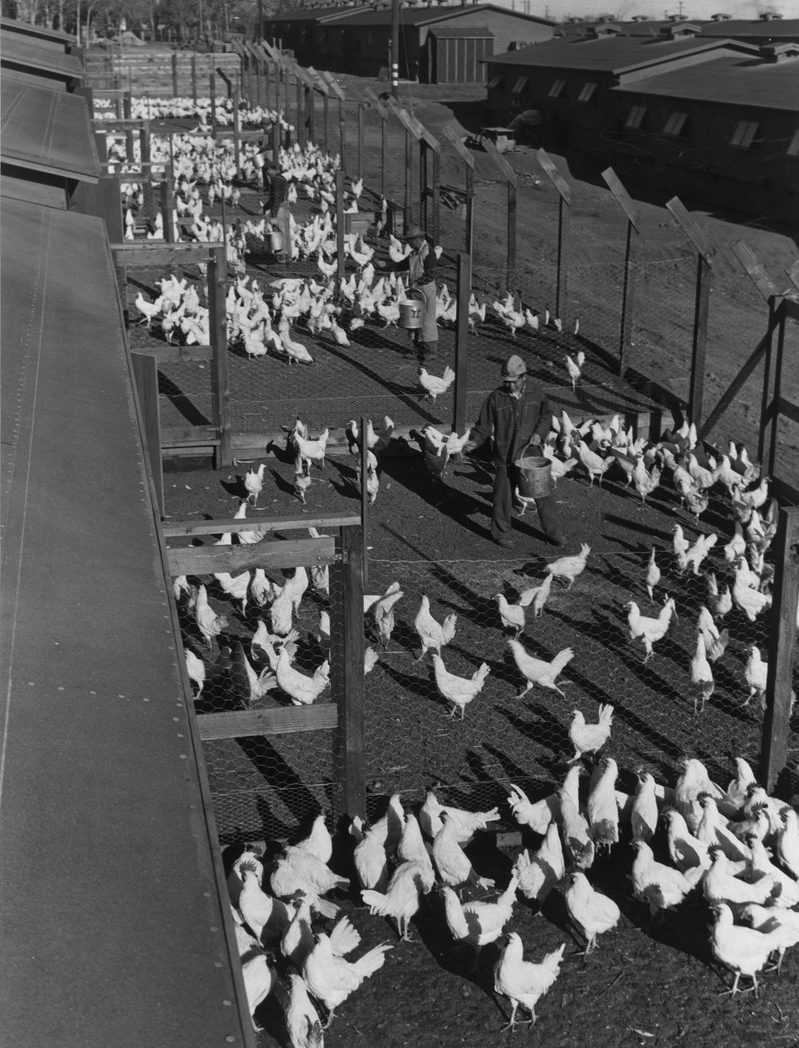
The henhouse system survived, largely unchanged, from the colonial dooryard flock through the first third of the twentieth century. What ended it was the same technology that had always been the missing piece: electric light on a timer, delivered by the rural power lines the Rural Electrification Administration began extending across the countryside from 1935 onward. Once a henhouse had power, a plain bulb could hold it at fourteen hours of light straight through December, and the entire seasonal rhythm of winter scarcity, lantern tricks, and south-facing windows simply stopped mattering.
What replaced it was a different kind of henhouse entirely. Writing for Edge Effects, a publication of the University of Wisconsin–Madison’s Center for Culture, History, and Environment, historian Zoe Robertson traces how electrified lighting, heating, and incubation let poultry operations scale in ways no dooryard flock ever could — by 1935, trade literature was already describing factory operations that could, in Robertson’s words, “condense into an acre of ground” what had once required 610 acres of range. The shift wasn’t only architectural. Electrified, climate-controlled housing let owners treat flocks as an industrial input rather than individually known animals, breaking the daily, personal relationship — checking on hens, lighting a lantern before dawn, trapping and recording each bird by hand — that the old henhouse had demanded. Commercial egg operations with artificial light and heat had taken over most production by the 1950s and 60s. Today’s commercial layers, aided by electric light and generations of the kind of selective breeding trap nests made possible, average well over 300 eggs a year — more than double what Elizabeth Robinson’s flock, or Robert Frost’s uncooperative hens, ever managed.
Watch the full history
The video version covers the same henhouse design, in about seven minutes of footage from the period.

None of this was trivial to the people living it. A farm family a century ago didn’t experience the henhouse as a historical curiosity — they experienced it as the difference between a lean January and a full one, worked out one south-facing window, one straw-lined nest box, and one carefully tracked hen at a time. Robert Frost’s trap nests failed him personally; he gave up the Derry farm in 1911 and turned, by his own later account, to teaching and writing instead. But the system he’d struggled with — daylight management, individual record-keeping, a wife’s independent cash — worked well enough, in the hands of farmers less famous and more patient than Frost, to feed the country’s demand for eggs for another half-century before electricity made it unnecessary.
What the henhouse ultimately measured wasn’t eggs. It measured attention — to the sun’s angle, to which hen was pulling her weight, to a ledger a wife kept that nobody else in the house was allowed to touch. Modern refrigeration and a supermarket egg case have made all of that invisible. How would you get eggs in January with no lights and no heat?
Related reading
- Why Farms Caught Rainwater Instead of Using the Well
- The Maple Sugar Abolition Movement That Almost Worked
- How a Water-Powered Grist Mill Turned Wheat Into Flour, No Cash Involved
- How Farmers Harvested Wheat With a Grain Cradle
Shop the styles/items related to this history:
Works cited
- Sherwood, Ross M. Chicken Houses. Kansas State Agricultural Experiment Station Circular. Link.
- Lippincott, William A. Poultry Breeding Records. Kansas State Agricultural Experiment Station Circular. Link.
- Frost, Robert. “Trap Nests.” The Eastern Poultryman 4, no. 5 (February 1903): 71. Documented in the National Agricultural Library’s Frost on Chickens exhibit.
- Wright, Ashley. Lighting Schedules for Arizona Backyard Laying Flocks. University of Arizona Cooperative Extension, publication az2185. Link.
- Smithsonian Institution Research Information System. “Butter and Egg Money,” on the farm diaries of Elizabeth Bourne Robinson. SIRIS blog, January 2022. Link.
- Robertson, Zoe. “How Electrified Farming Transformed Poultry Production in the U.S.” Edge Effects, Center for Culture, History, and Environment, University of Wisconsin–Madison. Link.
- United Egg Producers. “Evolution of U.S. Egg Farming.” Link.
- Penn State Extension. “The Chicken: Modern Egg Industry.” 4-H Animal Science resources. Link.