
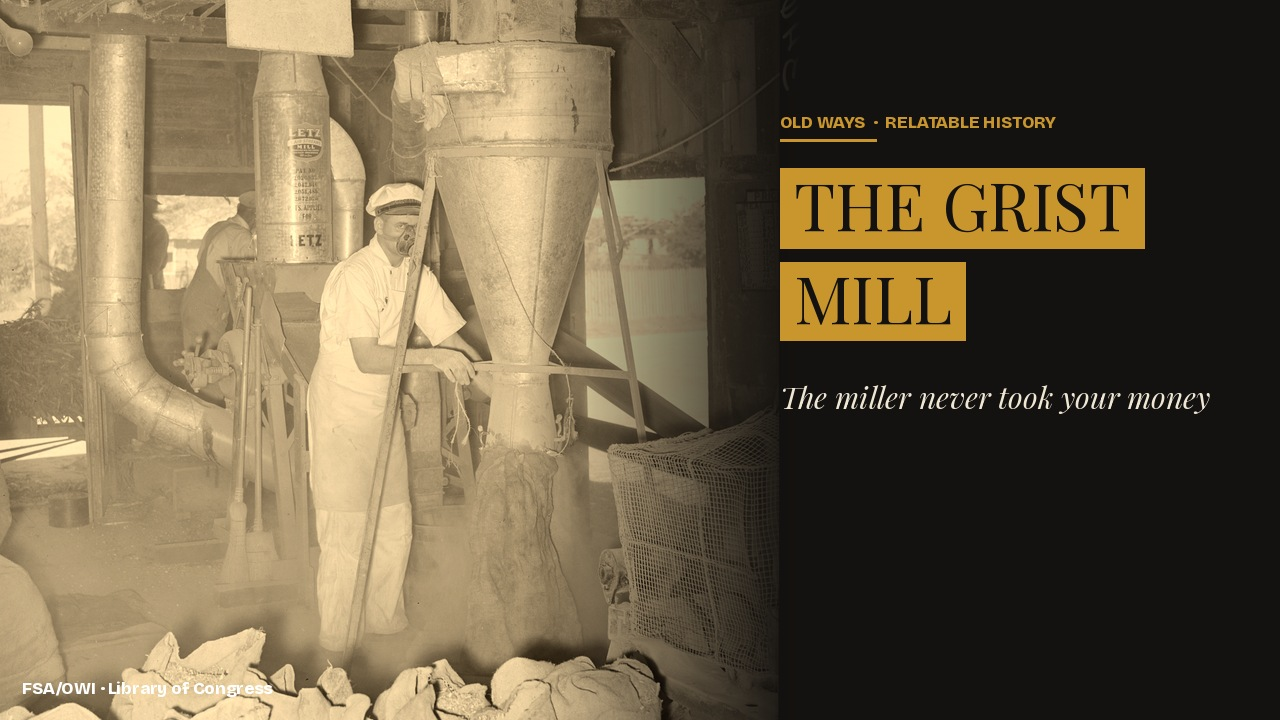
For most of American history, when a farm family needed flour or cornmeal, no money changed hands. They loaded a wagon with wheat or corn, drove it to the mill on the nearest fast-moving stream, and came home with meal ground from most of it. The miller kept the rest — a fixed fraction of the grain itself, taken off the top before a single sack was returned. There was no invoice, no price list, and for centuries, no cash register.
That arrangement, called the toll, was not a quirky local custom. It was the standard business model of an entire industry, regulated by colonial law, running on nothing but moving water and two shaped stones. Understanding how the toll worked means understanding how the mill itself worked — the mechanism, the economics, and the social role were really one and the same machine.
And it lasted. Roughly fifteen thousand small grain mills were still turning in the American Northeast as recently as the 1870s, before a single new technology, developed in Hungary and adopted in Minneapolis, ended most of them within about a decade.
Two stones did the entire job, and only one of them moved
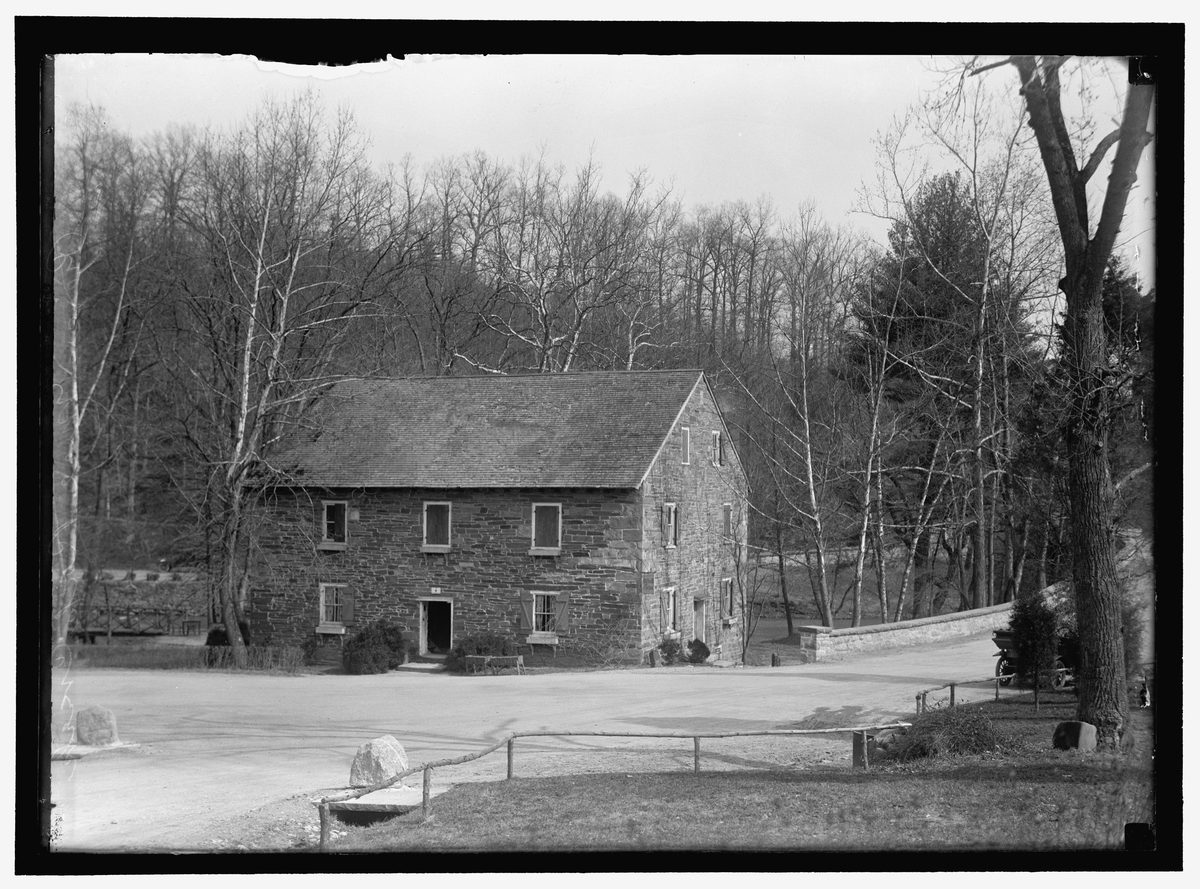
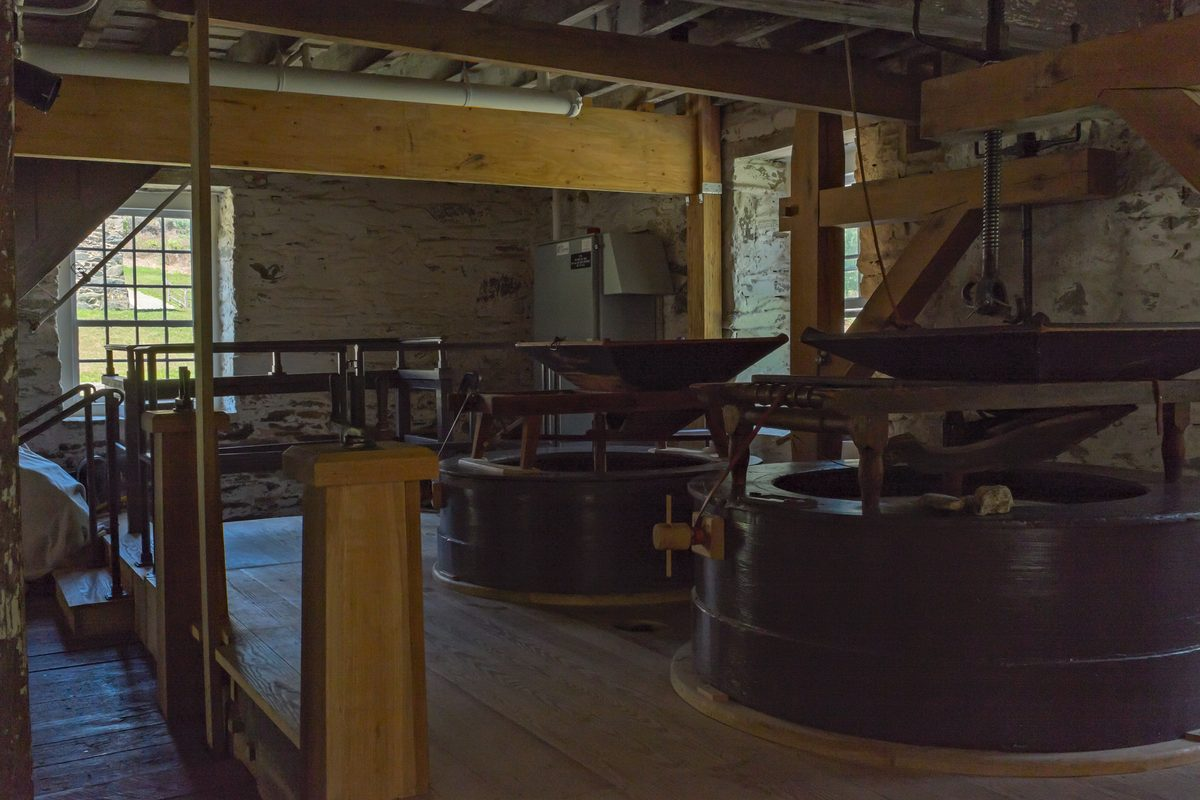
A gristmill’s grinding chamber holds a pair of millstones stacked one on top of the other. The lower stone, called the bedstone, is fixed in place. The upper stone, the runner stone, spins directly above it — at a working mill like George Washington’s on Dogue Run, over a hundred revolutions a minute, driven entirely by the force of water turning a wheel outside.
Grain is fed into a hole at the center of the runner stone, called the eye, and works its way outward between the two stone faces as they turn. Both faces are cut with a pattern of grooves, or furrows, radiating from the center. The furrows are not there to crush the grain so much as to cut it, the way a pair of scissor blades passing close together shears rather than smashes. By the time the ground meal reaches the outer rim of the stones and falls away, it has been sheared progressively finer the whole distance out.
The miller’s actual skill was in what is called dressing the stones — keeping that groove pattern sharp and the gap between the two faces set correctly, closer for fine flour, wider for coarser cornmeal. Get the gap wrong and the stones either grind too coarse to be useful or run hot enough to scorch the flour. This is a mechanical craft with essentially no moving parts to wear out except the stone faces themselves, which explains why the design survived, almost unchanged, for centuries.
The toll wasn’t a fee. It was a fixed share, and the law backed it up
Milling by toll meant the miller took a set proportion of whatever grain came through the door — commonly around one-eighth — and returned meal ground from the rest. A farmer who arrived with eight bushels of corn went home with meal from seven; the eighth bushel was the miller’s entire payment, no coin required in either direction.
This was not an informal handshake deal. Colonial and early state governments treated grist mills as essential infrastructure and regulated them accordingly. North Carolina’s 1715 “Act Concerning Roads and Ferries” granted fifty acres of land to anyone who would build and operate a public gristmill — effectively subsidizing the industry — and mills were widely understood, in the words of one North Carolina history, as the region’s first public utilities: not price-controlled monopolies, but businesses governments actively worked to make sure there were enough of, because a community without a working mill within reach was a community that could not reliably eat.
The toll system meant a mill’s income rose and fell directly with the local harvest, with no separate cash economy layered on top of it. In a rural county with little circulating currency, that was not a limitation. It was the entire point.
The exact fraction was not identical everywhere or in every period. One-eighth shows up repeatedly in the record, at Mount Vernon and in later Appalachian mill accounts alike, but colonies and states set their own statutory tolls by grain and by era, and a given mill’s actual take could run somewhat higher or lower depending on local law and how much competition it faced. What stayed constant across the regional variation was the form of payment itself — a share of the grain, fixed by custom or by statute, rather than a price negotiated per visit.
George Washington ran his mill as a serious business, and grain paid for all of it
The best-documented American example is also one of the most famous. George Washington built a new merchant gristmill on Dogue Run at Mount Vernon, replacing an older mill that had served the estate since the 1730s. At full operation it could turn out five thousand to eight thousand pounds of flour and cornmeal in a single day, and it was genuinely profitable: in 1797 alone it processed more than five thousand bushels of wheat and thirty-two hundred bushels of corn, generating the third-highest profit of any enterprise on the entire estate that year.
Washington’s mill did not just grind for the household. It processed grain for neighboring farmers under the standard one-eighth toll, and it shipped its own surplus flour well beyond Mount Vernon — to merchants in Alexandria and Fredericksburg, and from there in shipments as far as England, Portugal, and Jamaica. A single water-powered mill, in other words, could sit at the center of both a hyperlocal barter economy and an international export trade at the same time, because milling and merchandising were simply two stages of the same operation.
The trip to the mill was the neighborhood’s actual news network
Because a mill served an entire watershed’s worth of farms and could typically process only one customer’s grain at a time, a visit rarely meant a quick drop-off. Farmers often arrived to find wagons already lined up ahead of them, and a wait of several hours was routine during the harvest rush. That waiting time is what turned a chore into a social institution: neighbors who might otherwise go weeks without seeing each other traded news, discussed crops, and conducted informal business while their grain worked its way through the stones.
For farm families in genuinely isolated country, the mill was often the only regular reason to travel and the only reliable place to encounter people from outside their own household. It is not an exaggeration to say the mill functioned as rural America’s version of a post office, a market, and a meeting hall combined, built entirely on the fact that grinding grain simply takes time and people have to wait somewhere while it happens.
Mill sites tended to accumulate other businesses around them for exactly this reason — a blacksmith, a general store, eventually a post office, all drawn by the same weekly gathering of farmers who had nowhere else to be for the next few hours. It is why so many small American towns still carry the name of a mill that has not ground a bushel of anything in over a century: the settlement grew up around the waiting line, not the other way around.
One Delaware inventor tried to automate the mill before automation had a name
The basic two-stone mechanism went largely unchanged for centuries, but the labor around it did not stay that way forever. In the 1780s, the inventor Oliver Evans developed a system that moved grain and meal through a mill’s various stages — elevating, cooling, sifting — using bucket elevators, screw conveyors, and a raking device nicknamed the “hopper boy,” cutting the labor a mill needed from several men to essentially one. He patented the system in 1790.
George Washington was an early adopter. In 1791 he paid to license Evans’s system and install it at the Dogue Run mill, automating the handling of grain and flour even though the grinding itself still ran on the same paired millstones it always had. It is a useful reminder that mechanization at a mill did not arrive as one dramatic break with the past. It arrived first around the edges of a mechanism that was, at its core, already centuries old and did not need replacing yet.
Steel rollers did in a decade what millstones had done for three centuries
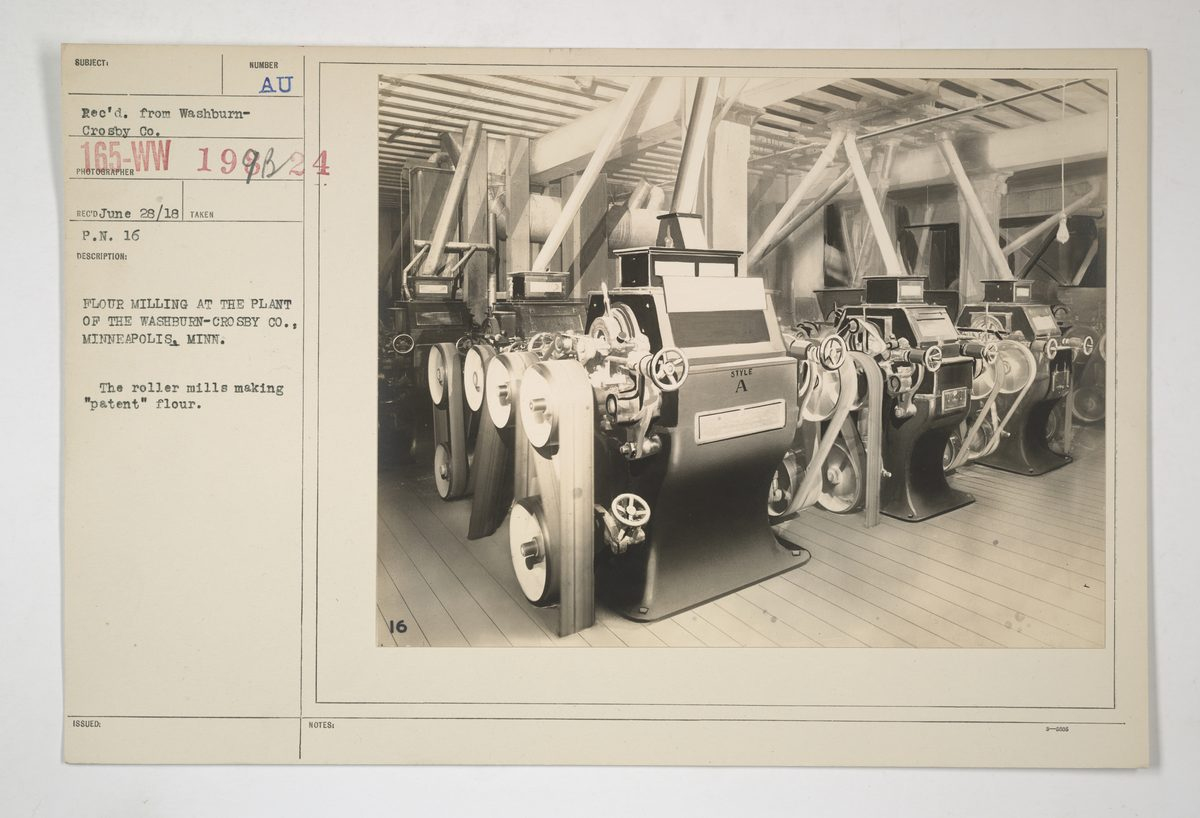
The millstone’s eventual replacement did not come from a better millstone. It came from a completely different way of reducing grain, developed in Hungary and brought to Minneapolis by millers at the Washburn company in the mid-1870s. Instead of shearing grain between two grooved stone faces in a single pass, the new process crushed it between chilled steel rollers, set progressively closer together across several gradual passes.
Washburn’s mill became the first major American mill to adopt roller milling in 1878, and the results were hard to argue with: flour that was more uniform, held up better in storage, and could be produced with more precision than stone grinding allowed. The technology spread fast. Within roughly a decade, the industrial roller mill — not fire, not neglect, not a change in what people wanted to eat — had made the small water-powered gristmill obsolete across most of the country, even though the stones themselves had not gotten any worse at their job.
What survives, and why it is worth finding
Most of those fifteen thousand Northeastern mills are gone entirely, torn down, burned, or simply left to collapse once the roller mills down the line made them unnecessary. A small number survive as museums or working demonstrations, still turning stones cut with the same furrow pattern the Mishnah’s contemporaries would have recognized, powered by the same kind of water wheel.
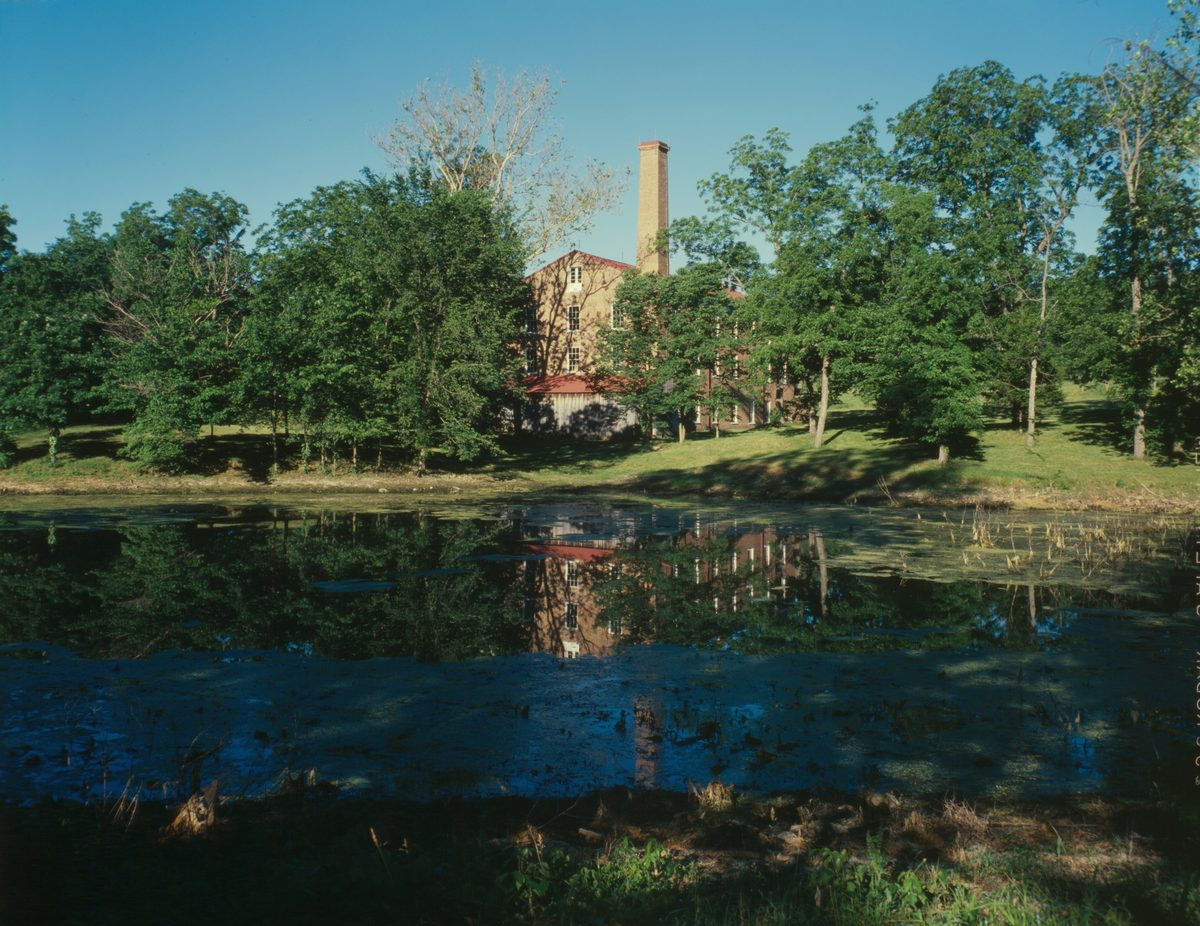
What made the gristmill worth documenting is not that it was primitive — it was, if anything, a remarkably efficient solution that needed almost no external inputs beyond moving water and a farmer’s patience. It ran an entire rural economy without currency, doubled as the region’s social infrastructure, and held that position for roughly three hundred years before a genuinely better machine, not a worse one, finally replaced it.
That is a slightly unusual way for an old technology to die. Most obsolete machines get replaced because they break down, or because the product they made stops being wanted. The gristmill’s millstones did neither. They kept doing exactly what they had always done, at the same quality they had always managed, right up until a genuinely superior process made that quality no longer good enough.
Watch the full history
The video version covers the toll system, the mechanism, and the mill’s social role in about three and a half minutes.

Related reading
- How Semaphore Flags Actually Worked at Sea
- How Farmers Harvested Wheat With a Grain Cradle
- Why a Corn Crib’s Walls Lean Outward, and Why It Never Fell Over
- How the Magic Lantern Became Europe’s First Horror Show
A period-illustrated survey, if you want more
Elmer Lewis Smith’s Grist Mills of Early America and Today (Applied Arts Publishers) is a real, specific survey of early American mills with period illustrations. See it on Amazon.
Works cited
- Cox, Joanne. Grist Mills of Early America & Today. University of Southern Indiana. Link.
- Boyd, Ken. Historic Watermills of North America: A Visual Preservation. University of Alabama Press, 2006.
- “Ten Facts About the Gristmill.” George Washington’s Mount Vernon.
- “Gristmills.” NCpedia, State Library of North Carolina. Link.
- “Minneapolis Flour Milling Boom.” Minnesota Historical Society, Mill City Museum. Link.
- “Flour Milling in Minnesota.” Minnesota Historical Society. Link.
- “Oliver Evans.” Encyclopaedia Britannica.
- “Milling the Past.” Whole Grain Council, January 2019. Link.
- Wells, Don, and Diane Wells. The Grist Mills of the Mountain Communities. Mountain Stewards, 2020. Link.