
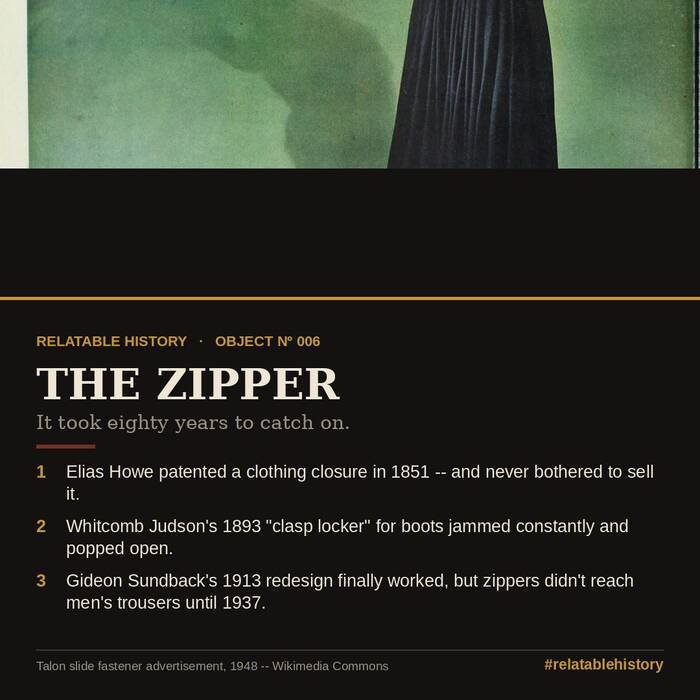
It took sixty-six years, three unrelated inventors, and a change forced by the U.S. Navy before the zipper actually worked. The first patent for it, filed in 1851, belonged to a man who never built a working model and never appears to have tried to sell one. The second version, unveiled at a world’s fair in 1893, jammed so often that its own inventor tested it on his own boots before risking it in public. By the time a design finally worked, in 1917, fashion still refused to touch it for another two decades.
The person everyone pictures when they picture “the inventor of the zipper” doesn’t really exist, because no one person did it. Elias Howe filed the first patent. Whitcomb Judson built the first commercial failure. A Swedish-American engineer named Gideon Sundback spent most of a decade in Hoboken, New Jersey, turning Judson’s clasp locker into a mechanism that worked a hundred times in a row instead of jamming on the first try. All three contributions were necessary. None of them was sufficient on its own.
What follows is the documented sequence by which a shoe fastener nobody wanted became standard equipment on every jacket, suitcase and pair of jeans on the planet — by way of a money belt, a flying suit, and a dress designer whose entire point was that you could see it.
Elias Howe filed the first patent in 1851, then forgot about it
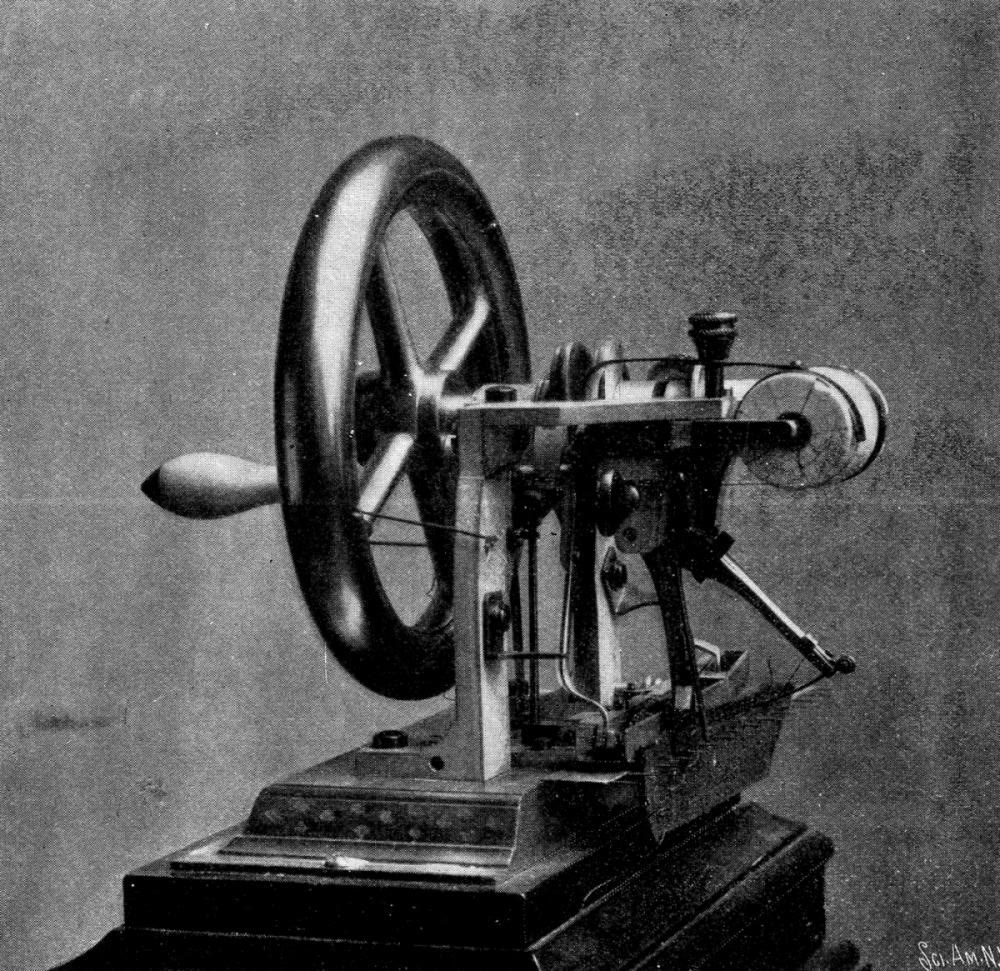
Elias Howe is famous for a different invention. In 1846 he patented the lockstitch sewing machine, the device that mechanized clothing production and eventually made him wealthy once a string of patent-infringement suits settled in his favor. Five years later, in 1851, he filed a second and much stranger patent: an “Automatic, Continuous Clothing Closure,” a mechanism built around a connected line of clasps, meant to shut a garment along its length in one motion instead of a column of buttons.
Howe never built a commercial version of it. He never advertised it, licensed it, or appears to have mentioned it again. The Hagley Museum and Library, which holds one of the country’s major archives of nineteenth-century American invention, now lists it mostly as a curiosity — the first documented attempt at the idea, filed by a man who had already made his fortune on a different machine and had no obvious reason to chase a second one.
The patent sat unbuilt for forty-two years. Nobody revisited the idea commercially until 1893, when a different inventor arrived at a similar mechanism from a different direction. That gap is the first clue to how slowly this object actually came together, and it is a familiar shape in invention history — a first patent and a usable product separated by decades and several uncredited hands, the same gap that complicates any honest answer to who really invented the telegraph key.
Judson’s clasp locker jammed at the 1893 World’s Fair, and the public ignored it
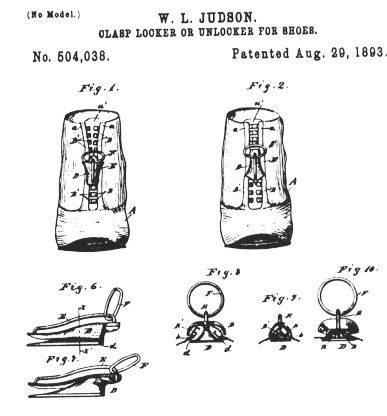
The next attempt came from Whitcomb Judson, a Chicago inventor who patented his own version — a “clasp locker,” meant to replace boot laces rather than buttons — on August 29, 1893. U.S. Patent No. 504,038 shows a row of interlocking hook-and-eye clasps running up the side of a boot, opened and closed by sliding a small guide along the row.
Judson debuted the clasp locker at the World’s Columbian Exposition in Chicago that same year, the fair that also introduced the country to the Ferris wheel. His invention made a considerably smaller impression. According to the Lemelson Center for the Study of Invention and Innovation at the Smithsonian, the prototype was “somewhat clumsy and frequently jammed,” though it worked well enough that Judson and an associate tested it in their own boots before showing it off. The public, in the Center’s account, “largely ignored” the device at the fair.
Judson was not naive about what he had. He and a business partner, Colonel Lewis Walker, formed the Universal Fastener Company to manufacture and sell the clasp locker, and by 1904 — according to the historian Cynthia Green, writing for JSTOR Daily — the company had refined the design and attached a slogan to it: “A Pull and It’s Done.” It still jammed. Universal Fastener never came close to the market success its founders wanted, and Judson died in 1909, sixteen years after his patent and eight years before anyone built a version that reliably worked. It is a pattern that shows up elsewhere in nineteenth-century invention: the zoetrope had three separate inventors arrive at working versions independently, and none of them is remembered as “the” one either.
A Swedish engineer in Hoboken spent a decade rebuilding the mechanism from scratch
Universal Fastener’s one lasting decision was hiring Gideon Sundback, a Swedish-American engineer, in the mid-1900s. Sundback did not patch Judson’s clasp locker. He replaced its entire operating principle, twice.
His first patent, filed in April 1908 and granted April 29, 1913 as U.S. Patent No. 1,060,378, kept Judson’s hook-and-eye logic but reworked the individual clasps to be more flexible and far less prone to popping open under tension. It was a real improvement, and it was still not the zipper anyone would recognize today — an incremental fix to a mechanism that was fundamentally still Judson’s.
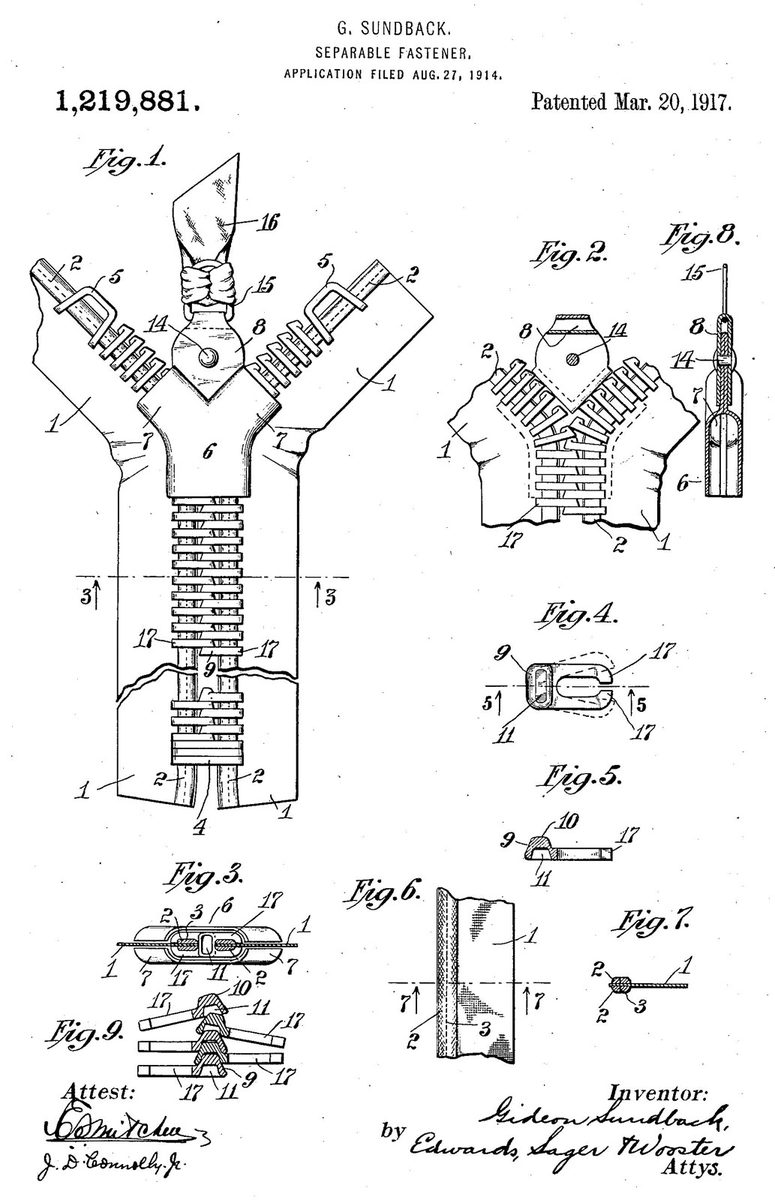
The breakthrough came with Sundback’s second patent, filed August 27, 1914 and granted March 20, 1917 as U.S. Patent No. 1,219,881, titled simply “Separable Fastener.” Its drawings show something genuinely new: two fabric tapes, each lined with identical, interlocking scoop-shaped teeth, drawn together or apart by a single sliding guide that cammed the teeth into and out of alignment. The word “identical” is the real innovation. Judson’s design needed two different kinds of fastening elements, built to different specifications and assembled in a fixed order — difficult to mass-produce accurately. Sundback’s scoops were all the same part, stamped by the thousands, so a factory could finally make them cheaply and consistently instead of hand-fitting mismatched pieces. The Fashion History Museum, which has studied the fastener’s manufacturing history, credits this version with roughly eleven interlocking teeth to the inch, nearly triple the density of Judson’s original — a figure that, if accurate, goes a long way toward explaining why it finally stopped jamming.
This cuts against the story people usually tell about invention. Sundback didn’t have a flash of design insight nobody else had considered; interlocking teeth weren’t a new idea. What he solved was a manufacturing problem — how to make thousands of identical, reliable, cheap metal parts and assemble them accurately by machine. The zipper’s sixty-six-year gestation wasn’t sixty-six years of nobody imagining the right shape. It was sixty-six years of nobody working out how to build that shape at a price and tolerance a factory could actually hold.
The U.S. Navy made the zipper indispensable before any tailor would touch it
Sundback’s patent alone didn’t create demand. A corporate restructuring and a war did. In 1917 — the same year the “Separable Fastener” patent issued — Universal Fastener’s successor, the Hookless Fastener Company, was incorporated, and a salesman named Robert J. Ewig found the fastener’s first real commercial niche: money belts. Per Cynthia Green’s reporting for JSTOR Daily, money belts accounted for almost all of the company’s 24,000 sales that year, not clothing or boots — a cash-carrying accessory for men who didn’t trust their pockets.
The far bigger order came from the military. The United States had entered the First World War that year, and in 1918 the U.S. Navy ordered Hookless fasteners for ten thousand flying suits. A military flight suit exposes a weak fastener fast: cold hands, high vibration, a garment that has to close securely under pressure and in a hurry. A fastener that survived that contract had, in effect, passed the most demanding quality test available in 1918.
It is not a coincidence that the fastener’s path to reliability ran through military procurement rather than fashion. Civilian clothing could tolerate a fastener that worked most of the time; a flight suit could not. The Navy’s order pushed Hookless to manufacture at a scale and consistency it had never needed before, in the same decade that other pieces of wartime equipment were being forced to the same standard — the same pressure that turned hand-flag signaling into a standardized naval system rather than an improvised one. The zipper just happens to be the piece of wartime equipment that ended up in everyone’s trousers afterward.
A rubber boot company gave the fastener its name, and the accounts disagree by a year
The word “zipper” did not come from Sundback, from Hookless Fastener, or from anyone trying to name a clothing accessory. It came from the B.F. Goodrich Company, which used Hookless fasteners on a line of rubber galoshes and wanted a catchier name than “separable fastener” for its advertising. The name was onomatopoeic, describing the sound the slider made, and Goodrich trademarked it for a period before the term genuinely entered the language as a generic word for any sliding fastener.
Sources disagree on the exact year. Green’s JSTOR Daily account dates the trademark to 1923, the same year Sundback patented an improved fastener-manufacturing machine. The Fashion History Museum’s history of the object puts the Goodrich naming a year later, in 1924. Both agree on the essential point: the name arrived attached to footwear, roughly a decade after the mechanism itself was solved, and more than a decade before anyone would consider putting one somewhere visible on a dress. By 1934, per Green’s reporting, the Hookless Fastener Company’s annual turnover had passed sixty million individual fastener units.
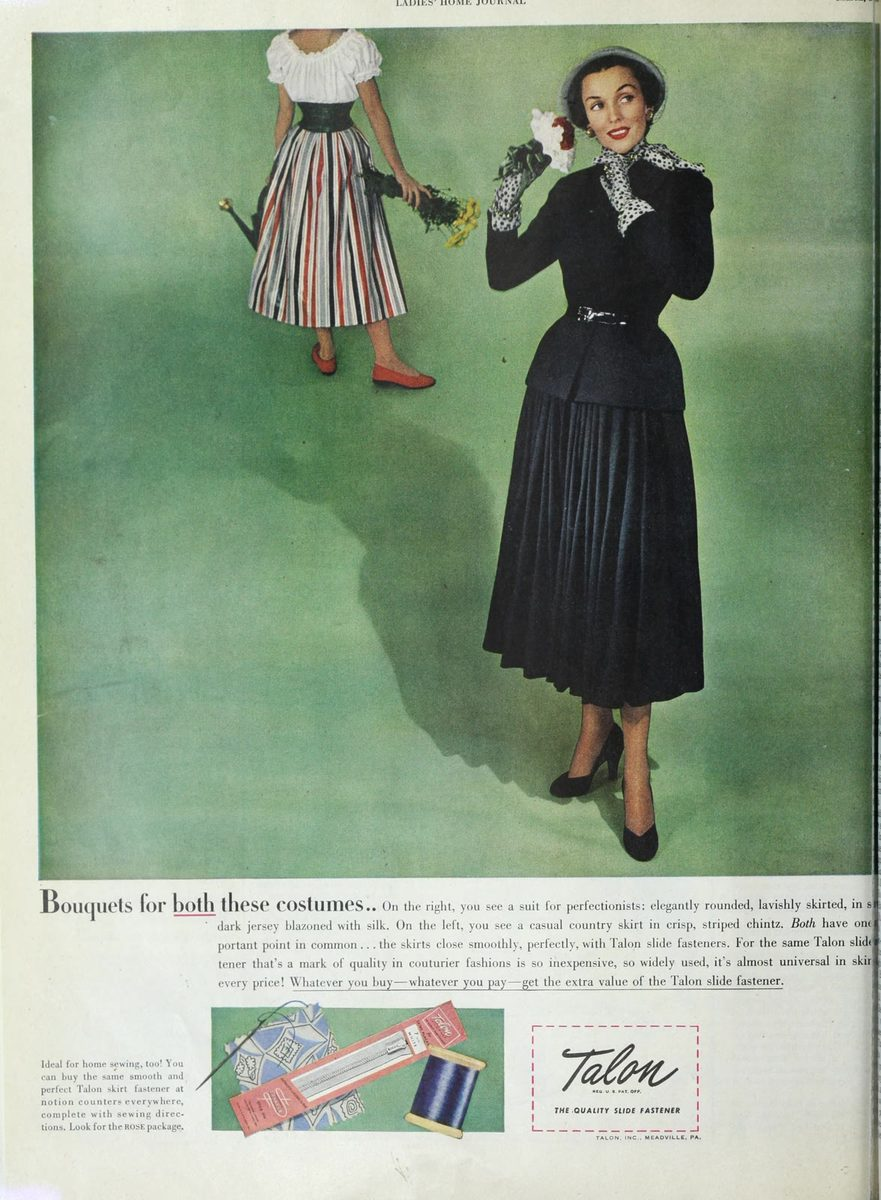
Fashion refused the zipper for twenty more years, until a dress designer put one where you could see it
The clothing industry’s resistance to the zipper lasted roughly as long as its own invention had. A visible metal fastener running down a garment struck tailors and dressmakers of the 1910s and 1920s as mechanical and more than a little vulgar — suitable for a workman’s boot or a tobacco pouch, not for anything worn in public by someone who could afford a seamstress.
The break came from a designer who built a career on deliberately breaking that kind of rule. In the winter of 1935–36, Elsa Schiaparelli showed an evening dress in Paris — a severe, floor-length column of brown wool crêpe — that fastened up the back with a visible celluloid zip running from waist to hip. The dress survives today in the collection of the Victoria and Albert Museum in London, where the catalog record notes it was “probably” made with an Éclair zip, a French brand, and records that its original owner, a Mrs. Peter Otway-Smithers, recalled it as one of the first dresses she had ever seen with a zip fastener at all.
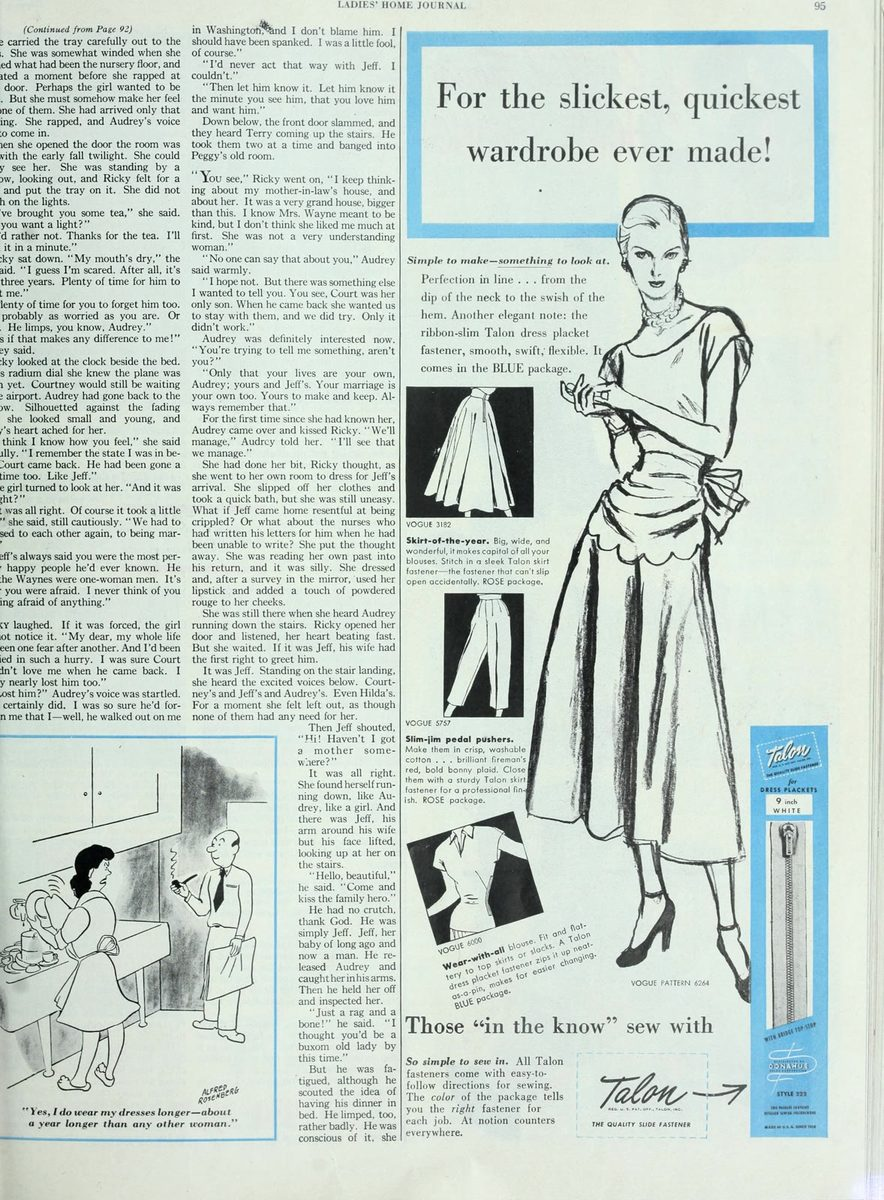
Schiaparelli was not alone in trying it. The Fashion History Museum credits both her and the American designer Charles James with early couture use of colored celluloid zippers around the same period, supplied in some cases by the Lightning Fastener Company of Canada — a company Sundback himself ran as president from 1925 until his death in 1954, meaning the inventor of the mechanism spent the second half of his career selling it as fashion hardware rather than industrial equipment. By the back half of the 1930s, Talon’s own advertising had shifted from pitching the fastener as a technical improvement to pitching it as a style statement for skirts, blouses and dress plackets — exactly the visible, decorative placement the previous generation had considered vulgar.
Watch the full history
The short version covers Howe, Judson and Sundback’s three attempts in about ninety seconds.

Related reading
- Who Really Invented the Telegraph Key (It Wasn’t Samuel Morse) — another invention credited to the wrong person for over a century.
- Who Invented the Zoetrope? Three Men Have a Claim — three separate inventors, none of them remembered as “the” one.
- Who Invented the Mousetrap? The Rat War That Made It Necessary — the same patent-race pattern that slowed the zipper down by decades.
- Who Really Invented the Rickshaw? Three Rival Claims, One Vehicle — a second object whose actual inventor is still disputed.
- How Semaphore Flags Actually Worked at Sea — another piece of hardware the military perfected before anyone else needed it to.
Shop zippers and zipper gear
Shop the styles and tools featured in the video version of this story:
Works cited
- Hagley Museum and Library. “Here at Hagley, We Love Inventions, Big and Small.” Hagley Vault (blog). Link.
- Judson, Whitcomb L. U.S. Patent No. 504,038, “Clasp Locker or Unlocker for Shoes.” Filed November 7, 1891; patented August 29, 1893. Link.
- Lemelson Center for the Study of Invention and Innovation, Smithsonian Institution. “Whitcomb Judson.” Link.
- Sundback, Gideon. U.S. Patent No. 1,060,378, “Separable Fastener.” Filed April 2, 1908; patented April 29, 1913. Link.
- Sundback, Gideon. U.S. Patent No. 1,219,881, “Separable Fastener.” Filed August 27, 1914; patented March 20, 1917. Link.
- Green, Cynthia. “How WWI Made the Zipper a Success.” JSTOR Daily, January 24, 2018. Link.
- Victoria and Albert Museum. “Evening Dress, Elsa Schiaparelli, Winter 1935–36.” Collection record T.36-1964. Link.
- Fashion History Museum (Cambridge, Ontario). “Zipping Down History.” Link.
None of this was obvious at any single step. Howe had no reason to think a second invention would matter after the first one made him rich. Judson had every reason to think his clasp locker would succeed, and watched it fail for sixteen years before he died without knowing it would ever work. Sundback solved a problem nobody was paying him to solve in a genuinely elegant way — a pattern of staggered, disputed credit that shows up again in the three rival claims behind the rickshaw — and it stayed unrewarded until a rubber-boot company’s marketing department and the U.S. Navy’s quality requirements turned his patent into an industry.
By the 1970s, annual zipper production worldwide had passed two billion units, and by the 1980s a Japanese company called YKK, founded decades after Sundback’s patent expired, had become the industry’s dominant manufacturer, a position it still holds. In 2017, Talon, the modern descendant of the original Hookless Fastener Company, built a publicity zipper 3.1 miles long — a stunt that only makes sense once you remember the whole object, at any length, is still built from Sundback’s single idea: two rows of identical interlocking teeth, closed by a sliding cam.
The zipper’s real history isn’t a story about a clever idea. It’s a story about how long a genuinely good, genuinely simple idea can sit unusable, waiting for someone to solve the boring problem of making it reliably and cheaply enough — and how much longer it can sit after that, waiting for someone willing to be seen wearing it.