
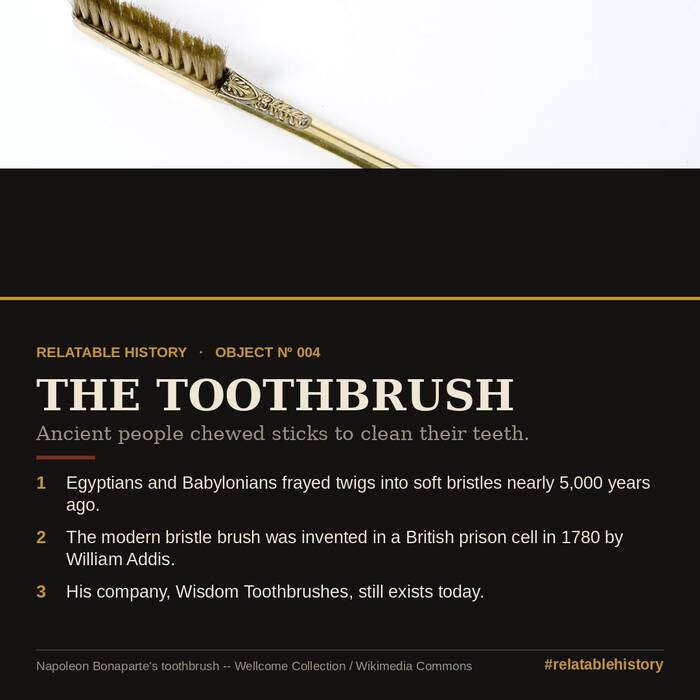
The toothbrush in your bathroom cup is, bristle for bristle, younger than the Golden Gate Bridge. DuPont introduced the first nylon-bristled toothbrush in 1938, a year after the bridge opened across San Francisco Bay, and nylon is still what almost every toothbrush bristle on earth is made of today. That is a strange fact to sit with, because the toothbrush feels ancient, the kind of object that has simply always existed, the way a spoon has always existed.
It has not. What is genuinely ancient is the underlying idea: rubbing something fibrous against your teeth to keep them clean. People were doing that in Mesopotamia and Egypt roughly five thousand years ago, using frayed twigs, and a version of that same object is still sold today, still used by millions of people, and has recently been the subject of a formal clinical literature review. The brush, the bristle and the plastic handle are the recent part of this story. The twig came first, and it arguably never actually lost.
Getting from the twig to the electric model on your bathroom counter took roughly five thousand years, at least four countries, one prison cell, and one company better known for stockings. The historical record disagrees with itself at several points along the way, about exactly when and about who deserves the credit, and that disagreement is worth keeping, because it means the tidy one-line version of this story — usually “a prisoner invented it in 1780” — is simpler than what actually happened.
Chewing sticks were doing real dental work thousands of years before anyone built a brush
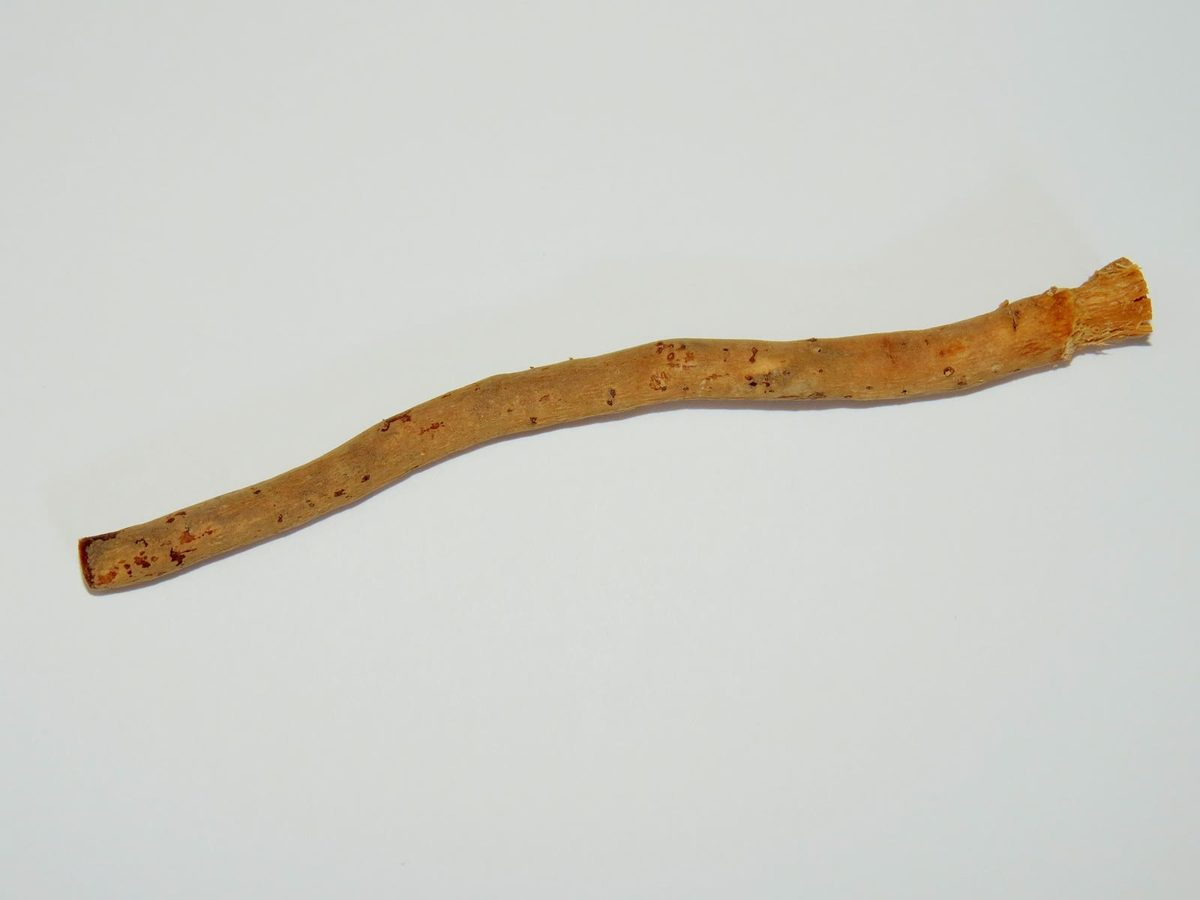
The earliest tooth-cleaning tools were not brushes at all. Archaeological and textual evidence from Mesopotamia, ancient Egypt, Babylon and Etruria shows people fraying the ends of twigs and rubbing them against their teeth and gums, a practice some of that research traces back roughly five thousand years. Across much of the Islamic world the same basic tool survived under the name miswak, or siwak, typically a twig cut from the arak tree, and it never stopped being made, sold, or used.
That continuity is not just sentimental. A 2025 systematic review in the journal Scientifica pooled the available clinical research comparing miswak against conventional toothbrushing and oral hygiene measures, and found real antibiofilm activity rather than a folk remedy that merely persisted out of habit. The stick releases natural antibacterial compounds as its fibres fray with chewing, which is roughly what a toothbrush and toothpaste are trying to achieve chemically by other means. The oldest tool in this story is also one of the few with an active peer-reviewed research literature testing whether it actually works.
China built a bristle brush centuries before Europe wanted one, though historians do not agree on exactly which century
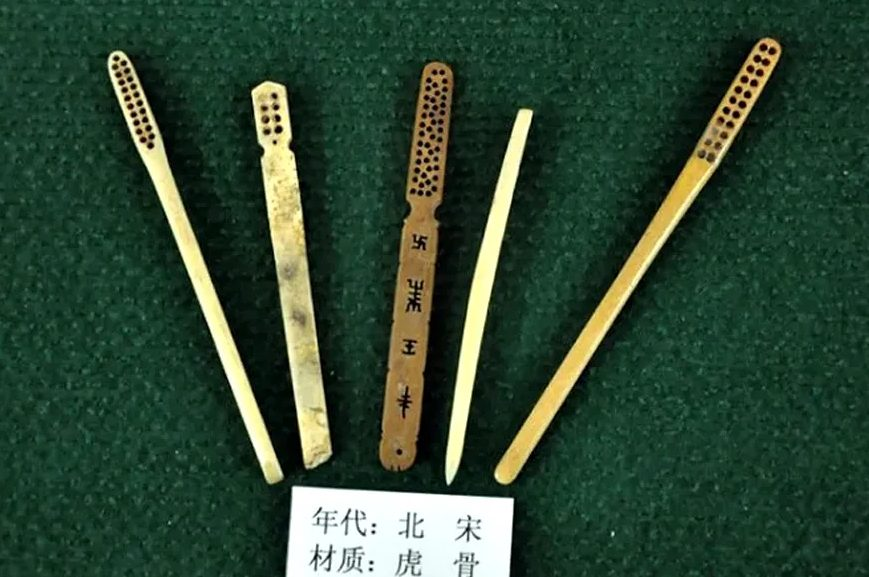
The bristle toothbrush, as something closer to what we would recognise today — stiff bristles bound into a handle rather than a frayed stick — is generally credited to China. Exactly how early is where the sources start to diverge. The Smithsonian’s National Museum of American History dates the earliest toothbrushes to China’s Tang dynasty, 618 to 907 CE, with surviving examples visible today at the Shanghai Museum. The Library of Congress and the University of the Pacific’s Arthur A. Dugoni School of Dentistry instead point to a more specific design — coarse bristles taken from the back of a hog’s neck and set into a handle carved from bone or bamboo — and date that particular innovation to 1498, deep into the Ming dynasty.
The surviving objects fall somewhere between those two claims, which is probably the more honest picture: this was not invented in one afternoon. A Northern Song dynasty toothbrush with a carved tiger-bone handle, for instance, sits in museum collections from the centuries between the Tang and Ming dates, suggesting the design was refined gradually over roughly six hundred years rather than appearing fully formed.
However precisely you date it, the design travelled slowly. European travellers encountered bristle brushes in use across the Islamic world after prayer as early as the writings of the diarist Thomas Hearne, and by 1649 well-off English visitors in Paris were buying toothbrushes with silver, or even gold, handles. Outside that small and wealthy circle, most Europeans kept rubbing their teeth with a rag dipped in soot, salt or chalk for a long time afterward. A paintbrush-handled variant moved from Spain to France around 1590, and England did not begin manufacturing its own bristle brushes — cow-bone handles, boar-hair bristles — until 1780. The hog bristle itself was part of the resistance: plenty of Europeans who tried the imported design simply found it too coarse for comfortable use.
The design that actually caught on came out of an English prison cell, in either 1770 or 1780, depending whose history you read
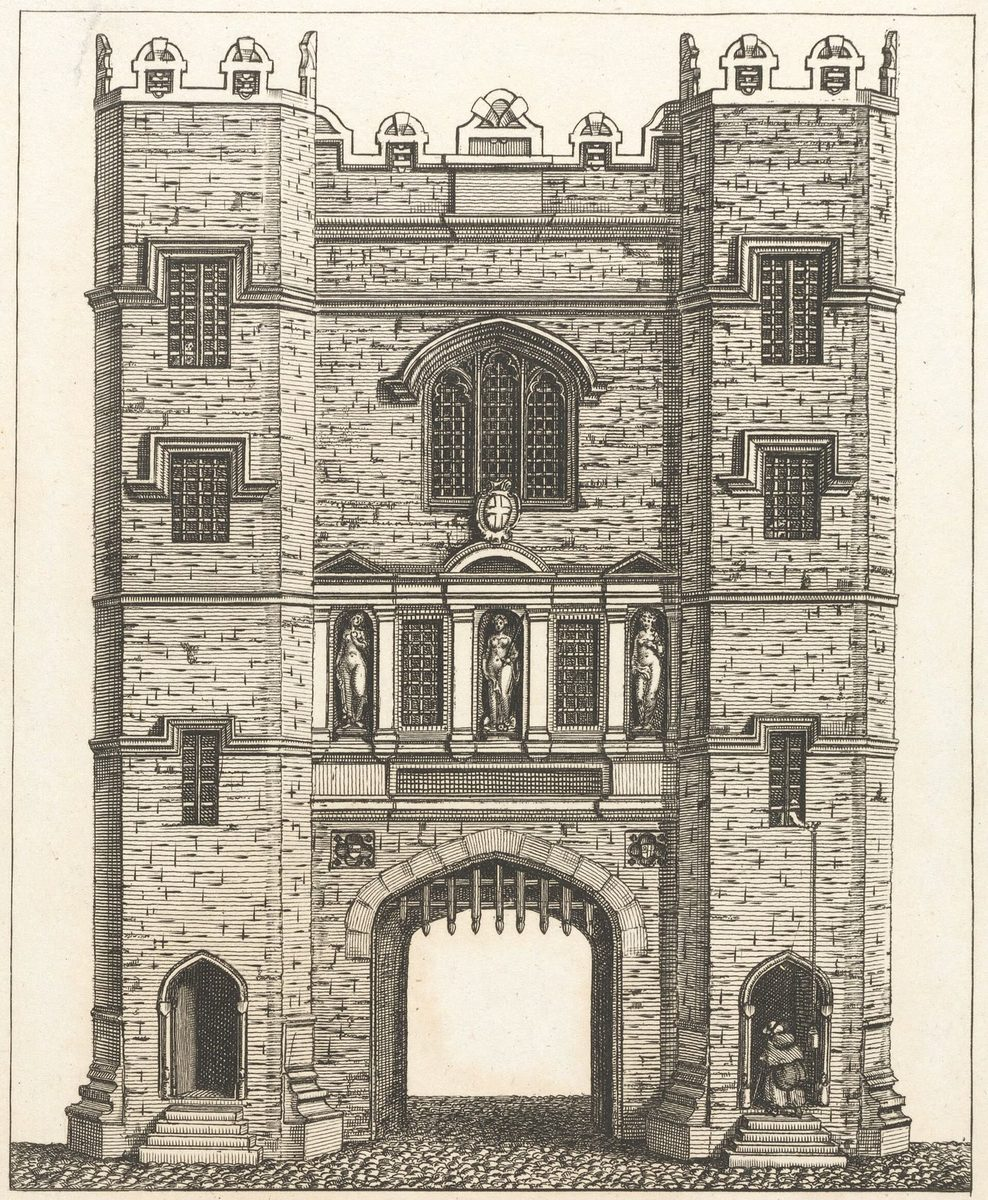
The version of the toothbrush that spread across Europe and eventually the world is credited to William Addis, an Englishman who, by most outside accounts, was serving time in 1780 for inciting a riot. Addis is said to have built the whole device out of prison-cell improvisation: a meal left him with a small bone, a length of wire or an awl let him work a row of holes through one end, and a guard, for reasons the record does not explain, supplied him with bristles, which he worked into the holes in tufts and fixed there with glue. Addis’s own company, trading today as Addis Housewares, tells essentially the same story but places the invention itself a decade earlier, in 1770, with 1780 instead marking the year he began manufacturing it commercially after his release. Most independent histories, including a 2015 peer-reviewed mini-review in the Journal of Dental Health, Oral Disorders & Therapy, use 1780 for both the invention and the business.
Whichever date is correct, the business itself is real and still trades: the company Addis founded is the ancestor of what operates today as Wisdom Toothbrushes in the UK. By Addis’s own account, manufacture of bone-and-bristle toothbrushes on his pattern had spread to England, France, Germany and Japan by 1840. The design formalised more slowly in America: the first United States patent for a toothbrush, No. 18,653, was not granted until November 7, 1857, to a New Yorker named H. N. Wadsworth, and it was not until the Pro-phy-lac-tic brush launched in the mid-1880s that an American-made toothbrush reached real mass-market distribution.
Natural bristles had a hygiene flaw nobody could really fix, until a stockings company stepped in
For roughly a hundred and fifty years after Addis, the basic recipe barely moved: a bone, wood or ivory handle, and bristles pulled from the neck of a hog, even as the Industrial Revolution let factories turn the things out by the millions. That recipe carried a real, unglamorous problem. Natural bristles absorb water, and a toothbrush left damp between uses, which by definition it always is, makes a genuinely good breeding ground for bacteria. Nobody in the natural-bristle era had a workable fix.
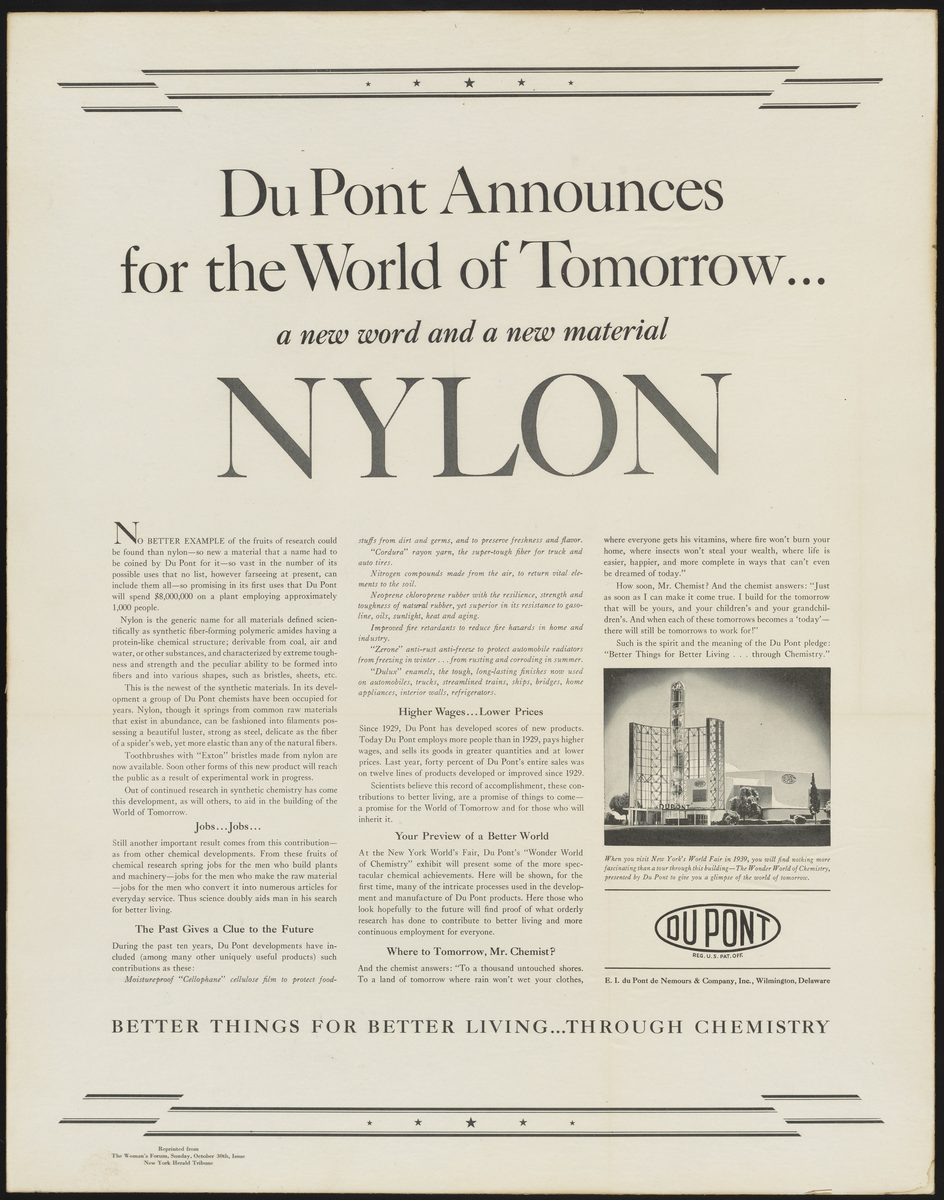
The fix, when it came, arrived from an unrelated industry. In 1938 the DuPont corporation, fresh off commercialising nylon, the synthetic fibre that would go on to make stockings a household word, introduced the first toothbrush with nylon bristles, sold under the name Dr. West’s Miracle Tuft. Nylon does not absorb water the way animal hair does, so it dries faster, resists bacteria better, and can be manufactured to a far more consistent stiffness than bristles pulled from an animal. It was a genuine hygiene improvement rather than a marketing novelty, and within a generation animal-bristle toothbrushes had essentially disappeared from the market.
A war and a toothpaste did more for brushing habits than any advertisement could
Nylon solved the brush. What actually got people brushing twice a day, as a habit rather than an occasional nicety, were two other things in close succession. During the Second World War, the United States military issued toothbrushes as standard equipment to millions of enlisted men and made regular brushing part of basic hygiene discipline. Soldiers who had never owned a toothbrush, or had owned one and rarely used it, came home with the habit intact, and American toothbrush ownership climbed sharply through the rest of the 1940s.
Toothpaste caught up with the toothbrush a decade later. At Indiana University, a graduate student named Joseph Muhler, working under biochemistry professor Harry Day, spent years systematically testing more than 150 different fluoride compounds for their effect on tooth decay before settling on stannous fluoride as the most promising candidate. Procter & Gamble began funding the research, and in 1950 chemistry professor William Nebergall joined the project; it was Nebergall who found that baking the toothpaste’s abrasive together with high-purity stannous fluoride in a laboratory oven produced a stable formulation that actually worked. The resulting product, Crest, entered test markets in 1955 and launched nationally in 1956 behind the slogan “Look, Mom, no cavities!” In 1960 it became the first toothpaste awarded the American Dental Association’s Seal of Acceptance, on the strength of clinical trials showing an average 49 percent reduction in cavities. Muhler and Nebergall were inducted into the National Inventors Hall of Fame together in 2019, sixty-four years after the research began.
The motor arrived in 1954, and the stick never actually left
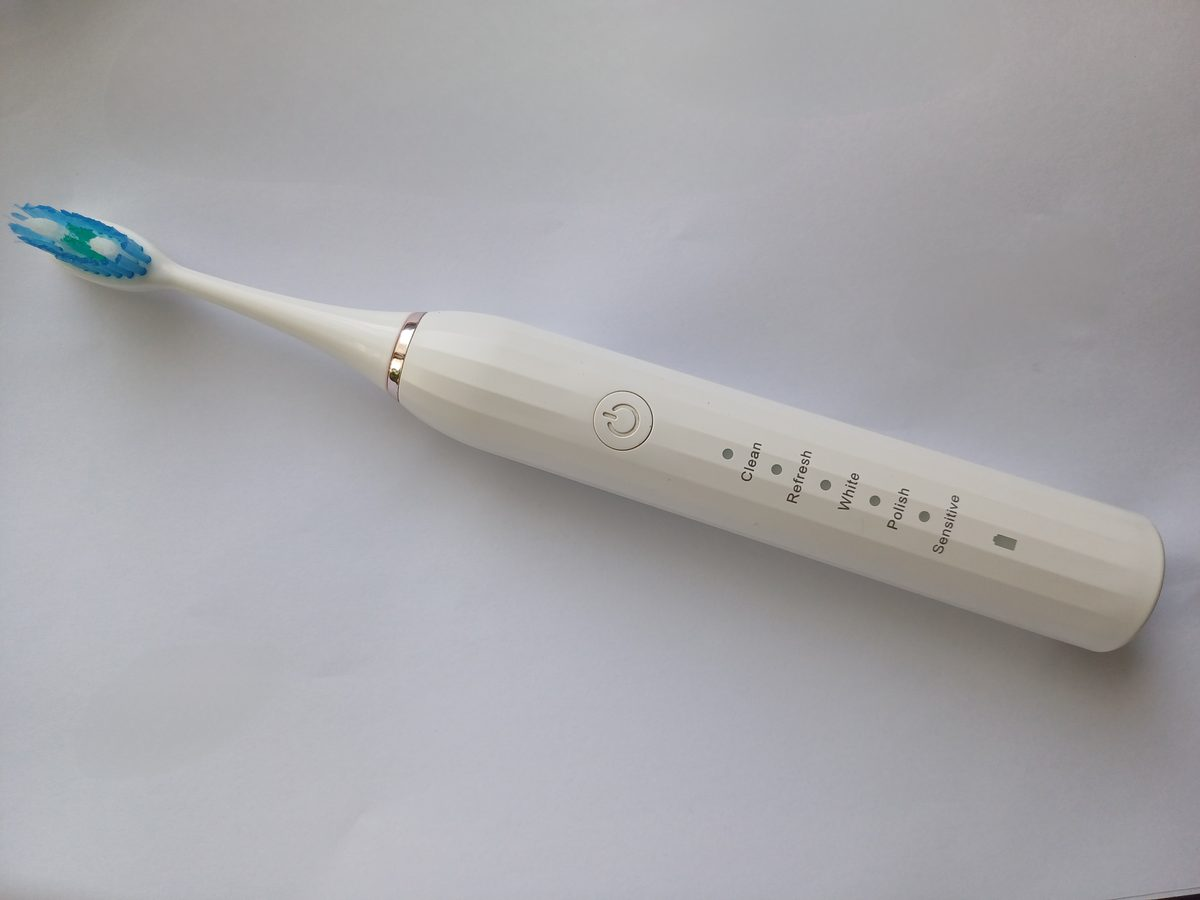
The last major mechanical change came from Switzerland. Philippe-Guy Woog, a dentist and chemist, built the first modern electric toothbrush, the Broxodent, in 1954, using a corded handle that moved the brush head from side to side to approximate a manual brushing motion, as a 2019 trade history of power brushing documents. It reached American consumers in 1959, launched at an American Dental Association meeting and marketed initially to patients with limited hand mobility, before spreading into ordinary bathrooms over the following decades as battery and rechargeable models replaced the cord.
And the chew stick this whole story opened with never actually went anywhere. Across parts of the Middle East, Africa and South Asia, the miswak remains an entirely normal part of daily hygiene, used on its own or alongside a plastic brush — the one object in this five-thousand-year history with the least engineering behind it, and, per that 2025 systematic review, one of the few with an active peer-reviewed research literature testing whether it actually works. The next time you reach for a toothbrush with a built-in timer and a pressure sensor, it is worth remembering that it is doing, chemically and mechanically, roughly the same job a frayed twig was already doing in Babylon some five thousand years ago.
Watch the full history
The video version covers the same object in under ninety seconds — the chew stick, the Chinese bristle brush, and the prison cell where the modern design was born.

Related reading
- Who Invented the Zipper? It Took Three Men and Sixty-Six Years — another everyday object whose one-inventor legend turns out to be more complicated.
- Inside the 150-Year History of Vibration Therapy — a medical device with the same arc from dubious remedy to accepted technology.
- The Public Health Panic That Made Baby Cages Seem Safe — a reminder that hygiene advice has always shifted with the science behind it.
- Why Venice Made Mirror-Making a State Secret — another craft that spread slowly across borders, guarded or resisted at every step.
Shop the styles/items featured in this video
Works cited
- Tadinada, A., Kilham, J., Bysani, P., & Gopalakrishna, A. “The Evolution of a Tooth Brush: From Antiquity to Present — A Mini-Review.” Journal of Dental Health, Oral Disorders & Therapy 2, no. 4 (2015): 62–65. Link.
- Vejendla, et al. “Antibiofilm Properties of Miswak (Salvadora persica) Compared to Conventional Oral Health Measures: A Systematic Review.” Scientifica, 2025.
- Warner, Deborah. “A Brush with History.” Smithsonian National Museum of American History, October 31, 2022.
- “Different Strokes for Different Folks: A History of the Toothbrush.” University of the Pacific, Arthur A. Dugoni School of Dentistry, Virtual Dental Museum. Link.
- “Who Invented the Toothbrush, and When Was It Invented?” Library of Congress, Everyday Mysteries.
- “Our History.” Addis Housewares. Link.
- “Meet 2019 Inductees Joseph Muhler and William Nebergall.” National Inventors Hall of Fame. Link.
- Guignon, Anne Nugent. “The Remarkable Evolution of Power Brushing: New Swiss Innovations.” RDH Magazine, August 1, 2019. Link.