
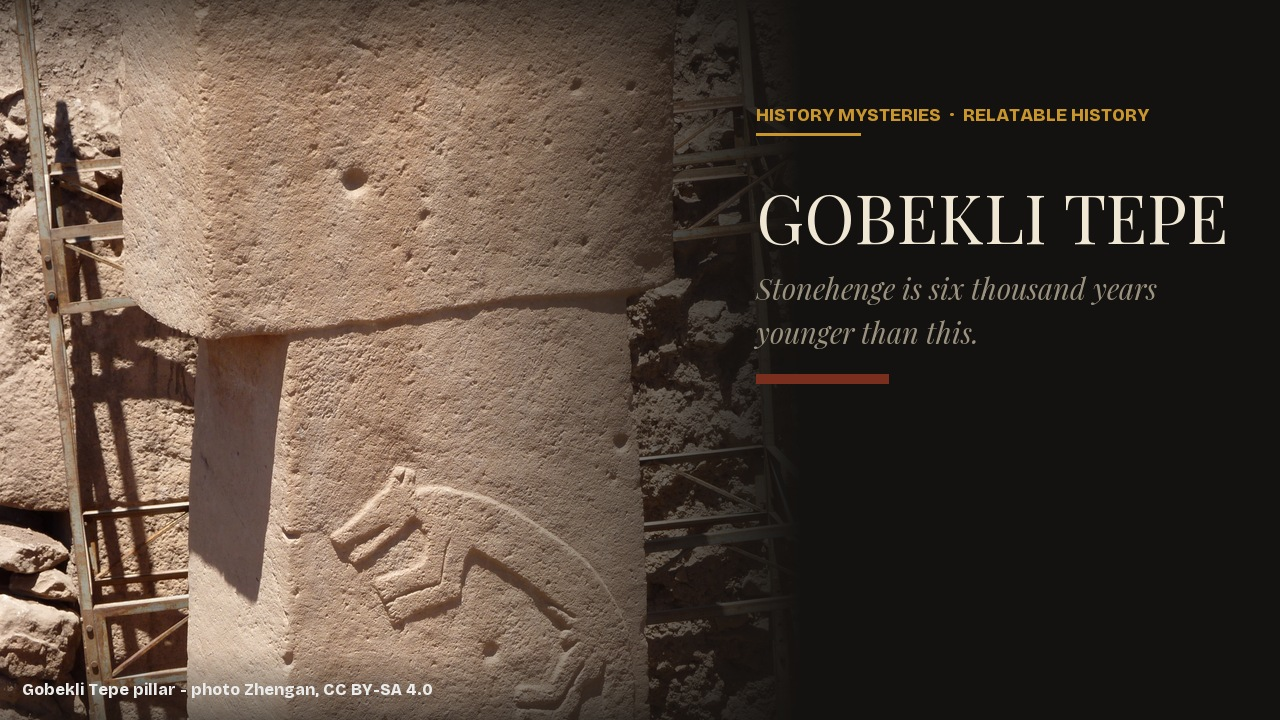
In 1963, a joint Istanbul University–University of Chicago survey crew cataloguing archaeological sites across southeastern Turkey walked over a low hill near the city of Şanlıurfa, noted a scatter of broken limestone slabs breaking the surface, logged the hill as an abandoned medieval cemetery, and moved on to the next site on the list. Their assessment sat unchallenged in the record for more than three decades.
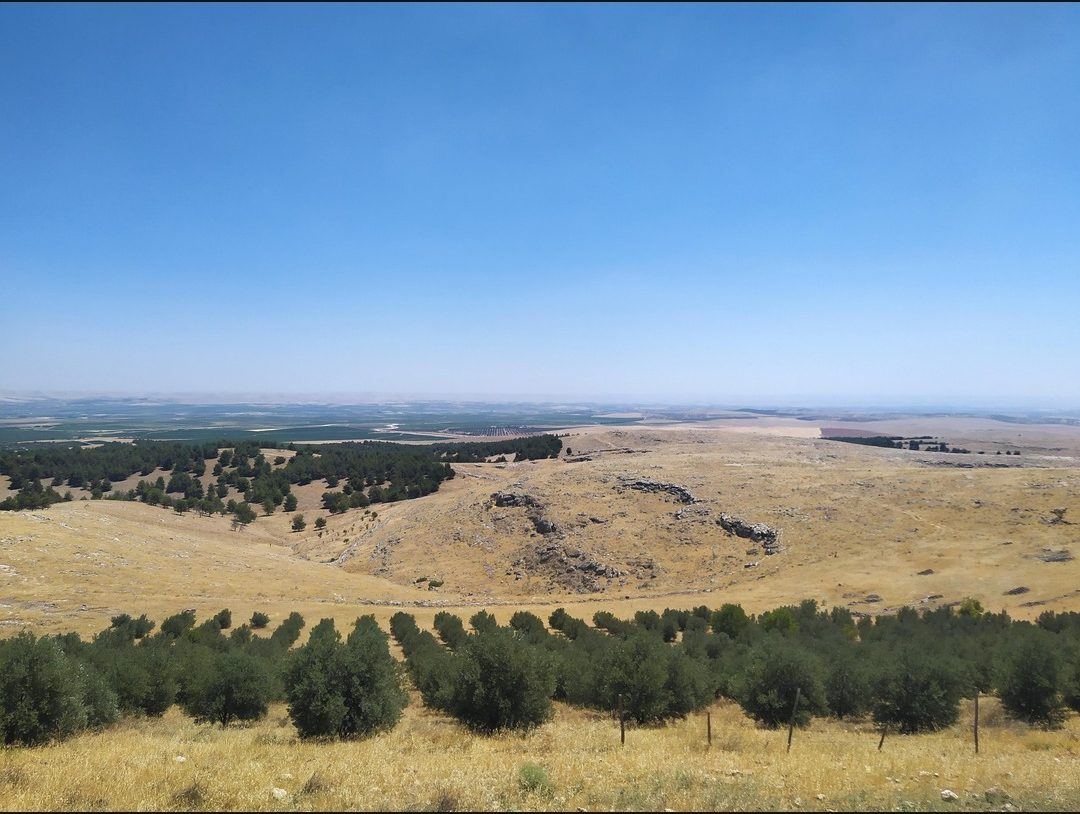
The correction came from Klaus Schmidt, an archaeologist with the German Archaeological Institute who had already excavated T-shaped stone pillars at Nevalı Çori, a nearby Neolithic site flooded by a dam reservoir in 1992. Working from the 1963 survey notes and tips from local villagers about flint scattered across a nearby hilltop, Schmidt climbed Göbekli Tepe himself in October 1994. He later described the scene: “A carpet of flint covered the bedrock, and sparkled in the afternoon sun.” Within minutes he recognized the broken “gravestones” for what they actually were — the tops of buried pillars identical in form to the ones he already knew, on a hill that had never been flooded, farmed over, or built on since the end of the last Ice Age.
Three decades of excavation since then have not settled what Göbekli Tepe actually was. They have mostly multiplied the questions: who organized the labor to raise these pillars before anyone in the region had learned to farm, whether the enclosures were temples or something closer to ordinary dwellings, what a set of deliberately carved human skulls found among the rubble were for, and — the question with the least agreement of all — why Göbekli Tepe’s enclosures were buried at all.
The Carvings Predate Farming, Pottery and the Wheel
The dating work is unusually well documented for a site this old, because the excavation team ran four independent methods against each other rather than relying on one: pedogenic carbonates formed on exposed limestone, organic material trapped in the original wall plaster, collagen pulled from animal bone, and charcoal recovered from the fill.
The results converge on the oldest architectural phase, called Layer III — the large circular enclosures with the tallest pillars — dating to roughly 9600 to 8800 BC, with wall plaster from Enclosure D returning a date in the range of 9745–9314 BC and Enclosure C close behind it. A later, structurally distinct phase, Layer II, built smaller rectangular rooms with much smaller pillars, and dates to the 8th millennium BC or later.
What makes Layer III’s date startling isn’t the number by itself — it’s what the number rules out. Nobody on this hill in 9600 BC had pottery, a domesticated cereal crop, or a wheel. The people who quarried, carved and raised these pillars were still hunting wild gazelle and gathering wild einkorn wheat, centuries before the earliest confirmed agriculture anywhere in the region — and they were already building in stone, on a scale nothing else from that era comes close to.
Someone Organized Enormous Labor With No State and No Farms to Feed It
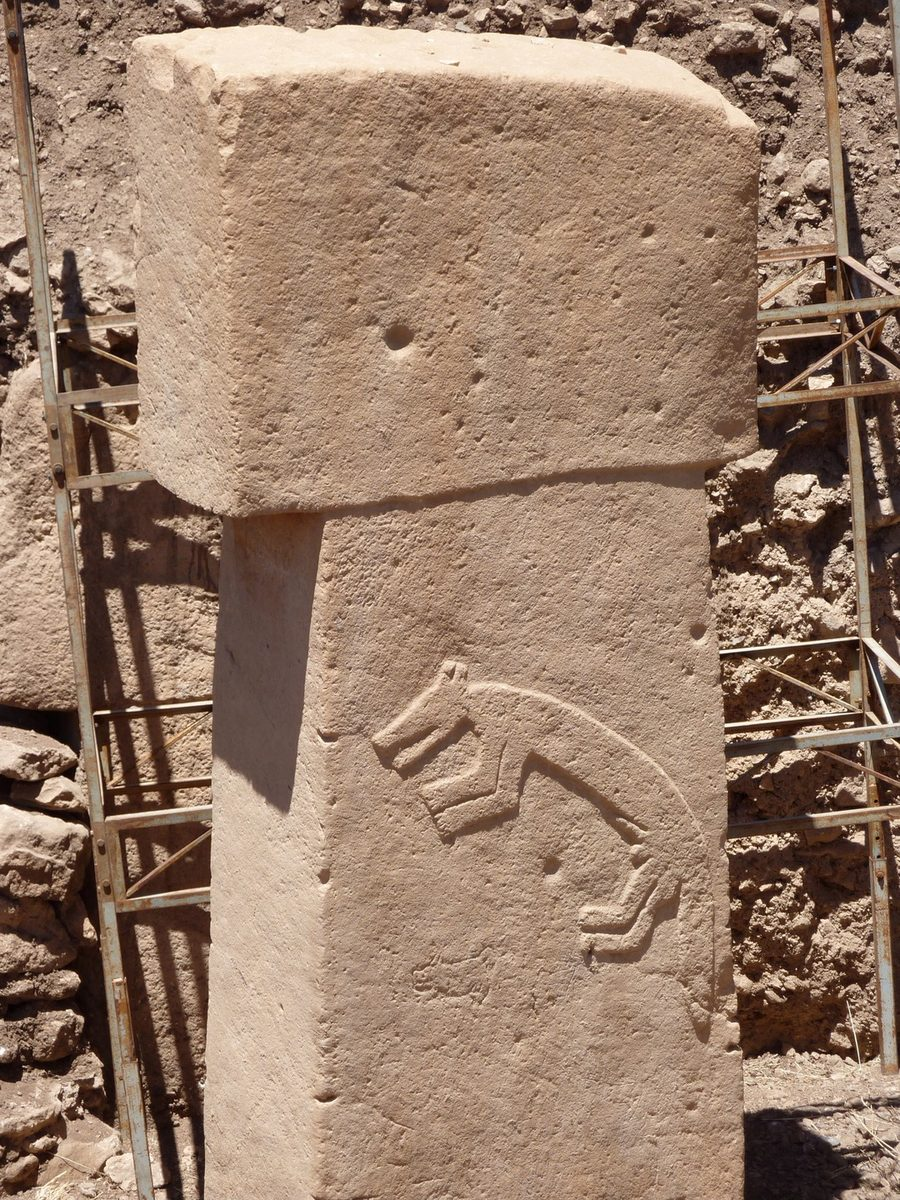
The engineering numbers sharpen the mystery. The paired central pillars inside Enclosure D stand 5.5 meters tall and are estimated at 8 to 10 metric tons each; the pillars ringing them run around 4 meters. One pillar never finished being freed from the limestone bedrock it was quarried from sits roughly 7 meters long and 1.5 meters thick — archaeologist Oliver Dietrich has put its weight at approximately 50 metric tons.
Moving stone that size with flint tools and no wheel is not, on its own, inexplicable: twentieth-century ethnographic records from Indonesia document villages hauling multi-ton megaliths by hand over several kilometers using timber rollers, rope, and several hundred coordinated workers. What’s unresolved at Göbekli Tepe is who did the coordinating. There is no granary, no central storehouse, no evidence of a ruling elite — none of the usual markers archaeologists look for when a hierarchy is compelling large-scale labor. The regional population is not known to have farmed yet, which means whoever organized the work also had to feed everyone involved without a stored harvest to draw on.
Analysis of the animal bone discarded at the site points to one partial answer: periodic feasting. Research on the bone assemblage by Oliver and Laura Dietrich has argued that construction phases line up with gatherings large enough to require butchering wild game well beyond what any single family group would need, suggesting the labor itself may have been organized around seasonal feasts. It’s a persuasive partial answer. It doesn’t explain who issued the invitation, or how.
Was It a Temple, or Did People Actually Live Here?
For roughly the first fifteen years of excavation, Göbekli Tepe was described almost universally as a sanctuary visited by people who lived elsewhere — a reading Schmidt argued directly, pointing to the enclosures’ lack of hearths, lack of the clay figurines common at contemporary settlements, and lack of the living-space/workshop-space split seen at nearby villages like Çayönü and Nevalı Çori.
In 2011, archaeologist E. B. Banning published a direct challenge in Current Anthropology, arguing that archaeologists had imported a modern, Western assumption — that “sacred” and “domestic” are separate categories — onto a site where no such line may have existed. Banning pointed to in-house burials, caches and symbolic wall decoration at other Pre-Pottery Neolithic sites as evidence that the sacred routinely leaks into ordinary life, and suggested Göbekli Tepe could have been a settlement whose buildings simply happened to be unusually rich in symbolism.
The excavation team’s published response, from Oliver Dietrich and Jens Notroff, conceded Banning’s broader point about the sacred-profane divide while standing by the site’s exceptional status: whatever the categories, the enclosures still look nothing like the houses at Çayönü or Nevalı Çori, which do have hearths, workshop debris and the figurines Göbekli Tepe lacks. The position has shifted since, without resolving into either side: the German Archaeological Institute’s own current project reporting now describes “clear evidence of domestic activities and indications of a permanent settlement” existing alongside the ritual architecture — a second, overlapping layer of use the earliest excavation seasons hadn’t yet uncovered, not a replacement for the temple reading.
The Carved Skulls Suggest a Death Cult
In 2017, a team led by Julia Gresky of the German Archaeological Institute’s Natural Science Department published an analysis in Science Advances of three human skull fragments recovered from the site, each bearing modifications with no known parallel elsewhere in the Neolithic Near East at that time. Deep grooves, cut with flint tools, had been carved along the surface of each skull, and the best-preserved of the three had a hole drilled carefully through it.
Gresky’s team proposed the modifications were made for display: the drilled perforation, they suggested, was likely used to suspend the skull from a post, a roof beam, or possibly one of the T-shaped pillars. If that reading holds, it documents the earliest known “skull cult” practice in the Neolithic Near East — a tradition of retaining, decorating and displaying the skulls of the dead that turns up at later sites across the region, but had not previously been traced back this far.
The find sits awkwardly on both sides of the temple-or-settlement argument. A display of modified human skulls is not ordinary domestic behavior by any standard, which weighs toward ritual use — but it isn’t proof of worship, sacrifice, or any specific belief, either. It demonstrates only that the dead here were handled with an unusual amount of deliberate, skilled attention after they had already died.
A Disputed Comet on the Vulture Stone
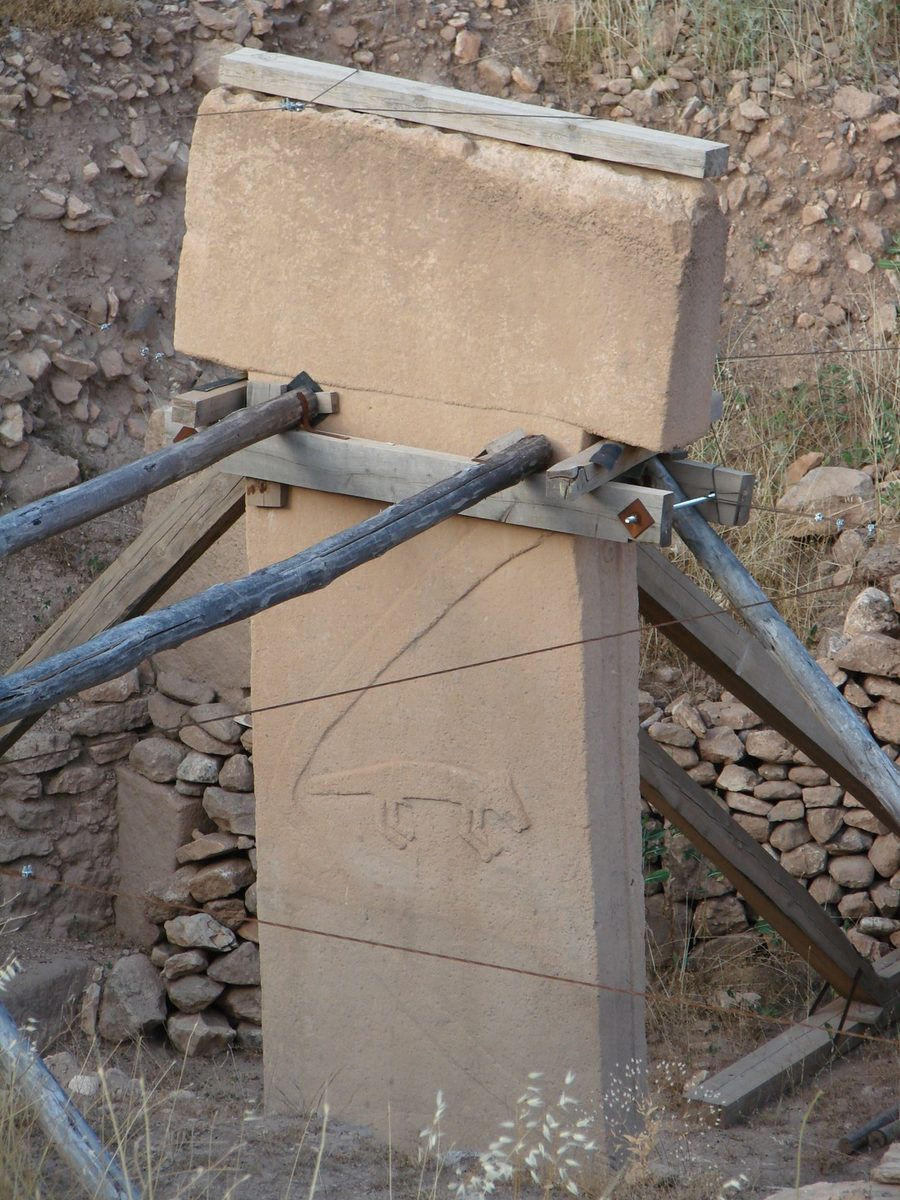
Pillar 43 in Enclosure D, nicknamed the Vulture Stone for the large bird carved across its upper register, carries one of the densest clusters of imagery at the site: animals, what may be a headless human figure, and abstract symbols some researchers read as markers rather than decoration. In 2017, engineer Martin Sweatman and physicist Dimitrios Tsikritsis argued in Mediterranean Archaeology and Archaeometry that several of the animal figures on Pillar 43 represent constellations, and that the pillar as a whole encodes the date of a catastrophic comet strike around 10,950 BC — roughly the period associated with the Younger Dryas cold snap.
The excavation team’s own researchers rejected the reading in detail. Jens Notroff and seven co-authors who have worked directly on the site published a response in the same journal, arguing that Sweatman and Tsikritsis examined only a handful of the site’s more than sixty carved pillars while claiming to decode its symbolism broadly; that their proposed date for Pillar 43 predates the oldest confirmed radiocarbon dates from Enclosure D by seven hundred to a thousand years, which would require the comet story to have been carried orally for centuries before it was carved; and that the enclosures were very likely roofed structures, undercutting the premise that they functioned as open-air sky observatories. A separate astronomer, Paul Burley, reviewed the star-pattern claims specifically and found that even where a celestial correlation may exist on the pillar, Sweatman and Tsikritsis’s proposed constellations don’t line up with the actual spatial arrangement of the stars they’re meant to represent.
None of this proves the carvings are meaningless — only that reading a specific astronomical date out of them is a far more contested claim than popular coverage of the “comet pillar” usually lets on. It’s a useful case study in how a site this old resists confident interpretation: the fewer comparable sites exist, the easier it is for one pillar to be read several incompatible ways, each internally consistent and each short of proof.
Why Was Göbekli Tepe Buried? The Fill Itself Is the Evidence
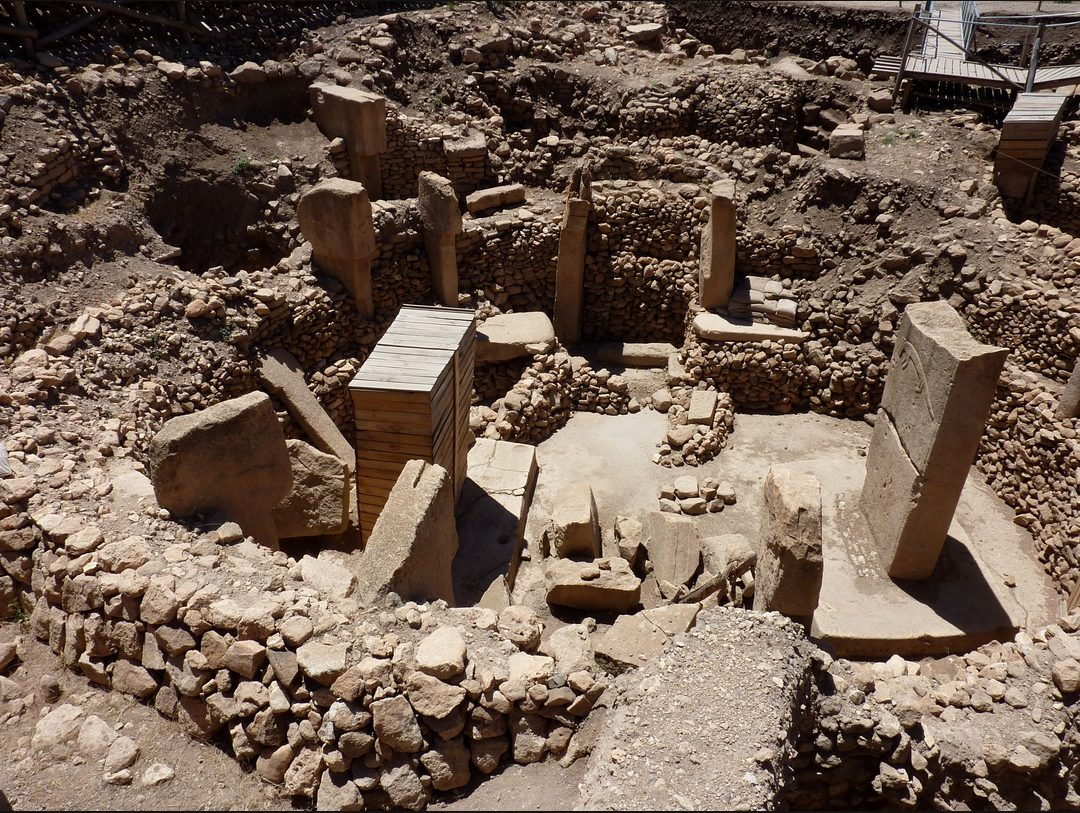
Every excavated enclosure at Göbekli Tepe, without exception, was found filled in — not collapsed, not simply eroded, but packed with a dense mix of limestone rubble, flint debris and animal bone before the next enclosure went up nearby. Schmidt’s original interpretation, which shaped most of the site’s early popular coverage, held that this was deliberate: each enclosure ritually “retired” by its own builders once its working life was done.
That reading has a real academic challenger. In 2022, archaeologist Julia Schönicke published a direct rebuttal of what she called the “widespread yet outdated interpretation of ritual backfilling,” built on evidence most popular accounts of the site skip past: fossil humus horizons inside Enclosure D’s fill that mark pauses in sedimentation rather than one deliberate burial event, phosphate concentrations near old fire installations consistent with ordinary use rather than ritual deposition, and walls built from roughly a third reused stone — spolia pulled from earlier, already-collapsed structures. Schönicke’s case isn’t that nothing at the site was intentional; it’s that the inhabitants were responding, over generations, to a hillside that kept sliding and collapsing on its own, rebuilding and recycling material as they went, rather than performing one ceremonial decommissioning of each ring.
Which version is right may not be a single answer for the whole hill. The fill is increasingly judged enclosure by enclosure rather than site-wide: some of it may genuinely have been placed as part of a deliberate closing ritual, and some may be nothing more dramatic than what wind, rain and an exposed limestone slope do to any structure left open for a few centuries. The question every visitor asks on first seeing the rings — why would anyone bury something they built this carefully? — may not have one answer. It’s equally possible nobody set out to bury it at all, and the builders credited with “burying” Göbekli Tepe were simply the last generation that stopped repairing it.
Göbekli Tepe’s clearest contribution to the historical record is also its most disruptive: it shows large-scale, coordinated, symbolically dense construction arriving first, with farming coming after — not the long-assumed reverse, in which agriculture generates the food surplus that then makes monumental building possible. Whatever organized the work on this hill, it wasn’t a granary.
Excavation continues under project director Lee Clare of the German Archaeological Institute, working with Turkish partners as part of a wider regional project, now called Taş Tepeler, that has identified related sites across the same stretch of southeastern Turkey. New finds keep complicating the picture rather than simplifying it: a painted, 1.35-meter limestone boar statue, pigmented in red, black and white, was still turning up in Special Building D as recently as October 2023, propped on a carved bench between two pillars, facing a third.
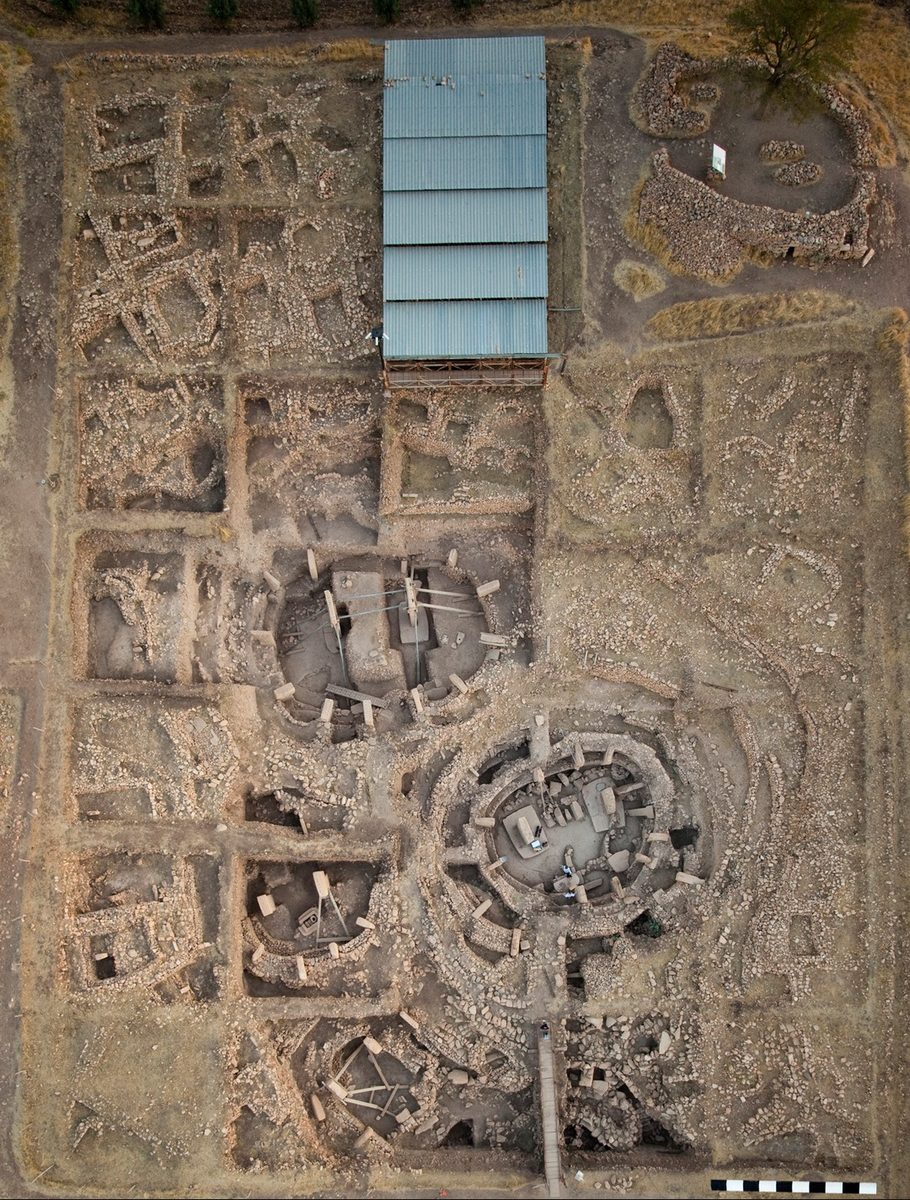
By the excavation team’s own published count, geophysical survey has identified at least nineteen enclosures across the hill; as of their most recent overview, nine were under active excavation and more than ten further locations were confirmed but still untouched. Every question above — who organized the labor, whether the enclosures were homes or temples or both, what the carved skulls were for, why the pillars ended up underground — has been argued from a fraction of the evidence still sitting in that ground. Thirty years after Schmidt first climbed the hill, Göbekli Tepe has generated far more documented disagreement than documented certainty. For a site this old, that’s roughly what honest archaeology looks like.
Watch the short
No long-form video exists yet for this topic — the original 51-second short below covers the Stonehenge comparison and the headline numbers; this article is where the labor-organization problem, the temple-versus-settlement debate, the skull cult, and the backfilling argument are laid out in full.

Related reading
- Why Were the Nazca Lines Made? What the Evidence Actually Shows — another prehistoric monument whose purpose is argued from the evidence, not the folklore
- Why Were the Sanxingdui Bronzes Smashed Before Burial? — a different ancient site with its own deliberate-burial mystery
- Why No One Can Read the Phaistos Disc — or Agree That It’s Real — another mystery built from evidence nobody has been able to fully agree on
- How the Antikythera Mechanism Predicted Eclipses — a different ancient object whose makers organized expertise nobody expected for its era
Works cited
- Dietrich, Oliver, Laura Dietrich, and Jens Notroff. “Cult as a Driving Force of Human History.” Expedition Magazine 59, no. 3 (Penn Museum, 2017). Link.
- Dietrich, Oliver, Manfred Heun, Jens Notroff, Klaus Schmidt, and Martin Zarnkow. “Establishing a Radiocarbon Sequence for Göbekli Tepe. State of Research and New Data.” Neo-Lithics 1/2013.
- Banning, E. B. “So Fair a House: Göbekli Tepe and the Identification of Temples in the Pre-Pottery Neolithic of the Near East.” Current Anthropology 52, no. 5 (2011): 619–660.
- Notroff, Jens, Oliver Dietrich, Laura Dietrich, Çiğdem Köksal-Schmidt, Cihat Kürkçüoğlu, Klaus Schmidt, and Devrim Sönmez. “More Than a Vulture: A Response to Sweatman and Tsikritsis.” Mediterranean Archaeology and Archaeometry 17, no. 2 (2017): 57–74.
- Sweatman, Martin B., and Dimitrios Tsikritsis. “Decoding Göbekli Tepe with Archaeoastronomy: What Does the Fox Say?” Mediterranean Archaeology and Archaeometry 17, no. 1 (2017): 233–250. Link.
- Gresky, Julia, Juliane Haelm, and Lee Clare. “Modified Human Crania from Göbekli Tepe Provide Evidence for a New Form of Neolithic Skull Cult.” Science Advances 3, no. 6 (2017): e1700564.
- Dietrich, Oliver. “How Did They Do It? Making and Moving Monoliths at Göbekli Tepe.” The Tepe Telegrams, German Archaeological Institute, May 3, 2016. Link.
- German Archaeological Institute. “How Old Is It? Dating Göbekli Tepe.” The Tepe Telegrams, June 22, 2016. Link.
- German Archaeological Institute. “A Sanctuary … or So Fair a House?” The Tepe Telegrams, January 24, 2017. Link.
- German Archaeological Institute. “Life-Size Statue of a Wild Boar Found in Special Building D of Göbekli Tepe.” DAI Newsroom, October 8, 2023. Link.
- Schönicke, Julia. “There and Back Again — Towards a New Understanding of Abandonment Practices at the Neolithic Settlement of Göbekli Tepe.” In Bridging the Gap: Disciplines, Times, and Spaces in Dialogue, vol. 1. Archaeopress Access Archaeology, 2022.