
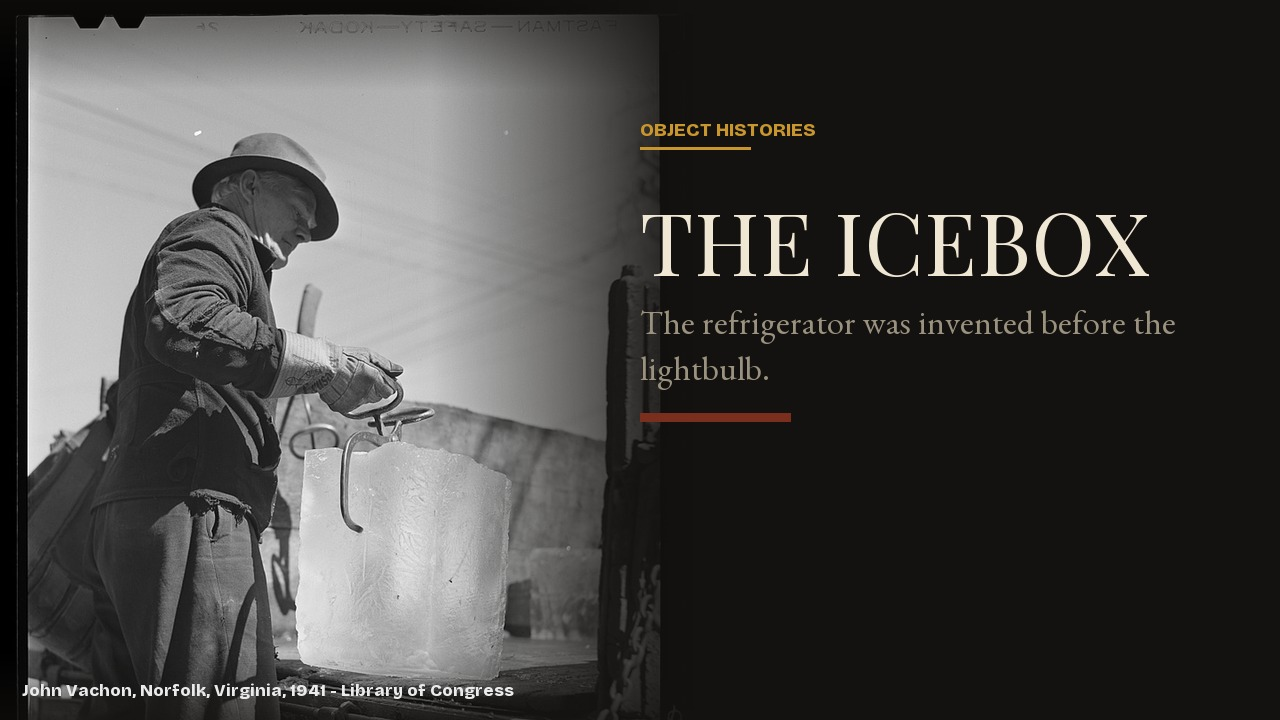
How iceboxes worked is simpler than it sounds: ice on top, food below, and gravity doing the rest. Cold air sinks, so a block packed into a compartment at the top of a cabinet chilled everything underneath it as it slowly melted, with the meltwater running down a pipe into a pan you had to remember to empty. That arrangement held the line against spoiled milk and warm butter for roughly a century, from a Maryland farmer’s patent in 1803 to the year General Electric finally made the electric alternative cheap enough for most households, in 1927. Behind that one appliance sits a stranger story: a president’s signature on a patent, a bankrupt merchant who sold frozen ponds to the tropics, and an industry that vanished almost overnight.
How Iceboxes Worked
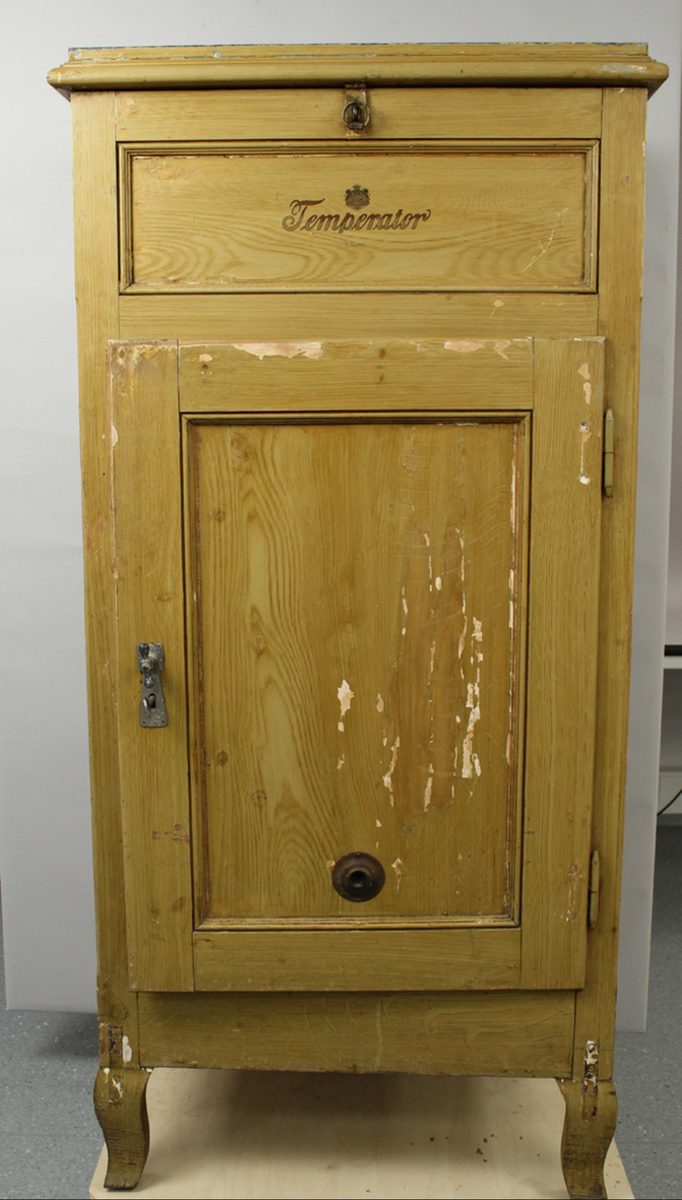
The commercial iceboxes that filled American kitchens by the mid-1800s were wood cabinets, usually oak or ash, lined with zinc or tin and insulated with cork, charcoal, sawdust, or straw packed between the inner and outer walls. A block of ice sat in a compartment at the top, sized to hold anywhere from twenty-five to a hundred pounds. Shelves below held the food, cooled by the steady downdraft of chilled air off the ice. A door at the bottom, or a spigot and pipe, drained the meltwater into a removable pan. Forget to empty it, and you found out by the puddle on the floor. Manufacturers and advertisers called these cabinets refrigerators. Everyone else, for the better part of a century, just called them iceboxes.
A Maryland Farmer Patented the Word “Refrigerator”
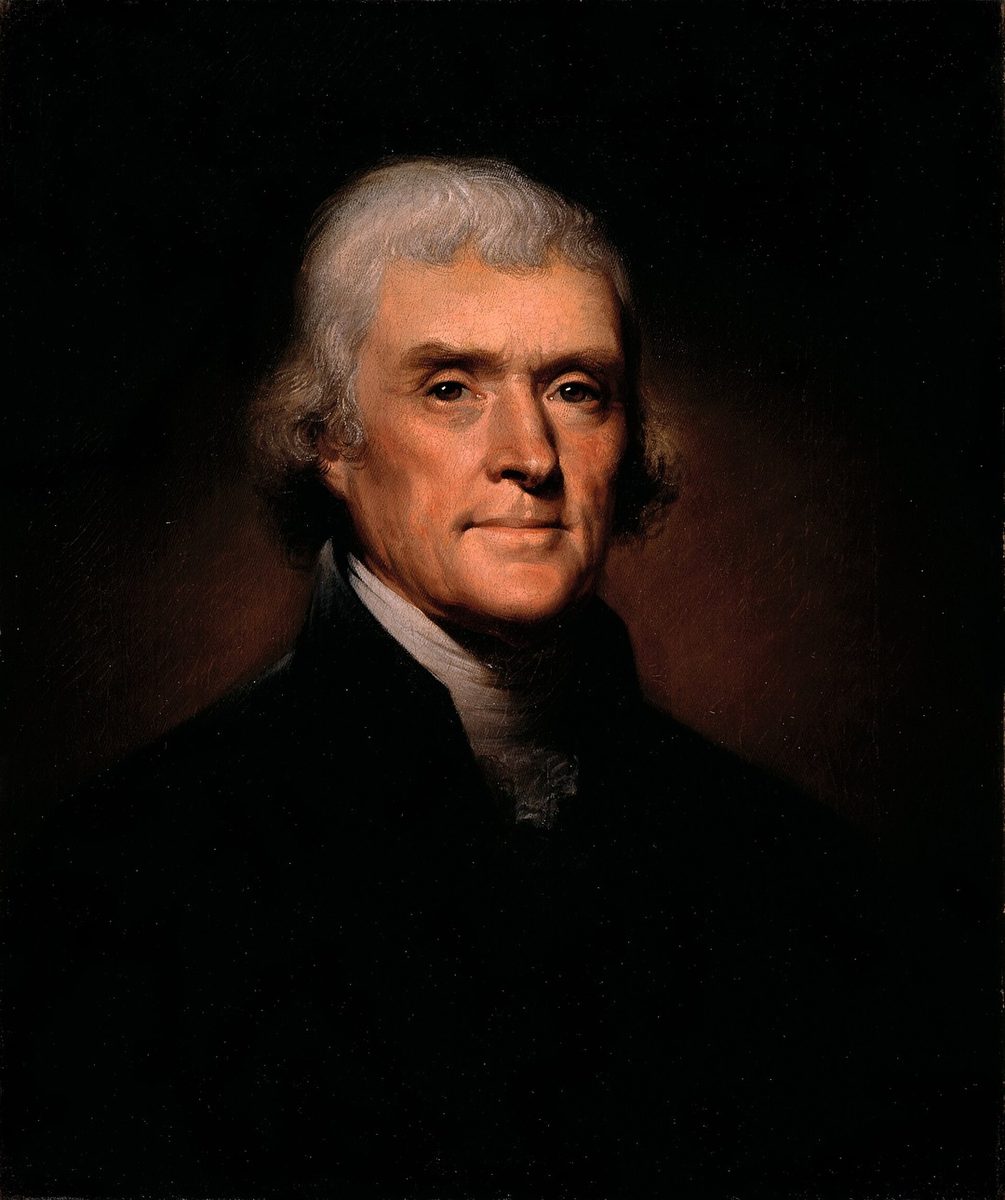
The word predates the cabinets that made it famous. In 1803, a Maryland farmer named Thomas Moore had a problem: his butter kept melting on the twenty-mile cart ride from his farm into Georgetown market. He built a box to solve it, an oval cedar tub with a tin box fitted inside, the gap between the two packed with ice, the whole thing wrapped in rabbit fur and coarse wool for insulation and topped with a hinged lid. He patented the design that same year and, according to the Maryland Association of Counties, the patent itself carried the signature of the sitting president, Thomas Jefferson. Moore needed a name for a type of object that had never existed before. He chose “refrigerator,” and it stuck to the whole category of appliance for the next hundred and twenty years.
Jefferson Signed the Patent, Then Bought the Box Himself
Jefferson’s connection to the refrigerator did not end with his signature. In June 1802, Moore invited him to come see the device in person; Jefferson sketched a rough version of it in the margin of the invitation. Two years later, his own memorandum book records a payment of thirteen dollars to Isaac Briggs, Moore’s brother-in-law, “for Thos. Moore” and a refrigerator. Jefferson kept using the thing for years afterward, which is more than his household was willing to forgive. In an 1819 letter, his granddaughter Ellen Randolph Coolidge complained about the “filthy cooler,” grumbling that it wasted ice while leaving the butter runny and the wine too warm. Jefferson eventually gave it up, family letters suggest, only after someone in the household recovered from an illness and the refrigerator lost whatever argument had been keeping it in service.
A Bankrupt Boston Merchant Started Shipping Ice to the Tropics
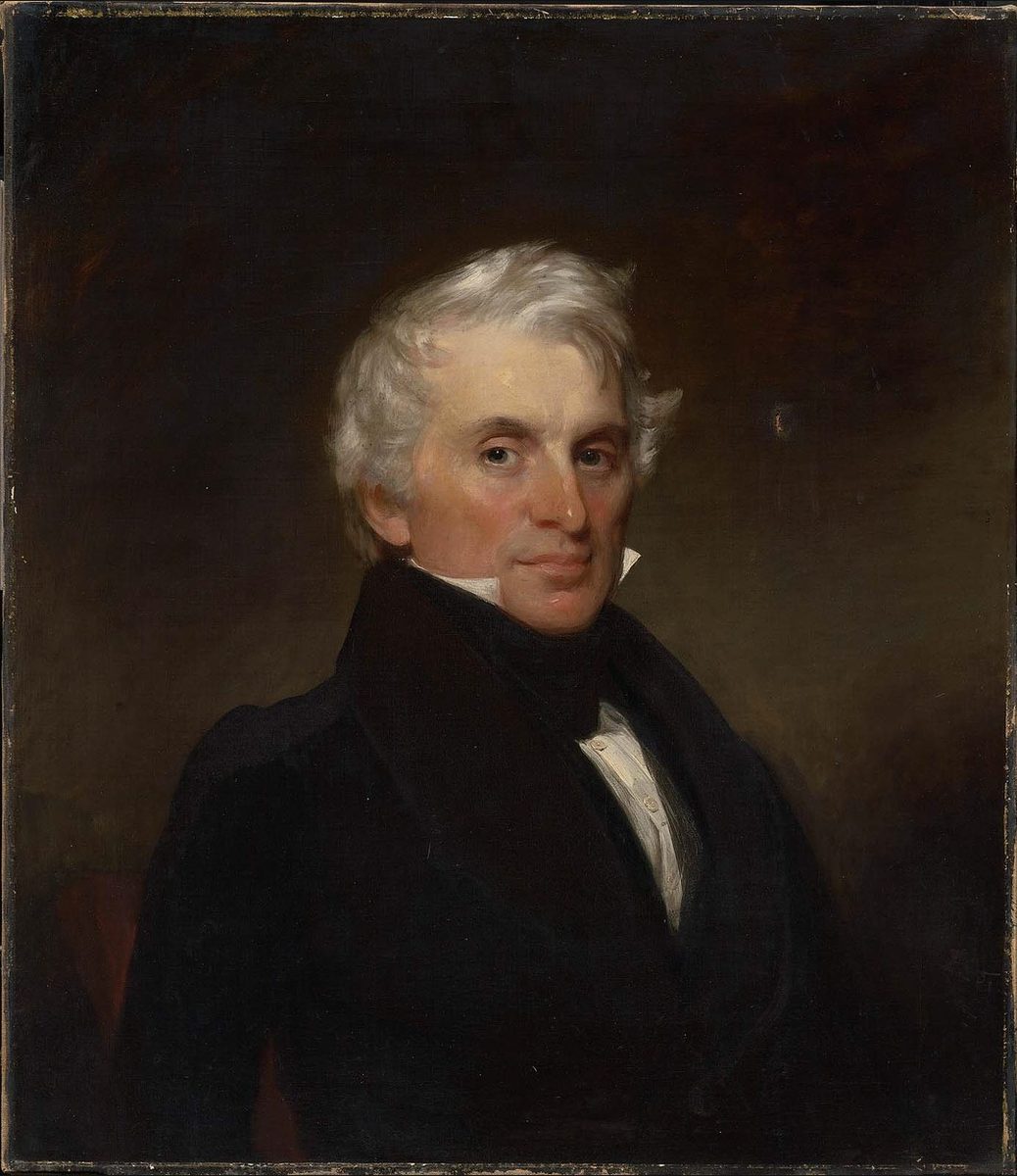
A patented box was only useful if you had ice to put in it, and in 1803 nobody sold ice. You cut your own from a frozen pond each winter and kept it in an icehouse if you were wealthy enough to own one; everyone else did without in summer. The man who turned ice into something you could buy was Frederic Tudor, a Boston merchant’s son who was, by most accounts at the time, chasing an obviously bad idea. In 1806, at twenty-two, Tudor bought a brig called the Favorite for $4,750, loaded it with 130 tons of ice cut from a family pond outside Boston, and sailed it to Martinique on the theory that people who had never seen ice would pay for it. The voyage proved the concept and still lost him about $4,500. It took him four more years even to turn a modest profit, and the War of 1812 and the embargoes around it gutted his shipping routes in between. A failed fruit-import venture in 1816 left him borrowing at thirty percent interest, and by the time his debts reached $38,772, he had landed in debtor’s prison.
Nathaniel Wyeth Turned Ice Cutting Into an Assembly Line
Tudor’s fortunes changed when he hired Nathaniel Jarvis Wyeth in 1824 to run the harvesting side of the business. Before Wyeth, cutting ice meant men with handsaws working block by uneven block. Wyeth introduced a horse-drawn cutter that scored a frozen pond into a precise grid in a single pass, along with improved saws, tongs, and a top-loading hoist that moved blocks out of the water and into storage far faster than hand labor ever could. The pond insulation itself, sawdust packed between stacked blocks, was already a familiar trick in New England icehouses before Tudor’s first voyage; what Wyeth brought was speed. The results compound year over year in the shipping ledgers: about 4,000 tons shipped in 1826, 12,000 tons a decade later, and 65,000 tons by 1846. By the 1830s, frozen New England ponds were a cash export.
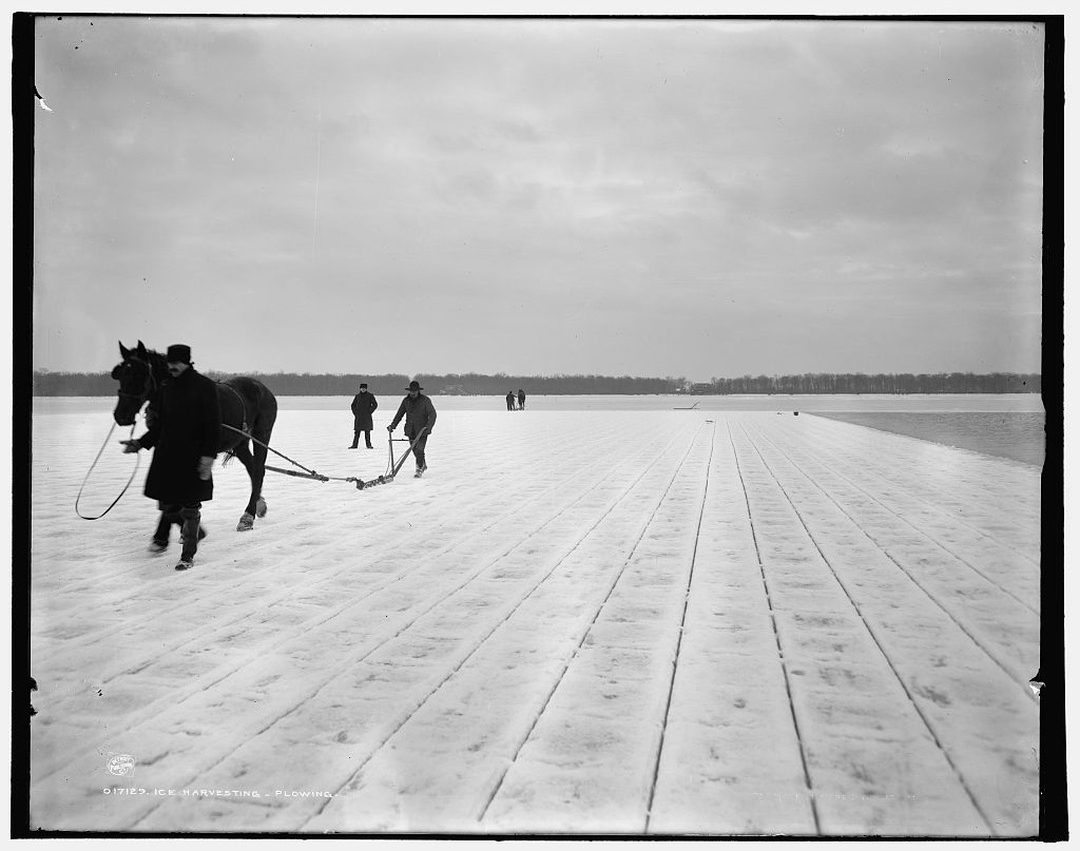
The Ship That Carried 180 Tons of Ice to Calcutta
Tudor’s signature voyage sailed in 1833. A ship called the Tuscany left Boston loaded with roughly 180 tons of ice, bound for Calcutta, over sixteen thousand miles and four months away. By the time it arrived, something like two-thirds of the cargo was still frozen solid, enough for British colonists there to buy out the entire hold. The voyage had three partners, Tudor among them, but it was William Rogers, who sailed with the shipment, whom Calcutta’s governor-general publicly praised and presented with a silver-gilt cup. Tudor, by his own account resentful that the credit had gone to someone else, wrote to India to press his own claim to the achievement. The trade named him the Ice King of Boston regardless. By then his ice was reaching Martinique, Cuba, Charleston, Savannah, and New Orleans too, a commodity cut from frozen water and sold purely on the strength of how well you could keep it from melting.
Thoreau Watched the Ice Cutters at Walden Pond
By the 1840s, Tudor’s company had expanded its harvesting far beyond his own family pond, and in the winter of 1846 its crews arrived at Walden Pond, just outside Concord, Massachusetts, where Henry David Thoreau was living in his cabin. He watched roughly a hundred workers cut an estimated ten thousand tons of ice from the pond that winter and wrote about it in Walden, unable to resist the thought of where the water was headed. “Thus it appears,” he wrote, that the sweltering inhabitants of Charleston and New Orleans, of Madras and Bombay and Calcutta, drink at my well.” The same pond he bathed in each morning really was, by then, plausibly part of the same global ice trade that had carried the Tuscany‘s cargo to India thirteen years earlier.
The Iceman and the Card in the Window
All that harvested ice eventually had to reach a kitchen, and by the 1880s every city of any size had an ice company and a delivery route to match. The iceman drove a covered wagon, chipped blocks to order with a pick, and carried them up however many flights of stairs a customer lived on, a block balanced on a leather shoulder pad and gripped with a pair of tongs. To place an order without a phone call, households set a square card in the front window with a number printed on each of its four edges, twenty-five, fifty, seventy-five, or a hundred pounds. Whichever number faced up and outward was what the iceman delivered that day.
Why the Ice Trade Melted Away
The natural ice business peaked around the turn of the twentieth century and then ran into trouble from two directions at once. Warm winters periodically produced ice famines, leaving ponds too thin to harvest and cities scrambling for supply the unpredictability pushed buyers toward a steadier alternative. At the same time, growing concern over the sanitary quality of ice cut from ponds and rivers near increasingly polluted cities made natural ice a harder sell on its own terms. Manufactured ice, frozen in plants using ammonia compressors rather than cut from the landscape, filled the gap: by 1914, American plants were turning out 26 million tons of artificial ice a year against 24 million tons harvested the old way, and the natural trade never recovered the lead.
The Monitor Top Finished the Job
What finally ended the icebox altogether was the appliance that replaced it in the kitchen itself. Electric refrigerators existed before the First World War, but they were costly and unreliable enough to stay a novelty. That changed in 1927, when General Electric released the Monitor Top, named for the distinctive round compressor housing sitting on top of the cabinet like a gun turret on the Civil War ironclad it was nicknamed for. It sold for $300, and some utility companies let customers finance one for as little as ten dollars a month, folded into the electric bill alongside their regular usage. GE backed the line with an $18 million manufacturing commitment and spent another $1 million advertising it directly to the public. Prices fell through the 1930s, and by 1944 the electric refrigerator had become standard enough in American homes that the card in the window, and the iceman who read it, had quietly disappeared from most city streets.
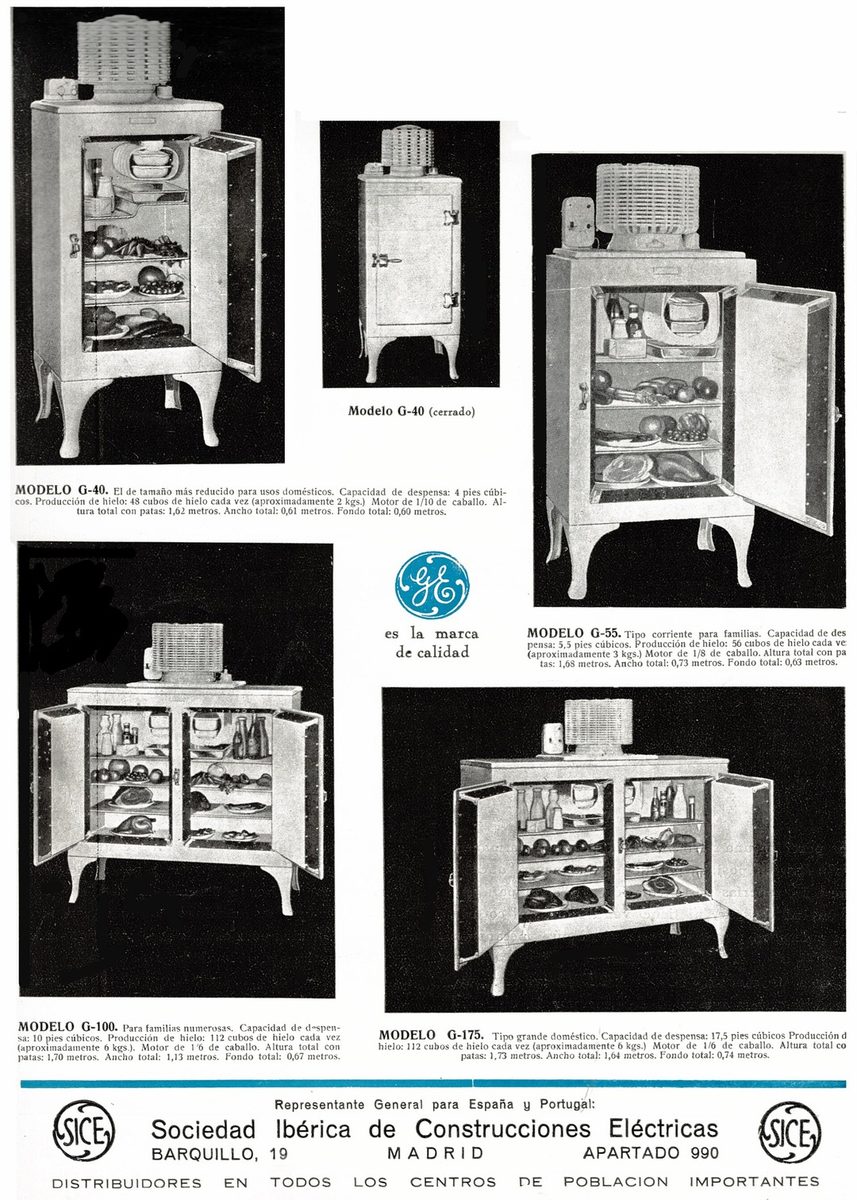
The word outlived the object by decades. People kept calling the new electric machine an “icebox” well into the twentieth century, long after the ice itself was gone, and the drip pan you had to remember to empty became, without much argument, the one part of the old system nobody missed.
Watch the short
The sixty-second video that started this one covers Thomas Moore’s patent and the rise of the electric refrigerator; the ice trade, the Calcutta voyage, and Thoreau’s well are new here.

Related reading
- What Was in Victorian Smelling Salts
- How Cream Separators Worked, and Why Every Farm Wanted One
- How Corn Shellers Worked, and Why American Farms Needed One
- How Skep Beekeeping Worked Before the Movable-Frame Hive
Works cited
- Thomas Jefferson Foundation. “Thomas Moore.” Monticello Encyclopedia.
- “Fun Fact: Did You Know that the Inventor of the Refrigerator Resided in Montgomery County?” Maryland Association of Counties, Conduit Street, May 11, 2017. Link.
- Nagengast, Bernard. “Cold Mine.” American Heritage, Invention & Technology. Link.
- “How Pioneering Entrepreneurs Helped 19th-Century America Keep Cool.” HistoryNet. Link.
- Thoreau, Henry David. Walden, “The Pond in Winter,” 1854, as quoted in “1846 | Concord, MA.” Lapham’s Quarterly. Link.
- Museum of Fine Arts, Boston. Francis Alexander, Frederic Tudor, object 34013.
- “Monitor Top Refrigerators.” Antique Appliances. Link.
- “Timeline: 1900–1910 — Decline of the Natural Ice Trade.” Antique Ice Tool Museum. Link.