
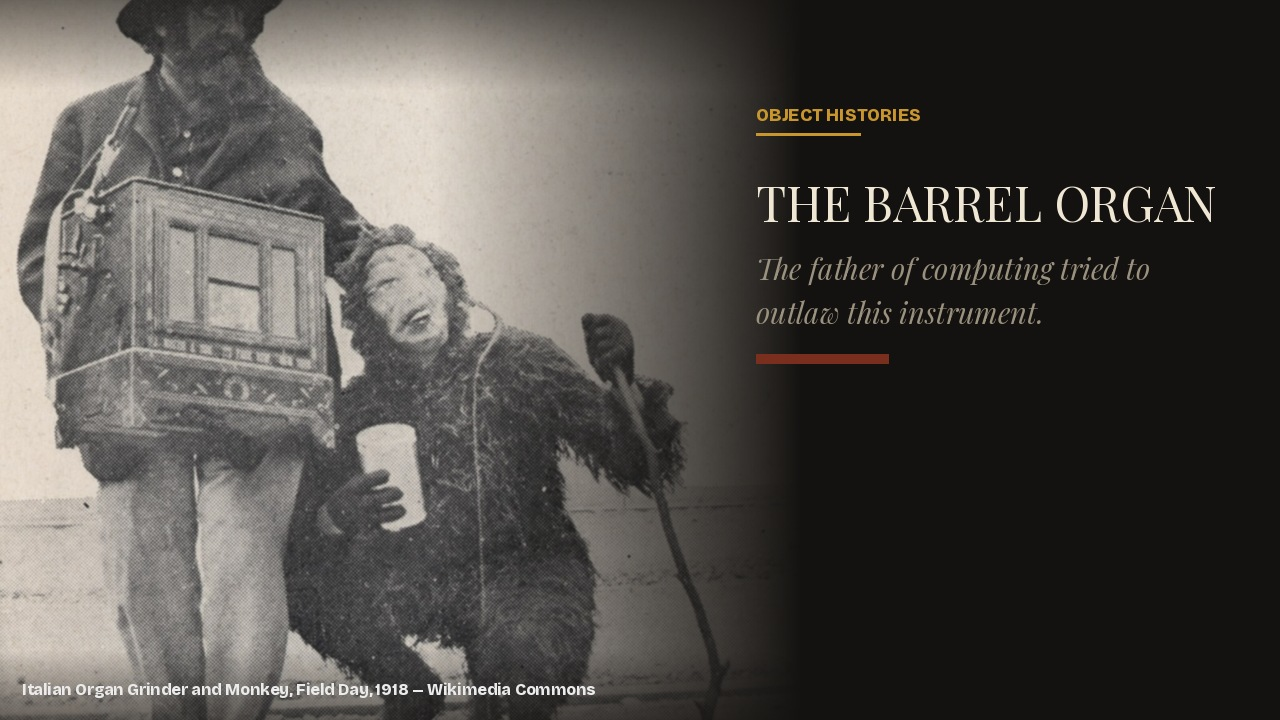
Charles Babbage and the organ grinders he hated make for one of the strangest real rivalries in the history of technology: the man who designed the first mechanical computer waged a very real, very public, decade-plus war against the street musicians outside his window, and the machine he blamed for ruining his career was, in its own quiet way, just as clever as anything he ever built. The barrel organ automated music a hundred years before anyone thought to automate much of anything else, and it made Babbage furious enough to help get an actual Act of Parliament passed because of it.
The Instrument That Needed No Musician
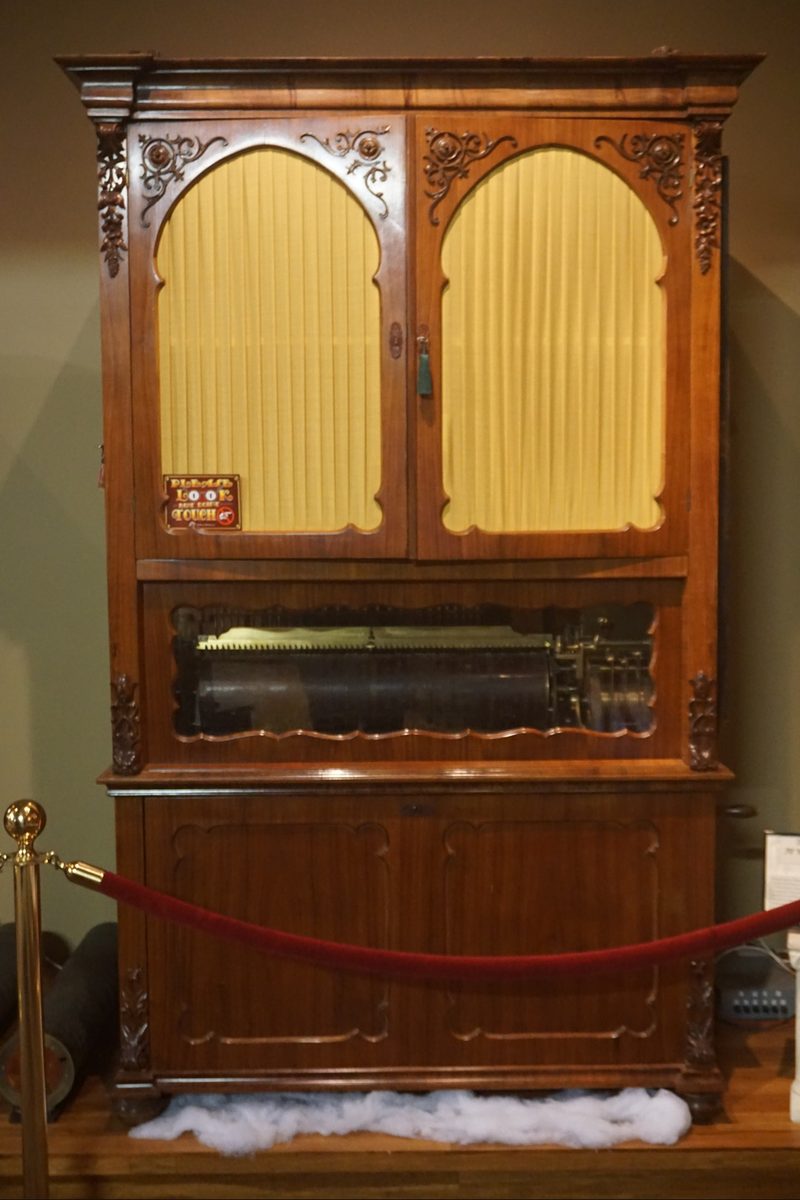
Barrel organs date back to at least the early 1700s in continental Europe, and even their name is disputed: the French called the hand-cranked street version the orgue de Barbarie, and historians don’t agree why. One persistent theory credits an Italian maker named Giovanni Barbieri; another points to the region of Barbary, where early mechanical organs are said to have traveled as diplomatic gifts; other theories exist too, and none has settled the question outright. What isn’t disputed is the mechanism. A wooden cylinder, studded with metal pins and staples, turns on a crank. Each pin lifts a lever, each lever opens a valve, and air from a hand-pumped bellows rushes into a matching pipe. Turn the crank at a steady pace and out comes the same tune, note for note, every single time, with no musical training required of the person turning it. That was the entire point, and it’s why, by the mid-18th century, the instrument had spread from court novelty to ordinary street fixture.
A Hymn Machine for the Village Church
Because the mechanism needed no trained musician, barrel organs found a real, practical niche inside parish churches that couldn’t afford, or didn’t want to pay, an organist’s salary. One surviving example still exists in the small English village of Trottiscliffe, Kent: an organ built around 1830 by Theodore C. Bates and Son of London, bought secondhand by the parish church of SS Peter and Paul in 1865. It originally held six barrels, each one pinned for ten hymn tunes, sixty hymns in total available to a sexton or churchwarden who had never taken a music lesson in his life. It stayed in service until 1937, when it was finally replaced, and a restoration in 2013 brought it back to playing condition after decades in storage — a genuinely rare survival from an era when, by one parish record’s own description, “many such instruments were used in village churches” across England.
Mozart’s Reluctant Commission
The mechanism was good enough to attract serious composers, too, if not always willingly. In 1790, a Viennese nobleman named Joseph Deym, operating a public wax-figure gallery in Vienna under the assumed name “Joseph Müller,” built a mausoleum there honoring the recently deceased Field Marshal Ernst Gideon von Laudon, one of Austria’s most celebrated generals, complete with a wax effigy under glass and a mechanical clock organ that played a funeral piece on the hour. Deym commissioned Wolfgang Amadeus Mozart to write for it. Mozart wasn’t thrilled: in an October 1790 letter to his wife Constanze, he called the assignment “a kind of composition which I detest” and complained that the instrument’s tiny pipes sounded “too shrill and childish” for his taste, admitting he composed a little each day but often grew bored. He delivered anyway, producing at least one F minor piece for mechanical organ that December, with two more related works following into 1791. By March of that year, a public notice announced that the mausoleum’s hourly piece was by “Kapellmeister Mozart,” and within months it was the only music played there at all — musicologists still debate today exactly which of the pieces belongs to which use, but the basic fact holds: one of history’s greatest composers spent part of 1790 and 1791 writing, however reluctantly, for the same kind of pinned-cylinder mechanism a village sexton used to crank out Sunday hymns.

The Streets Fill Up With Organ Grinders
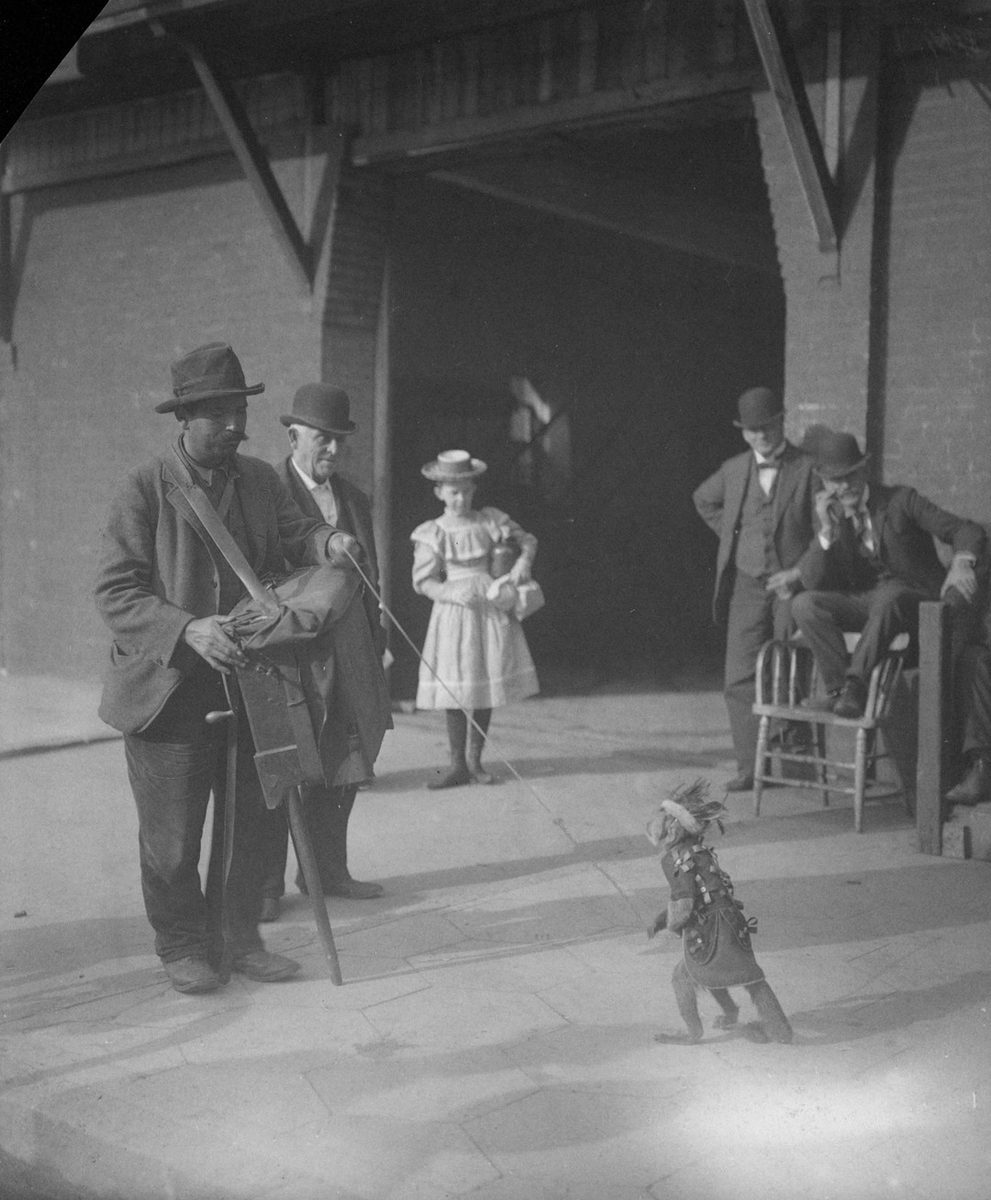
By the early 1800s, smaller, portable barrel organs had migrated off church balconies and concert stages entirely and onto the pavement. An organ grinder could sling one over a shoulder strap, turn the crank, and busk for coins on any corner in any city in Europe or America, no apprenticeship needed, nothing but patience and a steady arm. The trade became closely tied to Italian immigrants on both sides of the Atlantic. In London, organ grinders, often labeled “Savoyard” performers in contemporary complaints, were frequently described living in overcrowded conditions around Saffron Hill, many of them working for padrones, labor brokers who rented out the instruments, and sometimes the grinders themselves, often children, for a cut of the daily take. More than a thousand Italian grinders were reported working London’s streets through the 1850s and 1860s. In New York, the trade clustered in the Five Points neighborhood, where instruments could be rented from a dealer on Baxter Street or bought new from a manufacturer in Chatham Square, and by 1880, amid heavy immigration from Italy, nearly one in twenty men living in Five Points made his living as an organ grinder. The trained monkey, usually a capuchin dressed in a little jacket and cap, became many grinders’ real moneymaker: crowds that might walk right past a man cranking a box would stop for the monkey, tethered on a string, doffing its hat and holding out a tin cup. For plenty of grinders, the monkey, not the music, was the actual act.
Charles Babbage and the Organ Grinders He Declared War On
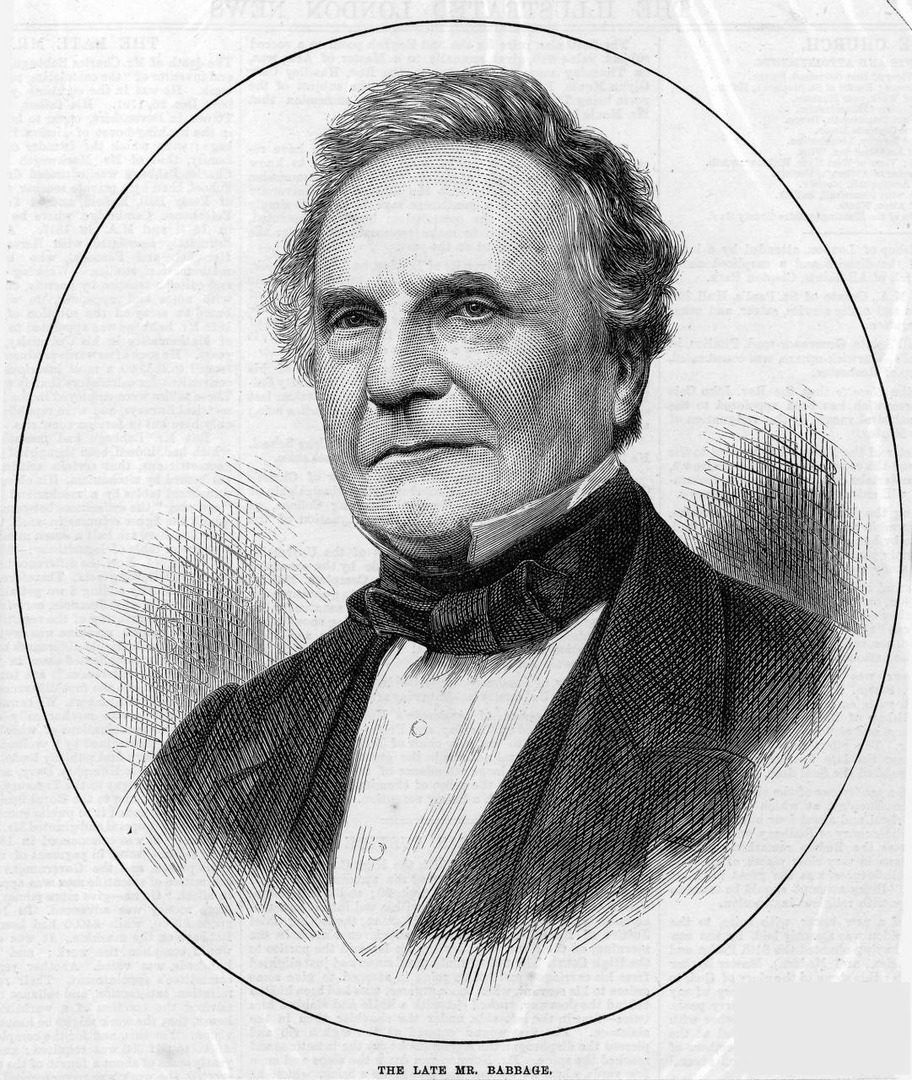
Not everyone found any of it charming. Charles Babbage, the mathematician whose Difference Engine and Analytical Engine are now considered the first mechanical computers, lived on a quiet central London street that filled up with buskers over the course of his life, and he became convinced they were a direct assault on his ability to think. He did the math to prove it: by his own estimate, noise from unwanted street musicians had cost him roughly a quarter of his entire working capacity over the previous twelve years. He wrote that street music “robs the industrious man of his time” and catalogued organs, barrel organs, hurdy-gurdies, and tom-toms alike as “instruments of torture” the government inexplicably permitted in London’s streets. He paid musicians directly to leave his street; new ones simply showed up the next morning. He published an entire chapter on “street nuisances” in his 1864 memoir, contributed material to a campaign collection organized by the MP and brewer Michael T. Bass, and became, by his own account, a public target for it: anonymous letters, some threatening, and open mockery in the press as the mathematician at war with a hurdy-gurdy.
The Law That Didn’t Quite Silence Them
It actually worked, up to a point. In July 1864, Parliament passed the act Bass had championed and Babbage had campaigned for, letting any householder, or someone acting on their behalf, have a street musician moved along from outside their home on request, with arrest and jail awaiting anyone who refused. Historians studying the episode since have generally agreed the law wasn’t a clean victory: street music continued regardless, and the public persecution of grinders arguably made some commentators more sympathetic to them rather than less. Babbage himself died in October 1871, at seventy-nine, having spent roughly the last decade of his life as London’s most famous opponent of a trade he never came close to actually eliminating.
New York Finishes the Job
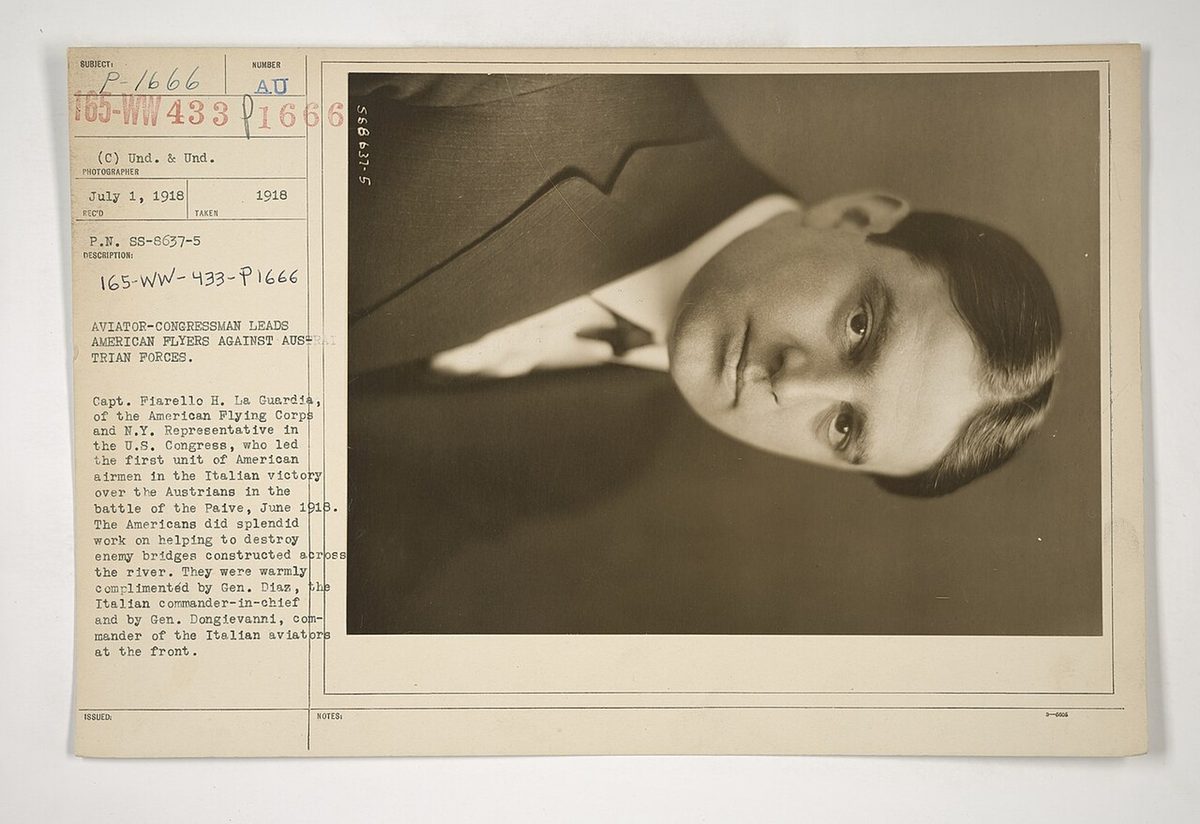
The organ grinder’s era didn’t really end in London at all; it ended, decades later, across the Atlantic, by municipal decree. In 1935, one of Mayor Fiorello La Guardia’s first acts in office was refusing to renew street musicians’ licenses in New York City, with October of that year proclaimed a month of “noiseless nights” and police specifically assigned to identify noise offenders. Depression-era hostility toward street begging and a push to keep public space clear for commerce were both part of the stated reasoning, and the ban wasn’t limited to organs; it covered all unlicensed street musicians. A formal Noise Abatement Bill followed in April 1936, growing directly out of the same crusade against unlicensed performers. Hundreds of barrel organs were destroyed in the crackdown, taking with them the only physical record of some of that era’s popular tunes, since their pinned barrels predated cylinder recordings. The ban was eventually repealed, though by the time it was, the trade itself had effectively disappeared anyway, replaced by records and radio that could put music on demand into any home without a man and a monkey on the corner.
The Mechanism Outlived the Controversy
The basic idea behind the barrel organ, automated music triggered mechanically instead of played by hand, didn’t die with the street grinders. It scaled up instead, into the band organs that powered carousels, skating rinks, and fairgrounds across America from the 1890s onward, their tunes triggered by perforated cardboard books and paper rolls rather than a wooden barrel. Eugene deKleist built the first one in North Tonawanda, New York, in 1891; the Wurlitzer company bought his factory in 1908 and was still producing eighteen different band organ styles by 1935, before finally discontinuing them in 1939 as amplified phonographs took over the same job. Fewer than ten thousand were ever built in the United States. Ride a restored carousel today and the music blasting out of it traces its basic idea straight back to the same automated-music concept Mozart begrudgingly composed for and Charles Babbage spent a decade trying to outlaw: a machine built to play music by itself, the same way, every single time, with nobody required to actually know how to play anything at all.
Watch the full history
The video below covers the full arc in more visual detail: the mechanism, Mozart’s commission, and Babbage’s campaign against London’s street organs.

Related reading
- Why Music Boxes Disappeared: Rise and Fall of an Industry
- How the Mechanical Turk Worked, and Who Was Hiding Inside
Works cited
- “The History of Street Performance: ‘Music by Handle’ and the Silencing of Street Musicians in the Metropolis.” Gresham College. Link.
- “Charles Babbage’s Observations on Street Nuisances (1864).” The Public Domain Review. Link.
- Strick, James. “Charles Babbage.” MacTutor History of Mathematics Archive, University of St Andrews. Link.
- “Allegro and Andante in F minor for Mechanical Organ.” Moldenhauer Archives, Library of Congress. Link.
- “Organ Grinders and Street Music: A History of New York Busking.” New York Almanack. Link.
- “The Trottiscliffe Barrel Organ.” Trottiscliffe Parish Council. Link.
- “Barrel Organs.” Musical Box Society International Collections (mus-col.com). Link.
- “Band Organ History.” City of Pueblo, Colorado. Link.