
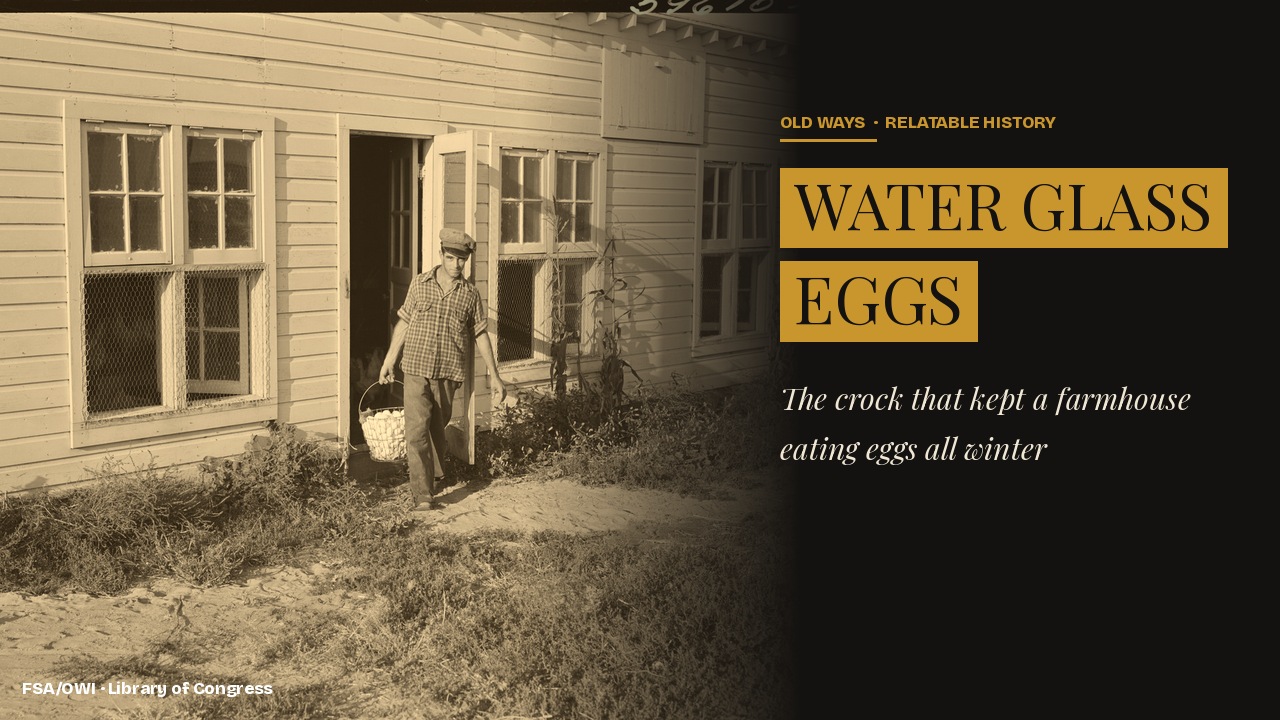
In 1907, a chemist at the University of Aberdeen named James Hendrick published a paper in The Journal of Agricultural Science with a plain, almost bureaucratic title: an account of preserving eggs in water glass. Buried in his results is a detail that reads like a dare. Alongside the eggs he preserved for the usual six months or so, Hendrick kept a separate batch submerged for as long as four years.
Four years. Not four months stretched generously — four actual years, in a jar of syrupy sodium silicate solution, in an era with no refrigeration and no food-safety agency to answer to beyond a household’s own common sense. By Hendrick’s account, water glass preservation had recently become the standard method in Britain, pushing aside the older salt-packing and lime-water techniques that had come before it. His experiment wasn’t designed to prove the method worked. That was already settled. It was designed to find out how far it could be pushed before it stopped working.
What follows is the fuller record behind that jar: the Bavarian chemist who made sodium silicate famous by putting out a fire, not preserving an egg; the Chicago inventor who tried to patent a version you painted on instead of soaked; the industrial cold-storage operation that eventually solved the same seasonal problem at a scale no farmhouse crock could touch; and the one piece of modern food science that none of these people had any way of knowing about.

A Chemist Who Tried to Find the Method’s Breaking Point
Hendrick’s paper opens by taking stock of a method that, by 1907, had already won its argument. Water glass preservation, he reported, had in recent years become the standard way British households and small shopkeepers carried eggs from a cheap spring glut into an expensive winter, pushing aside the salt-packing, bran-packing, and lime-water methods that had come before it. The reasons were straightforward: it was cheap, it required no special equipment beyond a crock and a lid, and it reliably worked. A household buying eggs in April, when hens laid heavily and prices bottomed out, needed roughly six months of shelf life to reach the scarce, expensive eggs of the following winter.
Six months was the practical target everyone actually needed. Hendrick, working from a university laboratory rather than a farmhouse, pushed well past it. Alongside his main trial batches he kept a separate lot of eggs submerged in water glass for up to four years, apparently out of plain chemical curiosity about how far the method could be stretched, and published findings on the composition of what came out the other end. It is one of the more extreme food-preservation experiments of its era — not a response to famine or institutional panic, but a controlled test of a kitchen method’s actual limits.
That kind of rigor is easy to take for granted now, when nutrition labels and food-safety agencies do most of a society’s worrying for it. In 1907, the only way to know whether a folk method genuinely worked, rather than merely seeming to, was for someone trained in chemistry to run the experiment properly, write it up, and publish it where other scientists could check the claim. Hendrick did exactly that, and his jar of four-year-old eggs is the earliest rigorous answer this method ever received.
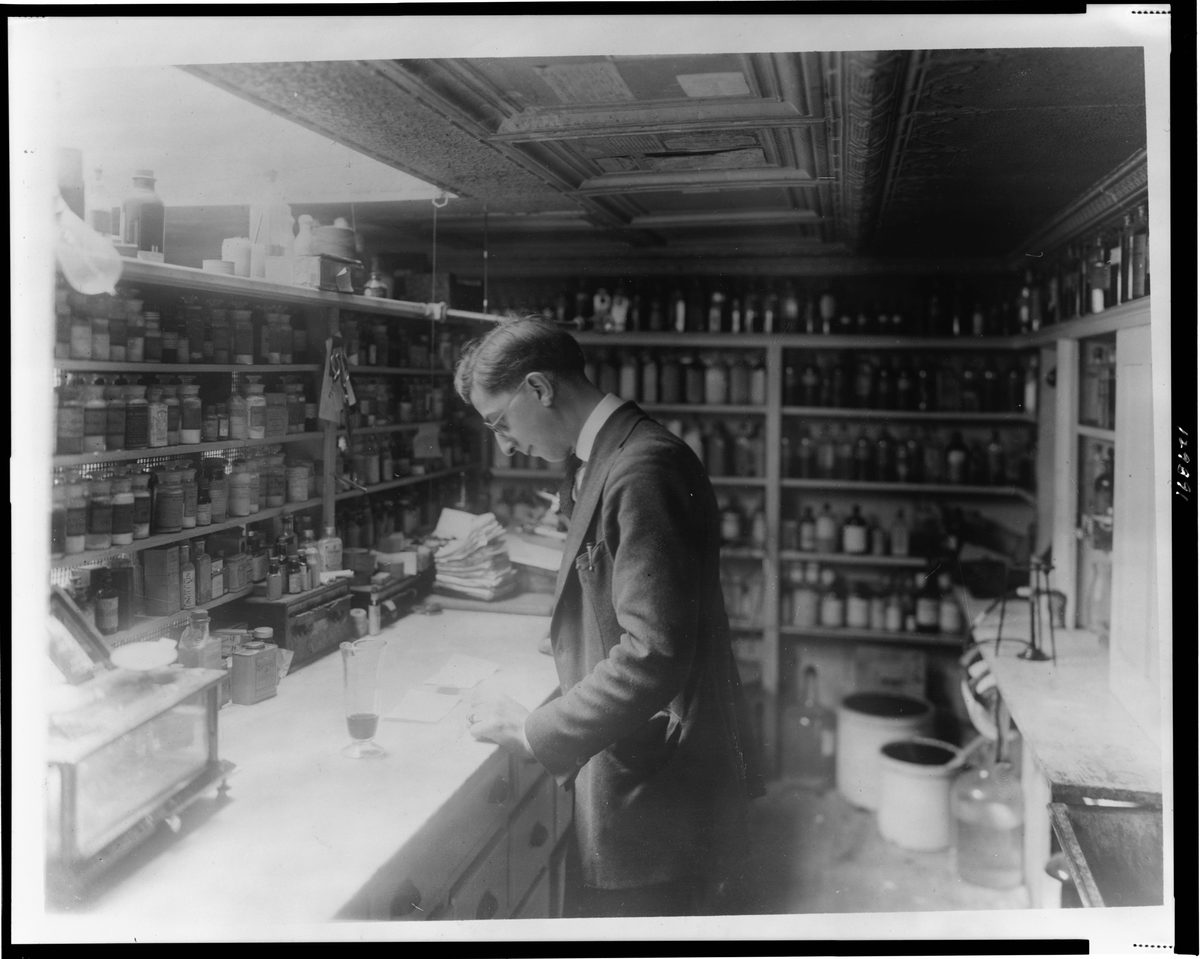
The Compound Put Out a Fire Before It Preserved a Single Egg
Water glass’s career as a household chemical began nowhere near a henhouse. In 1823, Munich’s court theater burned down, and the Bavarian chemist and mineralogist Johann Nepomuk von Fuchs presented city building authorities with a fix: a soluble silicate wash that could be painted onto timber and canvas to make them resist fire. That demonstration, not egg preservation, is what first made sodium silicate a recognizable household name in German-speaking Europe, and the compound picked up the nickname “Fuchs’s soluble glass” as a result.
Fuchs kept returning to the material for the rest of his career. In 1855, the year before he died, he worked out a technique called stereochromy — a way of fixing pigment onto a wall with a water-glass wash instead of true fresco plaster, meant to make large-scale wall paintings hold up better against damp and weather than old-fashioned lime fresco. The German history painter Wilhelm von Kaulbach used the technique for a set of monumental murals, and for a few decades stereochromy had a genuine vogue among muralists before oil-based and later synthetic alternatives displaced it.
None of this has anything to do with eggs, which is rather the point. By the time American and British farm households were buying water glass by the gallon jug in the 1880s and 1890s, the chemical already had a long resume: fireproofing a theater, decorating cathedral-scale murals, binding early concrete. Egg preservation was a comparatively humble addition to a substance that had already protected an opera house.
A Chicago Inventor Tried to Patent a Version You Painted On
Not everyone agreed that submerging whole eggs in a crock of brine was the best way to apply the chemistry. On January 12, 1897, the US Patent Office granted Henry Koch of Chicago a patent for what he called an “egg-preserving compound” — not a solution to soak eggs in, but a liquid meant to be brushed directly onto the shell.
Koch’s formula mixed about one ounce of finely powdered rice flour into roughly four ounces of cold water, then combined that paste with about sixteen ounces of liquid sodium silicate. The result was brushed over the whole egg and rubbed into the pores by hand, then left to dry into a thin, transparent, air-excluding coating. Koch’s patent specifically claimed the rice-flour addition made the coating more elastic than plain water glass alone — flexible enough that a treated egg could be handled, packed, and shipped without cracking its seal, while still breaking open normally once someone was ready to cook with it.
It is, in some ways, cleverer engineering than the method that actually became standard: no vat of liquid to store, no risk of an egg floating loose and cracking against its neighbors, a coating designed from the outset to survive handling. It also never caught on. Nothing in the historical record suggests Koch’s painted-on compound displaced the simple immersion method households were already using for free, with nothing more than a jug of water glass and a stoneware crock. Sometimes the cleverer version doesn’t win. The one that doesn’t require buying rice flour and licensing a patent does.
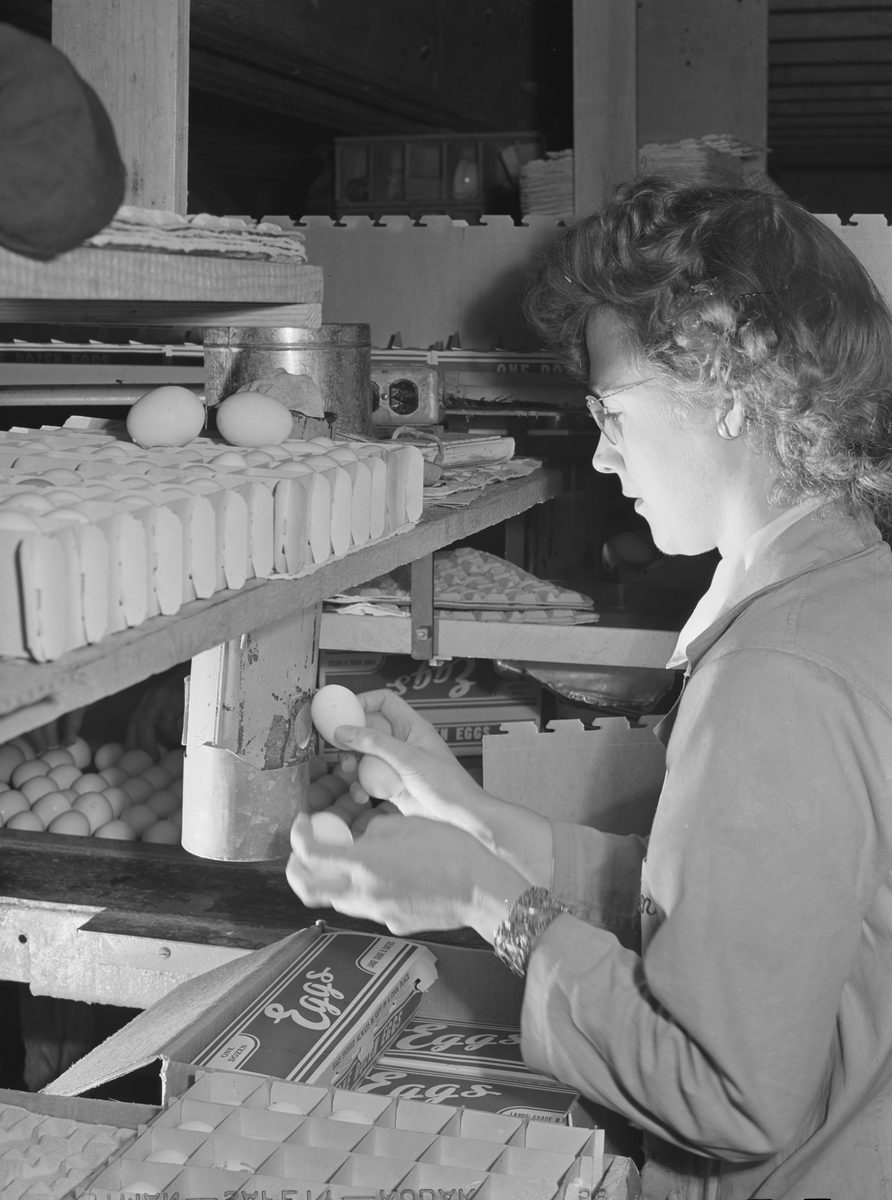
The Industrial Version Held 150 Million Eggs in One Boston Warehouse
While farmhouses sealed a few dozen eggs at a time in a cellar crock, an entirely separate industry was solving the same seasonal problem at a scale no water glass jug could touch. The first mechanically refrigerated warehouses for food appeared in the United States in the 1860s, built originally for fruit and insulated with ice and sawdust. By 1904, the country had more than six hundred cold-storage warehouses, and one facility at Boston’s Quincy Market alone had the capacity to hold 150 million eggs at a time.
The scale solved the same problem water glass solved at home — hens laying heavily in spring and barely at all in winter — but it introduced complications a home crock never had. Early cold-storage operators did not always understand what temperature and humidity eggs actually needed, and long-stored eggs sometimes picked up off flavors from sitting near other stored food; eggs held near stored apples, in particular, could come out tasting faintly of fruit. A 1919 US Department of Agriculture bulletin on commercial egg storage, drawing on roughly 840 test cases examined in New York and Philadelphia warehouses, found that an egg’s condition going into storage mattered enormously: clean, sound-shelled eggs delivered within about two days of laying showed almost no losses even after eleven months in a 30-to-33-degree room, while eggs that went in dirty, cracked, or already stale could come out of that same room with well over a hundred bad eggs in every case of several hundred.
The public did not entirely trust the result, and not without reason. Cold storage let dealers buy eggs cheap in spring and sell them as fresh in the dead of winter at two to three times the price, and when prices spiked sharply in 1909, newspapers accused warehouse operators of running a refrigerated “food trust,” hoarding eggs to keep prices high. Health inspectors in the 1920s estimated that as many as three-quarters of all cold-storage eggs were quietly switched back into fresh-egg cases and sold as though they had never seen a warehouse at all, a practice dealers called bootlegging. Water glass never had that particular problem, if only because nobody was trying to pass off a jar of silicate-soaked eggs as fresh. It was never built to deceive anyone. It was built to get one household to February.
Extension Agents Hedged Their Bets
If water glass really was as durable as Hendrick’s four-year jar suggested, official advice to farm households stayed noticeably more cautious. A 1917 circular from the University of Wisconsin’s Agricultural Extension Service, issued in cooperation with the USDA, offered households two roughly equal options — water glass or a lime-and-salt solution — and capped both at a single season. Neither, the circular warned plainly, was good for more than about a year.
The circular’s numbers give a sense of exactly how this was practiced. A five-gallon stoneware jar, filled with nine quarts of boiled and cooled water and one quart of liquid water glass, held about fifteen dozen eggs. The equivalent lime solution — two pounds of quicklime slaked in hot water, mixed with two gallons of water and a pound of salt, then settled and poured off clear — held slightly fewer, about twelve dozen, in a container the same size. The circular also noted, almost in passing, that powdered water glass dissolved fresh at home was more reliable than the ready-mixed liquid sold by the jug, a distinction that hasn’t survived in most popular memory of the method. For a family of five, the circular estimated, about fifty dozen preserved eggs would see the household through from October to the end of January, when prices climbed highest.
None of this contradicts Hendrick’s laboratory result so much as it sits alongside it uneasily. A chemist running a controlled trial found the method could be stretched to four years. The people actually responsible for feeding farm families with it told them not to trust it past one. Both were probably right, in their own context: a sealed research jar and a cellar crock that gets opened, dipped into, and topped up all winter long are not quite the same test.
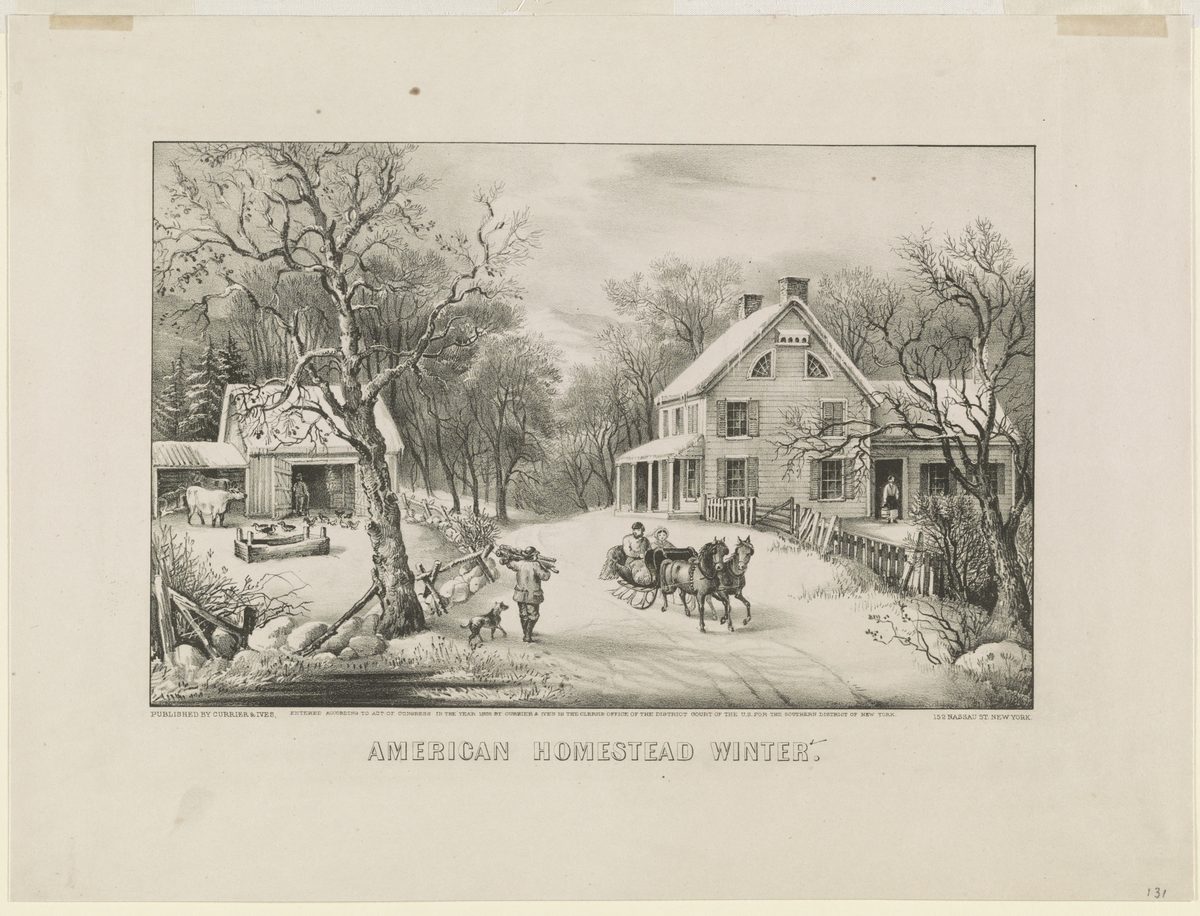
Food Science Found a Danger Nobody in 1917 Could Have Known About
Water glass preservation did not disappear because someone proved it dangerous. It disappeared, as a household technology, because rural electrification and the home refrigerator made it unnecessary — a solved problem does not need a crock in the cellar. For decades afterward it survived mainly as half-remembered grandparents’ lore, periodically rediscovered by homesteaders and backyard chicken keepers paging through old farm manuals.
What those later revivals eventually ran into was a piece of food science nobody working in 1897 or 1917 had access to. Every early account of water glass preservation, Hendrick’s included, rests on the same assumption: that a fresh, uncracked egg is sterile inside, and that the only real threat is bacteria working their way in through the shell after the hen has laid it — exactly what a silicate seal is built to stop. That assumption held for most of a century. It turned out to be wrong in one specific, consequential way. Salmonella enteritidis can be deposited inside an egg before the shell has even finished forming, while the egg is still developing inside the hen — a contamination route no amount of shell-sealing can intercept, because the bacteria are already on the inside before any solution ever touches the shell.
Colorado State University’s extension service, which still fields questions about the method from backyard flock owners, now states plainly that advances in food-safety knowledge mean the practice is not recommended, and that the risk runs higher for eggs from small home flocks than from inspected commercial operations. A University of Maine food-safety specialist put the broader verdict to a Maine newspaper even more bluntly in 2022, saying that more recent research shows a lot of these older preservation methods are not, in fact, safe practices.
Hendrick’s chemistry was not wrong. A sealed shell really does keep outside bacteria from getting in, and a properly made solution really can hold an egg edible for months, or apparently years. What the twentieth century added was not a correction to that chemistry. It was the discovery of a second door the chemistry was never built to guard.
Watch the full history
The eight-minute video covers the mechanics of the seal and the household routine built around it in more detail than any single paragraph here can.

None of this makes water glass a folk myth that happened to work by accident. It was tested in a university laboratory, patented in at least one competing form, scaled into a six-hundred-warehouse industry, and hedged by the very extension agents who taught it to farm families. What changed between then and now is not the chemistry of sodium silicate. It is how much more we now know about where an egg’s dangers can come from before it ever reaches the crock.
The object itself is almost absurdly simple: a cheap industrial chemical, a jar, a shell that was already built to keep most things out. The complexity turned out to be everywhere else — in the economics of a six-hundred-warehouse industry, in a Bavarian theater fire, in a Chicago patent nobody used, and in a bacterium nobody could have seen coming from the wrong direction. Would you trust a year-old egg kept only in water glass?
Related reading
- The History of Cheese Pressing: From Roman Molds to Jefferson’s 1,235-Pound Wheel — another Old Ways method for turning a seasonal farm surplus into something that would keep
- How Sorghum Syrup Was Made Before Sugar Came in a Sack — a different farmhouse answer to the same problem of making one harvest last all year
- Wash Day Before Washing Machines Started With a Patent Fight — the same farmhouse-to-factory transition that eventually ended water glassing too
- The Furcula: The Science and Superstition Behind the Wishbone — the stranger science hiding inside the same bird that laid the eggs
Shop the method
Works cited
- Hendrick, James. “The Preservation of Eggs by Water Glass, and the Composition of Preserved Eggs.” The Journal of Agricultural Science 2, no. 1 (1907): 100–105. Link.
- Hayes, J. B. Preserve Spring Eggs for Winter Use. Circular 74. University of Wisconsin Agricultural Extension Service, May 1917 (reprinted March 1918). Link.
- Jenkins, M. K. Commercial Preservation of Eggs by Cold Storage. USDA Bureau of Chemistry, Bulletin No. 775. Washington, D.C., 1919. Link.
- U.S. Patent 574,911. Henry Koch, “Egg-Preserving Compound,” granted January 12, 1897. Link.
- Freidberg, Susanne E. “The Triumph of the Egg.” Comparative Studies in Society and History 50, no. 2 (2008): 400–423. Link.
- Gershon, Livia. “When Refrigeration Was Controversial.” JSTOR Daily, August 14, 2016. Link.
- Deutsche Biographie. “Fuchs, Johann Nepomuk.” Historische Kommission bei der Bayerischen Akademie der Wissenschaften. Link.
- Colorado State University Extension (Live Smart Colorado). “Preserving Eggs.” Link.
- Bayly, Julia. “These Popular Food Preservation Techniques Can Kill You.” Bangor Daily News, December 26, 2022.