
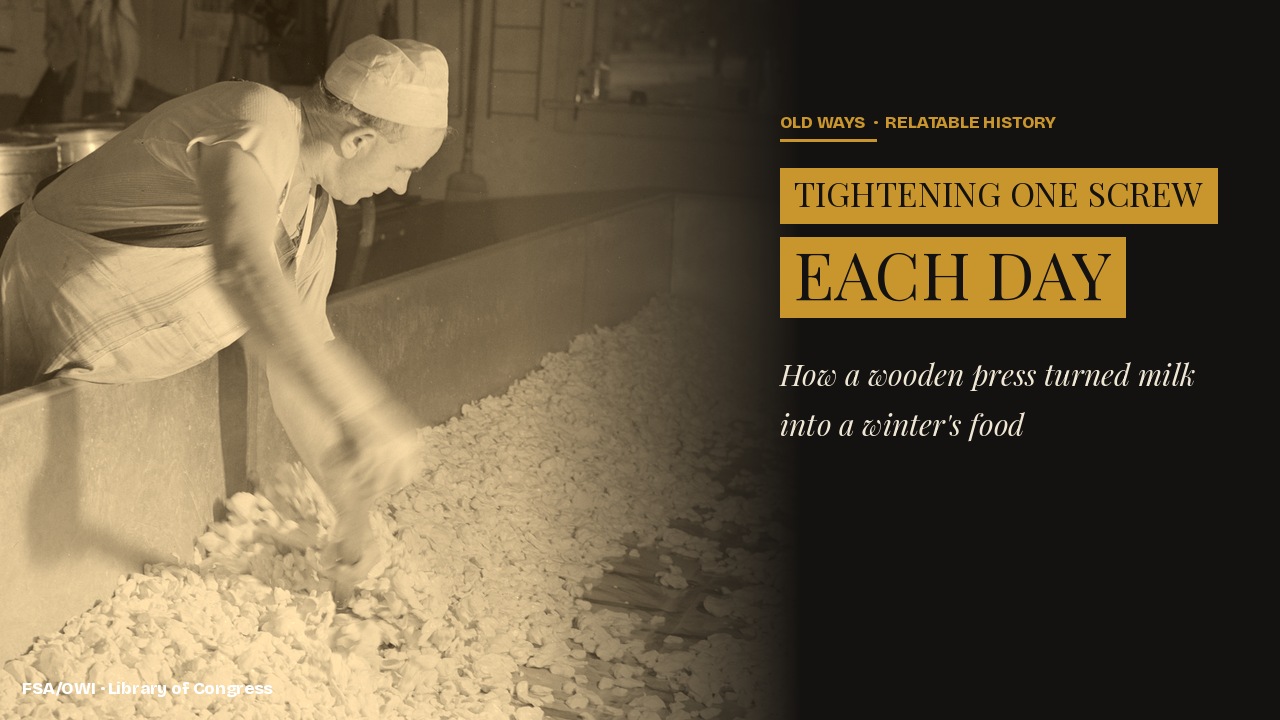
In the autumn of 1801, the Baptist congregation of Cheshire, Massachusetts borrowed a six-foot cider press, packed it with the pooled morning milk of nine hundred cows, and pressed a single cheese so large it needed a sleigh, a sloop, and two wagons just to leave the state. It remains the strangest single chapter in the history of cheese pressing in America, and a useful door into the rest of it: where the device came from, what people built with the idea besides keeping a farmhouse fed, and what finally put the whole apparatus out of a job.
The mechanics of a single press — the hoop, the screw, the daily turn — are their own story and well covered elsewhere. This is the bigger one: a Roman farm manual that pressed cheese without any screw at all, an English dairyman who turned cheddar into a teachable science, a patent filed in Ohio twenty years after the factory system was supposed to have made it unnecessary, and the stunt cheese that argued its own legend with the men who made it.
The history of cheese pressing starts before Rome had an empire
The idea that curd needs to be squeezed, not just drained, goes back further than any screw-driven machine. The clearest early description of it comes from a Roman farm manual: Lucius Junius Moderatus Columella, a landowner and writer working in the first century AD, devoted part of his twelve-volume De Re Rustica to dairying, describing curd shaped by hand or packed into box-wood molds, with wicker baskets used for a softer cheese that was then dipped in brine. The texture he is after — firm enough to hold a shape, salted enough to keep — is exactly what an American farm press was built to produce seventeen centuries later. What he does not describe is a mechanical screw. Roman cheesemaking relied on the mold and the cheesemaker’s hands, not on a machine applying steady force over days.
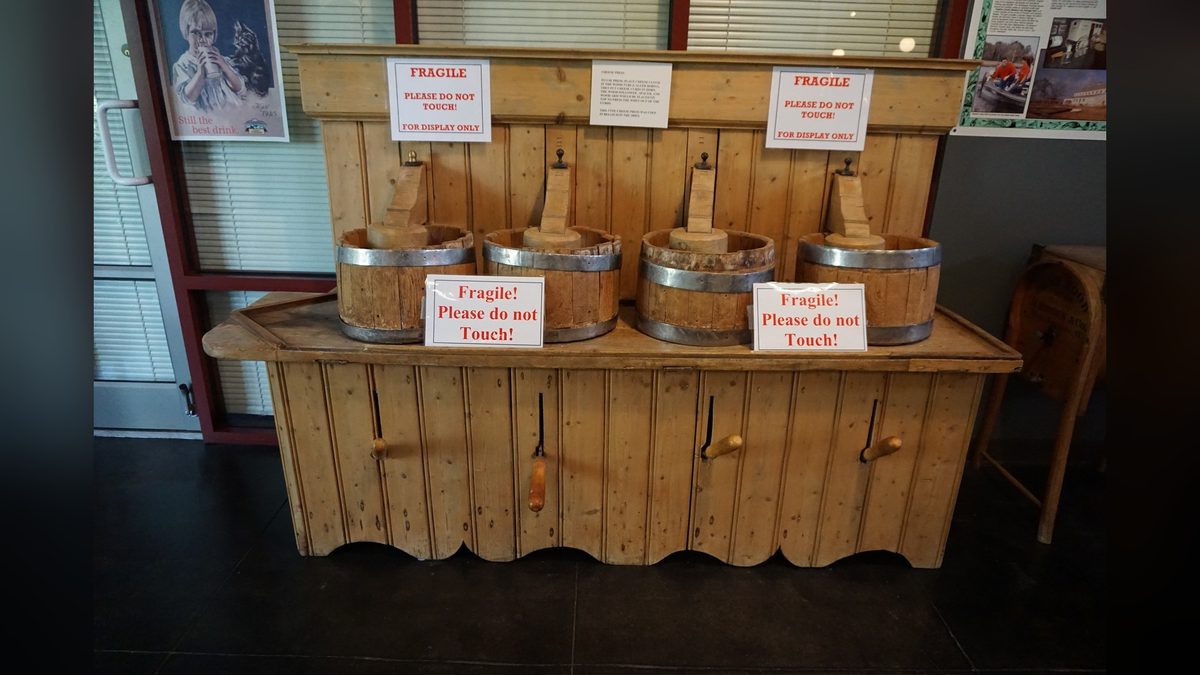
That mechanical piece arrived later, and nobody can point to the exact moment it did. The screw itself is much older than cheese — Roman and Greek presses already used threaded mechanisms for oil and wine, and medieval Europe adapted the same principle for cloth, paper, and eventually print. Somewhere in that long borrowing, a dairy version appeared: a threaded post driving a board down onto a hooped, cloth-wrapped curd, pressure increased a turn at a time rather than applied all at once. No single inventor, country, or date gets credit for that adaptation, which is itself telling — a device this useful on both large estates and small farms tends to spread by imitation long before anyone writes down who thought of it first.
England perfected the curd; American farms barely had to try
By the time English colonists were shipping screw presses across the Atlantic, English dairy country had already turned cheesemaking into something close to an industrial craft, long before any factory existed. The clearest figure in that story is Joseph Harding, a Somerset dairy farmer working through the 1850s and 1860s who is still credited as the person who put cheddar-making on a reliable, teachable footing. Harding is best known for refining the cheese mill, the machine that breaks pressed curd into small, even pieces before a second pressing — a step that turns a merely firm cheese into the dense, close-textured wheel the name now describes. He and his wife Rachel traveled England teaching the method to other dairies, at a time when farmhouse cheese quality still varied wildly from one kitchen to the next.
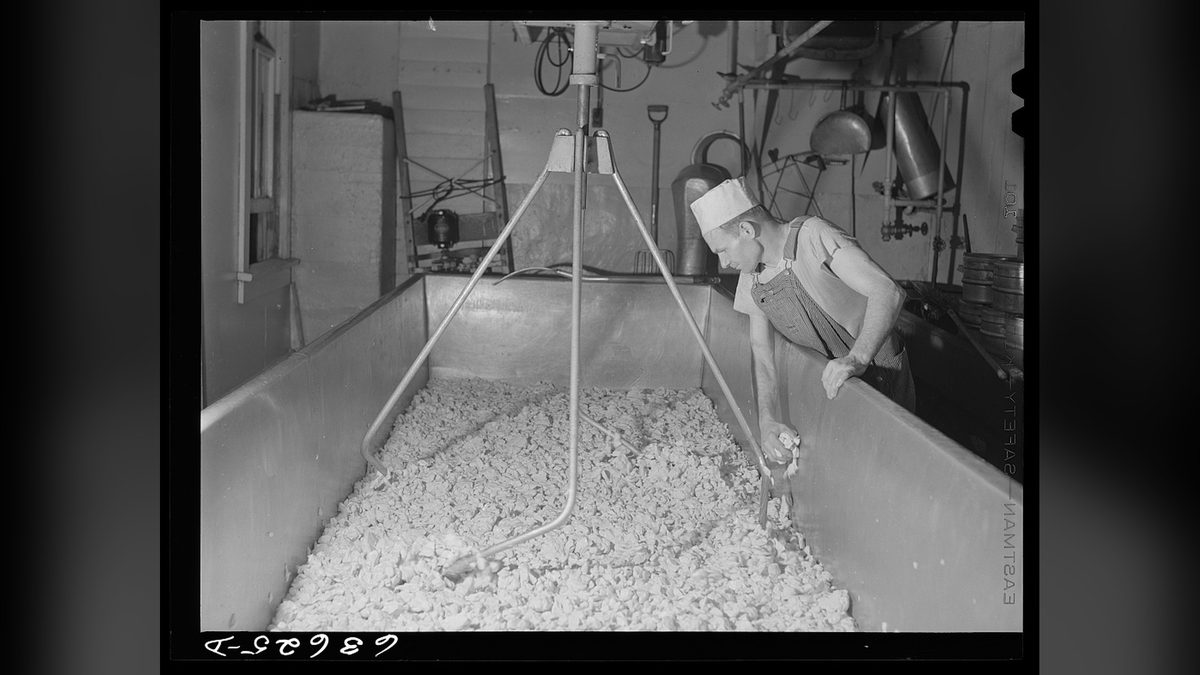
American farms imported the equipment and the general idea without needing anywhere near that level of refinement. A family making one or two wheels a week for its own table and the local store did not need a cheese mill or a published method; a press, a hoop, a curd knife, and a cool cellar covered it. The real gap between a Somerset dairy chasing an export-grade cheddar and a New England farmwife banking a winter’s food is a gap in scale, not in the underlying device — both were turning the same screw for the same reason. What eventually changed the American side of that equation was the idea of pooling many farms’ milk into one building, which is where the Massachusetts stunt cheese and a New York factory both belong, exactly fifty years apart.
A six-foot cider press, nine hundred cows, and the biggest gift a president ever received
The 1801 Cheshire cheese began as a tribute, not a joke. Elder John Leland, the town’s Baptist preacher, had campaigned hard for Jefferson’s election and for the religious liberty Jefferson stood for against an established church. He proposed that the women of his congregation mark the victory the way their farms knew how: by making the largest cheese anyone had assembled, using nearly every cow in town on a single day, pressed in a borrowed cider press six feet across because nothing built for cheese alone was anywhere near large enough.
How big the result actually was depends on which account is trusted, which is itself part of the story. A contemporary Rhode Island newspaper put the milk at nine hundred cows’ worth. Jefferson’s own letter to his son-in-law gave the finished cheese’s dimensions as four feet four and a half inches across and fifteen inches thick, weighed that August at 1,230 pounds. The Cheshire committee’s own letter to Jefferson, written the day they delivered it, puts the weight at 1,235 pounds and dates the pressing to July 20, 1801. Those numbers agree on the scale and disagree by just enough to show that nobody was weighing a stunt cheese with any real precision.
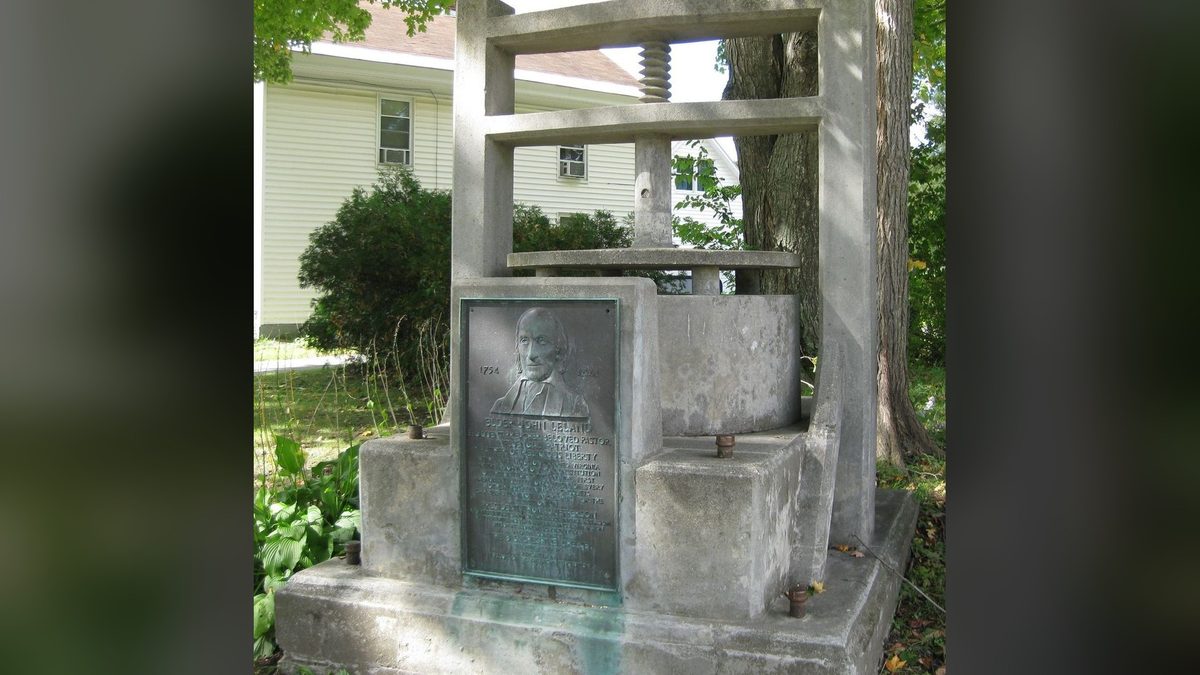
The famous inscription is shakier still. The story repeated for two centuries is that the cheese was stamped with Jefferson’s own motto, “Rebellion to tyrants is obedience to God.” The committee’s own letter says the opposite: they had considered adding writing and specifically decided against it, telling Jefferson they had “found such inconveniency in stamps on paper” that they chose to send the cheese “in a plain republican form” instead. The slogan everyone remembers appears to come from a newspaper’s headline over the committee’s printed letter, not from anything actually pressed into the rind.
Leland and a second farmer, Darius Brown, hauled the wheel from Massachusetts to the Hudson by sleigh and wagon, down the river and around by sloop to New York and Baltimore, then on by wagon to Washington, arriving December 29, 1801. Leland presented it at the President’s House on New Year’s Day 1802 in a short ceremony; Jefferson, caught off guard, spoke his thanks rather than reading a prepared text, and privately paid Leland two hundred dollars afterward, since a sitting president could not accept gifts. New York merchants reportedly offered a thousand dollars just to put it on display for twelve days. Nobody is certain how the cheese ended its days: it was apparently still at the President’s House a year later, when a visiting senator noted in March 1804 that what remained was “far from being good,” and later, unverified stories have it served at a reception or — the version everyone prefers — dumped in the Potomac.
Even in 1870, farmers were still trying to engineer the screw out of the job
Long after the Cheshire cheese had become a punchline, ordinary farmers kept quietly trying to make the press itself less tedious. One of them was Robert Allen of Cleveland, Ohio, who patented an improved cheese press on December 13, 1870. His design, filed with the US Patent Office as Letters Patent No. 110,105, replaced the single screw with a pair of levers — one weighted, one riding against the press frame — engineered so pressure stayed on the cheese continuously instead of needing to be re-tightened by hand every few hours. A farmer could hang a weight, walk away, and come back to find the pressure had never let up, adjustable simply by sliding the weight along the lever or swapping it for a heavier one.
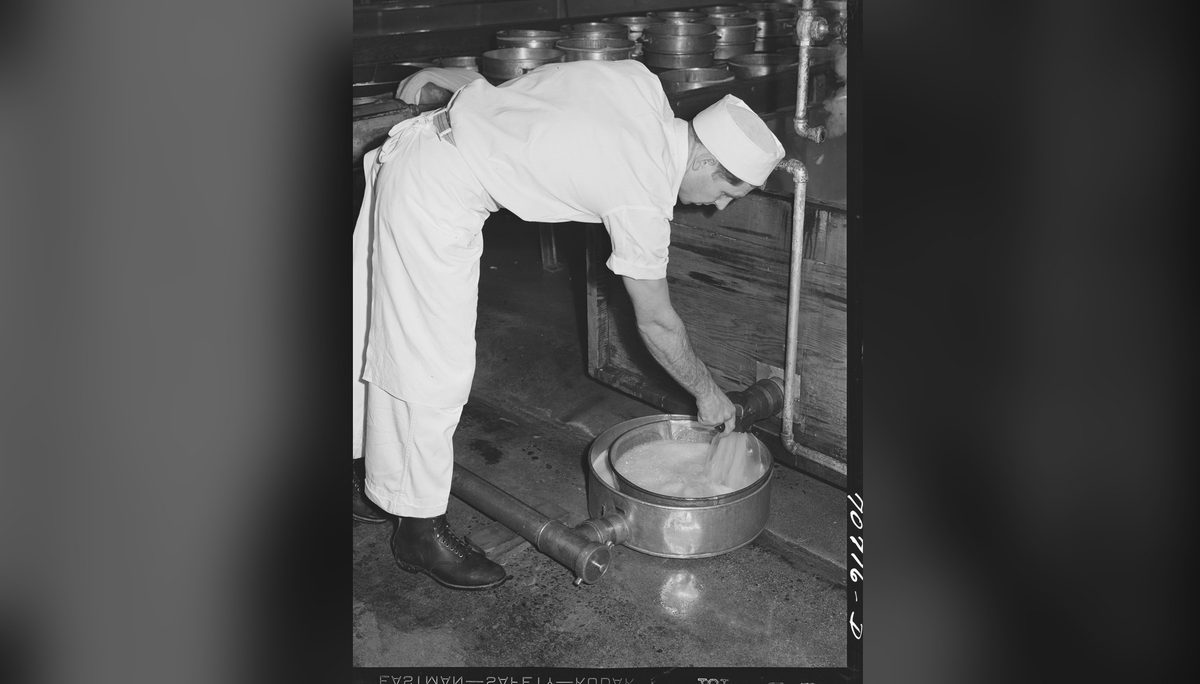
Allen’s patent is a small, slightly obsessive document — pages of carefully lettered diagrams for standards, followers, and pivot pins, all in service of a machine that, at bottom, still just squeezes a hooped curd. It is also a useful corrective to the idea that farm technology stood still between the colonial screw press and the rise of the factory. Right up to the end of the farmhouse cheese era, people who made cheese for a living kept finding small, patentable ways to make the same job take less of their attention, even as the device itself was quietly becoming optional.
The factory that made the farmhouse press optional, not obsolete
The event usually credited with starting that shift happened in the spring of 1851, when Jesse Williams, a dairy farmer near Rome, New York, began collecting milk from his neighbors’ farms and processing it in one building with equipment he had designed himself, rather than each household pressing its own curd separately. It is generally reckoned the first true American cheese factory: bought milk rather than bought curd, one standardized process instead of dozens of household ones, and output at a scale no farmhouse press could match. Within a few years similar factories were opening across New York; within two decades the model had spread into Wisconsin, which built much of its own dairy reputation on the factory system Williams had started almost by accident.
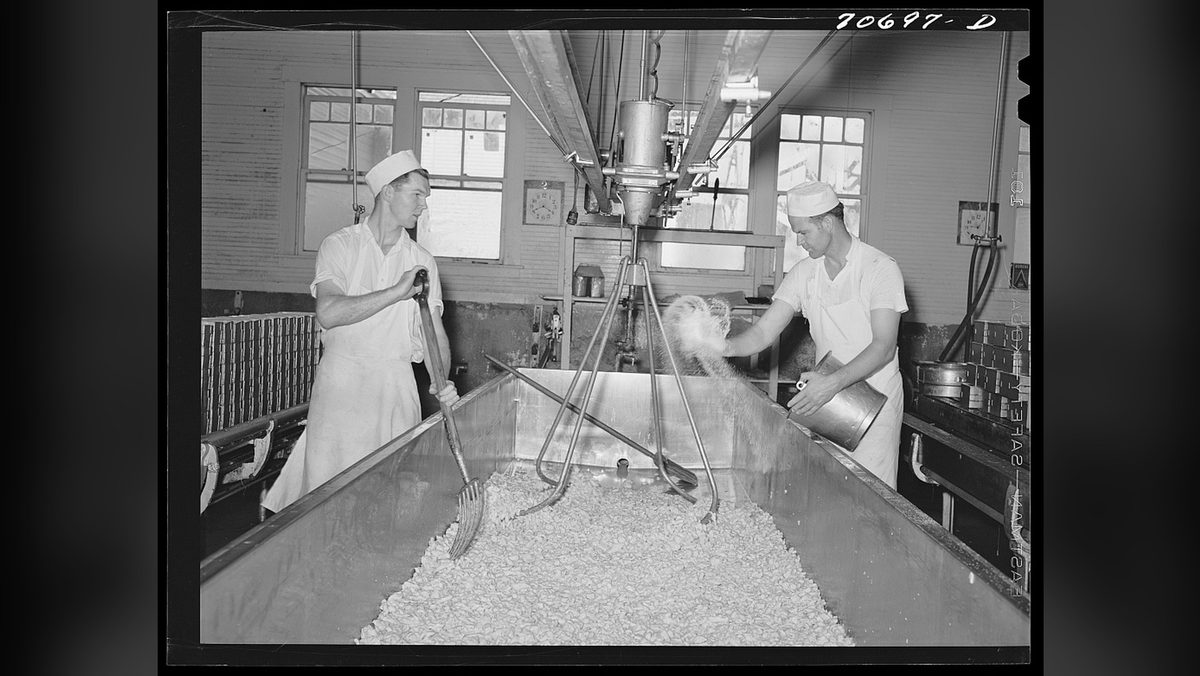
What the factory system did not do, at least not quickly, was empty every farmhouse cellar of its press. Smaller and more remote farms kept pressing their own cheese well into the twentieth century, and the practice came roaring back whenever cash got short. The Henry Ford Museum’s own collection holds the equipment of one such family: William Saxony Rider and Elizabeth Stephenson, who built a 300-acre Michigan farm partly on the cheddar they made and sold, and whose daughter Marion and son-in-law Herbert Hoffman revived the same press and curing room in the 1930s, pressing curd from a thirty-five-cow herd into traditional round cheddar “truckles” they carried into Detroit’s Eastern Market to sell by hand. The press that did that work was a simple vertical screw design handling four cheeses at once — mechanically much closer to a colonial farm’s equipment than to anything a factory would have used by then.
That is, in the end, the real shape of the story. A tool for turning surplus milk into a bankable, shelf-stable food did not get replaced all at once by something better. It got out-competed on scale by a factory model in 1851, kept right on working on smaller farms for another eighty-odd years, flared back to life whenever a depression made store-bought cheese a luxury nobody could afford, and only stopped mattering once rural electrification gave farms a different way to keep milk from spoiling in the first place. The screw itself never had to change. It simply ran out of farms that still needed it — which leaves one question worth carrying over from the video: if a cellar and a calendar were the only tools standing between you and a finished wheel, how many weeks of patience would you actually have in you?
Watch the full history
The video version covers the hoop, the rennet, and the daily turn of the screw in about seven minutes — the mechanics this article deliberately leaves to it.

Related reading
- How a Springhouse Worked: The Farm Refrigerator That Ran on a Spring
- How a Root Cellar Kept Vegetables All Winter: The Farm’s Biggest Refrigerator Was a Hole in the Ground
- How a Smokehouse Cured a Year’s Worth of Meat With Only Salt, Smoke, and Time
- How the Dog-Powered Butter Churn Actually Worked
- How Sorghum Syrup Was Made Before Sugar Came in a Sack
Works cited
- Columella, Lucius Junius Moderatus. De Re Rustica, Book VII (c. 65 AD), on hand-pressed cheese and box-wood molds. Cited and translated in Monaco, Farrell. “Making Cheese with the Romans: Caseus Fumosus Velabrensis.” Tavola Mediterranea, August 24, 2017. Link.
- McLean, Rachel E. “A Sharp Story: The Origin of Cheddar.” Culture: the Word on Cheese, May 25, 2017. Link.
- McMurry, Sally. Transforming Rural Life: Dairying Families and Agricultural Change, 1820–1885. Johns Hopkins University Press, 1995.
- “Mammoth Cheese.” Monticello Encyclopedia. Thomas Jefferson Foundation.
- Committee of Cheshire, Massachusetts, to Thomas Jefferson, 1 January 1802, with editorial note. The Papers of Thomas Jefferson, vol. 36. Princeton University Press. Founders Online, National Archives.
- Allen, Robert. “Improvement in Cheese-Presses.” US Patent No. 110,105, filed December 13, 1870. Link.
- “Where Was the World’s First Commercial Cheese Factory Established?” Grateful American Foundation. Link.
- “This City Is Made of Cheese: Early Industry in Rome.” Rome Sentinel. Link.
- “Farm-Made Cheese in a Big City Market.” The Henry Ford, Benson Ford Research Center. Link.