
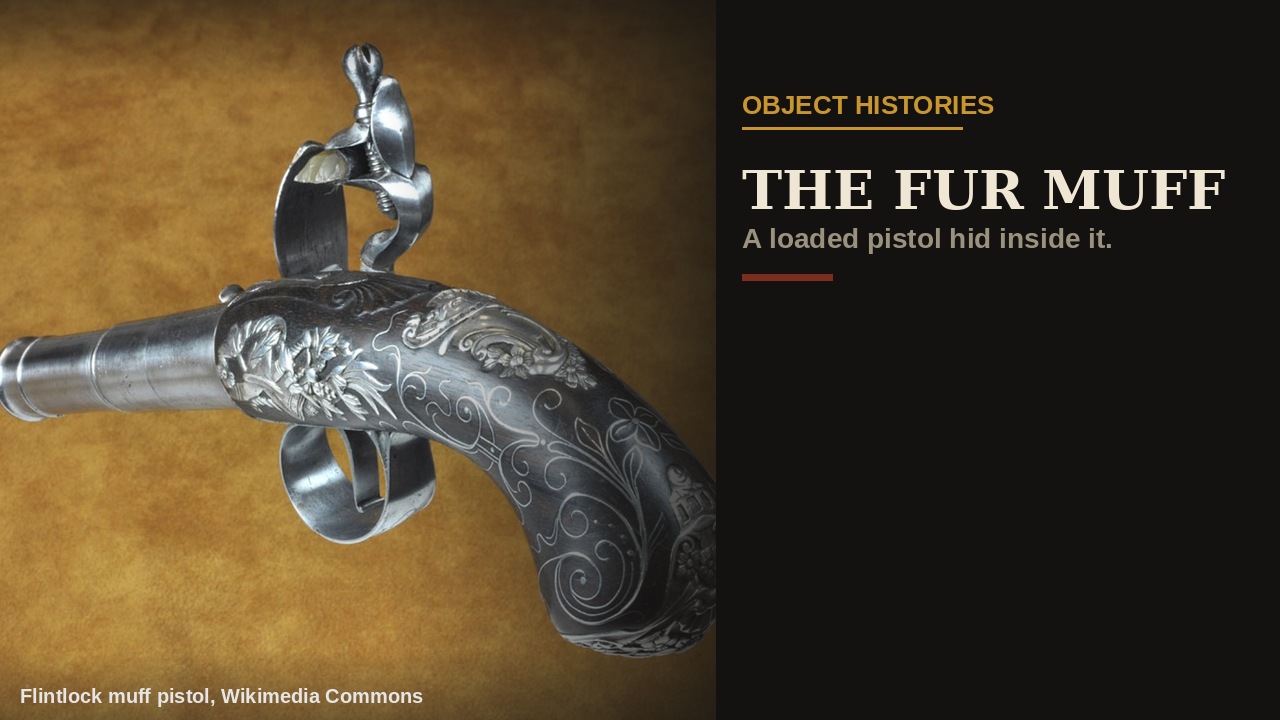
A fur muff is, structurally, almost nothing: a fur-covered tube, open at both ends, with no clasp, no compartment and no obvious way to search it without being rude about it. For roughly four hundred years, that nothing was exactly the point. People slid a loaded pistol into one end, a hot-water bottle into the other, and tucked love letters, lapdogs and — in at least one well-documented case — a meat cleaver in between. A muff never looked like it was hiding anything, because it so plainly was not built to hide anything. It was built to keep your hands warm.
That contradiction is what makes the muff worth more than a paragraph in a fashion history. The pistols built small enough to disappear inside one picked up their own name, “muff pistols,” and stayed in production for more than a century. The hand-warmers designed to fit inside one were patented, branded and sold by a London retailer. And when an Edwardian protest movement needed to get a weapon into one of the best-watched rooms in London, the muff was still the obvious choice. None of this required anyone to modify the object. It just required everyone else to agree not to look inside it.
None of it started with pistols, though. Three centuries before anyone thought to put a gun in one, the muff was simply the newest, most expensive way to be cold-proof and fashionable at once — and, for a surprisingly long stretch, that fashion belonged to men as much as women.
The muff started as a luxury item, not a necessity
The clearest documented date is 1570, the year the muff entered western European women’s fashion as a companion to the sudden craze for trimming garments in fur. Costume historians can say that much with confidence. What they cannot agree on is who actually invented it. A popular story, recorded by the Victorian writer Frank Hird in 1896, credits an unnamed Venetian woman of the late 1400s, said to have rolled a tube of fur-lined velvet and fastened it with crystal buttons. It is a charming story and almost certainly untestable — no earlier source corroborates it, and it reads like the kind of origin myth fashion writers attach to an object after the fact.
What is better documented is who wore the thing once it existed. Henry III of France, who reigned from 1574 to 1589, carried muffs laced with gold thread and fringed with jewels — a detail that fits everything else known about his famously ornamental court. Louis XIV reportedly owned one made of tiger fur. A surviving example from 1575 to 1600, made of silk velvet with gilt metal embroidery, shows that within a generation the object had already become a serious piece of goldsmith’s and embroiderer’s work, not a simple fur tube. A muff, in other words, started life as a status symbol before it became a practical one, and for roughly its first century almost nobody who owned one actually needed it for warmth.
For about 150 years, men carried muffs as proudly as women did
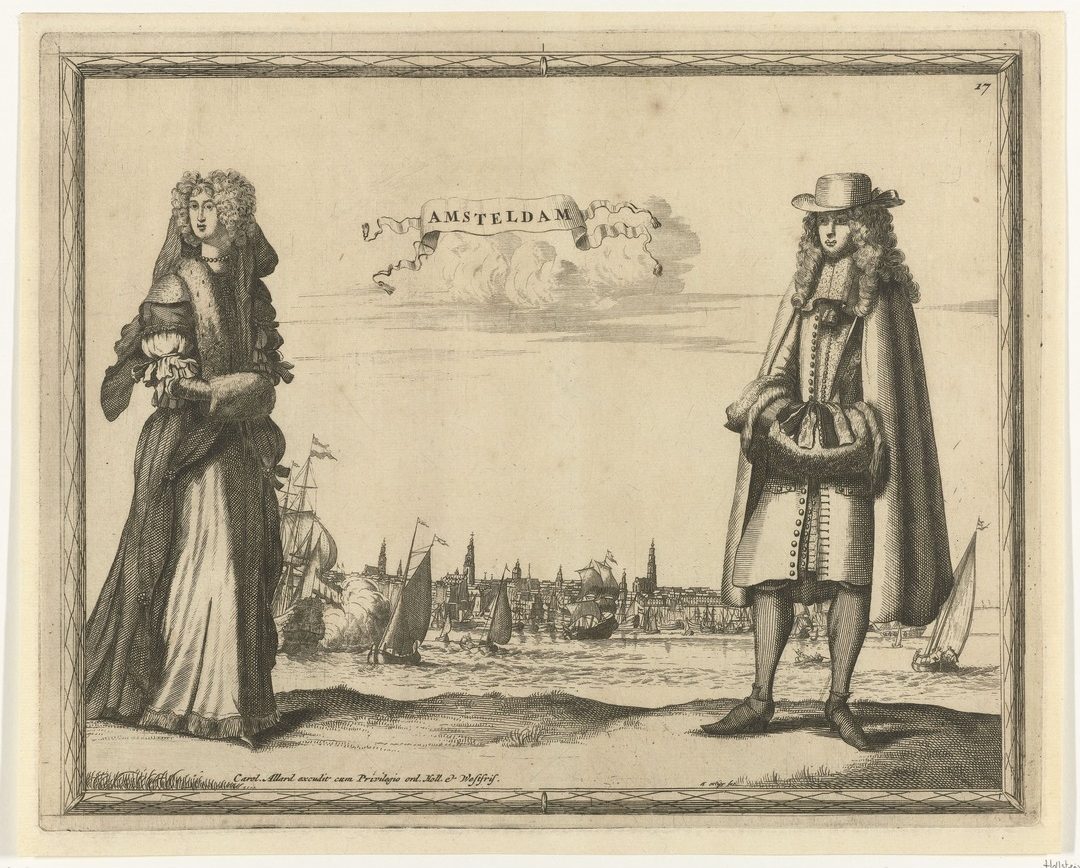
For a long stretch, carrying a muff said nothing at all about the carrier’s gender. The diarist Samuel Pepys recorded the exact moment he personally joined in: on 30 November 1662, during a bitter cold snap, he wrote that “this day I first did wear a muffe, being my wife’s last year’s muffe” — and promptly bought her a new one to replace it. Pepys was not an outlier. The Czech-born engraver Wenceslaus Hollar, who settled in England in 1637, drew women carrying large muffs that appear to be made entirely of fur, and within a few decades Dutch and English fashion plates were showing men holding muffs of their own, dressed no differently from their female companions.
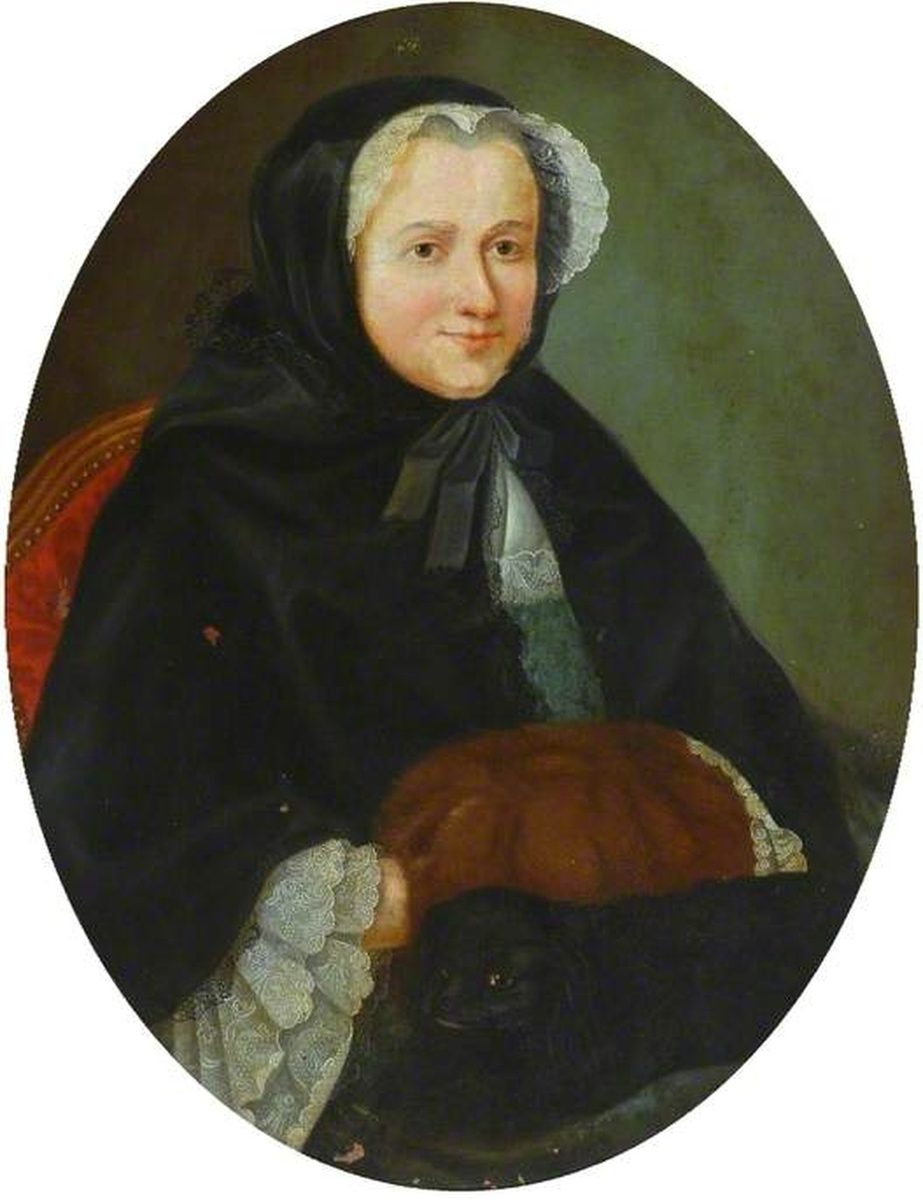
The high point for male muffs ran roughly from the 1690s through the 1770s and 1780s, when a large fur muff was a perfectly fashionable accessory for a gentleman. It did not last. By the mid-18th century, a man seen carrying one risked being read as affected, foppish, or suspiciously French-influenced — the playwright Isaac Bickerstaffe built an entire fussy, muff-toting character, Mr Jessamy, into his 1768 comic opera Lionel and Clarissa, specifically so the character’s gruff father could mock him for it. A French print from 1735 makes the same joke more bluntly, showing a bashful young man with a muff and a caption suggesting he would do better seeking warmth in a woman’s arms. By the close of the 18th century the muff had been fully reassigned to women alone, and a man seen with one was telling a joke, not making a fashion statement.
The pistol that borrowed the muff’s name
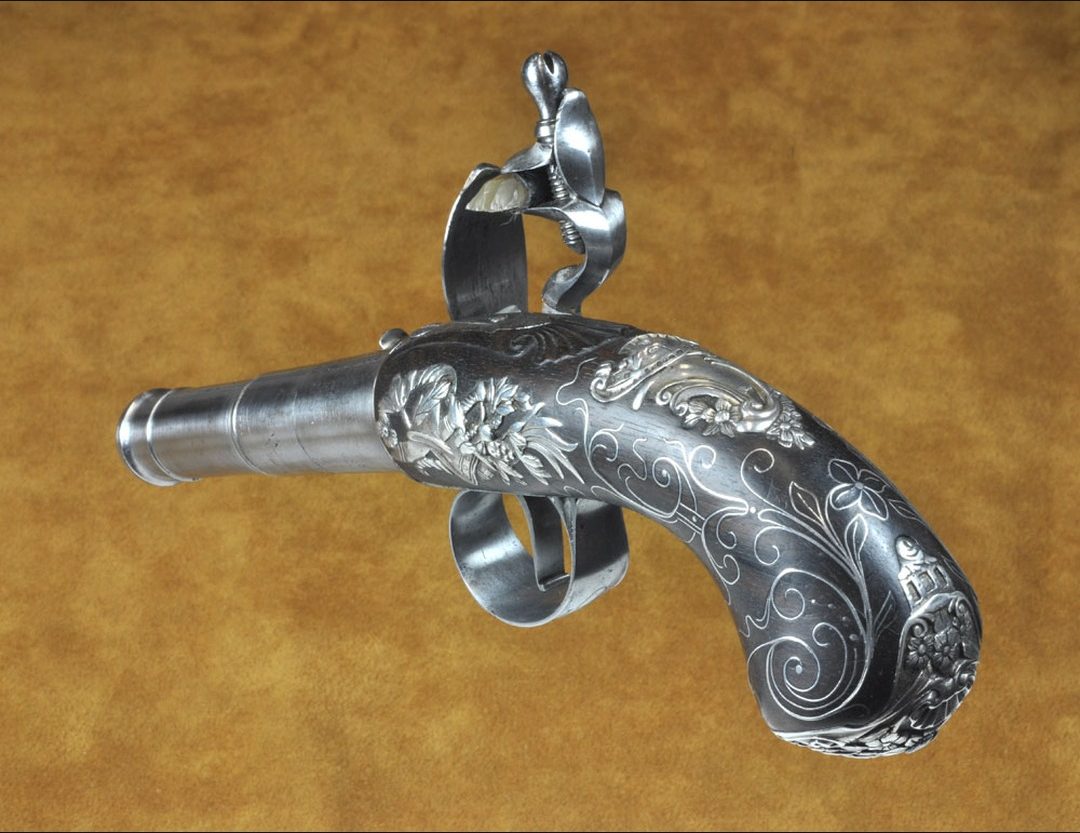
These were “turn-off” pistols: the barrel screws onto the breech rather than a fixed frame, and comes off with a small key or spanner so the gun loads from the chamber end instead of down the muzzle. That let a maker fit an oversized ball into the open breech and swage it slightly tighter as the barrel was retightened, producing a better seal and, by most accounts, more velocity and accuracy than an equivalent muzzle-loader. The design became especially popular across 18th-century England, built into boxlock frames with centrally mounted flintlocks, and because it could be made so small it earned nicknames describing exactly where people carried it: muff pistol, overcoat pistol, pocket pistol.
The “Queen Anne pistol” label attached to many of them does not really hold up. The Metropolitan Museum of Art dates the turn-off design to around the 1640s, two generations before Anne’s 1702-1714 reign, and notes that most surviving pistols firmly called “Queen Anne pistols” were actually made after she died. A pair stamped “I. Williams,” walnut-stocked, seven and a half inches long with a .45-inch bore and dated to roughly 1695, predates her reign outright. The queen’s name stuck to the style anyway, probably because it was at its most fashionable during her lifetime rather than because she had anything to do with it.
What the pistols could actually do is better documented than what they were called. A reproduction test of a Birmingham-proofed example made by the gunsmith William Ball — a .49-caliber smoothbore with a barrel under two inches long, loaded with roughly 25 grains of black powder behind a .50-caliber ball — produced a muzzle energy of around 100 foot-pounds, comparable to a .22 Long Rifle round fired from a four-inch barrel. These were not dueling weapons. They had no sights, fired once before needing to be reloaded with a key, and testers found that hitting anything smaller than a man’s torso past about three yards was “dicey.” Their whole purpose was close range and sudden: something produced from inside a pocket or a muff at a distance of a few feet, not aimed from across a room. A sliding safety on the tang, engageable only when the gun was half-cocked, existed for exactly the obvious reason — so a loaded pistol riding around inside a muff did not go off on its own.
A hand warmer, tucked inside a hand warmer
By the 17th century, a well-equipped muff might contain its own internal heating system. Ceramic hand warmers, often shaped like small books so they sat flat and out of sight, were carried inside a lady’s muff or pocket specifically to stop her hands going numb — fur insulates, it does not generate heat. The idea persisted long enough to get patented: in 1880, a London retailer named William Hannaford registered the design for a Britannia-metal flask meant to be filled with hot water, with a small coin purse clipped to one side. The combined object, catalogued today as a “muff warmer and purse,” was meant to survive a long church service, an unheated train carriage or a winter afternoon’s calling, and it is barely bigger than a deck of cards — about five centimetres tall and eleven wide.
The muff, in short, had become modular: a warm fur shell around whatever insert its owner needed that day, whether that was a hot-water flask, a few coins, or — as the next section covers — something considerably sharper.
When the muff became a protest prop
On 10 March 1914, a suffragette named Mary Richardson walked into the National Gallery in London carrying a sketchbook, so as to look like any other visitor copying the paintings. She waited roughly two hours for her moment, then produced a meat cleaver and cut deep gashes into Diego Velázquez’s Rokeby Venus, one of the gallery’s most valuable paintings. She later told a reporter that she had tried to destroy “the picture of the most beautiful woman in mythological history” to protest the government’s treatment of Emmeline Pankhurst, and to register her own anger at the way male visitors stared at the nude for hours at a time. The press had nicknamed her “Slasher Mary” by the next morning.
Accounts of the attack do not agree on exactly where she had hidden the cleaver. One detailed history of the muff as a fashion object states that she carried it inside hers; a separate magazine account of the attack itself says only that she drew it from her coat. Both details could be true of the same few seconds — a weapon tucked into a muff could easily be moved to a coat pocket while waiting — but neither source resolves it, which is a useful reminder that even a deliberately public act of vandalism can leave basic physical details contested more than a century later.
Richardson was not the only suffragette said to have used a muff this way. The ju-jitsu instructor Edith Garrud, who trained a cadre of women to physically protect Pankhurst and other movement leaders from arrest, is also recorded, in the same muff history, as having smuggled wooden clubs inside one when the job called for a weapon that would not show up on a police search. Neither woman needed to modify the object at all. The muff had spent three hundred years training the public not to look inside one, and the suffrage movement simply made use of that training.
Why the muff disappeared
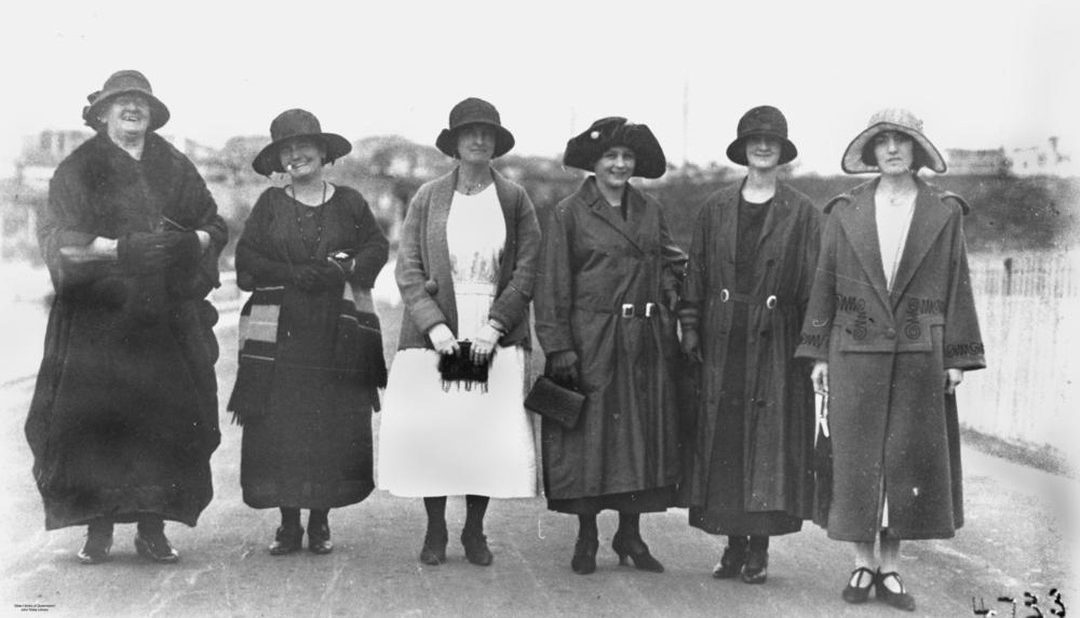
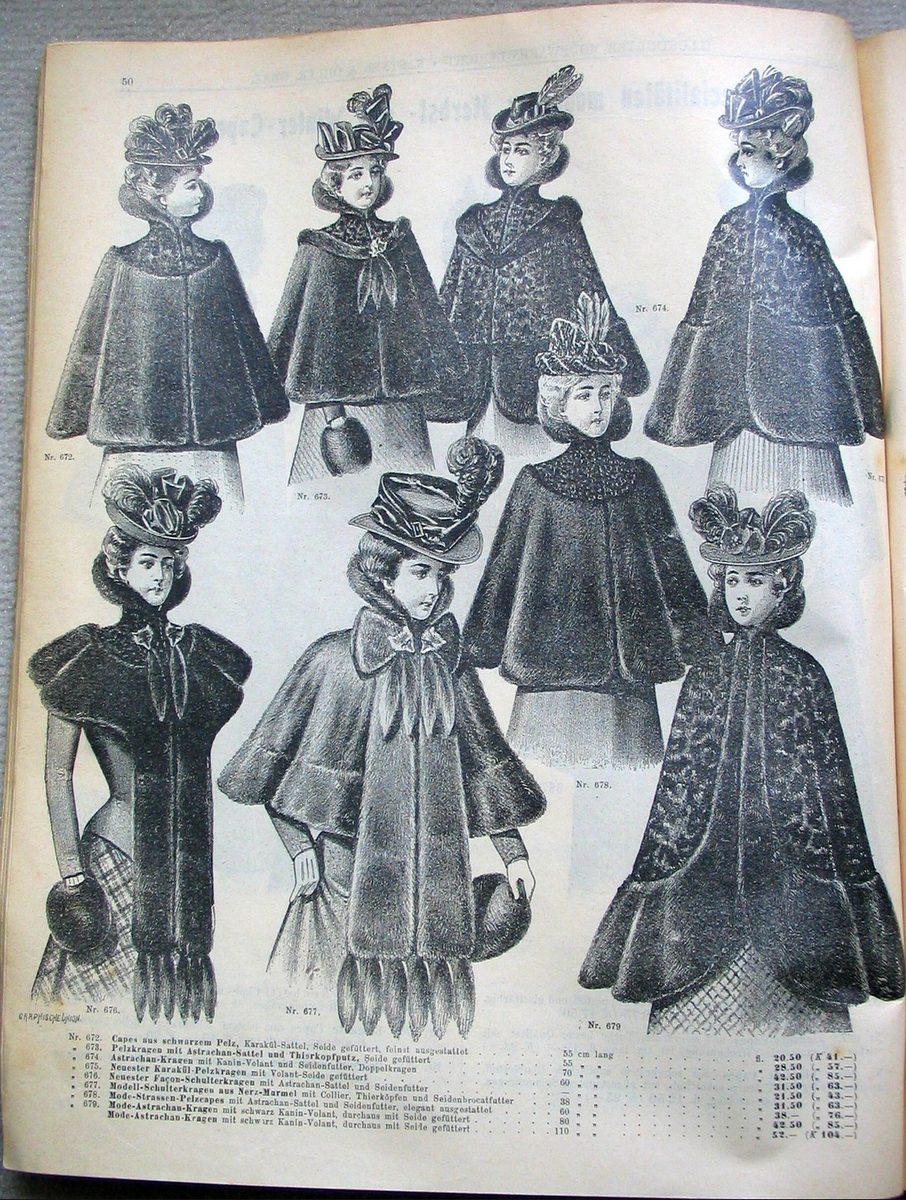
The muff did not vanish overnight. From the 1830s until the First World War it mostly got smaller while staying a reliable part of a woman’s winter wardrobe. It briefly swelled back to a showpiece size in the 1910s — the actress Gertie Millar was photographed with a large one in 1912 — and coat-and-muff sets were still being sold as matched outfits as late as 1935. What finally ended it was not one event but a competing accessory that did the muff’s old job better: the handbag. A photograph of six women on a 1920s street, every one of them carrying a small clutch bag, is a photograph of the muff’s replacement already in place. A bag held more than a muff ever could, it freed both hands, and it did not need to be the size of a fur bolster to do it.
Beatrice Behlen, senior curator of fashion and decorative arts at the London Museum, has put the muff’s whole social position in a single line: it was “probably only ever carried by men and women who did not have to work for a living.” That is a fair epitaph for an object whose job, for four centuries, was never really about cold hands. A muff announced that its owner had both the money for fur and the leisure to keep both hands out of use. Everything else it carried, from a flintlock to a meat cleaver, just rode along inside that announcement, unexamined, because nobody thought to ask what was really in there.
Watch the full history
The video traces the muff pistol itself in more detail — how small the guns got, and who actually carried one.

Related reading
- Shugborough Inscription Theories: What Each Explanation Actually Claims
- The Hatpin Peril: How a Fashion Pin Became an Outlawed Weapon
- Who Wrote the Monteagle Letter? Six Suspects, No Confession
- The 160-Word Letter That Undid the Gunpowder Plot
Shop the styles/items featured in this video
Works cited
- “Muff.” Encyclopædia Britannica.
- “Muff.” The Museum at FIT, Fashion History Timeline. Link.
- “A History of Muffs: A Forgotten Fashion Accessory.” London Museum blog. Link.
- Pepys, Samuel. Diary entry, 30 November 1662. The Diary of Samuel Pepys. Link.
- “Flintlock Box-Lock Turn-Off Pistol,” object 37.189.4. The Metropolitan Museum of Art, Bashford Dean Memorial Collection.
- “The Flintlock Pocket Pistol: Georgian England’s Micro-Compact.” American Rifleman. Link.
- “Hand warmer and purse,” object O78447. Victoria and Albert Museum. Link.
- Marston, Victoria. “Just Can’t Get Enough of the Muff? The History of the Furry Handwarmer with the Funny Name.” Country Life. Link.
- Walker, Ellen. “Deeds Not Words: Slashing the Rokeby Venus.” History Today, 9 May 2024.