
The letter that broke the Gunpowder Plot was never addressed to Guy Fawkes, to King James, or to anyone who could have stopped him directly. It was handed to the footman of a minor, anxious Catholic peer named Lord Monteagle, on a London street in late October 1605, and it ran to roughly 160 words. It did not name a single conspirator. It simply told Monteagle to stay away from Parliament, because “they shall receive a terrible blow this Parliament, and yet they shall not see who hurts them.”
Fawkes is the face of the plot because he is the man who was caught in the cellar with the matches in his pocket. But the plot did not fall apart because of a daring piece of detective work, or because the conspirators cracked under interrogation before the fact. It fell apart because one nervous man did not burn a letter he was told to burn, and because what followed was slower, stranger and more improvised than the arrest itself usually gets credit for.
Several things about that unraveling rarely make it into the version of the story built around the lantern and the cellar: who the letter probably came from, how long the authorities sat on it before acting, what the king’s own torture warrant actually permitted, the very different fates of two other men who knew what was coming, and how long England kept a law on its books specifically because of that one November night.
A Letter Addressed to the Wrong Man Nearly Worked
William Parker, 4th Baron Monteagle, was related by marriage to one of the plotters, Francis Tresham — Tresham’s sister was Monteagle’s wife. That connection is exactly why Monteagle has never been fully cleared of writing the letter to himself, to create cover for backing out, and it is exactly why Tresham has never been fully cleared of sending it, to warn his brother-in-law without confessing to his fellow conspirators that he had done so. Both men denied it. Catesby and Thomas Wintour suspected Tresham outright and nearly killed him over it.
A 1916 monograph by the researcher George Blacker Morgan pushed the question further still, arguing from handwriting comparison that the actual pen belonged to neither man, but to William Vavasour, a servant of Tresham’s, writing at his master’s dictation in a deliberately disguised hand. Morgan’s case rests on comparing the letter’s script to a statement Vavasour gave under interrogation in the Tower — a statement he tried to pass off as written by someone else, which is itself a strange thing for an innocent servant to do.
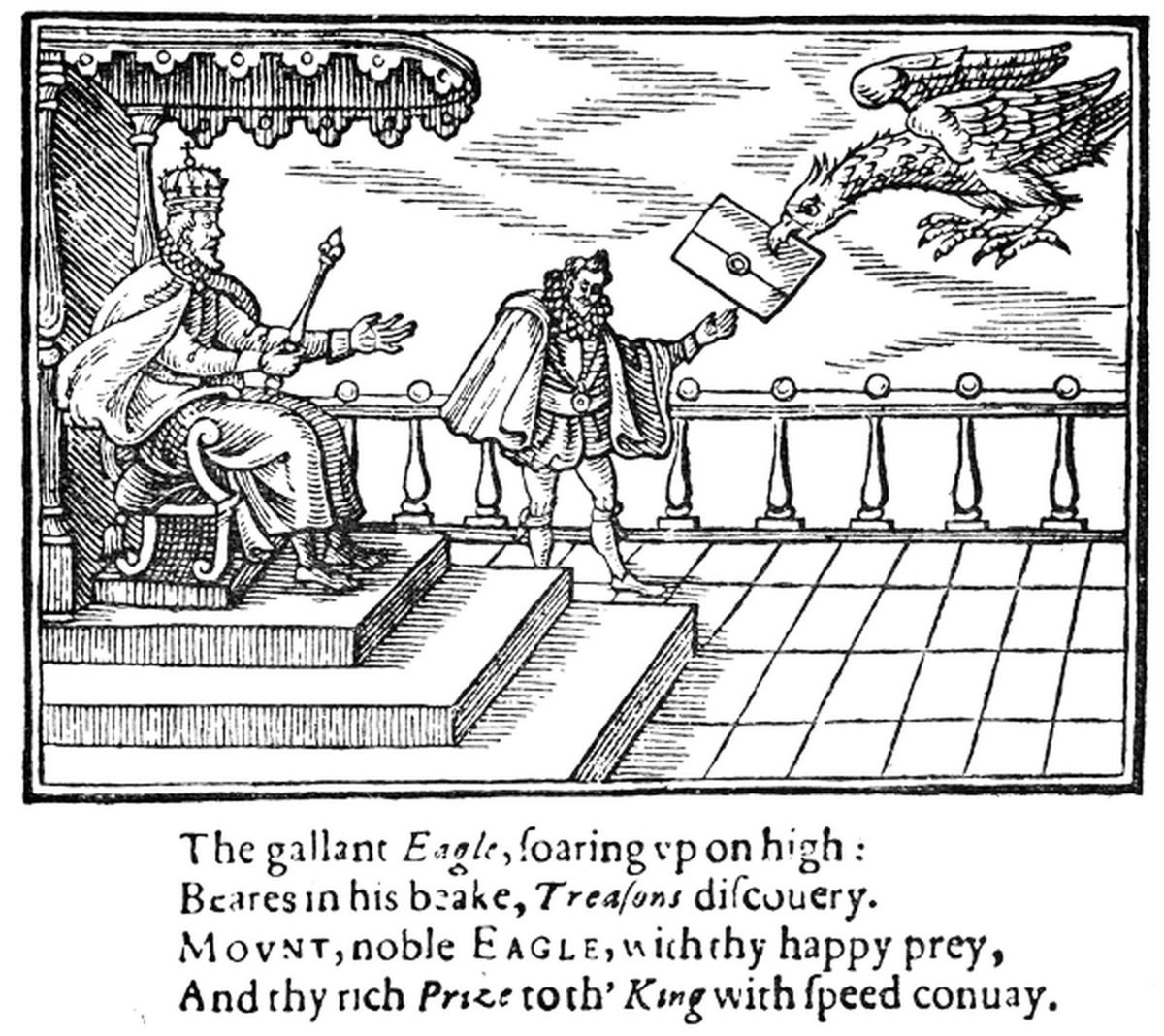
What is not in dispute is what Monteagle did with it. Rather than burn the letter as instructed, he rode to Whitehall that same evening and handed it to Robert Cecil, the Earl of Salisbury and the king’s chief minister. Cecil did not raid the cellars that night, or the next day. He sat on the letter for over a week, watching, before a search was ordered — a pause that has fed its own argument, covered below, about how much the government already knew.
Cecil had reason to move carefully rather than quickly. He ran an intelligence network built up over nearly two decades under Elizabeth I, and a premature raid on an empty cellar, or on one where the powder had already been removed, would have tipped off the conspirators and let them scatter before any arrest could be made. Letting the plot run a little further before striking was, on this reading, simply tradecraft — the same instinct that later fed the entrapment theory, depending on which motive one assumes was driving it.
The Search Took Two Passes to Find Anything
The first search of the undercroft beneath the House of Lords, on the afternoon of 4 November, was cursory. The searchers, led by the Lord Chamberlain, noted an unusually large stock of firewood and coal stacked against the wall and a servant — Fawkes, going by the alias John Johnson — minding it, and they left. Whatever suspicion that visit raised, it was not enough to make an arrest.
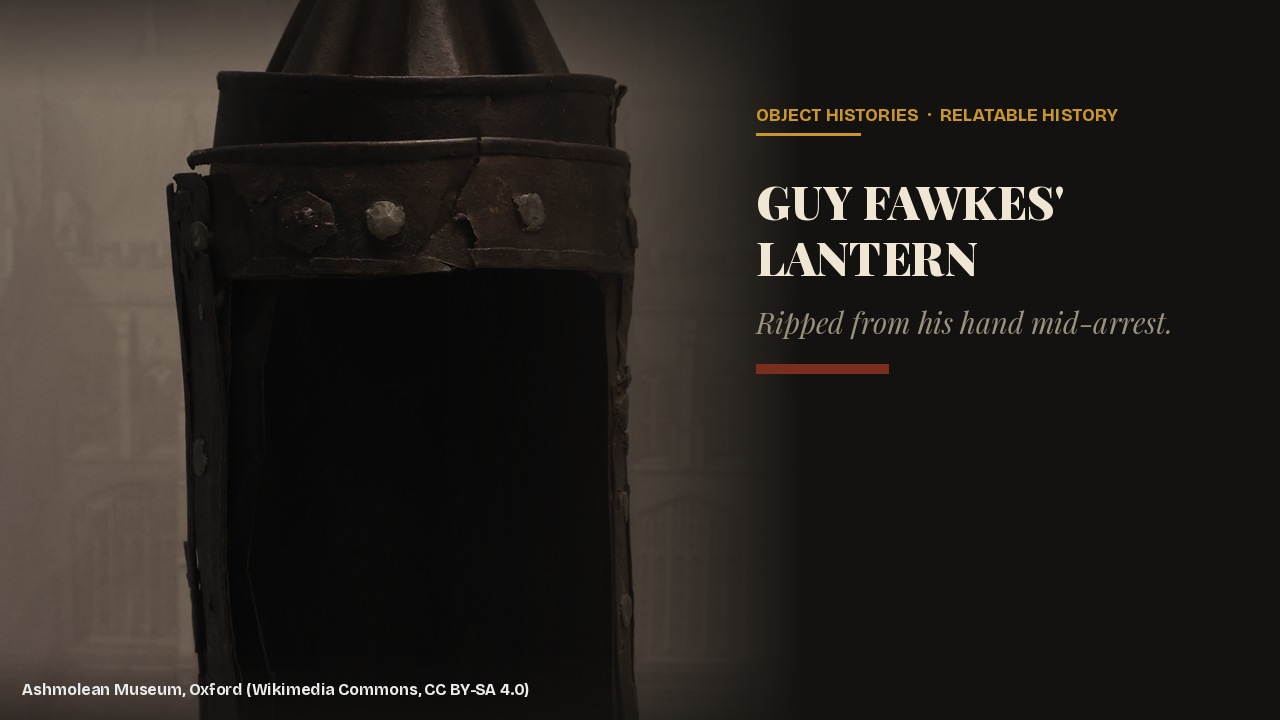
It was the second search, after midnight, that found anything, because by then the government had decided to look properly. A Westminster magistrate, Thomas Knyvett, led a party back into the cellar and this time ordered the firewood moved. Underneath it were 36 barrels of gunpowder. Fawkes was standing over them, fully dressed, with a watch, slow matches and a lantern on him — equipment for someone expecting to wait through the night and then move fast.
The gap of more than a week between Monteagle receiving the letter and that second search is the detail that keeps a minority of historians arguing the government, or Cecil specifically, already had some advance knowledge of the conspiracy and let it develop further before intervening, for maximum propaganda value against Catholics. No document proves it, and most historians read the delay as ordinary caution — confirming a vague threat was real before alarming the court — rather than evidence of entrapment. It is a genuinely unresolved argument, not a settled one either way.
The King’s Own Torture Warrant Was Deliberately Vague
Fawkes gave his captors nothing useful at first, not even his real name. James I personally authorised harsher questioning in a warrant sent to the Tower of London on 6 November, worded so that escalation was gradual rather than immediate: “the gentler tortures are to be first used unto him,” the order read, “and so by degrees proceeding to the worst.” What exactly was used on him is not recorded in surviving documents, though historians generally agree it likely included the rack.
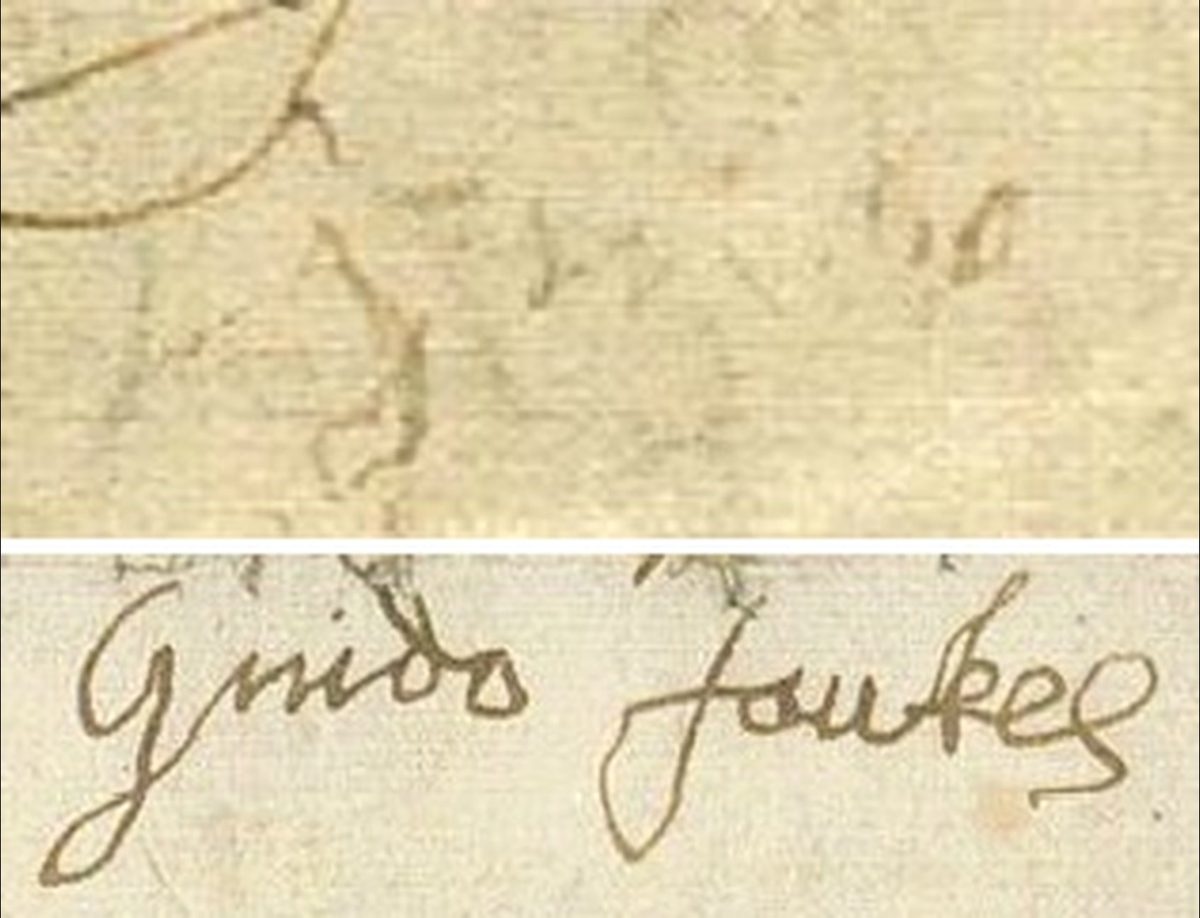
The physical evidence for what happened next is the clearest artefact to survive from the interrogation. Fawkes’s examinations were signed “Guido Fawkes,” the Italianised name he had adopted after years fighting for Catholic Spain in Flanders. An early signature, from before the harsher questioning, is a confident, legible hand. A later one, on the confession dated 9 November, is a broken, barely-formed scrawl — the clearest physical trace torture left on any document connected to the plot.
Not Everyone Who Knew Walked Quickly to a Scaffold
Fawkes and seven co-conspirators were tried for treason at Westminster Hall on 27 January 1606 and executed over two days that following weekend, dragged through London on hurdles and hanged, drawn and quartered. But two other names attached to the plot never reached that same public spectacle, for opposite reasons.
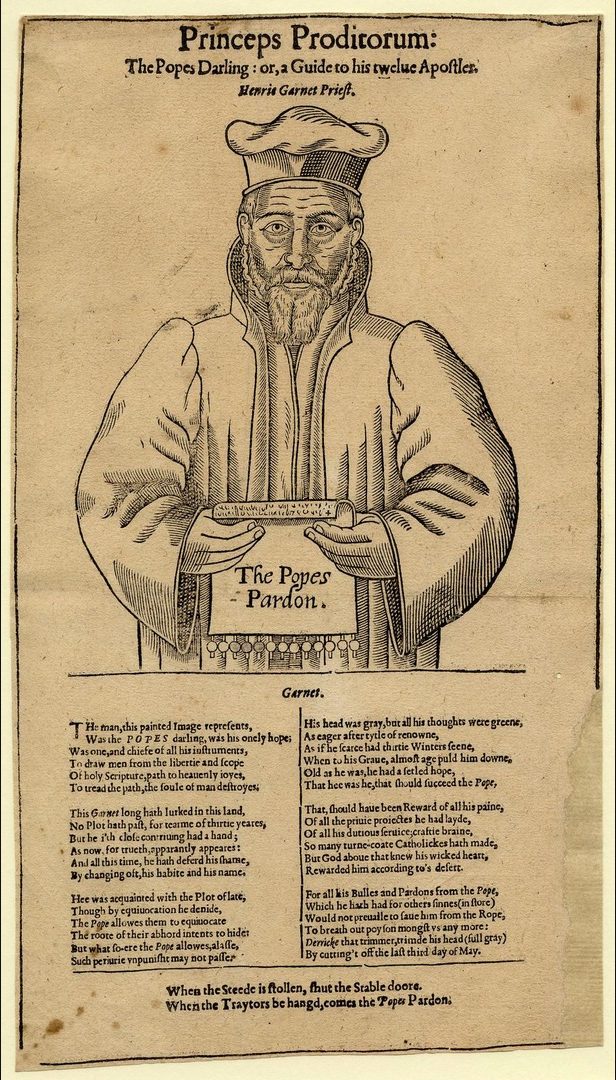
Francis Tresham — the suspected letter-writer — never stood trial at all. He died in the Tower in December 1605, of a urinary illness, before the main proceedings began. And Henry Garnet, the Jesuit superior in England, was tried separately in late March 1606 and executed on 3 May, not for plotting but for concealment: he had learned the broad shape of the conspiracy from a fellow priest who had heard it in confession from one of the plotters, judged the information too sacred to disclose while there was still time to act on it, and said nothing until after Fawkes was already in the Tower. English law had no real category for that dilemma, and Garnet’s prosecution for failing to report a crime he arguably wasn’t free to report became one of the plot’s longest-running arguments about where a priest’s silence should end and a subject’s duty to the crown should begin.
Whether the Plot Would Have Worked Was Untested for 400 Years
Thirty-six barrels is, by any modern reckoning, an extraordinary quantity of gunpowder — roughly a cubic ton of it, several times more than demolishing one chamber would plausibly require. That surplus, combined with months spent sitting in a damp cellar, is part of why some writers have floated the idea the powder was deliberately weak or spoiled by the time it was found, though that theory remains speculative rather than demonstrated.
In 2005, engineers at Arup and the explosives consultant Sidney Alford tried to settle the question directly, building a full-scale concrete reconstruction of the old House of Lords chamber at a test site in Cumbria and detonating an equivalent charge against it. The building was obliterated. Modelling of the blast radius indicated nobody within about 100 metres would have survived, with windows shattering as far off as Westminster Abbey. Even accounting for some of the powder having degraded, the experiment supported the same conclusion nearly every historian already held — that this was never a bluff.
Parliament Legislated a Thanksgiving That Outlived Itself
Within months, Parliament turned the plot’s failure into permanent law. The Observance of 5th of November Act, passed in 1606, ordered that every parish and cathedral in England hold a church service of thanksgiving on 5 November each year, with the Act’s own text read aloud to the congregation “publickly, distinctly and plainly,” and ministers obliged to warn their parishioners of the coming service the Sunday before.
That obligation did not fade quietly; it stayed in force, unrepealed, for 253 years, outlasting the Stuart dynasty, the republic that briefly replaced it, and the Restoration, until Parliament finally struck it from the books in 1859 along with several other legislated anniversaries from the same era. By then the religious service had long since been overtaken, in practice, by something nobody in 1606 had legislated at all: a bonfire.
Burning an Effigy Outlasted the Law That Started It
Bonfires were lit the very first 5 November, independent of the church order, and they are the part of the tradition that actually stuck. What burned on them changed over time. Early bonfires carried effigies of the pope, reflecting the period’s anti-Catholic feeling far more than any grudge against one failed assassin specifically. Effigies specifically of Guy Fawkes are attested from at least the 1790s onward, and by the Victorian era he had become the fixed figure of the night.
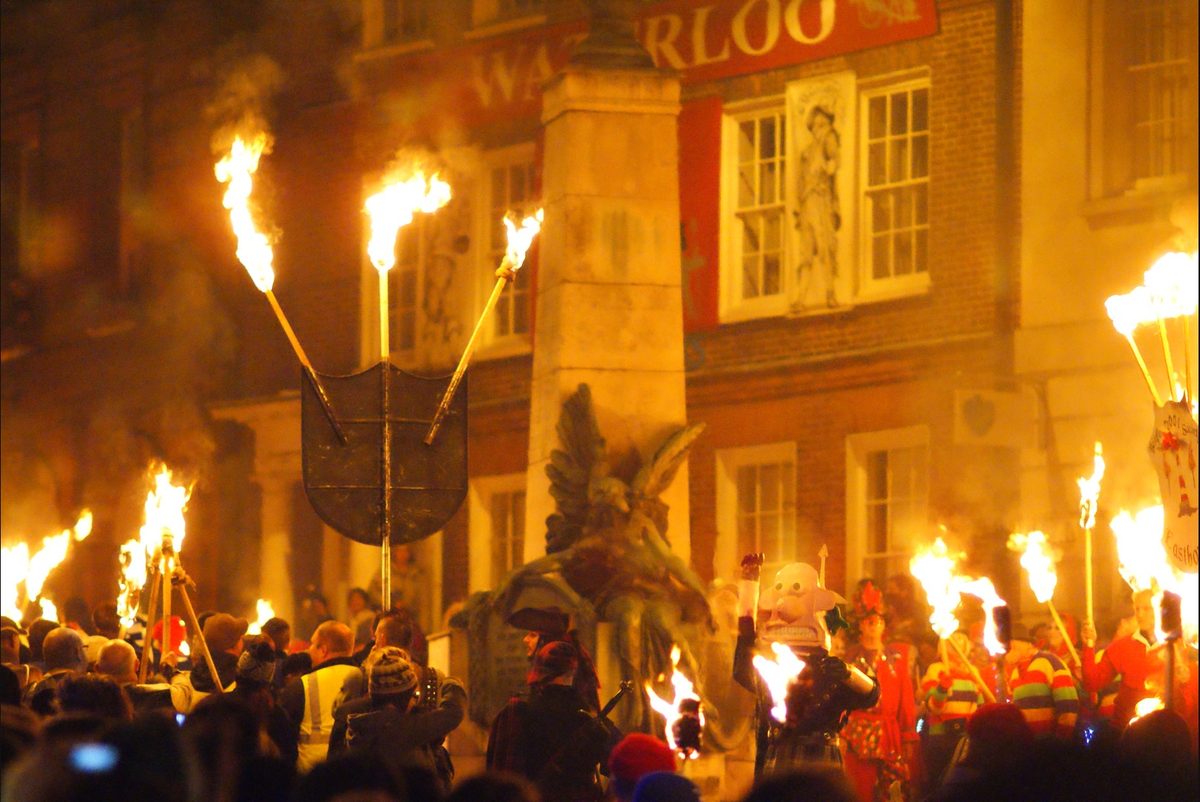
From there came “penny for the guy” — children wheeling a stuffed, Fawkes-dressed effigy around the neighbourhood in the weeks before 5 November, asking passers-by for coins, nominally to fund fireworks. The custom was common across Britain for most of the 20th century and had largely died out by its end, edged aside by Halloween. What has not died out is the ceremony that opens every new session of Parliament: the Yeomen of the Guard still formally search the cellars beneath the building before the State Opening, by lantern, a direct if now purely theatrical descendant of the search that caught Fawkes four centuries ago. Lewes, in Sussex, still runs the best-known torchlit procession and bonfire of them all every autumn, burning effigies that these days are at least as likely to be a disliked politician as Fawkes himself.
Those burned effigies left one more mark that has long since drifted free of the plot entirely. “Guy,” the word for the stuffed figure on the bonfire, started being applied by the 1830s to any oddly or shabbily dressed person — someone who looked like he had been dressed for a bonfire. By the 1840s, American English had worn that insult down to something neutral: just a man, any man, with no costume and no conspiracy attached. Most people who say “guy” today have never connected it to a Catholic soldier caught in a cellar with a lantern, but it is the same word.
Watch the full history
The video version follows the lantern itself, seized from Fawkes’s hand and still on display in Oxford four hundred years later.

Related reading
- Who Was the Man in the Iron Mask?
- How Indulgence Certificates Worked, and Why One Caused a Reformation
- The Warming-Pan Baby: The Bed-Warmer Behind a Royal Scandal
- Sealing Wax and Signet Rings: The Secret History
Shop
Gunpowder Plot: Terror and Faith in 1605, by Antonia Fraser — the standard narrative history of the plot. Rustic farmhouse lantern decor set, for a sense of the kind of iron-and-horn lantern Fawkes was carrying.
Works cited
- The National Archives (UK). “The Monteagle Letter” (SP 14/216). Explore the Collection. Link.
- Morgan, George Blacker. The Identification of the Writer of the Anonymous Letter to Lord Monteagle in 1605. London, 1916. Link.
- Irvine, Amy. “What Was the Monteagle Letter’s Role in the Gunpowder Plot’s Downfall?” History Hit, 6 November 2023. Link.
- UK Parliament. “Torture, Trial and Execution.” Living Heritage: The Gunpowder Plot of 1605.
- Historic Royal Palaces. “Guy Fawkes and the Gunpowder Plot.” Tower of London.
- “Arup Takes Part in Gunpowder Plot Experiment.” Building, 2005. Link.
- Observance of 5th November Act 1605 (3 Jas. 1, c. 1), full text. Link.
- Anniversary Days Observance Act 1859 (22 & 23 Vict. c. 19). Link.
- “Remember, Remember the 5th of November.” Bodleian Law Library Blog, University of Oxford, 5 November 2014. Link.
- “Penny for the Guy?: A Lost Bonfire Night Tradition.” Museum of London / London Museum. Link.
- “Henry Garnet.” The Catholic Encyclopedia, vol. 6. New York: Robert Appleton Company, 1909. Link.
- “Guy (n.2).” Online Etymology Dictionary.