
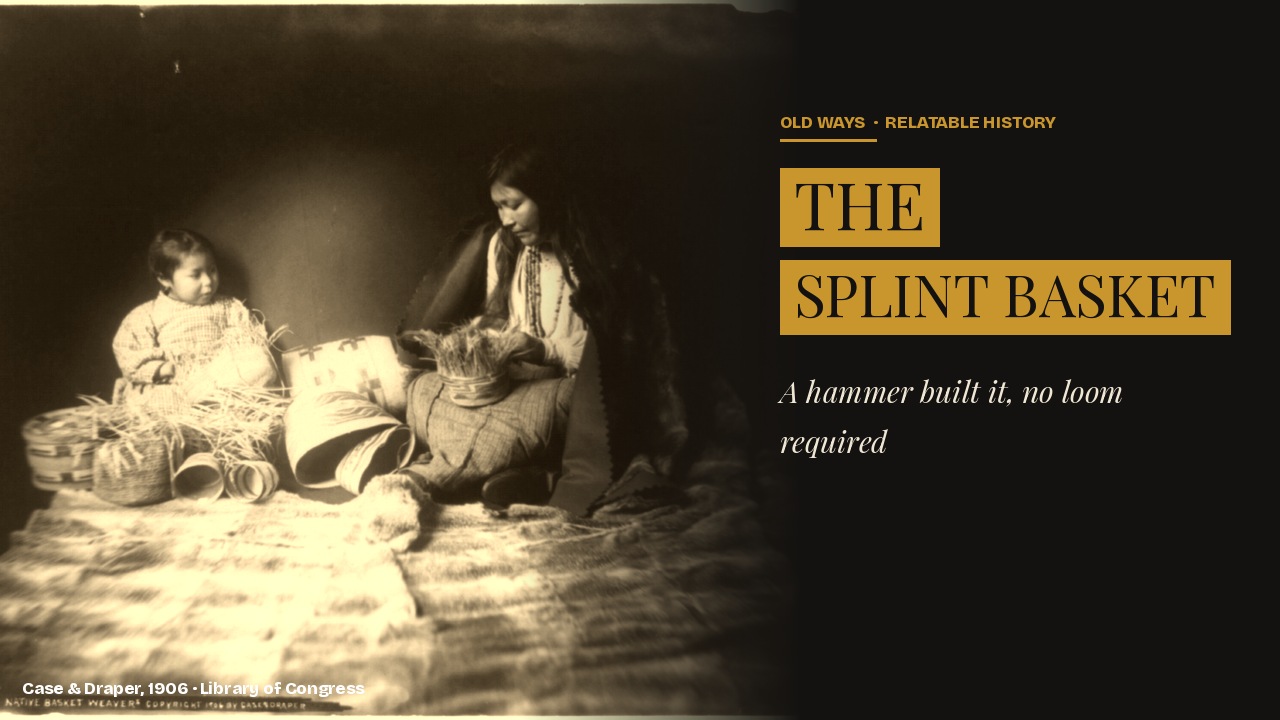
Almost every egg basket, feed basket, and market basket that survives from a nineteenth-century American farm was made with a technique that has nothing to do with weaving in the way most people picture it. Nobody cut reeds or wove cloth. Someone took a straight log, hammered it for hours until it came apart into long wooden ribbons, and then wove those ribbons into a container strong enough to carry eggs without cracking them or feed without a sack. That technique — splint basketry — did not originate with the farm families who leaned on it for generations. It came from Native basket makers in the eastern woodlands, and in large parts of the Northeast, settlers learned it from Native American makers directly, not the other way around. Splint basketry is a Native American craft first, a farm necessity second.
By the early 1800s, the connection was so complete that an “Indian basket” was, by most definitions of the time, simply a woodsplint basket — a label that erased the makers even as it advertised their work. This article follows the technique itself: how a log becomes a basket with no loom and no glue, why the Northeast used black ash while Appalachia used white oak, how the craft became both a farm necessity and, for some families, a cash crop, and why the tree it depends on is now dying faster than anyone can replace it.
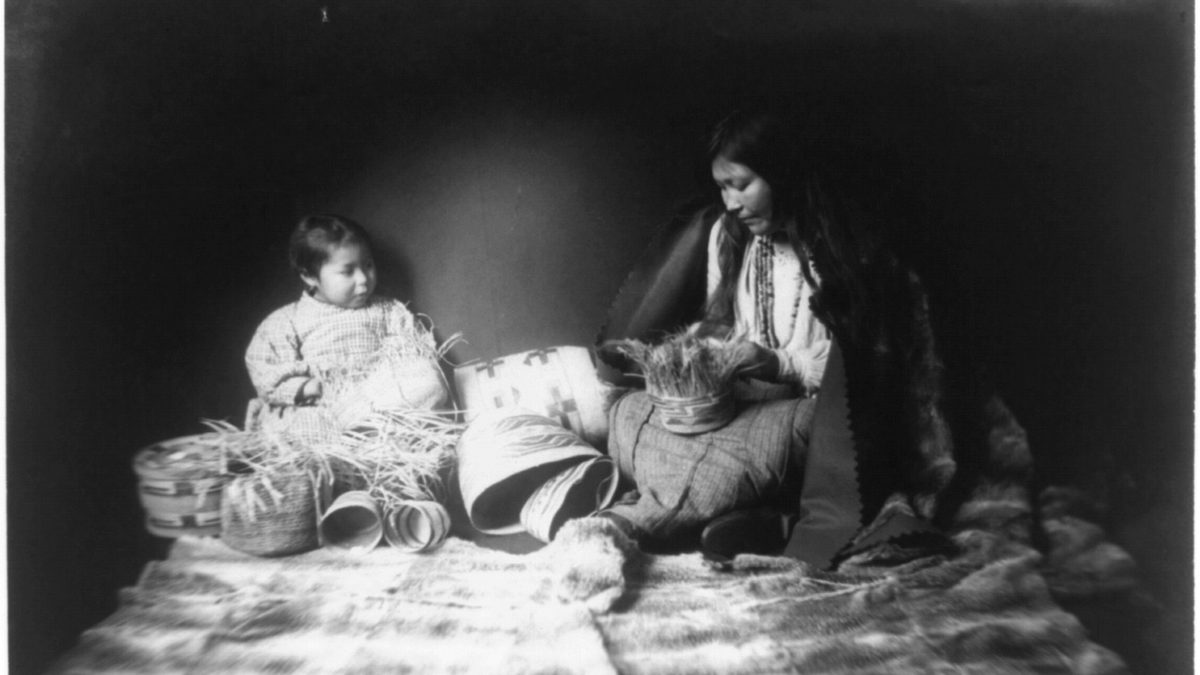
A log, not a reed: how splint basketry actually works
Most basketry traditions around the world weave with something naturally flexible — willow withies, split cane, coiled grass. Splint basketry starts with the opposite material: a stiff, solid log. The trick is a quirk of certain trees’ growth rings. In black ash (Fraxinus nigra), the ring most prized by basket makers across the Northeast and Great Lakes, each year’s growth ring is joined to the next by a layer of soft, porous cells that will tear apart cleanly if you hit the wood hard enough and evenly enough. Basket makers test a standing tree before felling it by cutting a small notch and checking the width of the rings, looking for ones roughly three to five millimeters wide — too narrow and the splints are weak, too wide and they are coarse.
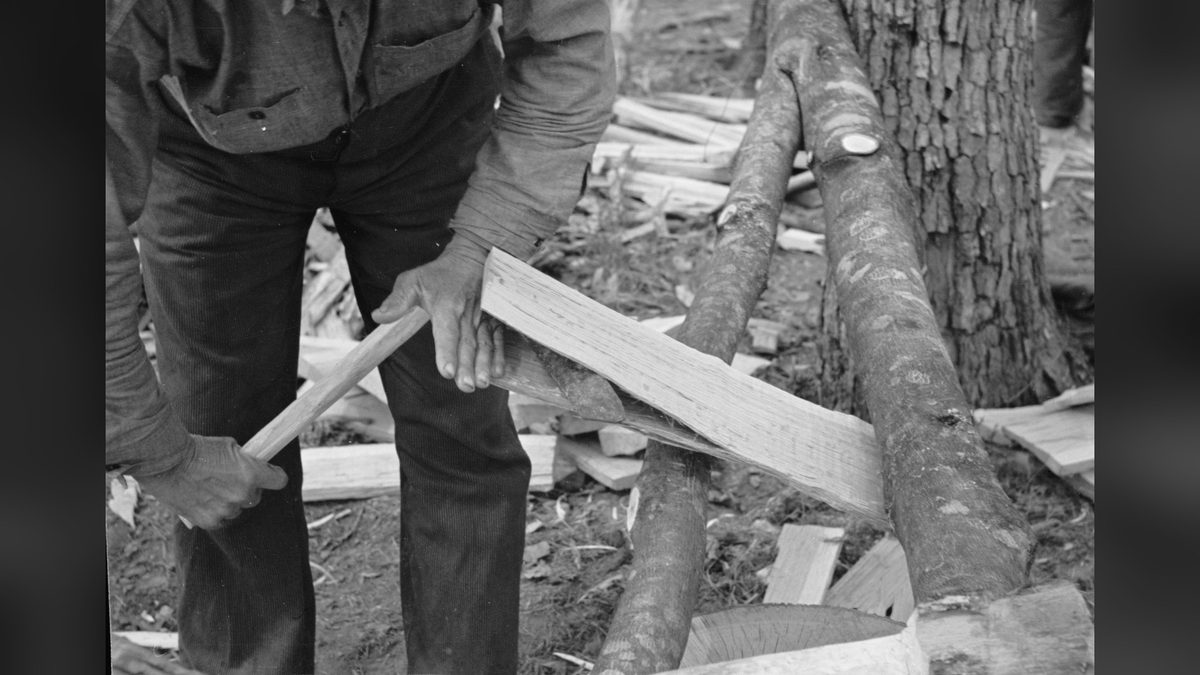
Once a suitable log is cut and the bark is peeled away with a drawknife, the real labor starts: pounding the log’s full length with the flat of an axe head or a wooden mallet, moving down the trunk in overlapping strikes. Done correctly, an entire growth ring peels free as one long, rough ribbon, which is then scored, split lengthwise, and shaved smooth with a knife to whatever width a given basket calls for. It is demanding, repetitive, and almost impossible to rush; a maker has to judge by sound and feel exactly how hard to strike, because hitting too hard tears through the ring instead of separating it.
Ash in the North, oak in the South
South and west of the ash forests, in the Appalachians and the Ozarks, basket makers used a different tree and a slightly different method. White oak splits and shaves well while still green, so makers there rived a young, straight oak into narrow strips with a froe and maul rather than pounding it apart along the rings, then shaved the strips smooth with a drawknife or crooked knife and wove them, often around a rib framework rather than a mold. Historians Rachel Nash Law and Cynthia W. Taylor, in the standard reference on the tradition, trace white oak basketmaking in the Southern Appalachians back through generations of Cherokee and settler families alike, each shaping the wood to their own patterns of rib baskets, split baskets, and wicker forms. In North Carolina specifically, split white oak baskets came to dominate basket making almost entirely, prized for a tree that was abundant, strong, and durable enough to survive decades of farm work.
West Virginia basket makers worked an even wider range of local material — white oak most of all, but also hickory, maple, elm, yellow poplar, honeysuckle, Virginia creeper, willow, and cattails — and named their baskets for the job they did rather than how they looked: egg baskets, potato baskets, pint and gallon baskets, sewing baskets, corn baskets. The name was the warranty. A basket maker and a customer both knew exactly what a given shape was for before either one said a word about it.
A Native American craft, renamed by the market
The deeper history is less tidy, and more interesting, than a simple craft handed down inside one culture. Historian Laurel Thatcher Ulrich, tracing a woodsplint basket now held at Harvard’s Peabody Museum, found that woodsplint basketry as a trade good developed among Native communities — Mahican and Schagticoke families along the Massachusetts–Connecticut–New York border chief among them — in the late 1700s and early 1800s, after generations of war and disease had pushed remnant communities toward new livelihoods. These makers adapted deep forest knowledge of ash and other woods into a product that outside buyers wanted: cheap, light, durable containers. Within a few decades, Ulrich notes, the market had collapsed the category entirely — an Indian basket simply meant a woodsplint basket, whoever had actually made it.
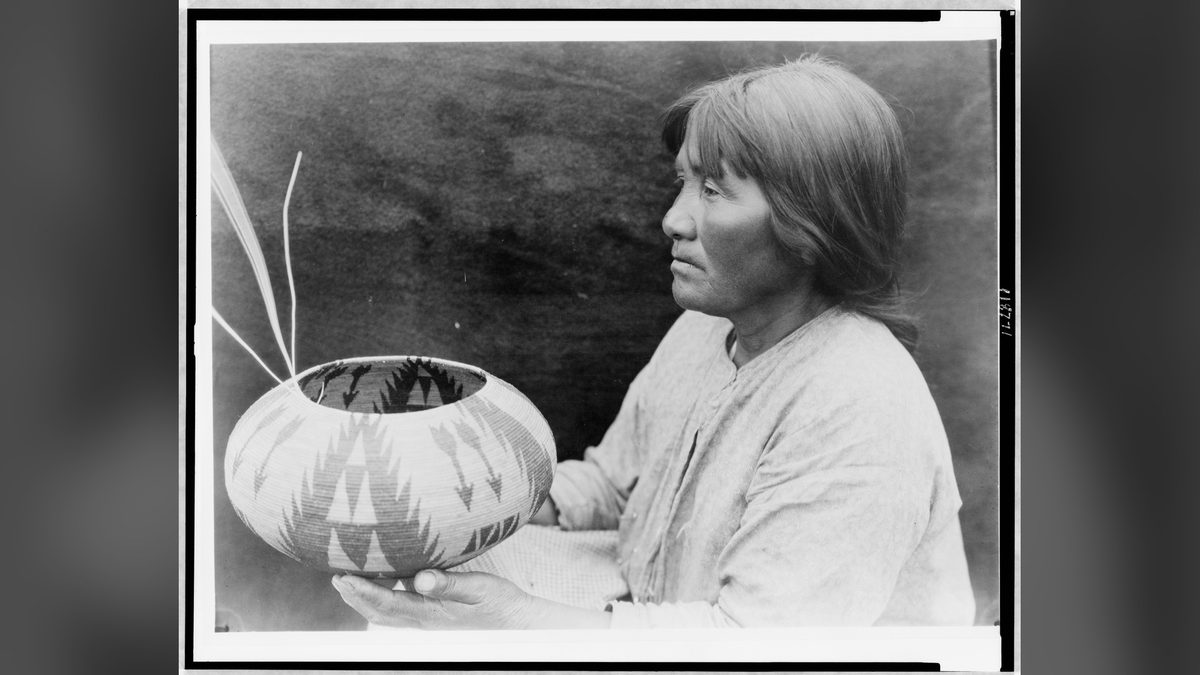
“Yankee” basket makers, as the same research describes them, borrowed the pounding-and-weaving technique for their own plain, undecorated farm baskets, while basket makers working inside Native communities kept making theirs with dyed splints and stamped geometric patterns — reportedly colored with a soot-based black dye rather than the plant dyes used elsewhere, since laboratory tests on surviving pieces found plant dyes alone produced only pale washes, nothing like the strong colors that survive on decorated baskets. The farm basket that ended up in a hundred thousand American henhouses, in other words, is the stripped-down, undecorated descendant of a specific, documented Native craft economy — not a parallel invention that happened to look similar.
A basket for every chore
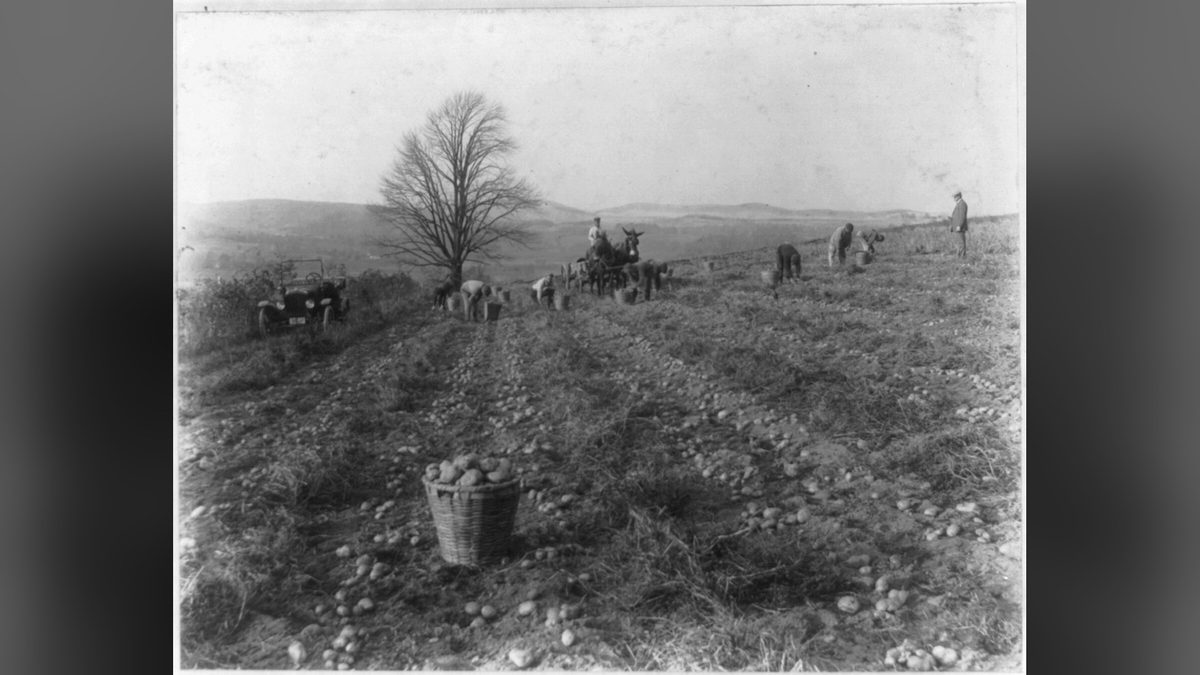
Once a family had the splints, or the cash to buy a finished basket, almost no farm task went without one. A shallow, wide-mouthed basket went to the henhouse, shaped so a hand could reach in without cracking a shell — nicknamed a “melon” or “gizzard” basket in some regions for its rounded profile. A deeper one hauled shelled corn or mash to the hogs. A sturdier one went up the orchard ladder for picking apples, and a wide one came out at harvest for potatoes, each basket’s shape doing a job a sack or a bucket could not do as well. The Shaker communities of New England, who turned basket production into something close to light industry, built their utility baskets over wooden forms for a consistent, repeatable shape, with thicker splints as the upright ribs and thinner, doubly split splints woven as the horizontal weavers — at their peak of production even using power-driven machines to shape rims and handles that had originally been cut by hand with a drawknife.
Selling the surplus
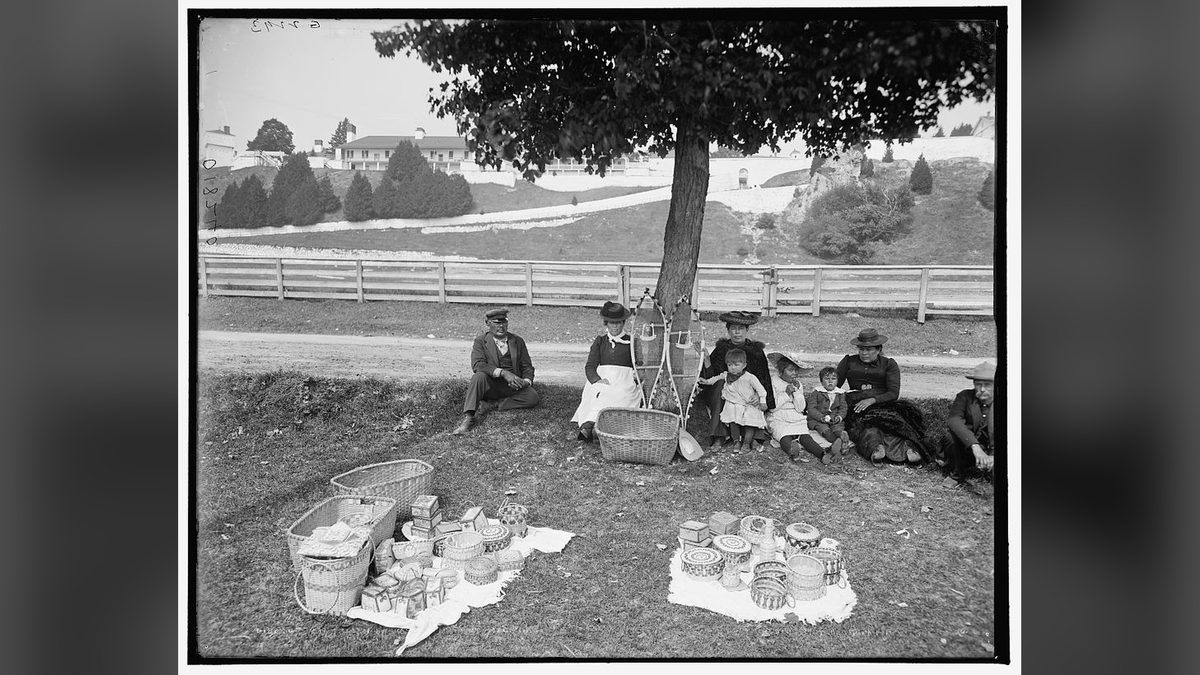
For many basket-making families, the craft was not only a household chore but a small, steady source of cash. Surplus baskets went to the general store, to market stalls, or door to door with a traveling peddler, the same rural sales circuit that carried tin ware and notions to farms too far from town for regular shopping. The Gibson family of Springdale, Arkansas, has built split white oak baskets without major variation since the 1880s, across four generations — a continuity the Encyclopedia of Arkansas treats as the clearest living link between the basket as farm tool and the basket as a family trade. The same encyclopedia records a harsher chapter of that economic history: after the Civil War, basket making was taught in school curricula for African American children in parts of the South, on the assumption that they would need the skill for farm labor and future employment — a reminder that who got to make baskets, and why, was never separate from the social order around them.
Cheap, and then gone
Splint basket making held on as ordinary, unremarkable farm equipment through most of the nineteenth century and well into the twentieth, especially in rural Appalachia, the upper Northeast, and the Ozarks, where the right wood was always close at hand. What ended its everyday role was not one invention but a slow stack of them: wire baskets and galvanized buckets in the late nineteenth century, lightweight woven cotton sacks that replaced field baskets in cotton country by the early twentieth, and eventually paper bags, cardboard boxes, and plastic containers that were faster to buy than a hand-split basket ever was to make. None of the substitutes lasted as long as a well-made splint basket, and none of them needed a skill that took years to learn by feel.
Saved once by nostalgia, now threatened by a beetle
The craft has already survived one near-disappearance. Interest in American handwork, kindled in part by the 1876 Centennial Exhibition in Philadelphia and renewed again by Depression-era nostalgia for pre-industrial skills, kept basket making alive as heritage practice even after it stopped being daily necessity. In the 1950s, textile scholar Ed Rossbach led what is often called the “new basket” movement, reframing basketry as fine art rather than utilitarian ware, and in 2002 basket artists who had split from the Handweavers Guild of America founded the National Basketry Organization. Among Native communities, the craft never stopped being both — practical and ceremonial, taught generation to generation inside families like those of basket makers Kelly Church and Les Benedict today.
The current threat is new, and it is existential in a way plastic buckets never were. The emerald ash borer, an invasive beetle first identified in Michigan and Ontario in 2002, has since spread through roughly 60 percent of black ash’s native range, and research led by USDA Forest Service and Michigan State University scientists, working directly with tribal basket makers, projects that more than 75 percent of black ash across most of that range will be dead by 2035 — a loss that will reach 98 percent of the Indigenous people who live within black ash’s range and still practice basketry. Unlike the shift to wire and plastic, this is not a story about a better substitute arriving. Tribes and federal agencies are now banking black ash seed for future reforestation, injecting individual trees with systemic insecticide, and releasing parasitic wasps that attack the borer’s larvae — a race to keep a single species of tree alive long enough for the craft built on it to survive a second time.
Watch the full story
The video embedded below walks through the same pounding technique in under nine minutes, with the farm uses that made a splint basket worth the hours it took to make one.
https://www.youtube.com/watch?v=PIXOMS3sgNY
Related reading
- How to Store Root Vegetables All Winter Without a Cellar — the same winter-storage problem, solved without a basket
- Drying Apples Before Refrigeration: How Farm Families Did It — another hand-preserved harvest that never needed electricity
- The Quilting Bee Was Already a Punchline by the 1860s — the social side of repetitive hand-craft work on a farm
Shop
Rachel Nash Law and Cynthia W. Taylor’s Appalachian White Oak Basketmaking: Handing Down the Basket is the standard illustrated reference on the Southern tradition covered above — available on Amazon.
Works cited
- Ulrich, Laurel Thatcher. The Age of Homespun: Objects and Stories in the Creation of an American Myth. Knopf, 2001.
- “A Woodsplint Basket.” Harvard Magazine, March–April 2002, excerpting Ulrich’s research on the Mahican and Schagticoke origins of woodsplint basketry. Link.
- “Black Ash Basketry.” Emerald Ash Borer Information Network, Michigan State University/USDA Forest Service. Link.
- Costanza, K.K.L., et al. “The Precarious State of a Cultural Keystone Species: Tribal and Biological Assessments of the Role and Future of Black Ash.” Journal of Forestry 115, no. 5 (2017): 435–446.
- Siegert, N.W., McCullough, D.G., Luther, T., Benedict, L., Crocker, S., Church, K., & Banks, J. “Biological Invasion Threatens Keystone Species Indelibly Entwined with Indigenous Cultures.” Frontiers in Ecology and the Environment 21, no. 7 (2023): 310–316.
- Law, Rachel Nash, and Cynthia W. Taylor. Appalachian White Oak Basketmaking: Handing Down the Basket. University of Tennessee Press, 1991. Link.
- “Basket Making.” NCpedia, State Library of North Carolina / University of North Carolina Press.
- “Basketry.” Encyclopedia of Arkansas, Central Arkansas Library System. Link.
- “Basket Making.” e-WV: The West Virginia Encyclopedia, West Virginia Humanities Council. Link.
- “Gathering Basket.” In a House Divided, 1850-1890, Illinois State Museum. Link.
- “Durable Beauty: Baskets from Shaker Museum.” Shaker Museum, Mount Lebanon. Link.